
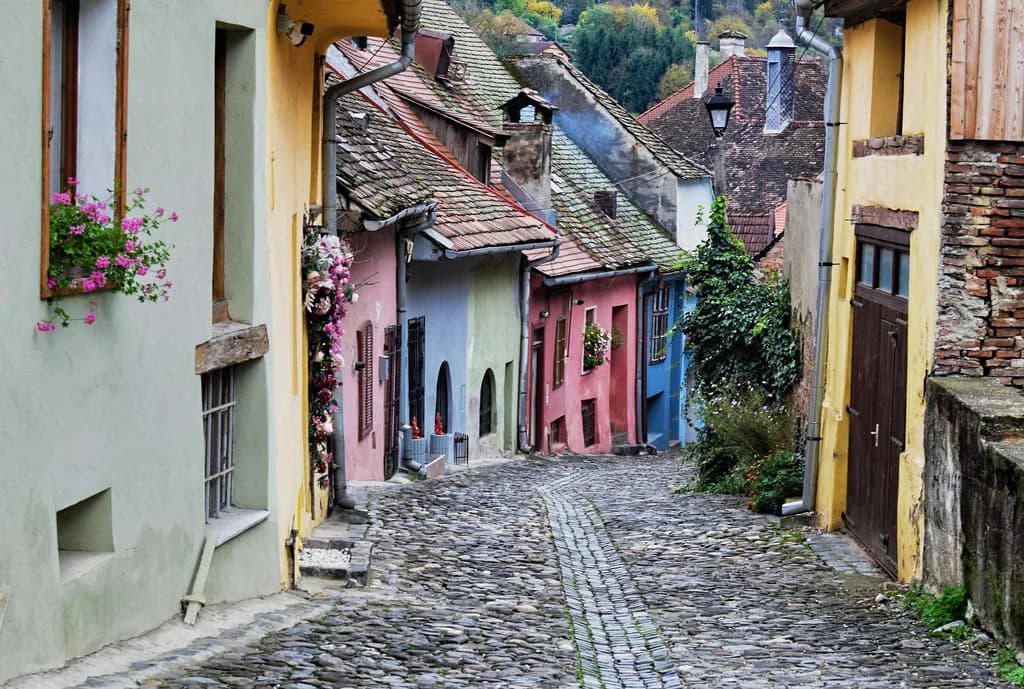
Sighișoara Citadel: What to See Inside the Fortress
Sighișoara Citadel is the walled medieval core of Sighișoara, built on a hill above the lower town and entered on foot through its gates. Allow half a day to walk the walls and towers, see the Clock Tower and take the covered staircase up to the Church on the Hill. This guide covers where the citadel sits, how to reach it, what to see and how to pace a short stop, and Sighișoara Attractions: 9 Visitor Guides covers the rest of the town.
What the citadel is and where it sits
The citadel occupies a hill above the Târnava Mare river, with the lower town spread out below it. Sighișoara lies in Transylvania, roughly 250 km northwest of Bucharest and 56 km southeast of Târgu-Mureș, which makes it a natural stop between the two cities. The historic core has been a UNESCO World Heritage Site since 1999, and the fortress walls and towers are the reason most travellers come.
Sighișoara was founded in the twelfth century by Saxons, German-origin craftsmen and merchants sent to Transylvania by the Hungarian court to protect the border and the mountain passes, and the town's towers were built for its defence. Many of the towers carry the names of the guilds associated with them, so look for the Tanners', Tailors', Butchers', Shoemakers' and Blacksmiths' towers as you walk. Expect cobbles, steep lanes and a compact circuit rather than a single monument.
How to reach the citadel on foot
You reach the citadel on foot from the lower town, through the gateways in the wall. Sighișoara's railway station sits below the old town, so the approach is uphill whichever route you take; allow 15 to 20 minutes at an easy pace from the lower streets to the centre. Wear shoes with grip for the cobbles.
Coming by car, park in the lower town and walk up rather than trying to drive into the walled streets, which are narrow and largely pedestrian. Sighișoara sits on the main road and rail corridor between Brașov and Târgu-Mureș, so it fits easily into a town-and-castle route through Transylvania. Check the station's current services before you fix a day, since the walk from the platform to the walls is not short.
Walking the walls and towers
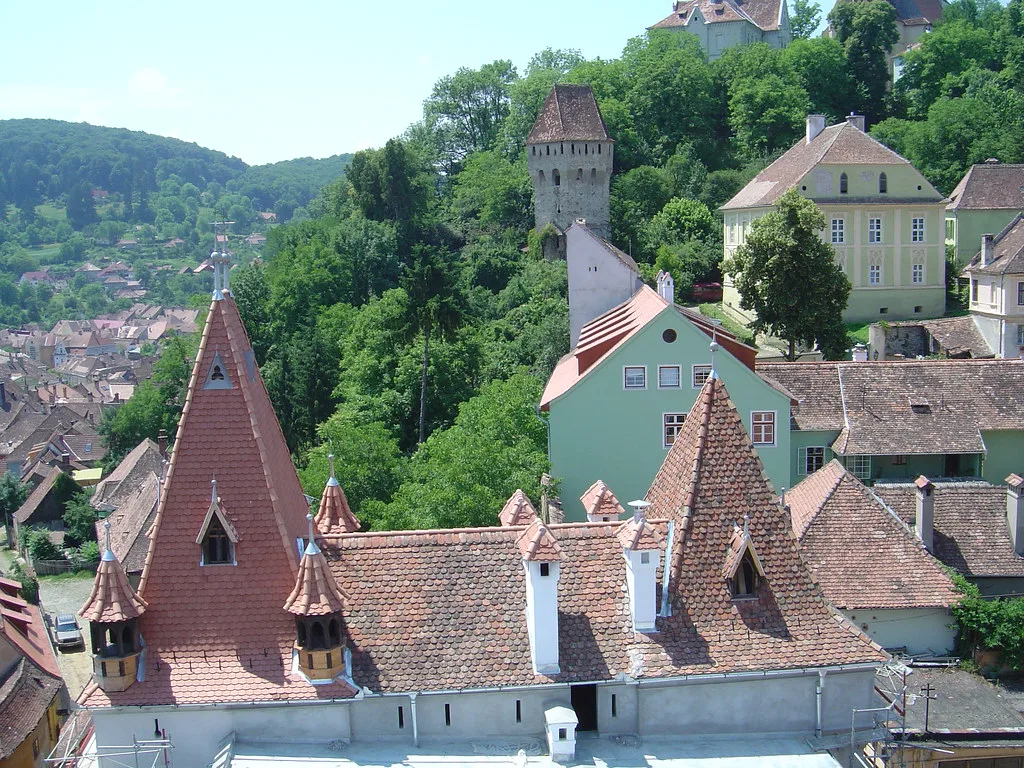
The defensive walls stretch for over 900 metres around the citadel. The town originally had 14 towers, of which nine remain. Walk the surviving stretches early or late in the day, when the lanes are quiet and the light on the tiles is best. The circuit is short enough to cover in an hour if you do not stop, but you will stop.
Look for the guild names on the towers as you go: the Tanners', Tailors', Butchers', Shoemakers' and Blacksmiths' towers each carry the name of a trade. The named towers are exterior sights rather than interiors you can enter.
The Clock Tower and the old centre
The Clock Tower is the citadel's landmark and the sensible first stop, because it gives you the layout of everything else. It rises about 64 metres above the cobbled streets, and the climb to the top rewards you with the clearest view over the roofs and the lower town. Go up first, then walk the rest of the citadel with that map in your head.
The Clock Tower, Turnul cu Ceas, is the emblem of Sighișoara's old centre. Pause at the tower door to check whether the interior is open and what the ticket covers, then build the rest of your walk around the climb. Budget 30 to 45 minutes for the tower including the stairs and the view. The Sighișoara Clock Tower (Turnul cu Ceas) guide sets out what to see.
Piața Cetății and the streets around it
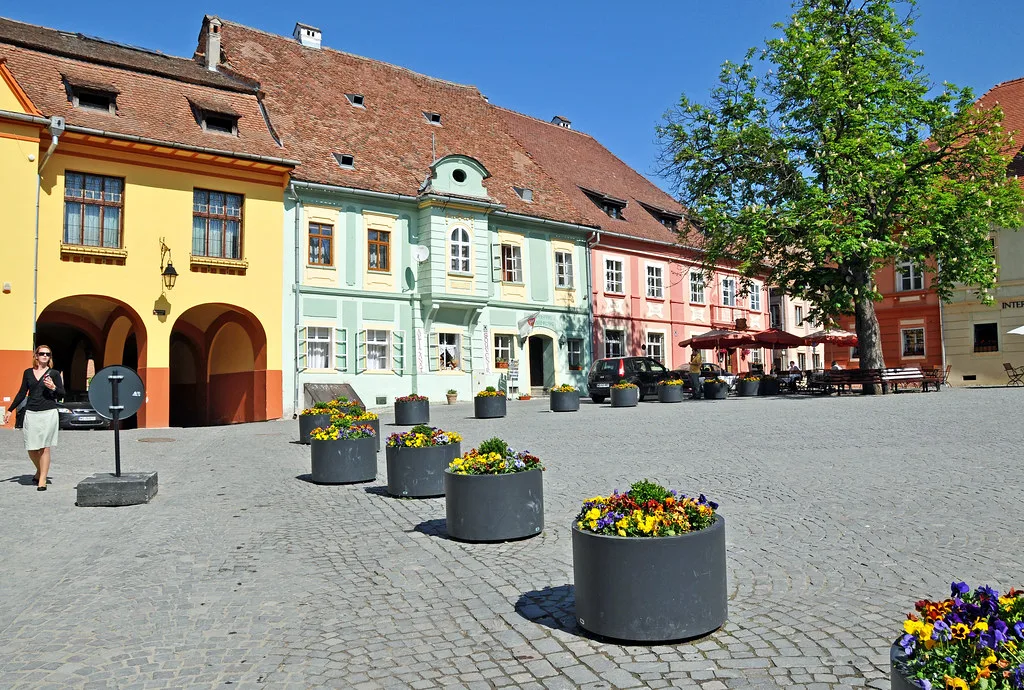
Piața Cetății, Fortress Square, is the open heart of the citadel, ringed by colour-washed houses and the Clock Tower at one corner. Use it as your orientation point: lanes run off it towards the walls, the scholars' staircase and the upper church. Sitting on the square for ten minutes is the best way to feel how small and enclosed the medieval town really is.
From the square, wander the lanes towards the Monastery Church and the northern wall, where the crowds thin out and the houses lean close together. The Monastery Church, Biserica Mănăstirii, is a short detour off the main flow and worth a look for its setting among the roofs.
The House of Vlad Dracul and the historical Vlad III
The House of Vlad Dracul stands near the square, and the town is associated with the legend that Vlad Țepeș, the historical ruler Vlad III, was born here. Treat that as the town's tradition rather than a documented fact, and keep the man and the fiction apart. Vlad III was a fifteenth-century Wallachian prince; Bram Stoker's Count Dracula is a Victorian invention who borrows the name.
The house is a modest, ochre-fronted building rather than a castle, and the interest lies in the story attached to it and the street it sits on. Read up on Vlad III before you go so the plaque means something; Casa Vlad Dracul in Sighișoara explains what is actually there. Five minutes at the door is enough unless you are a dedicated Dracula reader.
The Church on the Hill and the Schoolchildren's Ladder
The Schoolchildren's Ladder is a covered wooden staircase that climbs from the upper citadel to the Church on the Hill, built so pupils could reach school in bad weather. It is a climb of several minutes in a dark, narrow tunnel, not a photo stop, and the steps are steep. Start it fresh rather than at the end of a long day. Our page on Scara Școlarilor (The Scholars' Stairs), Sighișoara covers the route and what to expect underfoot.
At the top, the Church on the Hill, Biserica din Deal, sits inside the old cemetery with views back over the citadel roofs. Allow 20 to 30 minutes for the climb and the look around, more if you linger among the graves. Check the church's own opening arrangements at the door, as interiors keep shorter hours than the citadel streets.
Opening hours and ticket prices
The citadel publishes a seasonal visiting programme with a Monday closure: summer hours run from 15 May to 15 September, with shorter winter hours from 16 September to 14 May. The published price is 12 lei for an adult and 4 lei for a child. The programme applies to visiting the citadel; check the board for your dates, since these are advertised figures rather than a live booking system.
Opening arrangements change seasonally, and the Monday closure applies only in the visiting programme season, so do not assume your dates fall inside it. Check the board at the entrance on the day. For which sights sit in the old centre together, start with Sighișoara Attractions: 9 Visitor Guides.
How long the citadel needs
Give the citadel a half day: about 30 to 45 minutes for the Clock Tower, an hour for the walls and squares, and 45 minutes for the climb to the Church on the Hill and back. That pace leaves time to sit in Piața Cetății without rushing. If you only have two hours, do the Clock Tower and the square and skip the upper church.
On a short stop between trains, cut the church and the cemetery first, since they cost the most time for the least dramatic reward on a grey day. The citadel rewards slow walking, so a rushed hour is worse than a focused two. Stay overnight in the lower town if you can, and walk up in the early morning before the day-trippers arrive.
Nearby add-ons: the Saxon Cemetery and the Breite plateau
The Saxon Cemetery wraps around the Church on the Hill and is part of the same climb, so see it on the way down rather than as a separate trip. The old gravestones and the quiet make a good counterpoint to the busy square. The Breite plateau, an ancient oak reserve, lies outside the walls and needs a car or a longer walk to reach.
Treat the Breite as a nature add-on for a second day rather than squeezing it into a citadel visit. The citadel is dense enough to fill a morning without it. Other churches in the old town, such as the Holy Trinity Church, fill short gaps between the main sights.
Is the citadel worth the climb?
Yes, if you treat it as a half-day walk rather than a quick photo stop. The Clock Tower, the guild walls and the climb to the Church on the Hill make a compact, coherent visit that suits a stop between Brașov and Târgu-Mureș. Start early, and go up the tower while you are still fresh.
Explore more Sighisoara guides
Frequently Asked Questions
Can you walk around Sighișoara Citadel without a ticket?
The citadel has a published visiting programme with a Monday closure and an advertised price of 12 lei for an adult and 4 lei for a child, applying to visiting the citadel. Individual buildings such as the Clock Tower may be ticketed separately, so check the board at the entrance and the tower door on the day.
How long does it take to climb to the Church on the Hill?
Allow about 20 to 30 minutes for the covered staircase up and the look around the church and cemetery, and the same again to come down if you stop often. The steps are steep and the passage is narrow, so start the climb fresh rather than at the end of a long day.
Is the citadel in Transylvania?
Yes. Sighișoara sits in Transylvania, on the Târnava Mare river, roughly 250 km northwest of Bucharest and 56 km southeast of Târgu-Mureș. That position makes it a natural stop on a town-and-castle route between the two cities.