Timișoara City Break Guide: Squares, Cathedral and Revolution Sites
Plan a Timișoara city break: Piața Victoriei, Piața Unirii and Piața Libertății, the Orthodox Cathedral, the 1989 Revolution Museum and how long the city needs.
On this page
Timișoara works as a compact two-day city break: the three central squares sit within a short walk of each other, and the museums that explain the 1989 revolution are in the same core. This guide covers what each square holds, which museums repay the time, the outlying Banat Village Museum, and how to shape one day or two.
The city sits in the Banat region, close to the Hungarian and Serbian borders, and that mix shows in its buildings: a Romanian Orthodox cathedral in Piața Victoriei, a Serbian Orthodox cathedral in Piața Unirii, a Rococo St George's Cathedral on the same square, Baroque palaces and a Moorish-revival synagogue in Fabric.
What Timișoara is and why it suits a city break
Timișoara is a walkable city whose centre is arranged around plazas rather than a single high street, which makes it easy to plan on foot. A public square with a fountain and ornate façades, an ornate church interior with a large chandelier, a green-spired historic building: these are the set pieces you will pass between.
Timișoara was in the running to be European Capital of Culture in 2021. Visitors get a centre laid out around squares, and the building-by-building detail rewards reading before you go.
Come expecting a Central European streetscape rather than a walled medieval town: the pleasure is in the sequence of squares, the mix of styles and the revolution sites, not in a single monument. Our guide to Timișoara architecture covers the Rococo, Secession and Serbian Orthodox strands one square at a time.
How Timișoara is laid out: Piața Victoriei, Piața Unirii and Piața Libertății
The centre groups three squares within minutes of each other: Piața Victoriei, Piața Unirii and Piața Libertății, each one a short walk from the next. Plan a loop through all three rather than treating them as separate stops, and use our Timișoara Map to see how they sit together.
Piața Victoriei is the broad, formal square, dominated by the Romanian Orthodox Cathedral and the Opera House on opposite sides. Piața Unirii is the historic one, with St George's Cathedral, the Serbian Orthodox Cathedral and the Serbian Bishop's residence facing each other across the paving.
Piața Libertății is the quietest of the three and a good place to end a loop before heading for the Bega riverside. None of the squares is long; the distance between them is minutes on foot, so the sequence is about ordering what you see, not about transport.
Piața Victoriei: the Romanian Orthodox Cathedral and the Opera House
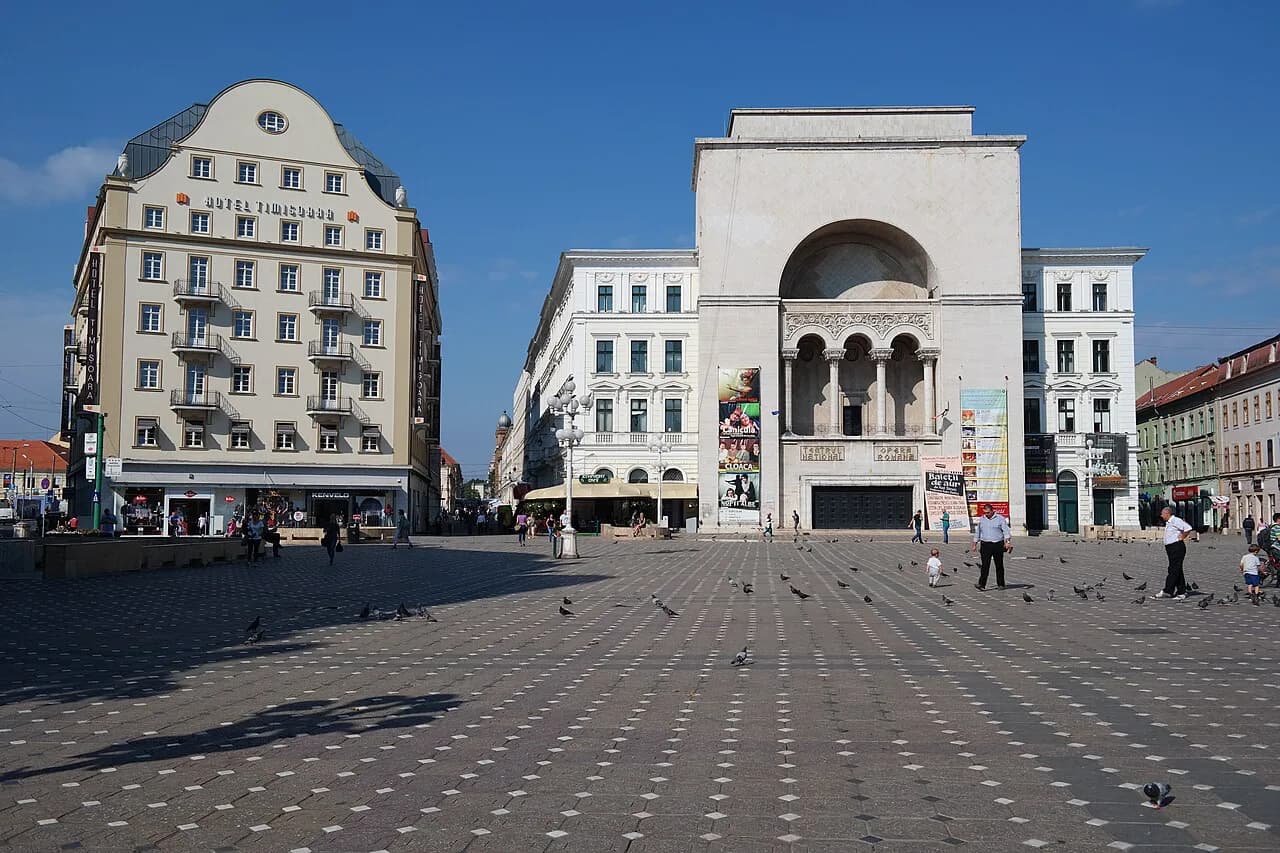
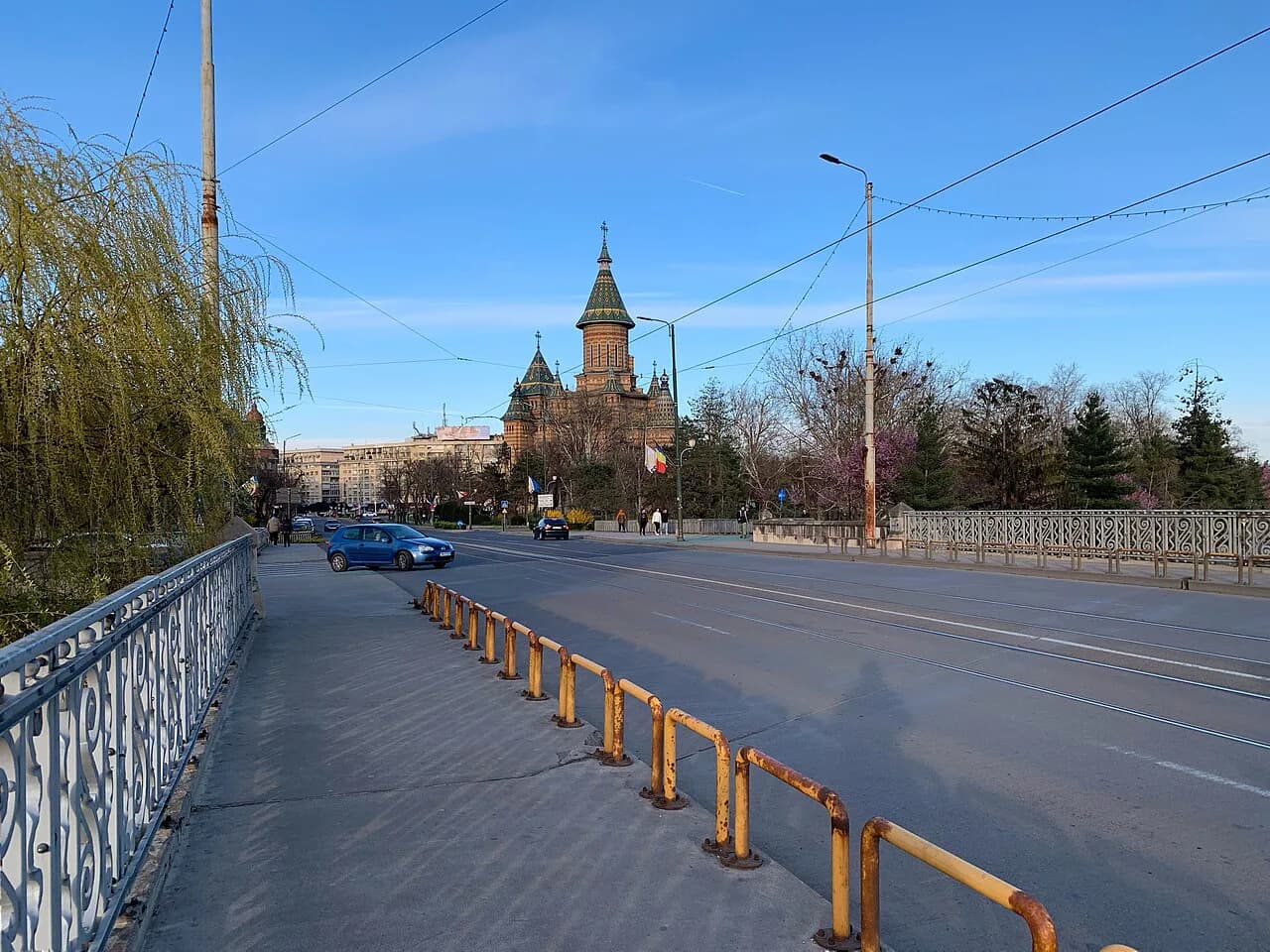
Piața Victoriei is built around two landmarks: the Romanian Orthodox Cathedral, with its tall domes, and the Opera House opposite. The square is also where the city gathers, a central plaza with a fountain, pigeons and a steady flow of people through the day.
The cathedral interior is the reason to go inside: a large chandelier, painted ceilings and icons, and a scale that reads clearly against the busy square outside. Give the square and the cathedral a single block of time rather than splitting them across the day.
Start at Piața Victoriei in the morning, then walk on into the older squares. The building-by-building detail is worth reading before you go, and our guide to Timișoara Architecture covers the Rococo, Secession and Serbian Orthodox strands one square at a time.
Piața Unirii: St George's Cathedral, the Serbian Orthodox Cathedral and the Baroque Palace
Piața Unirii is the architectural high point: St George's Cathedral shows Rococo detail and the square gives good views of the Serbian Orthodox Cathedral and the Baroque-style Serbian Bishop's residence. Each building carries a different national imprint, which is what gives the square its patchwork character.
The Baroque Palace on the square houses the city's Museum of Art, where the collection runs through German, Flemish and Italian masters. Pair the palace interior with the square outside, and set aside however long the galleries take you.
Because the buildings sit close together, Piața Unirii rewards slow looking more than rushing: read the façades one by one rather than crossing the square in a straight line. It is also a place to see several architectural styles in a single view.
The New Synagogue in Fabric and the city's other architectural set pieces
The New Synagogue in Fabric stands out for its Moorish design: minarets and ochre walls that look nothing like the Baroque squares behind you. It is the clearest single contrast to the cathedral-and-palace centre and worth the walk for that reason alone.
Treat Fabric as an extension of the centre rather than a separate trip. The surrounding streets give you the city's Secession and later buildings without the crowds of the main squares.
The 1989 Revolution Museum and the memorial to the revolution
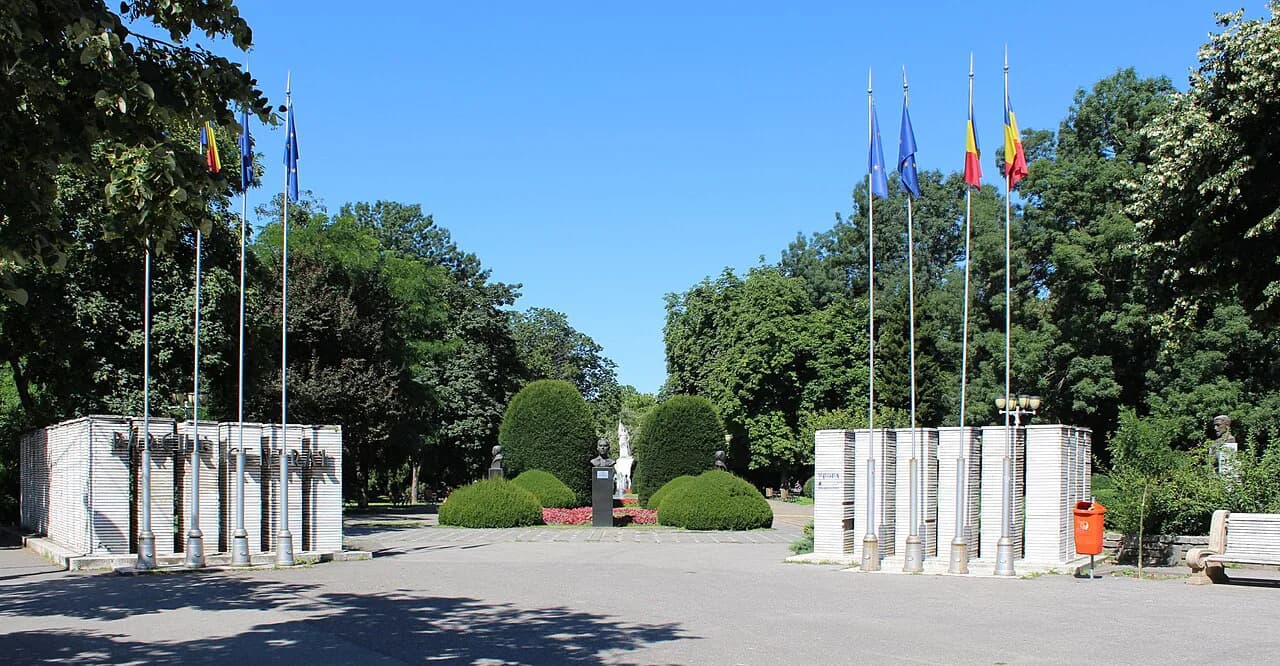
In 1989 Timișoara was the site of mass protests against Romanian communism that culminated in the Romanian Revolution. The 1989 Revolution Museum uses audiovisual archives to tell the story, and in the centre a memorial to the revolution occupies an old army building.
Visitors who go into the memorial tend to come out quieter than they went in: a guide who grew up during the communist era takes groups through the exhibits and ties the national story to individual people, making the timeline concrete. Set aside proper time for it and do not tack it onto the end of an already full day.
Keep the museum and memorial as a single block in your plan so the revolution narrative stays coherent, rather than meeting fragments of it at different points in the city. If you have only one day, this is the block to protect.
Museums worth your time: the Museum of Art and the Banat Ethnographic Museum
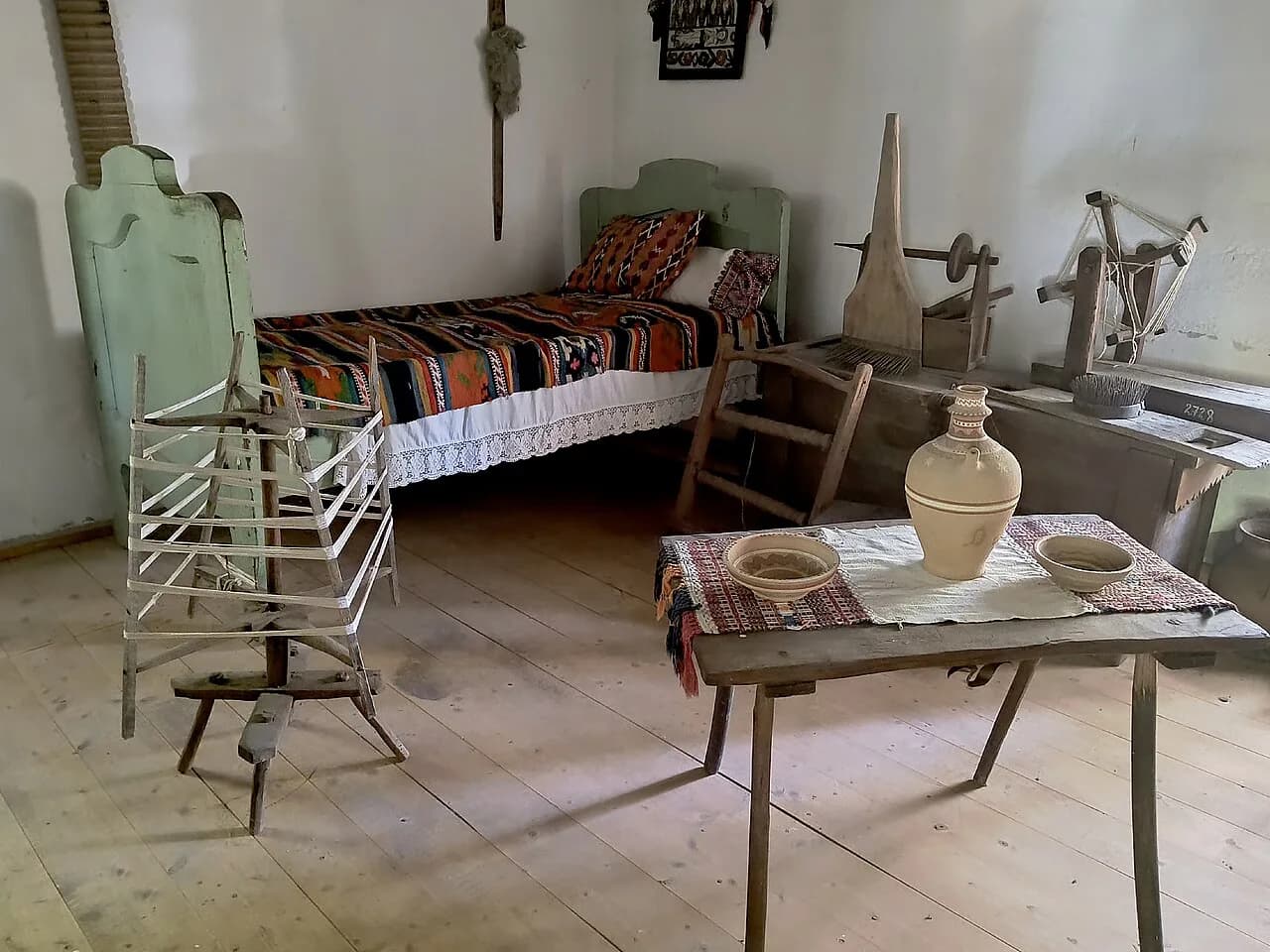
Two museums round out the centre: the Museum of Art in the Baroque Palace on Piața Unirii, and the Banat Ethnographic Museum, where the region's folk costumes and textiles are displayed. Choose between them by taste rather than trying to fit both into a short break.
The art museum suits anyone interested in European painting and the palace interiors themselves; the ethnographic museum suits anyone who wants the Banat region explained through objects. Both are central, so neither costs you travel time, only the hours you spend inside.
The Banat Village Museum outside the centre
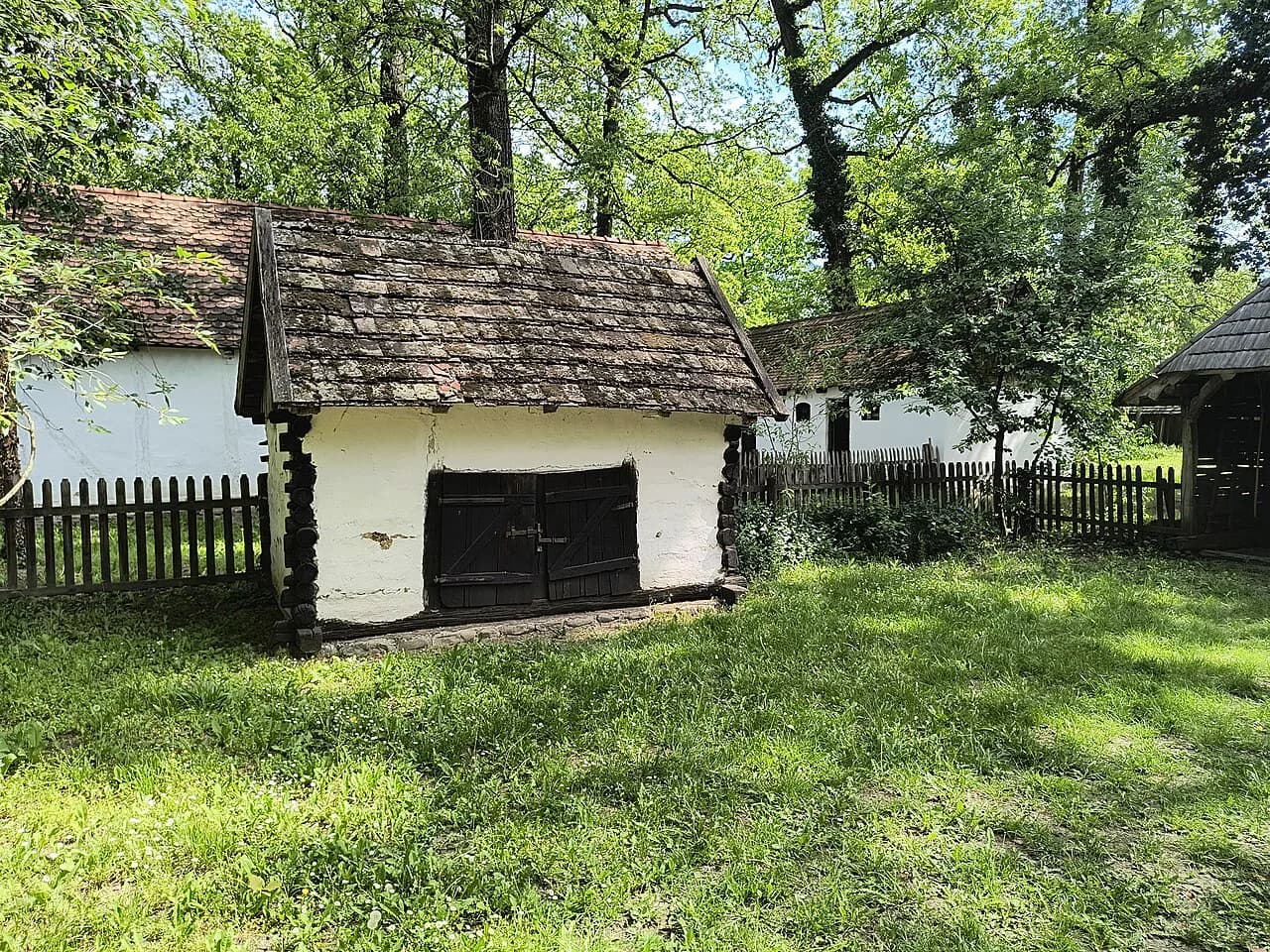
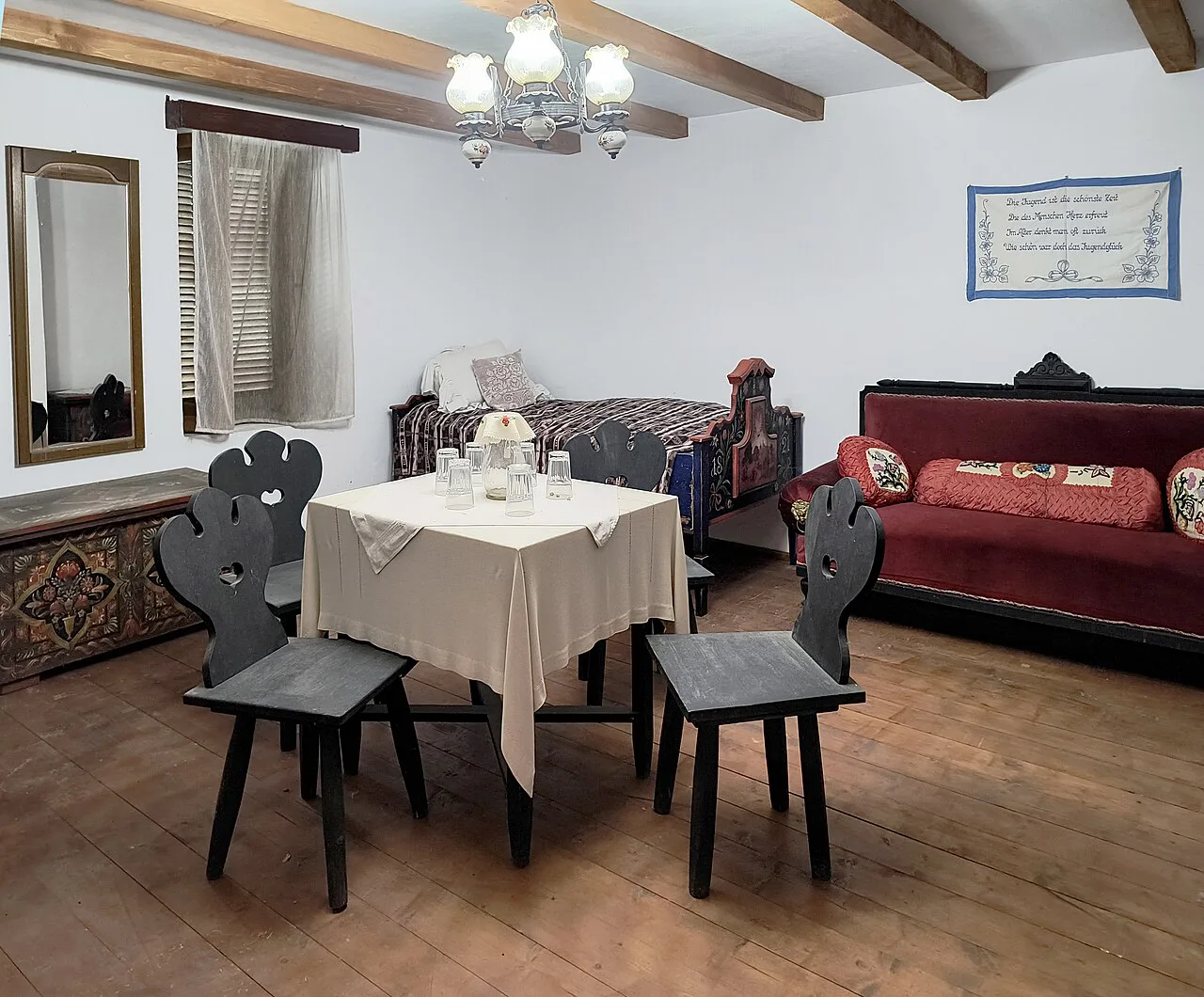
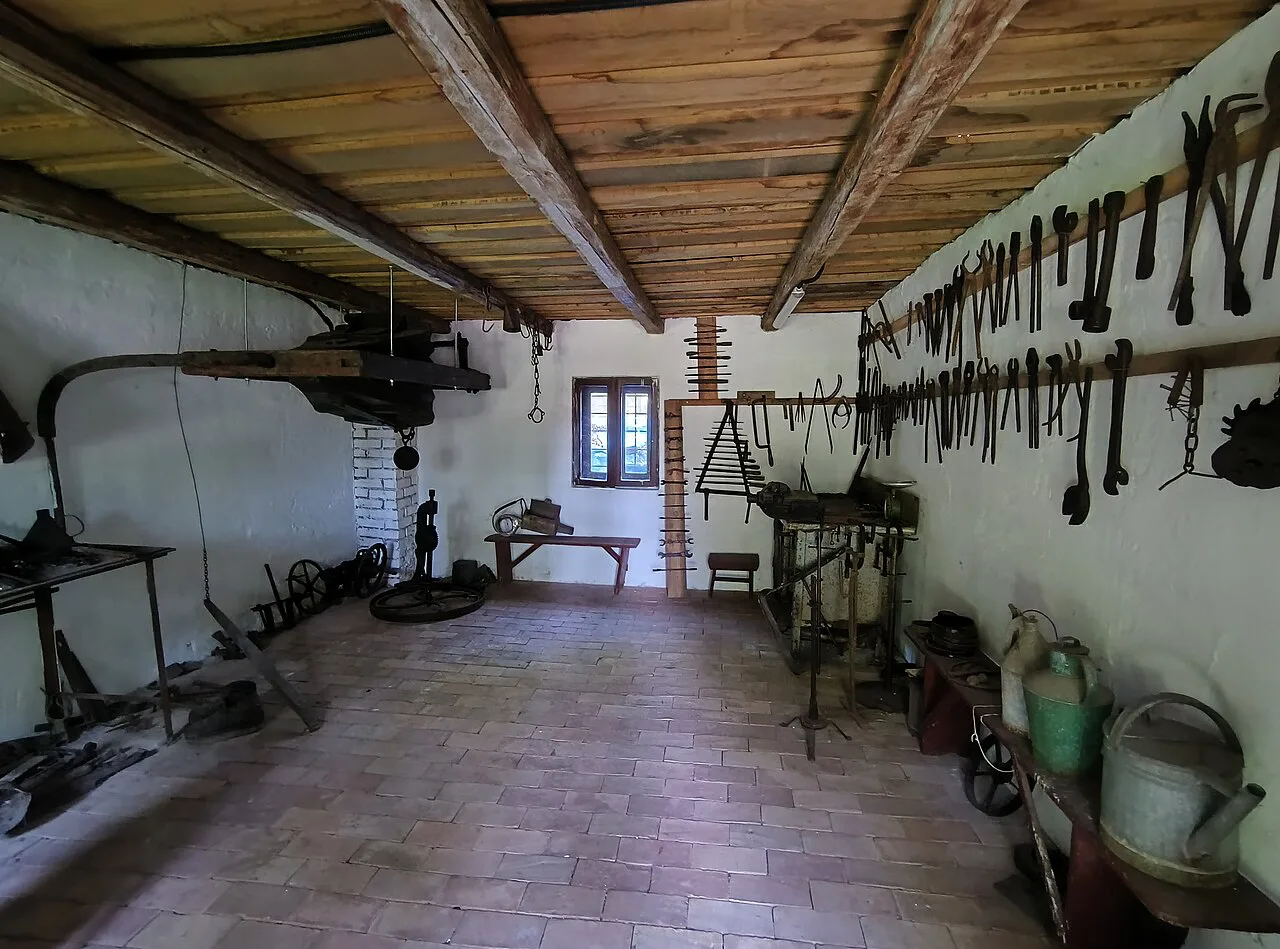
The Banat Village Museum is an open-air reconstruction of a nineteenth-century village on the edge of the city, with craft fairs, folk music and a nearby zoo. It is the one major sight that sits outside the walkable centre, so it needs its own slot in the plan.
The trade-off is straightforward: an afternoon here is an afternoon not spent in the squares, so it earns its place on a two-day visit rather than a single day. Arrange transport out before you travel.
How long Timișoara needs: a one-day plan and a two-day plan
One day is enough for the three squares, the Orthodox Cathedral, St George's and the revolution museum, walked in a single loop from Piața Victoriei southwards. That shape keeps the walking short and leaves the evening free without leaving anything central unseen.
Two days adds the art or ethnographic museum, the New Synagogue in Fabric and the Banat Village Museum, which is the point at which the city stops feeling like a stopover.
A guided walk is a sensible first-morning move if you want the squares explained before you explore them alone. Several walking tours run in the city, some free and some paid.
Getting around on foot, by bike and by tram
The centre is a walking city: the three squares, the cathedrals and the museums are all within a comfortable stroll of each other. Bikes are a good way to reach the Bega riverside and the further neighbourhoods.
Trams cover the distances that walking does not. Check the current arrangements on arrival.
Where Timișoara sits in a wider Romania trip
Timișoara is the western anchor of a Romanian trip, close to the Hungarian and Serbian borders, which makes it a natural first or last stop by land.
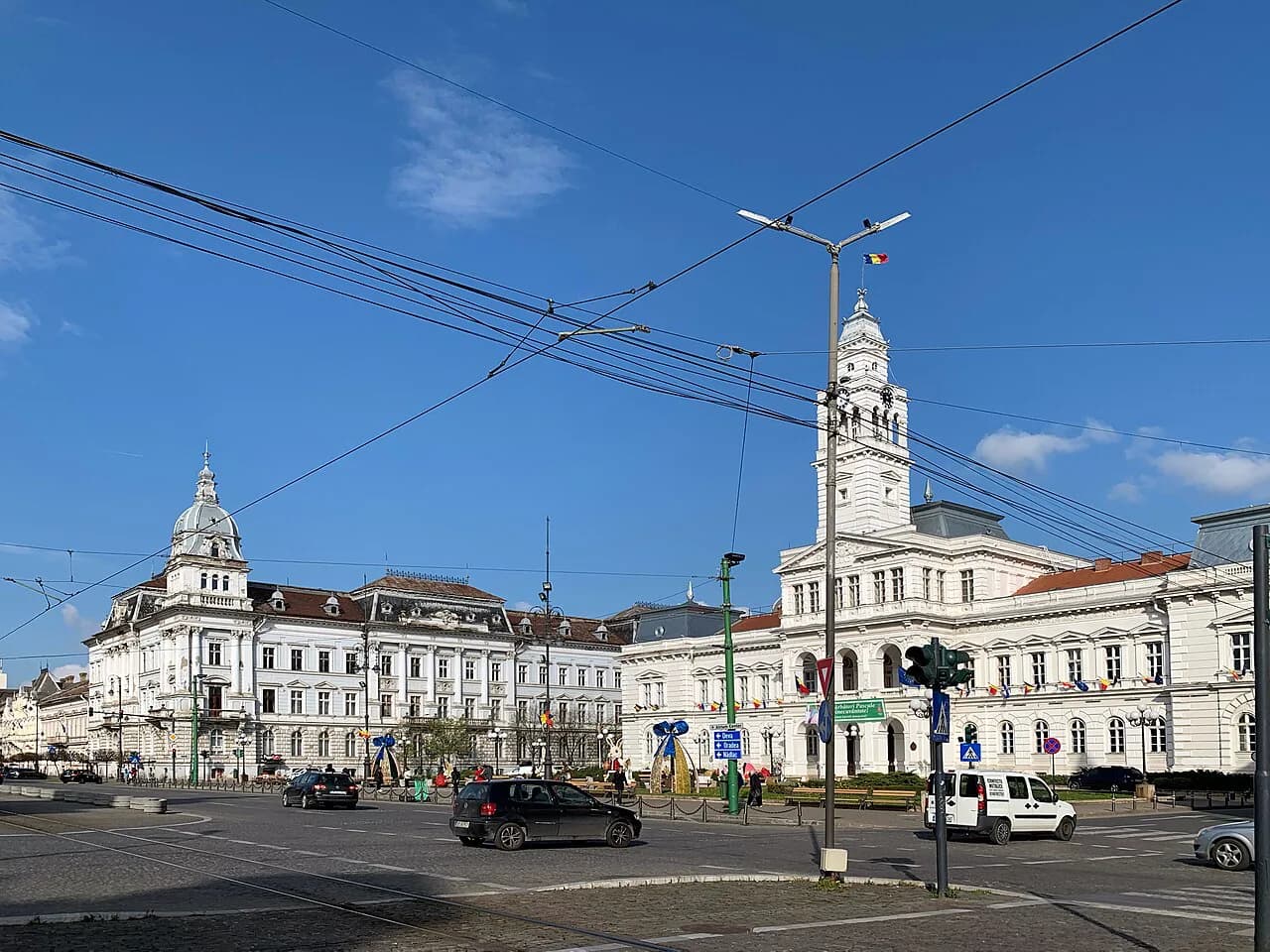
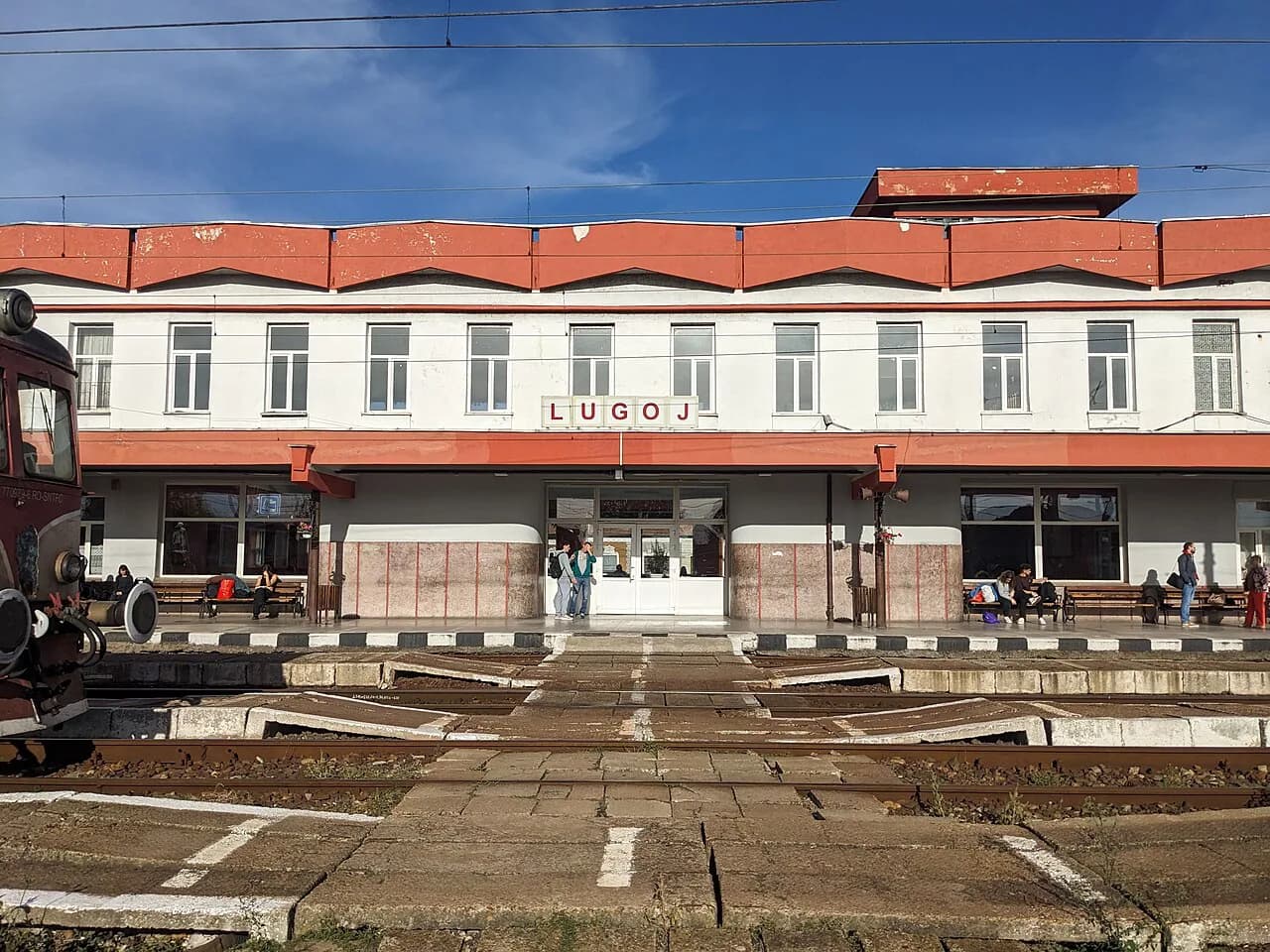
Arad sits on the same rail corridor and Lugoj lies to the east. Brașov and Bucharest are the two cities most visitors pair with the Banat.
Timișoara is not a short hop from Bucharest, so plan it as a separate stop rather than a day trip.
Practical points: tickets, opening days and checking details before you go
Museum opening days vary through the week and around public holidays, so confirm them at the museum entrance or the tourist information office.
The same applies to the Banat Village Museum and the synagogue: check the current position locally.
Which Timișoara shape suits your trip
Choose the one-day loop if Timișoara is a stop between other Romanian cities: the squares and the revolution museum give you the city's character without eating your schedule. Choose two days if you want the art collection, the synagogue and the village museum, which is where the city rewards the extra night.
Either way, walk the centre in sequence from Piața Victoriei south, and keep the revolution sites together. That plan is the difference between seeing Timișoara and merely passing through it.
Explore more Timisoara guides
Frequently Asked Questions
Is Timișoara close to Bucharest?
No, it is not a short hop: Bucharest sits in the south-east of the country and Timișoara in the west near the Hungarian and Serbian borders, so treat it as its own stop rather than a day trip.
What airlines fly into Timișoara?
The city has its own airport outside the centre, but schedules change by season, so check the airport's departures board or a booking site for the routes running from your city on your dates.
Is Timișoara worth visiting?
Yes, if you want a compact Central European-style centre with three distinct squares, a Moorish-revival synagogue and museums devoted to the 1989 revolution. It suits a one- or two-day break rather than a flying visit.
Sources
Useful notes for your next trip
Optional updates to our guides.
You might also like
Continue reading
More guides you'll find useful