Things to Do in Sighișoara: What to See in the Citadel
Plan your time in Sighișoara with the Clock Tower, the Covered Staircase, the hilltop church and the guild towers, plus how long the citadel needs.
On this page
Sighișoara needs half a day for the citadel itself and one night if you want the streets without the midday crowds. The sights sit close together inside the walled upper town: the Clock Tower, Citadel Square, the Covered Staircase, the church and cemetery on the hill, and the surviving guild towers. This guide walks you through the citadel, the Lower Town and the walk up from the railway station, then sets out how long to allow and which fortified churches are realistic as an add-on.
What there is to see in Sighișoara, in short
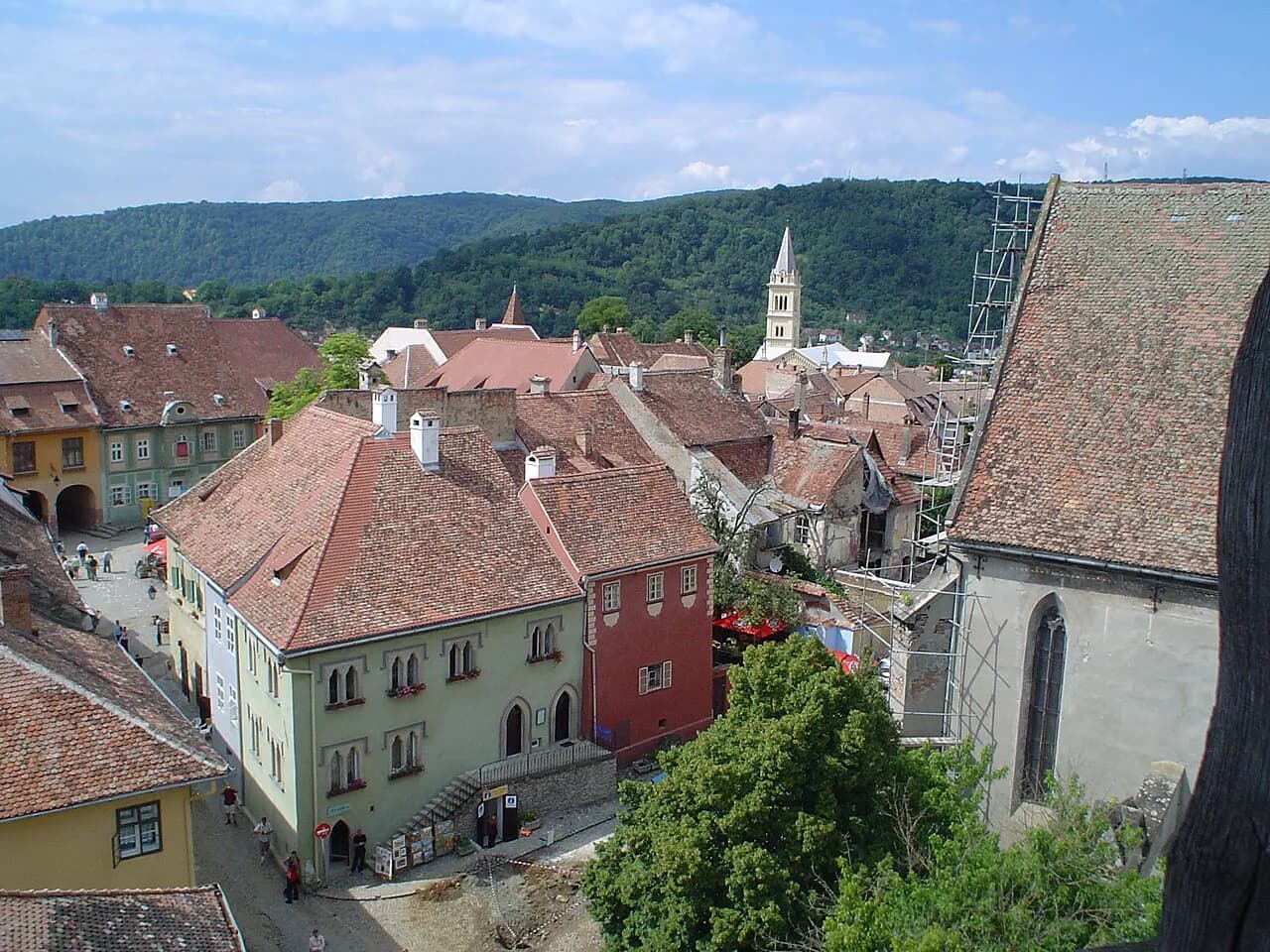
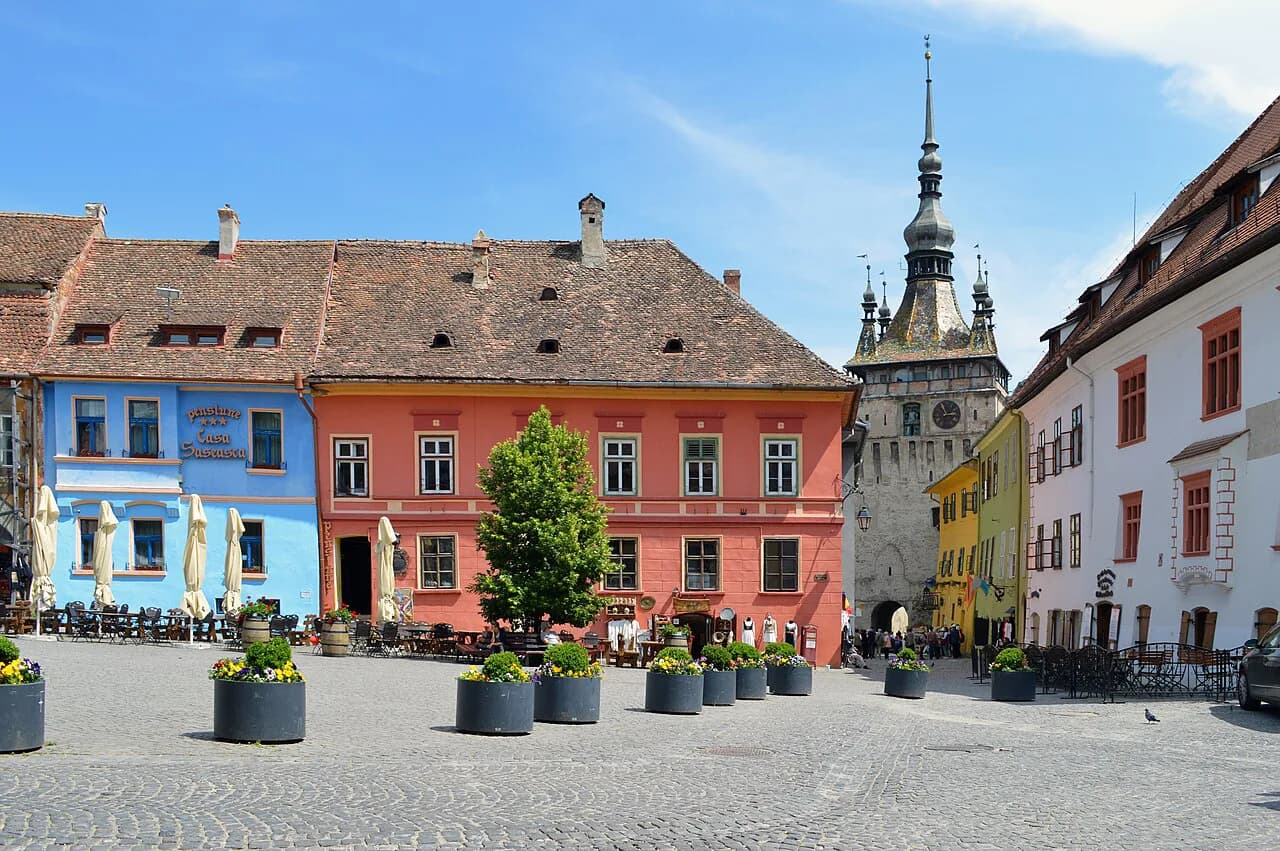
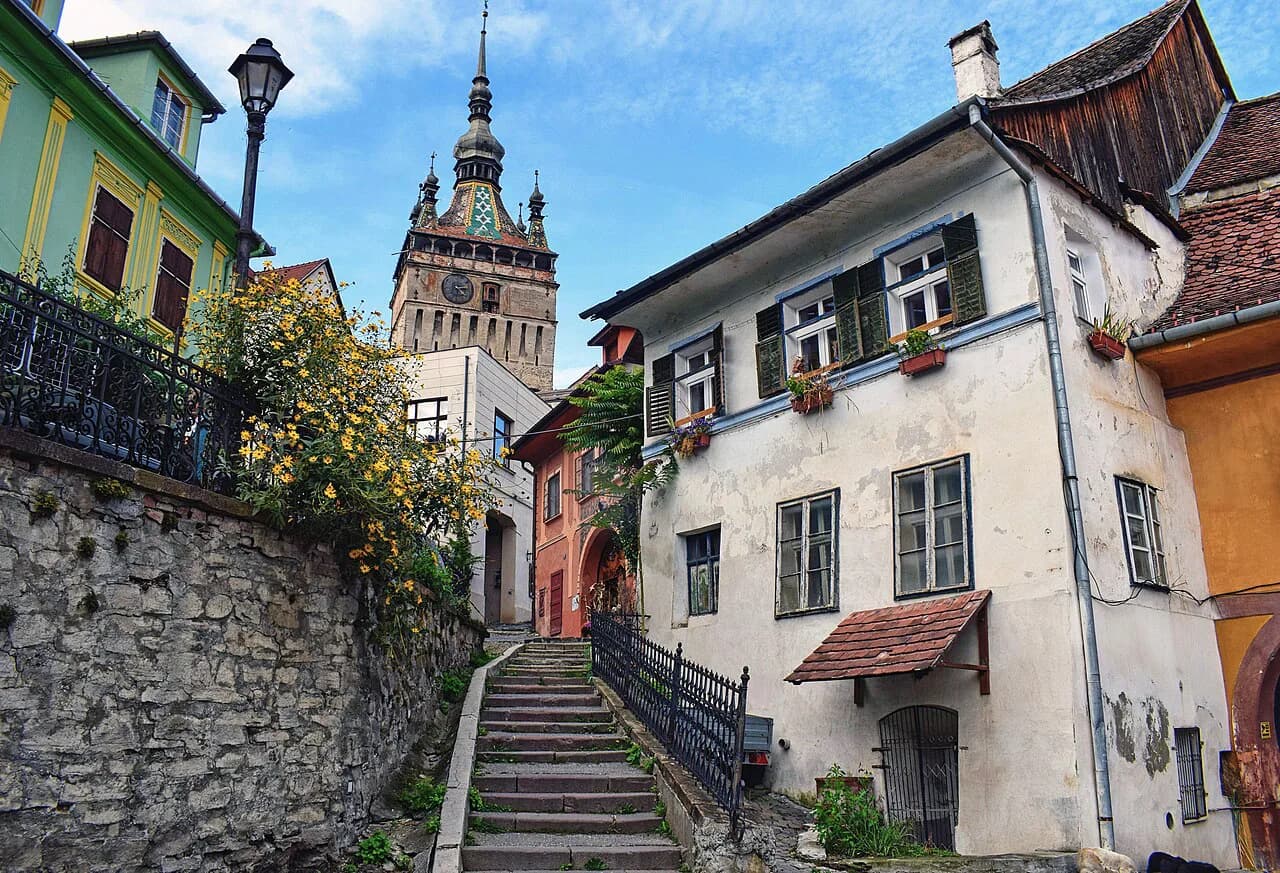
The old town is a fortified citadel on a hill, entered through gateways and threaded with cobbled lanes between coloured houses. Inside it you find the Clock Tower, Citadel Square, Casa Vlad Dracul, the Covered Staircase and, at the top of the hill, the church and its cemetery. The defences survive as city walls with a series of named towers rather than a continuous walkable rampart.
Below the citadel, the Lower Town spreads along the Târnava Mare River, and the railway station sits about a kilometre from the old town gates, a climb of roughly fifteen minutes on foot. Plan your arrival around that ascent: it shapes how you pace the first hour, especially with luggage.
How the town is laid out: Lower Town, the citadel and the hill
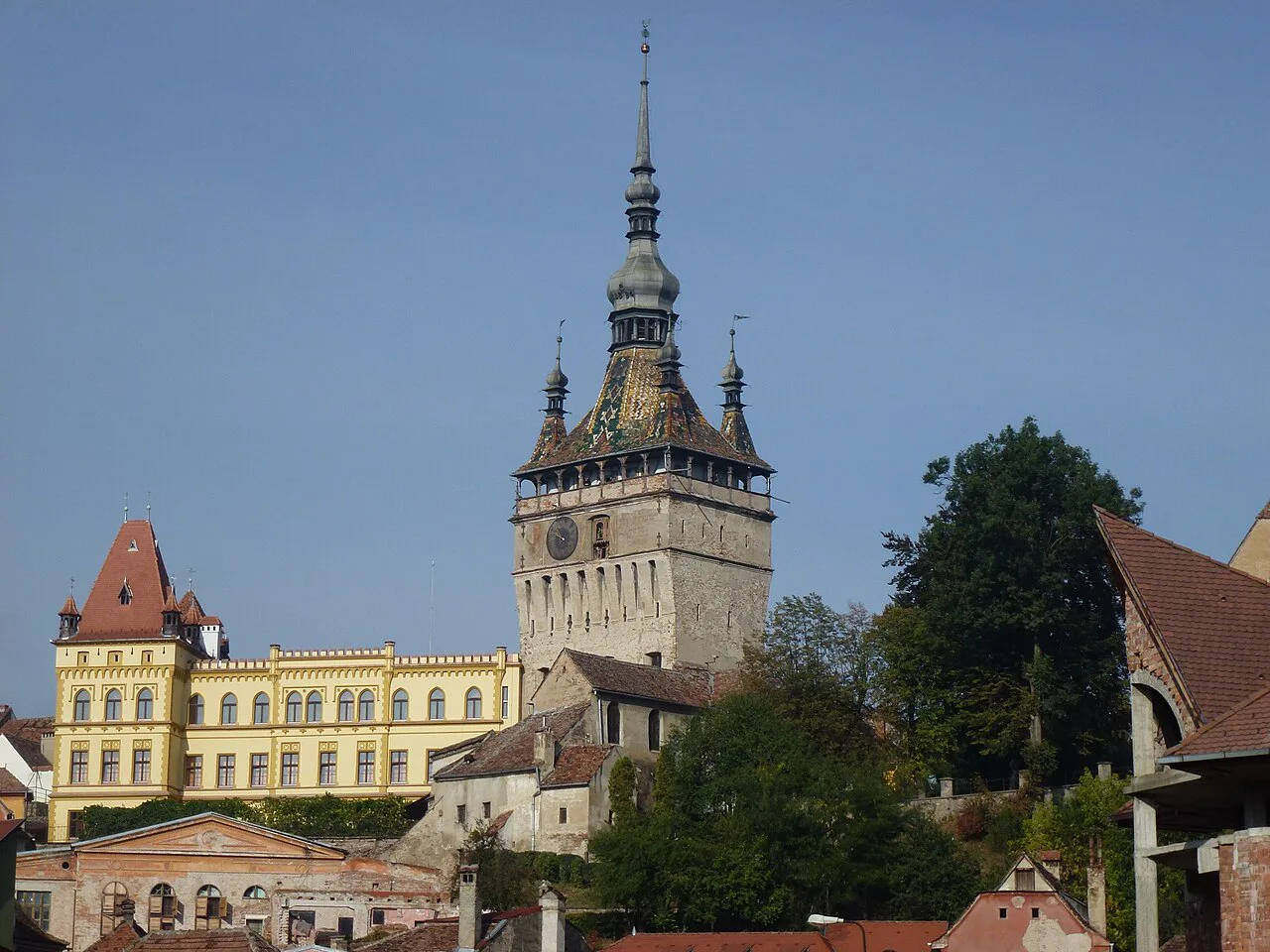
Treat Sighișoara as three levels in town terms: the Lower Town has the station, the river and ordinary streets; the citadel is the fortified upper town above; and the hill rises again behind the citadel to the church and cemetery. Almost everything visitors come for sits on the top two levels, so the practical question is how often you want to walk the slope between them.
Staying inside or just below the citadel removes the climb from your day and lets you see the lanes early and late, when the day-trippers have gone. The trade-off is that parking in the upper town is difficult, so drivers often leave the car below and walk up. A Sighisoara map is worth opening before you book anything, because the distance between the station and the gates looks shorter on paper than it feels.
The Clock Tower and the view from the top
The Clock Tower is the citadel's landmark and its entry point, and climbing it gives you the clearest view over the coloured roofs and the countryside beyond. The stairs are old wood and the ascent is the main effort; the reward is a raised look back across the whole upper town. It is the one sight worth doing first, before the square fills up.
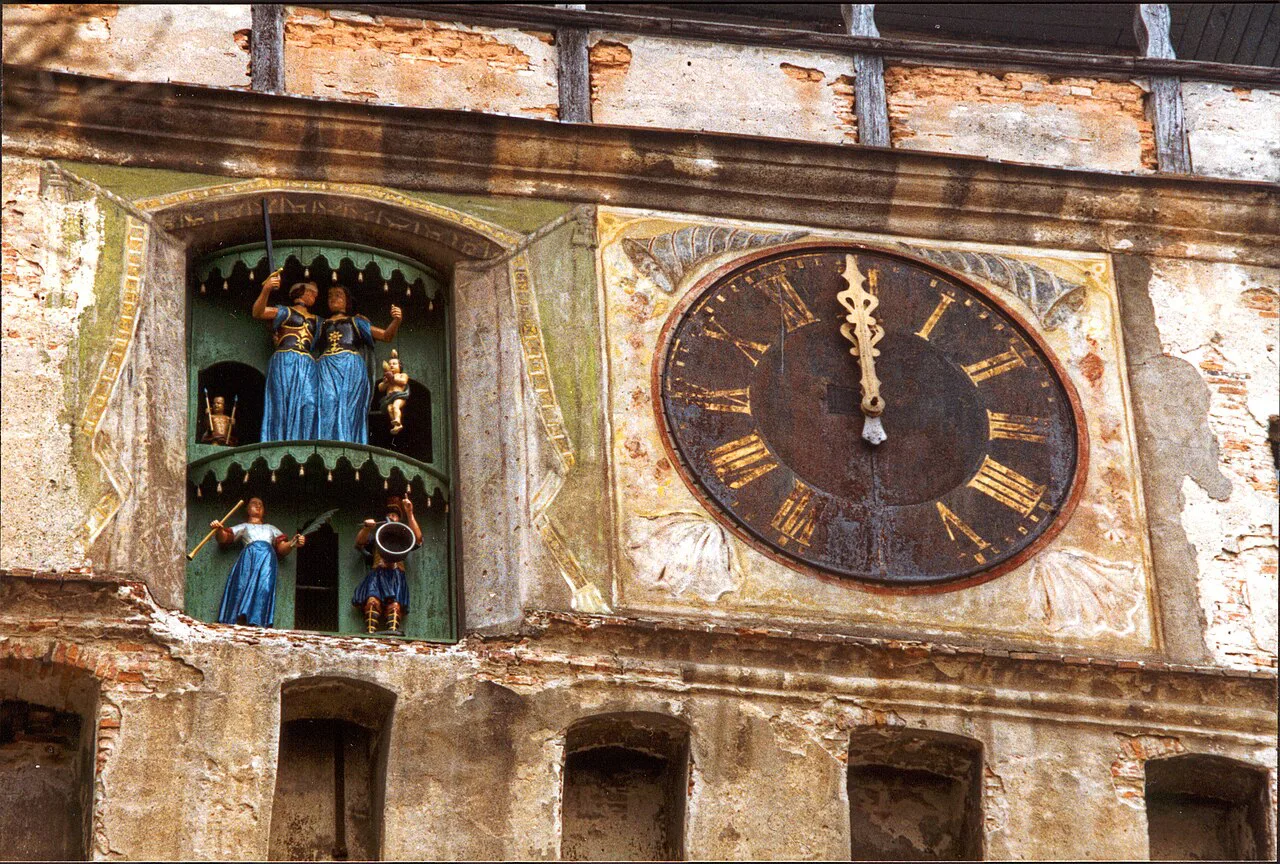
The tower was built in the fourteenth century as the entry point to the medieval citadel, and its clock was restored in 1964 and still runs. Allow a comfortable half-hour if you stop at each level rather than racing to the top. The tower also holds museum displays, which are covered in the separate guide to Sighișoara Museums if you want to build them into the climb.
The Covered Staircase and the church and cemetery on the hill
From the upper town, a covered wooden staircase climbs to the Church on the Hill and its cemetery, sheltering you from rain and sun on the way up. It is a short walk but a steady ascent, and the payoff is the quietest corner of the citadel plus a view back over the roofs. Give it an hour if you want to linger among the graves.
The cemetery is still in use and is the reason the hill feels inhabited rather than preserved, so walk it quietly and keep to the paths. The church itself is a plain Gothic building rather than a decorated showpiece, which is part of why the climb feels calmer than the square below.
The towers and the line of the old walls
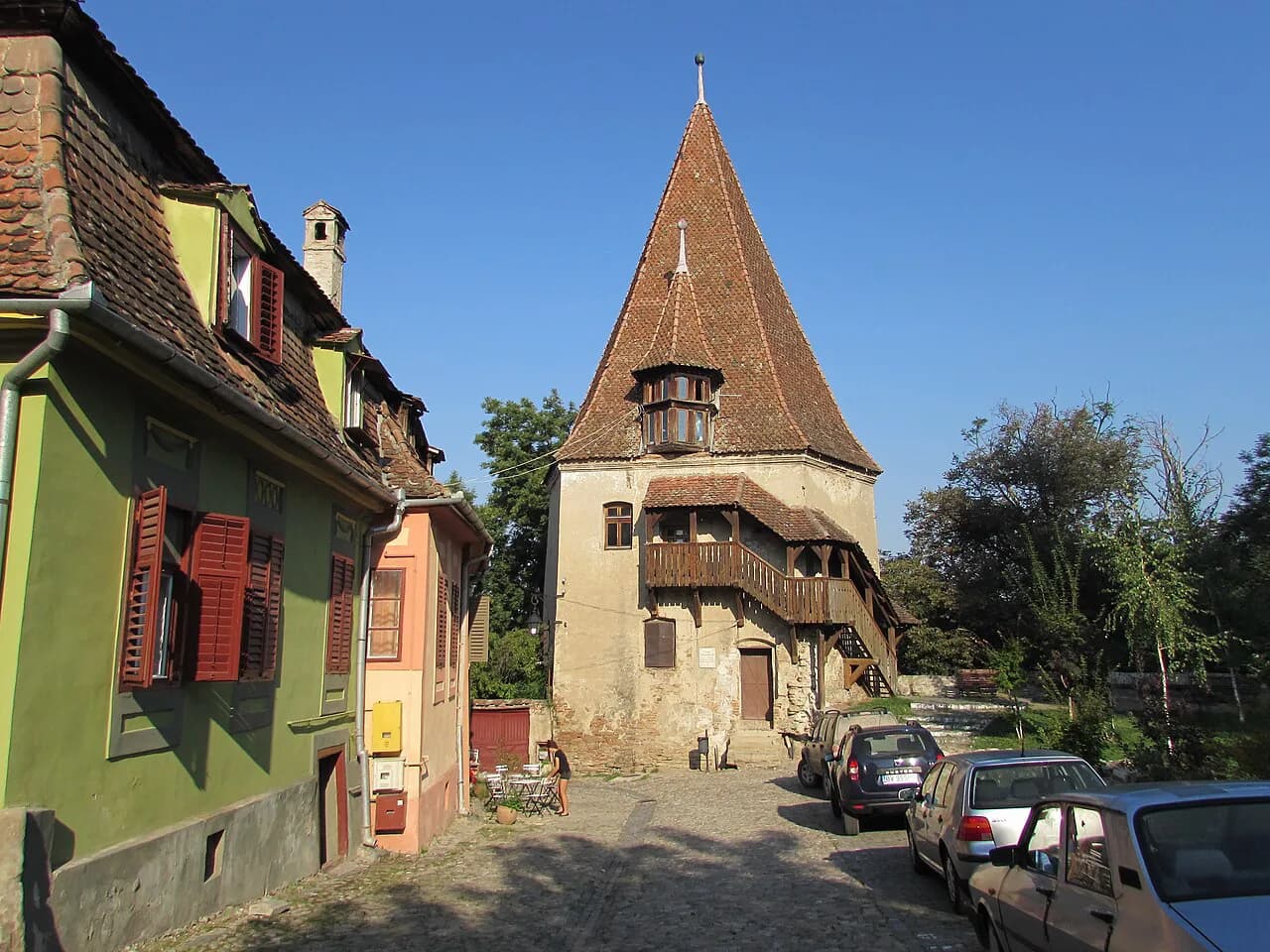
The guilds that defended Sighișoara each maintained a tower, and several survive as named landmarks on the edge of the citadel. Turnul Cizmarilor, the Shoemaker's Tower, is the one often singled out, and it reads best at dusk when the light drops and the lanes empty. Walking the tower circuit takes under an hour and gives you the clearest sense of how the defences worked.
You do not need to see every tower to understand the layout, and a full circuit can start to feel repetitive. Pick three or four on the side nearest your route in and out of the citadel, and use the Sighișoara Map to see which sit closest to the Clock Tower and the square.
Casa Vlad Dracul on Citadel Square and what the visit actually involves
Casa Vlad Dracul on Citadel Square is the building associated with Vlad III, born in 1431, and it is the town's Dracula hook. The visit is small: a room fitted out with red drapes and an empty coffin, with a restaurant on the same site, and it draws poor reviews for how little there is to see. Treat it as a five-minute curiosity rather than the reason to come.
Keep the historical Vlad III apart from Bram Stoker's novel: Stoker's Dracula is fiction, and the connection between the two is a later piece of marketing rather than a fact of the building's story. If that distinction interests you, the background is set out in the history guide before you pay to go in.
The town hall and the squares of the old town
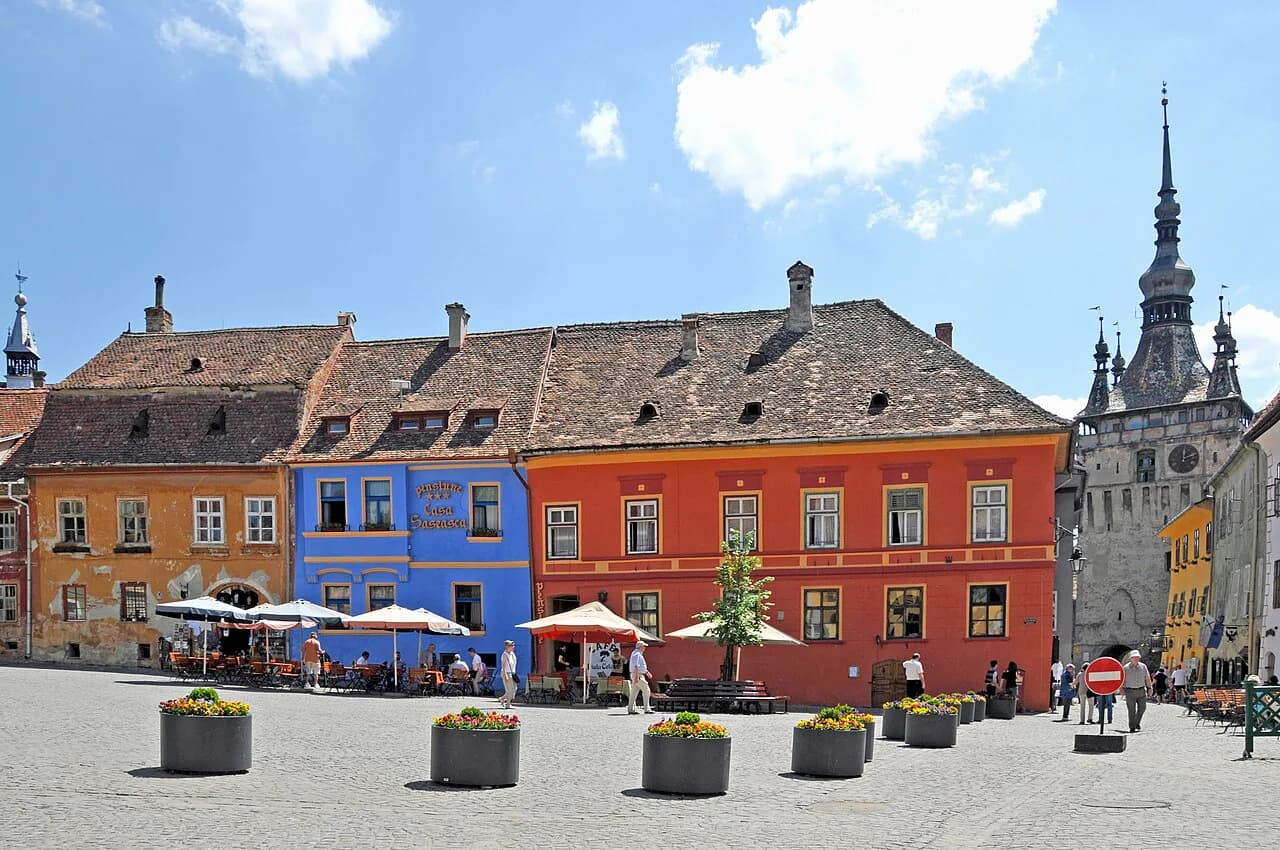
Citadel Square is the heart of the upper town, lined with the Clock Tower, Casa Vlad Dracul and the town hall, and it is where you will want to sit once you have climbed. The square is small enough to cross in a couple of minutes, which is why the citadel never feels crowded in the way a big-city centre does.
Beyond the walls, the Lower Town has its own squares and streets where ordinary life continues, and a wander down there gives you a break from the heritage circuit. A Sighisoara walking tour is the efficient way to link the upper and lower towns if you want the layout explained once rather than piecing it together yourself.
Lower Town and the walk up from the railway station
Trains arrive at a station roughly a kilometre from the old town, about fifteen minutes on foot and uphill for much of it. With a suitcase that climb is unpleasant, and a taxi for the last stretch is the sensible call. Trains from the main Transylvanian cities serve Sighișoara, but the network is slow and Bucharest–Brașov–Sibiu journeys can require a change at Mediaș, so check connections before you commit to a tight schedule.
Driving is the simplest way to reach Sighișoara, since the main road through the region passes the town, and it also frees you to add a fortified church the same day. The catch is parking: leave the car in the Lower Town and walk up rather than hunting for a space inside the citadel.
How many days Sighișoara needs, and whether to stay overnight
Most visitors see Sighișoara as a few-hour stop, usually on a day trip from Brașov, and that is enough for the Clock Tower, the square and the Covered Staircase. The argument for staying is timing rather than quantity: early morning and late afternoon are when the citadel is quiet and the place makes sense. One night covers it comfortably, and a second day inside the walls gives diminishing returns.
If you are weighing up where to base yourself in Transylvania, Brașov has more to fill a longer stay while Sighișoara is the sharper, smaller experience. Build the trip around which one you would rather wake up in rather than trying to give both equal time.
Viscri, Biertan and the fortified churches within reach
The realistic add-on beyond the town is a Saxon fortified church, and Viscri is the one most often paired with Sighișoara. Reaching it without a car means a group tour or a long, indirect journey, so the transport is the deciding factor rather than the distance. Tours combining Sighișoara with Viscri and Rupea, or with Biertan, run from the larger Transylvanian cities.
With your own car you can link a church visit to the drive in or out of Sighișoara and keep the day flexible. Without one, pick a single church and accept that it will take most of the day. The Sighisoara Attractions hub lists the sites in and around the town so you can match one to your route.
Getting there and getting around on foot
Inside the citadel everything is walkable, and cobbles plus steps make comfortable shoes the practical choice rather than a precaution. The train station sits below the town, and the climb between the two is the one part of the day worth planning around. From Cluj-Napoca, the train runs roughly every two hours and takes a little over three hours; from Brașov there are hourly services of varying speed and comfort, and the drive can slow badly on the E60 at weekends.
Check fares and timetables with the train operator before you travel rather than relying on figures from someone else's trip. If you are coming from Cluj-Napoca, it is worth seeing whether the city's own sights fit your itinerary on the way through, since Unirii Square and the rest of the centre reward a night of their own.
Should you stay the night in Sighișoara?
Stay one night if you can. The citadel is small enough to see in half a day, but the early morning and late afternoon are when the lanes empty and the town stops feeling like a stop on a coach route. Book somewhere inside or just below the walls so the climb is not part of every outing.
If your time is tight, prioritise the Clock Tower, Citadel Square and the Covered Staircase, then walk one stretch of the towers on your way out. Leave Casa Vlad Dracul until last, and add a fortified church only if you have a car or a tour booked — reaching Viscri without one is a long and indirect business. Confirm the Clock Tower's opening times and admission before you climb.
Explore more Sighisoara guides
Frequently Asked Questions
Is Sighișoara worth visiting?
Yes, if you want a compact walled town you can walk in half a day. The Clock Tower, Citadel Square and the Covered Staircase up to the church on the hill are all within a few minutes of each other, and staying overnight gives you the quiet streets that day-trippers miss.
What is Sighișoara famous for?
Its fortified citadel, the Clock Tower and the guild towers, and the building on Citadel Square linked to Vlad III, born in 1431. That last connection is often marketed through Bram Stoker's Dracula, but the novel is fiction and separate from the historical figure.
Can you see Sighișoara as a day trip from Brașov?
Yes, and many people do. Trains run hourly from Brașov with different classes and speeds, and the drive takes a little under two hours outside the worst weekend congestion on the E60. The trade-off is that you arrive with the crowds and leave before the citadel empties.
Sources
Useful notes for your next trip
Optional updates to our guides.
You might also like
Continue reading
More guides you'll find useful