Things to Do in Sibiu: Squares, Towers, Churches and Museums
Plan a Sibiu city break with the main squares, the Council Tower, the Evangelical and Orthodox cathedrals, the Brukenthal Museum and the Astra Museum.
On this page
One full day covers the highlights of Sibiu's old town, because the three main squares, both cathedrals, the Council Tower and the Brukenthal Museum sit within a few minutes of each other on foot. This guide works through the city by level and by square, so you can plan a walking order rather than tick off a flat list, and it separates the free sights from the paid ones.
The old town splits into the Upper Town and the Lower Town, and the layout is easier to follow on paper before you arrive. Pair this page with the Sibiu map to see how Piața Mare, Piața Mică and Piața Huet connect, then read on for the towers, churches and museums that fill them.
What Sibiu is known for
Sibiu is a Saxon town in Transylvania, founded by German settlers, and its old town is built on two levels: the Upper Town on the higher ground and the Lower Town below it. German and Hungarian influences shaped the architecture, which is why the streets and squares feel closer to a central European town than to much of Romania around it.
The compact core is what makes a short break work here: travellers report covering the old town highlights in an afternoon and evening, with a few extra hours the next day. Treat that as the baseline for planning, and add time only for the museums and the Astra Museum outside the centre.
How the old town is laid out: Piața Mare, Piața Mică and Piața Huet
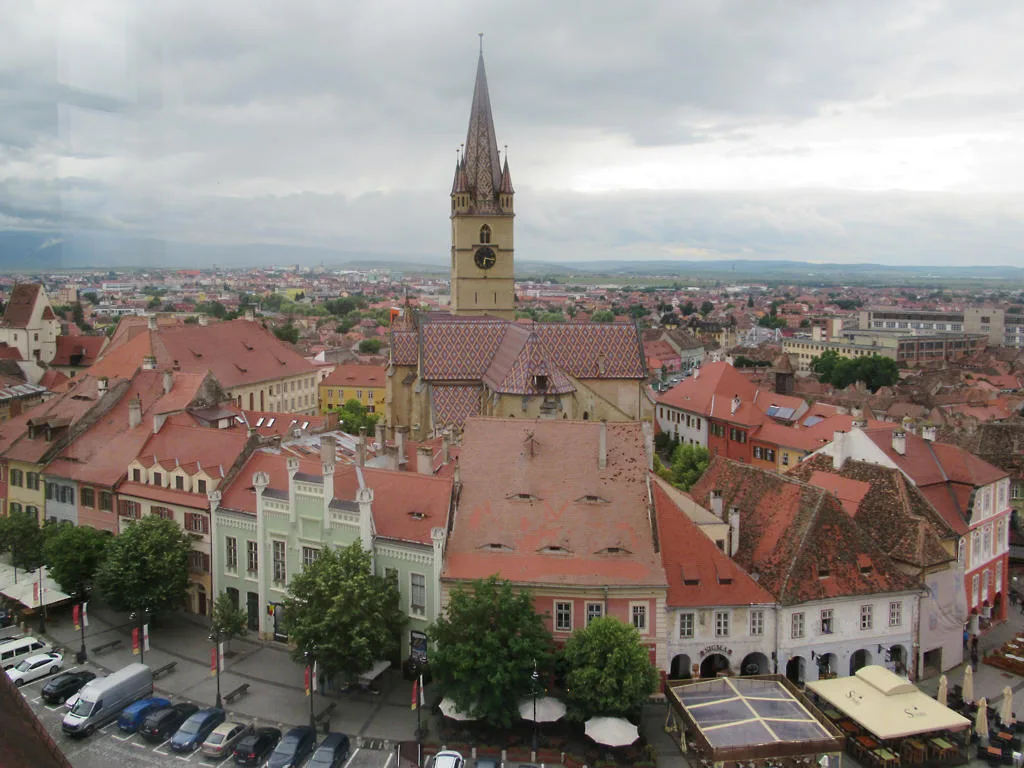
Three squares form the spine of the Upper Town. Piața Mare, the Large Square, is the central open space; Piața Mică, the Small Square, runs alongside it and holds the Council Tower; Piața Huet sits a short walk away and is dominated by the Evangelical Cathedral. You can move between all three in minutes, which means the order you visit them in matters less than when you climb the tower. If you enjoy this square-by-square approach, the things to do in Brasov follow a similar pattern around Piața Sfatului.
Getting the levels right saves legwork. Start in the Upper Town, where the squares cluster together, then descend to the Lower Town for the Bridge of Lies and the streets below, and climb back once rather than shuttling up and down through the day.
Piața Mare (Large Square): the Brukenthal Museum, the Roman Catholic Church and the pastel facades
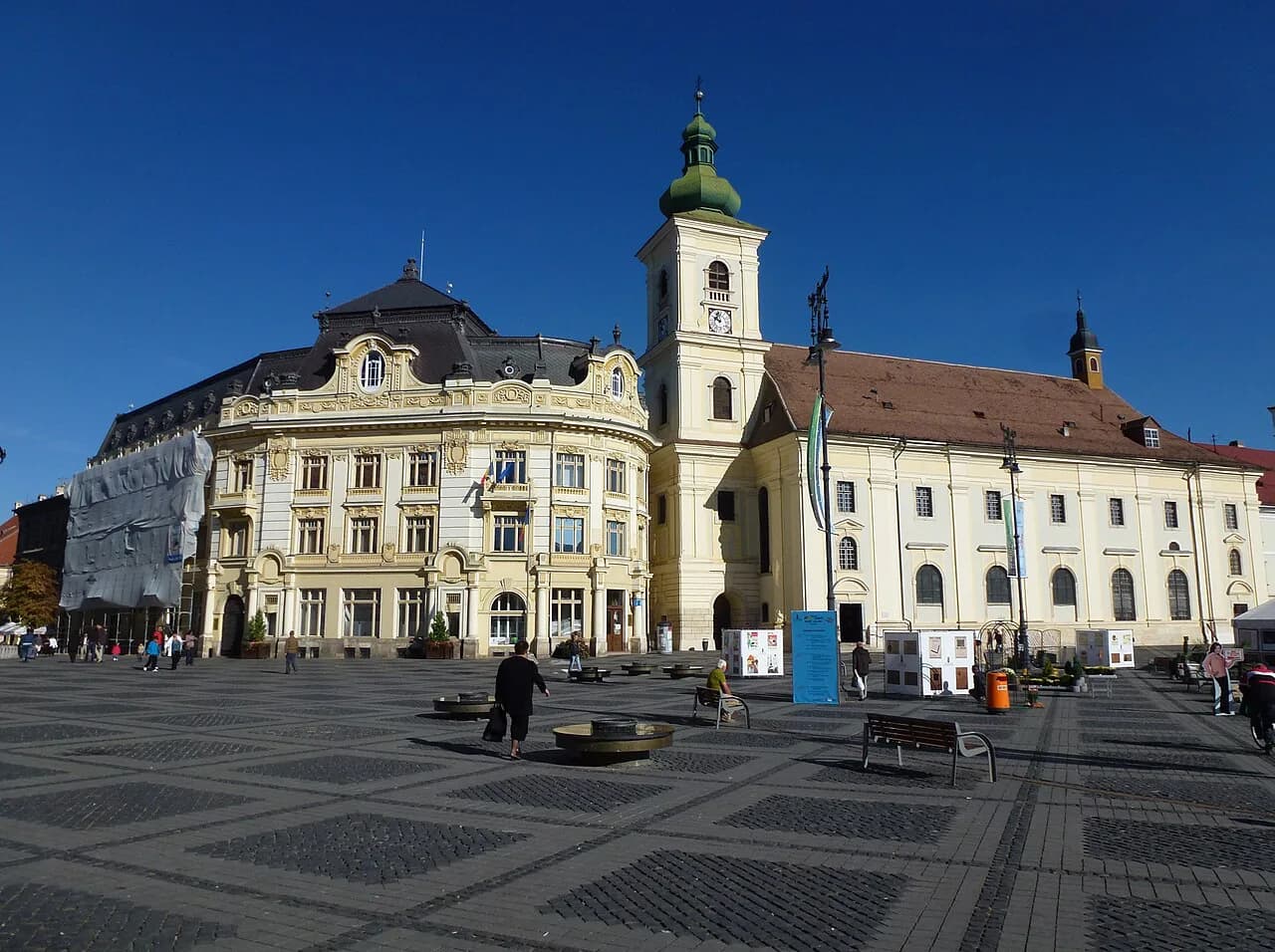
Piața Mare is the square most visitors reach first, and it holds several of the buildings worth seeing in their own right. The Brukenthal Museum occupies one of the most impressive palaces on the square, and the Roman Catholic Church, Biserica Romano-Catolică, stands here too; it is free to enter.
Allow time simply to look at the facades: pastel-coloured houses line the edges, and the Bank of Transylvania building in soft peach and yellow is one of the more photographed. Cafés and restaurants sit along the sides, so the square works as a rest stop between the tower and the cathedral.
Piața Mică (Small Square) and the Council Tower
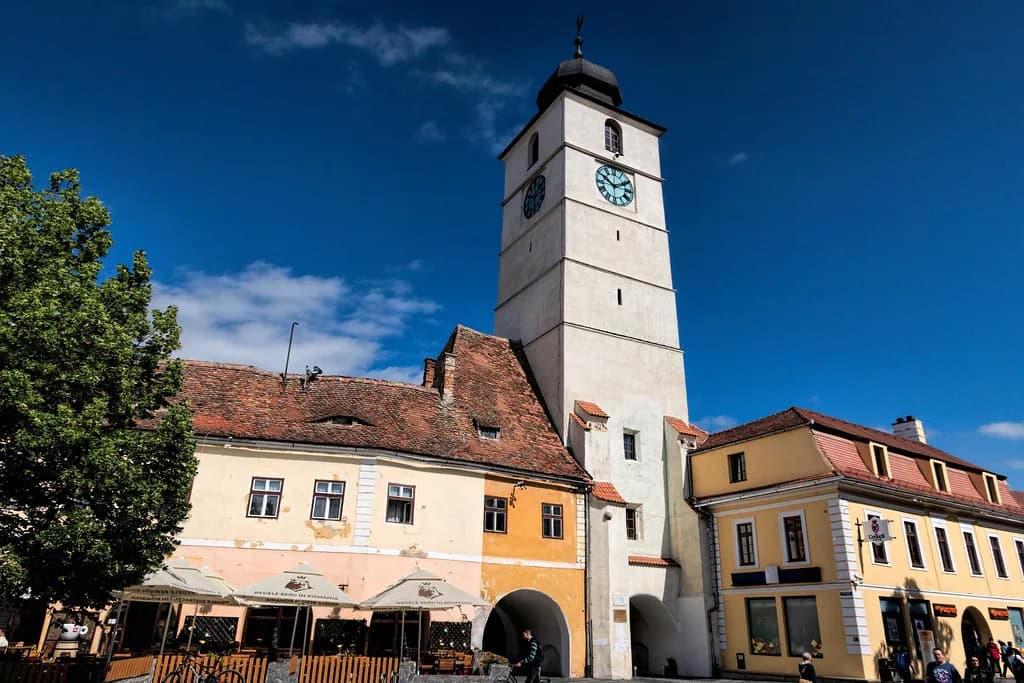
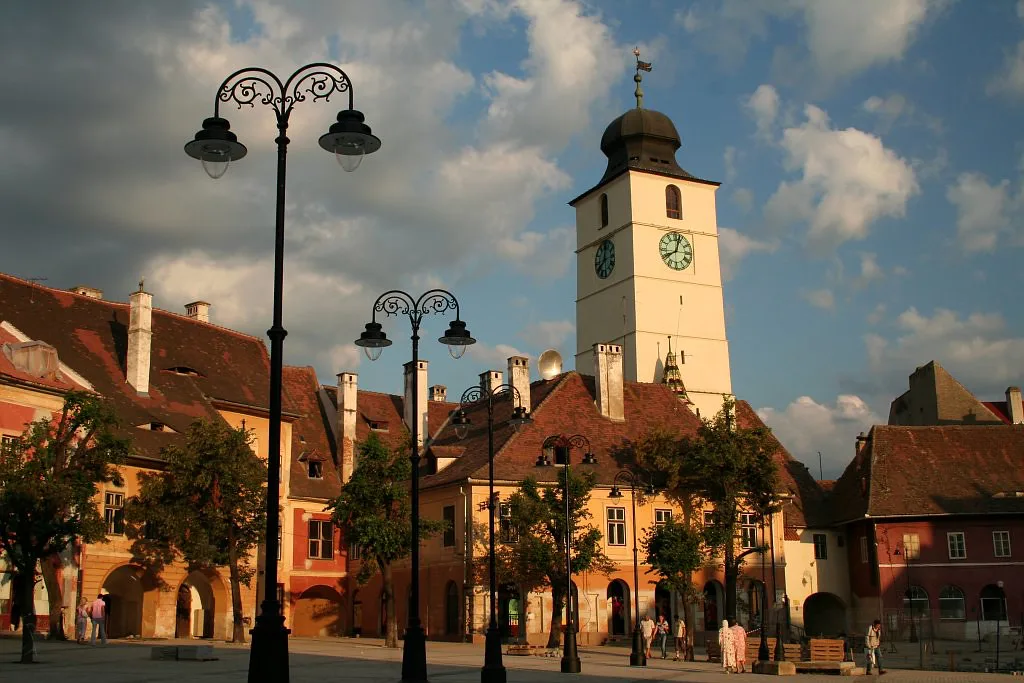
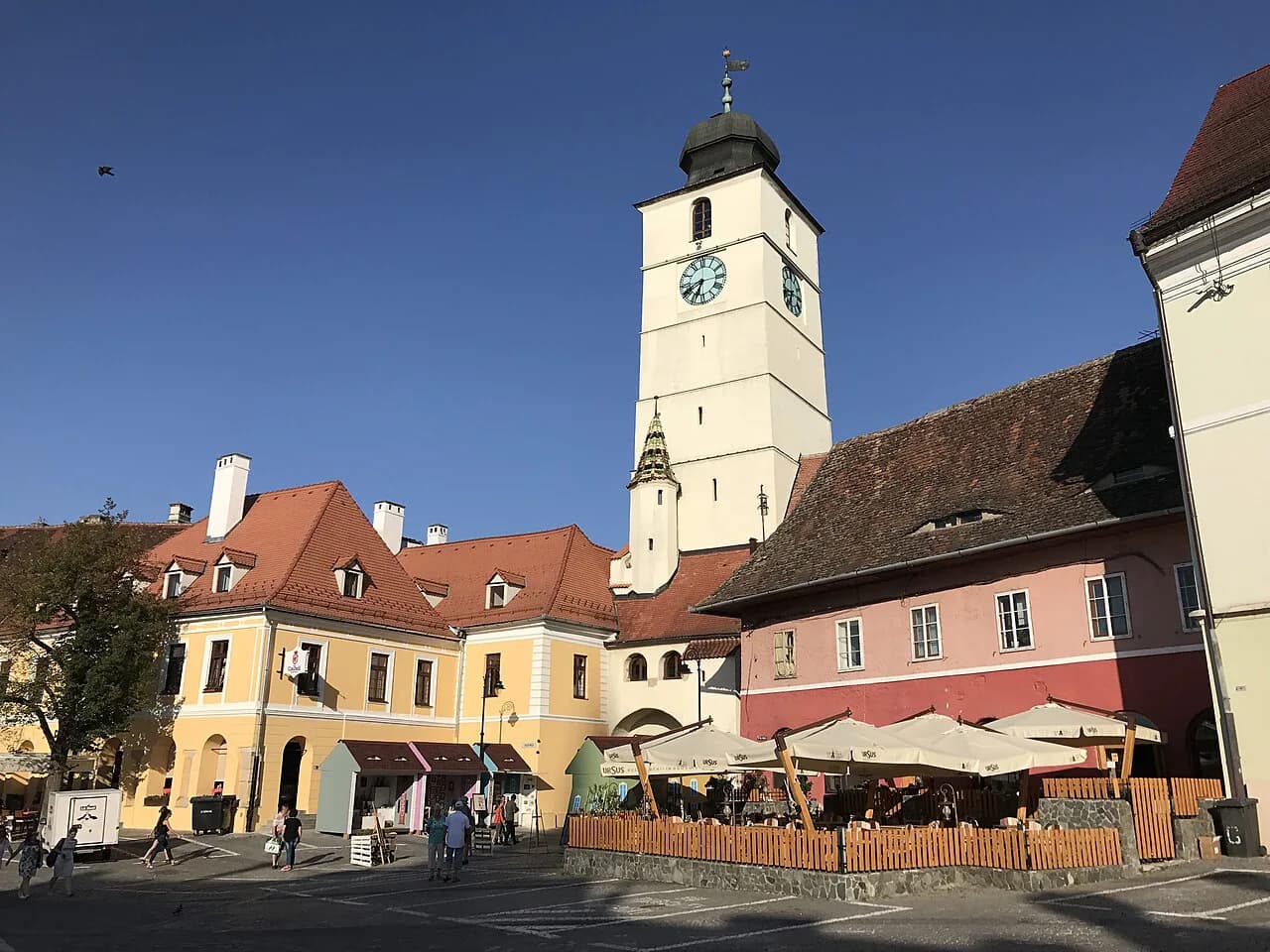
The Council Tower, Turnul Sfatului, stands between Piața Mică and Piața Mare, with the entrance on the side of the smaller square. The staircase is narrow and climbs through seven floors, so expect to be out of breath by the top; the payoff is a panorama over the red rooftops of the old town and across the surrounding landscape.
One account gives entry at 2 lei and suggests allowing about 30 minutes for the climb and the view. Treat that figure as the price that account reports rather than a confirmed current rate, and check the ticket price at the door. Views are framed through windows, so the experience is closer to peering out of a historic tower than standing on an open platform.
Do the tower early in the day if you want to understand the city's layout before walking it; the view makes the relationship between the squares and the Lower Town obvious. Piața Mică itself is lined with cafés and restaurants, which makes it a sensible place to pause after the stairs.
The Bridge of Lies and the way down into the Lower Town
The Bridge of Lies is a small iron bridge dating from 1859, and it gives a view down into the Lower Town. The legend, as it is told to visitors, is that the bridge creaks if someone walks across it telling a lie; treat that as a story attached to the place rather than a fact.
To see the bridge from a different angle, take the stairs beside the old building at its end and look back up from below. The descent also drops you into the Lower Town streets, which are quieter than the squares above and worth half an hour of wandering before you climb back.
Piața Huet and the Evangelical Lutheran Cathedral
Piața Huet is the square to prioritise if you only see one church interior in Sibiu. The Evangelical Lutheran Cathedral dominates it, and its spire is visible from across the old town, so it works as a landmark while you navigate.
The cathedral is a working place of worship, so visits can coincide with services; if one is in progress, look in quietly or come back later rather than treating it as a sight to rush through. The square outside is small and calm compared with Piața Mare, which makes it a natural breather between the busier stops.
The Orthodox Cathedral (Holy Trinity Cathedral)
The Orthodox Cathedral, known as the Holy Trinity Cathedral, is the other major church in the old town and sits apart from the Piața Mare cluster. Its interior style differs sharply from the Evangelical Cathedral, so seeing both gives a fuller picture of the city than choosing one.
The Roman Catholic Church in Piața Mare is free to enter, so a short break can be built around the squares and the Bridge of Lies without committing to ticket costs. Save your paid time for the Council Tower and the Brukenthal Museum.
Houses with eyes: the attic windows above the old streets
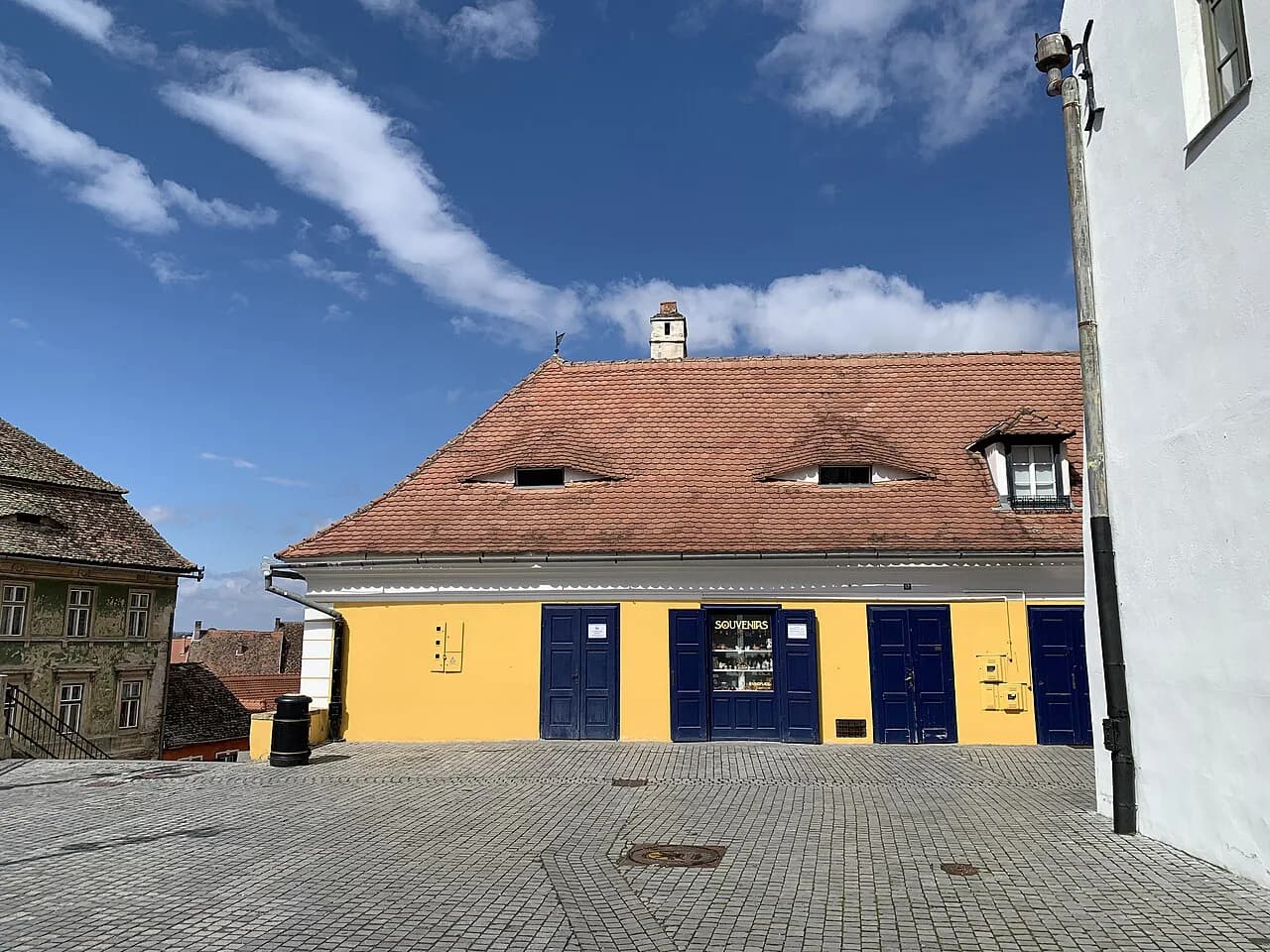
Look up above the street line and you will see the feature Sibiu is known for: small window openings set into the roofs that read as eyes watching the street. They appear across both the Upper and Lower Towns, though not on every building, so the search is part of the walk rather than a single stop.
The openings were built as ventilation shafts, designed to cool the attic space; some of these houses date from the 15th century. The unsettling effect is a bonus of the design rather than its purpose, and knowing that makes the streets easier to read as you go.
The old town walls and towers, including the Stairs Tower (Turnul Scărilor)
Remnants of the old town walls survive, and walking them gives you a different view of the city from the squares. The Stairs Tower, Turnul Scărilor, is one of the named stops on that circuit and connects the levels of the old town.
Build this into the walk down to the Lower Town rather than treating it as a separate outing. The walls and towers are outdoor sights, so they suit the middle of a day when you want a break from interiors.
Brukenthal Museum: what is inside and who the palace belonged to
The Brukenthal Museum fills one of the grandest buildings on Piața Mare and holds a large art collection alongside books, minerals, engravings and coins. It was founded in 1790 and opened to the public in 1817, and the palace itself belonged in the 18th century to Samuel von Brukenthal, governor of the Grand Principality of Transylvania under the Habsburg Empire.
The building is as much the attraction as the collection, so even travellers with limited interest in paintings get something from the state rooms. If you are choosing between paid sights on a one-day visit, decide between the museum interior and the tower climb depending on whether you prefer art or a rooftop view.
The Astra Museum and what it adds to a Sibiu trip
The Astra Museum sits outside the old town and is the reason to consider a second day rather than squeezing everything into one. It is the stop that a walking route around the squares cannot reach, so give it its own block of time instead of bolting it onto an afternoon in the centre.
If your schedule only allows the compact core, leave Astra for a return visit and use the time to walk the Lower Town properly. The trade-off is simple: one day gives you the squares, towers and churches; a second day gives you the museum and the villages beyond the city.
How many days Sibiu needs, and how to split a day between the squares, towers and museums
One day is enough for the old town's main sights, and that is how most short breaks here are shaped. A sensible order is Piața Mare and the Brukenthal Museum in the morning, the Council Tower before the queues build, then Piața Huet and the Evangelical Cathedral, before crossing the Bridge of Lies into the Lower Town in the afternoon.
A second day makes room for the Astra Museum and for the villages and castles beyond Sibiu. It also lets you slow down: the city rewards wandering the back lanes as much as following a list of sights.
Getting there and getting around the old town on foot
Sibiu's old town is compact enough to cover on foot, and walking is the only sensible way to move between the squares, the tower and the cathedrals. Wear shoes you can climb stairs in, because the Council Tower and the descent to the Lower Town both involve steps.
Guided options exist if you want the layout explained as you go. A Sibiu old-town exploration game and tour runs for up to about two hours and fifteen minutes and can be booked with free cancellation, which suits a first morning before you explore alone.
Castles and villages within reach of Sibiu for a second day
Sibiu works as a base for the surrounding Transylvanian sights, and organised excursions run from the city to Sighișoara, Mediaș and Biertan, as well as along the Transfăgărășan road to Bâlea Lake. These are full-day outings, so they replace rather than supplement a day in the old town.
Booking a tour removes the transport problem but fixes your timetable, so weigh that against hiring a car and setting your own pace. Either way, keep the old town day separate: the squares deserve unhurried time rather than an hour stolen before a departure.
Which sights to book and which to walk to
Build your Sibiu day around the free sights first: Piața Mare, Piața Mică, Piața Huet, the Roman Catholic Church and the Bridge of Lies, plus the streets with the roof windows, cost nothing but time. Then decide where your paid hours go, choosing between the Council Tower's narrow seven-floor climb and the Brukenthal Museum's collection in Samuel von Brukenthal's palace.
Add a second day for the Astra Museum and one of the excursions into the villages and castles around the city. Check current ticket prices at the door, and confirm tour departure times and meeting points with the tour company before you travel.
Explore more Sibiu guides
- Avrig: Brukenthal's Summer Palace and the Town on the Sibiu to Făgăraș Road
- Cisnădioara
- Houses with Eyes in Sibiu
- Lower Town Sibiu (Orașul de Jos)
- Museums in Sibiu
- Rășinari
- Sibiel: What to See in the Village of Glass Icons Near Sibiu
- Sibiu City Walls
- Sibiu Itinerary
- Sibiu Map
- Sibiu Old Town
- Villages Near Sibiu
- Free Things to Do in Sibiu
- How many days in Sibiu do you need?
- One Day in Sibiu
- Shopping in Sibiu
- Sibiu Cathedral
- Sibiu History
- Sibiu Walking Tour
- Sibiu Weekend
Frequently Asked Questions
Is Sibiu, Romania worth visiting?
Yes, if you want a compact old town you can cover on foot in a day. The three squares, the cathedrals, the Council Tower and the Brukenthal Museum sit within a few minutes of each other, and the Lower Town adds a quieter half-day below them. The trade-off is scale: this is a city-break stop, not a place that fills a week on its own.
What is Sibiu famous for?
Sibiu is known for its Saxon old town built on two levels, its three linked squares in the Upper Town, and the small attic windows above the streets that read as eyes. The Council Tower, the Evangelical Lutheran Cathedral in Piața Huet and the Bridge of Lies are the landmarks visitors seek out first.
Sources
Useful notes for your next trip
Optional updates to our guides.
You might also like
Continue reading
More guides you'll find useful