
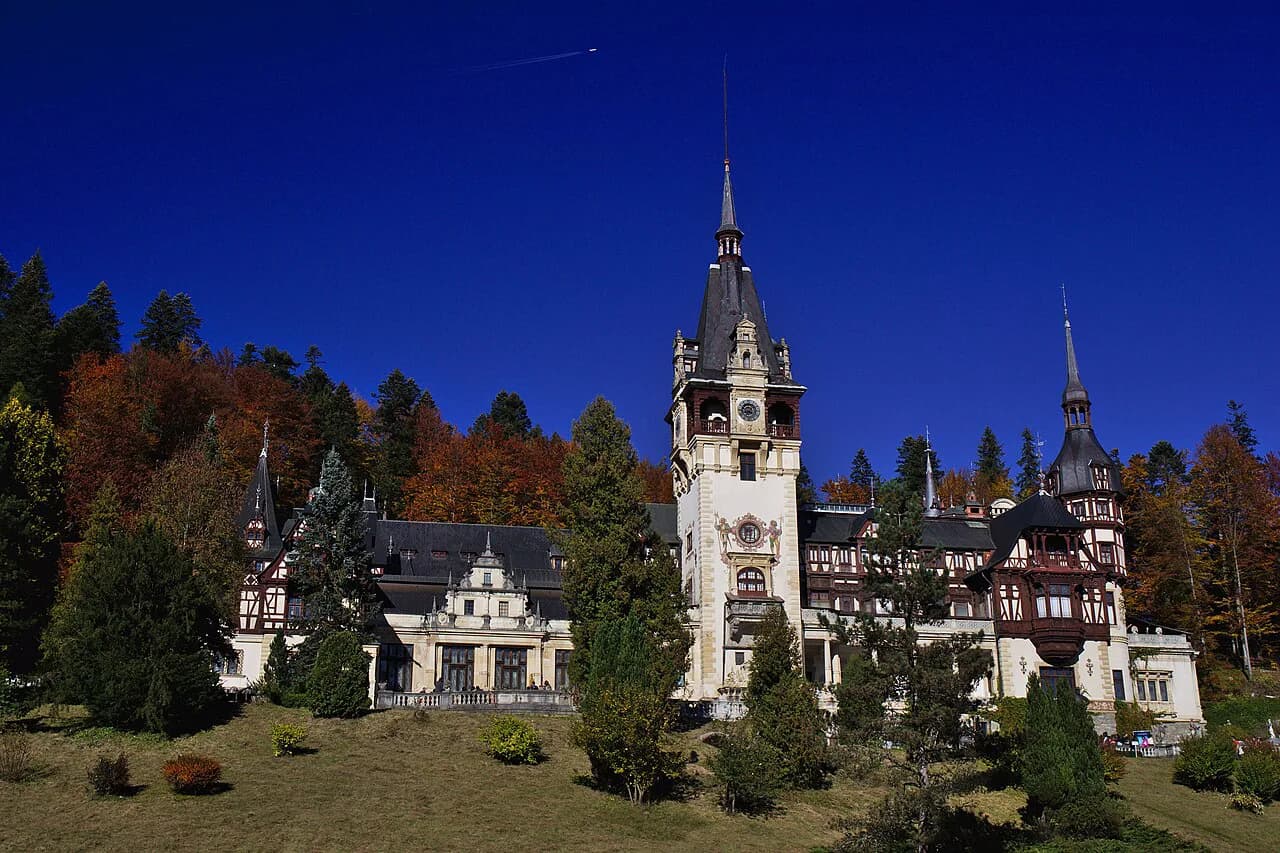
Peleș Castle: A Visitor's Guide to Sinaia's Royal Castle

Allow about half a day for Peleș Castle: the walk up from Sinaia station takes roughly 30 to 45 minutes, and the interiors and the royal gardens deserve at least a couple of hours between them. The castle sits above the town in Prahova County, and it was built as the summer residence of King Carol I: foundation work ran from 1873 to 1875, construction began in 1875, the first inauguration took place in 1883, and the castle was extended and modernised until Carol's death in 1914. This guide covers where the castle stands, how to reach it by train or car, which rooms to pause in and how long to budget.
Where Peleș Castle stands in Sinaia
Peleș sits on the wooded slope above Sinaia, a mountain resort in Prahova County, with the castle complex laid out across the hillside rather than in the town centre. Carol I, a German prince who became Romania's ruler in 1866 and later its king, chose the site for its mountain scenery, which reminded him of the German landscapes he came from.
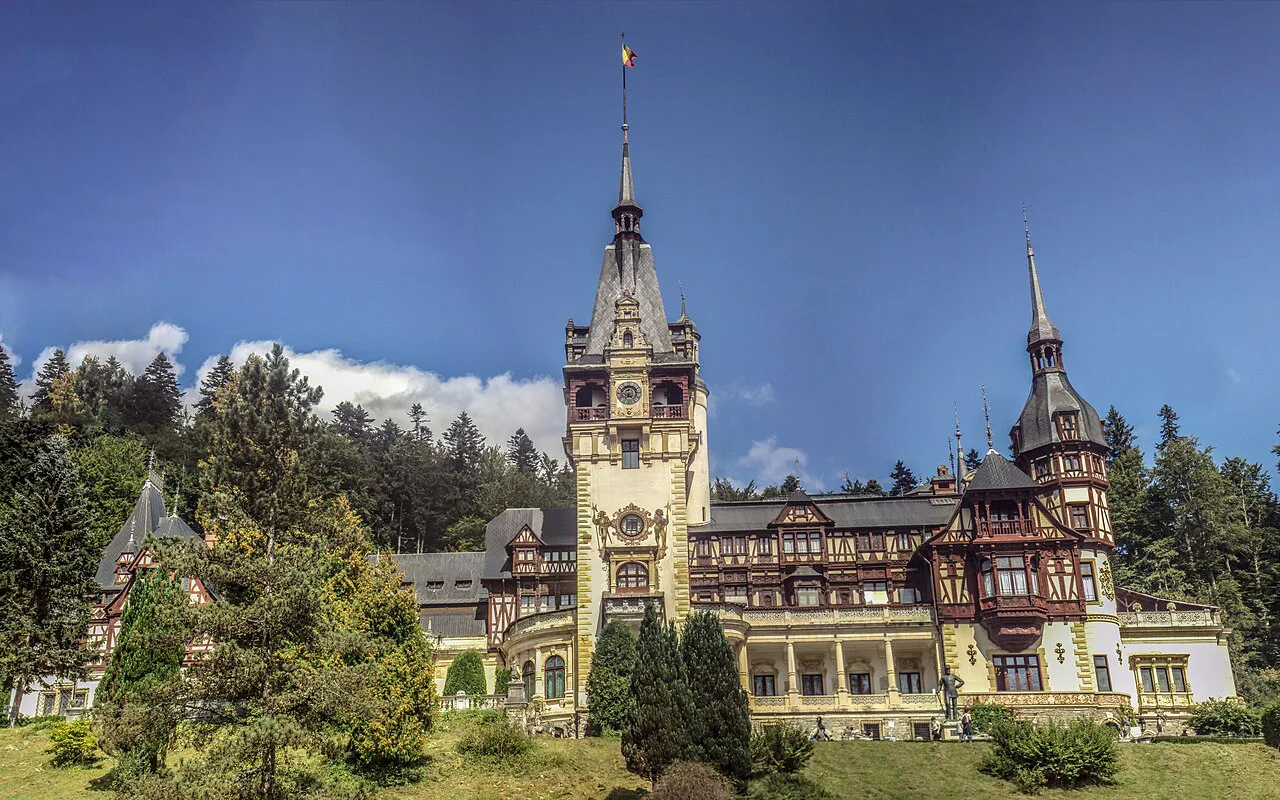
The castle itself is a German Neo-Renaissance building, with painted murals, carved woodwork and ornate ironwork across its facade. Inside, the state rooms and the royal apartments are arranged over several floors, and the whole complex includes the smaller Pelișor Castle nearby alongside the terraced gardens. Plan your visit around the main castle first and treat everything else on the estate as an addition.
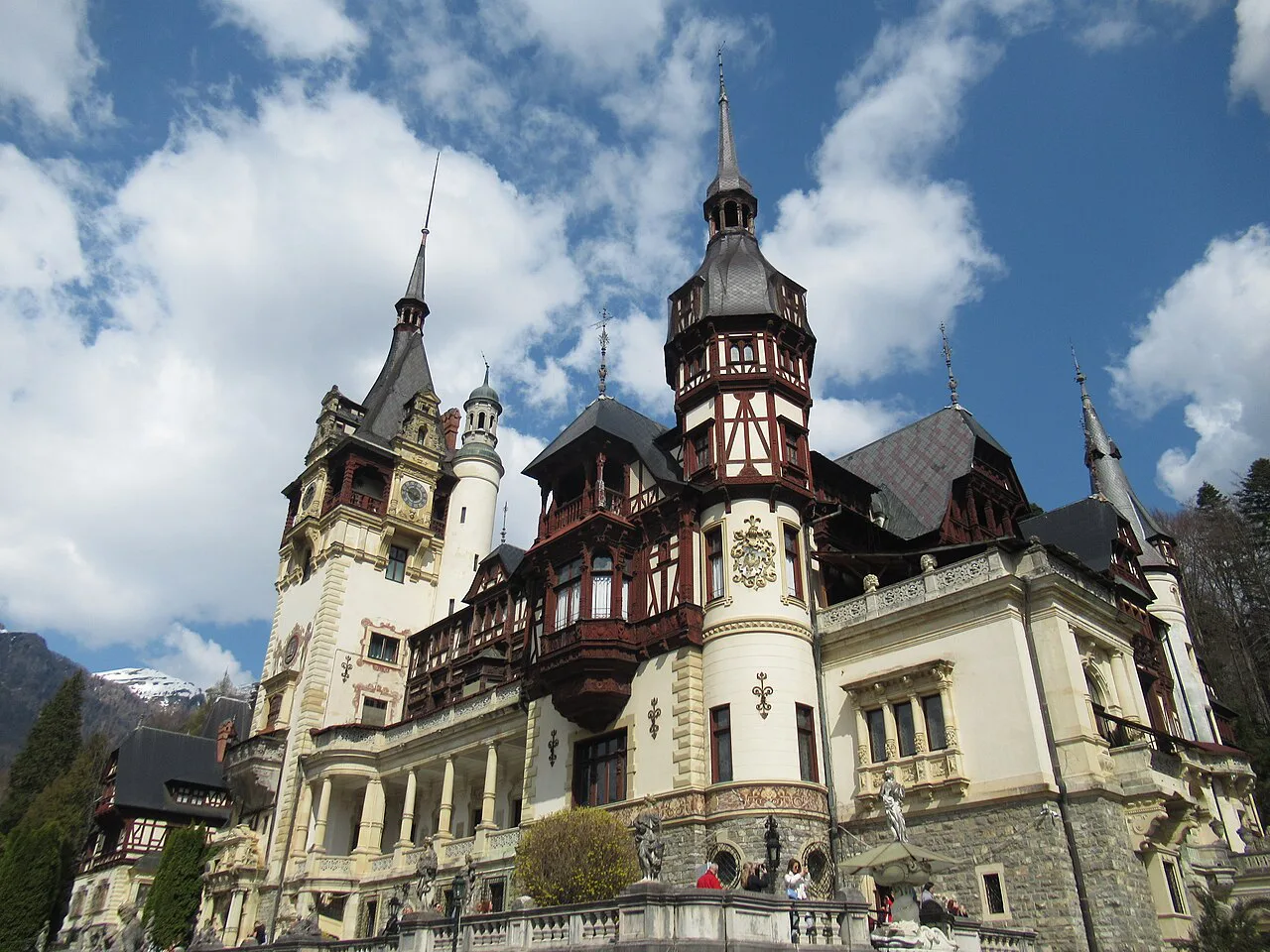

Getting there: train to Sinaia, then the climb
The simplest route is the train: services run from Bucharest's Gara de Nord towards Brașov, and trains from Brașov towards Bucharest also stop at Sinaia, so you get off at Sinaia station. From the station, a long staircase leads up towards the castle; it is a pleasant climb but a slow one, so budget 30 to 45 minutes on foot each way.
The climb rules out arriving with heavy luggage or a tight connection, and it is not a route to count on with a pushchair. If you are driving, signs in Sinaia point towards the castle, and parking is available in the resort. Either way, build the ascent into the day rather than treating the castle as the only part of the journey.
What to see inside Peleș Castle
The Hall of Honour is the room to slow down in. Completed in 1911, it stretches across three floors to a height of 16 metres, with a decorated glass ceiling, walnut woodwork carved in the manner of the Fredenhagen Hall in Lübeck and painted murals showing scenes from Romanian history and mythology. Balconies overlooking the hall held musicians during royal gatherings, so look up as well as around.
Beyond the hall, the Arsenal displays the royal collection of arms, and the Royal Dining Room sets out the scale on which the court entertained. The Music Room is the most elegant of the sequence, while the Moorish Room provides a change of style. Groups move through these rooms at a steady pace, so decide in advance which two or three you want to linger in.
The castle was unusually modern for its period, fitted with central heating, electricity and a lift. That detail matters for visitors: it shows a working royal household rather than a preserved shell, and the furnishings and fittings repay close attention. Give the interiors around 60 to 90 minutes at an unhurried pace.

The royal gardens and terraces
The royal garden is laid out over seven terraces, decorated with stone statues, fountains and ornamental pots of Carrara marble. Among the statues are figures of King Carol I and Queen Elisabeth, and there is a viewpoint from which the whole complex can be photographed.
Treat the gardens as a separate stage of the visit rather than something to glance at on the way out, because they are spread over several levels and the terraces take time to walk. A further 30 to 45 minutes is realistic if you want the viewpoint and a circuit of the principal terraces. Combine the gardens with the castle interiors and you have a comfortable half-day on the hillside.
How long to allow, including Pelișor
A workable plan for the day is the climb from the station, 60 to 90 minutes inside the castle, 30 to 45 minutes in the gardens, then the descent, which comes to roughly four to five hours in total. Pelișor Castle stands within the same complex and is a separate Art Nouveau royal residence built between 1899 and 1903, so check its own admission and hours before you book — it does not run on the same ticket as Peleș.
Pelișor deserves its own slot rather than a quick look on the way past, so decide before you climb whether you are doing one interior or two. Two interiors plus the gardens and the walk up is a full day; one interior is a half-day that leaves the afternoon free for the rest of the town. Read more about the smaller castle on the Pelișor Castle page before you commit.
Tickets, opening hours and closures
Peleș does not operate on a single fixed schedule throughout the year, and visiting hours vary. Check the castle's official website for the current opening days, the day's closing time and any period when the interiors are shut before fixing your travel date, and confirm whether you need to book a timed entry.
Ticket prices change over time and are set by the castle, so buy at the official ticket office or through its online channel and check the current price in lei before you pay. Booking a tour from Bucharest is an option if you would rather not handle the transport yourself, but check what the price covers before you pay.
Peleș versus Bran: two different days out
Peleș is a royal residence: a Neo-Renaissance palace built for Carol I, filled with state rooms, royal apartments and gardens. Bran Castle is the fortress marketed as Dracula's castle. Bram Stoker's novel is fiction, so keep it and the historical Vlad III out of your expectations for Peleș.
For a short trip from Bucharest, Peleș suits travellers who want interiors, decoration and a mountain walk from the station, while Bran suits those who want a fortress and the associated folklore. Both can be reached by train or organised tour, but they are separate days out rather than stops on one loop. Choose one as the main event rather than trying to fit both into a single day.
What else is nearby in Sinaia
The town below the castle has more than the royal estate. Sinaia Monastery is within reach of the centre, and the Sinaia casino gives the resort its period streetscape. These are short additions to a castle day rather than a reason to skip the interiors, and the wider set of Sinaia Attractions: 6 Visitor Guides covers them in more detail.
On the estate itself, the Foișor Hunting Lodge and the George Enescu Memorial House in Sinaia are further reasons to extend a stay beyond a single morning. Neither replaces Peleș as the centrepiece, but both make the walk up the hill worthwhile for a second visit.
Is Peleș worth the climb from the station?
Yes, if you give it the time it needs: the climb, the interiors and the terraces together make a proper half-day, and the Hall of Honour alone justifies the trip. Skip it only if your schedule leaves no room for the walk up and back, since rushing the castle defeats the point of going.
Build the day around one interior and the gardens if you are short of time, and add Pelișor as a second interior only when you have a full day. Check the castle's own site for opening days and ticket prices before you travel so the plan holds.
Explore more Sinaia guides
Frequently Asked Questions
Why is Peleș Castle so famous?
Peleș was built as the summer residence of King Carol I, and its German Neo-Renaissance design, richly carved interiors and mountain setting make it the showpiece of Sinaia. Its state rooms, including the Hall of Honour with its glass ceiling and painted murals, are the main reason visitors make the climb.
How do I get to Peleș Castle from Sinaia train station?
Leave the train at Sinaia station and follow the staircase up towards the castle; it is a long walk of roughly 30 to 45 minutes. Allow the same again for the descent, and do not plan to do it with heavy luggage or a pushchair.
Is Dracula's castle real?
Bram Stoker's Dracula is fiction, and Peleș has no connection to the novel. Bran Castle is the fortress marketed as Dracula's castle, and it is a separate day out from Peleș rather than a stop on the same visit.