
Pelișor Castle: What to See Inside Sinaia's Art Nouveau Royal Residence

Pelișor Castle is worth a separate slot from Peleș Castle: it is a compact Art Nouveau residence whose interiors were shaped by Queen Maria, and it sits on the same estate, a short walk from the larger palace. Allow around 45 to 60 minutes inside and plan the visit around a timed entry slot. This guide covers where Pelișor sits, how to reach it, what to look for inside and outside, and the booking and closure rules that affect a visit.
Where Pelișor Castle sits in the Peleș complex
Pelișor stands on the Peleș estate in Sinaia, on the Prahova Valley, at Peleș Alley 2. It belongs to the same architectural ensemble that King Carol I created along the Peleș stream, and the Peleș National Museum runs both castles. Get your bearings before you arrive: the estate is a wooded park with several buildings, and Pelișor is not the first building you reach.
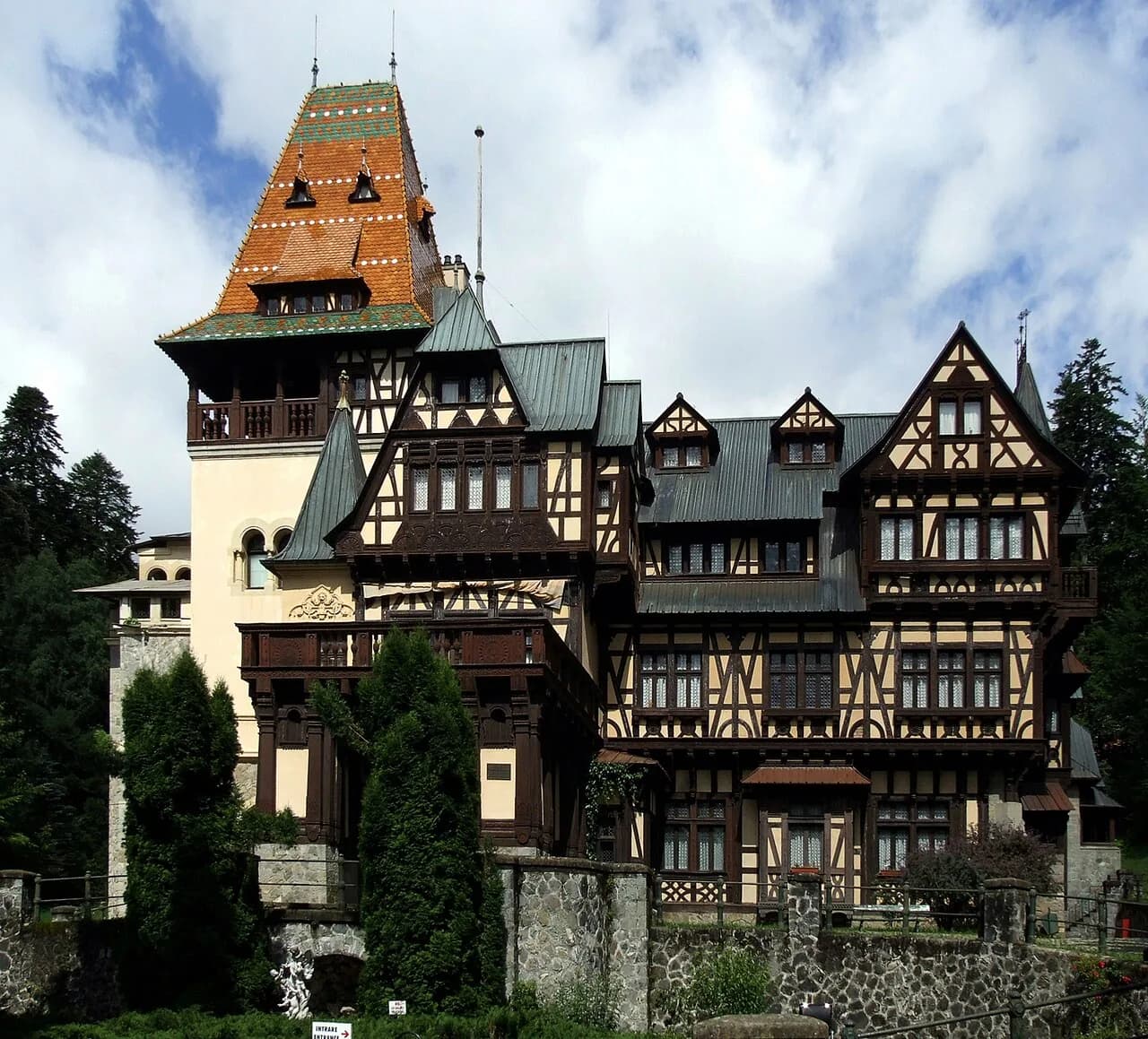
The house was built between 1899 and 1903 as a gift from King Carol I to the crown princes, and it opened to visitors in February 1993. Think of it as a family home rather than a state palace: smaller rooms, personal decoration and a scale you can cover without hurrying.

How to reach Pelișor from Sinaia
From central Sinaia, the estate is a steady uphill walk from the town centre, and many visitors combine that climb with the Sinaia Monastery on the way up. Allow more time than the map suggests, because the approach is on foot through the park rather than a straight street. Sinaia itself is easily reached by train from Brașov or Bucharest; see the wider Sinaia Attractions: 6 Visitor Guides for the town's layout.
If you arrive by car, expect to leave it below the estate rather than pulling in at the castle door; the woodland approach up to the buildings is on foot. Once you have bought your ticket, access to both castles is granted on a first-come, first-served basis within the time slot on your ticket. Arrive at the entrance at the start of your slot, not at the end.

Inside Pelișor: the Golden Bedroom and Queen Maria's interiors
The interiors are the reason to come. Queen Maria shaped the decoration at different periods, and the museum's own account highlights the Golden Bedroom as one of the rooms where her taste is most visible, along with spaces that move from gilded, enclosed rooms to cleaner geometric lines. Look for the Romanian elements worked into the decoration, including the niches typical of the Prahova Valley and the Brancovan division of space.
Inside, expect intimate rooms rather than long state halls, which is why the visit is short. Read the room labels: the museum frames Pelișor as a personal statement by the Queen, and the wall text and furnishings make more sense if you follow that thread.
The exterior: half-timbered walls and tiled towers
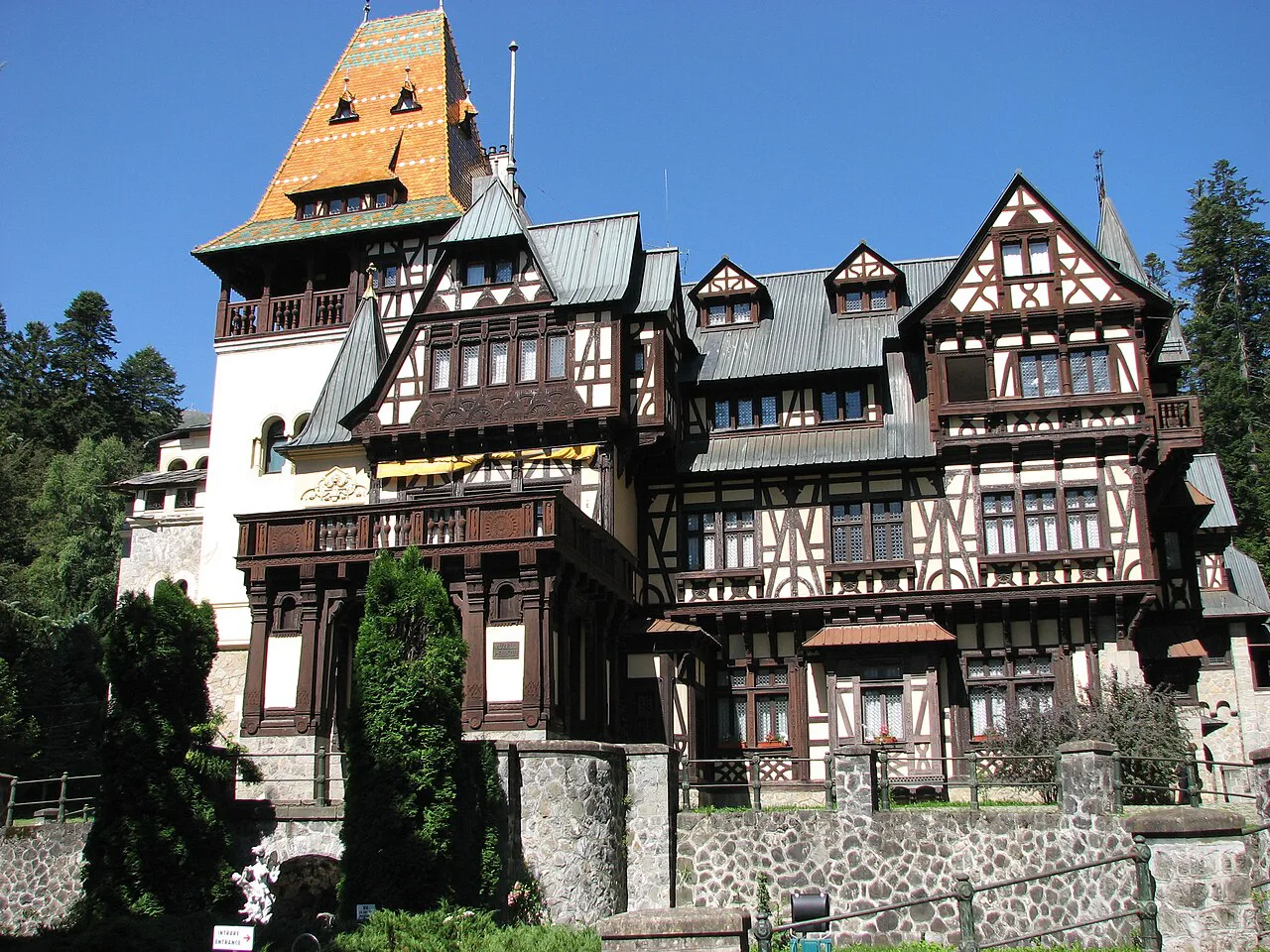
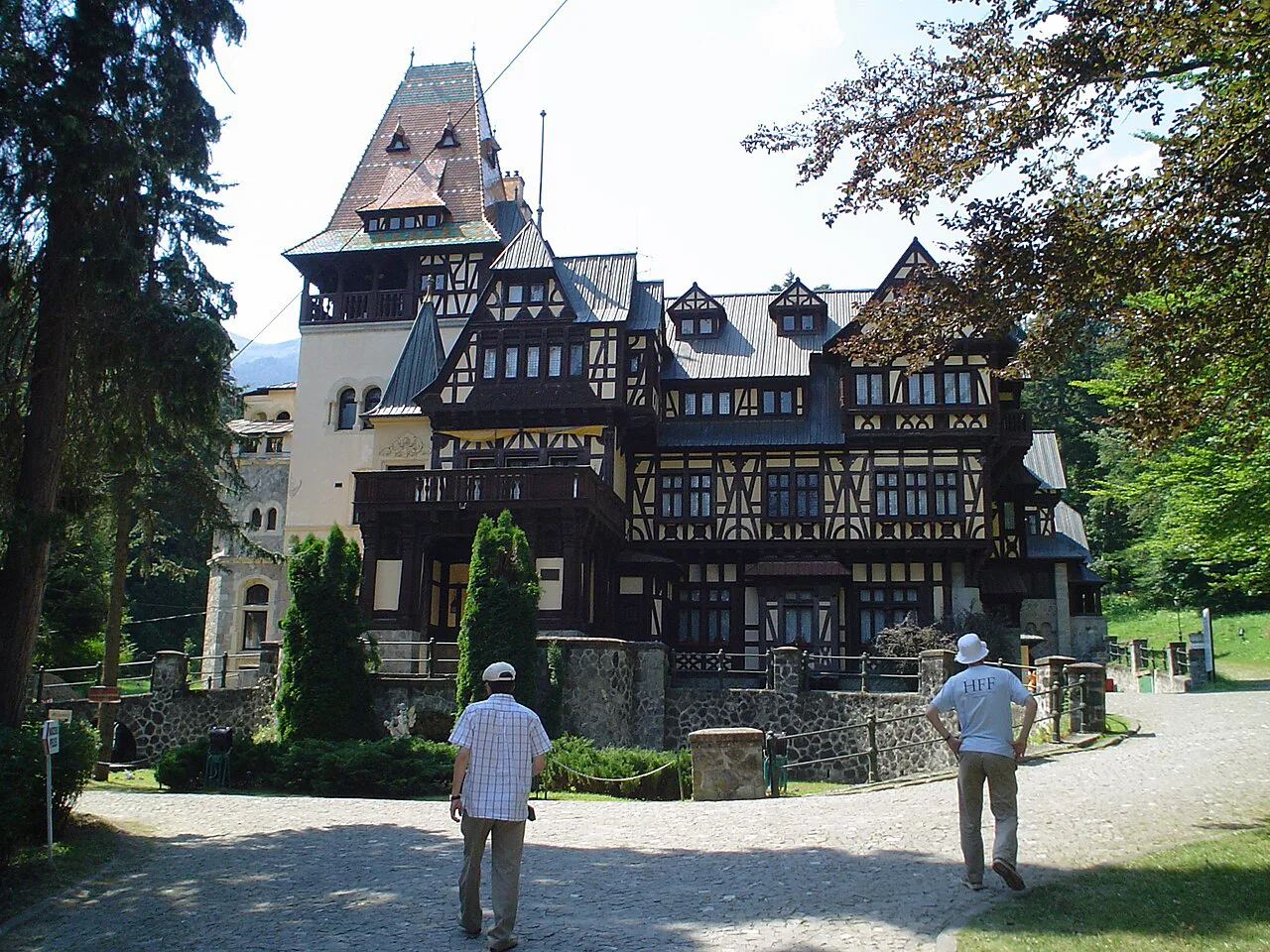
Before you go in, walk round the outside. Karel Liman, the chief architect, gave the exterior half-timbered elements alongside Romanian features, and the two towers are covered in coloured sandstone tiles in the manner of Bucovina church steeples. The result is cheerier than the neighbouring palace, and the towers are the detail most worth a photograph.
The building stands in the estate park, so leave time for the paths between the buildings rather than treating Pelișor as a standalone stop. There are other estate structures nearby, including the Cavaliers' House, the Economat, the Guard Corps House and the Architects' House, all part of the same group built around the Peleș stream.
How long to allow and whether to pair it with Peleș
Give Pelișor 45 to 60 minutes, including the walk round the exterior, and treat the time slot on your ticket as the real limit. Pairing it with Peleș Castle is the obvious plan, since the two are on one estate, but book the slots so you are not rushing between them.
Pelișor's advantage is its size: you see a whole house in under an hour, which suits a morning that also takes in the monastery or the town. The trade-off is that there is less to absorb than at the larger palace, so do not expect to fill an afternoon here. The Carpathian Mountains around Sinaia give you plenty to do with the rest of the day.
Tickets, entry rules and timed admission
The Peleș National Museum sells tickets and runs both castles, and it states plainly that it is not responsible for online sales or SelfPay station sales. Access is by timed slot on a first-come, first-served basis, and tickets bought as a scheduled visit cannot be rescheduled. Check the current ticket prices and booking options on the museum's own site before you commit to a date, since the estate publishes the official rates rather than travel retailers.
Because slots cannot be moved, buy only once your travel date is fixed, and keep the booking confirmation with you for the entrance. If you are visiting with someone who needs step-free access, look at the museum's accessibility tab before booking, since the two castles differ in layout.
Closures and conservation periods
The museum schedules cleaning and preventive conservation closures, which affect the castles at different times. For Pelișor, the published period runs from 28 September to 3 November 2026, while Peleș closes from 2 November to 1 December 2026. These dated closures matter if your trip falls in autumn, so check the museum's announcement before you settle on dates.
The site also notes that last entry is at 4:00 PM and points visitors to its visiting-schedule page for opening hours. Do not assume the two castles keep identical hours on the same day, and build your slot around the last entry time rather than arriving late in the afternoon.
What is nearby on the estate and in Sinaia
Peleș Castle is the main neighbour and the natural second visit of the day, with its own ticketing and closures. Near the town end of the estate, the Sinaia Monastery is a calm stop that pairs well with a castle morning, and the walk between the two gives you a sense of how the resort is laid out.
Down in the town, the Sinaia casino on Bd. Carol I is a landmark worth passing, and the George Enescu Memorial House in Sinaia adds a musical stop for anyone staying the night. Further out, the Foișor Hunting Lodge in Sinaia is another royal-estate building to consider if you have a car.
Is Pelișor Castle worth it if you have already seen Peleș?
Yes, if you want interiors with a distinct personality rather than another state palace. Pelișor is where Queen Maria's decorative ideas, including the Golden Bedroom and the Romanian motifs, are on show in a compact house you can cover in under an hour.
Skip it if your day is already tight: the timed slot, the uphill walk and the 4:00 PM last entry leave little room for a second big visit. The honest comparison is scale versus personality, and Pelișor wins on personality.
Which ticket slot to book first
Book Peleș first if you want the larger palace, then fit Pelișor around it, because Pelișor takes less time and the slots cannot be rescheduled. If Pelișor is the main draw, take an earlier slot and use the saved hour for the estate park and the walk back into Sinaia.
Either way, buy through the museum's own channels, check the dated conservation closures against your travel dates, and plan to be at the entrance at the start of your slot. Sinaia Attractions: 6 Visitor Guides has the wider planning context for the resort.
Explore more Sinaia guides
Frequently Asked Questions
Do you need to book Pelișor tickets in advance?
Not strictly, but access is first-come, first-served within the time slot you buy, and scheduled tickets cannot be rescheduled. Booking ahead gives you a fixed slot rather than a wait at the entrance, so it is the safer choice on a short break.
Can you visit Pelișor and Peleș on the same day?
Yes. The two castles share one estate, so a morning and early afternoon covers both if you book compatible slots. Allow about an hour for Pelișor and longer for the larger palace, and keep an eye on the 4:00 PM last entry.
What is there to see inside Pelișor Castle?
The draw is Queen Maria's interior decoration, including the Golden Bedroom and rooms that mix gilded, enclosed spaces with cleaner geometric lines and Romanian motifs. The museum's own account of the rooms is the best preparation for what you will see.