
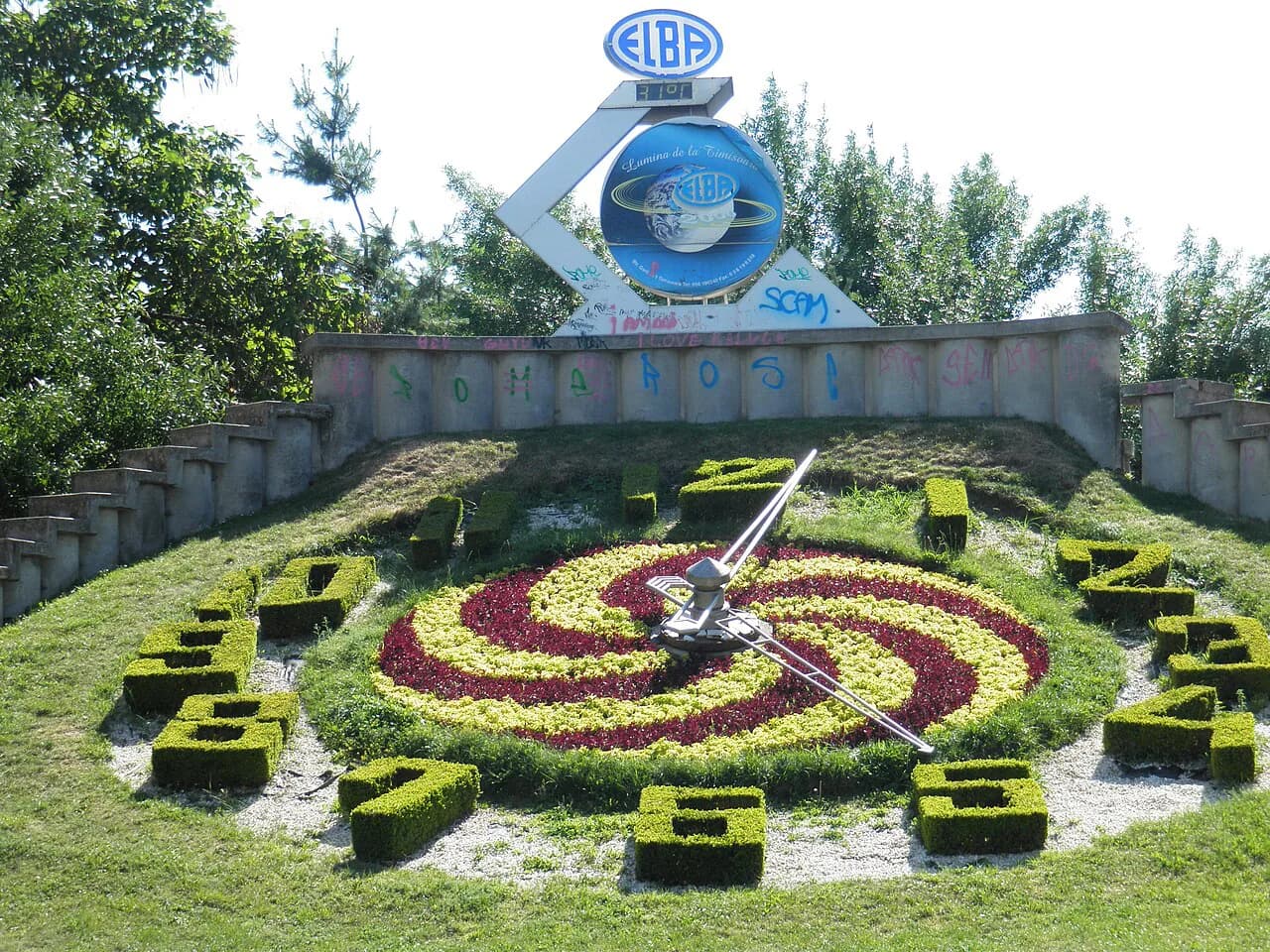
Cetate, Timișoara: What to See in the Old Fortress District

Cetate is the district to walk first in Timișoara: the old fortified core of the city, rebuilt in Austrian Baroque style after the Habsburg conquest, with straight, perpendicular streets replacing the Ottoman lanes. Allow half a day on foot for its two central squares and the imperial buildings around them. This guide covers what Cetate is, how its grid is laid out, what to see, how long it needs, who it suits and how to reach it.
The quarter was not always laid out this way. Under Ottoman rule the fortified town held a bazaar of dozens of small shops, three public baths, the pasha's house and inns, with narrow twisting streets leading to a central square roughly where Piața Libertății and Piața Sf. Gheorghe now sit. Those structures are historical features, described in the record but not standing today, so read the squares as the anchors of a walk rather than expecting Ottoman remains.
What Cetate is: the fortified core of Timișoara
Cetate is the area of the fortified town of Ottoman Timișoara, which the Habsburgs rebuilt entirely after Eugeniu de Savoya took the city, following the imperial pattern of the age. The Austrian Baroque architecture that shapes it today gave the city its nickname, Mica Vienă, or Little Vienna. The quarter corresponds to the urban site of the Cetatea Timișoara, the historic core rather than a single monument.

In the Ottoman period the city had three parts: the castle, the fortified town and two outer quarters, Palanca Mică and Palanca Mare, themselves fortified and full of shops, inns and houses. The inner town was defended by earth-and-timber walls and bastions, surrounded by marshes and branches of the Timiș, and entered through five gates, each with its own defence tower. Knowing this helps you read the modern street plan: the fortifications are gone, but the compact shape of the core survives.
Cetate's character is administrative and ceremonial rather than residential back-street. It suits travellers who want squares, facades and civic buildings within a short walk of each other. The straight, perpendicular streets make navigation simple, and you can cross the whole core on foot without needing transport.

Where Cetate sits and how the street grid is laid out
Cetate occupies the centre of Timișoara, and its rebuilt grid runs straight and at right angles, a deliberate contrast with the winding lanes of the Ottoman town. The old central square of the Ottoman city stood roughly where Piața Libertății and Piața Sf. Gheorghe are today, which is why these two spaces remain the natural reference points for a walk. Old public baths stood near the former town hall in the Piața Libertății area, another reminder that the ceremonial core has stayed in place across regimes.
Orient yourself on the two squares and treat everything else as a loop between them. The Bega river runs through Timișoara and gives you a second line to follow when you want to step out of the grid. Because the core is compact, you can walk from one square to the other in a few minutes, then branch into the surrounding streets for the Baroque and imperial facades.
Piața Libertății and Piața Sf. Gheorghe: the two squares at its centre
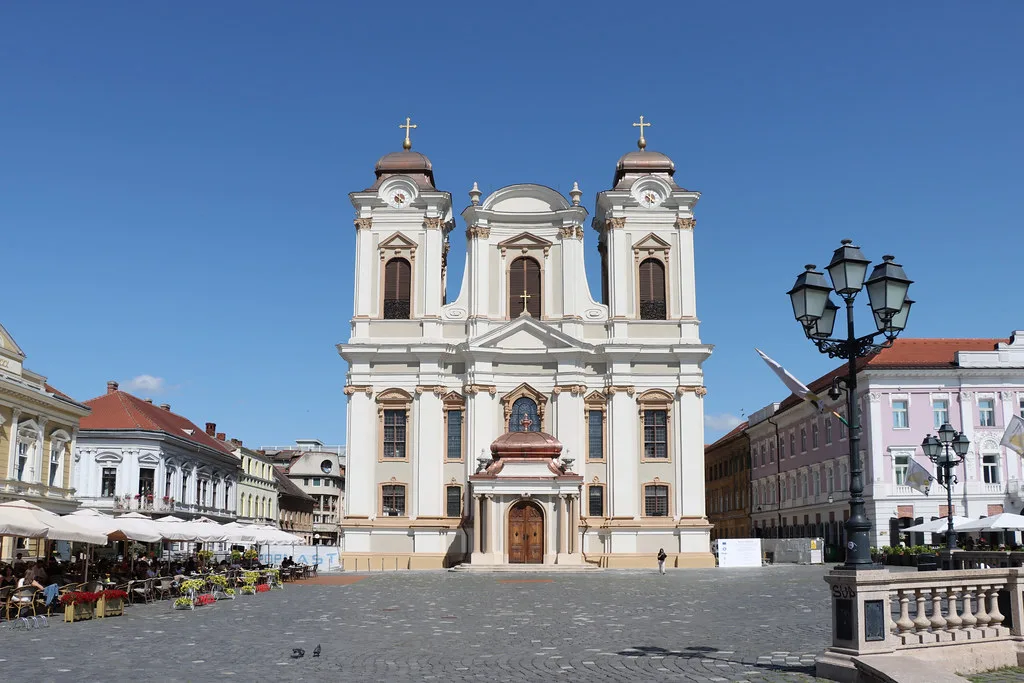
Piața Libertății and Piața Sf. Gheorghe are the anchor points of any walk through Cetate. The first is tied to the Ottoman-era centre and the former town hall area, while the second sits within the fortified town's historic core. Start at one, walk the straight streets to the other, and use them as fixed points when you wander.
The squares are best read slowly: look at the buildings framing them, cross to the corners, then move on. A circuit that takes in both squares and the streets between them fits comfortably into a morning. If you only have an hour, cover the two squares and one connecting street rather than trying to see every facade.
The Baroque and imperial buildings that give Cetate its character
The architecture to look for is Austrian Baroque and the imperial civic style of the Habsburg rebuild. Piața Libertății and the Romano-Catholic Cathedral, the Domul Romano-Catolic, are among the landmark locations of the quarter, and the Baroque style and Habsburg-period influences are what tie the ensemble together. Walk the grid with those in mind rather than ticking off individual doorways.
Many of the buildings raised in those years still stand, which is what makes the quarter coherent as a piece of townscape rather than a scatter of isolated monuments. Look for consistent heights, regular window rhythms and stucco fronts along the straight streets. The ensemble is described as holding monuments of European value, and that is the right scale to judge it by: the whole street, not one house.
How long Cetate needs on foot and what to pair it with
Give Cetate half a day if you want the two squares, the main streets between them and time to look up at the facades. An hour covers the essential loop through Piața Libertății and Piața Sf. Gheorghe. The compact grid means you are never far from where you started, so you can break the walk and return without losing time.
For contrast, pair Cetate with Iosefin, Timișoara, a separate district to the south-west, or cross to Fabric, Timișoara for a different street pattern and scale. Both work as separate walks rather than extensions of the same one. If you have a full day, do Cetate in the morning and one of the others in the afternoon.
Who Cetate suits and who it does not
Cetate suits travellers who want to arrive, step out and be among the city's principal squares and civic buildings within minutes. It rewards slow walking and looking at facades rather than chasing individual attractions. Anyone with limited time in the city should start here, because the core sets the shape of everything around it.
It does not suit anyone after a quiet residential atmosphere or a base away from the busiest streets. The rebuilt grid is regular and urban, not picturesque and winding, and the interest lies in the ensemble. If you would rather wander crooked lanes, plan more time in one of the outer historic quarters and treat Cetate as a half-day.
Getting there and getting around on foot
Cetate is the centre, so the practical approach is to arrive at the edge of the core and walk in. Once inside, everything in this guide sits within a continuous pedestrian loop between Piața Libertății and Piața Sf. Gheorghe. Wear shoes you can walk in for a few hours on paving, and carry water in warm weather.
Plan your arrival and departure around walking, not around hopping between stops. Because the grid is straight, you can cut a walk short at any corner and still find your way back to a square. Check current public transport routes and ticket arrangements with Societatea de Transport Public Timișoara (STPT) before you travel, as these change.
Basing yourself in Cetate
Cetate is the district to base yourself in if you want the squares on your doorstep and the rest of Timișoara within walking distance. The core suits a short city break where the day's walking starts outside the door. For a wider view of how the city's districts compare, see Timisoara Neighbourhoods: 4 Area Guides.
For a different base, Elisabetin Timisoara is another historic district in the same group and works well if you prefer to stay outside the ceremonial core. Read that guide alongside this one if you are weighing up which side of the city to stay on.
Is Cetate the right base for your Timișoara trip?
Choose Cetate if you want to walk out of your door into the old fortified core, with Piața Libertății and Piața Sf. Gheorghe as your fixed points. It rewards half a day on foot and a willingness to look at whole streets rather than single buildings. If you want crooked lanes and a quieter base, split your time with Iosefin or Fabric instead.
Explore more Timisoara guides
Frequently Asked Questions
Is Cetate the same as the Timișoara fortress?
Cetate is the district that grew from the fortified town of Ottoman Timișoara, which the Habsburgs rebuilt after taking the city. The walls, gates and bastions described in the historical record are not standing today; what you walk through is the Austrian Baroque city laid out on the same core, with Piața Libertății and Piața Sf. Gheorghe as its two squares.
How long does it take to see Cetate on foot?
An hour covers a loop through the two central squares and the streets between them. Half a day lets you add the surrounding imperial facades and walk the grid at an unhurried pace. The district is compact, so you can break the walk and return without losing time.