
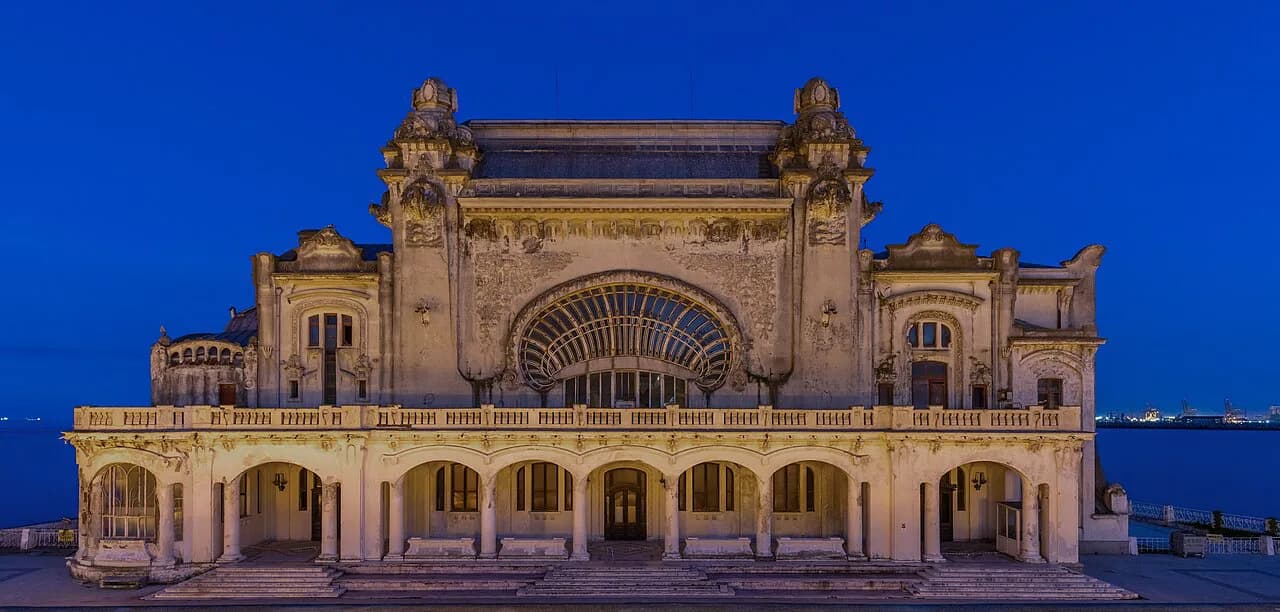
Constanța Casino: What to See at the Seafront Building

The Constanța Casino is a seafront landmark best treated as an exterior stop of roughly 20 to 30 minutes, unless a current cultural programme inside is running. The Art Nouveau shell, the position above the Black Sea and the walk between the old town and the port area are the reasons to come. This page covers where the building stands, how to reach it on foot, how to check whether the interior is open and how to slot it into a Constanța walk.
What the Constanța Casino is and where it stands
The casino, known in Romanian as Cazinoul din Constanța, sits in Constanța on the Black Sea coast, at the edge of the pedestrian area above the port. The waterfront strip around it draws couples and families for the walk itself, so the building works as a fixed point in a promenade stroll rather than a destination on its own. Approach it from the old town side and the sea appears behind the facade as you arrive.
The city's casino-themed listings that appear in searches mostly point to gaming halls on Bulevardul Mamaia and elsewhere, which are unrelated to this historic building on the waterfront. If you want the landmark, navigate to the seafront promenade rather than the addresses attached to those halls. Our Constanta Attractions: 8 Visitor Guides sets the casino alongside the city's other sights so you can judge how it fits your day.
The building is listed as a historic monument by Romania's Ministry of Culture and Religious Affairs, which is the status that gives it its protected place on the seafront. That listing is the practical reason to treat the facade and setting as the visit, since it fixes the building in the cityscape rather than promising an interior attraction.

The building itself: Art Nouveau design and the architects behind it
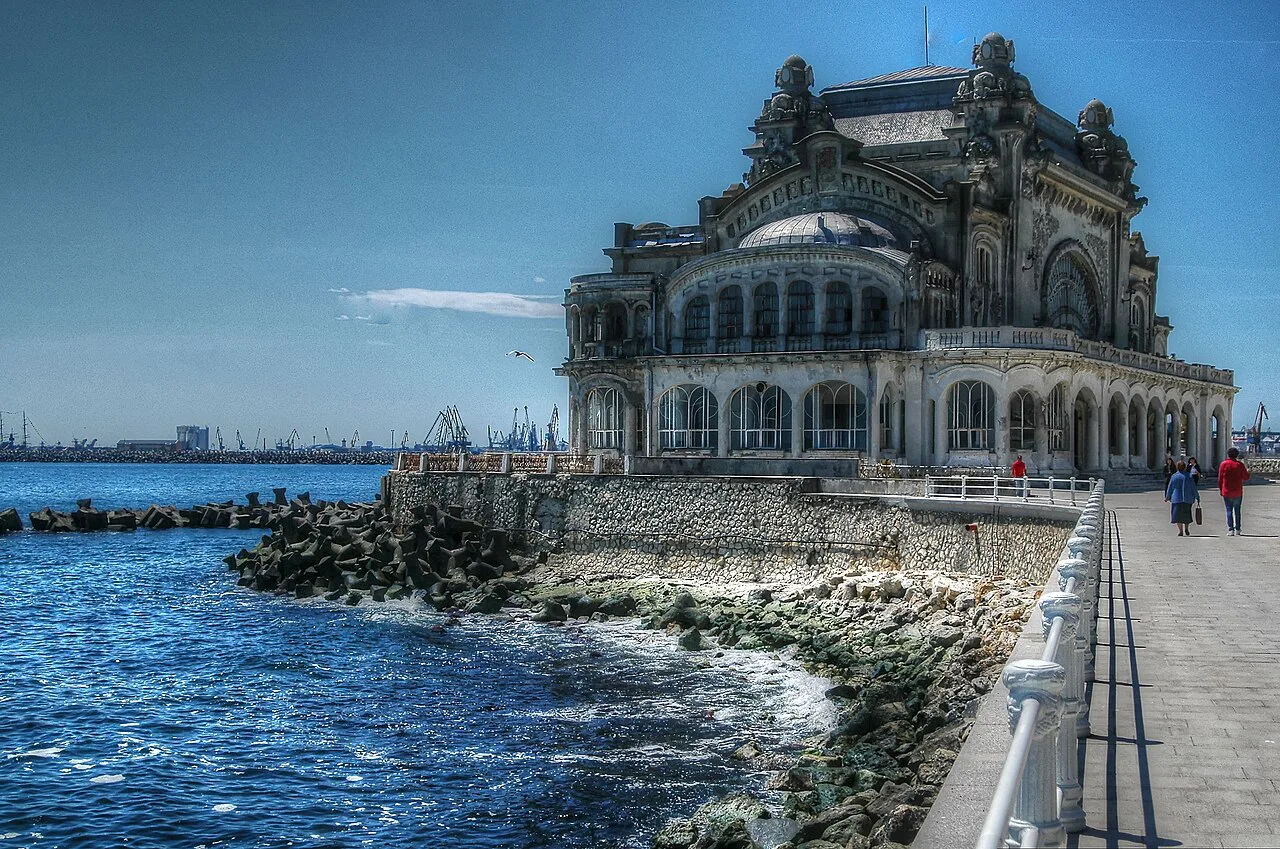
The casino is an Art Nouveau building with Baroque accents, designed by Daniel Renard and Petre Antonescu and first opened to the public in 1910 under King Carol I. It was built with money from the public, and the design shifted during construction from a scheme honouring Romania's artistic traditions into an Art Nouveau palace for the Belle Epoque. Look for the curved decorative work and the heavy detailing together on the same facade, which is what gives the building its layered look.
Inside, the building held a ballroom and theatre space and a staircase with a chandelier, as well as dressing rooms behind the stage. Those interiors are documented in photographs, and when the building is open to visitors the interior is what you see; then treat the exterior as the reliable part of a visit and the interior as something to check before you set out.
The building survived both World Wars and served as a hospital during the Second World War, then operated as a restaurant under the post-war communist regime. The last major repairs took place in 1988, and it closed in 1990. That sequence explains why the fabric looks worn: the casino has been through a century of different uses, and the wear shows at close range.

How to reach the casino on foot from the old town and port area
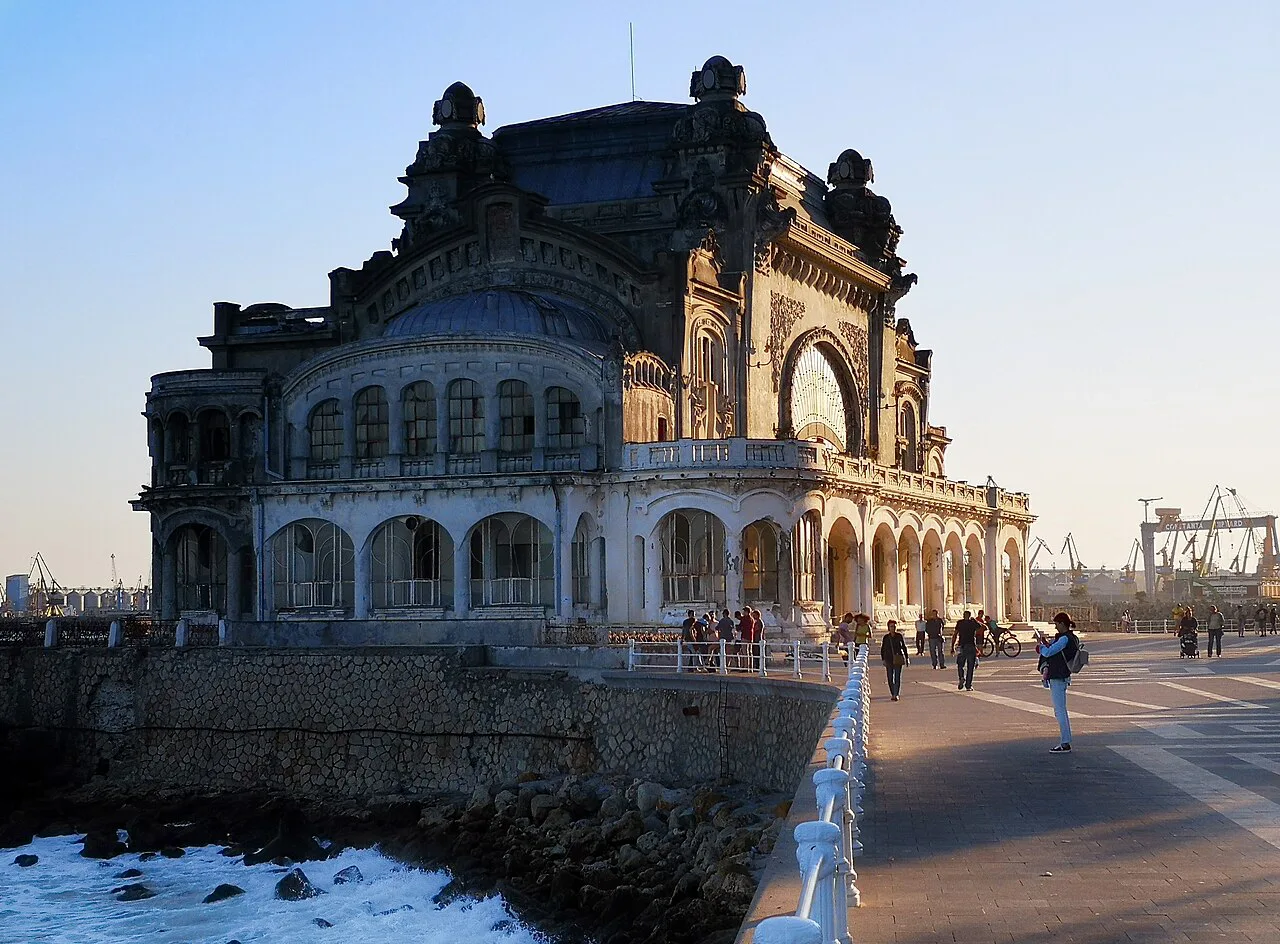
Walkers reach the casino from the old town by heading downhill towards the water and following the seafront until the building appears above the port. The stroll is short enough to combine with the squares and museums inland, and the seafront route keeps the sea in view for most of the way. Allow for steps and sloping streets as you drop towards the harbour.
Constanța sits on the Black Sea coast and the casino once served as the eye-catcher of the city's port, which is the largest on the Black Sea coast and one of the largest in Europe. The building therefore faces working harbour water rather than an empty bay, and the port setting is part of the view. For the rest of the city's sights, including the ones inland from the water, see Constanta Attractions.
What you can see from outside and around the building
From the promenade you get the full front of the casino, the roofline, the sea behind you and the port to the side, which is the view most visitors come for. Walk along the front and then round towards the side stairs for a second angle on the structure. The exterior repays a slow circuit more than a quick snapshot.
In 2016 the building was guarded around the clock and entering was effectively impossible without legal permission, so plan on looking from outside unless a current cultural programme says otherwise. The guarded status was also the reason the fabric deteriorated in plain sight: the site was watched, but the building itself had not been brought back into use. Accept the exterior visit as the realistic default and treat the Cazino Constanța reopening programme as something to check rather than expect.
The restaurant directly across from the casino has been renovated and given a new purpose, so the immediate surroundings are not uniformly derelict. The pedestrian area around the building is described as a popular spot for couples and families, which fits the seafront stroll. Use the promenade as your loop and the casino as the anchor at the middle of it.
How much time to allow for a stop here
Budget 20 to 30 minutes for the casino itself: a slow pass along the front, a look from the side stairs and a few minutes on the promenade. If you are photographing the facade, add another ten minutes and come in softer light. The stop works best as one segment of a longer seafront walk rather than a half-day plan.
If the interior is closed, there is no queue, ticket desk or timed entry to plan around. If a cultural programme is running at the Cazino Constanța, check its official site for programme times or visitor arrangements before you set out, since these can change.
Nearby: the pedestrian seafront and the port
The seafront promenade and the port area are the natural companions to the casino, and walking between them fills an hour or two without any planning. Inland, the Constanța Art Museum and other old-town sights are worth adding if you are building a half-day route through the old town. The Constanța Dolphinarium is nearby and gives the area a family-friendly counterpoint, while the Roman Mosaic Edifice (Edificiul Roman cu Mozaic), Constanța sits close to the waterfront walks.
For a family-friendly stop near the water, the Constanța Aquarium (Acvariul) is within reach of the seafront and pairs well with the casino on a walk. The Museum of National History and Archaeology, Constanța and Ovid Square (Piața Ovidiu), Constanța round out an old-town loop if you want more than the waterfront. Pick two of these and leave the casino as the seaward end of the route.
Is the casino worth the walk to the seafront?
Yes, as a 20-to-30-minute exterior stop folded into a seafront walk, not as a standalone excursion. Go for the Art Nouveau facade, the position above the Black Sea and the sense of a building that has outlived its heyday. Pair it with the old town sights inland, and add a look inside only if the current Cazino Constanța programme is running.
Check the official Cazino Constanța site before travelling for any cultural programme or visitor arrangements, since a reopened programme and an exterior-only visit can both be reported in the same season. Plan around the exterior, and treat any interior access as a bonus rather than the point of the trip.
Frequently Asked Questions
Can you go inside the Constanța Casino?
It depends on the current cultural programme: bilet.cazinoul.com presents a reopened, reimagined Cazino Constanța with exhibitions and visitor spaces, while the building spent decades closed and guarded and exterior visits are the default when no programme is running. Check the official Cazino Constanța site before you go.
Why was the Constanța Casino abandoned?
The casino closed in 1990, after last being repaired in 1988, and maintaining the structure had become too expensive. Its later history includes wartime use as a hospital and a post-war stint as a restaurant.
Is the casino a working gambling venue?
The historic seafront building is not a functioning gaming hall in the way the casino-themed listings elsewhere in the city are; it is a heritage building and cultural venue. The gaming venues you may find online are separate businesses at other addresses.