
The Roman Mosaic Edifice (Edificiul Roman cu Mozaic), Constanța
Allow around half an hour for the Roman Mosaic Edifice (Edificiul Roman cu Mozaic) in Piața Ovidiu, a compact site where roughly 850 sq m of Roman floor mosaic survives from a hall that once covered more than 2,000. It is best treated as one stop on a walk round the square rather than a separate excursion, and this guide covers where it sits, what is under the protective building, how the complex worked and how it fits an Old Town morning.
The site is managed as an archaeological monument rather than a museum of objects, so the visit is about the floor itself and the vaulted rooms around it. Read the surviving floor against the original footprint and the short visit makes sense.
What the Roman Mosaic Edifice is, in one answer
The complex is the excavated remains of a large Roman building from ancient Tomis, with a polychrome mosaic floor as its centrepiece. Building began in the 4th century and the complex was extended in stages until it stopped being used around the 6th century, when Tomis went into decline and the structure was left unmaintained.
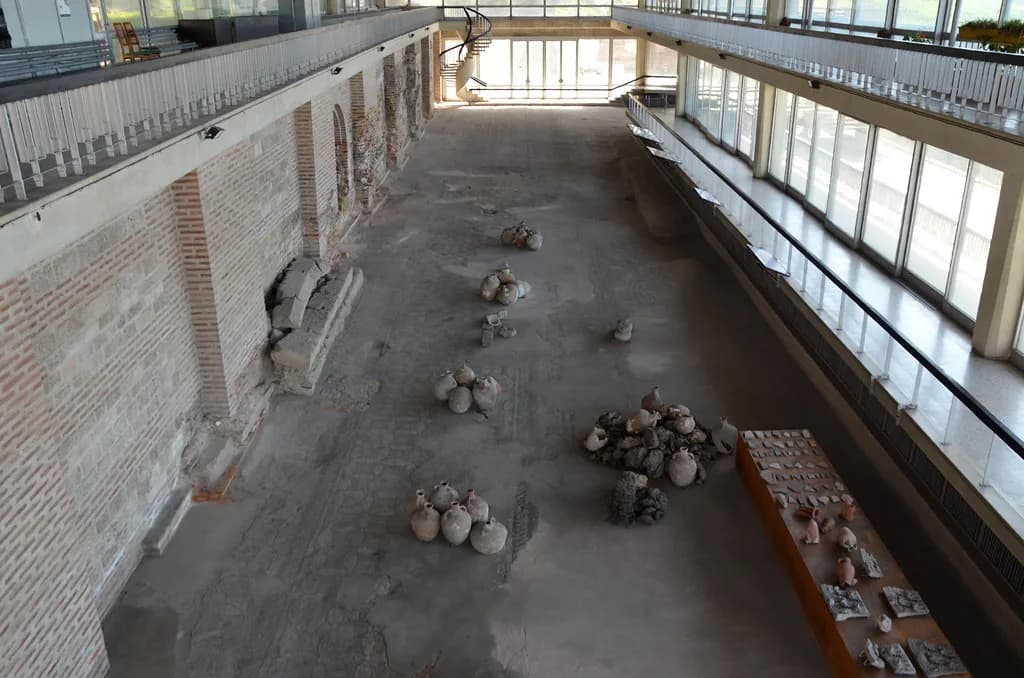
The floor survived partly because of the quality of its materials, and the museum displays around it hold what came out of the storerooms: anchors, ingots, weights, amphorae still holding paints and resins, statuettes, marble facing and pilaster capitals. Expect an archaeological site with a protective building and museum fittings arranged around the excavated floor.
Where it is: Piața Ovidiu, Old Town Constanța
The edifice sits immediately beside the Museum of National History and Archaeology on Piața Ovidiu in Old Town Constanța, a short walk from the harbour. The square is the natural anchor: arrive there, find the museum frontage, and the mosaic building is next door.
Its position is part of the story: the building once spread over three of the four terraces of the Tomitan harbour cliff, stepping down towards the water. The first terrace matched today's Piața Ovidiu level, which is why the excavated lower rooms sit well below the modern street.

How to reach it on foot from the Old Town and the harbour
Old Town Constanța is compact and the square is reachable on foot from most of the historic core, so leave the car behind if you can. From the harbour side, walk up towards the Museum of National History and Archaeology and the edifice appears alongside it.
Coming from further along the seafront, the walk past the casino and up into the old streets is the simplest approach, and it sets you up for several sights in one loop. Set your map for Piața Ovidiu rather than for the site name, since the entrance is found from the square.
What you see inside: the mosaic floor, the vaulted storerooms and the goods found there
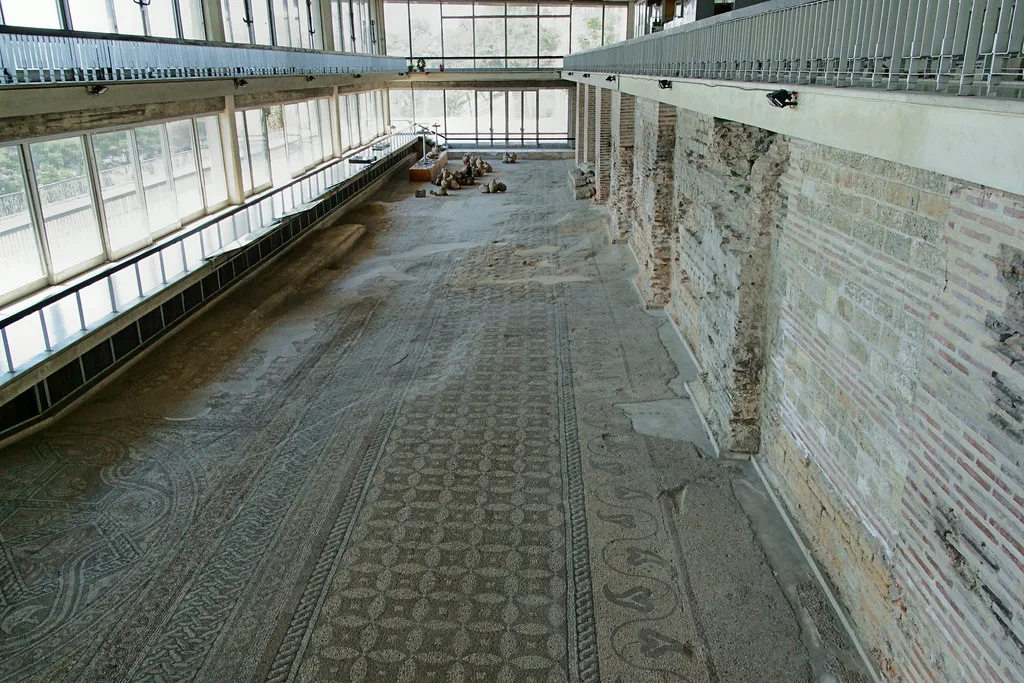
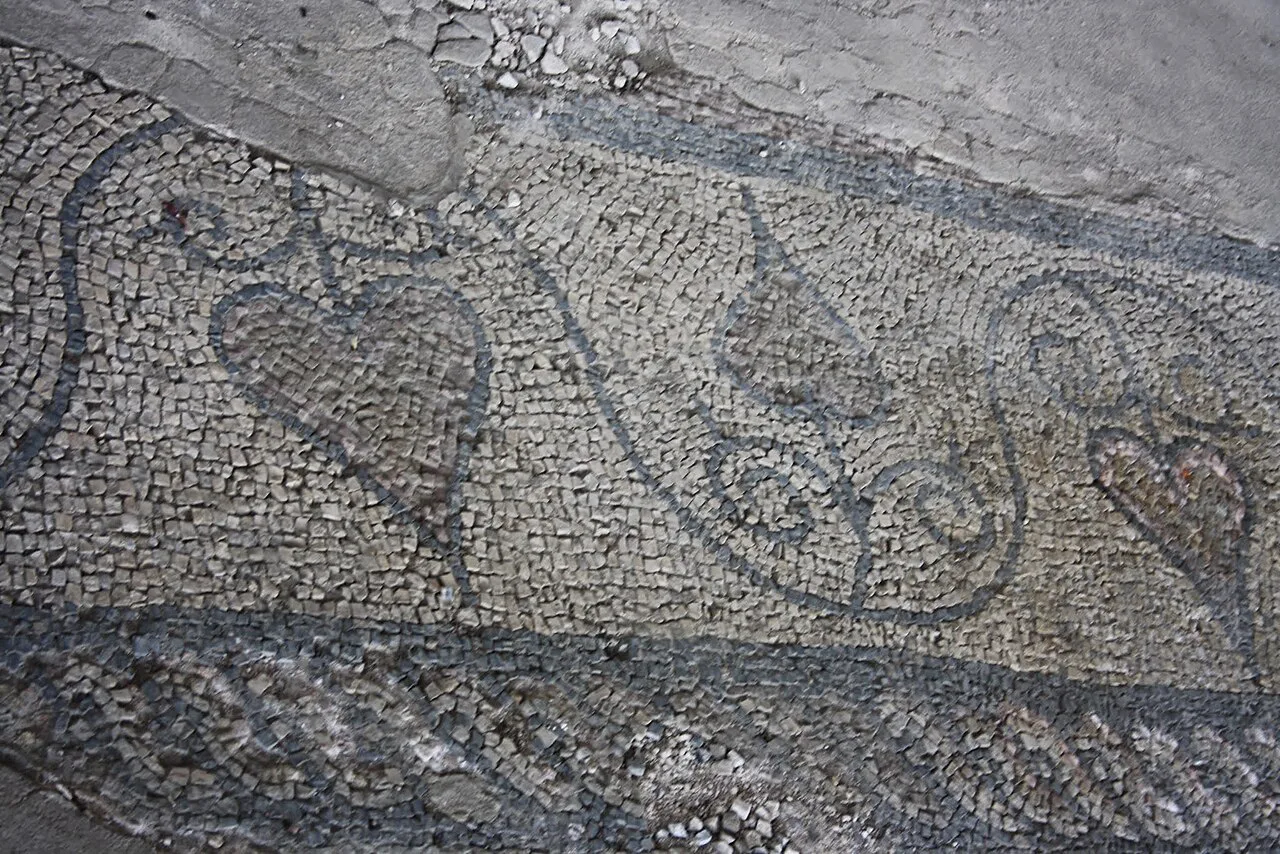
The mosaic hall is the room that mattered: it was where merchants and officials met, laid over a floor of polychrome mosaic. The floor was more than 2,000 sq m in total and about 850 sq m of it is preserved today, so look at the surviving panel and then note how much of the hall it once filled.
Around the hall are the vaulted storerooms that held the trading goods of a working port, and the collections on display come from those rooms. Look also for the rainwater drainage system, which is described as still functioning.
How the building worked in its day: the three terraces between port and city
The complex originally spread over three of the four terraces of the Tomitan harbour cliff. The first terrace matched today's Piața Ovidiu level and linked the building to a public square in the ancient city; the next held several storerooms and the mosaic hall; the lowest sat at the quayside and held more vaulted storage, now buried under limestone.
Read that way, the site is a link between port and town rather than a single hall: goods came off the quay, were stored on the lower terrace and were traded in the mosaic room above. The anchors, weights and amphorae in the displays fit that picture of a commercial building with heavy traffic.
How long to allow and how it fits a walk round Piața Ovidiu
Half an hour covers the mosaic floor, the storerooms and the display cases at an unhurried pace, and 45 minutes suits anyone who reads every panel. The site is small, so it works as a first stop in the square rather than the main event of a day.
A sensible order is the mosaic edifice, the archaeology museum beside it, then the square itself, which keeps you within a few minutes' walk across the whole set. Grouping it this way avoids doubling back through the old streets.
What is nearby: the archaeology museum, the Greek Church and the casino
The Museum of National History and Archaeology is the immediate neighbour and the obvious pairing with the mosaic, since it holds the wider story of Tomis. The Carol I Mosque and the Greek Church Metamorphosis are both within the Old Town, so a single morning covers several of the square's sights without transport.
Towards the seafront, the Constanța Casino is an easy add-on at the end of a walk through the old streets, and the Constanța Art Museum suits anyone who wants a change of register after archaeological remains. Further out, the Constanța Aquarium and the Constanța Dolphinarium sit in the same waterfront area for a longer day.
If you are planning the wider city, the Constanta Attractions: 8 Visitor Guides collection shows how these pieces sit together before you commit a day to the centre.
Checking opening hours and tickets before you go
Ticket prices and opening hours change with the season, so check the current figures at the site entrance or with the museum on the day you plan to visit, and ask whether the mosaic hall is open before making the trip. Set your map for Piața Ovidiu, where the entrance is found.
The edifice is in Old Town Constanța, which places it within a short walk of the waterfront and the main square. Allow time to wander, since the surrounding streets and the nearby Constanța Casino reward an unhurried approach.
Is the mosaic worth half an hour of your Constanța day?
Yes, if you are already in Piața Ovidiu: half an hour with the mosaic floor, the storerooms and the goods that filled them gives the square its context, and the museum next door does the rest. Skip it only if time is tight and the seafront is your priority.
Build the visit round the square rather than the site alone, and check the day's opening and ticket price at the entrance before you set out. That way a short stop fits neatly into a longer Old Town walk.
Frequently Asked Questions
How big is the Roman mosaic in Constanța?
The mosaic floor covered more than 2,000 sq m in its original hall, and roughly 850 sq m of it survives today. The remainder is what you are looking for as you walk round the protected area, since the missing sections show how much of the building has been lost.
When was the Roman Mosaic Edifice discovered?
The complex was found in 1959 during works in Piața Ovidiu, and later research placed its construction in the 4th century with extensions until around the 6th century. It is an archaeological site rather than a purpose-built museum, so the displays are arranged around the excavated remains.