
Ovid Square (Piața Ovidiu), Constanța: What to See and How Long to Allow

Ovid Square (Piața Ovidiu) is a short stop rather than a sight in its own right: allow about twenty minutes for the statue and the square, then use it as the starting point for the old town around it. The centrepiece is a bronze statue of the Roman poet Ovid, who was sent to ancient Tomis and whose monument was inaugurated in central Constanța in 1887. This page covers where the square sits, the statue's own story, how to walk there and what lies within a few minutes of it.
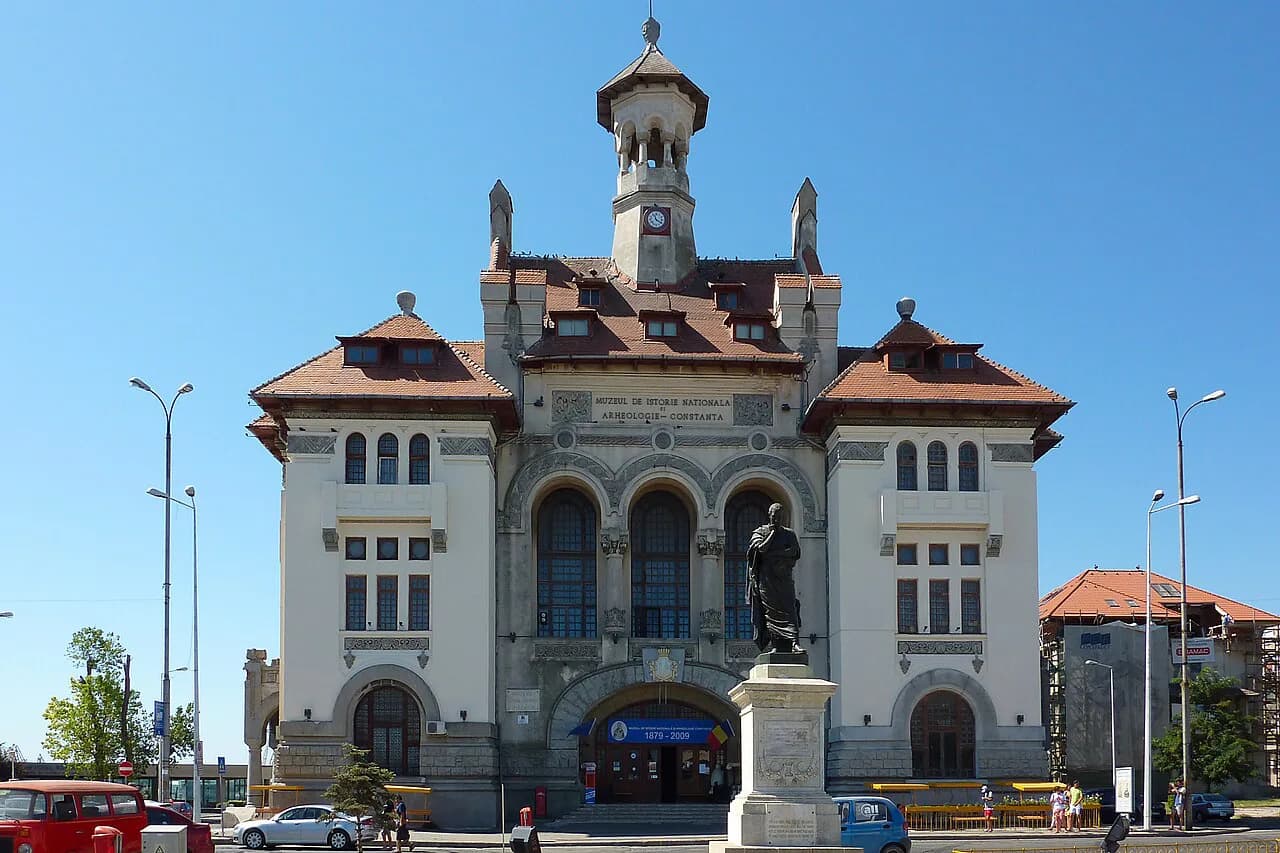
Treat the square as a place to pause between bigger sights. The Museum of National History and Archaeology occupies the former Town Hall on one side, the seafront is a short walk away and the casino building sits further along the waterfront. The square is open ground and no ticket is involved in crossing it.
What Ovid Square is and where it sits in Constanța
Piața Ovidiu is the main square of Constanța's old town, in the part of the city that grew over the Roman fortress of Tomis. It opens towards the Black Sea, a few minutes' walk from the waterfront. The square is paved, with the statue on its own pedestal at the centre and the former Communal Palace building closing one side.
In 1887 the space looked very different and carried another name, Independence Square. It was reorganised in 1921, when construction of the Communal Palace was completed after work that had begun in 1912 and paused during the First World War. That building now houses the Museum of National History and Archaeology, which gives the square its present shape and its main indoor sight.

The statue of Ovid: the 1887 bronze by Ettore Ferrari
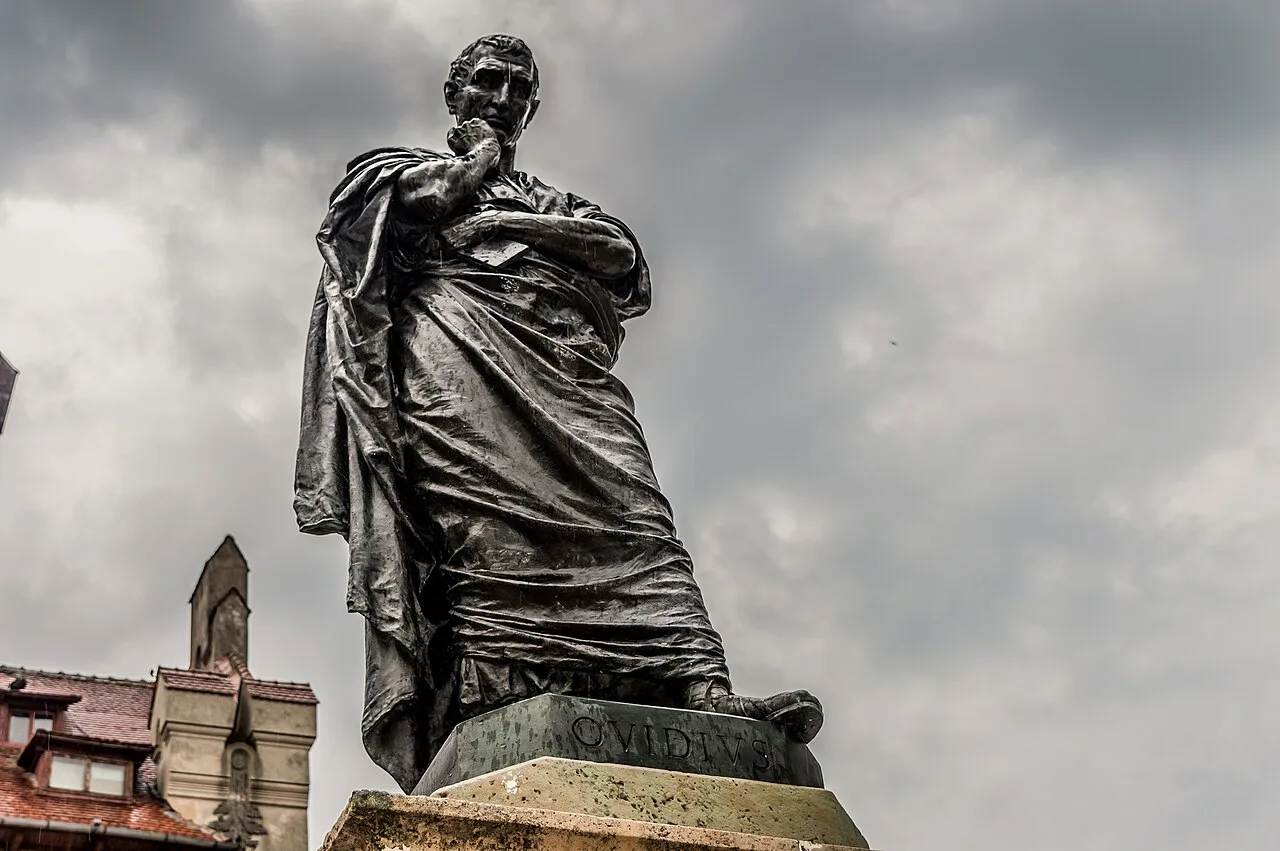
The statue was the idea of Remus Opreanu, the county's first prefect, who approached the Italian sculptor Ettore Ferrari. Ferrari finished the work in 1883 and sent it to Romania, where it sat forgotten in a warehouse for three years before being placed on its pedestal. It was inaugurated on 18 August 1887 in front of local and national officials, including Opreanu himself.
The bronze figure stands about 7.2 feet tall and was originally set facing north. Between 1878 and 1921 it was moved three times, and in the autumn of 1916 Bulgarian troops occupying the city took it down from its pedestal before German orders had it put back. Read the statue as a piece of the city's modern history as much as a portrait of the poet.
Look at the pedestal and the inscriptions rather than only the figure, since the base carries the monument's identity as a civic commission. The square around it is flat, open and easy to cross on foot, with the statue visible from the surrounding streets. Photography is straightforward at most times of day because the space is broad and uncluttered.

Why Ovid is linked to Constanța
Ovid, or Publius Ovidius Naso, was relegated to Tomis, present-day Constanța, in the autumn of year 8 AD by order of the emperor Augustus. Relegation was a milder form of exile: he kept his civil rights and his wealth was not confiscated. He reached Tomis in spring, most likely April, of year 9 AD after a journey of at least three to four months, and stayed until his death.
During that exile he wrote the Epistulae Ex-Ponto, letters from the Black Sea, and the Tristia, works that describe the province of Scythia Minor and its people. The reason for his relegation is not settled; the poet himself wrote of carmen et error, a poem and a mistake. His grave has not been found, and accounts place the funeral outside the city gates of Tomis, somewhere in what is now central Constanța.
That is why the statue became a symbol of Dobrogea and of the city's Roman ancestry rather than a decorative monument. The connection is to the historical poet exiled to Tomis, so the square is about Latin literature and Roman provincial life, not later fiction. The monument gives a name and a face to a story that otherwise survives only in the city's archaeology.
How to reach the square on foot from the old town and the seafront
The square sits inside the old town, so the simplest approach is on foot from the surrounding streets or from the seafront promenade. Walk inland from the waterfront and follow the open space towards the statue and the former Town Hall; the paved centre makes the route obvious once you are close. No gate or turnstile interrupts the way in.
If you are working through the old town, put Piața Ovidiu at the start and let the streets around it lead you on. From the square you can reach the seafront and the casino building on foot, and other sights in the old town are close by. This makes the square a natural orientation point rather than a destination that needs its own transport.
Allow for the walk rather than for queues: the square itself takes minutes to cross, and the time you spend there depends on whether you go into the museum. Wear shoes you can walk in, because the old town's streets and the seafront are best covered on foot in one loop.
Nearby: the Museum of National History and Archaeology in the former Town Hall
The Communal Palace, completed in 1921 after construction began in 1912, now holds the Museum of National History and Archaeology Constanța. It faces the square, so you can step from the statue straight into the collection. The building is the square's architectural anchor and the reason the space took its present form.
The museum sets its own opening hours and admission charges, so check its published details before you build a day around it. That is the one detail on this page that changes from season to season. The rest of the square needs no planning.
Other sights within a few minutes of Piața Ovidiu
The seafront and the casino building are the obvious next stop, a short walk from the square along the waterfront. The Constanța Casino is the landmark most visitors photograph from the promenade, and it pairs naturally with a pause at the statue.
Inland from the square, the Constanța Art Museum gives you a quieter indoor stop if the weather turns or you want more than monuments. The Roman Mosaic Edifice is another old-town sight within walking distance and works well in the same loop.
Two more landmarks sit close enough to include without a detour: the Carol I Mosque, whose minaret is a useful orientation point in the old town, and the dolphinarium and aquarium near the waterfront for a longer day with children. All of them are reached on foot from the square, which is why it makes a sensible first stop in Constanța.
How long to allow and when the square is busiest
Budget about twenty minutes for the square and statue, longer only if you add the museum or sit at the edge of the space. The square is a passage as much as a sight, so you will cross it more than once while exploring the old town. That makes it easy to fit around the rest of your day rather than a fixed appointment.
Expect the busiest spell when the seafront promenade fills in the middle of the day and around sunset, which is when the waterfront draws a crowd. Early morning is quieter and better for photographing the statue without people in the frame. The square itself is open ground, so you can pass through at any hour without a ticket.
Where to check current details for the museum and nearby sights
The square and statue need no ticket, but the museum, art museum and other old-town sights publish their own hours and prices. Check each site's own notice before you go, particularly the Museum of National History and Archaeology if it is the reason for your visit. One quick look covers the only details on this page that change.
For the wider picture of what else is in the city, the Constanta Attractions: 8 Visitor Guides collection shows how the old town sights fit together. Use it to order your walk after leaving Piața Ovidiu.
Is Ovid Square worth stopping for?
Yes, as a twenty-minute stop that anchors the old town and gives context to the museum beside it. The statue's story, from Ettore Ferrari's 1883 bronze to the 1887 inauguration and its wartime removal, is more interesting than the square's size suggests. Come for the statue, then let the seafront and the old town carry the rest of the day.
Plan the stop around the museum if you want substance beyond the monument, and check that museum's own hours before travelling. Otherwise, simply walk in from the seafront, read the pedestal and move on to the casino and the waterfront.