Oradea History: The Fortress, the Habsburg Rebuild and the Belle Époque City
Oradea history for visitors: fortress sieges, the Habsburg rebuild and the Art Nouveau boom, and the buildings in the centre where you can still see it.
On this page
Oradea's history gives you a compact old centre where the fortress, the Baroque bishop's palaces and an Art Nouveau shopping arcade sit within walking distance of each other. Work through it in three layers: the fortress, the 18th-century Habsburg rebuild, and the Belle Époque additions around Union Square.
The city lies in the Crișana region of north-western Romania, on both banks of the Crișu Repede river and about 8 miles east of the Hungarian border. That position explains much of what you see: it was a gateway town administered at different times by the Principality of Transylvania, the Ottoman Empire and the Habsburg Monarchy.
Where Oradea is and who governed it
Oradea is first documented in 1113 under the Latin name Varadinum. Modern Romanian Oradea is pronounced roughly "O-ra-de-ah", and the city has a population of around 184,000 across 35 sq km.
Successive administrations left their own layer. The Principality of Transylvania, the Ottoman Empire and the Habsburg Monarchy each governed the city at various times, which is why a single central walk passes a medieval fortress, Baroque palaces and a twentieth-century glass-roofed arcade.
For a traveller, this matters because the historic core is small enough to cross on foot rather than by taxi. Treat the fortress as the western anchor and Union Square as the centre of gravity, then plan the rest of your day between the two.
The fortress: 1598, 1660 and 1692
The fortress is the oldest part of the story you can still walk around. It was besieged in 1598, fell to Ottoman raids on 27 August 1660, and was then seized by the Austrians in 1692. Those three dates are the skeleton of the medieval and early modern chapter, and they show how often the town changed hands.
Reading the fortress in that order makes a difference: it is not one building from one century but a strongpoint that was tested, lost and retaken. Give it the first slot of a morning, before the palaces and arcade, so the later Baroque city reads as a rebuild rather than a separate place.
Plan the fortress as the anchor of a half-day, then walk east into the centre for the palaces and Union Square. The walk between them is short, so you can cover the historic core without a car. The Oradea walking tour page sets out a route through the centre.
The 18th-century rebuild: Hillebrandt, the flood banks and the 1836 fire
Present-day central Oradea was largely rebuilt in the 18th century to plans by the Viennese engineer Franz Anton Hillebrandt, in the Austrian architectural style then in fashion, with richly decorated facades in pale pink, blue, green and white. This is the layer that gives the centre its colour.
Two practical forces shaped the town as much as taste did. Flood banks built along the length of the Crișu Repede ended constant flooding threats, and in 1836 a large part of the town was destroyed by fire.
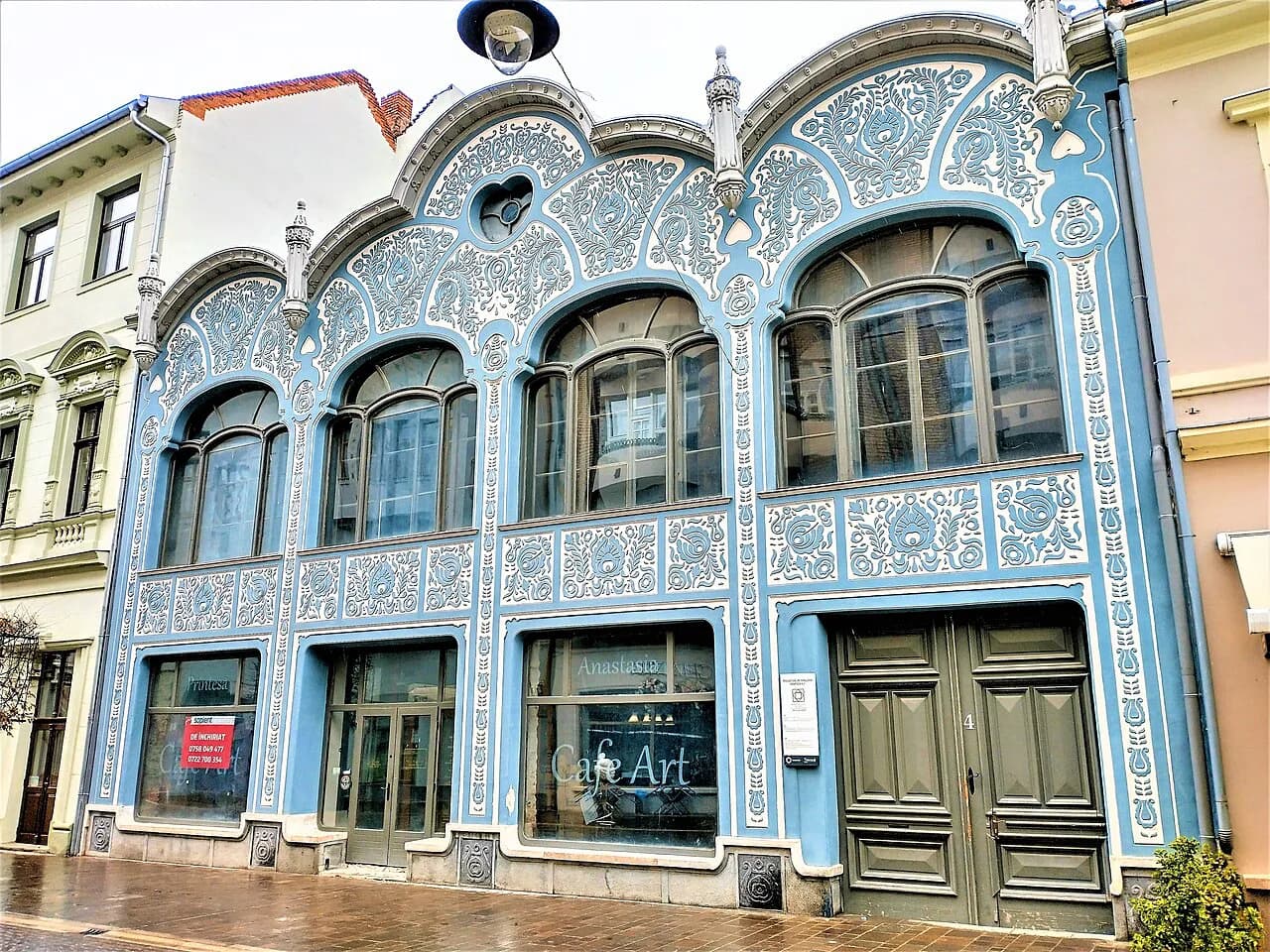
The rebuilding explains why the centre feels more Austrian than you might expect this far east. Look for the Secession decoration on facades as you walk between the palaces and the river; the separate guide to Oradea Art Nouveau picks out the buildings in more detail.
The Bishop's Palace and the Roman Catholic Episcopal Palace
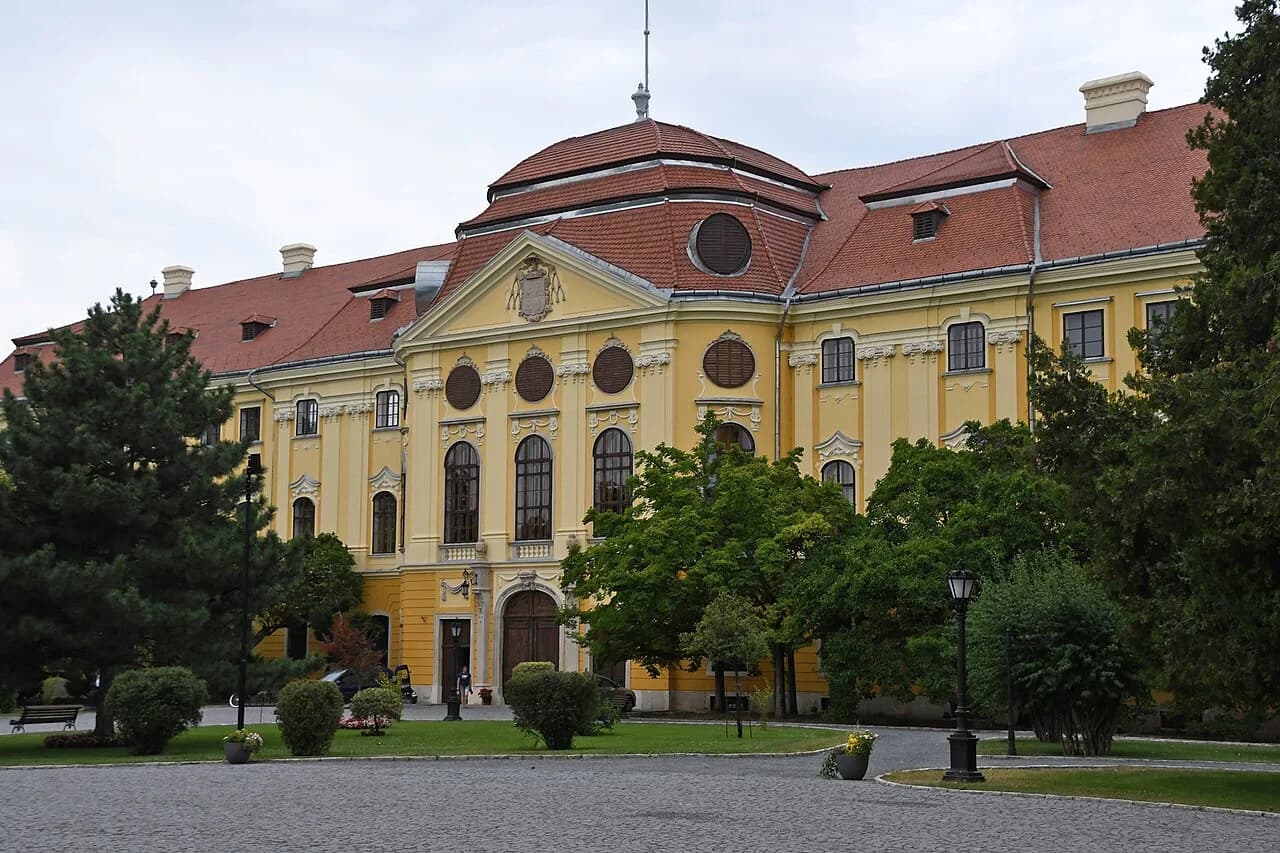
The Bishop's Palace, Palatul Episcopal, is one of Oradea's most splendid buildings. It was modelled on drawings by the Italian architect Giovanni Battista Ricca and completed in 1770 by the Austrian architect Franz Anton Hillebrandt, and it is a three-storey U-shaped structure with 100 fresco-adorned rooms, 365 windows and a facade punctuated with ionic capitals.
Today the Bishop's Palace is home to the Muzeul Țării Crișurilor, the museum of the Crișana region, so this is a palace whose interior is open to visitors. Check the museum's current opening days and ticket prices in lei before you build a day around it.
The Roman Catholic Episcopal Palace, known as the Palatul Baroc, was completed in 1780 and forms part of the same architectural ensemble by Hillebrandt, together with the Bishop's Palace and ten other structures known as Canon's Row. Group the two palaces in one stop rather than treating them as separate sights.
Union Square: the spine of the historic centre
Union Square, Piața Unirii, is the most useful landmark for orienting yourself in the historic centre, and King Ferdinand Square, Piața Regele Ferdinand, is the other named square worth knowing. Start at Union Square and work outwards rather than following a street-by-street list.
From here you can reach the Black Eagle Palace, the Church of the Moon and Canon's Row on foot. Two days gives you room for the fortress, both palaces and the arcade without rushing; the Oradea weekend page sketches that split.
The Art Nouveau layer: the Black Eagle Palace and its arcade
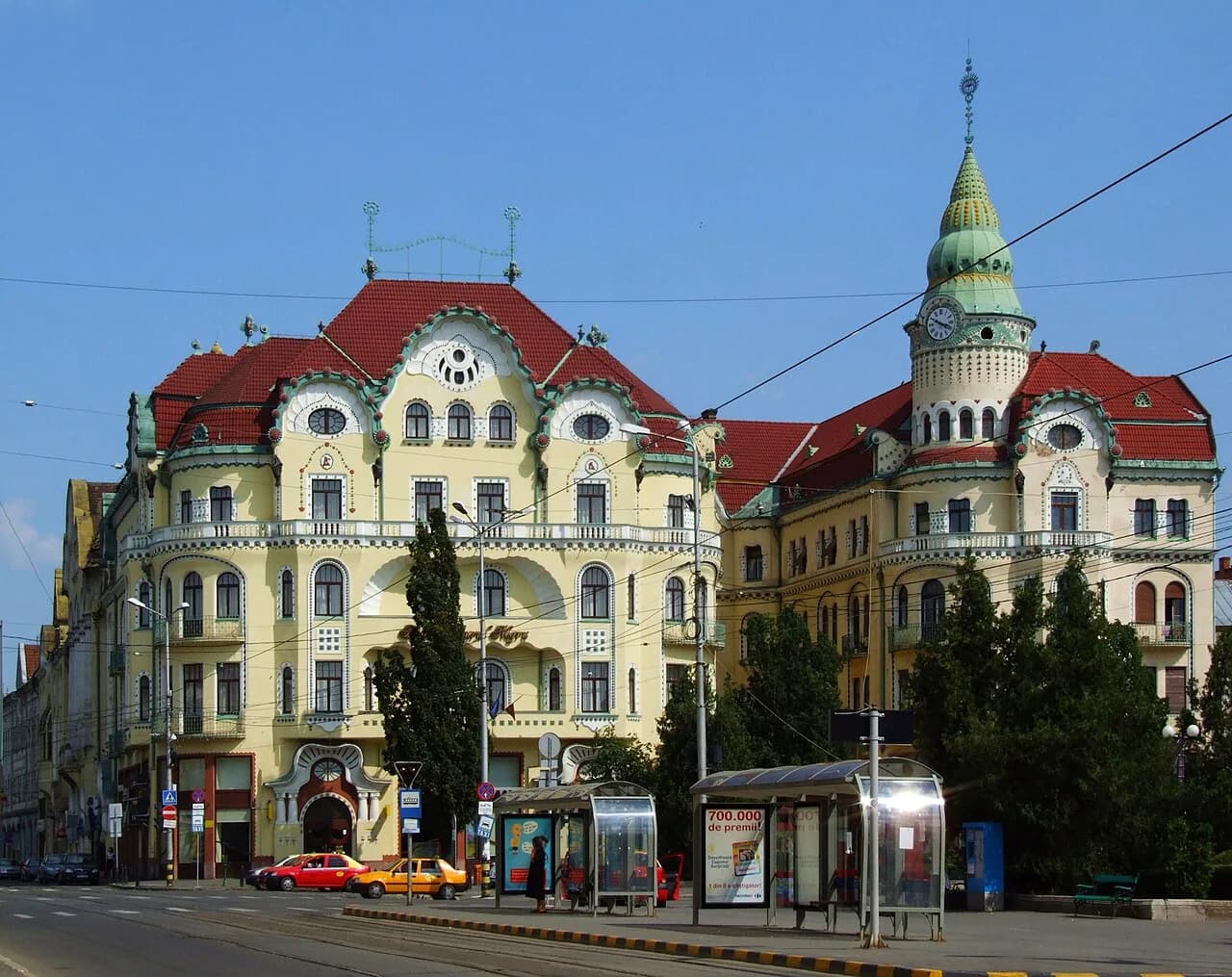
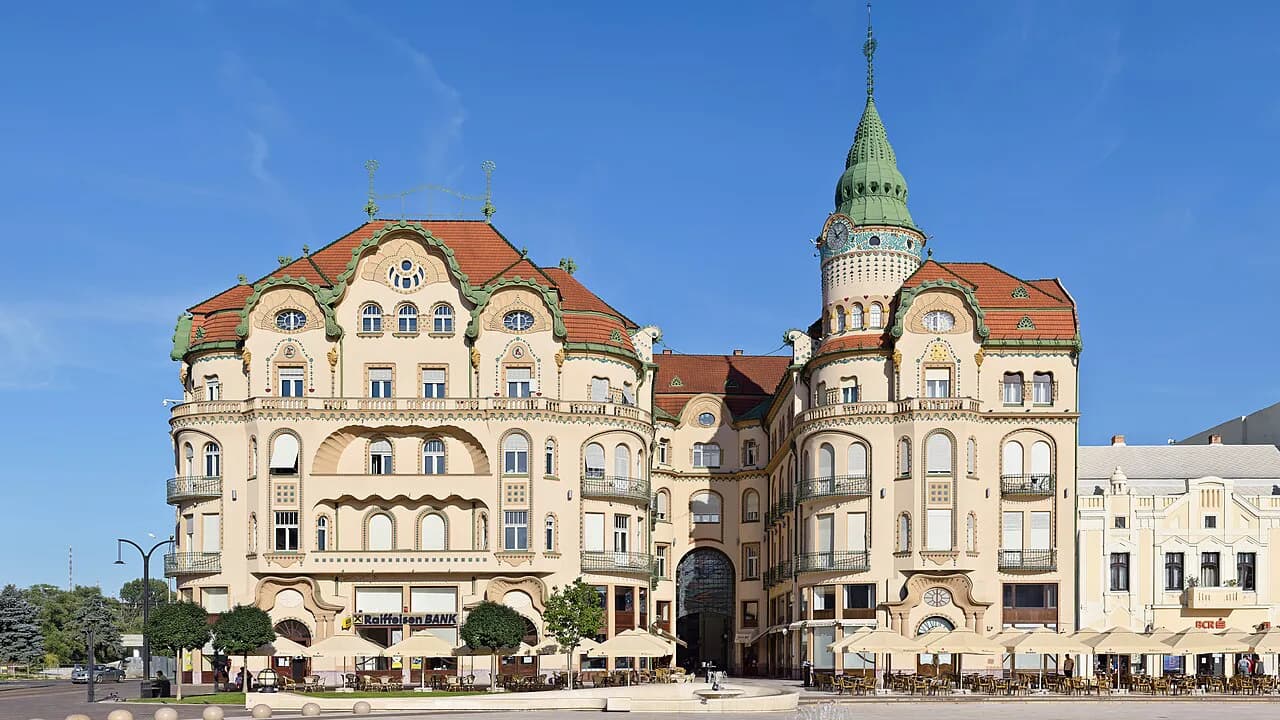
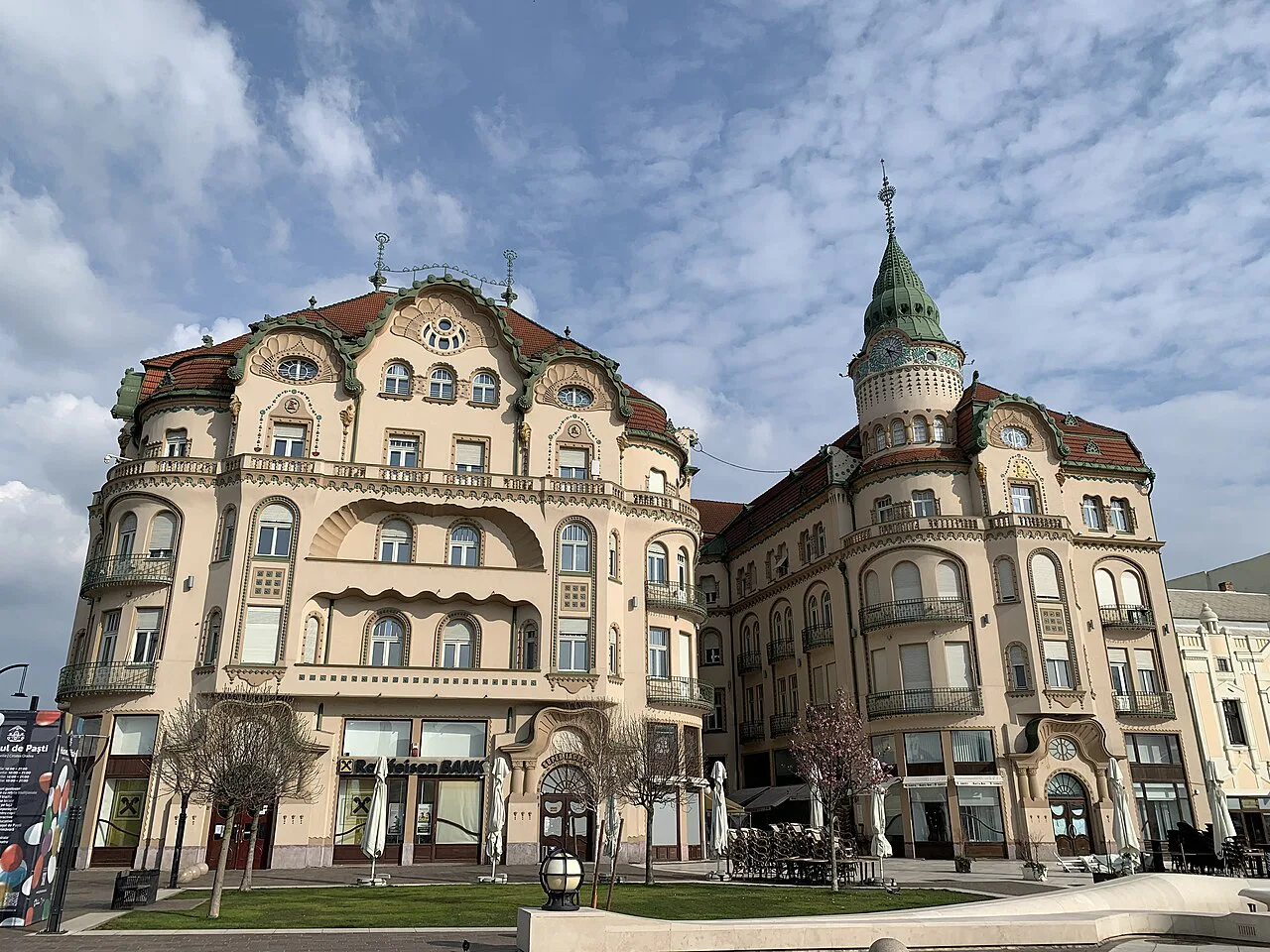
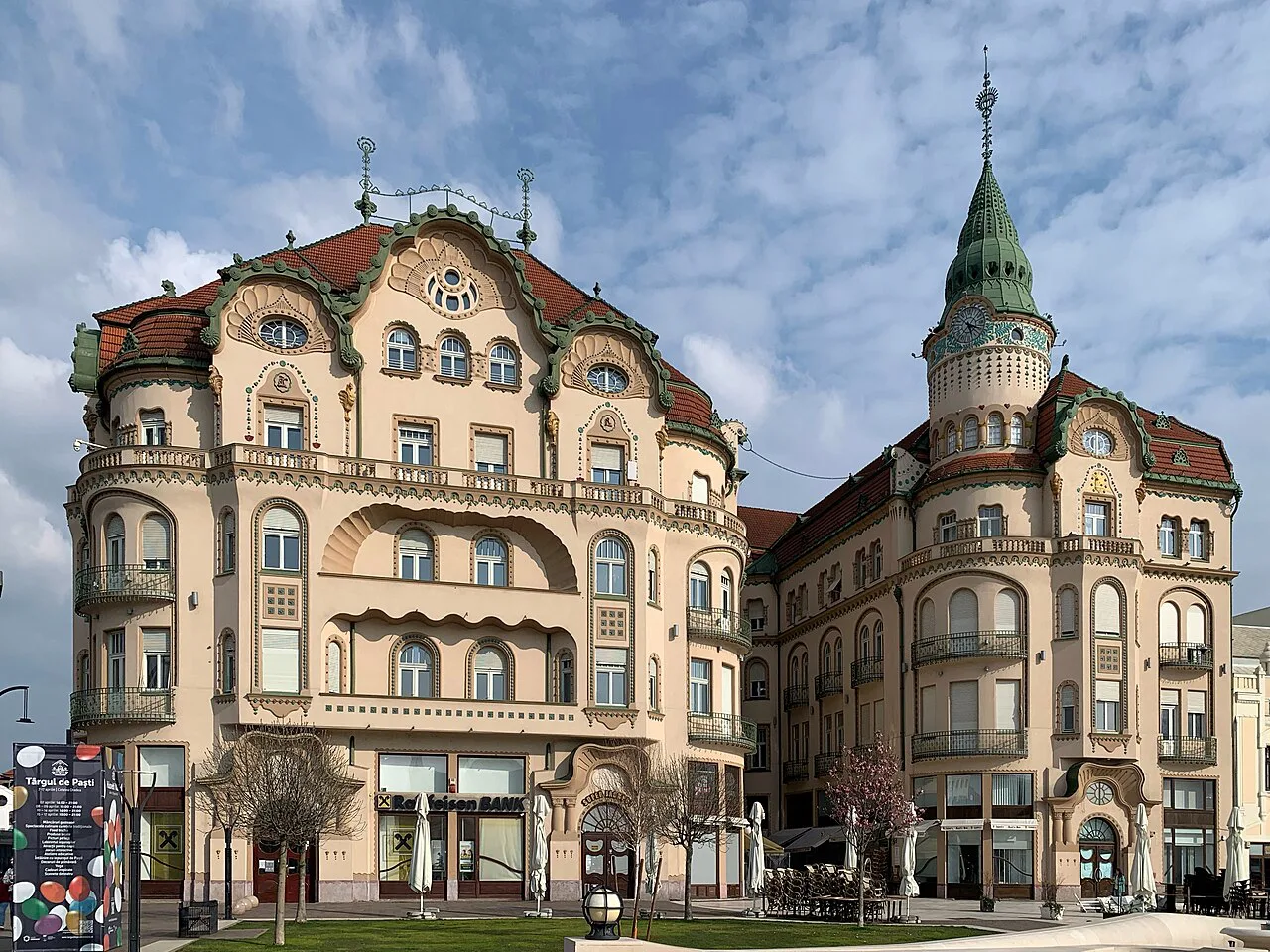
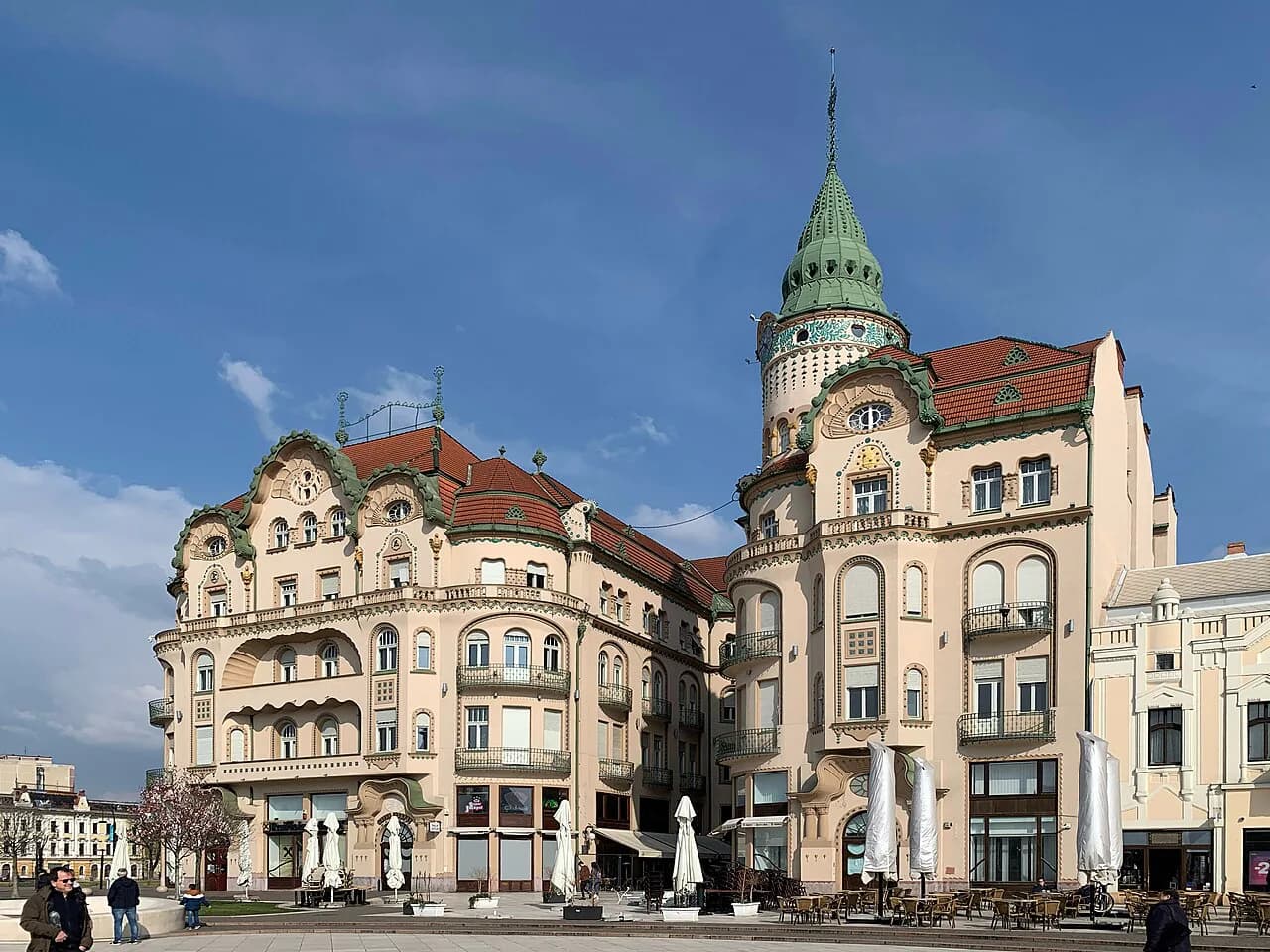
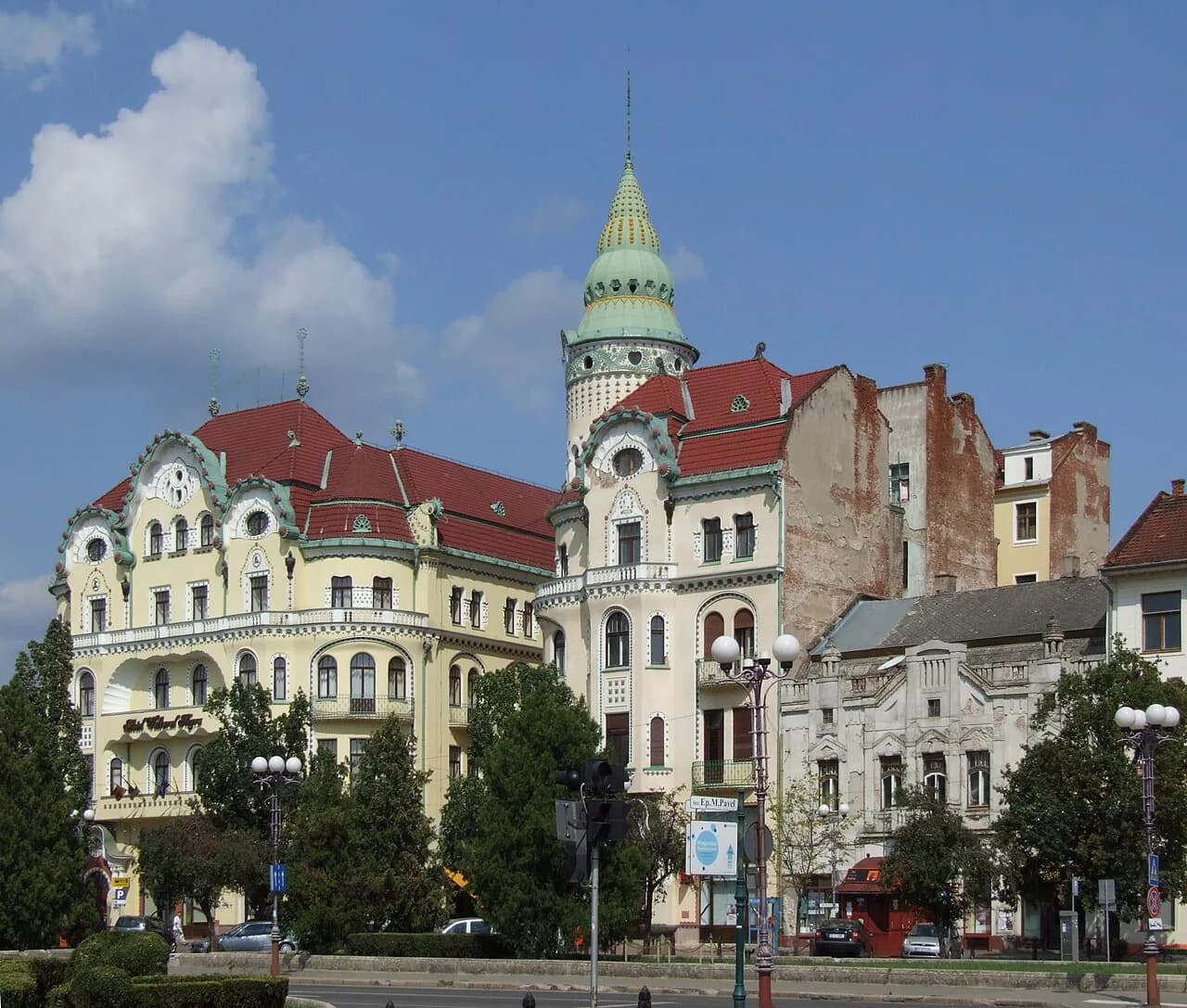
The Black Eagle Palace, Palatul Vulturul Negru, stands in Piața Unirii and was built between 1907 and 1909 to plans by the architects Marcell Komor and Dezső Jakab. It is the clearest single building for the Belle Époque chapter of the city's story.
Cutting through the two main buildings of the palace is the Pasajul Vulturul Negru, a glass-roofed Art Nouveau shopping arcade. It houses shops, a four-star hotel, cafes and a cinema, so you can walk through it whether or not you plan to buy anything.
This is also where the city's claim to a notably rich collection of Art Nouveau architecture becomes concrete. If that is your main interest, the Oradea Art Nouveau guide covers the wider set of buildings beyond the Black Eagle Palace.
The Church of the Moon (Biserica cu Luna)
The late Baroque Church of the Moon, Biserica cu Luna, was completed in 1790. Its clock mechanism was installed in 1793 and features a half-gold, half-black sphere maintained in perpetual motion.
It is a small stop rather than a half-day, but its date places it exactly at the end of the 18th-century rebuilding programme, which makes it a neat close to the Baroque part of your walk. Look up at the clock face rather than at the nave.
The Jewish community in Oradea's story
Oradea's Jewish heritage is a strand of the city's history that is presented on its own walking tour. Guides offer an Oradea Jewish Heritage walk of about two hours in English, alongside the general medieval-to-Belle-Époque route.
Treat it as a distinct subject rather than a footnote to the palace walk. Oradea: Union Square, the Black Eagle Palace and the Fortress covers the central squares if you want to plan the two themes on separate days.
Seeing it on foot: a short central route
A workable order runs from the fortress to the palaces, then into Union Square for the Black Eagle Palace and the Church of the Moon. Because the centre is compact, the whole sequence fits into a morning and early afternoon without transport.
The Crișu Repede runs through the middle of this route, so the river is a handy way to keep your bearings between stops. Save the fortress for last if you prefer to end on the oldest layer of the story.
For the full set of visitable sights beyond the history, the Oradea Attractions hub gathers the individual guides. Pick two or three buildings to enter and treat the rest as a walking route.
Guided walks through the historic centre
Several guided walks in Oradea are listed as tip-based, with no set price and no upfront payment; at the end each participant gives the guide whatever they consider appropriate. English-language options include a walk from medieval to La Belle Époque and a Baroque and Art Nouveau route, both lasting 2 hours 30 minutes.
A guide earns its place here if you want the palace dates and architects explained in sequence rather than pieced together from plaques. If you only want the fortress and Union Square, the walking route is easy enough to follow alone.
Which layer of Oradea to see first
Start at the fortress for the sieges of 1598, 1660 and 1692, then walk into the centre for Hillebrandt's 18th-century rebuild and the 1907–1909 Black Eagle Palace. That order turns a list of dates into a single morning's walk.
If you have a second day, add the museum inside the Bishop's Palace and one of the tip-based walks. Confirm the museum's current hours and ticket price before you go, and book a tour only if the fixed-language format suits you.
Frequently Asked Questions
Which country is Oradea in?
Oradea is in north-western Romania, in the Crișana region, on both banks of the Crișu Repede river and about 8 miles east of the border with Hungary.
Is the fortress older than the palaces in Oradea's centre?
Yes. The fortress was besieged in 1598 and changed hands in 1660 and 1692, while the Bishop's Palace was completed in 1770 and the Roman Catholic Episcopal Palace in 1780.
Do I need a guide to see Oradea's historic centre?
No. The fortress, the palaces and Union Square are close enough to link on foot. A tip-based English-language walk of 2 hours 30 minutes adds the architects and dates in sequence if you want them explained.
Sources
Useful notes for your next trip
Optional updates to our guides.
You might also like
Continue reading
More guides you'll find useful