Oradea Art Nouveau: A Walking Guide to the City's Best Facades
Plan an Art Nouveau walk in Oradea: the Darvas-La Roche House and its museum, the Black Eagle Palace and the Secession palaces linking the squares.
On this page
Oradea's Art Nouveau fits into a single flat circuit through the centre, and you can see the best of it in roughly half a day. The city publishes a 2.4 km route of about 3,000 steps and 30 minutes that strings the main Secession facades together, which makes planning simple. This guide follows that line, names what you are looking at and separates the buildings you admire from the one you go inside.
What Oradea's Art Nouveau is and where you see it
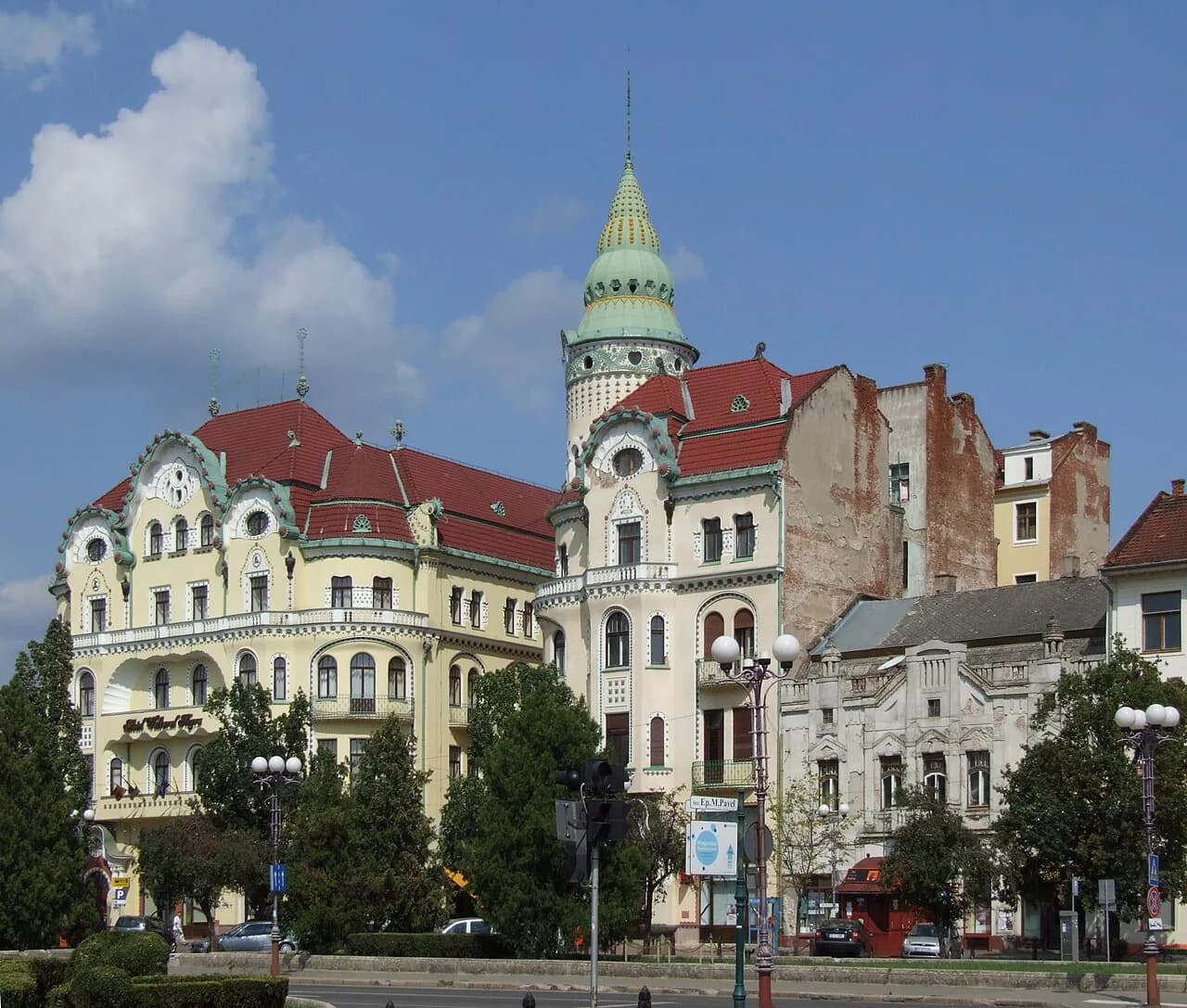
The style here is Secession, the Central European strand of Art Nouveau, and it shows in ceramic cladding, pierced balconies, stained glass and ironwork shaped into plant and heart motifs. Oradea's own tourism site counts 89 Art Nouveau buildings and monuments in the city, so you are never far from one. The concentration sits in the centre, between Piața Unirii, Piața Ferdinand and the streets running off them, which is why a walk works better than a bus.
Start in Piața Unirii (Union Square)
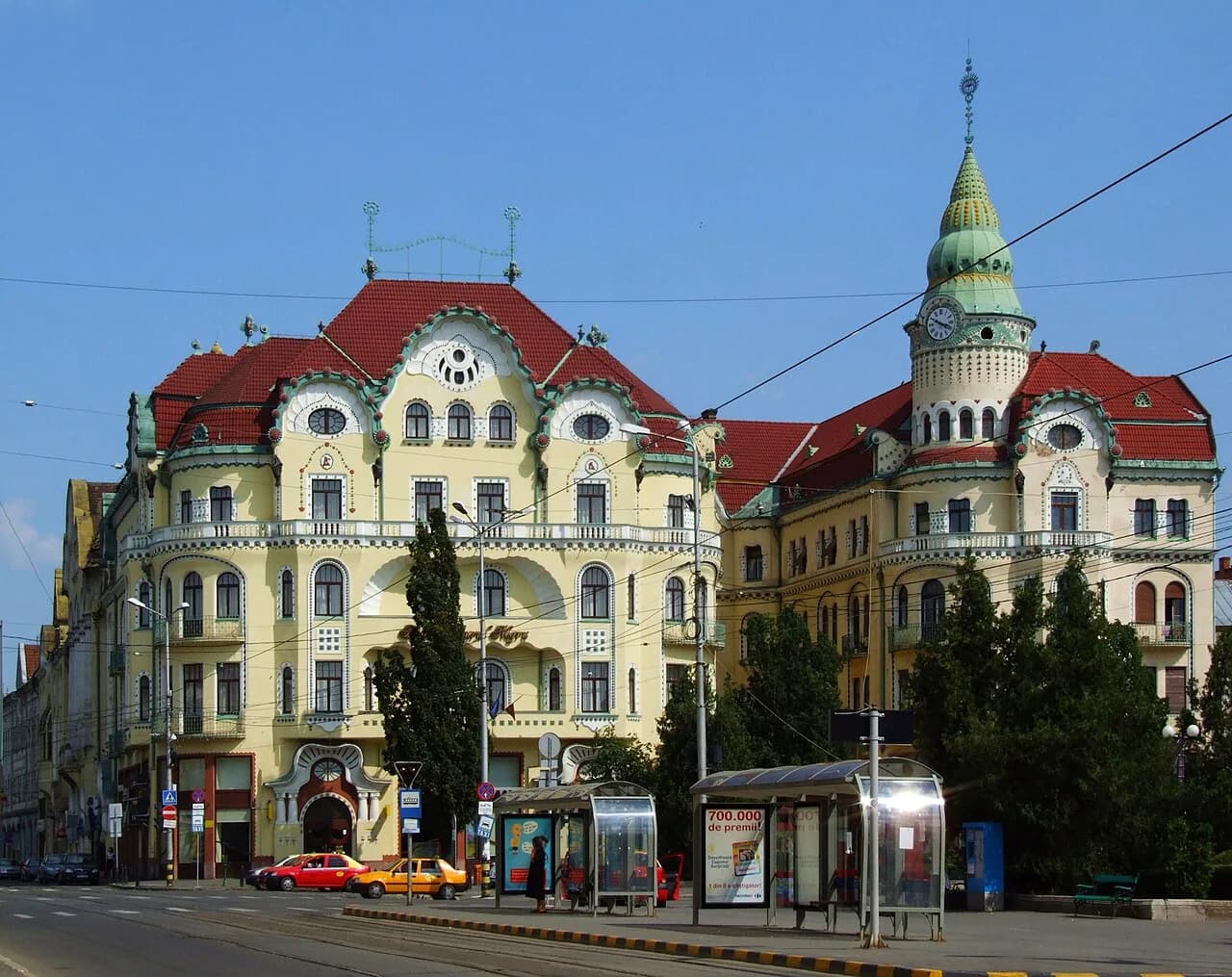
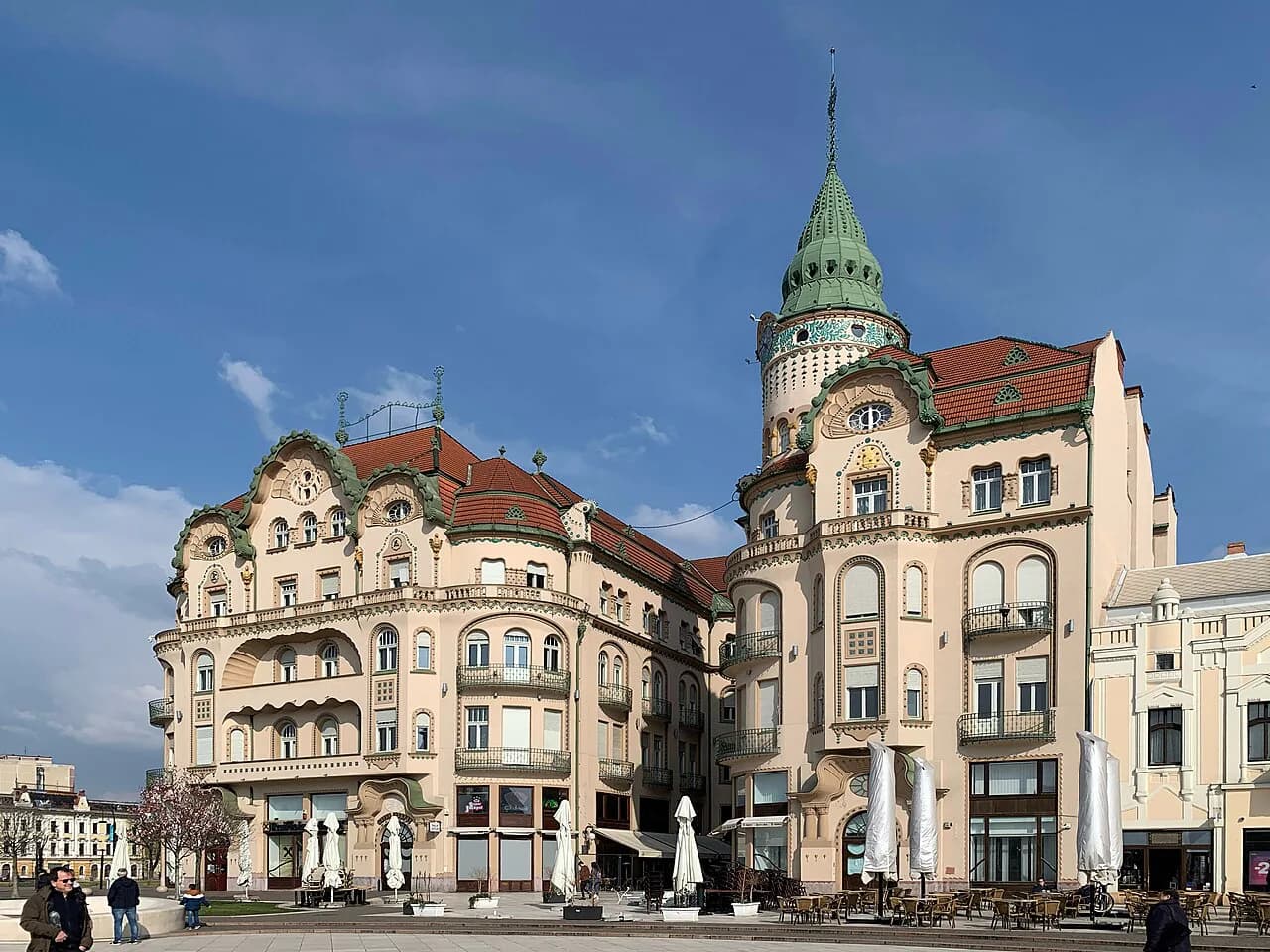
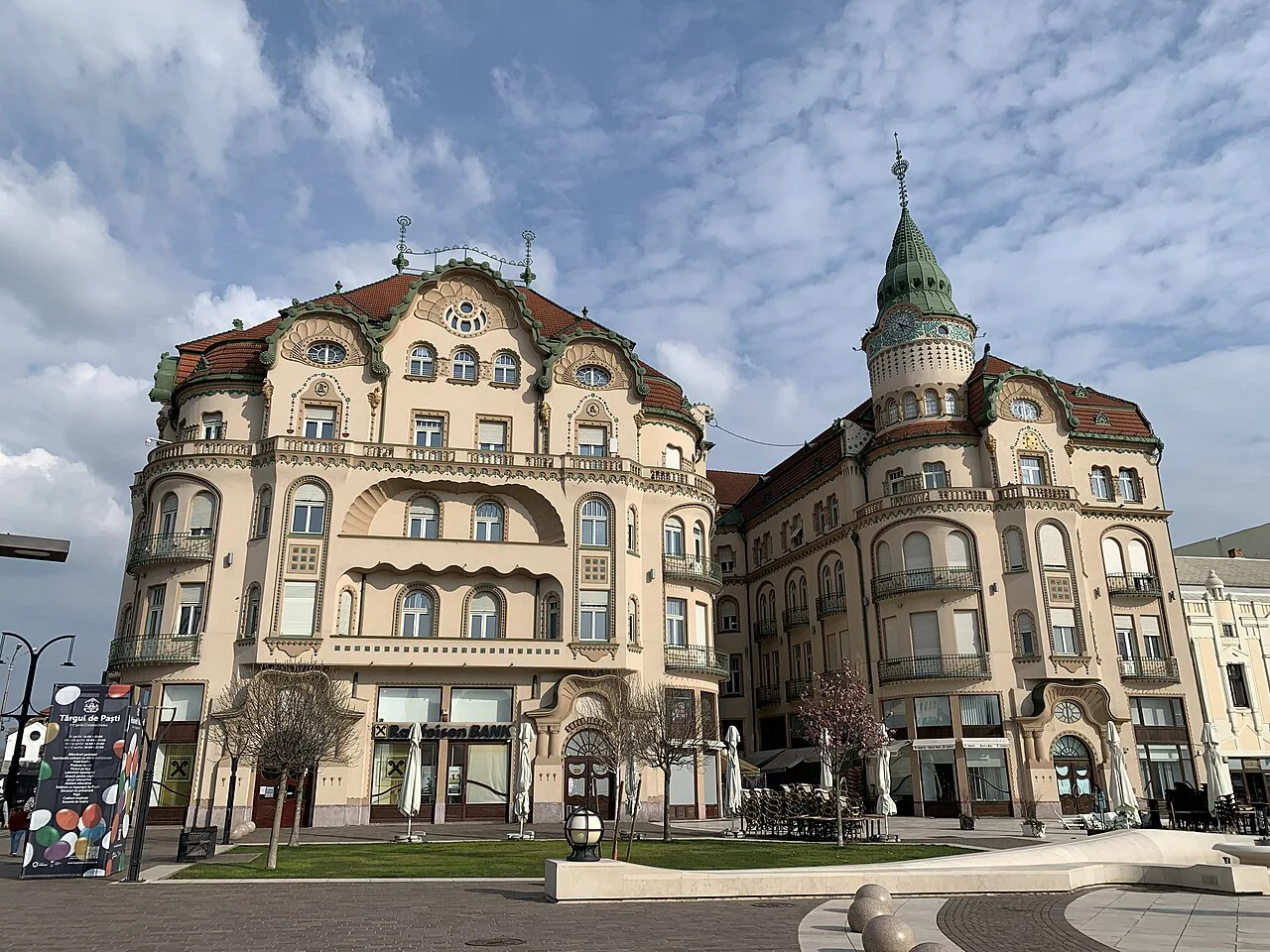
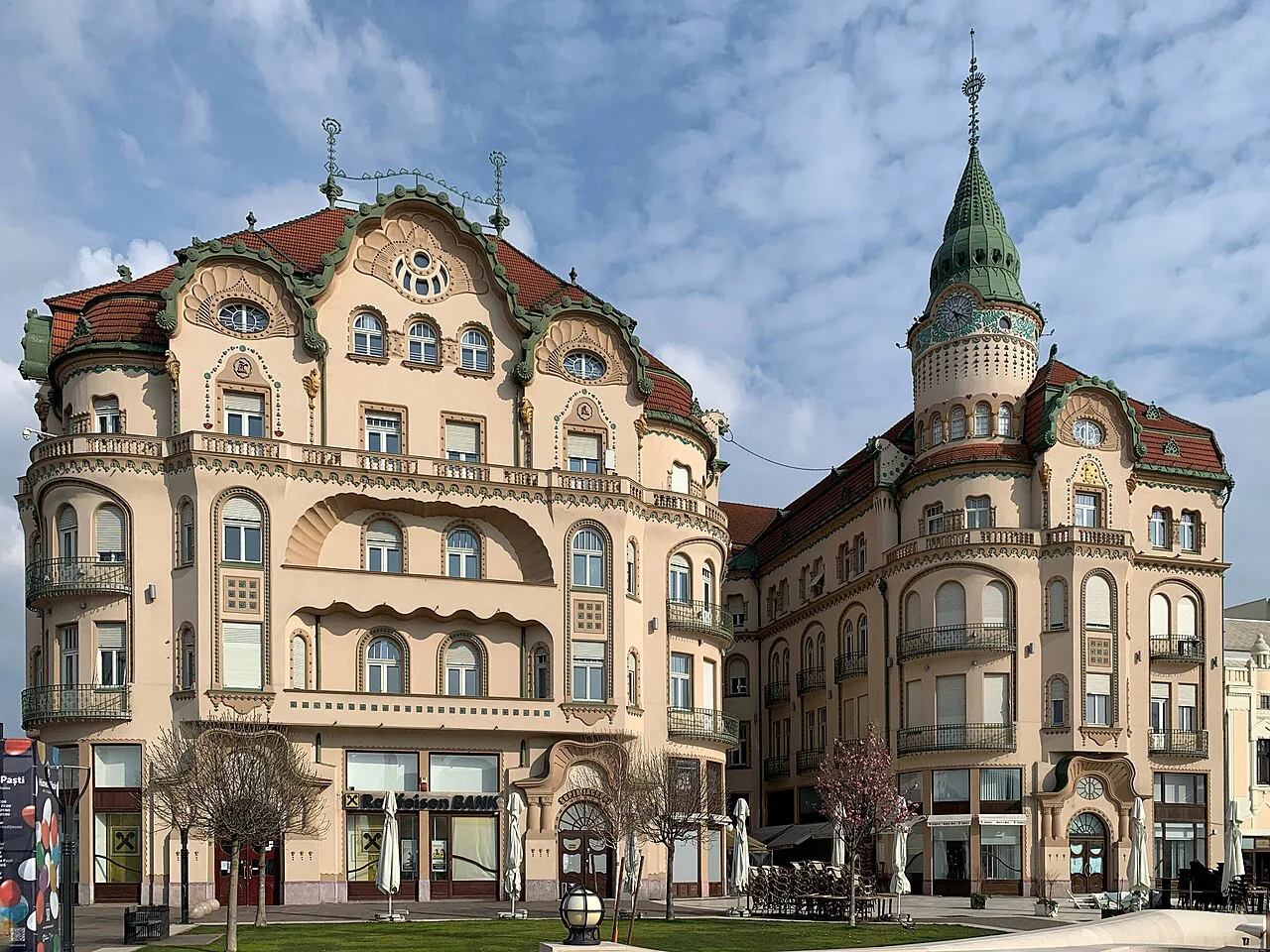
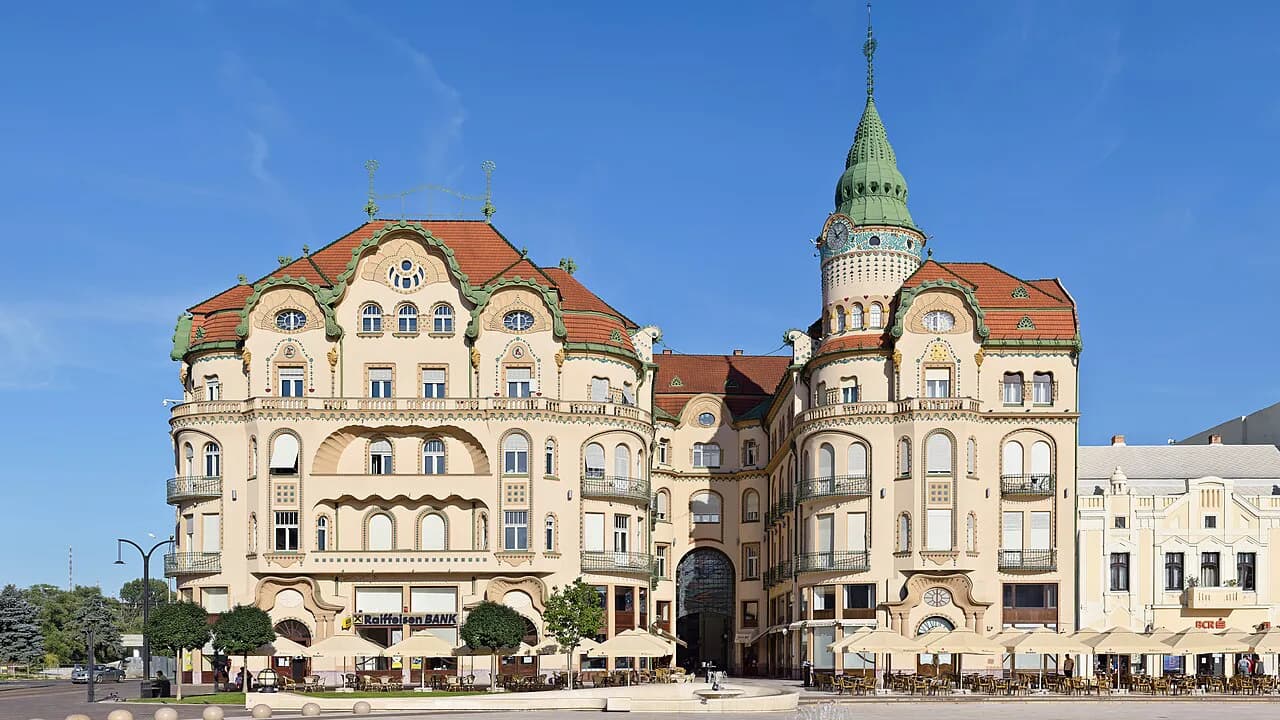
Piața Unirii is the natural first stop. The Vulturul Negru Palace, known in English as the Black Eagle Palace, stands on the square, alongside the Oradea City Hall and its tower, the Greek-Catholic Episcopal Palace and three churches.
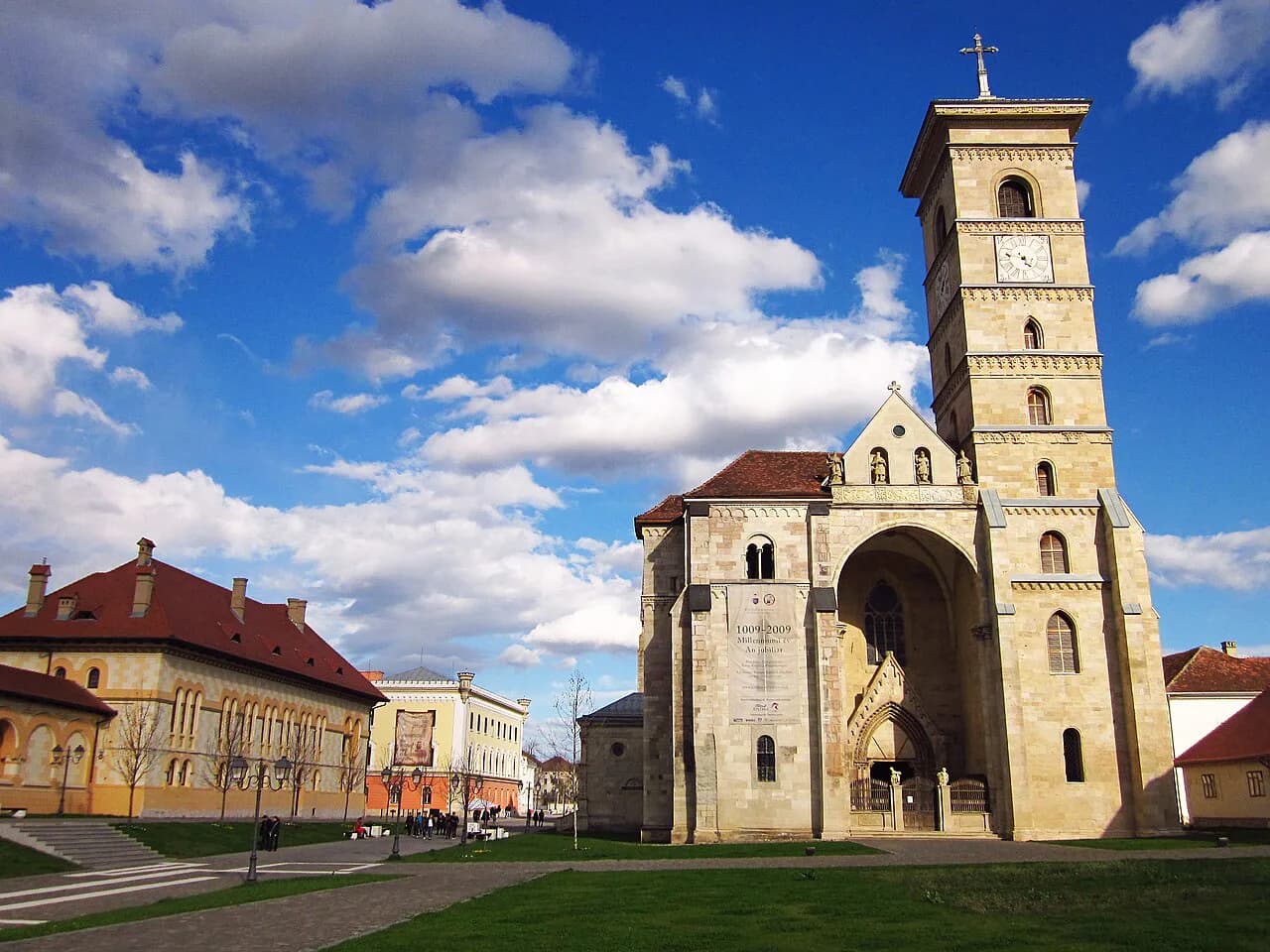
The three places of worship on the square are the Moon Church, the Church of Saint Nicholas and the Church of Saint Ladislaus, and the Sion Neolog Synagogue stands a short way off on Independence Street. Look up at the Moon Church clock, whose mechanism shows the phases of the moon as well as the time. The City Hall tower is a separate stop again: it can be climbed to a height of over 40 metres for the panorama, and the clock at the top plays Iancu's March at fixed times.
The Darvas-La Roche House on Iosif Vulcan Street
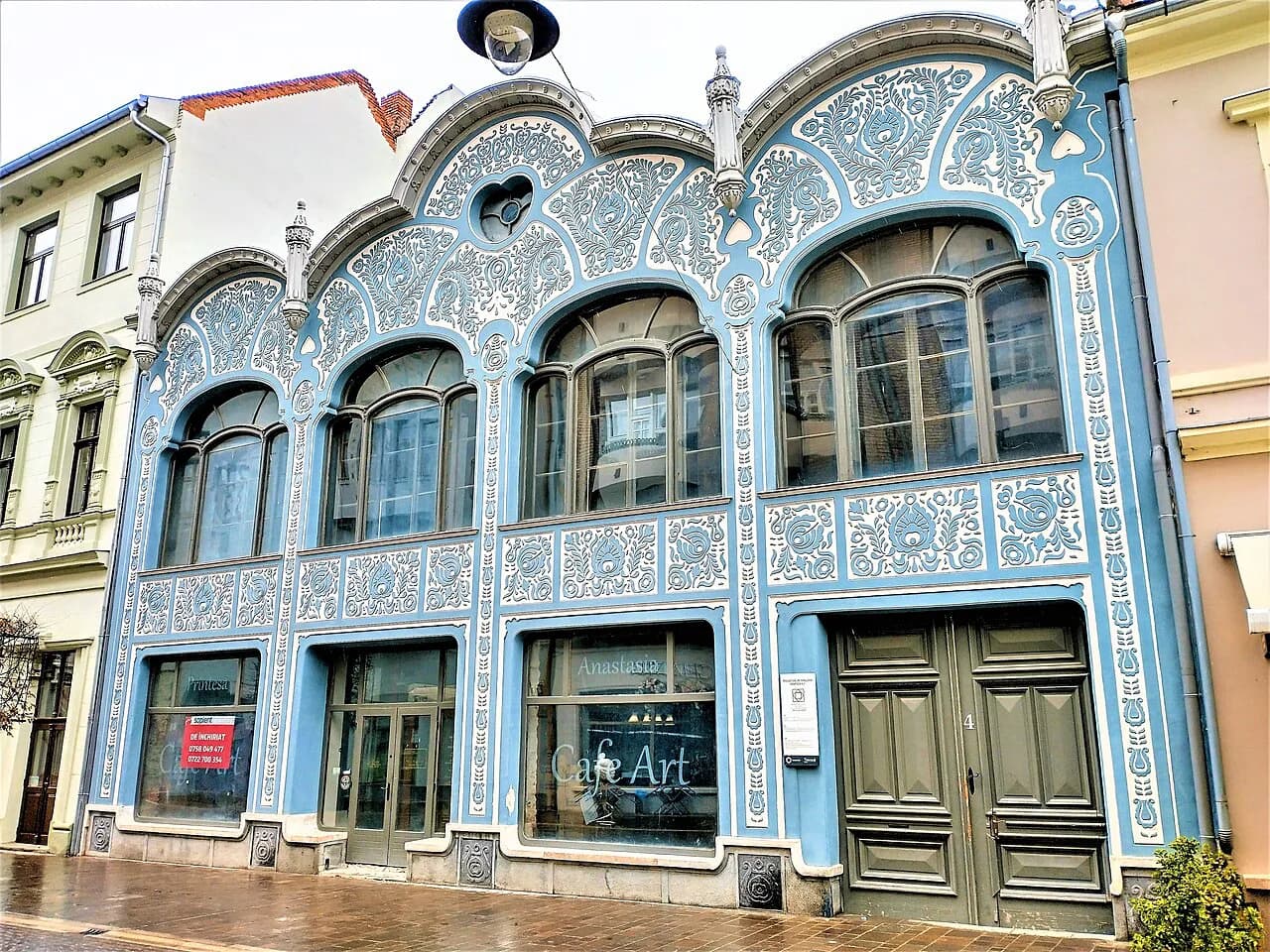
The one building on the route that rewards going inside is the Darvas-La Roche House, built between 1909 and 1912 by the architects László and József Vágó. Its facade is studded with decorative buttons of Zsolnay ceramic in six distinct motifs, their greenish-blue glaze catching the light, and the balcony above carries pierced tracery of pine cones, hearts and spiralling plants. The house has two frontages, one to Iosif Vulcan Street and one to the Crișul Repede, and its wrought iron follows the Viennese Secession habit of turning plant forms into geometric triangles and scrolls.
After restoration the house holds the Art Nouveau Museum, the city's newest museum. Inside, the original stained glass does most of the work: a glazed wall in the ground-floor hall, and upstairs a window of flowering stems and birds kept in its original position and form, plus a glazed panorama in the bedroom. The upper bedroom keeps neo-rococo furniture carved from pale-painted sycamore that belonged to the original owners.
Piața Ferdinand and the Republicii pedestrian street
From Union Square, Piața Ferdinand is a few steps away and has been fully renovated, so the facades are easy to read. The Regina Maria Theatre faces the square in one of the city's key heritage buildings, and the Grand Hotel Astoria and the Pannonia Hotel, now the Transilvania restaurant, stand here too, with Poynar House in Secession style close by.
Strada Republicii, the pedestrian spine, runs from Piața Ferdinand towards the Crișul store and on to the main station. This is where the parade of Secession palaces is densest: Moskovits Miksa Palace, Apollo Palace, Stern Palace and the Rimanóczy Kálmán senior Palace all line the restored promenade. Walk it slowly in one direction and note which facade you want to photograph on the way back, when the light falls differently.
The official 2.4 km route as a ready-made plan
The city's own line is worth following rather than inventing your own. It runs past the Black Eagle Palace, the Moon Church, Füchsl Palace, the Sion Neolog Synagogue, the Oradea State Theatre, Rimanóczy Kálmán Palace, Poynar Palace, the Darvas-La Roche House and Moskovits Miksa Palace, and the published details are 2.4 km, 3,000 steps and 30 minutes. Treat those as the route's own figures, not a promise for every walker with a camera.
To follow it on the ground, keep a map open and tick off the named buildings as you pass them; the Oradea map marks the squares and the Crișul Repede, which gives you two fixed reference points when the streets bend. The route is flat and entirely central, so it suits an afternoon rather than a full day.
How long to allow and how to pace it
The 2.4 km route is a walking route through the centre, not a measured sightseeing schedule, so allow more than its nominal 30 minutes if you stop to read facades or photograph them. Budget an hour or more for the Darvas-La Roche House if you want to read the stained glass and the period rooms properly, and add time for the City Hall tower climb, which is a separate effort from the street walk. Doing both in one day is realistic because everything sits within a few minutes of Piața Unirii.
Opening days, ticket prices in lei and any seasonal closures for the Art Nouveau Museum and the tower are not fixed in the sources here, so check the museum's own listing or the tourist information centre before you set out. Build the walk around the museum's opening times rather than the other way round, and leave the facades for whenever the museum is shut.
Ending on Ciuperca Hill
Ciuperca Hill, Dealul Ciuperca, is the city's most important viewpoint and closes the walk with a look back over the rooftops you have just crossed. It is the obvious place to end, because you can pick out the towers and the Crișul Repede from above after seeing them at street level. Go late in the day for the last of the light on the facades.
If you want more context on how the centre took its present shape, the Oradea history pages are the place to read up before or after the walk.
What the walk does not cover
The Art Nouveau circuit stays in the centre, so it leaves out the Oradea Citadel and the Baroque Complex, both of which sit outside this line and deserve their own time. The citadel reopened to the public in 2015 after restoration and now holds museums, craft workshops and restaurants, with a water-lily lake in the moat; the Baroque Palace, built between 1762 and 1777, has 365 windows, one for each day of the year. Neither is Art Nouveau, so treat them as a separate half-day rather than bolting them onto the facades.
For the wider picture of the city, from the squares to the fortress and the synagogues, the Oradea guide sets the Art Nouveau walk alongside everything else worth seeing. Two days gives you the centre on foot and one outlying complex without rushing either.
Should you do the Art Nouveau walk first or the museum first?
Walk the route first thing, while the streets are quiet, then go into the Darvas-La Roche House once it opens; you will recognise the Zsolnay buttons and the balcony tracery from the other palaces you have already passed. Finish on Ciuperca Hill, and keep the citadel for another half-day rather than squeezing it in.
Explore more Oradea guides
Frequently Asked Questions
Is Oradea known for Art Nouveau architecture?
Yes. The city's tourism site lists 89 Art Nouveau buildings and monuments and groups its routes around them, with the densest cluster in the centre between Piața Unirii, Piața Ferdinand and the streets linking them.
Can you visit the Darvas-La Roche House inside?
Yes. After restoration the house holds the Art Nouveau Museum, with the original stained glass, period rooms and neo-rococo furniture on show. Check the museum's current opening days and ticket prices before you go.
How long does an Art Nouveau walk in Oradea take?
The city's published route is 2.4 km, about 3,000 steps and 30 minutes, which covers the facades only. Add an hour or more for the museum interior and time for the City Hall tower climb if you want both.
Sources
Useful notes for your next trip
Optional updates to our guides.
You might also like
Continue reading
More guides you'll find useful