Alba Iulia: Inside the Alba Carolina Citadel
Plan Alba Iulia around the star-shaped Alba Carolina Citadel: its gates, two cathedrals, palaces and museums, with a walking route and how long to allow.
On this page
Alba Iulia is a small Transylvanian city whose old town sits inside one continuous ring of fortifications, the Alba Carolina Citadel, so most of what you came to see is within a short walk of the gates. The city is the capital of Alba County and stands on the Mureș River in the historical region of Transylvania. This guide treats the walls and gates as your route rather than a backdrop, and it separates the two cathedrals, the palaces and the museums so you know what each building is showing you.
Allow half a day for the fortifications, both cathedrals and the main square, and a full day if you add the palaces, the library and a museum. Everything described below sits inside or immediately beside the star-shaped walls unless the section says otherwise, which keeps the walking short.
What Alba Iulia is and why visitors come
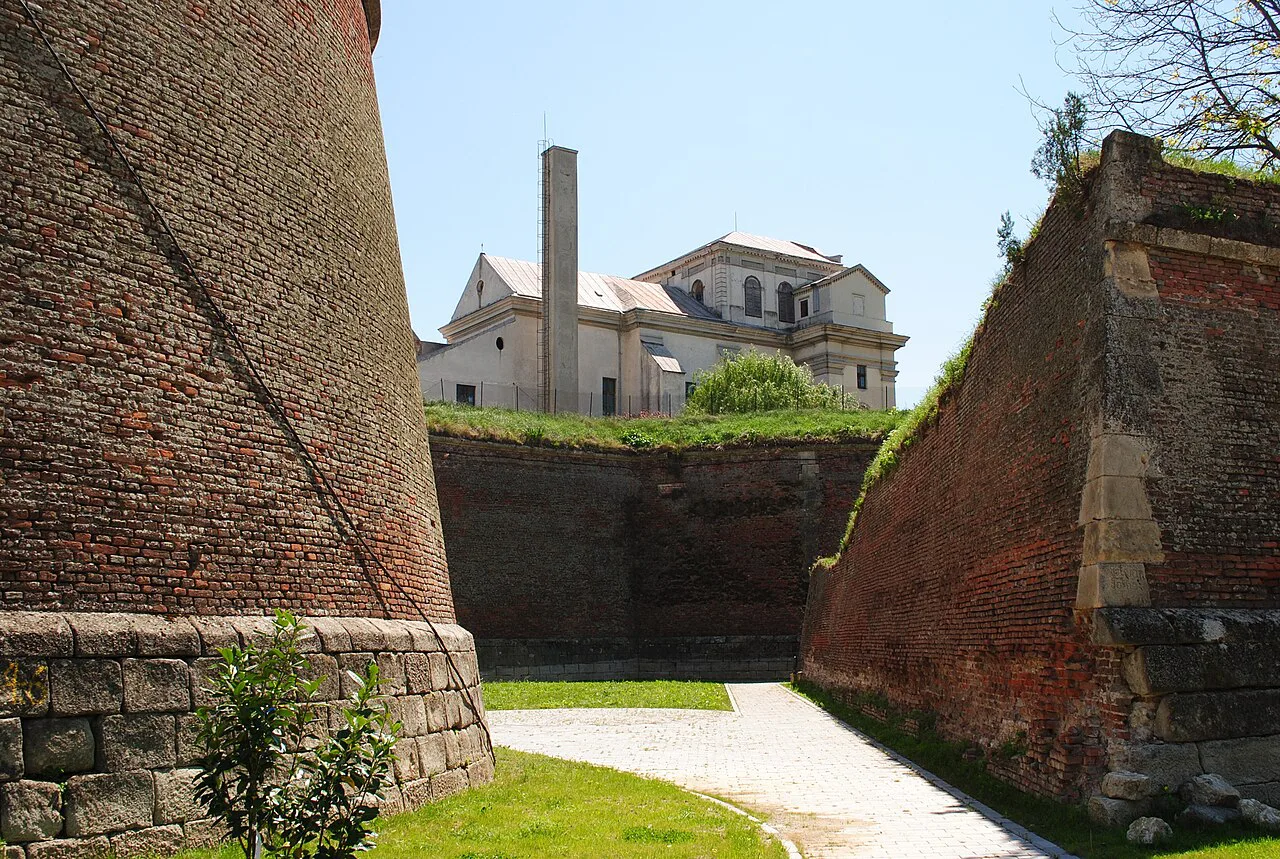
Visitors come for the citadel: a Vauban-style fortress one kilometre across, built to serve as Transylvania's main military hub and designed to hold the Habsburg Empire's splendid buildings behind a protective star of earthworks and walls. That military shell survived, and the historic core of Alba Iulia still sits within it, which is why a visit here feels like entering a town rather than viewing a monument.
The wider city around the walls has a population of about 64,000, recorded in the 2021 census, and it includes four smaller villages: Bărăbanț, Micești, Oarda and Pâclișa. Those villages are outside the tourist core, so a short break can ignore them entirely and stay within walking distance of the gates.
Where Alba Iulia sits and the names it goes by
Alba Iulia lies on the Mureș River in west-central Romania, in Alba County, which makes it a natural stop between the larger Transylvanian cities rather than a detour off the main lines. In Romanian, Alba means white, and the modern name became established in the 18th century.
The city has carried several names, and you will still see them on old maps and on signage. The German name was Weyssenburg before the Saxons changed it to Karlsburg, in honour of Charles VI, and the Hungarian name is Gyulafehérvár, meaning the white castle of the Gyula. Earlier Slavic and old Romanian forms gave Bălgrad, also meaning white town or white castle, and the Roman site underneath the city was called Apulum.
Getting into the citadel: gates and star-shaped walls
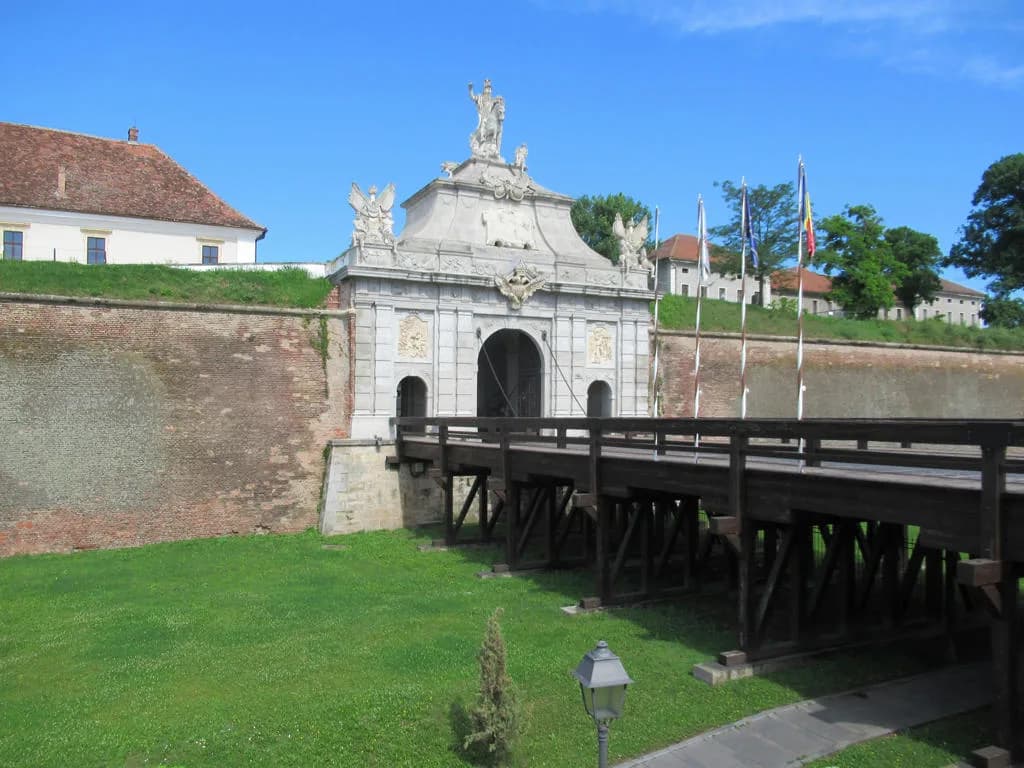
You enter the old town through the fortress gates, and the walls themselves are the first sight worth slowing down for. The Alba Carolina Citadel was built in the early 18th century, between 1716 and 1735, to a design by Giovanni Morando Visconti, and its defensive star shape frames the whole historic centre. Walking the outside of the fortification first, then entering through a gate, gives you a clear sense of how the town was meant to be defended.
Inside the gate, the streets are short and the sights cluster together, so there is no need for transport once you are through. Keep one gate as your reference point for the way back out, because the star layout sends roads off in several directions and the outer town is less clearly signed.
St Michael's Cathedral
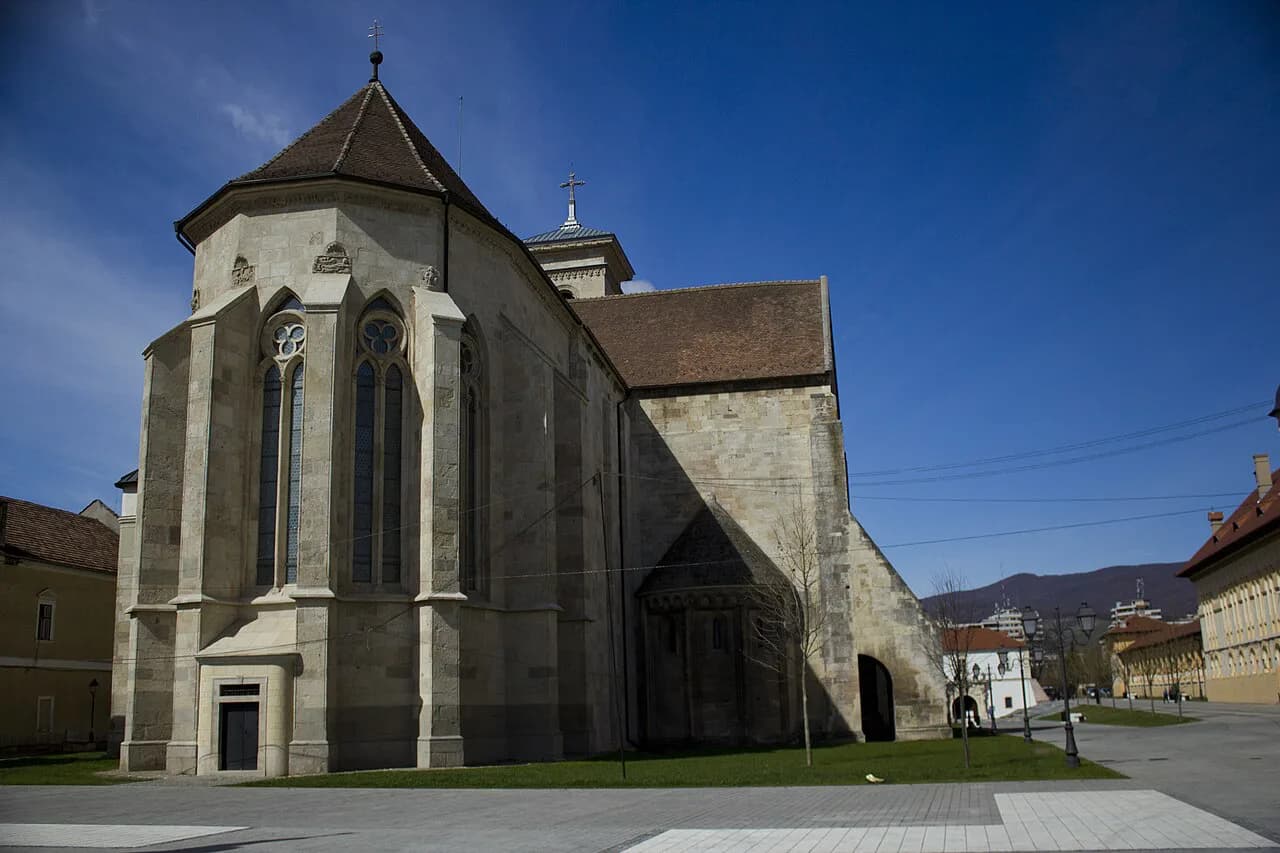
St Michael's Cathedral is the Catholic cathedral inside the citadel, seat of the Archbishop of Alba Iulia, and it has stood here almost unchanged since the 13th century, with frescoes, a chapel and choir stalls added in the Renaissance. Look for the Romanesque reliefs, the Pietà and the organ, and the tombs of rulers including Isabella Jagiellonica and Johann Sigismund Zápolya. The building looks slightly lopsided from outside because a second tower was planned and never paid for, but the Gothic interior is the reason to step in.
Its history explains the building beside it: the cathedral became Calvinist during the Reformation and was returned to Catholic use when the Habsburgs took power. That is why a second, Orthodox cathedral was raised directly next door.
The Coronation Cathedral
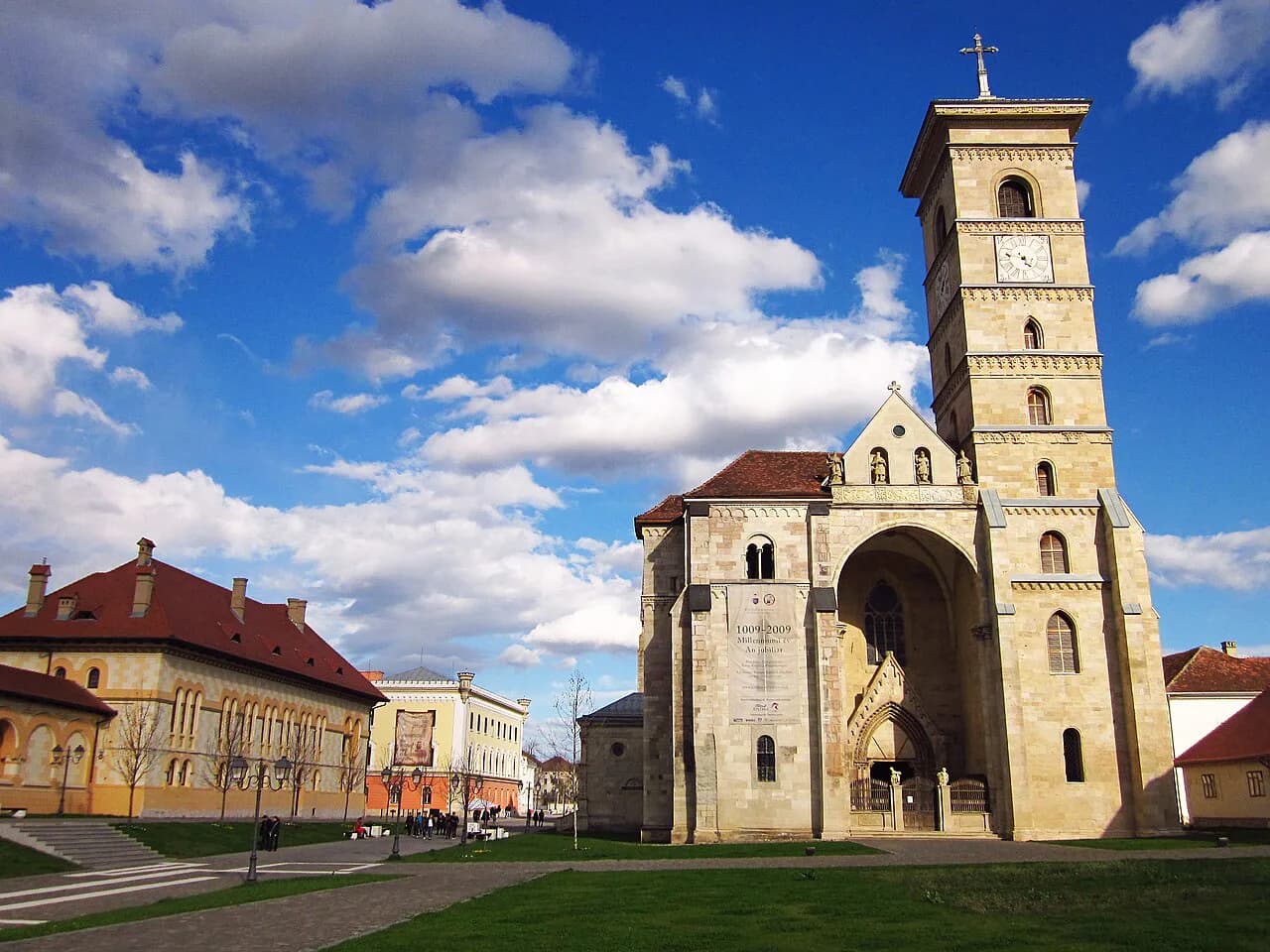
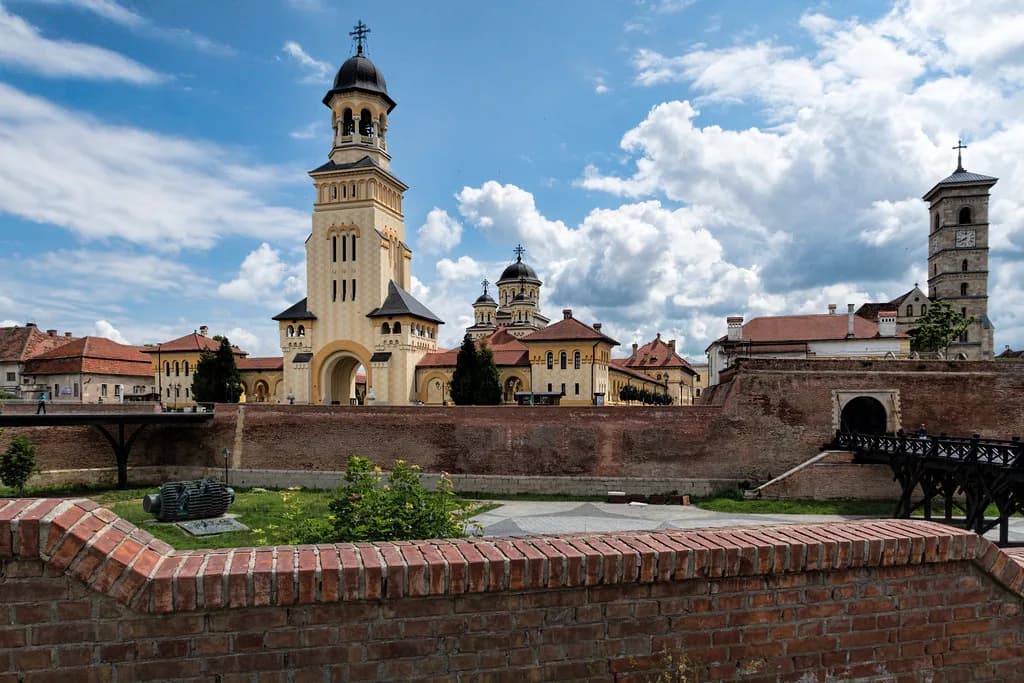
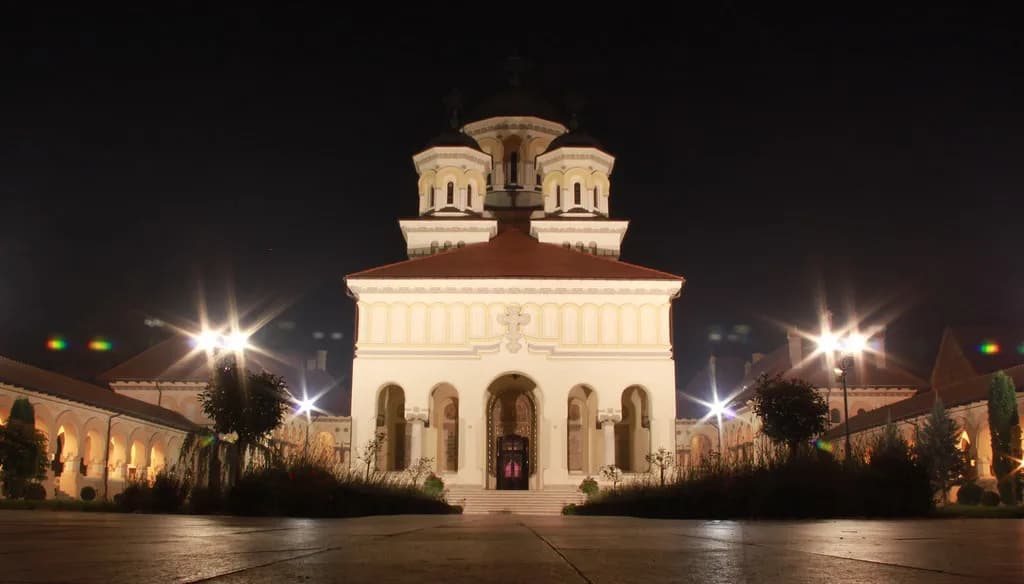
The Coronation Cathedral, also called the Trinity Cathedral and the Cathedral of the Reunion, is the dominant building of the citadel, reached through a bell tower almost 60 metres high that leads into an arcaded courtyard where ancient finds are displayed. The neo-Byzantine church with its domes was built in the 1920s, after Transylvania became part of Romania, and it commemorates the 1918 Union declared in this city. Ferdinand I and Marie were crowned here in 1922.
Pair the two cathedrals in one stop: they stand side by side, one Catholic and Gothic, the other Orthodox and domed, and seeing them together makes the Habsburg and Romanian layers of the town obvious in a way that visiting either alone does not.
The Museum of National Unity and the Union story
The Union declared at Alba Iulia on 1 December 1918, when Romanian leaders gathered here to join Transylvania with Romania, is the event the modern town commemorates, and several places in the city mark it. The Museum of National Unity carries that story inside the citadel, so treat it as the place where the 1918 declaration is explained on the ground rather than as another historic house.
Before you build a day around the museum, check its opening days and ticket price in lei, since the museum sets its own conditions. The same applies to any other interior you plan to enter.
Other stops inside the walls
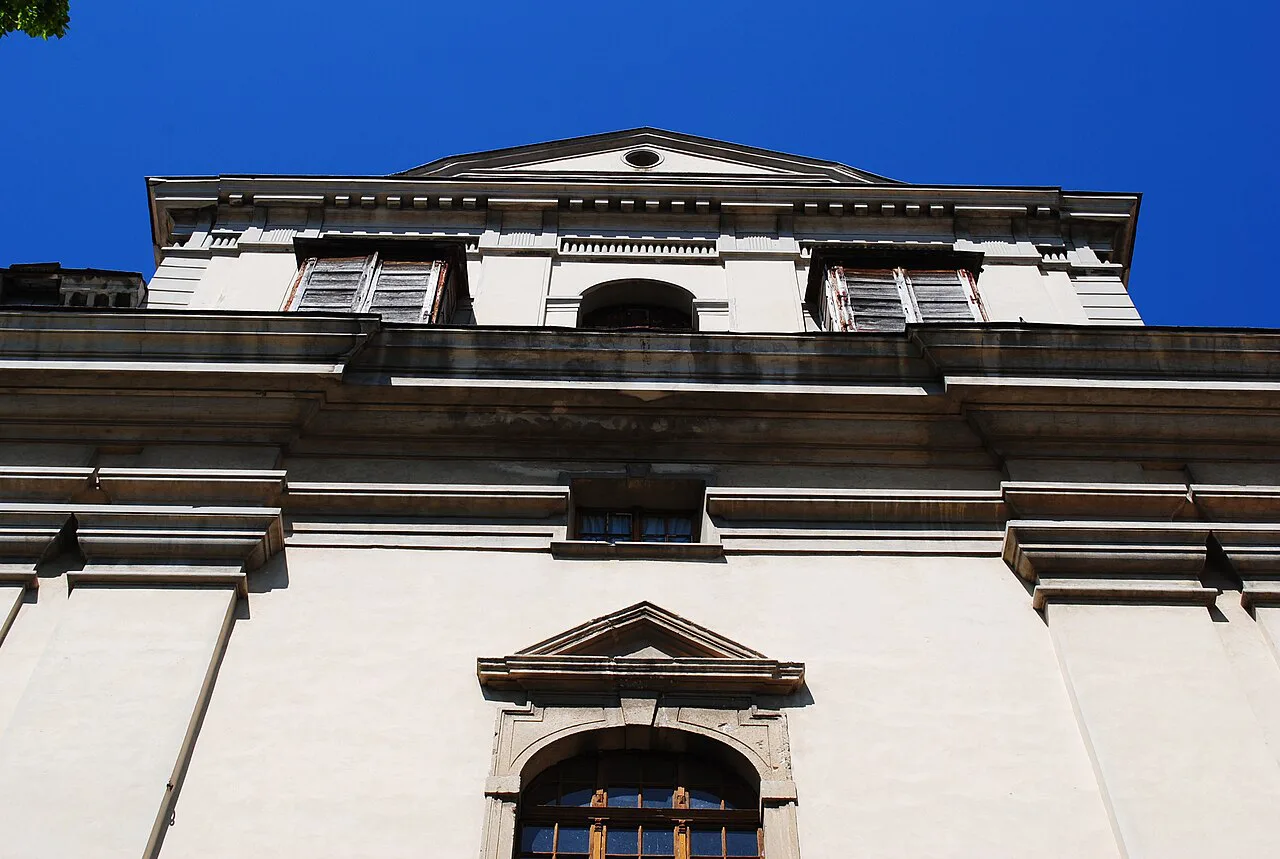
Beyond the cathedrals, the citadel holds the Prince's Palace, the Apor Palace and the Batthyaneum Library, a collection that dates from 1780. The synagogue, built in 1840, is also part of the town's fabric, and the Jewish community here was the first in Transylvania, formally allowed to be founded in 1623. These are separate buildings rather than one complex, so pick the ones that interest you instead of trying to tick off every facade.
Allow roughly an hour to walk past these palaces and the library without going in, and more if you plan to visit the library itself. The arcaded streets between them are where the citadel's everyday life happens, so this stretch rewards a slower pace rather than a checklist.
The Roman castrum of Apulum
Underneath the Habsburg town lies Roman Apulum, home to the XIII Gemina legion, whose camp is the largest in Romania at about 37.5 hectares. Remains of the castrum are still visible in Alba Iulia, and the arcaded courtyard of the Coronation Cathedral displays ancient finds, so the Roman layer is not confined to a single site.
If Roman remains are your priority, build the walk around the castrum first and the citadel second, because the fortress streets are easier to cover quickly at the end of the day.
A walking route through the citadel
Start outside the walls for a view of the star-shaped defences, enter through one of the gates, then head for the two cathedrals, which stand beside each other and anchor the centre of the old town. From there, the palaces and the Batthyaneum Library are a short walk away, and the Museum of National Unity fills the middle of the route. Finish outside the walls so you leave by a different gate from the one you entered; the circuit makes the fortress layout clear in a way that walking back the same way does not.
The whole circuit is level and compact, and a map helps because the star layout produces several similar-looking streets. Load an offline map before you arrive if you plan to move between the sights without backtracking.
How long Alba Iulia needs
Half a day covers the walls and gates, both cathedrals and the main square at an unhurried pace, which suits a stop on a longer Transylvanian itinerary. A full day adds the palaces, the library and the Museum of National Unity, and leaves time to walk the outer fortifications properly rather than glancing at them on the way in. The honest trade-off is depth against breadth: the citadel rewards a full day, while a half-day visit gets you the essentials without the museums.
If you are weighing Alba Iulia against other stops, the deciding factor is whether you want one walled town in detail or several towns in sequence. Neighbouring Sebeș, for example, has its own Saxon citadel and works as a separate half-day rather than an add-on to this one. If you have a few days in Transylvania, it is worth slotting Alba Iulia alongside other stops rather than treating it as a standalone day.
How the town is laid out around the citadel
Alba Iulia divides into the historic core inside the star-shaped fortifications and the wider modern town outside them, with the two connected by the fortress gates. Practical stops, including the railway station, sit in the outer town, so budget a walk or a short taxi ride between the two.
Because the old town is enclosed, orientation is simpler than in most cities: find the walls and you find everything else. Plan your day from the gate inward and you will spend your time at the sights rather than working out which way the centre lies.
Practical checks before you go
Opening days and ticket prices in lei for the museums and the library need checking before you travel, because each interior keeps its own arrangements and the cathedrals and fortifications are visited on different terms. The town's tourism site lists attractions and activities in Alba County, including the citadel, and is the place to start for what is currently open.
If Alba Iulia is one leg of a longer Romanian trip, compare it with the bigger city breaks before you commit days: Brasov and Bucharest both work as bases with their own attractions and are easier to reach by public transport. If you are deciding between walled towns, weigh which Brasov Attractions you would book against the free sights here. Alba Iulia suits travellers who want a compact walled town rather than a metropolis.
Half a day or a full day in the citadel?
Choose half a day if the walls, the two cathedrals and a walk through the arcaded streets are your priority, and a full day if you want the palaces, the Batthyaneum Library and the Museum of National Unity as well. Either way, the fortress is the trip: build your visit from the gates inward and you will cover the town without wasting steps.
Confirm opening days and ticket prices in lei before you go, since the interiors set their own terms. The rest of the visit, from the star-shaped defences to the two cathedrals side by side, works on foot within a single compact circuit.
Explore more Alba Iulia guides
Frequently Asked Questions
What is the population of Alba Iulia?
About 64,000 people, according to the 2021 census. The city also includes four smaller villages outside the urban core: Bărăbanț, Micești, Oarda and Pâclișa.
What does the name Alba mean?
Alba means white in Romanian. The city has been known by several names over the centuries, including the German Karlsburg, the Hungarian Gyulafehérvár and the older Bălgrad, all built around the idea of a white castle or town.
What country is Alba Iulia in?
Alba Iulia is in Romania, on the Mureș River in the historical region of Transylvania, and it is the capital of Alba County. The modern Romanian name became established in the 18th century.
Do I need a car to see the citadel?
No. The Alba Carolina Citadel is compact and level, and the gates, cathedrals, palaces and museums all sit within a short walk of each other. A car is only useful for reaching places outside the town.
Sources
Useful notes for your next trip
Optional updates to our guides.
You might also like
Continue reading
More guides you'll find useful