Alba Carolina Citadel, Alba Iulia: Walls, Gates and What to See
Plan a visit to the Alba Carolina Citadel in Alba Iulia: the star-shaped walls, gates and bastions, what to see inside and how long to allow on foot.
On this page
The Alba Carolina Citadel is worth a half day in Alba Iulia: a star-shaped Habsburg fortress in the town centre, begun on 4 November 1715 and completed in 1738 on the site of the Roman camp of Legio XIII Gemina and the medieval Belgrad Citadel. You can walk through the gates and along the fortifications, and the Coronation Cathedral sits inside the walls. This guide covers how the citadel is laid out, the eastern gate, the changing of the guard, the cathedral interior and how long to set aside.
What the Alba Carolina Citadel is
The fortress sits in the centre of Alba Iulia, the capital of Alba County in Transylvania. Construction started on 4 November 1715 under Habsburg rule and was completed in 1738, replacing two earlier fortifications on the same ground: the Roman castle of Legio XIII Gemina and the medieval Belgrad Citadel. The address given for the citadel is Strada Mitropolit Andrei Șaguna no. 1.
The design follows the Vauban school, named after the French marshal Sébastien Le Prestre de Vauban, with a heptagonal plan and a bastion at each corner. Builders included Romanian peasants alongside Italian workers and artisans, and the citadel's outline is echoed in the city logo of Alba Iulia. The scale of the defences is part of the visit: this is a fortress you walk through rather than a single building you queue for.
How the citadel is laid out
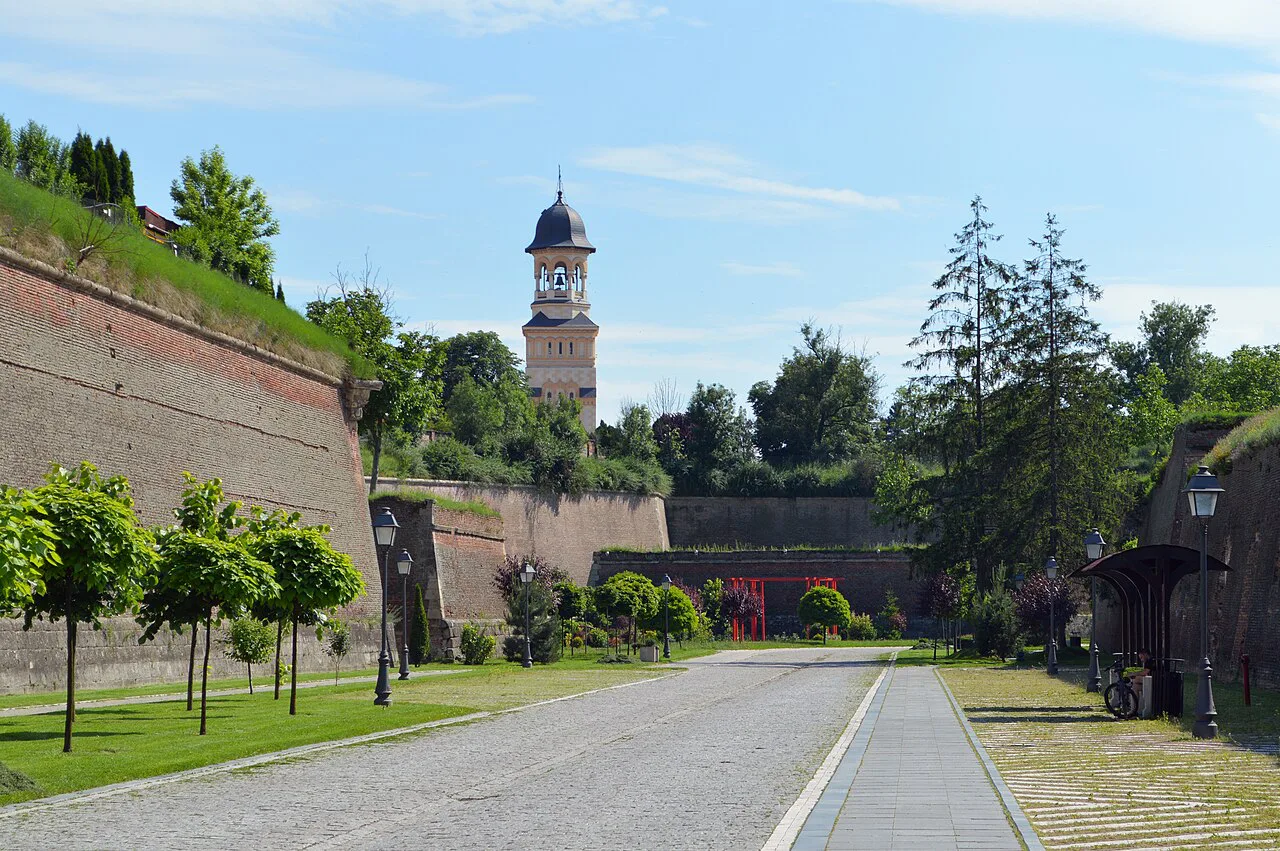
Think of the citadel as a star with seven points: a ring of walls drawn as a heptagon, with a bastion on each corner so that defenders could fire along the face of the next wall. For a visitor this means the interesting walking is around the perimeter as much as across the middle, and you will cover more ground than a look at a map suggests. Allow for doubling back where a bastion juts out.
One account describes a 12-kilometre outer wall and calls the citadel the largest in Romania; treat the figures as the scale to expect rather than a route to walk end to end. The inner town, with the cathedral and the main squares, is compact and pleasant on foot. A sensible plan is to enter by the eastern gate, cross the centre, then pick one stretch of wall and bastion to walk properly.
The gates and what you see passing through
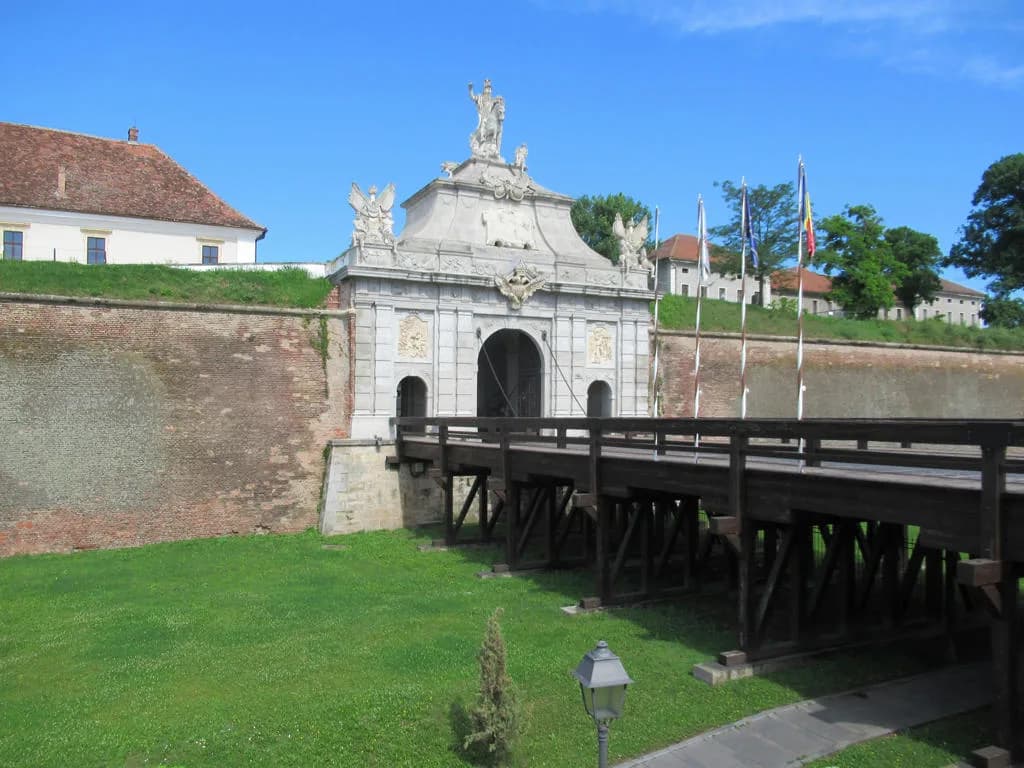
The citadel has several gates, and the main gate on the eastern side is the one to aim for: it is the ceremonial entrance and the natural start to a visit. Passing through, you are looking at a baroque fortification built to impress as well as defend, so slow down and look up at the stonework rather than treating the gate as a doorway.
Beyond the gate the streets lead into the old town inside the walls, where the cathedral and the main civic buildings sit close together. This is the part to walk slowly: the distance from gate to cathedral is short, but the fortifications around it reward a longer loop. If you are arriving by train or bus, plan the walk in from the station and use the gate as your landmark.
Walking the walls and bastions
The practical route is a circuit of one or two bastions rather than the whole perimeter: enter at the east gate, walk the wall to the next corner bastion, then drop back into the centre. Surfaces on and around the fortifications are stone and uneven in places, with steps and slopes at the bastions, so grippy shoes matter more than on a city-centre pavement walk. There is little shade on the exposed stretches in summer.
Give the walls an hour if you want to see the corner bastions properly, and add the cathedral interior on top of that. The walking is not strenuous, but the sun and the stone make it feel longer in July and August. Carry water and time the walk for the morning or late afternoon.
The changing of the guard
Guards in 18th-century uniforms stage a changing of the guard that doubles as the best photograph of the visit. In the tourist season, which runs from May to September, it takes place at noon, and at weekends it can happen twice a day. The uniforms and the setting are the draw rather than a long ceremonial: it is a short stop, not an afternoon.
Build the rest of your morning around that noon slot: walk the east gate and one bastion first, then be in place for the guard change, then go into the cathedral. Outside the May to September season, the ceremony is not part of the visit, so the citadel becomes a quieter walk through the gates and walls. Check the day's timing with the citadel or the Alba Iulia tourist office before you plan around it.
Inside the walls: the Coronation Cathedral
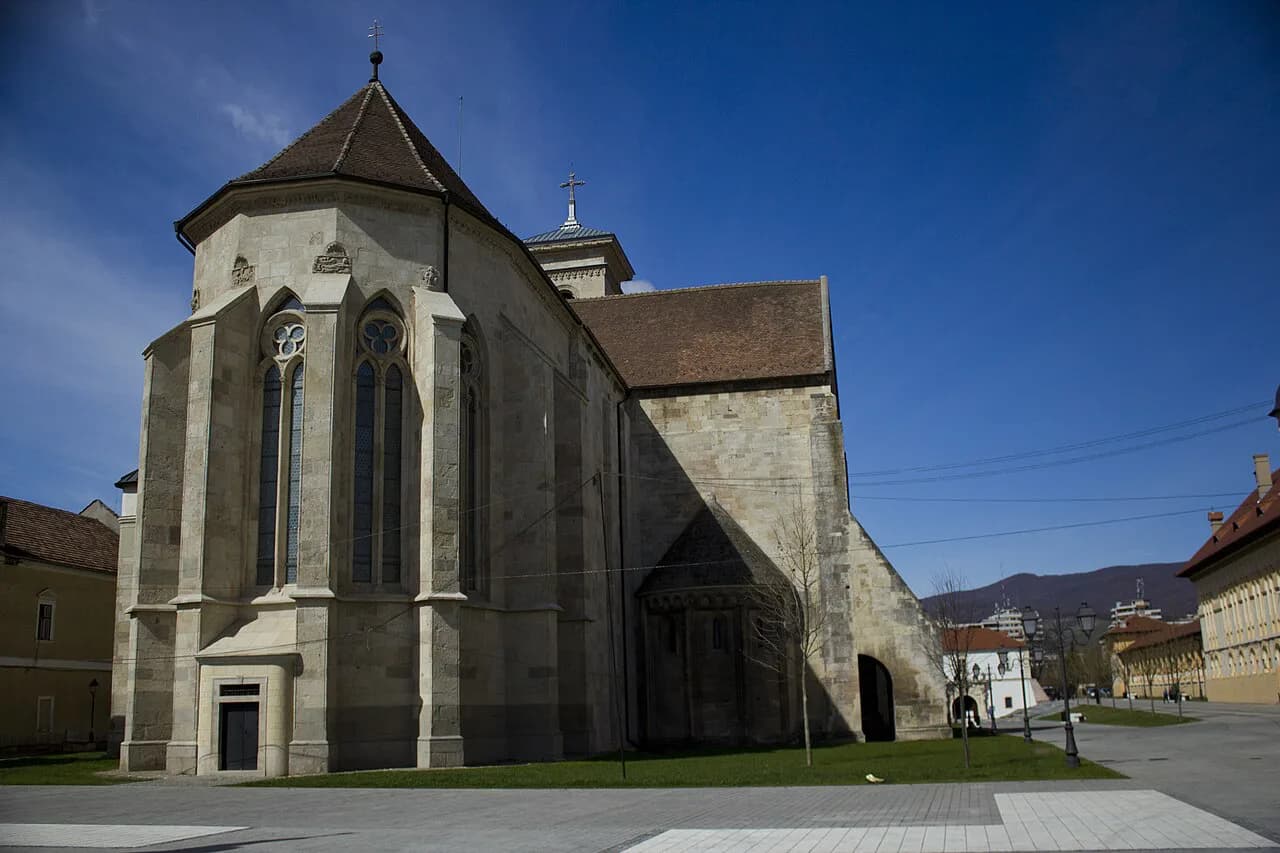
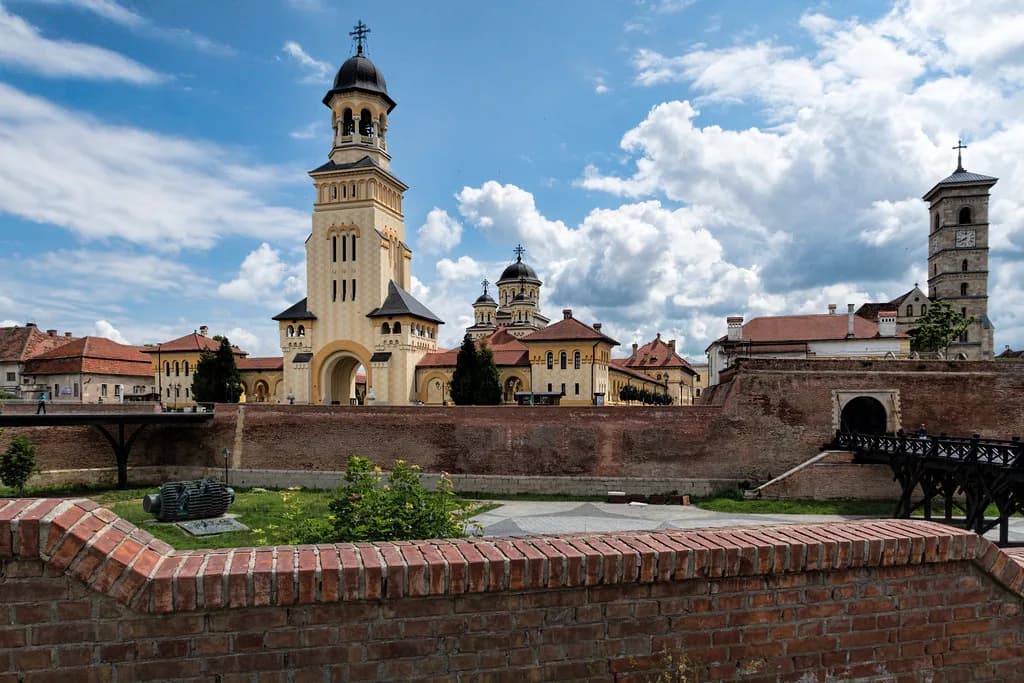
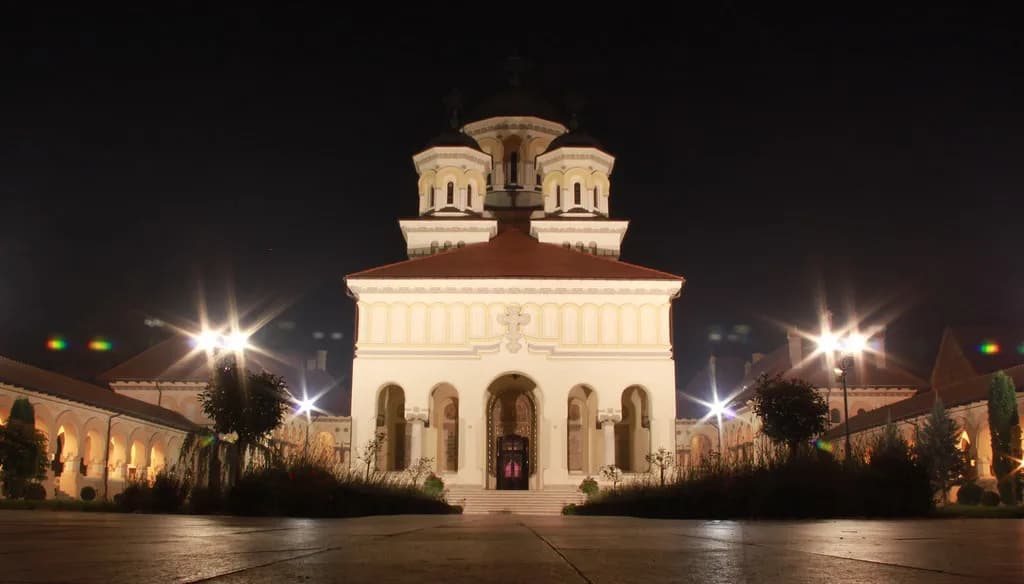
The Coronation Cathedral is the building to see inside the citadel, a baroque church with an ornate interior, frescoes and the tomb of Michael the Brave. The decoration is dense and worth a slow look rather than a walk-through, and the tomb gives the cathedral its place in Romanian history. Pair it with the walk along the walls rather than treating the two as separate outings.
The Coronation Cathedral, Alba Iulia, sits a short walk from the eastern gate, so the logical order is gate, wall, cathedral, then back out through the centre. If you have time for a second church, St Michael's Cathedral, Alba Iulia, is the other major religious building in the old town and is covered separately. The two visits work well back to back.
How long the citadel needs
A pass through the gates and a look at the eastern entrance takes about half an hour. Add the walls and one or two bastions and you are at an hour and a half, which is the version most visitors should plan for. Put the cathedral interior on top and you have a comfortable half day, with time left to walk the old town.
If Alba Iulia is one stop on a wider Transylvania trip, the citadel is the reason to get off the train here, and a half day is enough to see the gates, a stretch of wall and the cathedral without rushing. Travellers with a car can combine it with a stop in Sebeș, Romania, on the same road, though the citadel alone justifies the detour. The Alba Iulia guide covers the rest of the town for anyone staying longer.
Getting there and getting around
The citadel is in the centre of Alba Iulia, so once you are in town you can reach the eastern gate on foot from the main streets. The address to navigate to is Strada Mitropolit Andrei Șaguna no. 1. From the station, allow a walk of a couple of kilometres through town rather than expecting a gate on the platform.
Inside the walls everything is walkable, and a car is a hindrance once you are through the gate. If you are driving, park outside the fortifications and walk in. Use the Alba Iulia map page to place the gate, the cathedral and the bastions before you arrive, so you are not circling the walls looking for the entrance.
When to go
The tourist season runs from May to September, and that is when the noon guard change is staged; it is also when the walls are busiest and most exposed to sun. The trade-off is simple: in season you get the ceremony and the atmosphere, out of season you get quieter walls and a faster walk.
If the guard change matters to you, a summer weekend gives you the best chance of catching it twice in a day, but check the timing locally before you build a morning around it. If you would rather have the bastions to yourself, come outside the season and accept that the ceremony is not part of the visit. Either way, the walk itself is the main event.
Practical points
Expect stone surfaces, steps at the bastions and long exposed stretches with little shade. Wear shoes you can walk on uneven ground in, and carry water in summer. The centre inside the walls is flat and easy, so the difficulty is concentrated on the wall circuit rather than the town streets.
The main gate is approached on foot from the surrounding streets, and the guard change is staged in the open. Interior visits or temporary exhibitions have their own arrangements, so check at the cathedral door. Photography is the reason many people come for the noon ceremony, so arrive a few minutes early for a clear view.
Is the Alba Carolina Citadel worth the stop?
Yes: the Alba Carolina Citadel gives you a genuine star fortress to walk through, a baroque cathedral to step inside and, in season, a noon guard change, all in the centre of Alba Iulia. Plan for a half day, arrive before noon if you want the ceremony, and walk one or two bastions properly rather than trying to cover the full perimeter.
Frequently Asked Questions
Is Alba Iulia worth visiting?
Yes, if you want a Habsburg star fortress you can walk through in the centre of town. The Alba Carolina Citadel, begun in 1715 and finished in 1738, combines the gates, bastions and walls with the Coronation Cathedral inside. A half day covers it well, and in the May to September season you can time the visit around the noon guard change.
Can you walk into the Alba Carolina Citadel?
Yes: the citadel sits in the centre of Alba Iulia and you walk in through its gates and around the fortifications on foot. The noon guard change is staged in the open during the May to September tourist season. Interior visits such as the Coronation Cathedral have their own arrangements, so check at the door or with the Alba Iulia tourist office on the day.
How long does it take to see the Alba Carolina Citadel?
Half an hour covers the eastern gate and a quick look. Allow an hour and a half for the gate plus one or two bastions and a stretch of wall, and a half day if you add the Coronation Cathedral and a walk through the old town inside the walls.
Sources
Useful notes for your next trip
Optional updates to our guides.
You might also like
Continue reading
More guides you'll find useful