Carpathian Mountains in Romania: Ranges, Bases and What to See
Most of the Carpathian range lies in Romania. Here are the Romanian ranges, the towns that work as bases and what a sightseer gets from each.
On this page
Romania holds the largest part of the Carpathian Mountains, an arc that runs across seven countries and covers roughly 210,000 square kilometres. For a town-based trip the practical question is not where the range begins and ends, but which Romanian range you build a few days around. Start with our guide to the Mountains in Romania.
What the Carpathian Mountains are and where they run
The Carpathians form a long arc across Central and South-East Europe rather than a single ridge. They extend through Czechia, Slovakia, Poland, Hungary, Ukraine, Romania and Serbia, and Romania takes the biggest share of the range.
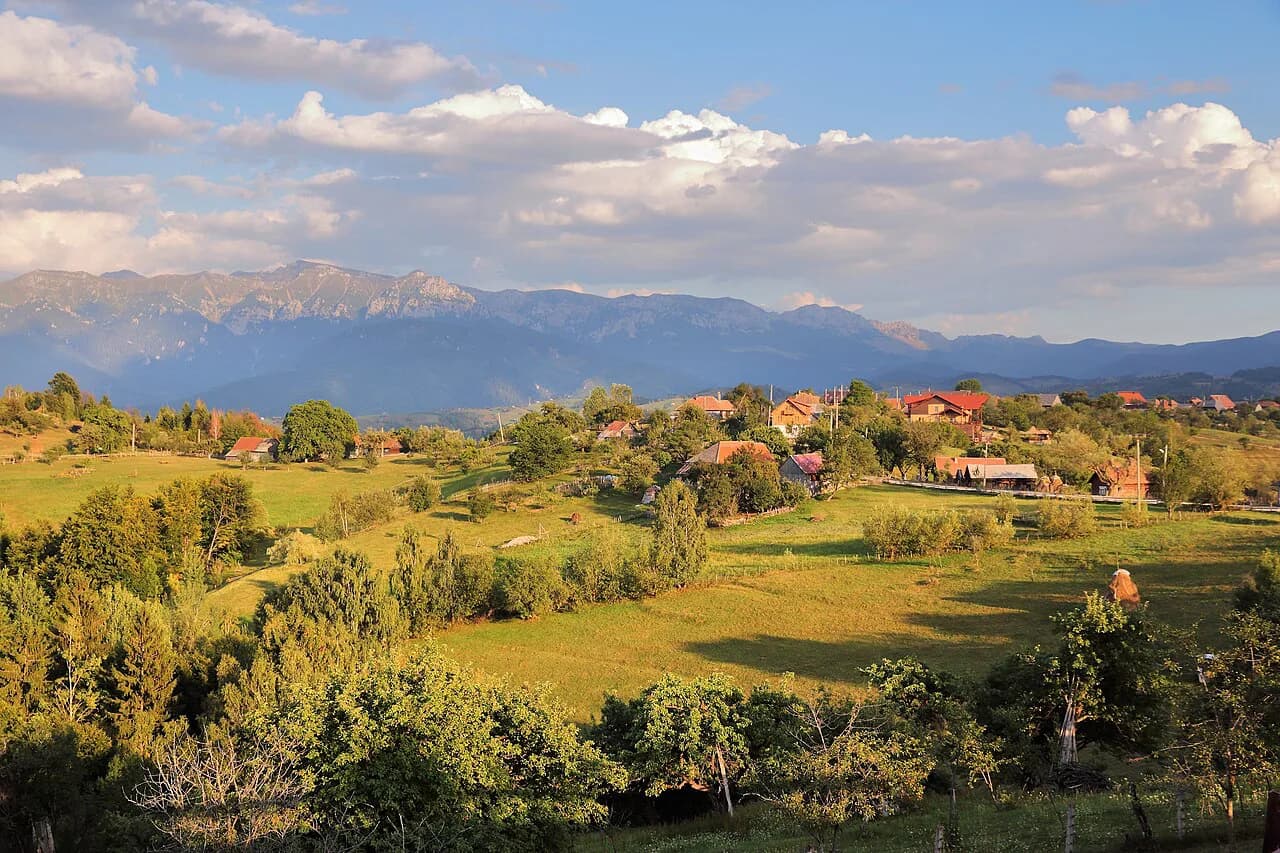
Within Romania, the Transylvanian plateau, with its Saxon villages and medieval castles, sits inside a curve formed by the Eastern, Southern and Apuseni ranges. That layout matters for planning: whichever town you base in, a mountain range is usually a drive away rather than a day's journey. If the castles rather than the peaks are your reason for coming, our guide to the castles in Transylvania explains which ones are worth the detour and how to plan them around a town base.
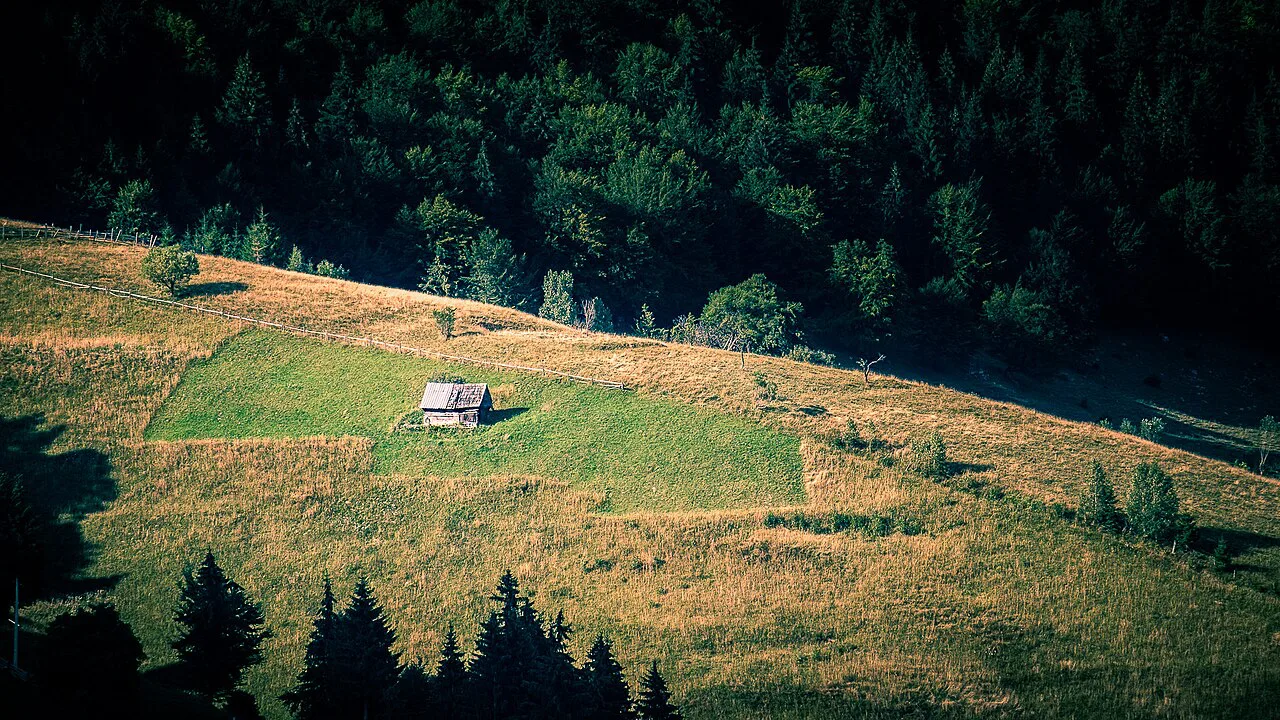
Which countries share the Carpathians, and how much sits in Romania
Seven countries share the Carpathian region: Czechia, Hungary, Poland, Romania, Serbia, Slovakia and Ukraine, five of which are EU members. Romania's portion is the largest single national share, which is why the range is treated as a Romanian destination in its own right.
Which country has the Carpathian Mountains? Seven countries share the range: Czechia, Hungary, Poland, Romania, Serbia, Slovakia and Ukraine. Romania holds the largest single share, which is why most Carpathian itineraries are built around Romanian ranges.
Does Poland have the Carpathian Mountains? Yes. Poland is one of the seven countries the Carpathian arc crosses.
Why are the Carpathian Mountains famous? They are known for Europe's largest populations of brown bears, wolves and lynx, for about 30 per cent of the continent's flora, and for traditional hay meadows and mountain pastures shaped by centuries of grazing. That combination of wildlife and working landscape is what draws visitors.
The high point of the whole chain lies outside Romania, in Slovakia's High Tatras, where several peaks top 2,600 metres. Romania's ranges trade that altitude record for width of landscape: forests, hay meadows, karst and villages spread across a much bigger area.
The Romanian ranges: Eastern, Southern and Apuseni, and what each is like for a sightseer
Romania's Carpathians divide into the Eastern, Southern and Apuseni ranges, and each rewards a different kind of trip. The Southern Carpathians suit travellers who want big mountain scenery within reach of towns such as Brașov, while the Eastern Carpathians reward those heading towards Moldavia. Our guide to the mountains in Romania sets out the main ranges and how they fit together for a short trip.
The Apuseni, in the west, are a karst landscape of caves, sinkholes and scattered villages rather than alpine peaks. Sightseers who prefer gentle scenery and underground visits to high ridges generally get more from the Apuseni than from the tall ranges.
Piatra Craiului National Park and the Zărnești Gorge
Piatra Craiului National Park is the limestone ridge closest to Brașov and one of the range's most distinctive pieces of scenery. The Zărnești Gorge, cut into the park's limestone, gives a sharp contrast to the wide pastures around it.
The park is usually approached from the villages on its northern side, where guesthouses and trailheads sit close together. Our page on Piatra Craiului National Park covers the access points and what a day in the park involves, and it is the page to read before fixing a base on this side of the mountains.
The Barza Valley near Brașov offers walks through hay meadows to mountain hermitages, with home-cooked lunches at the end. It is a lower-commitment day than a ridge walk in Piatra Craiului and works well for a mixed group.
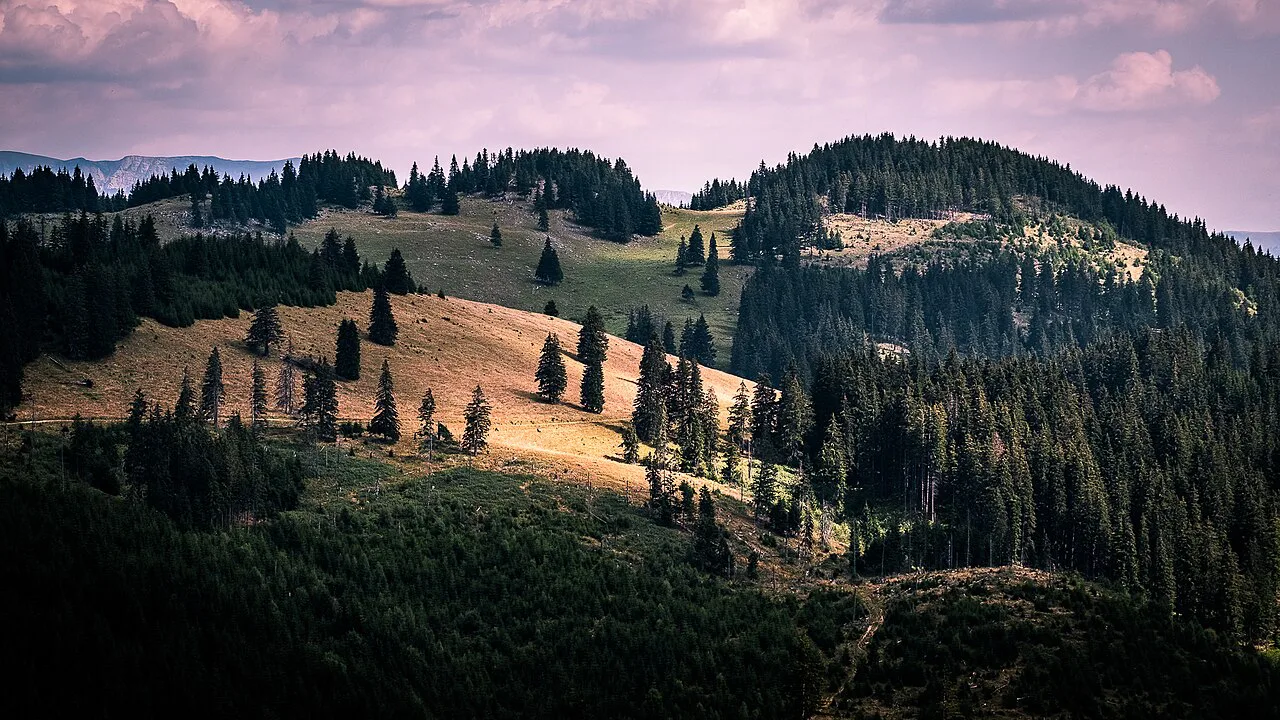
Bucegi Mountains and the Bucegi Plateau above 2,000m
The Bucegi Mountains rise above 2,000 metres and are known for alpine trails scented with wildflowers, including rare species such as the Lady Slipper orchid. The plateau gives sightseers high ground without the exposure of a narrow ridge.
For a town-based trip the Bucegi are the most convenient high mountains for Brașov, and they are usually combined with Piatra Craiului in a single stay. Our guide to Romania national parks explains which parks have marked access and facilities, and how they compare for a short visit.
Apuseni Nature Park and its karst landscape
Apuseni Nature Park is the range's limestone country, with caves, gorges and underground water shaping the scenery. It suits travellers who would rather spend a day below ground and in villages than climb to a summit.
The Apuseni form a separate block of mountains in the west of the country, beyond the Transylvanian plateau, so they rarely combine neatly with a southern mountains itinerary built around Brașov. An itinerary based on Cluj-Napoca or Oradea can reach the Apuseni, and a route from Roman serves the eastern side. If caves are the draw, read our guide to caves in Romania before choosing which to build a day around, since access and guiding vary from site to site.
Brașov as a base: Barza Valley, Zărnești and the Bucegi within reach
Brașov is the most practical base for the southern ranges: the Barza Valley, the Zărnești Gorge and the Bucegi trails all sit within reach. Staying in the city means returning to a full-size town each evening rather than a mountain village.
The trade-off is transfer time. Trails near Zărnești and the Bucegi trailheads are reached by road, and public transport to the smaller villages is thin, so a car or an organised transfer does most of the work. Hiking operators run guided days from the Brașov area, which removes the driving but fixes your start times.
Village guesthouses on the Piatra Craiului side put you closer to the trailheads and cut the morning drive. The cost is a quiet evening and fewer options if the weather turns.
Wildlife: bears, wolves and lynx, and how bear hides work
The Carpathian region holds Europe's largest populations of brown bears, wolves and lynx, alongside European bison and rare birds including the Imperial Eagle. That concentration is the reason wildlife watching is a genuine reason to visit rather than a side attraction.
Bear watching works through forest hides: you sit in a concealed shelter while bears visit known feeding areas, guided by local experts who know the animals' habits. Wolves and lynx are far shyer, and sightings are never guaranteed however fresh the tracks.
Book a hide place through an operator rather than turning up at a forest, and expect to be flexible about dates, because wildlife does not keep a schedule. Bear hides are the reliable option; wolf and lynx tracking demands patience and confidence walking at pace over mountainous terrain.
Walking: what graded day walks in the range involve
Day walks in the Romanian Carpathians range from easy hay-meadow routes to long days on high alpine trails. Trail conditions, waymarking and the length of a given route change with the season and with local maintenance, so plan from a current map and ask locally before setting out.
The Barza Valley meadows and the lower Zărnești Gorge paths suit a relaxed day; the Bucegi plateau above 2,000 metres asks for proper footwear and a settled forecast. Build in a spare day if walking is the main purpose, because weather in the high ranges regularly closes the best routes.
The responsible-tourism principle for the range is simple: keep to marked paths, carry out what you carry in and do not feed wildlife. The Carpathian landscape is shaped by centuries of traditional grazing and haymaking, and the meadows you walk through are working land.
Getting around without a car versus hiring one
Without a car, the realistic pattern is a train or bus to Brașov, Sibiu or Cluj-Napoca, then a guided day or a booked transfer to the trailheads. Public transport reaches the towns well but thins out sharply for villages and gorge entrances, which is where most of the scenery is.
Hiring a car gives you the Barza Valley, Zărnești and the Bucegi in one flexible loop from Brașov, and lets you shift plans when cloud sits on the ridge. The trade-off is mountain-road driving, parking pressure at popular trailheads in summer, and the need for a vignette and winter-ready equipment outside the warm months.
A good compromise is a car for two or three days and a guided wildlife or walking day, which covers the places where local knowledge genuinely changes the experience. Fixed-price mountain transfers and vehicle paperwork change from year to year, so confirm the details with your hire company before you book.
Where the Carpathians sit on the map and how to plan a route between towns
On a map the Romanian Carpathians form a horseshoe around the Transylvanian plateau, with the Eastern range running north and the Southern range running west from the Brașov area. The Apuseni sit separately to the west, so a loop that takes in all three is a long trip rather than a weekend.
A sensible short route links Brașov and the southern ranges with Sibiu and the Olt valley, or heads north into Moldavia via the Bicaz gorge country. Both routes keep towns and mountains within a day of each other, which is what makes a town-and-mountain trip in Romania work without long transfers.
If the Apuseni are the priority, base in Cluj-Napoca or Oradea and treat the southern ranges as a separate trip. Trying to fit both into one week means spending most of it in the car.
Which range should you build your trip around?
Choose the southern ranges around Brașov if you want high scenery, gorge walks and the easiest bear-hide access in one trip. Choose the Apuseni if you prefer caves, karst and quiet villages, and accept that it means a separate itinerary in the west of the country.
Whichever you pick, fix your base, book a car or a guided day early in the summer season, and leave a flexible day for mountains and wildlife. The mountains in Romania are the place to start once you have chosen your town.
Explore more Romania guides
Frequently Asked Questions
Which country has the Carpathian Mountains?
Seven countries share the range: Czechia, Hungary, Poland, Romania, Serbia, Slovakia and Ukraine. Romania holds the largest single share, which is why most Carpathian itineraries are built around Romanian ranges.
Does Poland have the Carpathian Mountains?
Yes. Poland is one of the seven countries the Carpathian arc crosses. The highest peaks of the whole chain are in Slovakia's High Tatras, so Poland's share is lower and closer to the northern edge of the range.
Why are the Carpathian Mountains famous?
They are known for Europe's largest populations of brown bears, wolves and lynx, for about 30 per cent of the continent's flora, and for traditional hay meadows and mountain pastures shaped by centuries of grazing. That combination of wildlife and working landscape is what draws visitors.
What cities are in the Carpathian Mountains?
Brașov is the most practical city base for the southern ranges, with Piatra Craiului, the Zărnești Gorge and the Bucegi within road reach; Sibiu and Cluj-Napoca serve the southern and western ranges, and Oradea is the gateway to the Apuseni. None of these cities sits inside the high mountains, so plan on road transfers to the trailheads.
Sources
Useful notes for your next trip
Optional updates to our guides.
You might also like
Continue reading
More guides you'll find useful