St Michael's Cathedral, Alba Iulia: What to See Inside
A guide to St Michael's Cathedral in Alba Iulia: the Romanesque nave, the Hunyadi and Jagiellon tombs, the 1877 organ and the Renaissance Laszai chapel.
On this page
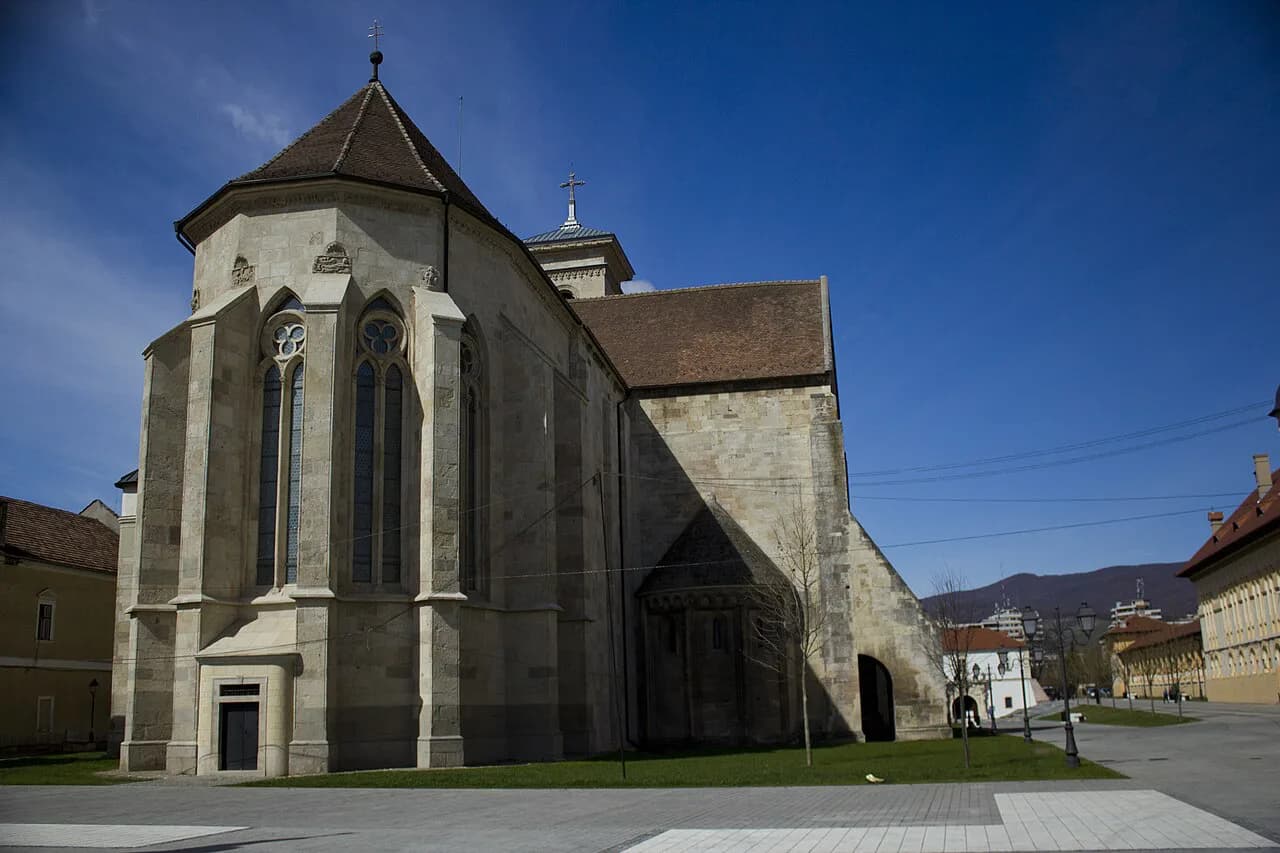
St Michael's Cathedral is the Roman Catholic cathedral inside the Alba Carolina citadel in Alba Iulia, and it is the building to see first if you only have time for one interior. It was built between 1247 and 1291, so the core you walk through is late Romanesque, with Gothic, Renaissance and Baroque layers added later. This guide covers what to look at inside, where the tombs sit, and how to fit the visit into a morning in the citadel.
Alba Iulia's official visitor site gives the cathedral's axis as 89.16 m and calls it the oldest and longest cathedral in Romania; treat that as the municipality's own description rather than a neutral survey. What is not in dispute is the fabric itself: a Romanesque core, a Renaissance chapel of the sixteenth century, and an organ of 1877 still in place.
Where the cathedral sits in the citadel
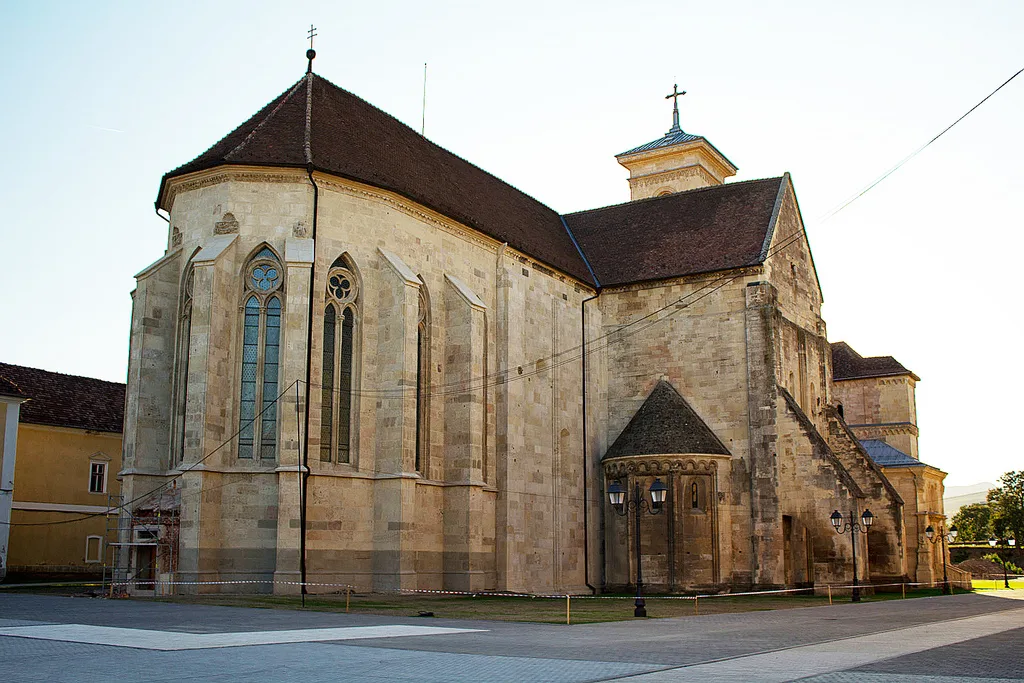
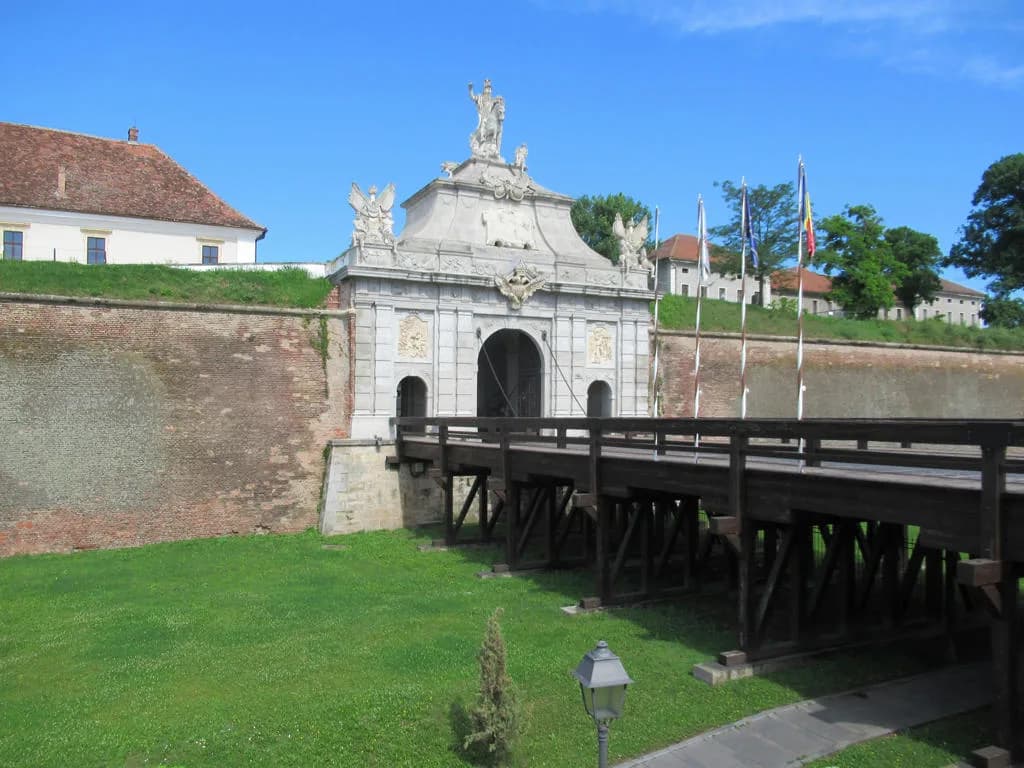
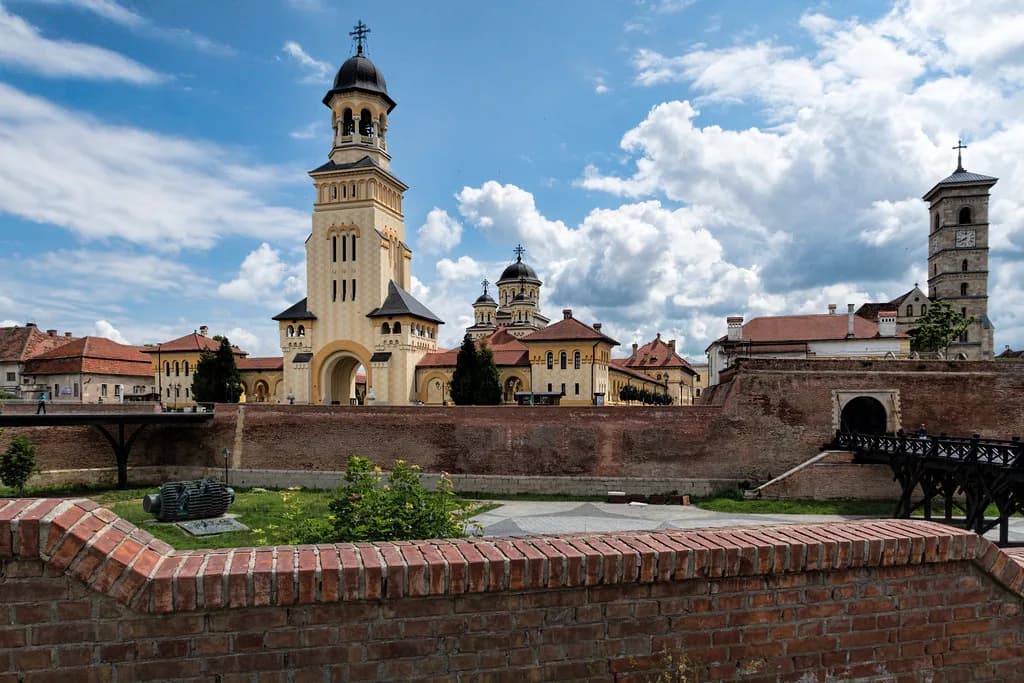
The cathedral stands within the star-shaped Alba Carolina Citadel, the Habsburg fortification that encloses the historic centre of Alba Iulia. Arriving on foot from the town side, you pass through the gates and the cathedral rises ahead as you cross the broad interior. Save the Alba Iulia map before you set out, because the citadel's angled bastions make the interior feel larger than it is and the cathedral door is not visible from every approach.
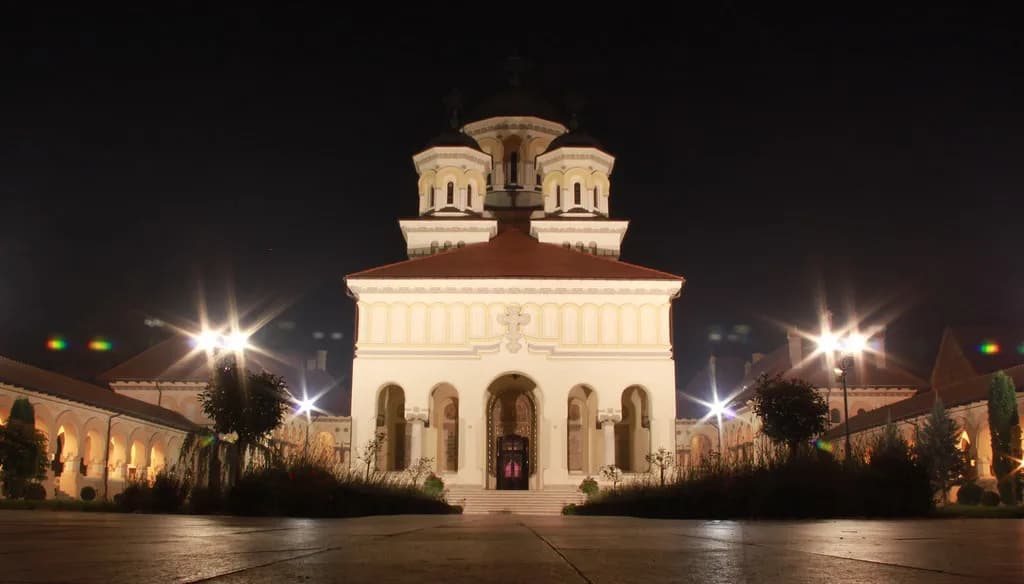
Plan the cathedral as one stop on a loop rather than a separate trip. The neighbouring Coronation Cathedral, the Orthodox church in the citadel, is a few minutes away and makes an obvious pairing with the Catholic cathedral; the two sit close enough to see in a single walk. The rest of the citadel, including the gates and the museum buildings, fills the remainder of a half day.
How long to allow and what to see first
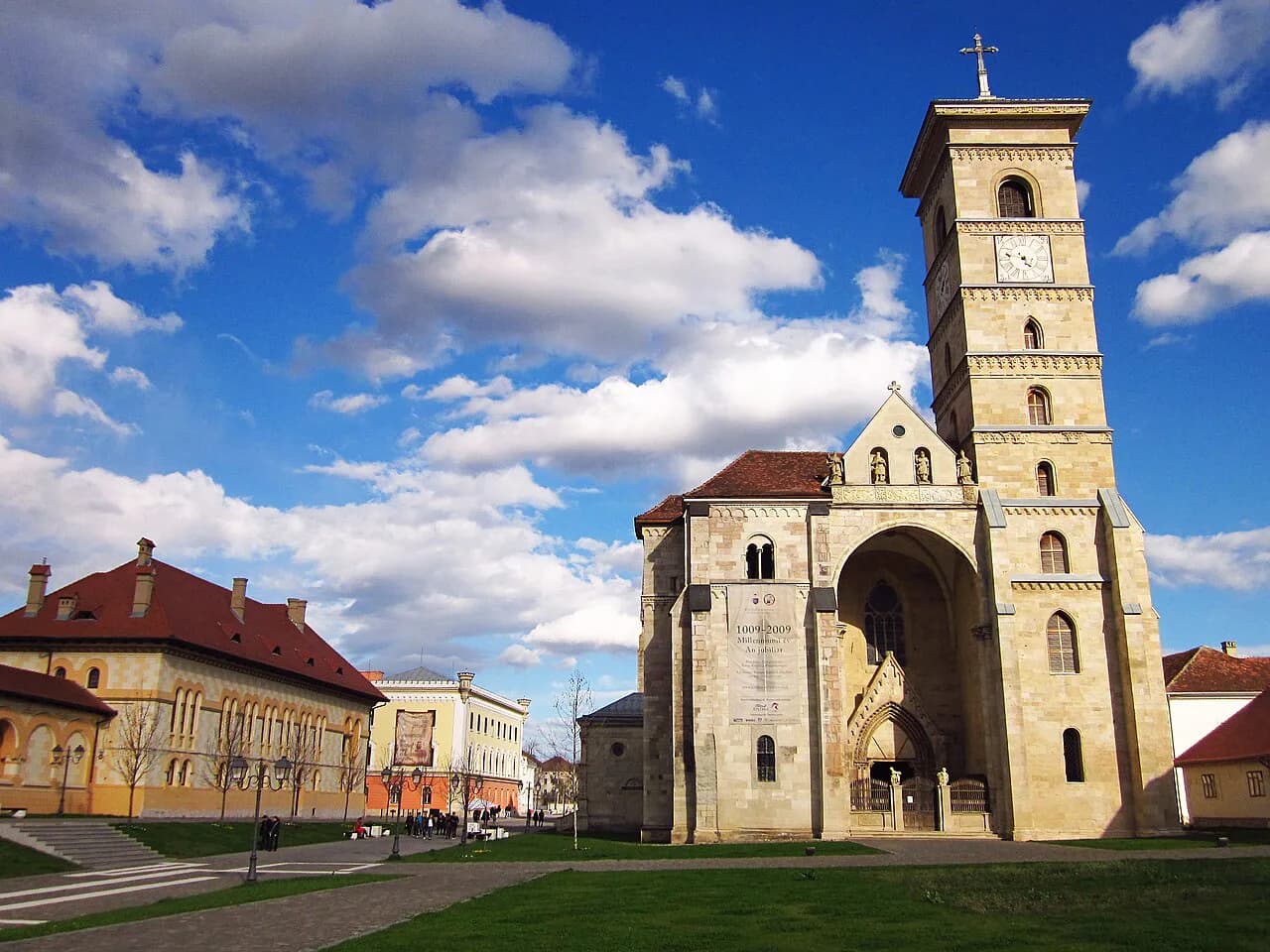
Set your own pace rather than aiming for a fixed tour length. Start at the west end and look up at the entrance vault built between 1718 and 1738, with a gable framed by four statues of saints and three bas‑reliefs, then walk the nave from there: heavy Romanesque walls, then Gothic height, then Baroque fittings.
After the nave, take the side aisles, then the Laszai chapel, and finish at the organ loft end. If a service is in progress, the practical move is to step out and return later rather than walk the aisles mid-ceremony. This is an active Catholic cathedral, not a museum room.
The Romanesque nave and the sanctuary's bas-reliefs of St Michael
The nave is the part that dates to the thirteenth-century campaign, and it is the reason the cathedral matters architecturally: the official visitor site calls it the most important monument of Romanesque architecture in Transylvania. Look at the thickness of the walls and the small windows before the later additions pull your eye upward. The same account names a French architect, Villard de Honnecourt, as a possible contributor to the design, framed as an attribution rather than a certainty.
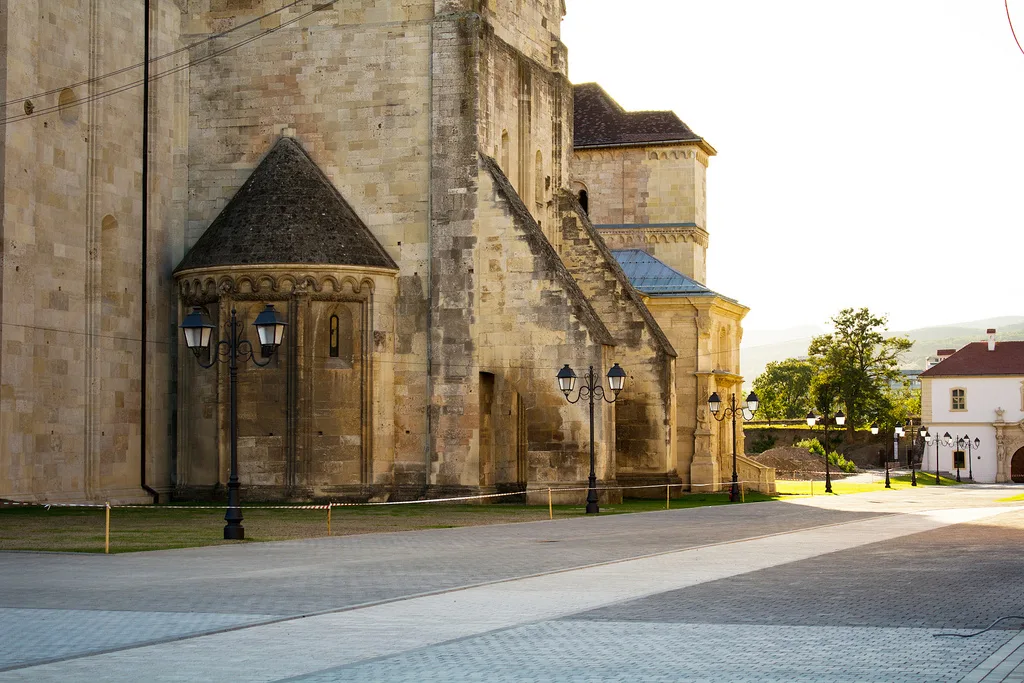
In the sanctuary, the lateral walls carry two Romanesque bas‑reliefs of St Michael the Archangel. The sanctuary itself was reshaped: a square structure with a semi-circular apse was demolished by the end of the thirteenth century so the space could be extended in early Gothic style. That is why the east end reads later than the nave you have just walked through.
The tombs in the side naves
The tombs are easy to miss, so note which side each sits on. The southern lateral nave holds the sarcophagi of John Hunyadi, his first son Ladislaus Hunyadi, and the princes Kendi Ferenc and Kendi Antal. The northern lateral nave holds Queen Isabella Jagiellon and her son John Sigismund, the first prince of Transylvania. Note that the tombs sit within an active worship space, so keep any visit quiet and brief.
The tombs carry weight beyond the building itself. John Hunyadi's burial here ties the cathedral to the political history of the kingdom, and Isabella Jagiellon with her son John Sigismund, the first prince of Transylvania, connect it to the princely court that shaped the town.
The Laszai chapel and its Renaissance bas-reliefs
In the northern part of the cathedral, the Laszai chapel was built in 1512 by archpriest Laszai Janos to house the altar of Christian Souls. It is described as the oldest example of Renaissance architecture in Transylvania, and it is the one corner where the decoration changes character abruptly. Look for the carved coats of arms, figures from classical mythology and the Bible, and Hungarian monarchs worked into the bas‑reliefs.
The chapel is small and its carvings are at eye level, so it rewards standing still rather than walking past. Allow five or ten minutes here after the nave, when you already have the building's older style in your eye and can see the Renaissance contrast clearly.
The 1877 organ, the Baroque altar and the clergy pews
Inside, the church displays an organ made in 1877 with 2,209 pipes. The sanctuary's altar and the clergy pews are Baroque, and the pew backs are painted with scenes from the lives of the prophets and the history of Salvation, alongside the portal of today's Baroque sacristy. These painted backs are among the details most visitors overlook because they sit behind the seating.
The west entrance vault added between 1718 and 1738 belongs to the same Baroque campaign as the altar fittings, with its gable and statues of saints. Seen together, the organ, altar and west front show how the cathedral was refitted over the centuries.
The cathedral and the Transromanica network
St Michael's Cathedral has been included in Transromanica, a network covering Romanesque heritage across eight European countries between the Baltic and the Mediterranean. The Visit Alba Iulia page describes it as the only landmark in Romania to join the network. If Romanesque churches are the reason for your trip, this is the Romanian entry point.
The network is a useful way of choosing which buildings to compare, not a ticketing or scheduling service. Read the cathedral first, then look at other Romanesque interiors across Transylvania with the same eye for the plain nave and the later additions.
Before you go: services, entry and pairing with the citadel
The cathedral is a working church, so times and any entry conditions can shift with services. Check the current position with Alba Iulia's official visitor site or the cathedral's own notice board on the day rather than relying on a listing screenshot.
The cathedral sits inside the Alba Carolina Citadel, so pair it with the citadel's gates, bastions and the Coronation Cathedral on one continuous walk rather than making two journeys. The wider guide to the Alba Carolina Citadel explains the layout, and the Alba Iulia town guide covers the rest of the day. If you are travelling by train, Sebeș lies on the same line and its citadel makes a logical second stop, though as a separate outing.
Is the cathedral worth an hour of your day in Alba Iulia?
Yes, if you want the one building in the citadel where Romanesque, Renaissance and Baroque work sit in the same room. Give it the first hour of the morning, see the tombs and the Laszai chapel before the citadel fills up, then walk the rest of the fortifications with the cathedral's plan still in your head.
Frequently Asked Questions
Do I need a ticket to enter St Michael's Cathedral?
It is an active Catholic church, so access can depend on whether a service is taking place. Check Alba Iulia's official visitor pages or the notice board on arrival for current entry conditions before planning around a specific slot.
How old is St Michael's Cathedral and is it really the oldest in Romania?
The building was constructed between 1247 and 1291. The claim that it is the oldest and longest cathedral in Romania comes from Alba Iulia's municipal visitor site; it is presented there as the city's own description rather than a neutral survey.
Which tombs can I see inside?
The southern side nave holds John Hunyadi, his son Ladislaus Hunyadi, and the princes Kendi Ferenc and Kendi Antal. The northern side nave holds Queen Isabella Jagiellon and her son John Sigismund, the first prince of Transylvania.
Sources
Useful notes for your next trip
Optional updates to our guides.
You might also like
Continue reading
More guides you'll find useful