
Moon Church (Biserica cu Lună), Oradea: What to See and How Long It Takes

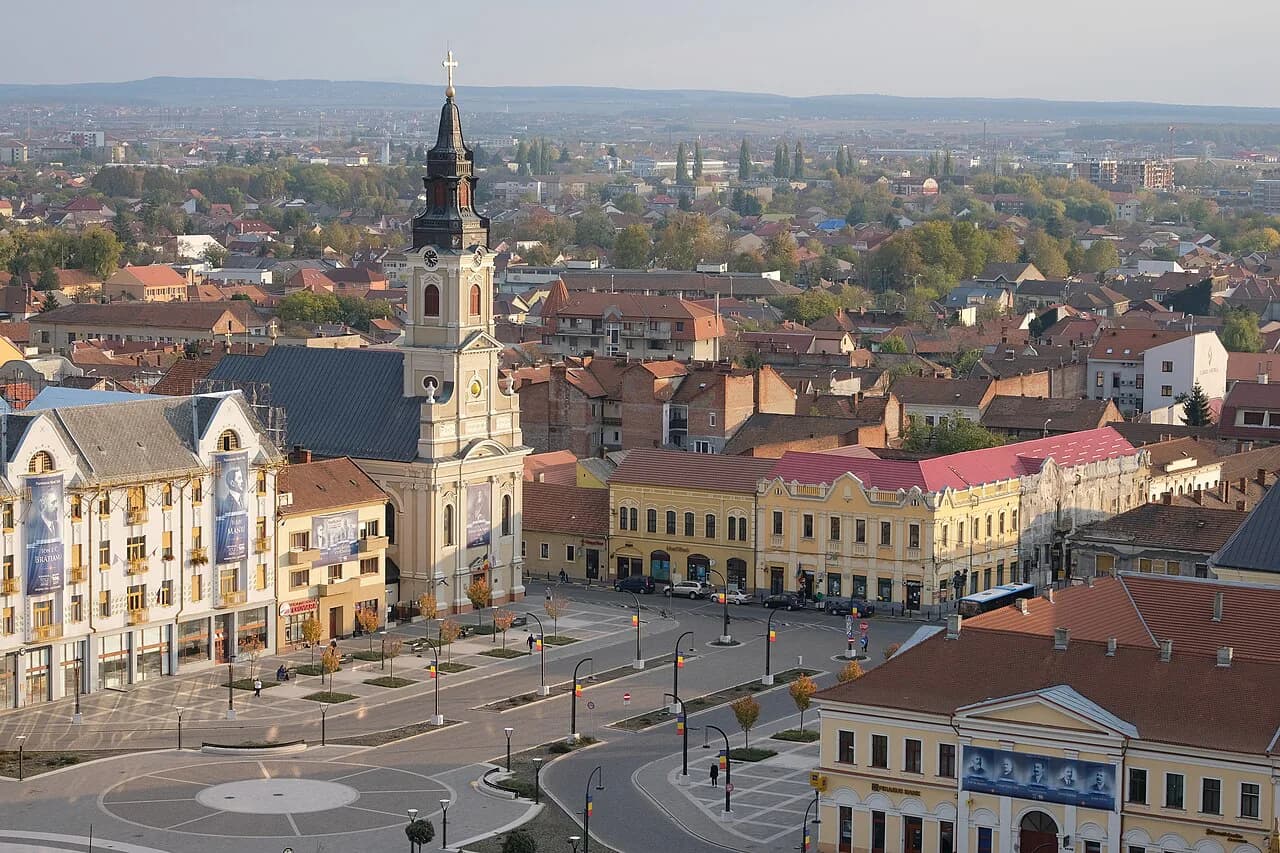
The Moon Church is a five- to ten-minute stop, not a half-day sight: you come to look up at a tower sphere about a metre across, painted half Black and half gold, that turns to show the phases of the Moon. The church stands at 10 Piața Unirii, so it fits naturally into a walk across Oradea's main square rather than a trip of its own. This guide covers the mechanism, the building, the names you will meet and what to look for from the square.
Treat the tower and the square as the main event and the interior as a quiet add-on. Access and service times are not confirmed here, so plan any look inside around what the parish posts at the door.
Where the Moon Church stands on Piața Unirii
The Moon Church faces Oradea's central square at number 10, an address that puts it among the secessionist palaces and statues of the old centre. Because it is on the square itself, you reach it on foot from anywhere in the historic core; there is no separate approach road or out-of-town detour to plan.
If you are working through the city's sights, the Moon Church belongs on the same short walk as the waterfront and the palaces around the square. Our guide to Oradea Attractions maps the rest of the centre so you can see what else sits within a few minutes of this corner.

Why it is called the Moon Church
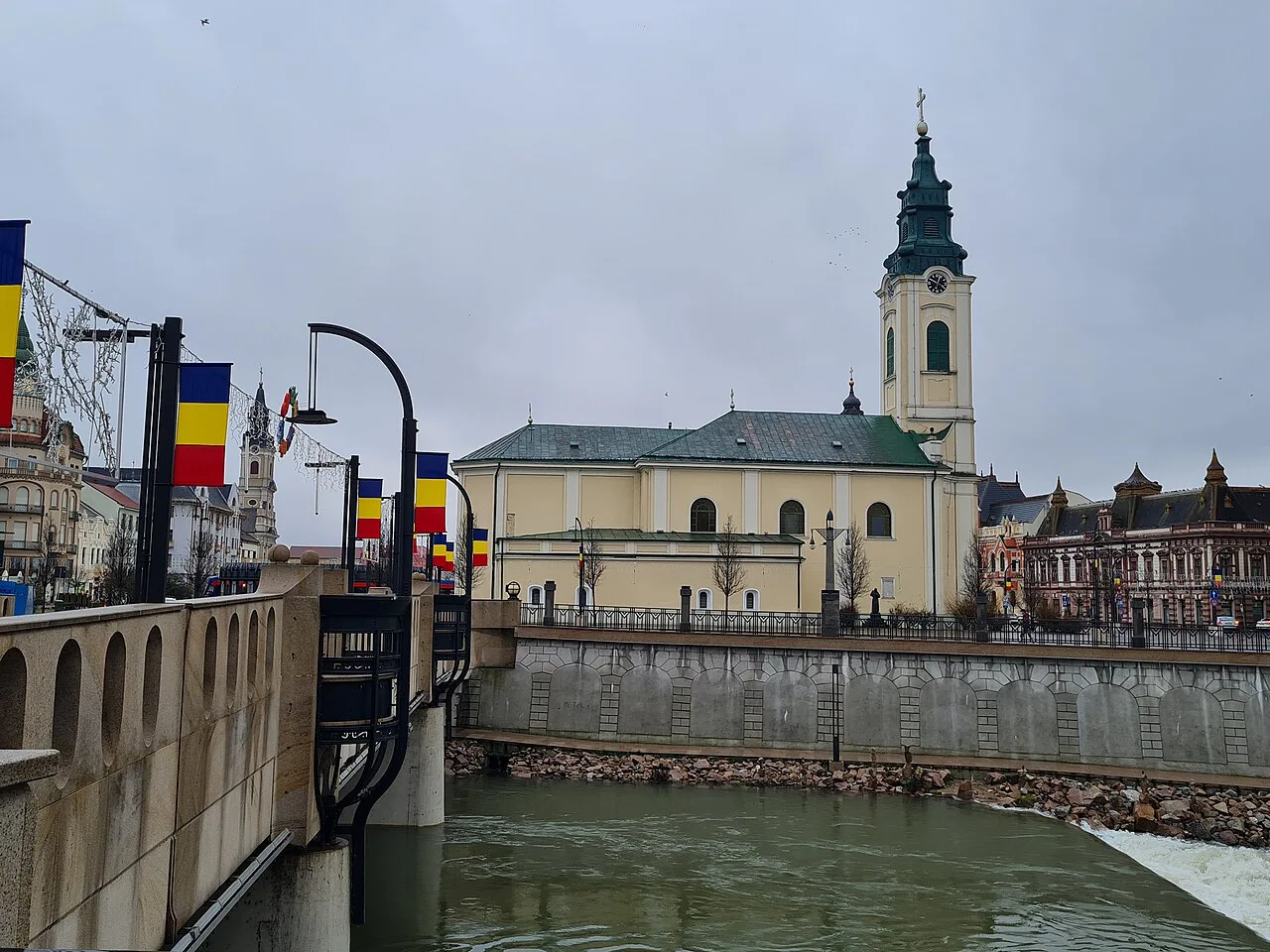
The name comes from a mechanism on the church tower that sets a sphere of about one metre in diameter in motion. The sphere is painted half Black and half gold and turns with the rotational movement of the Moon around the Earth, so its rotation displays all the phases of the Moon. It is this device, rather than anything inside the building, that visitors come to see.
Look up before you go in: the sphere sits high on the tower, and from street level you need to step back across the square to see it properly against the sky.

The Moon Church and the Cathedral of the Assumption: one building, two names
Visitors sometimes hunt for two separate churches because the same building appears under different names. The Moon Church is a Christian Orthodox church also referred to as the Cathedral of the Assumption, so if a map or sign sends you to the Assumption, you are looking at the same tower.
In Romanian the building is Biserica cu Lună, and it is described as one of the emblematic monuments of the city. Use either name when asking directions on the square; the two names will lead you to the same tower.
The building: foundation stone and construction dates
The foundation stone was laid in 1784 by Petru Petrovici, Bishop of Arad, and the church was built between 1784 and 1790. Those dates explain why the church sits so comfortably among the eighteenth-century fabric of the old centre rather than standing apart from it.
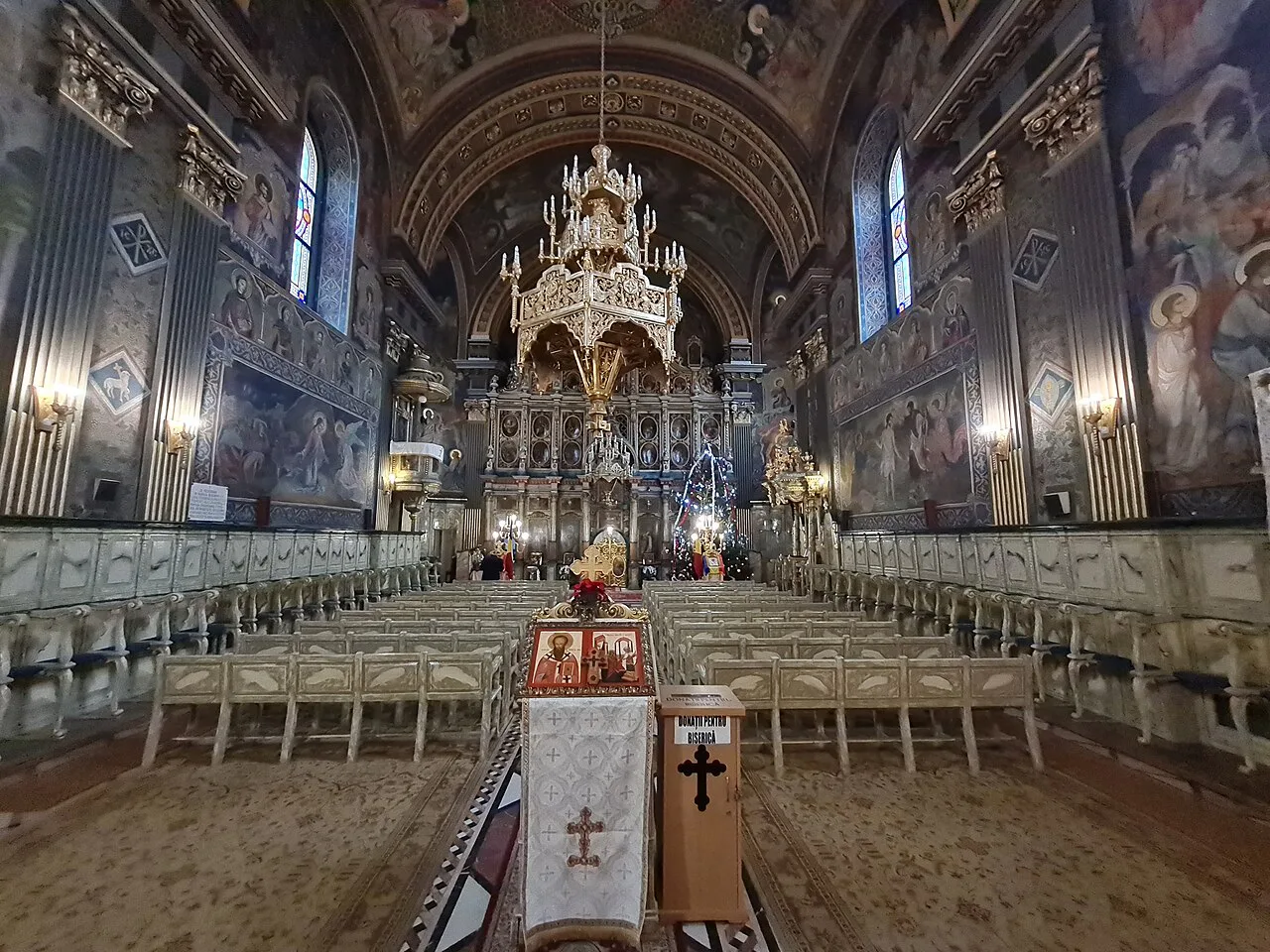
It is a Romanian Orthodox church, so treat it as a place of worship first and a photo stop second. Keep voices low and dress with a little care if you plan to step past the threshold.
What to look at from the square, and what to expect inside
From the square, give your attention to the tower: the moon sphere and the way the facade closes one side of Piața Unirii. Walk a few paces back towards the centre of the square for the angle that shows the tower cleanly, and look up at different points so you catch the sphere from more than one side.
Inside, this is a quiet Orthodox interior rather than a museum with labelled exhibits. Go in for a few minutes of stillness if the doors are open, and let the tower outside remain the reason you came.
How long to allow for the Moon Church
Budget five to ten minutes at the church itself: a couple of minutes looking up at the tower and a few more inside if it is open. It is a stop on a walk, not a destination that fills an afternoon, and treating it that way leaves time for the rest of the centre.
The square rewards a slower circuit, so build the Moon Church into a half-hour wander rather than a separate errand. Pair it with a look at the nearby palace fronts, then carry on towards the river.
Nearby in the same square
The Moskovits and Sons Palace stands beside the church on Piața Unirii, and photographs of the two together are a common view of this corner of the square. The statue of Ferdinand I is also in this part of the square, so a single turn can give you architecture and monuments in one frame.
Further round the centre, the Black Eagle Palace is a short walk away for anyone following the city's architecture. Our piece on Black Eagle Palace, Oradea sets out what to see there for a compact continuation of the same stroll.
If you have longer in the city, Oradea Fortress (Cetatea Oradea) makes a bigger second stop. Choose one or two of these rather than trying to cover everything from Piața Unirii in a single morning.
Is the Moon Church worth a stop on your Oradea walk?
Yes, if you are already crossing Piața Unirii: the tower sphere justifies the detour and costs you only a few minutes. Build it into a circuit that takes in the square's palaces and statues, and leave any heavier sightseeing, such as the fortress, for later in the day.
Before you go, check the times the church is open to visitors at the door or with the local tourist information service, since access to the interior depends on services and parish arrangements.
Explore more Oradea guides
Frequently Asked Questions
Is the Moon Church in Oradea open to visitors?
The church is a Romanian Orthodox place of worship, so access to the interior depends on services and parish arrangements. Check posted times at the entrance on Piața Unirii; the tower and its moon sphere can be seen from the square.
Do you need a ticket for the Moon Church?
The chief sight, the tower moon sphere, is on the outside and seen from Piața Unirii. For the interior, check any entry arrangement at the door.
What is the moon sphere on the tower?
It is a sphere about one metre across, painted half Black and half gold, set in motion by a mechanism on the church tower. It rotates in step with the Moon's movement around the Earth and so displays the Moon's phases.
Where exactly does the Moon Church stand?
It stands at 10 Piața Unirii in Oradea, facing the city's main square, so you reach it on foot from anywhere in the historic centre. There is no out-of-town approach or separate detour to plan.
What are the church's other names?
The building is Biserica cu Lună in Romanian and is also referred to as the Cathedral of the Assumption. The Moon Church and the Assumption are the same building, not two separate churches to seek out.
When was the Moon Church built?
The foundation stone was laid in 1784 by Petru Petrovici, Bishop of Arad, and the church was built between 1784 and 1790.
What is next to the Moon Church on Piața Unirii?
The Moskovits and Sons Palace stands beside the church on the square, and the statue of Ferdinand I is in the same part of the square, so one turn takes in both the palace front and the monument.
How long should I spend at the Moon Church?
Budget five to ten minutes at the church itself: a couple of minutes looking up at the tower and a few more inside if it is open. It works as a stop on a walk across the square rather than a destination that fills an afternoon.