
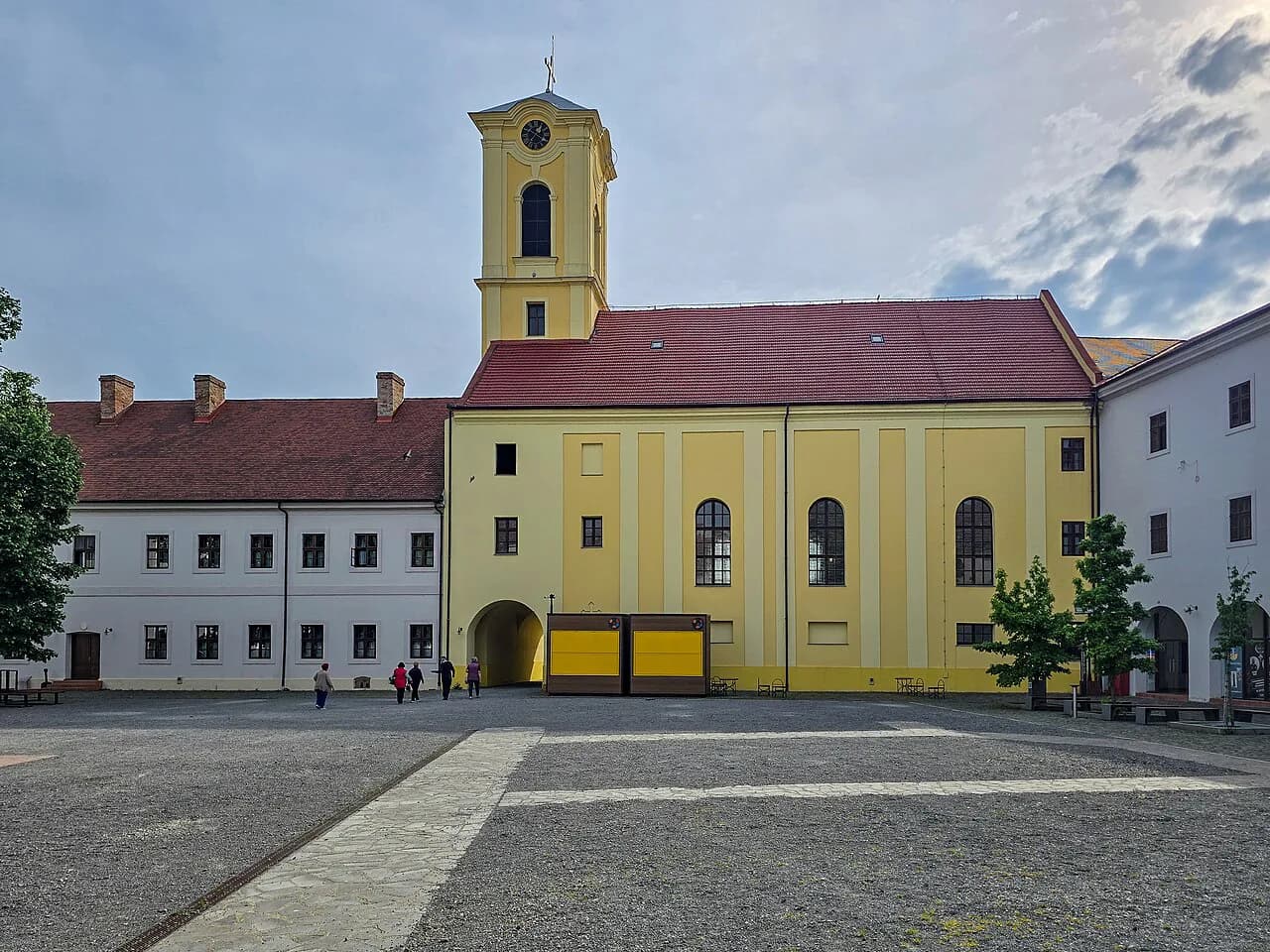
Oradea Fortress (Cetatea Oradea): a Visitor's Guide

Allow about two hours at Oradea Fortress if you want the Princely Palace interiors as well as the courtyards, and cut that to 45 minutes if you only walk the grounds. The fortress is a bastion fort in Italian style built around the late Renaissance Princely Palace, and it is the palace wings that hold the Oradea City Museum. This guide covers the address, the layout of the wings, the rooms worth seeking out, the practical details and what sits within walking distance.
The site sits on Piața Emanuil Gojdu 39-41, by the Crișul Repede and the Peța, in the low ground where the first settlement and an island between the two waters once were. The fortress opened to visitors in 2015 after a long restoration of the buildings, courtyard and bridge, and work on the interior courtyard and walls has continued since. Treat the courtyards and the museum as two separate parts of the same visit.
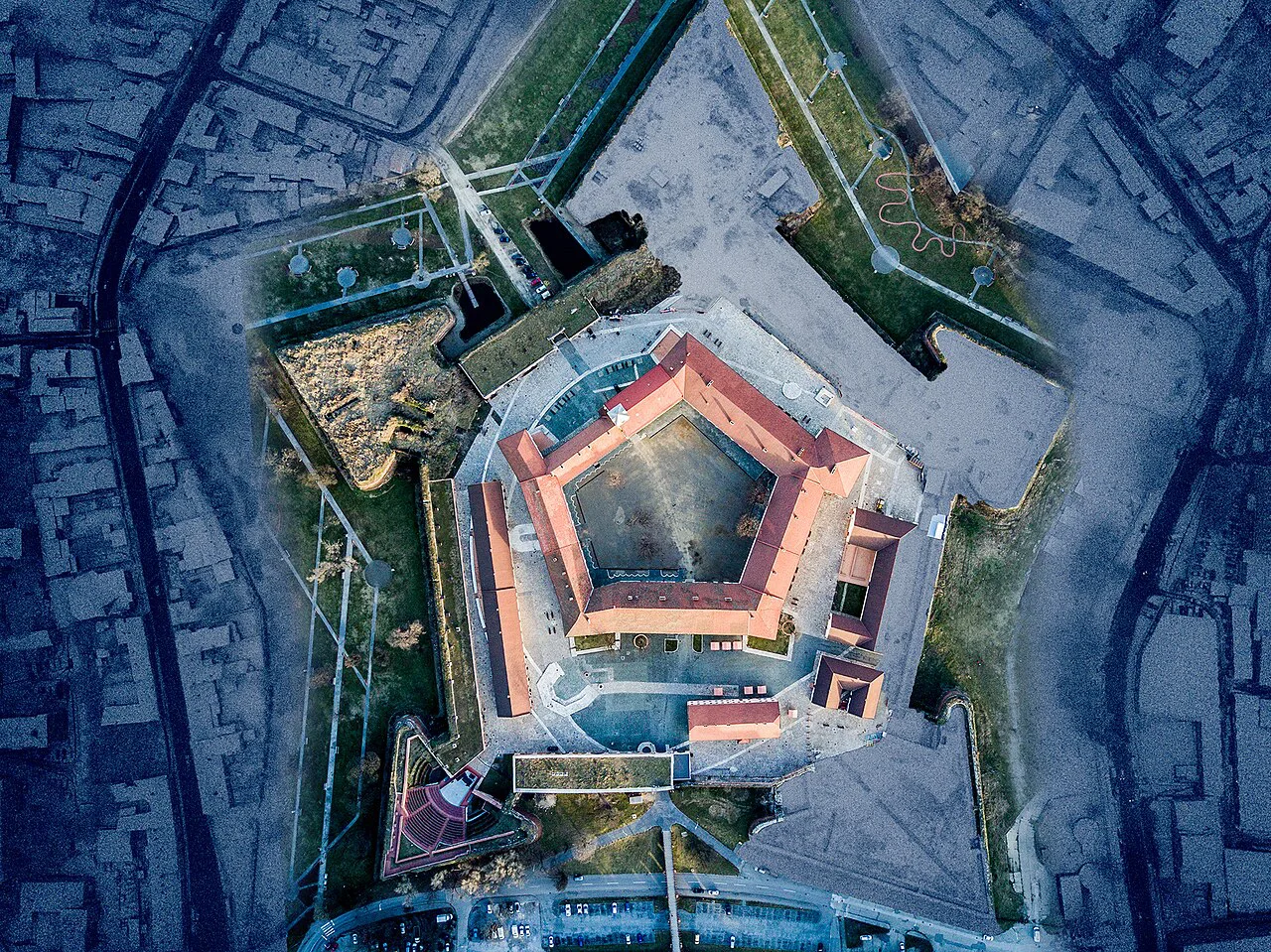
What the fortress is and how it is laid out
The fortress is a bastion fort in Italian style, and its walls once stood inside a moat fed by thermal water from the Peța and cold water from the Crișul Repede. The moat was roughly 4 m deep and 50 m wide, and the mix of warm and cold water kept it from freezing, which removed the winter weakness a besieger would look for. Read the site this way and the low brick stretches make sense as a defensive ring rather than scenery.
Inside the ring, the Princely Palace is the building you have come for. The Transylvanian prince Gabriel Bethlen began it in 1619 to a design by the Veronese architect Giacomo Resti, with walls running parallel to the outer defences and a tower at each of its five corners. Work continued under Gheorghe Rákoczi I and II, and the palace was completed in 1650.
The palace is divided into wings A to E, and knowing the letters saves you wandering. Wings A and B hold the Museum of Oradea City, which the Oradea Heritage page describes as fully housed there, and Wing C holds the Art Gallery of the City, which is integrated into the museum. Match the letter on the door to the collection before you commit to a queue.

Where it is and how to get there
The entrance address is Piața Emanuil Gojdu 39-41, in the Oradea Fortress. From Piața Unirii the walk is level, which makes the fortress an easy add-on to a morning in the squares rather than a separate trip. Coming from the railway station, take a taxi for the straightforward run or check the local tram routes before setting out.
If you are working through the Art Nouveau set, the Black Eagle Palace, Oradea sits on the same side of the centre, and pairing the two on foot works well. The Moon Church (Biserica cu Lună), Oradea is the other obvious companion in the central squares.

The Princely Palace: Wing A and the painted rooms
Wing A is the oldest part of the standing palace, built between 1620 and 1625 by Giacomo Resti in late Renaissance style, and it served as the princely residence. Spend your time in the first two halls: the arch of the first keeps painted emblems with Latin inscriptions, parts of them still legible, and the second carries mural paintings of allegorical floral motifs.
The room to seek out is the Griffin Hall, whose decoration depicts eight mythical and real animals representing princely virtues such as valour, strength, purity and tenacity. It is a small room and easy to pass, so ask at the desk if the door is not obvious. The palace is also the reason the fortress rewards a slower visit than its courtyard suggests.
The Museum of Oradea City in Wings A and B
The city museum occupies Wings A and B and runs permanent exhibitions on the denominations of Oradea, the First World War and General Traian Moșoiu, the communist period and the disco culture of the 1970s to 1990s. The photography collection of the Oradea photographer Ștefan Toth fills six rooms with around 500 objects, which makes it a strong reason to pay for the interiors.
The multi-confessional history gets its own generous space, with displays on the Roman-Catholic, Greek-Catholic and Reformed bishoprics of the city. If your interest is the city rather than the building, this section explains why Oradea looks the way it does. Budget 60 to 90 minutes for the museum floors alone.
The lapidarium and archaeopark
The basement lapidarium holds architectural fragments from the Gothic cathedral alongside funerary items, and the archaeopark in building B shows the ruins of St Mary the Little's church, built in the 12th century before the Mongol invasion of 1241. The Saint's church was later demolished and the south-western part of the Princely Palace was built over it in the 17th century.
The Churches in the Palace exhibition gathers finds from the 2012 to 2015 excavations, from 11th to 13th-century pottery to silver coins and medieval building tools. Walk the archaeopark first if the day is dry, then come inside for the objects, because the labels make far more sense once you have seen the ground they came from.
Museum of Bread and the Art Gallery
Wing H holds the Museum of Bread, a permanent exhibition that is popular with Romanian visitors and easy to fold into a palace circuit. Wing C holds the Art Gallery of the City, which is integrated into the museum rather than run separately. Both can be added to the museum visit if you have the time.
Opening hours and tickets
The Museum of Oradea City publishes a visiting-hours and ticket-price section on its own site. Check the current schedule and prices on the museum page before you travel. The outdoor courtyards and the fortress park are the part you can walk without committing to a ticket, while the palace interiors are the ticketed element.
The defences, the moat and the park
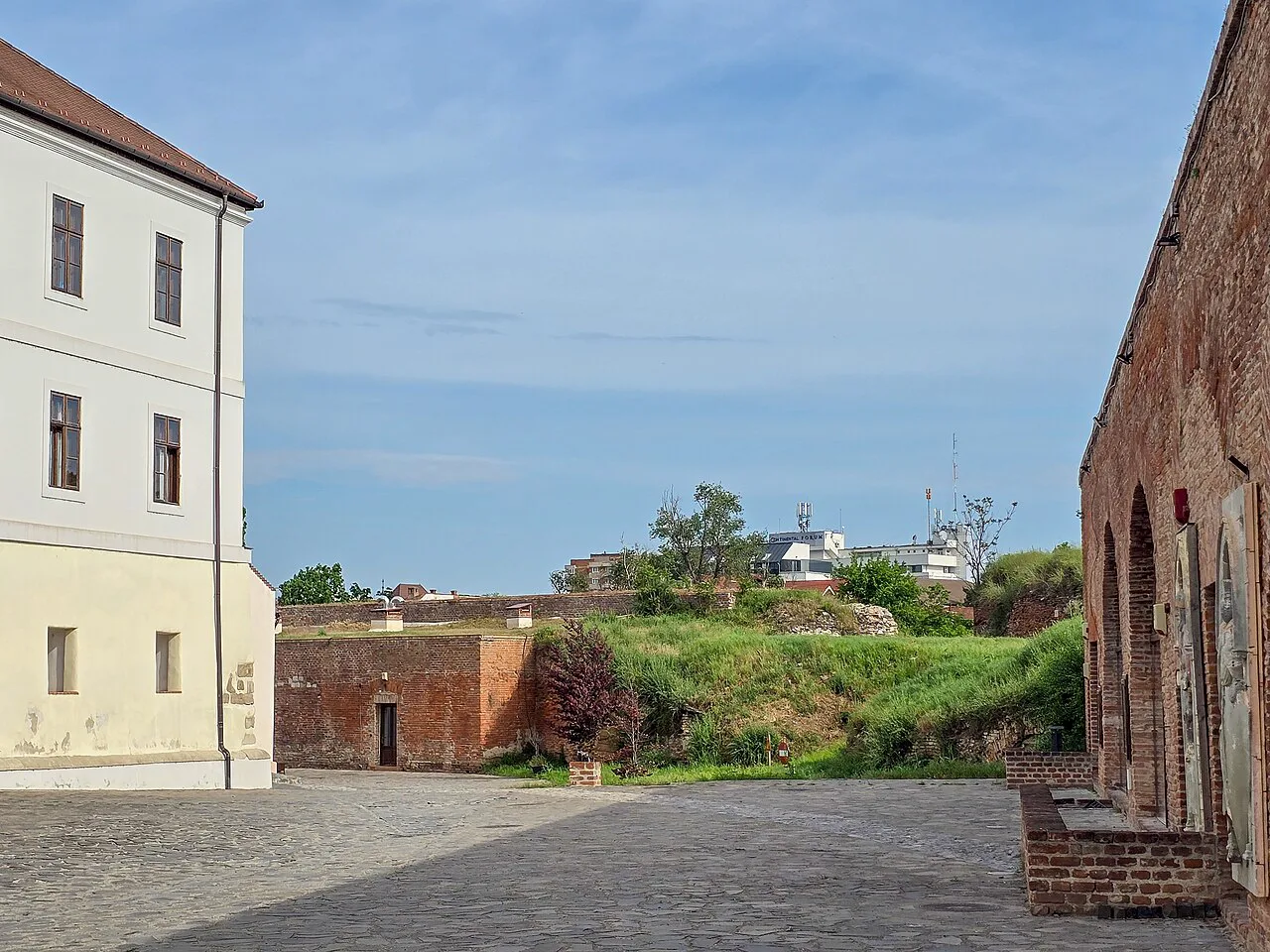
The bastions and the line of the moat are part of the outdoor circuit, and the trench still reads clearly against the outer walls. The fortress now doubles as a centre of the city’s cultural activities, with medieval festivals, reenactments, craftsmen’s workshops and film nights on the grass of the fortress park, and the events calendar changes year to year.
Allow 30 to 40 minutes to walk the walls and courtyards, longer if an event is on and the inner spaces are busy. The bridge and courtyard restoration has been phased, so expect some sections to be screened off while works continue.
What is nearby
Piața Unirii is the natural next stop, with the Moon Church and its astronomical clock face a few minutes away. Union Square, Oradea also holds the bulk of the Art Nouveau facades, so a fortress morning followed by a square-and-street afternoon covers the city’s core without transport. Add the City Hall tower if you want a view over the Crișul Repede.
For a different half-day, the Oradea Zoo (Grădina Zoologică Oradea) sits in the same western part of the city and suits a slower afternoon. The Darvas-La Roche House, Oradea is the pick if you want one more Art Nouveau interior after the fortress, and the Sion Neolog Synagogue, Oradea rounds out the central circuit.
Who should prioritise the fortress
Prioritise the fortress if you have a full day in Oradea and want one site where the city's medieval, Renaissance and modern layers sit in one place. The museum floors reward people who read labels; the courtyards reward anyone who wants a quiet walk away from the traffic. Skip the interiors and keep to the walls if your time is tight, because the paid rooms need at least an hour to justify the stop.
Museum ticket or courtyard only?
Decide before you arrive: the palace wings, with the Griffin Hall, the lapidarium and the Toth photography collection, justify a two-hour visit, while the walls and moat make a 45-minute walk. If you only have an afternoon in Oradea, walk the defences, cross to Piața Unirii and leave the museum for a return trip. Check the museum page for the day's hours and ticket prices before setting out.
Frequently Asked Questions
How long does a visit to Oradea Fortress take?
Allow around two hours to see the Princely Palace interiors, including Wings A and B, the lapidarium and the archaeopark. The courtyards, bastions and moat take about 45 minutes on their own, and the Museum of Bread and Art Gallery can be added if you have the time.
Do I need to book Oradea Fortress tickets in advance?
The museum site gives the visiting hours and ticket prices, so check the current details there before you travel. The outdoor courtyards and park are walk-up spaces.
Is the Oradea Fortress the same as the Oradea City Museum?
No. The fortress is the walled site with its bastions, moat and courtyards, while the Oradea City Museum occupies Wings A and B of the Princely Palace inside it. The palace also holds the Art Gallery of the City in Wing C and the Museum of Bread in Wing H.