
Sion Neolog Synagogue, Oradea: A Visitor's Guide

The Sion Neolog Synagogue is worth 30 to 45 minutes of your time in Oradea: a restored 1878 building in the New Town, beside the Crișul Repede, now used for concerts, exhibitions and theatre rather than regular prayer. This guide covers where it stands, how to walk there from the centre, what to look for outside and inside, and the nearby sights that pair with it.
What the Sion Neolog Synagogue is and where it stands in Oradea
The Sion Neolog Synagogue, known locally as Sinagoga Neologă Sion, was built in 1878 in the centre of Oradea's New Town after a group of Reform, or Neolog, Jews separated from the city's Orthodox Jewish community in 1870. It was designed by Busch Dávid, the city's chief architect and a member of the Jewish community, with construction entrusted to Kálmán Rimanóczy Sr., and it is a simplified modern replica of the Synagogue in Nuremberg. The building holds around 1,000 seats and is decorated inside and out in a Moorish-inspired style. It was rehabilitated through a cross-border project run by the municipality of Oradea with the Jewish Community of Debrecen, and it now runs as a contemporary arts venue.

How to reach it: New Town location by the Crișul Repede
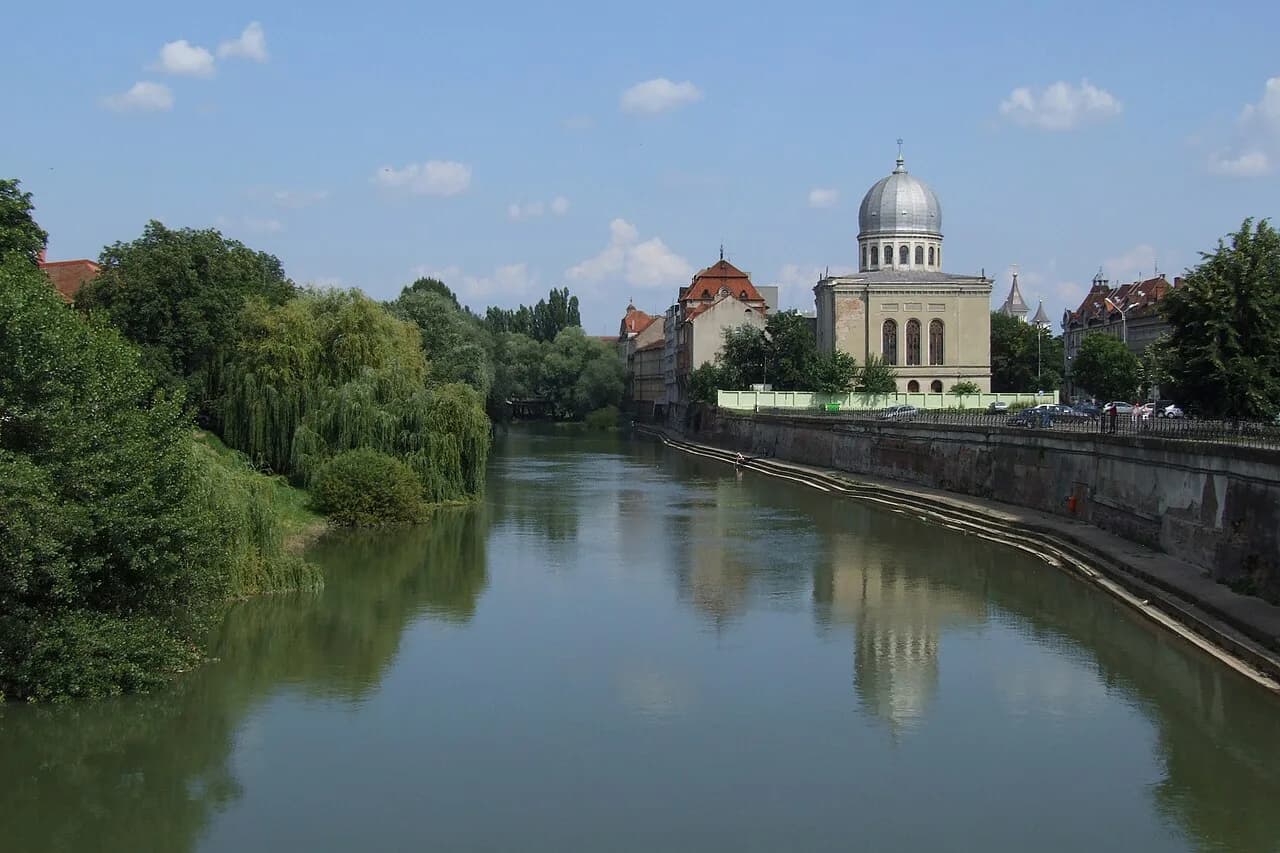
The synagogue stands in the New Town, with a terrace in front of it looking across to the banks of the Crișul Repede, which makes the river the easiest landmark to steer by. From the historic centre around Union Square and the Black Eagle Palace, the walk is short and mostly level; allow roughly 15 to 20 minutes on foot, and use the river as your guide rather than a street number, since the visitor sources locate the building by the New Town and the river rather than by a numbered address.

The building outside: Moorish decoration and the southern façade
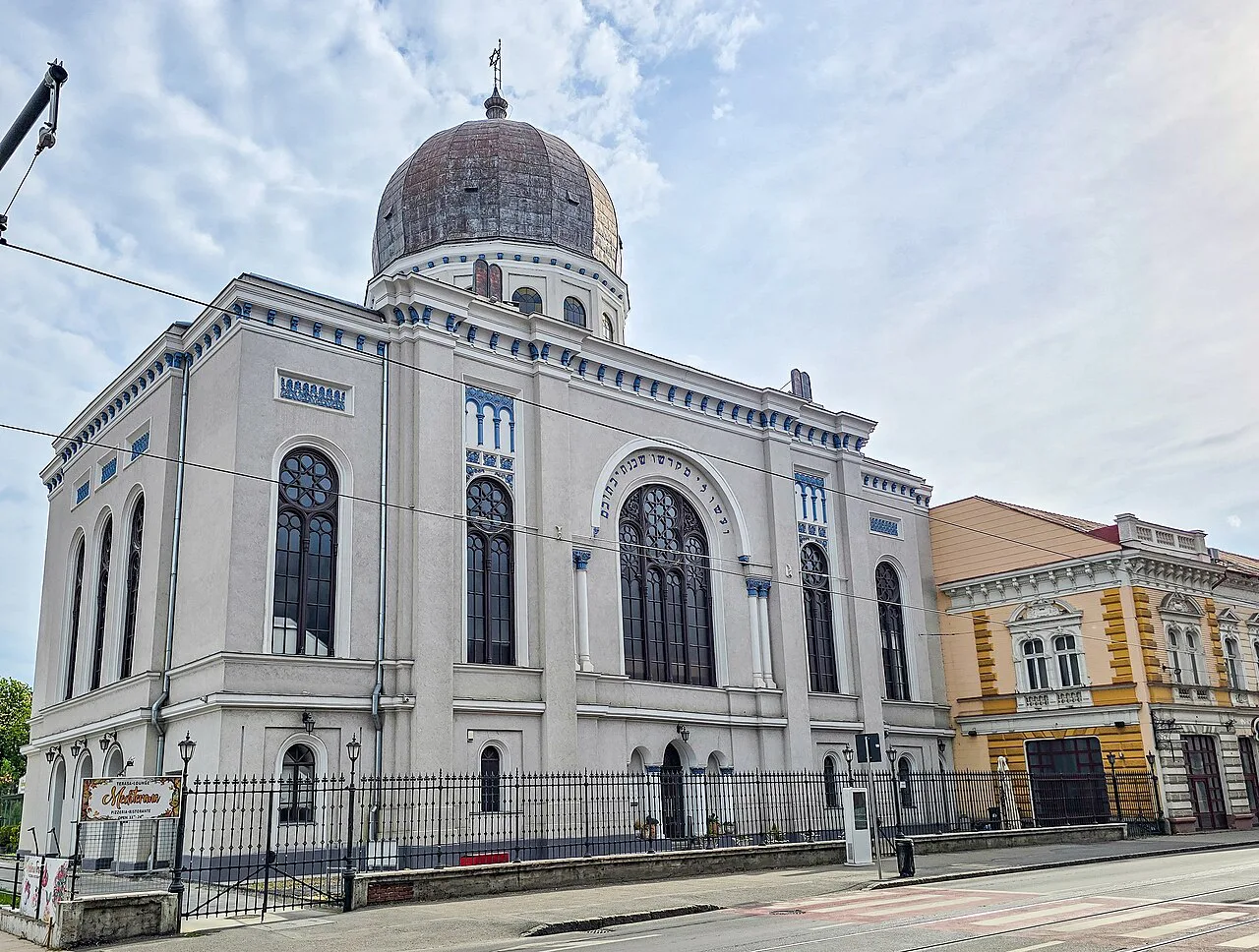
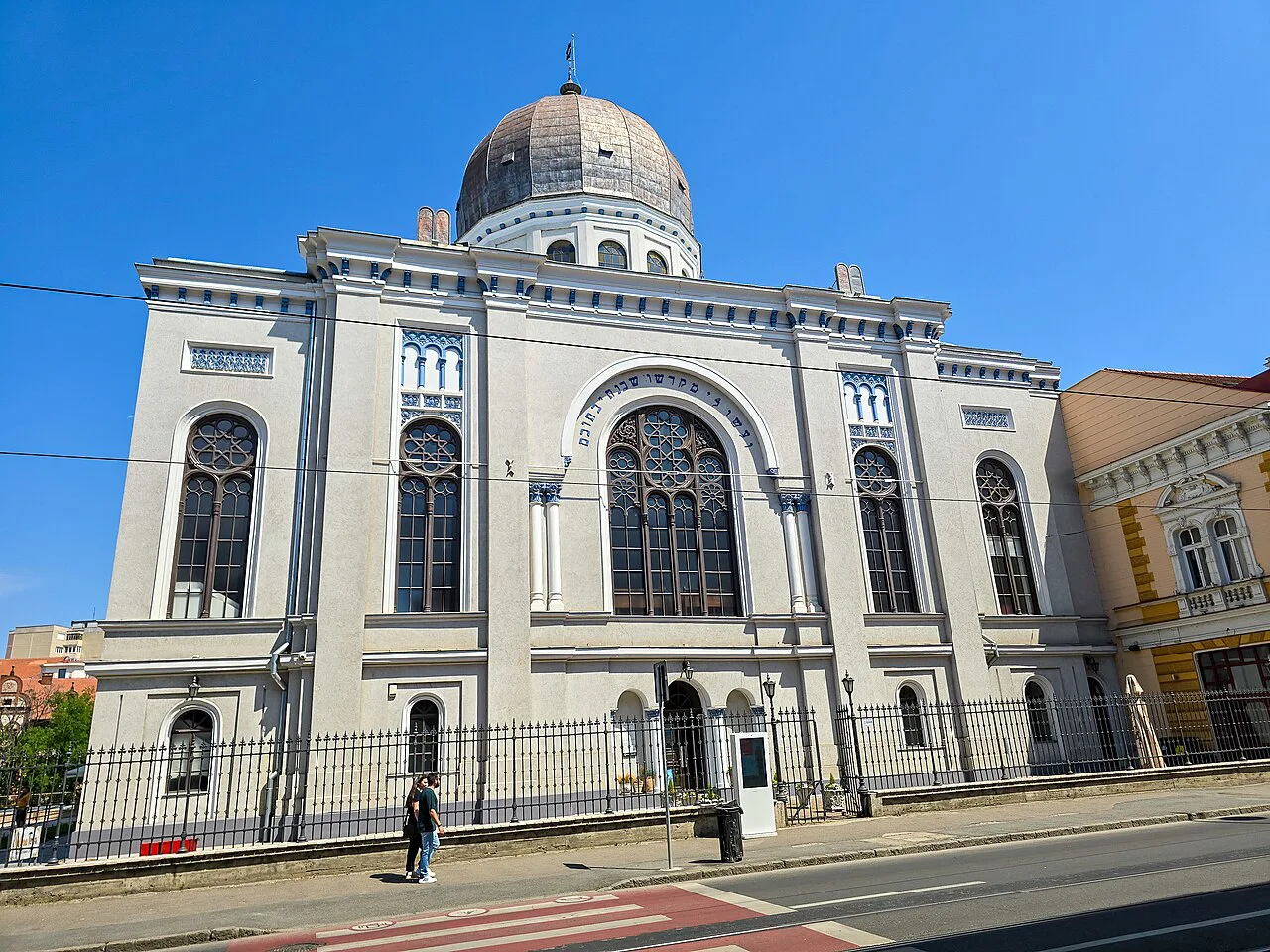
The exterior is where the Moorish inspiration reads most clearly: the façades are built around arcaded windows that close with semicircular arches, and the intention behind them was a triumphal-arch effect borrowed from Renaissance architecture, itself drawing on Roman models. The most rewarding view is the southern façade, which faces the street and carries a central jutty framed by four pilasters and five wide windows topped with wooden rosettes in Eastern motifs. Above the roof, a tambour pierced by sixteen windows gives the upper profile its floating look, so step back across the street to take in the whole composition rather than viewing it from directly below.
Inside: three naves, painted ornament and the organ
Inside, the synagogue follows a basilica-like plan with three naves on an east-west axis oriented towards Jerusalem, separated by cast-iron poles that draw the eye towards the Torah ark. The painted decoration is entirely Moorish in inspiration, the work of the painter Horovitz Mor of Košice, and it is strictly geometric: Star of David motifs, eight-petal rosettes and repeating modular patterns in a restrained colour harmony. An iron grate decorated with floral motifs marks the sacred area around the ark, and an organ sits above the ark's niche. Look up at the painted ceiling and the upper windows as well as forward to the ark; the decorative scheme is the reason to come inside rather than just photograph the façade.
What a visit involves now: a restored space for the arts
Do not expect a working congregation's prayer hall or a conventional museum with labelled cases. Since its restoration, the synagogue has been reconverted as a space for contemporary arts, hosting concerts, exhibitions, openings, theatre shows and conferences for the general public. That means what you find inside depends on what is on: you might walk into an exhibition hang or a closed stage set-up rather than an empty nave, and on event evenings the building is busy rather than quiet. Check the Oradea Heritage page for the current schedule before you build your day around it.
How long to allow and when to go
Budget 30 to 45 minutes for the synagogue itself: long enough to walk the three naves, read the interior ornament and look at the ark and organ, short enough to fit alongside the fortress or the city museum in the same afternoon. If an exhibition or concert is running, add time for that. The visit is indoor and unaffected by weather, which makes it a sensible stop in the middle of a walking day. Opening times and any event-based access should be confirmed before you travel, since a building used for performances does not keep a simple daily visitor schedule.
Nearby: the Orthodox Synagogue and the riverbank
The Neolog Synagogue's closest counterpart is the Orthodox Great Synagogue, a separate building designed by Bách Nándor, built in eclectic style and seating 1,050 people. Seeing both makes the Neolog building's scale and setting easier to judge, since the two differ in the grandeur of their scale and in their location. Just outside, the terrace in front of the synagogue serves Mediterranean food with a view towards the Crișul Repede, a practical place to pause between sights. For more of the city's architecture, the Black Eagle Palace, Oradea Fortress and the Moon Church are all within walking distance of the centre.
Practical points: tickets and opening times
The visitor sources give no ticket price or standing opening schedule for the Sion Neolog Synagogue, so plan around what is on rather than a fixed daily window and confirm access before you set out. If you are coming for a specific concert, exhibition or theatre performance, the event listing is the reliable way to know the building will be open. Otherwise, treat the synagogue as one stop on a walking loop through the New Town and the centre rather than a destination that anchors the whole day.
Is the synagogue worth fitting into your Oradea day?
Yes, if you are already walking the New Town and the riverbank: the 1878 building gives you a Moorish-inspired interior, a painted geometric scheme and a sense of how Oradea's heritage buildings have been reused for the arts, all in under an hour. Pair it with the Orthodox Great Synagogue to see the contrast in scale, then continue to the fortress or the centre. Whatever your plan, check current access with the Oradea tourist information centre or Oradea Heritage before setting out, so the stop hangs on a confirmed event or open doors.
Explore more Oradea guides
Frequently Asked Questions
Can non-Jewish visitors go inside the Sion Neolog Synagogue?
The building is presented to the public as a restored heritage site and contemporary arts venue, with concerts, exhibitions, theatre and conferences open to a general audience, so you do not need to be Jewish to attend. Whether the doors are open on a given day depends on the event programme, so check what is scheduled before you go.
Do you need tickets for the Sion Neolog Synagogue?
No visitor ticket price is published for the synagogue. Access is usually tied to a specific concert, exhibition or performance, so check the organiser's listing for the event you want to attend and any admission details it gives.
How many synagogues are there in Oradea?
The city's Jewish heritage includes the Neolog Sion Synagogue, built in 1878, and the Orthodox Great Synagogue, built in 1890 and still the hub of the local Jewish community. They are separate buildings with different architecture and scale, and both are worth seeing if you are following the Jewish heritage trail through the city.