Decebalus Rock Sculpture: Where It Is and How to See It
The Decebalus rock sculpture is a huge carved head on the Danube at the Iron Gates near Orșova. Here is what it shows, how it is described and how to see it.
On this page
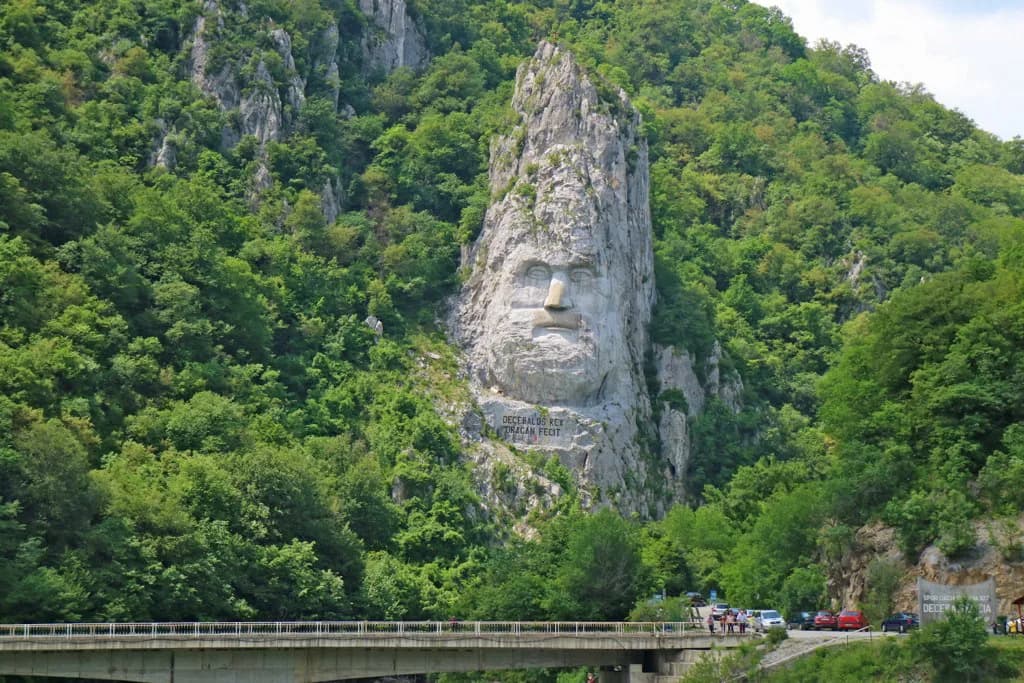
The Decebalus rock sculpture is a colossal carving of the Dacian king's face cut into a rocky outcrop on the Danube at the Iron Gates, near Orșova in Mehedinți County. It sits on the Romanian bank of the river where the Danube forms the border with Serbia, so you see it across water rather than up close. This guide fixes the location, gives the size and carving figures as the published sources report them, and sets out the two realistic options: a boat on the river or a stop on the road.
Treat the numbers with care. Published figures for the height and for the carving years differ, and the larger figures come from a secondary reference entry rather than from an official heritage body or the commissioning side. The sections below attribute each claim to the source that makes it.
What the sculpture shows
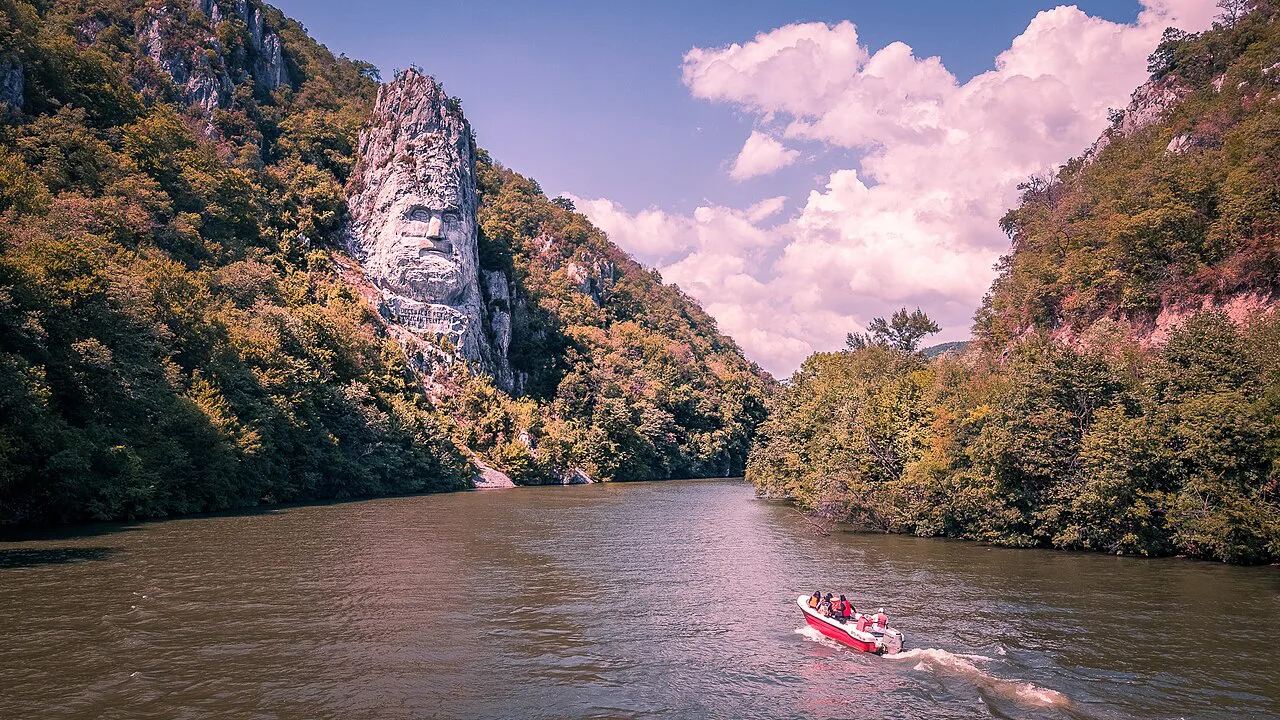
The World Record Academy describes a carving in rock of the face of Decebalus, the last king of Dacia, who fought the Roman emperors Domitian and Trajan to preserve the independence of his country, which corresponded to modern Romania. The carving sits on a rocky outcrop above the Danube at the Iron Gates.
This is a historical figure, not a character from fiction. The sculpture has no connection to Bram Stoker's Dracula, so plan the visit as a landscape and engineering sight rather than a literary pilgrimage.
Where the Decebalus sculpture is
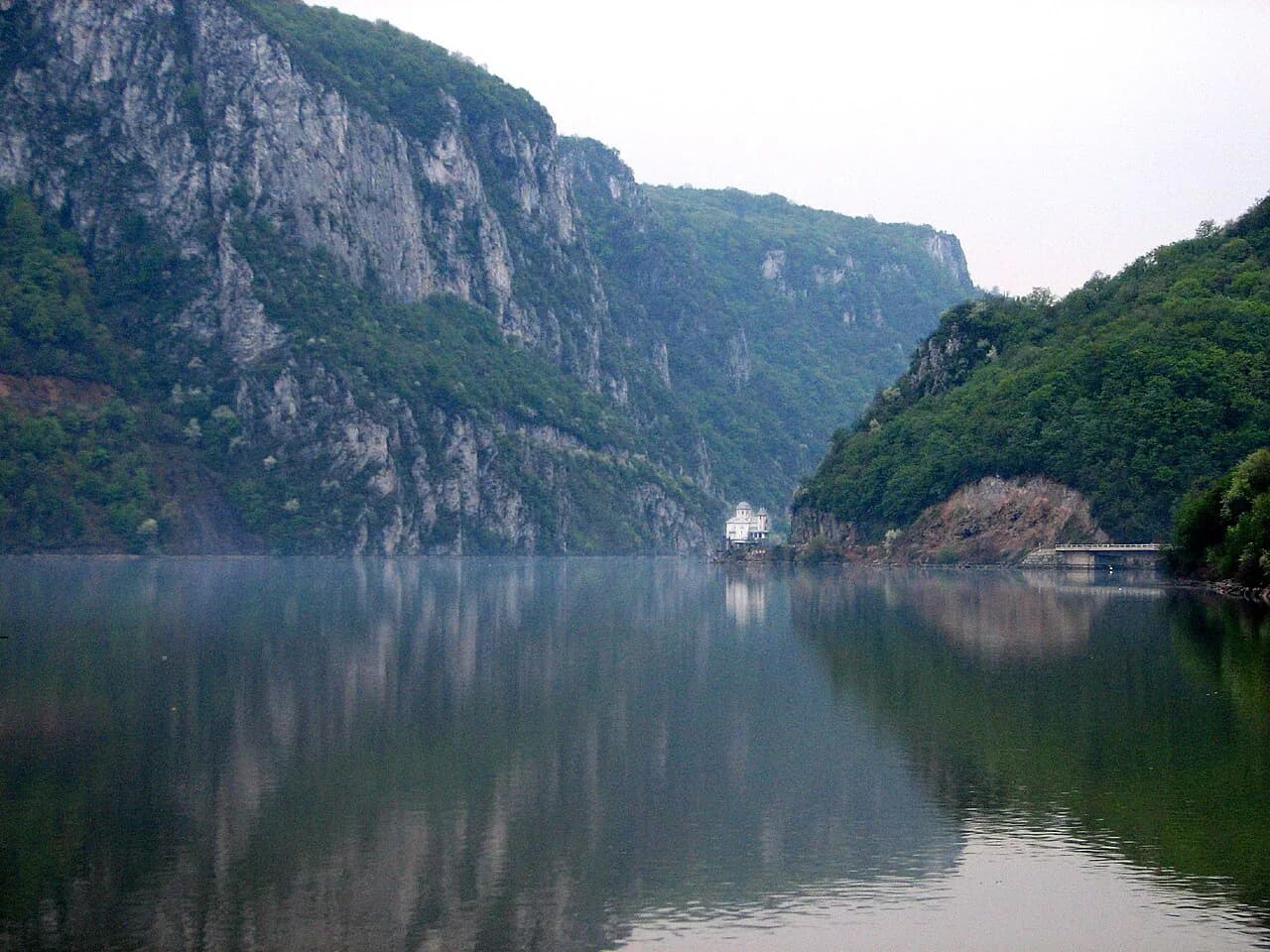
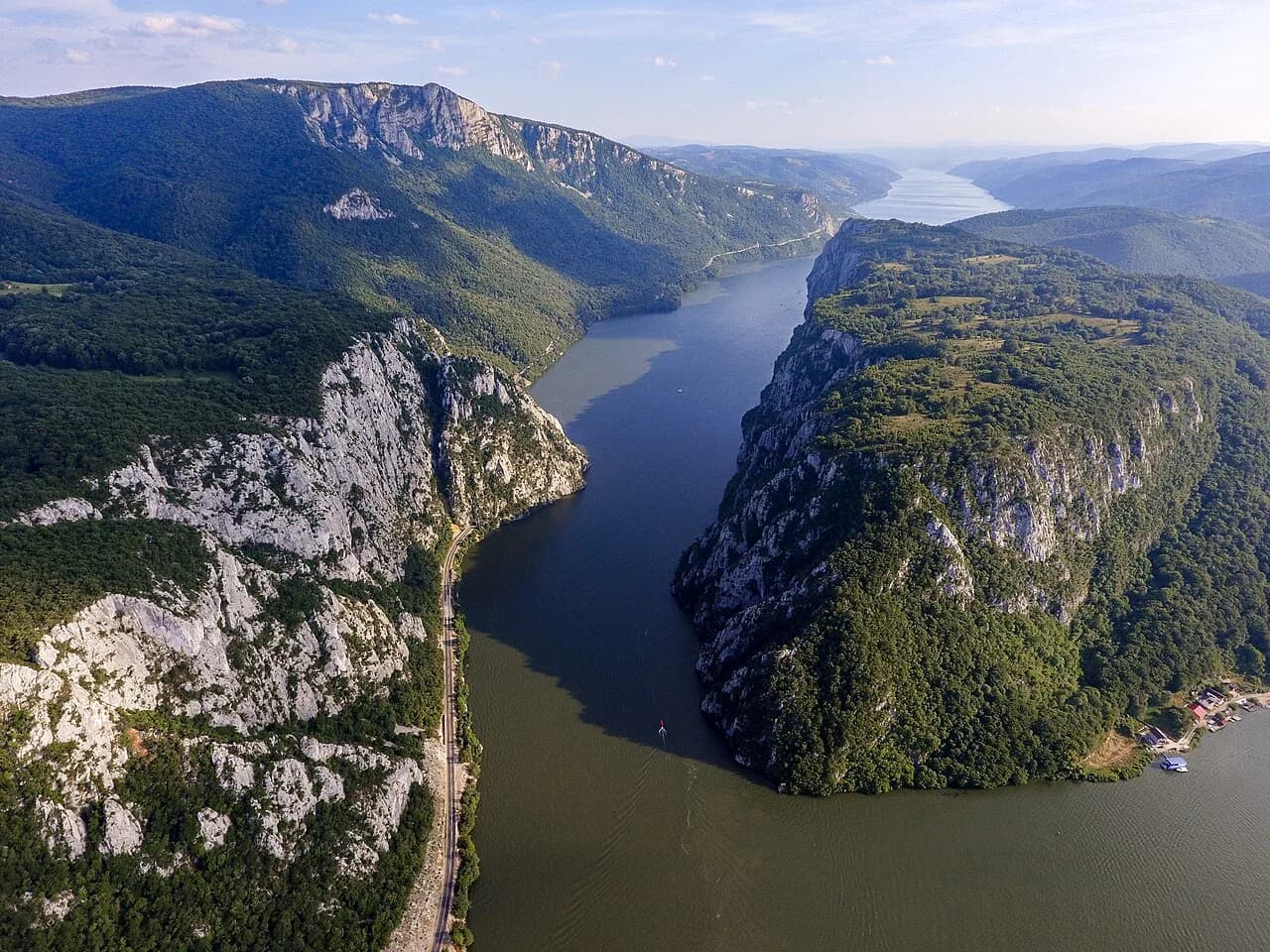
The sculpture faces the Danube at the Iron Gates, which form the border between Romania and Serbia, near the city of Orșova. Coming from the Romanian side, Orșova is the practical base for the approach, and the gorge itself is covered in the wider Iron Gates guide.
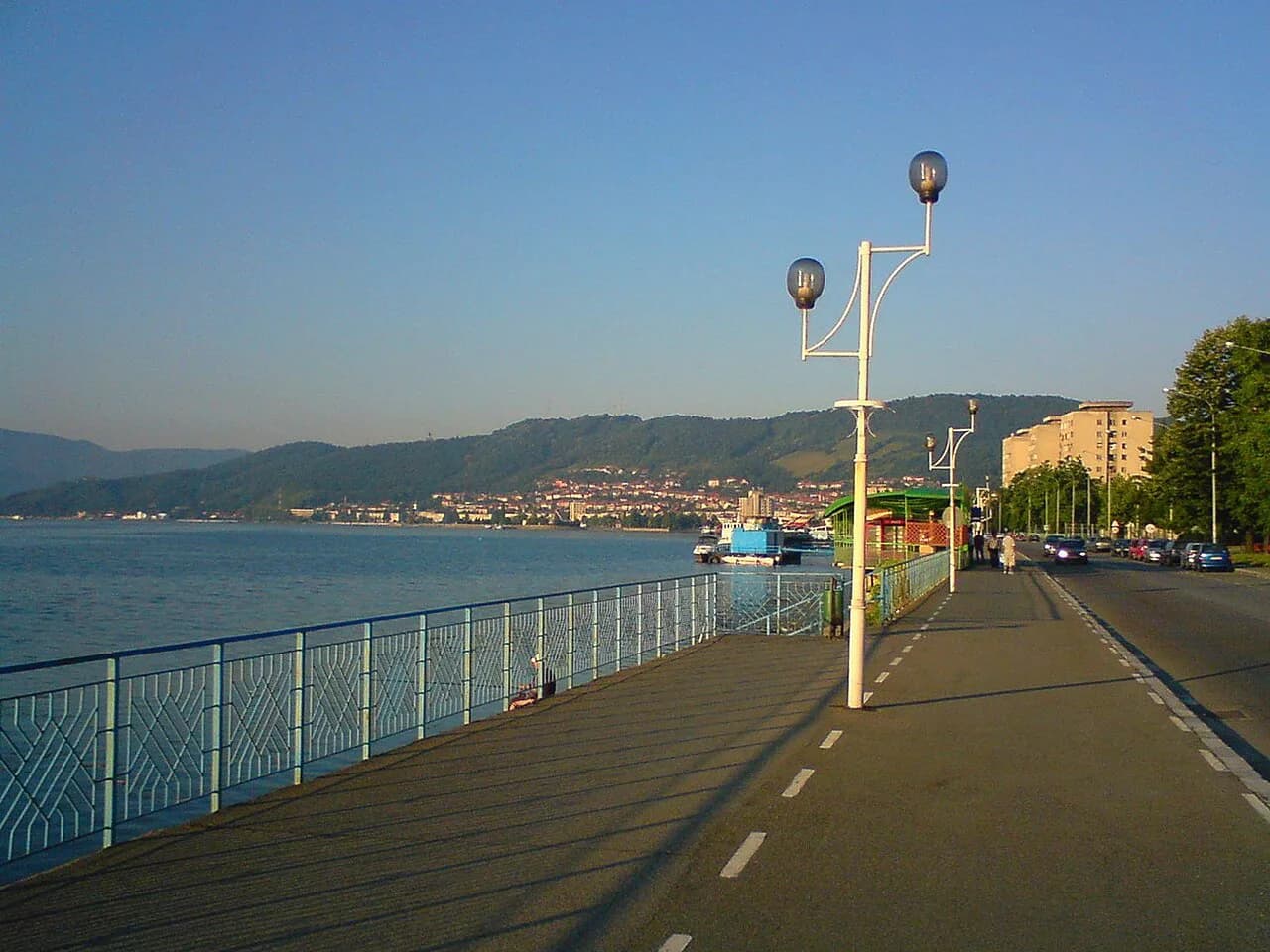
Orșova is the nearest city named in the published accounts, sitting on the Danube in Mehedinți County, and is the simplest base for arranging transport, food and a bed for the night. If you are building an itinerary around the river rather than a single stop, start with an Orșova guide before fixing your days.
How big the carving is
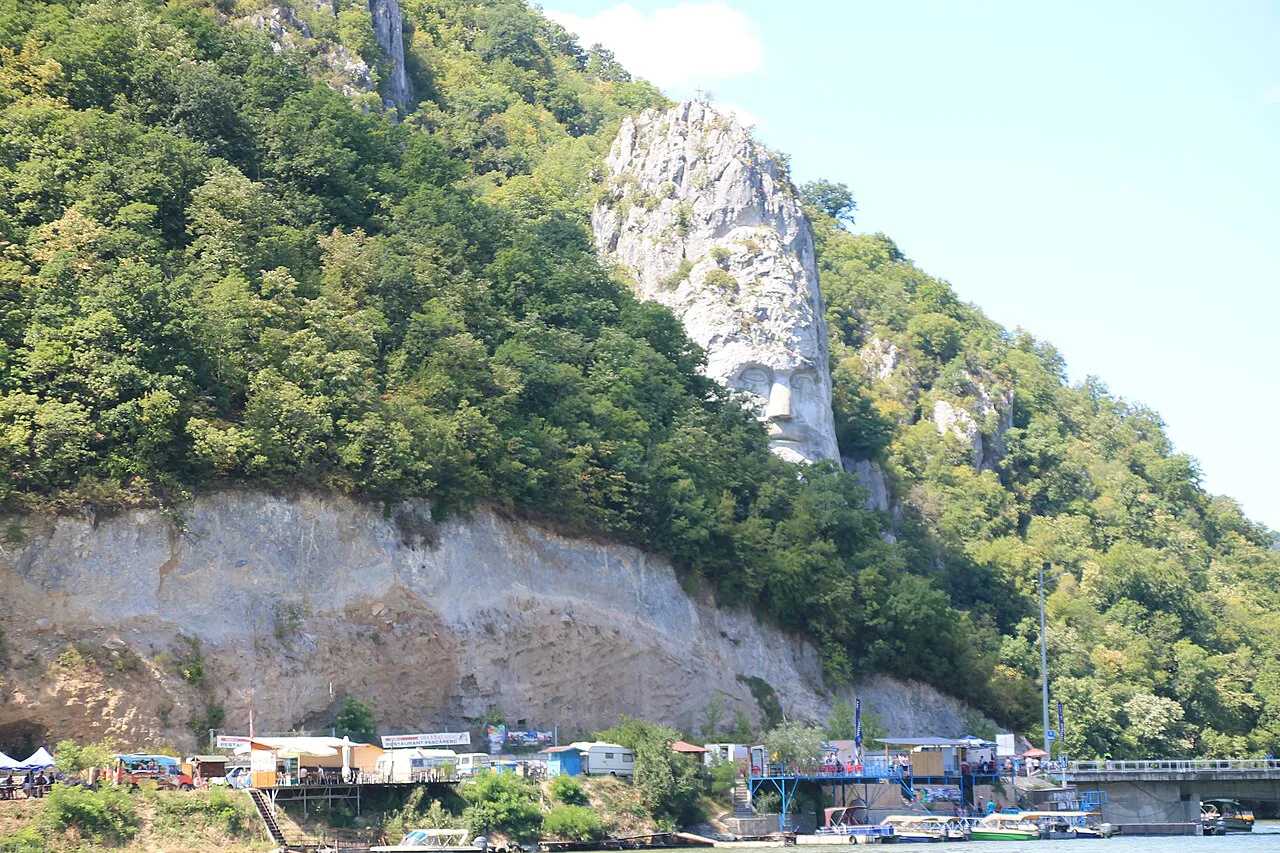
The World Record Academy gives the sculpture as 42.9 m (141 ft) in height and 31.6 m (104 ft) in width, and records it as the world's largest rock sculpture on a river bank. That record status is the Academy's own designation, and the Academy is a records organisation rather than an official heritage body, so treat the status as a published claim.
A German-language reference entry gives a larger figure: it describes the sculpture as 55 m high and the highest rock sculpture in Europe. That is a secondary encyclopaedia entry, not the institution that made the sculpture, so quote the height with its source attached rather than as a bare fact.
The lesson for planning is simple: the carving is tens of metres tall either way, which is why a boat on the river puts you beneath it while a roadside stop leaves you looking across at it from a distance.
When and how it was carved
The carving period is reported in two versions. The World Record Academy says it was made between 1994 and 2004, and elsewhere on the same page says twelve sculptors took ten years, from 1992 to 2001, to finish it, so the page itself carries both spans.
The two versions also disagree on the finishing year: 2004 in one, 2001 in the other. Either way the sculpture is a modern work made in the 1990s and 2000s, not an ancient monument, cut into an existing rock face above the Danube.
Who commissioned it
The sculpture was commissioned by the Romanian businessman Iosif Constantin Drăgan, according to the World Record Academy's account. Drăgan is named as the commissioner of a modern carving looking out over the Danube rather than a monument erected by a state or heritage body.
A stock-image library caption makes a different attribution again, crediting an Italian sculptor named Galeotti and dating the work to 2004. That is a commercial image caption rather than a commissioning or heritage record, so it is the weakest of the three and should not be repeated as settled fact.
Seeing it from the water
The river is the obvious vantage point, giving you the full height and width of the face in one frame, and boats work the gorge from the Romanian bank. A boat trip is the way to combine the sculpture with the rest of the Iron Gates scenery.
Book and time the sailing through the cruise company or the port you depart from, and ask whether the route passes the Decebalus face and the Tabula Traiana, since a short gorge cruise may not reach both.
Seeing it from the road
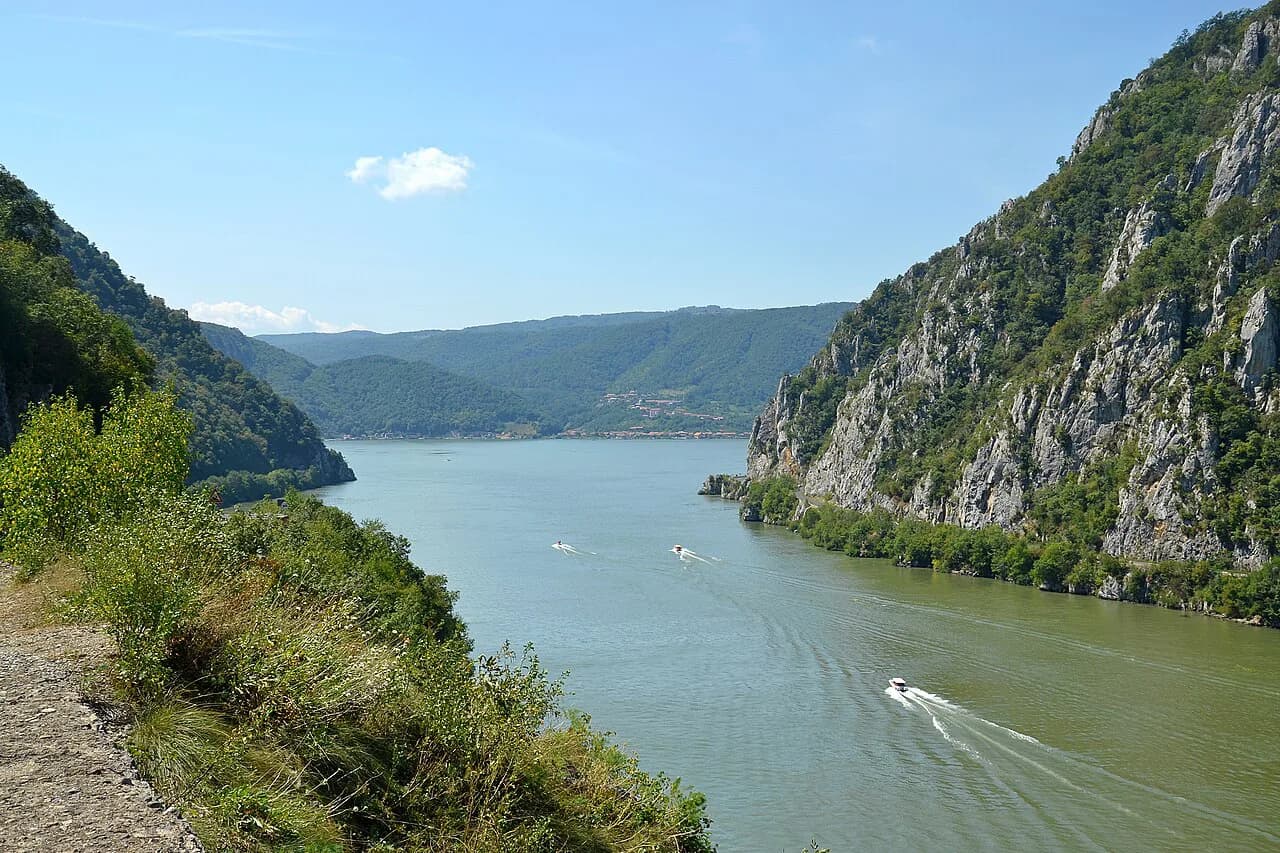
The Romanian bank road runs along the Danube through the Iron Gates gorge and gives a roadside view across the water towards the sculpture. What you get is a distant, wide view of the carved face and the river rather than a close inspection of the rock.
If you are driving the gorge, treat the sculpture as a stop on a longer run through the Cazanele Dunării, the narrow section of the Danube where the river squeezes between the Carpathians and the Serbian side.
Practical trade-offs
The trade-off is distance against effort. The road view asks nothing but a car and a pause, yet the sculpture is across the water and appears smaller than photographs suggest, while the boat view puts you beneath it but commits you to a sailing.
Two further points decide the trip. The river is wide and deep here, so scale is hard to judge from the bank, and the whole experience is weather-dependent: a clear day shows the carved face, a grey one flattens it into the rock.
Pairing it with the Iron Gates
The sculpture shares its stretch of river with the Tabula Traiana, the Roman memorial tablet commemorating Trajan's road through the gorge. Boat routes along the Danube are a direct way to link the two, which is the strongest argument for taking to the water rather than only driving the bank.
Build the day around the gorge rather than around the face alone: the Iron Gates setting, the narrowed channel of the Cazanele Dunării and the Serbian bank opposite are the reason people come.
Boat or road for the Decebalus sculpture?
Choose the boat if the sculpture is the point of the trip: it puts you on the river the face was carved to overlook. Choose the road if you are already driving the Danube gorge and want the view without a fixed sailing time.
Either way, plan around Orșova and the Cazanele Dunării, keep the height and date figures attached to the sources that publish them, and check sailings and road conditions with the operator or locally before you set out.
Explore more Iron Gates guides
Frequently Asked Questions
Where is the Decebalus sculpture?
It is carved into a rocky outcrop on the Danube at the Iron Gates, near the city of Orșova in Mehedinți County, on the Romanian bank of the river where the Danube forms the border with Serbia.
How tall is the Decebalus rock sculpture?
Published figures differ. The World Record Academy gives 42.9 m (141 ft) in height and 31.6 m (104 ft) in width, while a German-language reference entry describes it as 55 m high. The larger figure comes from a secondary encyclopaedia entry, so treat the height as reported rather than settled.
Is it the largest rock sculpture in the world?
The World Record Academy records it as the world's largest rock sculpture on a river bank, and a German-language entry calls it the highest rock sculpture in Europe. Both are published claims from non-official reference sources, not measurements you can check on site.
Can you see the Decebalus sculpture without a boat?
Yes, from the road along the Romanian bank of the Danube, but the face is across the water and reads at a distance. The river gives the closer view.
Sources
Useful notes for your next trip
Optional updates to our guides.
You might also like
Continue reading
More guides you'll find useful