Bigăr Waterfall: What to Expect and How to Get There
Bigăr Waterfall in Caraș-Severin is a small, moss-covered cascade with free access and free parking. Here is how to reach it and what to expect.
On this page
Bigăr Waterfall is a modest, moss-covered cascade in Caraș-Severin County, southwestern Romania, and it costs nothing to visit. It suits travellers already touring this corner of the country rather than a dedicated long haul. This guide covers what the fall looks like, how long to allow, the drive on DN57B, the map mix-up worth avoiding and where to park.
Set your expectations before the detour. The water drops only a few metres and forms a bell-shaped travertine face rather than a thundering curtain, so anyone arriving after a multi-hour drive expecting a huge fall will be disappointed.
What Bigăr Waterfall actually is
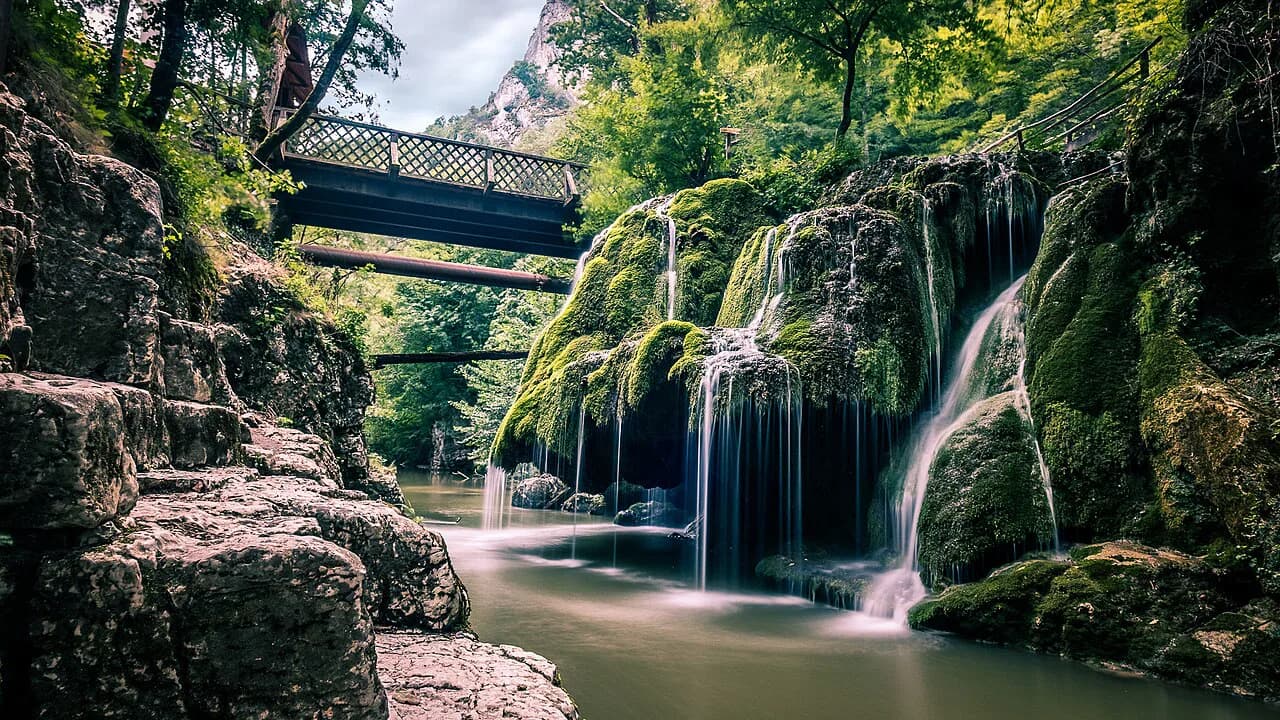
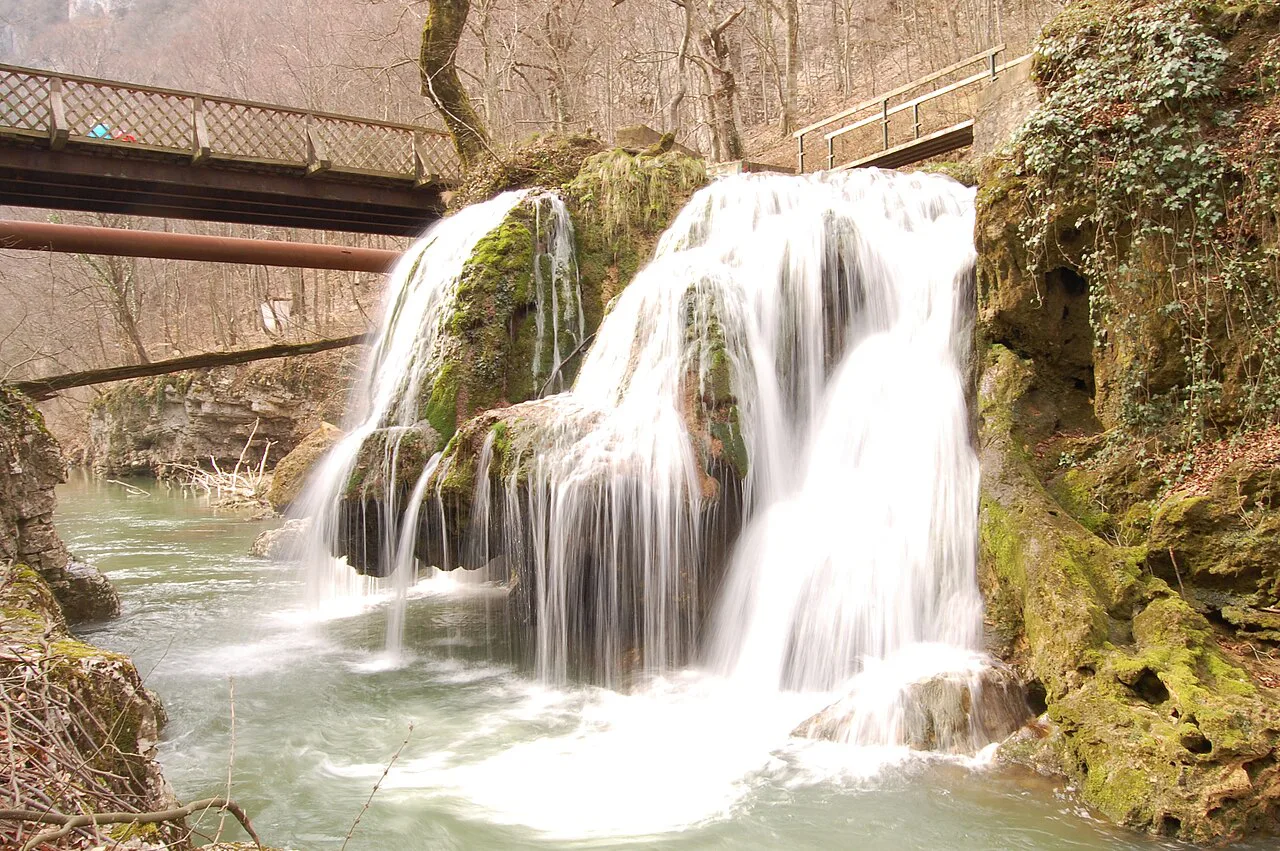
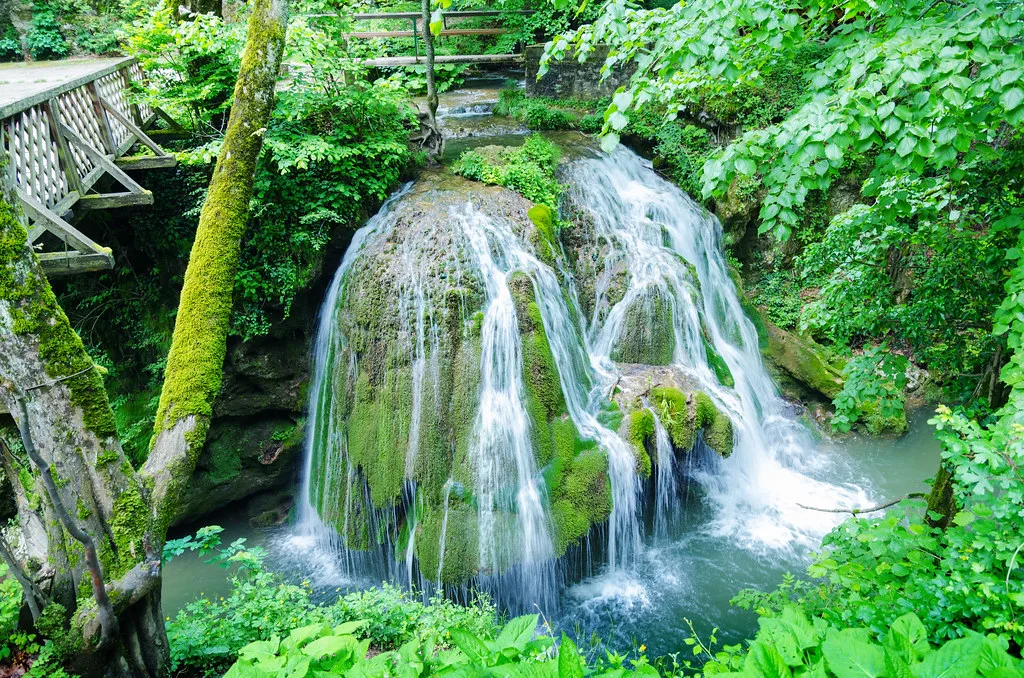
The cascade sits inside Cheile Nerei-Beușnița National Park, in the Bozovici area near Poneasca, and the water falls from a height of roughly four to five metres. Rather than dropping freely, it spreads over a rock face shaped into a bell or mushroom form, with plants rooted in its grooves giving the surface a green cast. Two sides give you a near-360-degree view, and a small pagoda behind the fall is the spot for photographs.
It is often described as a moss-covered travertine waterfall, which is the accurate way to picture it: a quiet natural feature rather than a spectacle. Give it the time a short stop deserves and it works well.
Opening hours and tickets
The waterfall is open around the clock, every day of the year, and there is no entrance fee. Nothing needs booking in advance, which makes it easy to slot in around other stops on a driving day. Because access is open-air and unsupervised, normal care on wet rock applies rather than any ticketing rule.
How long you need here
Allow about an hour and a half to explore the fall and its immediate surroundings, or up to two and a half hours if you want to linger, use both viewing sides and eat a picnic. The visit is short enough to fold into a longer drive through Caraș-Severin rather than a destination in its own right. Treat the time as a rough planning figure, not a schedule.
How to get there by car
The address is DN57B, Romania, and the usual approach is by car. Map estimates put Timișoara at about 2.5 hours and 140 km, Brașov at roughly 6 hours and 460 km, and Bucharest at about 8 hours and 600 km. Those are driving estimates on Romanian roads rather than promises, so build in slack.
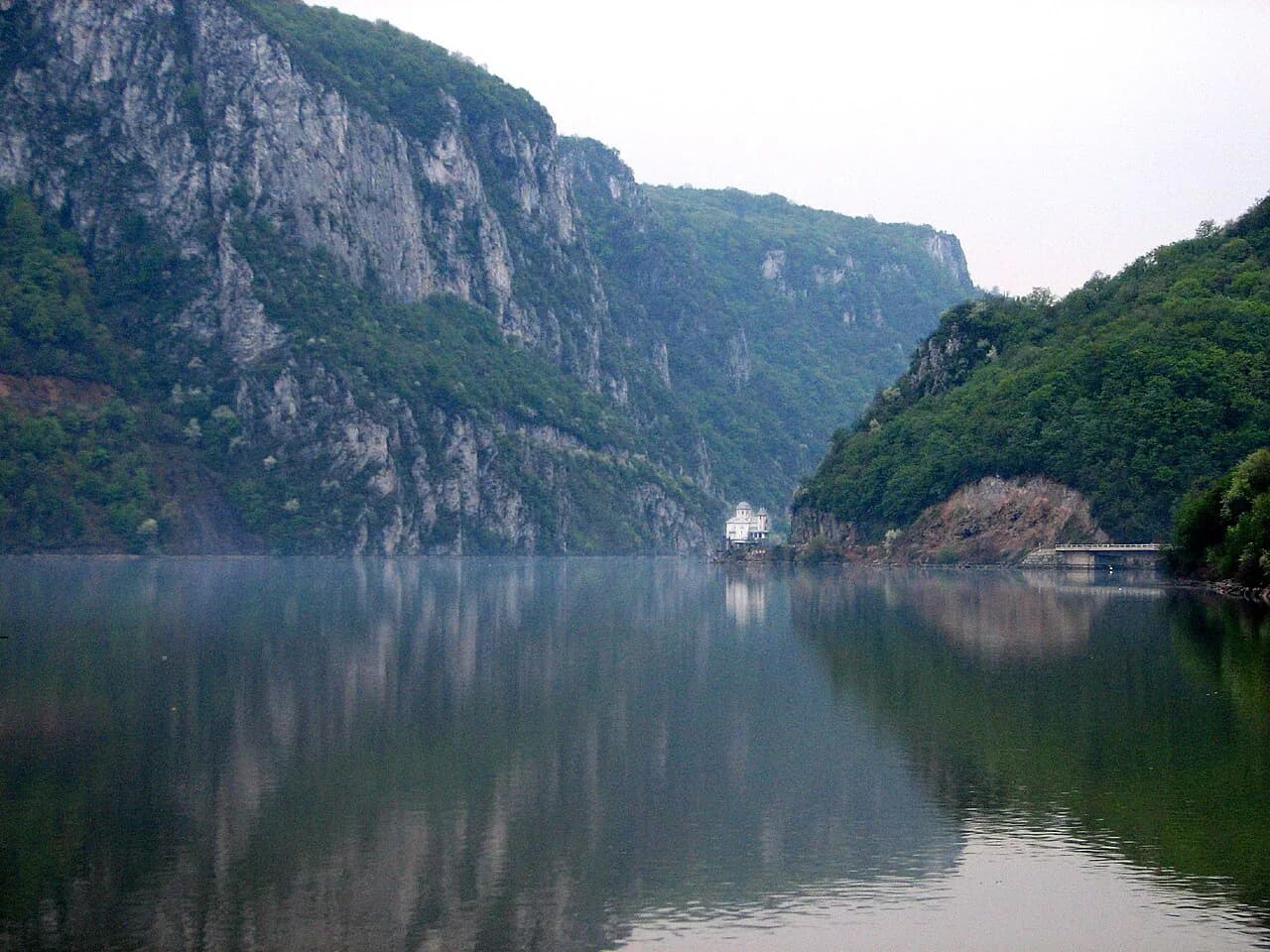
From Brașov the route runs through Făgăraș, Deva and Lugoj, which gives you sensible places to break the drive. Coming from the west, Arad is a natural staging point before the final stretch on DN57B. If you are building a wider Danube trip, the Iron Gates, Romania lie within reach of this part of the country on a longer loop.
The Bigăr name trap
There is a town also called Bigăr roughly two to three hours away from the waterfall, so check that your route points to the cascade on DN57B and not to the town of the same name. Confirm the pin on the map before you set off, particularly if you are relying on a search result rather than coordinates. This is the single most useful check for anyone driving here for the first time.
Parking and finding the entrance
Parking is free. You can leave the car on the roadside in front of the entrance or use the spaces opposite, in front of the gates, before the entrance itself. The car park rarely fills, so finding a spot is not the difficulty.
The real friction is spotting the entrance, which is not marked by large signs. Drive slowly on the final approach and watch for the roadside parking rather than a visitor centre. If you pass the gates without noticing, turn round rather than pressing on to the next village.
What the fall looks like through the year
The flow is richer in spring and after long rainy spells in autumn, when the water spreads more widely over the green rock. In dry periods the stream is thin and the shape of the travertine face carries the visit. Winter brings its own version, with the small stream often freezing at low water and in sub-zero temperatures.
If you go in winter, wear closed, non-slip shoes; the same applies after rain at any time of year. The approach and the area around the fall are the places to watch your footing.
Shoes and footing on the approach
Closed, non-slip footwear is the practical choice for the approach and the viewpoints. The two-sided layout and the pagoda behind the fall involve moving over natural ground rather than a paved trail. Carry a light waterproof layer in spring and autumn, when the flow is at its best and the ground is wettest.
Nearby: watermills and the Oravița railway
On the same DN57B, south-east of the fall, the village of Eftimie Murgu holds the Rudăria watermills, described as the largest watermill park in Southeast Europe, spread along the river with most of the mills outside the town. The mills are still used locally, and the site makes a natural add-on to a Bigăr stop if you have a spare hour or two.
The Oravița railway is another local option, with a short heritage-style train ride on benches fitted in 1914, about two hours out and two hours back. Further afield, the Cazanele Dunării stretch of the Danube is a different day altogether, best planned as its own outing rather than tacked onto a Bigăr morning.
Should you build Bigăr into your route?
Bigăr Waterfall earns a stop if your route already crosses Caraș-Severin, and not much more than that. Free access, free parking and a short visit make it a low-risk addition to a driving day; a six- or eight-hour haul from Brașov or Bucharest for the fall alone does not stack up.
Plan around what the fall actually is, check that your map pin lands on DN57B rather than the town of Bigăr, and bring shoes that grip. Pair it with the Rudăria watermills or the Oravița railway to make the day worthwhile outside the main Iron Gates touring corridor.
Explore more Iron Gates guides
Frequently Asked Questions
Can you visit Bigăr Waterfall in winter?
Yes. Access is open all year and around the clock, with no entrance fee. The stream often freezes at low water and in sub-zero temperatures, so wear closed, non-slip shoes and expect a different, quieter scene.
Is Bigăr Waterfall worth stopping for?
If you are already driving through Caraș-Severin, yes. It is a short, free stop of roughly an hour and a half, but the fall is only a few metres high and will not reward a long dedicated drive on its own.
What is there to see near Bigăr Waterfall?
The Rudăria watermills at Eftimie Murgu sit on the same DN57B south-east of the fall. The Oravița railway runs a short return trip of about two hours each way, which makes a second nearby option.
Sources
Useful notes for your next trip
Optional updates to our guides.
You might also like
Continue reading
More guides you'll find useful