How Many Days in Sighisoara? One Day or Two Compared
One full day covers Sighisoara's citadel, Clock Tower and Church on the Hill. Two days adds a slower pace and a nearby village, and here is how to choose.
On this page
One full day is enough for Sighisoara. The citadel is small and walkable, so a single unhurried day covers Piața Cetății, the Clock Tower, the plaque on the house linked to Vlad III and the climb to the Church on the Hill. This guide sets out what fills day one, what a second day adds, and when staying longer only pays off if you use the town as a base. It sits alongside the wider Things to Do in Sighișoara guide, which covers the individual sights in more detail.
How many days in Sighisoara: the short answer
Budget one full day inside the citadel and treat a second day as optional. Once you have done the square, the tower and the hilltop church, extra time buys a slower pace rather than new sights. The citadel itself has been recognised by UNESCO as a World Heritage Site, which is the main reason people come.
If you arrive late in the afternoon, do not try to compress everything into the evening. Plan the tower first, the staircase second and the streets after, using the Sighisoara map to fix the order before you set out.
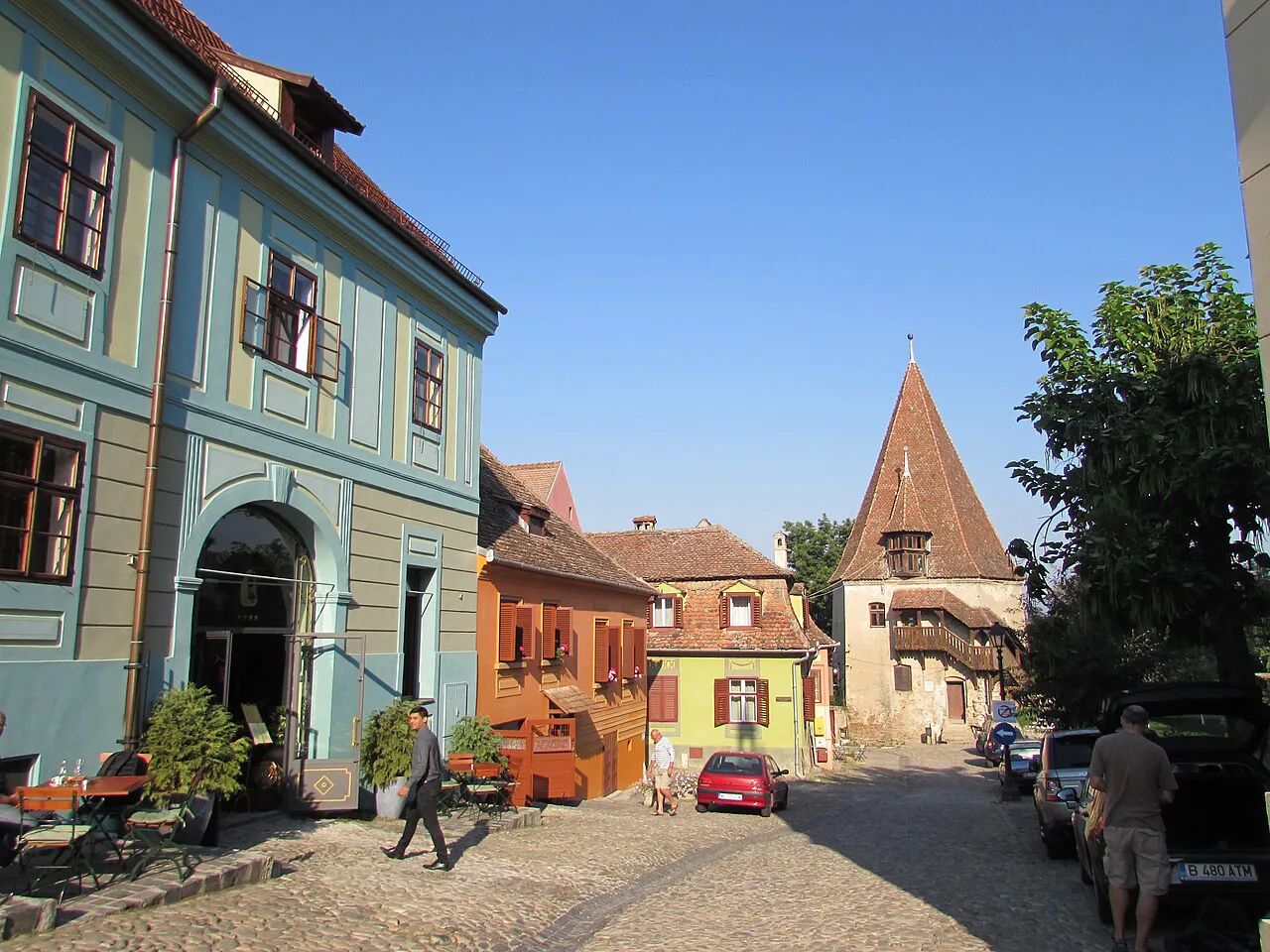
What one full day covers: Piața Cetății, the Clock Tower, the Vlad III house and the covered staircase
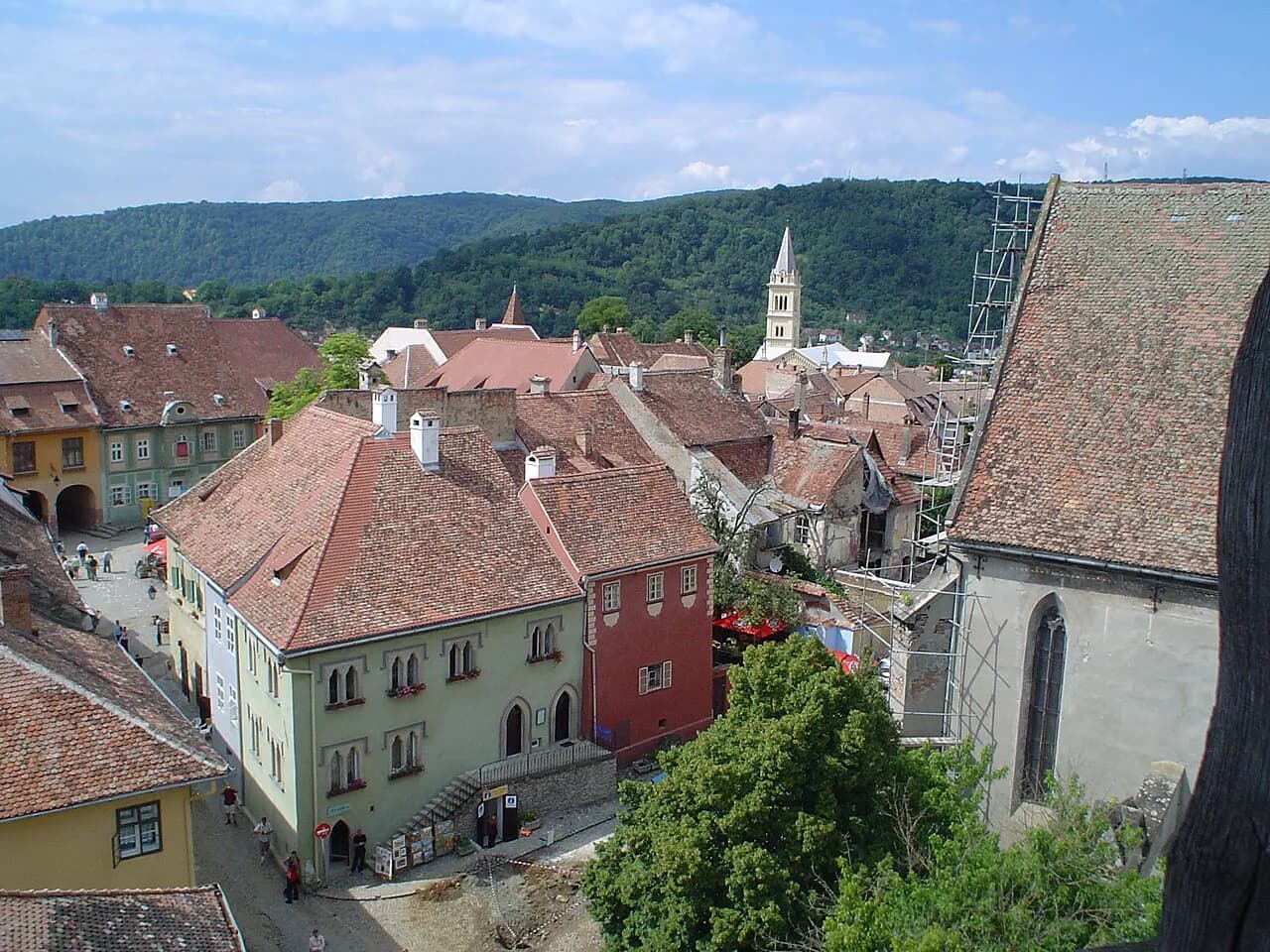
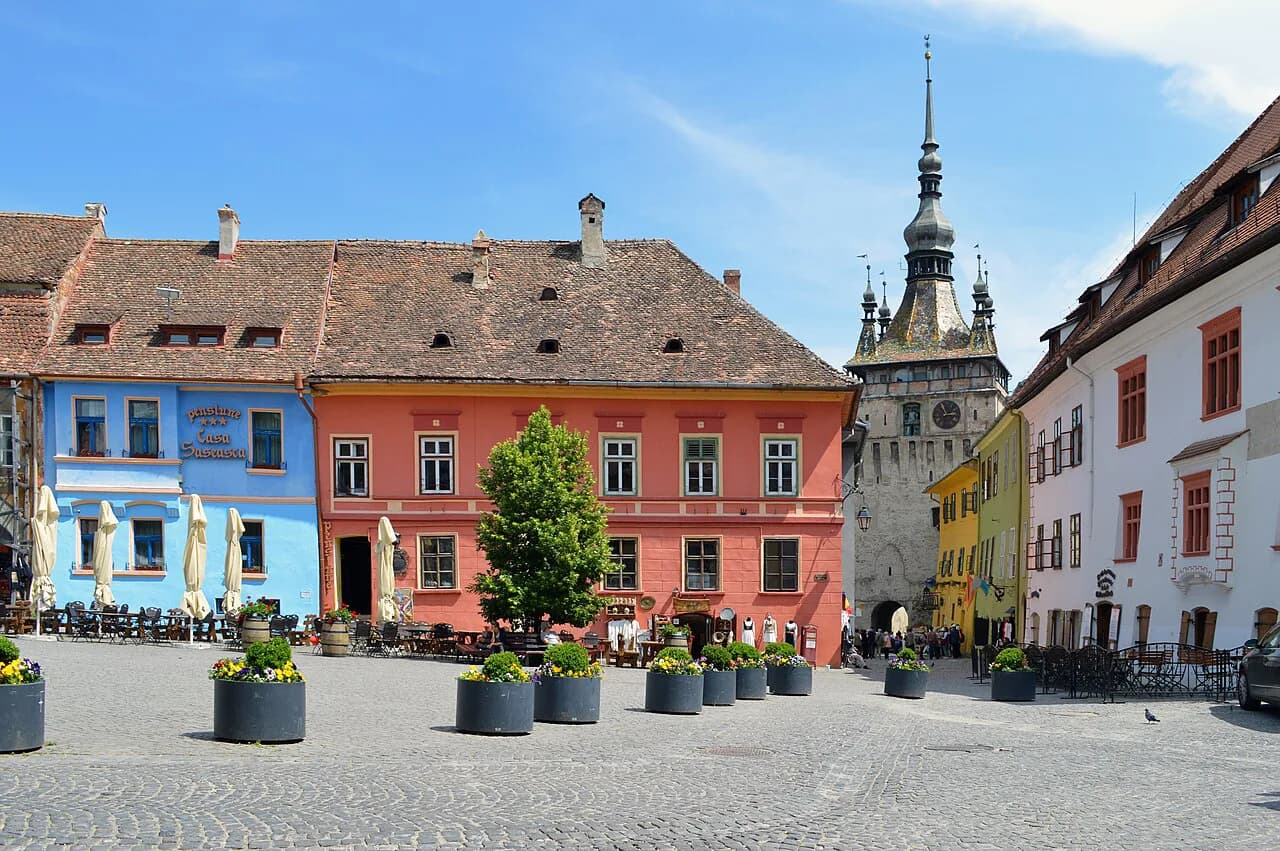
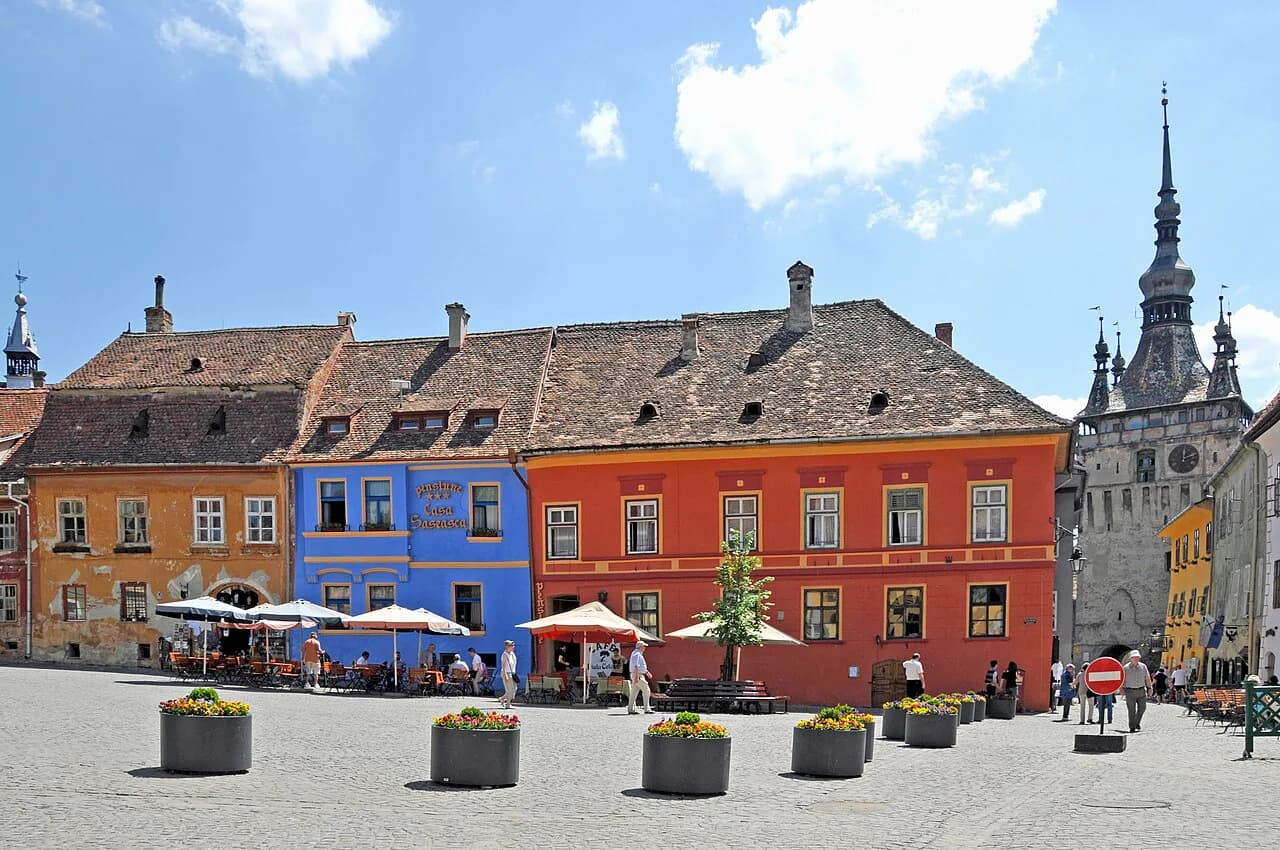
Start in Piața Cetății, the main square of the old town, close to the Clock Tower. Markets, executions and witch trials once took place here, and today the painted facades and two trees in the centre make it the place to find your bearings before setting off down the lanes.
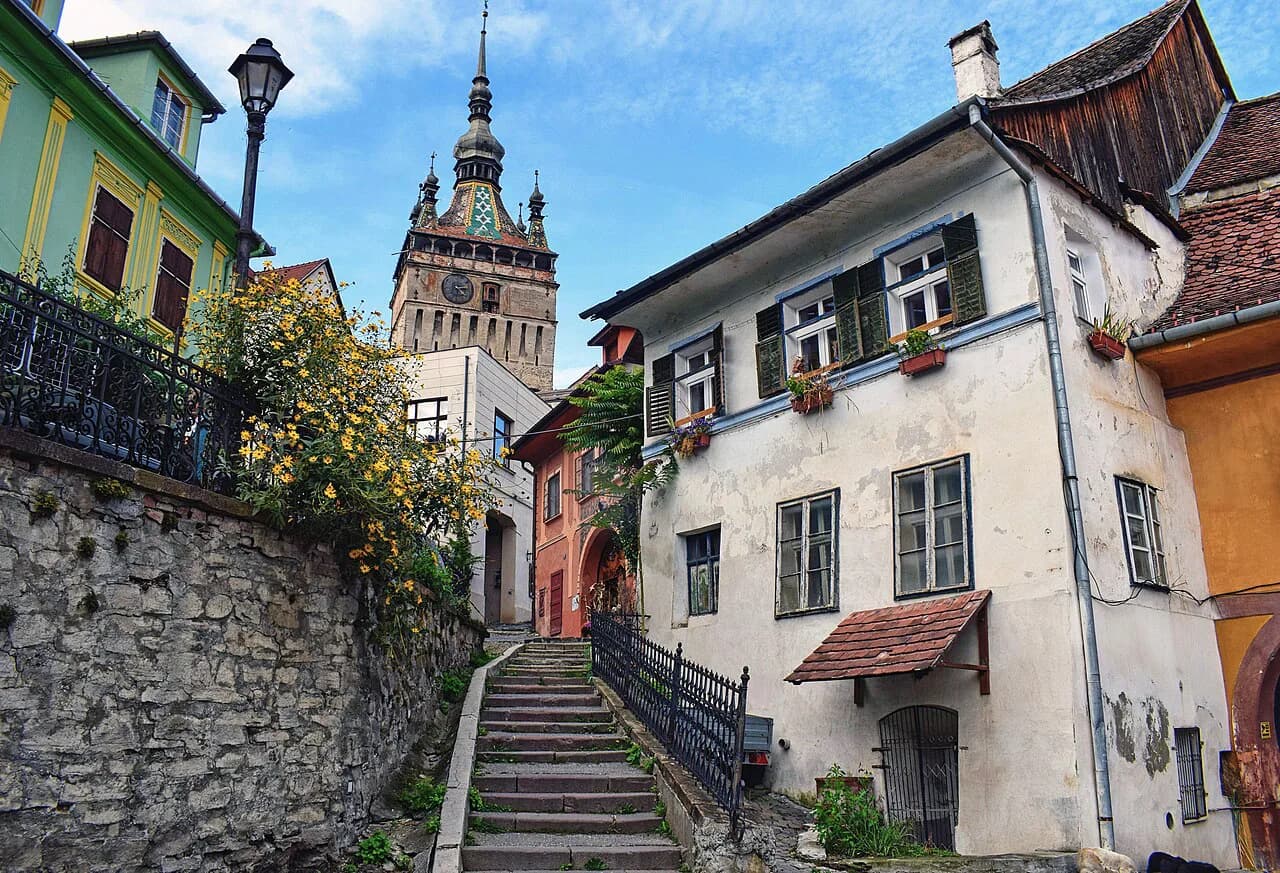
The Clock Tower is the entrance point to the citadel and stands 64 metres high, so you can see it from almost anywhere in town. Climbing it is an optional extra with a panoramic view across the roofs. The tower carries two clock mechanisms with different figurines, and a drummer strikes a bronze drum at six in the morning and six in the evening on the side facing the citadel.
A few steps past the tower stands the yellow house identified with the birthplace of Vlad Țepeș, the Romanian ruler who inspired Bram Stoker's fictional Count Dracula. Treat it as a photograph stop. The historical Vlad III and Stoker's vampire are separate stories, and the building also houses a restaurant.
Then walk the cobbled streets on a self-guided loop before heading for the covered staircase. A Sighisoara walking tour route helps here, because the lanes curl without obvious logic and the staircase entrance is easy to walk past if you are following the main flow of visitors.
Climbing to the Church on the Hill and what the steps cost you in time
The covered staircase up to the Church on the Hill is the single biggest time variable in a Sighisoara day. It is a climb, not a stroll, and the payoff is the Gothic church with three naves, frescoes inside including St George fighting a dragon, and Renaissance objects. Build in the walk up, the visit and the descent; it will not slot into a spare twenty minutes.
Lower in the citadel, the monastery church is a 13th-century Gothic building, first linked to a Dominican monastery, with a Baroque pulpit and altar inside. Pair the Church on the Hill with the monastery church and you have a religious-architecture half-day rather than a quick detour.
What a second day adds: guild towers, the lower town and an unhurried pace
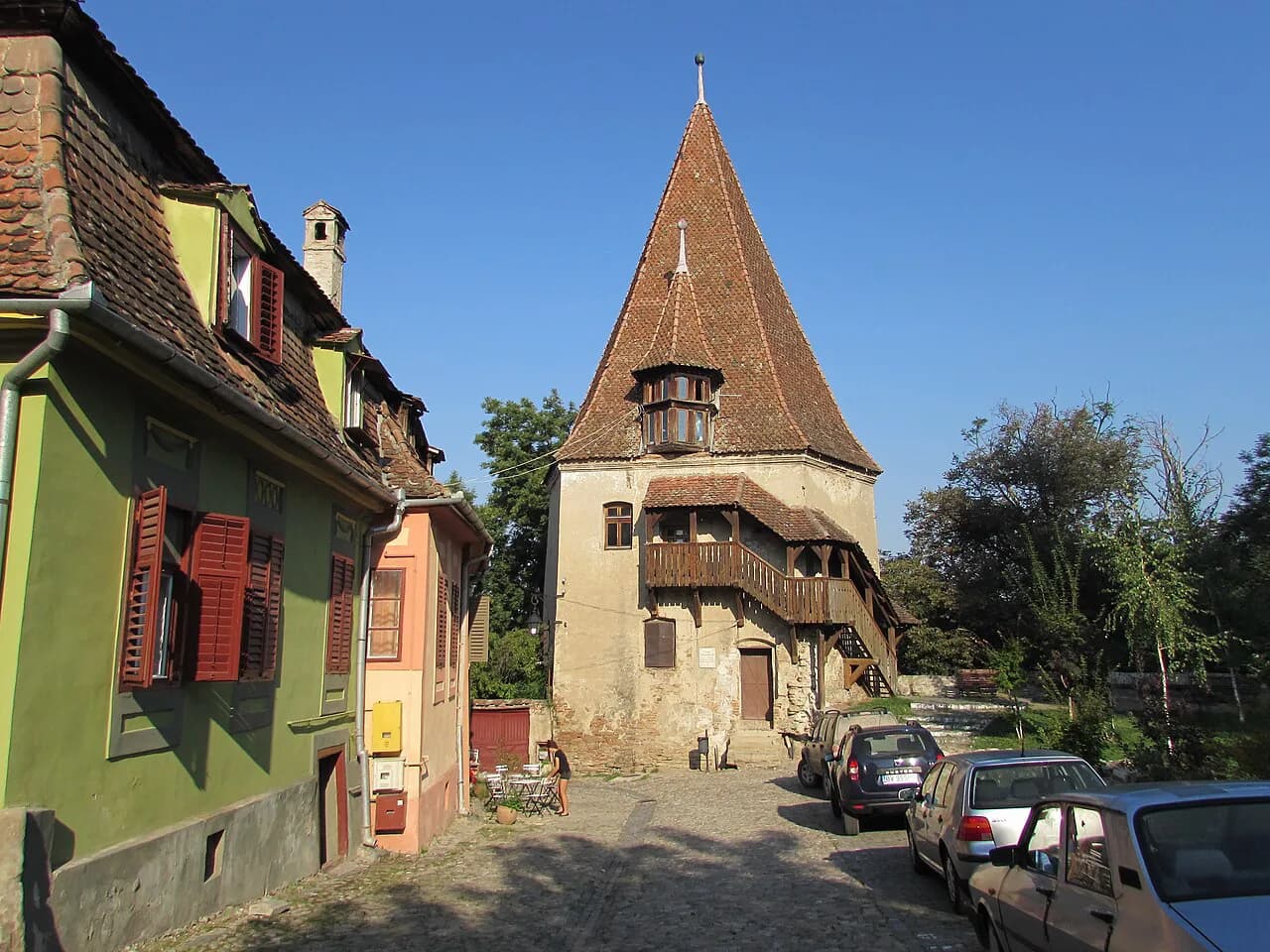
Nine towers survive of the fourteen built, among them the Clock Tower and the Shoemakers' Tower, and the others were named after the trades that paid for them, such as the Tailors' Tower. On a single day you will pass several without noticing. A second morning lets you pick out the Blacksmiths' Tower to the east, the Tailors' Tower to the south and the Shoemakers' Tower guarding the northern approach, each built to a different standard.
The lower town below the citadel rarely makes a one-day schedule. With a second day you can drop down, look back up at the walls, and re-enter through a different gate instead of retracing the same lane. That loop, rather than any extra ticketed sight, is what the second day really buys.
A second day also leaves room to read up on the guilds, the walls and the sieges the town weathered on the Ottoman frontier. The history of the Saxon colonisation and the fortifications explains why the towers are named as they are, which makes the walk more than a set of photographs.
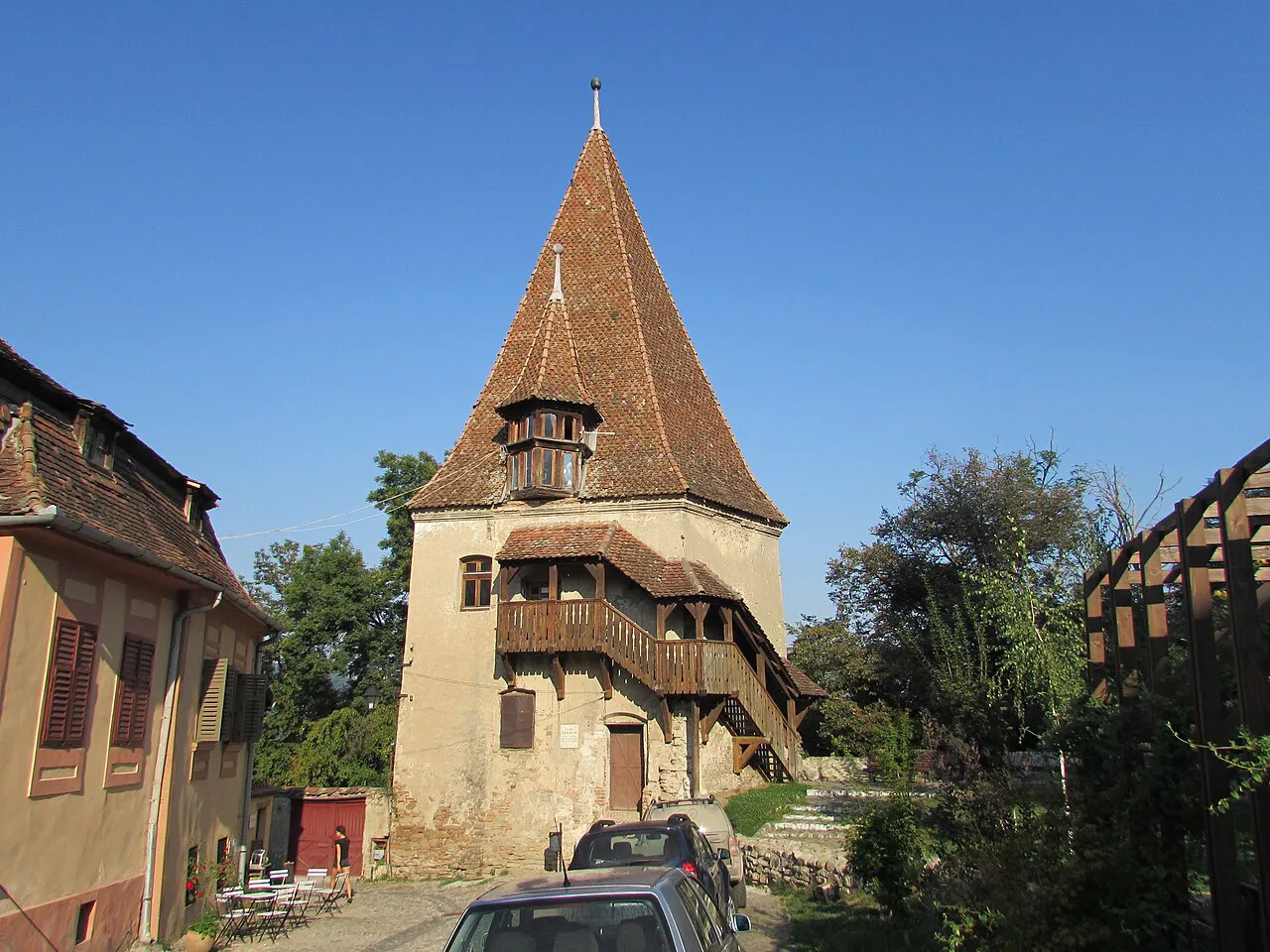
Splitting the visit across two half-days instead of one full day
Two half-days often work better than one long day, especially in summer. Do the Clock Tower and the square in the morning, break for the middle of the day, then take the covered staircase and the church in the late afternoon when the light on the roofs is better and the lanes are calmer.
The trade-off is that a half-day split only works if you sleep in or near the citadel. If you are based in Brașov and travelling in and out, the two halves cost you two journeys, and a single full day is the more sensible shape.
When Sighisoara works better as a base than a stop
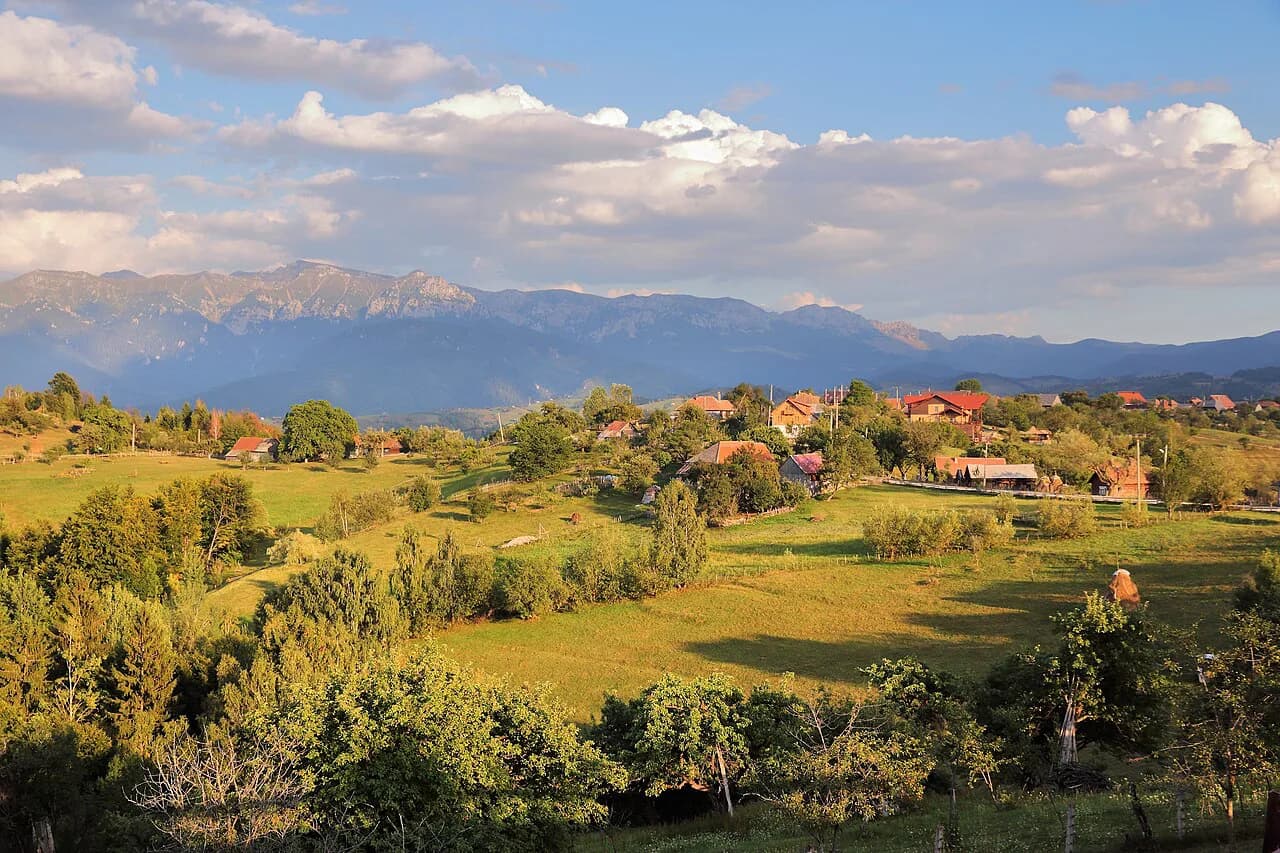
A second day is worth it when you use Sighisoara as a base rather than as a sight in itself. Saschiz, with its fortified church and village setting, sits within reach for a half-day outing. The surrounding Saxon villages reward a car. Inside the walls, another day adds nothing new.
Three days only makes sense with a car and a list of villages and fortified churches to visit between the walls and the hills. Distances are short, but the roads and the stops eat the day.
Getting there: car versus public transport and what that does to your timing
Arriving by car gives you the most control over timing. You can reach Sighisoara, do the citadel in a day and drive on to a village the next morning, which is how a two-day stop earns its keep. Parking near the citadel and walking in is the practical pattern.
Trains and buses get you into town, but you are tied to return times and cannot add a village detour on a whim. If you are coming by public transport, plan the Clock Tower climb and the hill early and leave the streets for the last hour before you leave.
Where Sighisoara fits against Sibiu and Brașov
Sighisoara sits between Sibiu and Brașov and forms part of the same Transylvania circuit. Sibiu and Brașov are full cities with several days of sights each; Sighisoara is a citadel and a lower town. Give Sighisoara one day, two if you are using it as a base, and keep the larger cities for their own stops.
If you have only one day for a Transylvanian town and want maximum concentration of towers, painted facades and cobbles in a small area, Sighisoara delivers it on foot. If you want more to do beyond the walls in the evening, put your days into Brașov or Sibiu and treat Sighisoara as a stop of one night.
Common mistakes: the quick photo stop, no cash and no plan for the hill
The most common mistake is booking the citadel as a two-hour photo stop. It fits into that window, but you will skip the Church on the Hill or rush the climb, and the hill is the part that makes the visit. Carry small change for tower entry and small purchases.
The third is arriving without a shape to the day. Decide before you set out whether you are climbing the Clock Tower and whether you are doing the covered staircase. Those two choices set the length of your visit more than anything else in town.
One more: the medieval festival runs every year on the last weekend of July, which changes crowd levels and the feel of the square. If you want the town quiet, work around that weekend. Opening hours and ticket details for individual sights change through the year, so check current times and prices before you travel.
One day or two?
One full day is the right answer for most visitors. You will see the square, climb the Clock Tower, photograph the house linked to Vlad III and make the covered staircase to the Church on the Hill without rushing.
Add a second day only if you want to use Sighisoara as a base for Saschiz and the Saxon villages, or if you prefer two half-days over one long one and are sleeping in town. Inside the walls, a third day adds nothing. Browse Sighisoara Attractions: 9 Visitor Guides if you want to check a single sight before you commit.
Explore more Sighisoara guides
Frequently Asked Questions
Is Sighisoara a day trip or an overnight stay?
It works as either. One full day covers the citadel, the Clock Tower and the Church on the Hill. Staying the night suits travellers who want to split the visit into two half-days or use the town as a base for nearby villages such as Saschiz. Coming from Brașov and back in a day is workable, but you lose the evening and any village detour.
Is one day in Sighisoara enough?
Yes, for the citadel itself. The old town is compact and walkable, and the main stops are the square, the Clock Tower, the plaque on the house linked to Vlad III and the covered staircase up to the Church on the Hill. What one day cannot do comfortably is combine those with a village beyond the walls.
Should I visit Sighisoara from Brașov or stay overnight?
Stay overnight if you want two half-days, an evening in the lanes or an early start for Saschiz and the surrounding villages. Base yourself in Brașov if you prefer a larger city with more to do after dark and only need one compact day in Sighisoara itself.
Sources
Useful notes for your next trip
Optional updates to our guides.
You might also like
Continue reading
More guides you'll find useful