Sighișoara History: What You Can Still See in the Citadel
Sighișoara's history told through what survives: the Clock Tower, the Church on the Hill, the Covered Staircase and the guild towers of the citadel.
On this page
Sighișoara's history is written into a walled citadel that people still live in, and you can read most of it in a morning on foot. The old town sits above the modern town, and its towers, churches and squares are the timeline. This guide ties each period to a building you will actually stand in front of, then gives a walking order that puts the climb to the Church on the Hill at the end.
History-minded travellers usually need more than a quick pass, because the Clock Tower and the walk up to the hilltop church each take time. Carry small notes for anything you pay for, as you would on any Romanian town visit. For a fuller picture of how the sights fit together, see Things to Do in Sighișoara and keep the Sighișoara Map handy.
An inhabited fortress on a hill
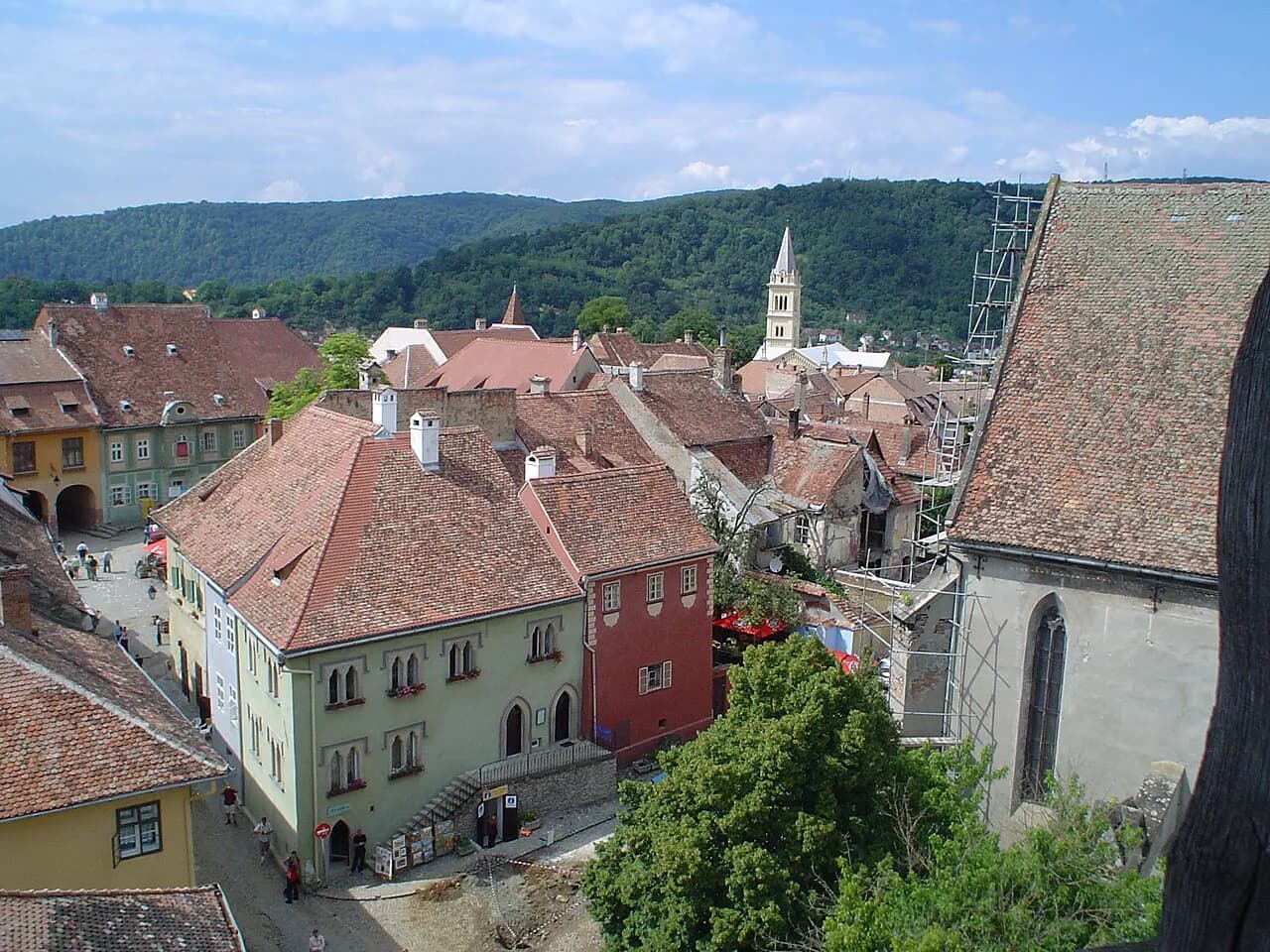
The defining fact of Sighișoara is that its medieval citadel is still inhabited, which shapes everything you see: houses in use, not museum sets, inside the walls. Travel writing on the fortress describes it as one of Europe's last inhabited medieval citadels, and the UNESCO-listed old town is the reason most travellers come. Approach from the lower modern town and the walls read as a boundary between two different places.
The Clock Tower, the former main gate, is the natural point to enter the citadel. Inside, the streets are cobbled and uneven, so flat shoes matter more than on a normal city break. The Sighișoara Map is worth loading before you climb, since the lanes bend and bend back on themselves.
The Clock Tower and the History Museum
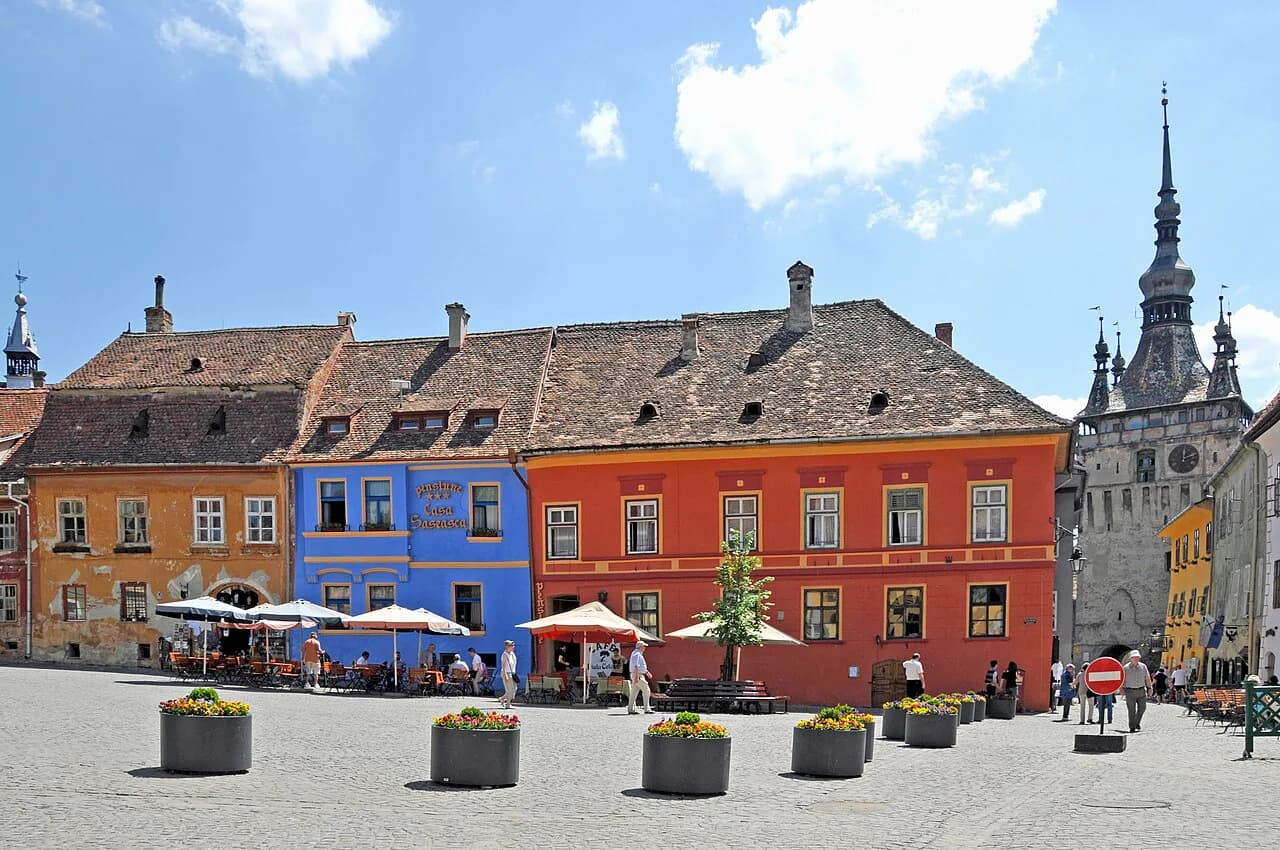
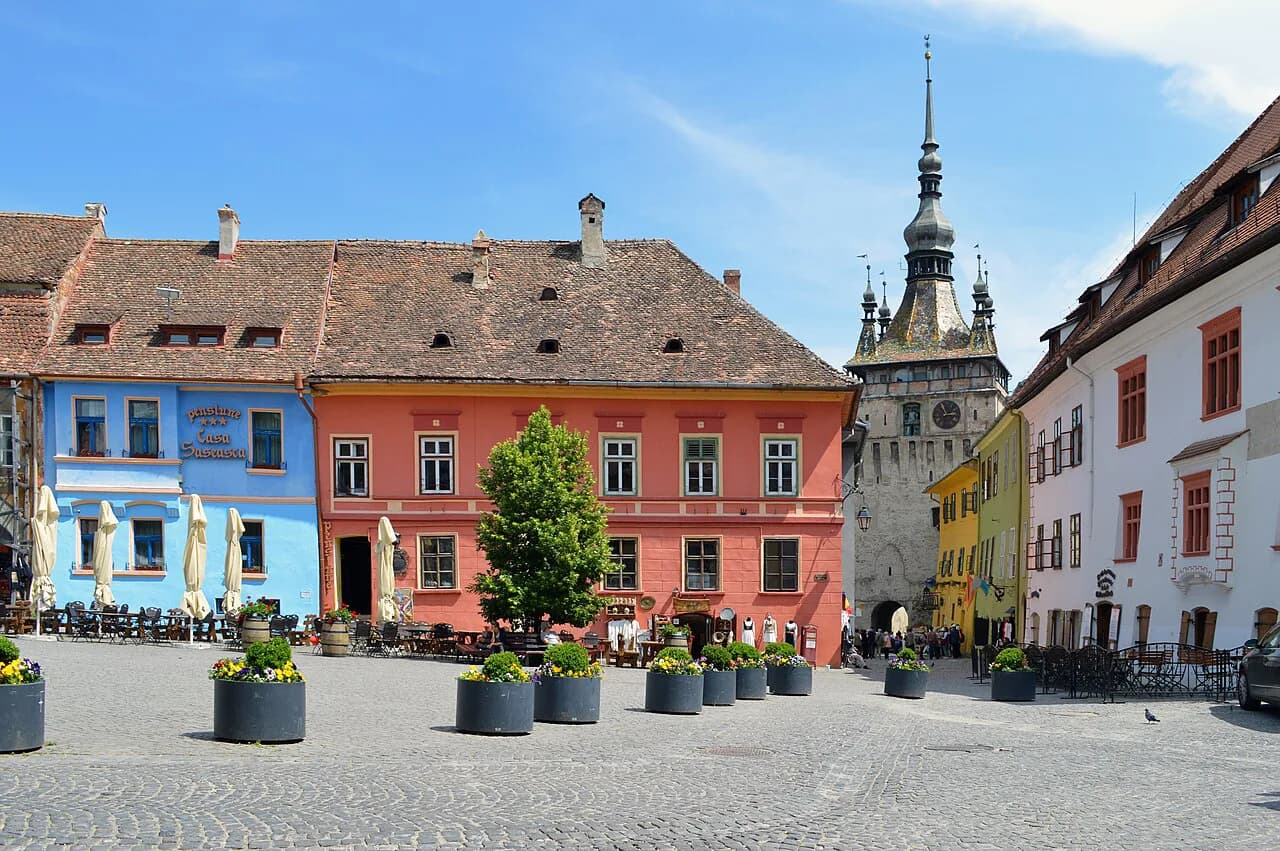
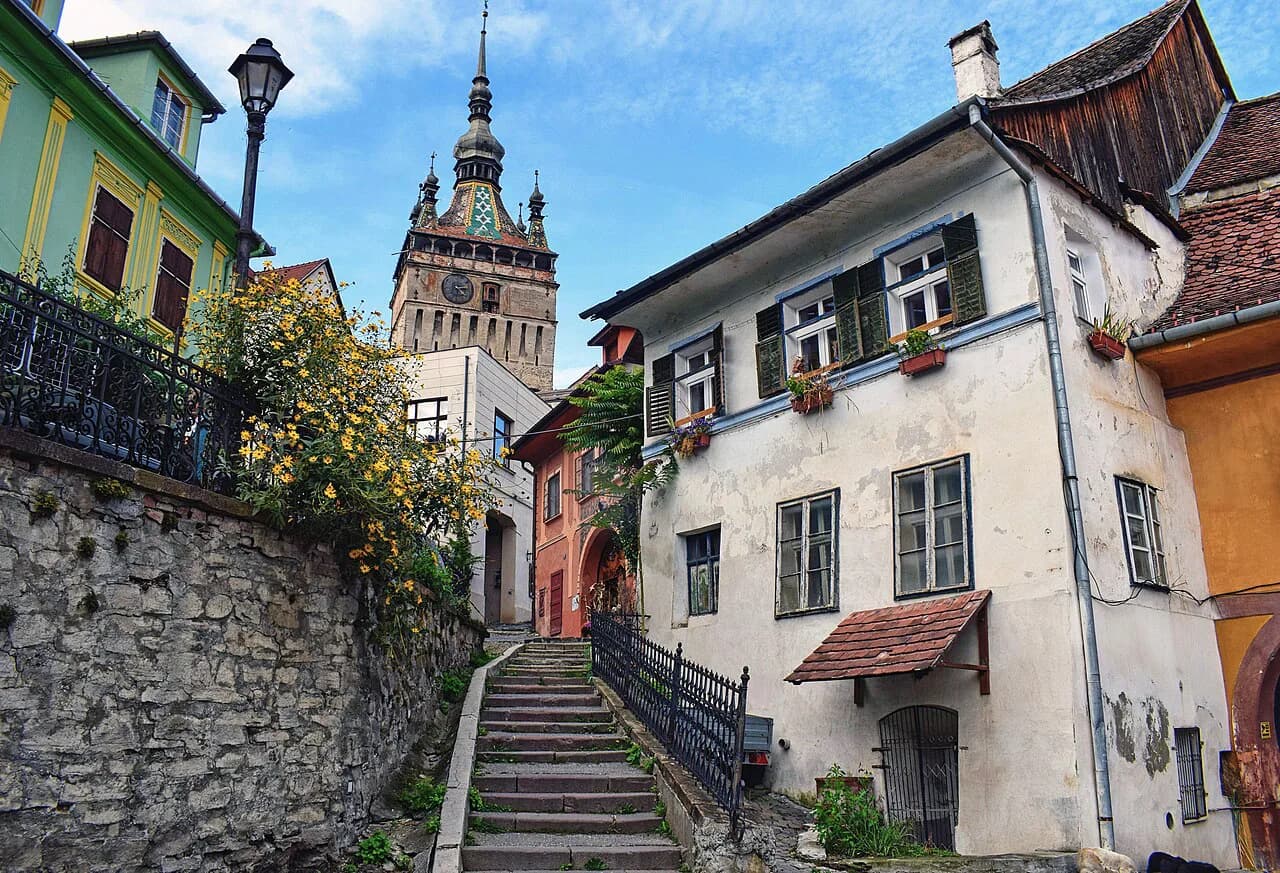
The Clock Tower is the citadel's most recognisable landmark and its former main gate, and it now houses the Sighișoara History Museum. Climb it for the view over the roofs and towers, then treat the tower as your orientation point: the citadel's defences radiate from it. It is the natural first stop, not a finale.
If your time is short, the tower view alone justifies the stop; opening days and ticket prices are best confirmed at the tower before you build your day around the museum.
Citadel Square, the colourful heart
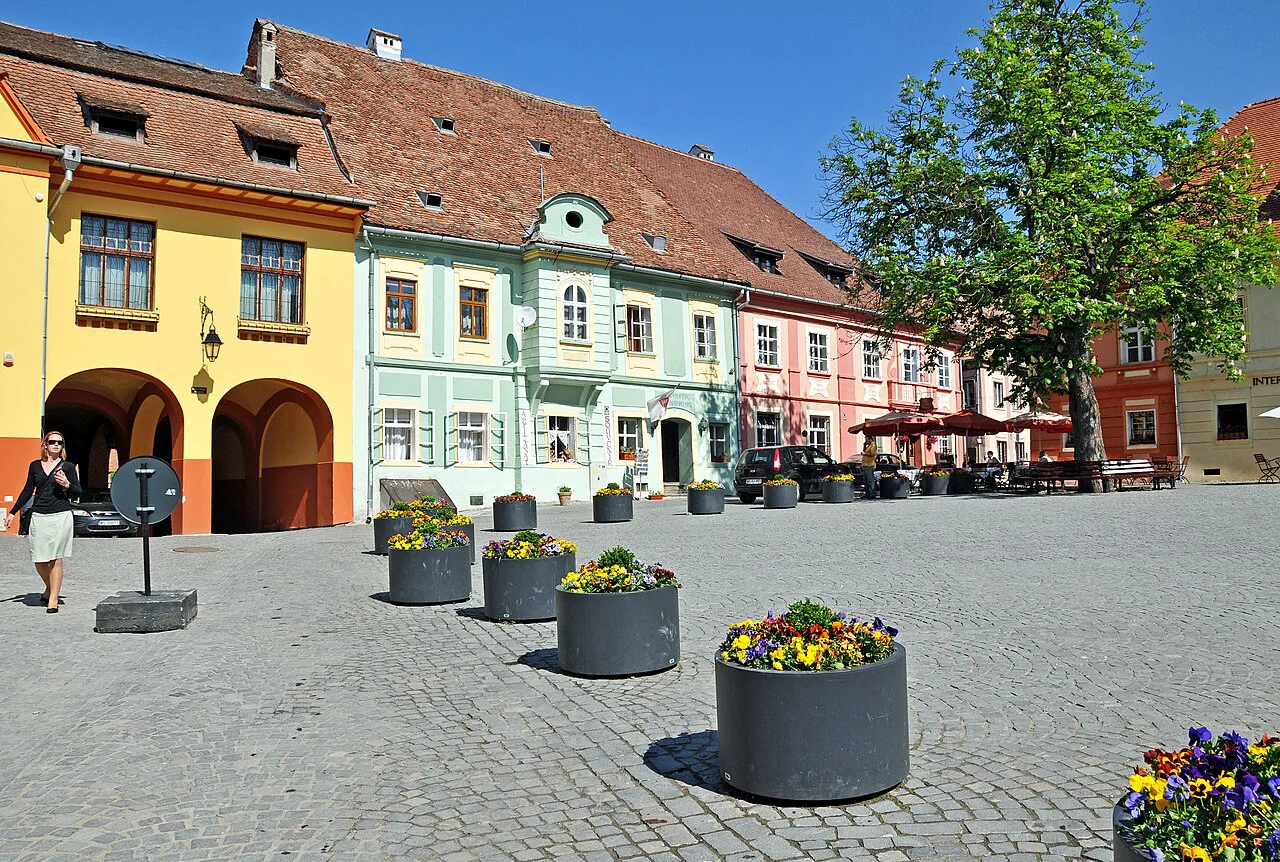
Citadel Square, Piața Cetății, is the colourful heart of the old town inside the walls, and it works as a compass point for the whole visit. Pastel facades, café tables and the tower overhead give you the postcard view, but the square is also where the town's public life happened. Stand in the middle and note the lanes leaving it: each one leads to a different piece of the story.
Use the square as a rest stop between sights rather than a destination in itself, and you will cover more ground. It is also the easiest place to pause with coffee or lunch before tackling the stairs. For a fuller list of what surrounds it, the Sighișoara Attractions: 9 Visitor Guides hub groups the individual sights.
The guild towers and the defences
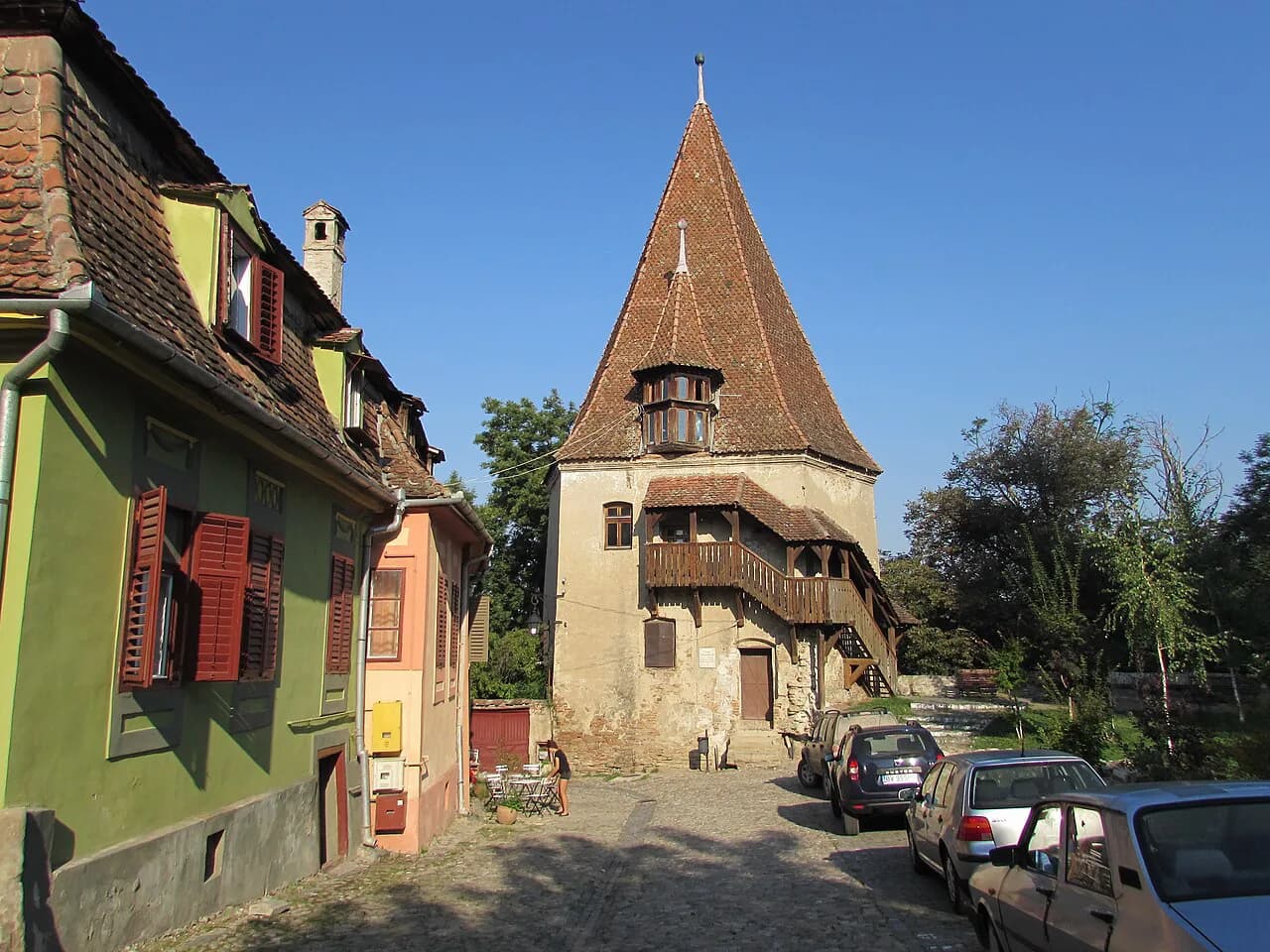
Several medieval defensive towers still stand, and they are the clearest surviving trace of how the town organised its own defence. Each tower belonged to a craft guild, so walking the wall line is a lesson in who paid for and manned the fortifications. Look for the towers as you move between the square and the upper lanes rather than seeking them out one by one.
The Transylvanian Saxons, German craftsmen and merchants, were invited here by the King of Hungary to settle and defend the frontier. Their guilds and German names run through the town's buildings. Read the towers as a frontier-defence system rather than decoration: gates, walls and towers worked together. That layer explains why a small town carries such heavy fortifications.
The Covered Staircase
The Covered Staircase, also called the Scholar's Stairs, is the historic wooden stair that leads uphill toward the church and school on the hill. It is the sensible route up, because it shelters you from rain and sun while cutting the steepest part of the climb. Treat it as transport with atmosphere rather than a sight in itself.
Take the stairs slowly if you are carrying bags or travelling with anyone unsteady on their feet, and save them for after the lower citadel so you only climb once. Belvedere viewpoints above the town reward the effort at the top. A Sighișoara walking tour route that follows the lanes in order will save you backtracking.
The Church on the Hill
The Church on the Hill is the Gothic church overlooking the citadel, and it caps the climb the Covered Staircase begins. The reward is the view back over the roofs and towers, so time your arrival for good light rather than rushing up and straight down. The church sits in a quiet upper enclave, well removed from the bustle of the square below.
The climb is the trade-off: it is not long, but the stairs and slope demand more than the flat circuit of the square. Visit it last in your route so you are not descending and re-climbing during the day. If knees or time are against you, you can enjoy the tower view instead.
Vlad Dracul House and the Dracula question
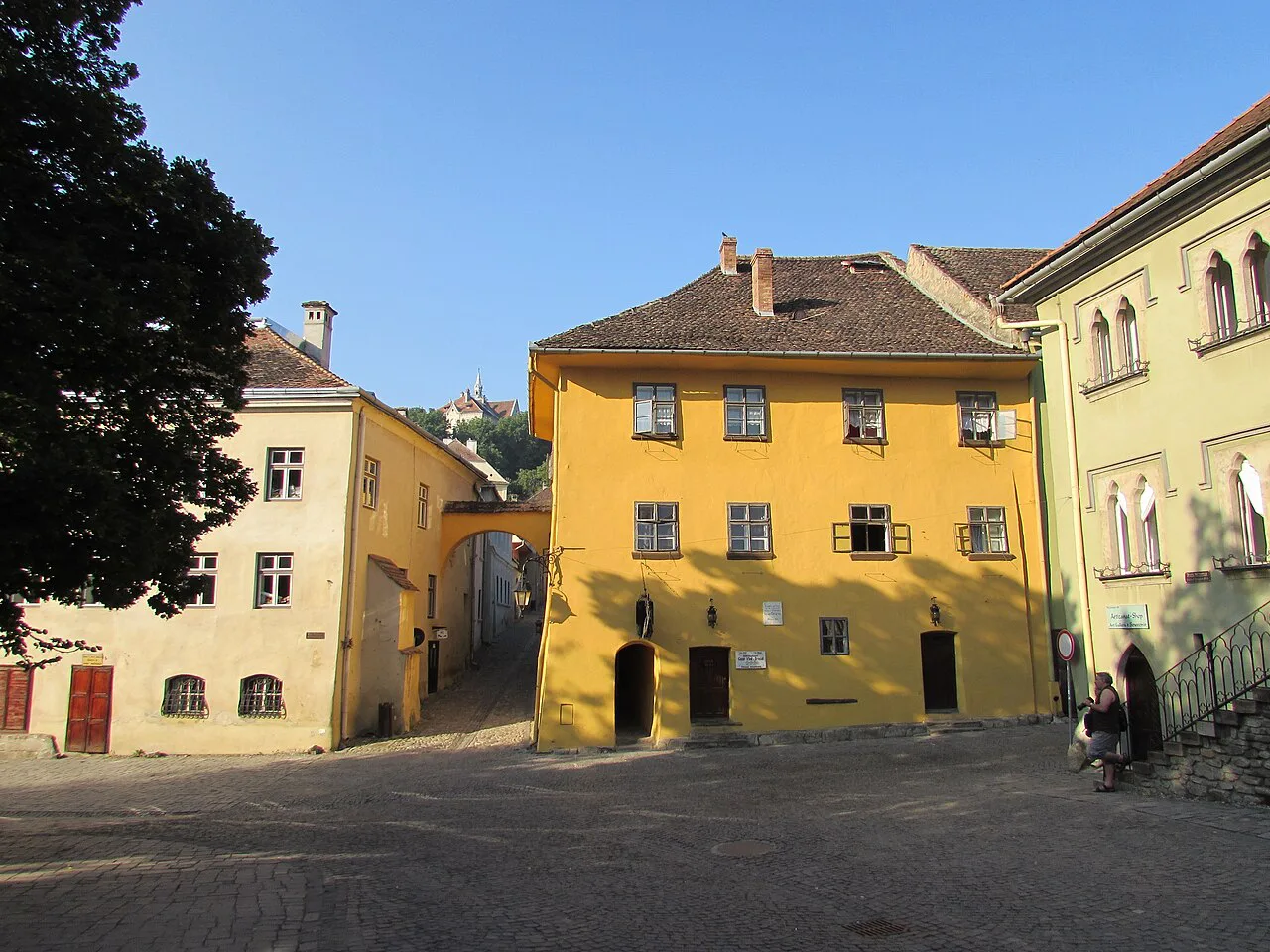
Vlad Dracul House is identified as the birthplace of Vlad the Impaler, the historical figure behind the Dracula association. Keep him separate from Bram Stoker's fictional Count Dracula: one is a fifteenth-century Wallachian ruler, the other a character in a novel. The house is a stop on the walking route, not a themed attraction.
Walk past the house early in your circuit, before the stairs, and it costs you little time. Read the plaques for the historical framing instead of expecting a Gothic set piece. The legends around Vlad are best treated as stories told about the town, not as the town's chronology.
The Saxon story in the stones
The German names and guild structure you meet along the lanes come from the Saxon settlers invited by the King of Hungary to hold this frontier. Reading the town this way turns a pleasant old quarter into a piece of medieval border policy. The same pattern repeats across southern Transylvania, at fortified churches and small towns beyond Sighișoara.
Biertan Fortified Church and Rupea Fortress are the nearest extensions of that story if you have a car or a tour, and both appear on local day-trip lists. Treat them as separate outings with their own travel time rather than add-ons to a citadel morning. The citadel alone repays the time you give it.
A walking order that saves the climb for last
Enter at the Clock Tower, take in the History Museum, cross Citadel Square, follow the wall line past the guild towers, detour to Vlad Dracul House, then climb the Covered Staircase to the Church on the Hill. That sequence keeps the ascent at the end and avoids retracing the steep lanes. It also puts the museum before the sights it explains.
This order suits a half-day visit with the tower and the church, or a full day if you add a longer pause in the square and a second museum stop. Nearby Sibiu and Brașov are separate trips, not afternoon add-ons. Build your day around the citadel and let the wider region wait.
Are the stairs up to the church worth it?
Yes, if the weather is clear and your legs are willing: the Church on the Hill and the viewpoints above the citadel give you the view that makes the layout click. If time or knees argue otherwise, the Clock Tower view gives you a high point over the town with far less climbing. Either way, finish your circuit before descending, so the climb happens once.
Two practical habits make the visit smoother: keep some lei in small notes for museum entries, and confirm opening days and prices at the tower before you plan around the museum. The walls, the square and the lanes themselves are free to walk through.
Frequently Asked Questions
Is Dracula from Sighișoara?
Sighișoara is associated with Vlad the Impaler, the historical Wallachian ruler linked to Vlad Dracul House. Bram Stoker's Count Dracula is a fictional character, distinct from the historical Vlad, and the town's sites frame the connection as history rather than horror.
Is Sighișoara worth visiting?
Yes for anyone interested in medieval fortifications and living old towns. The compact citadel, the Clock Tower, the guild towers and the Church on the Hill fit into a morning or a relaxed day, and the inhabited walled centre is the main reason to come.
Is Transylvania mostly Hungarian or Romanian?
Transylvania has a mixed Hungarian, Romanian and Saxon heritage. In Sighișoara the Saxon layer shows in the German names and the guild towers; other towns reflect different mixes, so treat each place on its own terms.
Sources
Useful notes for your next trip
Optional updates to our guides.
You might also like
Continue reading
More guides you'll find useful