
Bánffy Palace (Palatul Bánffy), Cluj-Napoca: A Visitor's Guide

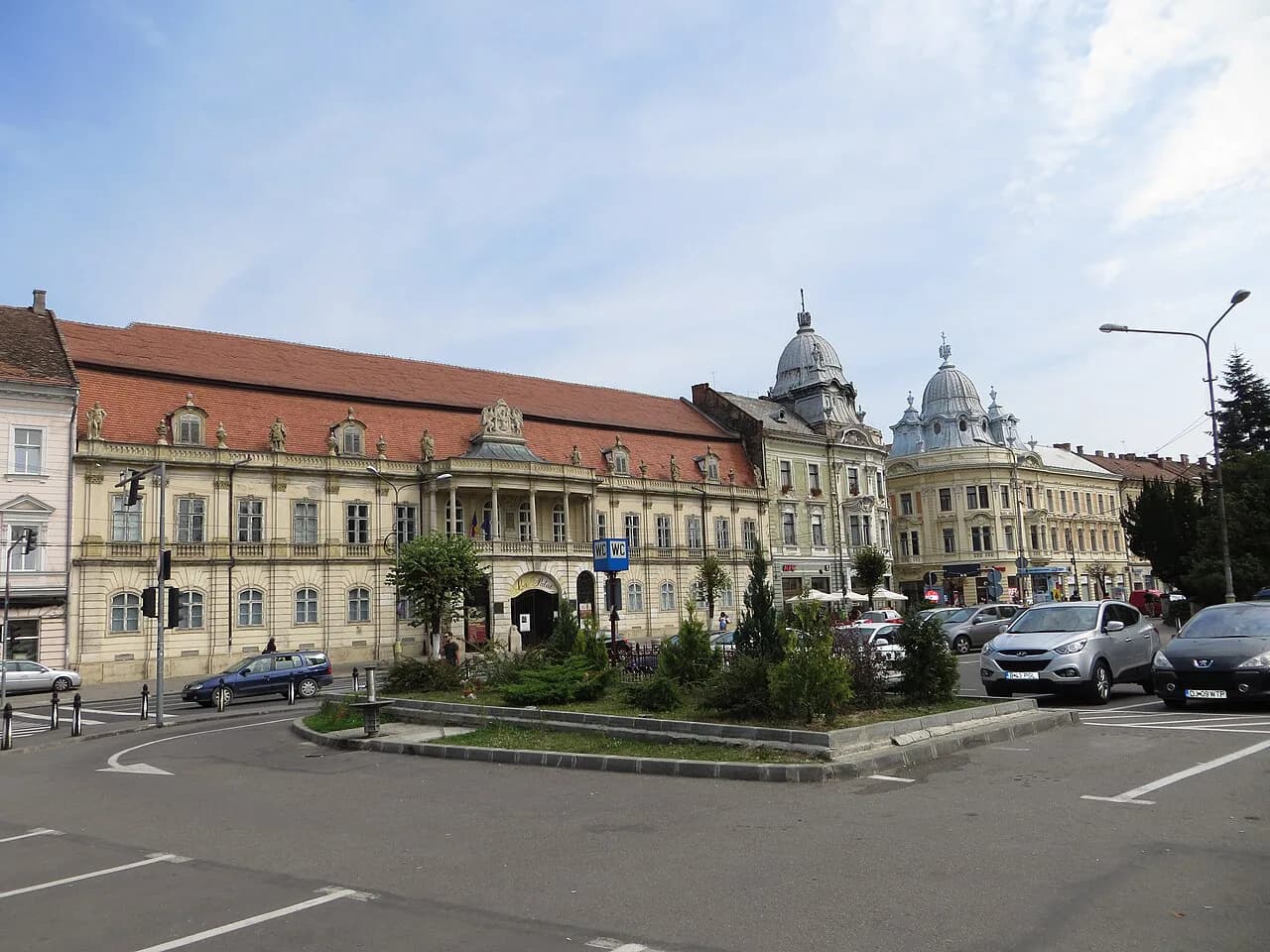
Bánffy Palace (Palatul Bánffy) is the 18th-century baroque building at Piața Unirii nr. 30 in Cluj-Napoca, designed by the German architect Johann Eberhard Blaumann and now home to the National Museum of Art. Allow 15 to 20 minutes for the facade and the square, or longer if you go inside for the collection. This guide covers where the palace stands, how to find the right building on the square and which nearby sights fit around it.
What Bánffy Palace is and where it stands on Piața Unirii
The palace is a baroque building of the 18th century in Cluj-Napoca, built to designs by Johann Eberhard Blaumann, a German architect working in the city. Its address, Piața Unirii nr. 30, puts it directly on the main square rather than on a side street, so you reach it as part of any walk through the old centre. Treat number 30 as your anchor point, because several palace fronts line the same square.
This is the palace in the town centre, not the Bánffy Castle at Bonțida, a separate property outside the city that shares the family name and turns up in the same search results. If you have read about a castle park or a rural estate, that is Bonțida. Check the address before you set out.
Within the wider set of Cluj-Napoca Attractions, the palace works as a museum visit inside a baroque shell rather than as a monument you circle from outside. The building is the setting; the reason to step through the door is the art collection it holds. Plan the palace and the square as one stop.

How to reach it from the old centre
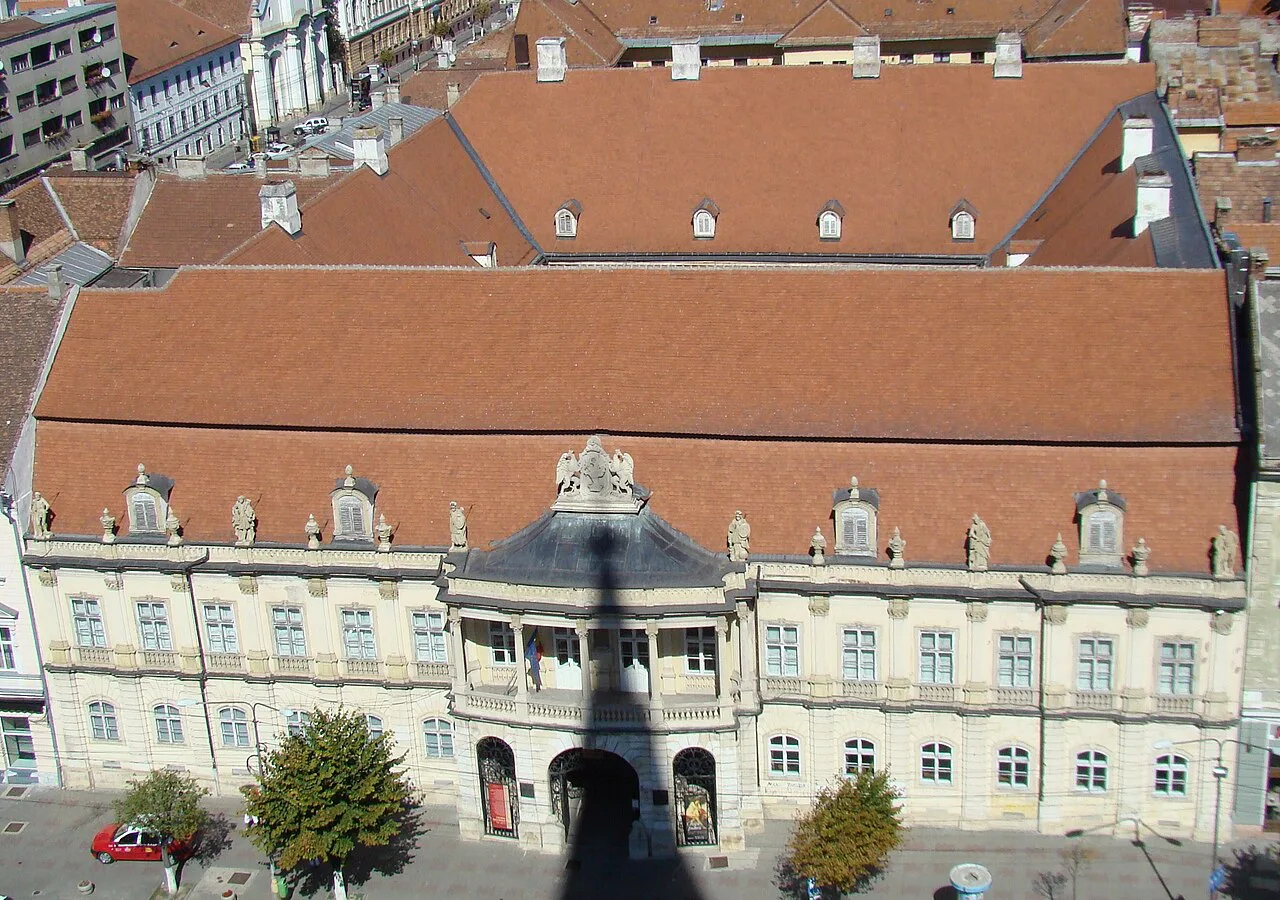
The palace fronts Piața Unirii, so you arrive on foot. From the streets of the old centre, walk towards the main square and look for number 30 among the palace fronts on the same side. A city map of Cluj-Napoca helps you fix the square within the wider centre before you walk.
No separate transport leg is needed once you are in the centre. Build the visit into a walking loop: reach the square, find number 30, and read the facade before deciding whether to go in. If you are coming from further out, pick your approach street from the map rather than circling the square.

What to see inside: the National Museum of Art
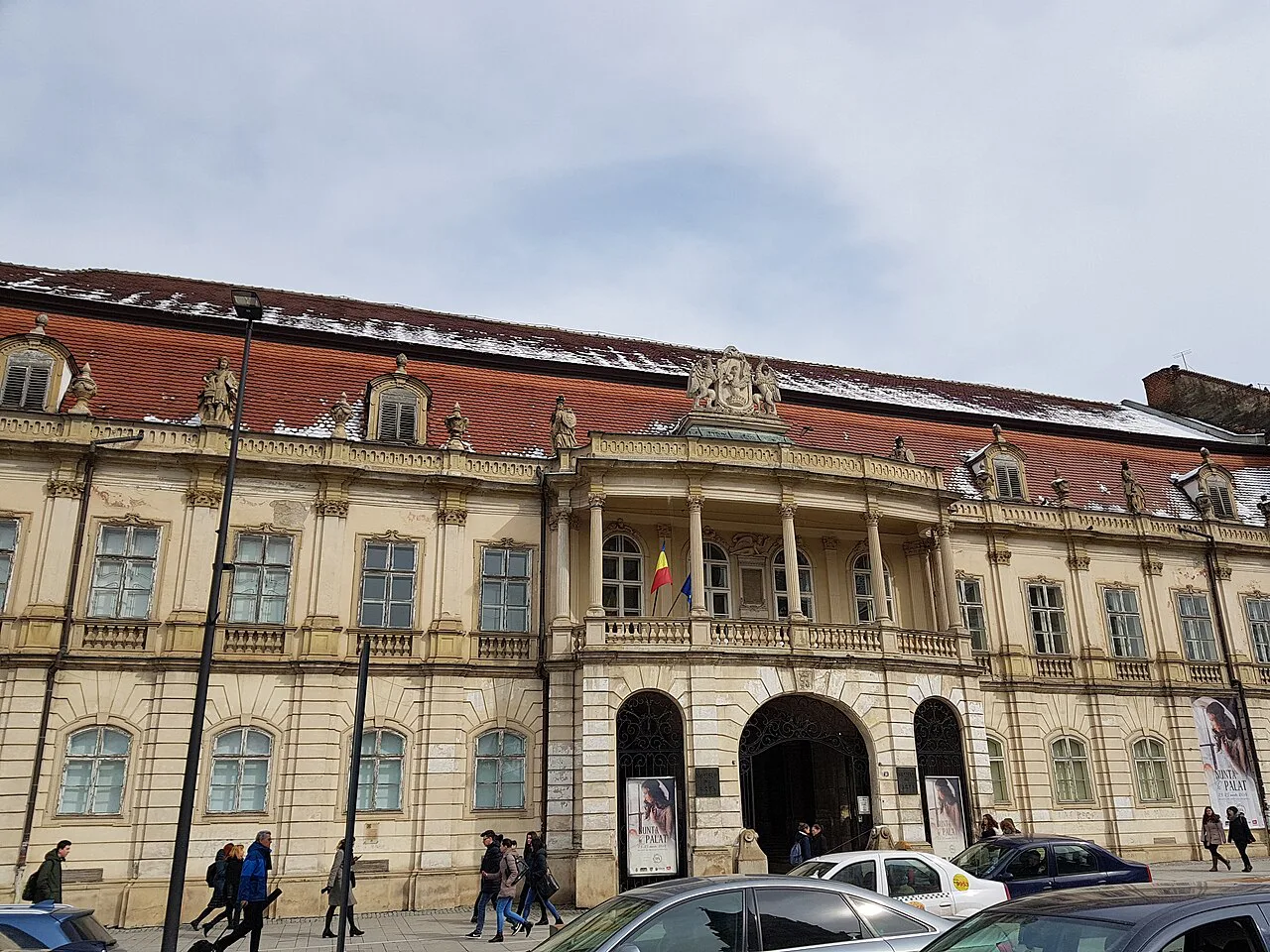
The palace houses the National Museum of Art, so the visit is a collection seen inside a baroque interior rather than a tour of empty state rooms. Go in expecting an art museum that occupies a palace, not a palace shown as a period home. That framing tells you how to pace the stop.
Opening days and admission in lei are set by the museum, so check its own pages before you build the day around it. The exterior on the square needs no ticket and no booking. Two details worth confirming are which rooms are open and whether the museum closes on a Monday.
How long to allow
For the facade and a walk around Piața Unirii, allow 15 to 20 minutes; that covers finding number 30, reading the front and taking in the square. If you go into the museum, allow longer and set the length by how much of the collection you want to see. Block out a morning or afternoon rather than squeezing it into the walk.
Do not treat the palace as a quick photo stop if you intend to go inside; the museum is the substance of the visit and deserves its own slot. The outside is free and takes minutes, so the trade-off is simple: facade only, or facade plus collection. Decide before you arrive so the rest of your walk stays realistic. Opening hours and ticket prices change by season, so check the museum's current schedule before setting out.
What is nearby on Piața Unirii
St Michael's Church (Biserica Sfântul Mihail), Cluj-Napoca stands on the same square, and the Matthias Corvinus statue sits at its centre, so both are a few steps from the palace door. Pair the facade with the church and the statue in one circuit of Piața Unirii. The square is where you read the palace in context rather than in isolation.
The statue at the centre of the square is the natural meeting point and the obvious place to stop and look back at the palace front. The Matthias Corvinus House is a separate sight elsewhere in the city, so do not confuse the statue with that building. Use the statue as your fixed point while you work out which facade is number 30.
Nearby option: Parcul Central Simion Bărnuțiu
Parcul Central Simion Bărnuțiu was laid out in the 19th century and has free entry, which makes it a calm follow-on from the busy square. The walk between the two keeps you in the centre. Allow an hour to wander the alleys and the ground around the lake.
The lake and the pavilions around it give the walk a shape beyond open grass; the one-time skating pavilion now sits on an island in the water. Go after the palace and the church rather than as a separate outing. It is a straightforward green-space stop on a day built around Piața Unirii.
Nearby option: the view from Cetățuia Hill
Cetățuia Hill rises above the city and is a popular spot for looking back over the centre, with a climb of stairs to reach the top. The reward is the panorama, and it pairs naturally with a morning at the palace and square. Allow time for the climb rather than treating it as a quick detour.
Use the hill as the closing leg of a walking day: palace, square, park, then the climb for the view. Keep the order flexible and check the route as you go rather than relying on a set descent. In clear weather the view is the best way to end.
Where to fit the palace into a Cluj-Napoca day
Start the day at number 30 on Piața Unirii, read the baroque front, then cross to the church and the statue. From there, the Cluj-Napoca Botanical Garden (Grădina Botanică Alexandru Borza) is a longer walk and a good afternoon option if you would rather have green space than more stone. Build the day outwards from the square.
If the museum is the priority, put it first and give it a proper slot before the square fills. If it is not, the facade and the square cost nothing and take minutes. Either way, the palace anchors the day rather than becoming an afterthought.
Is the palace worth stopping for?
Yes if you want a museum in a baroque setting on the main square; no if you only want the facade, which the square gives you for nothing. Decide which of the two you are after before you set the day's pace.
Either way, start at Piața Unirii nr. 30 and let the square set the timing, leaving room for the church, the statue and the park afterwards.
Explore more Cluj-Napoca guides
- Central Park (Parcul Central „Simion Bărnuțiu”), Cluj-Napoca
- Ethnographic Museum of Transylvania
- Museum Square (Piața Muzeului), Cluj-Napoca
- National Museum of Transylvanian History (Muzeul Național de Istorie a Transilvaniei), Cluj-Napoca
- Pharmacy Museum (Muzeul Farmaciei) in Cluj-Napoca
- Piața Avram Iancu, Cluj-Napoca
Frequently Asked Questions
Is Bánffy Palace the same as Bánffy Castle at Bonțida?
No. Bánffy Palace is the 18th-century baroque building on Piața Unirii in Cluj-Napoca, designed by Johann Eberhard Blaumann. Bánffy Castle at Bonțida is a separate property outside the city that shares the family name, so match the address to the building you want before you set out.
Can you go inside Bánffy Palace?
The palace houses the National Museum of Art, so you go inside as a museum visit rather than as a tour of state rooms. Opening days and ticket prices are set by the museum; check its own website before you travel. The exterior on Piața Unirii is free to see.
How long does a visit take?
Allow 15 to 20 minutes for the facade and a walk around Piața Unirii. If you go into the museum, allow longer and set the length by how much of the collection you want to see; a half day covers the museum and the square without rushing.