Brașov History: What to Look For as You Walk the Old Town
Brașov history for visitors: the walls, gates, churches and squares you can still see, with the dates the sources give and where each one sits in the old town.
On this page
Brașov's history rewards a walking pace: the medieval street plan, the Saxon walls and the churches sit in a compact centre, so one loop carries you from a 1420 Council House to a façade pocked by 1989 bullets. Brașov was first documented in 1234. This walk gives the date attached to each building so you know what you are looking at.
Read the city as having two edges: the fortified Saxon town inside the walls and the Romanian Schei district outside them. Once you can tell which side of the wall you are on, the gates, tolls and towers start explaining how the place worked. The things to do in Brasov guide covers the wider set of sights for planning the day.
The Medieval Layout: Saxon Walls, Bastions and Where the Citadel Ends
The Saxons fortified Brașov with massive stone walls and seven bastions, and those lines still mark the boundary between the old town and the districts beyond. Walk the stretch beside the stream and you follow the wall as a physical edge rather than a line on a map. Our guide to Brasov's Walls picks up the surviving sections in detail.
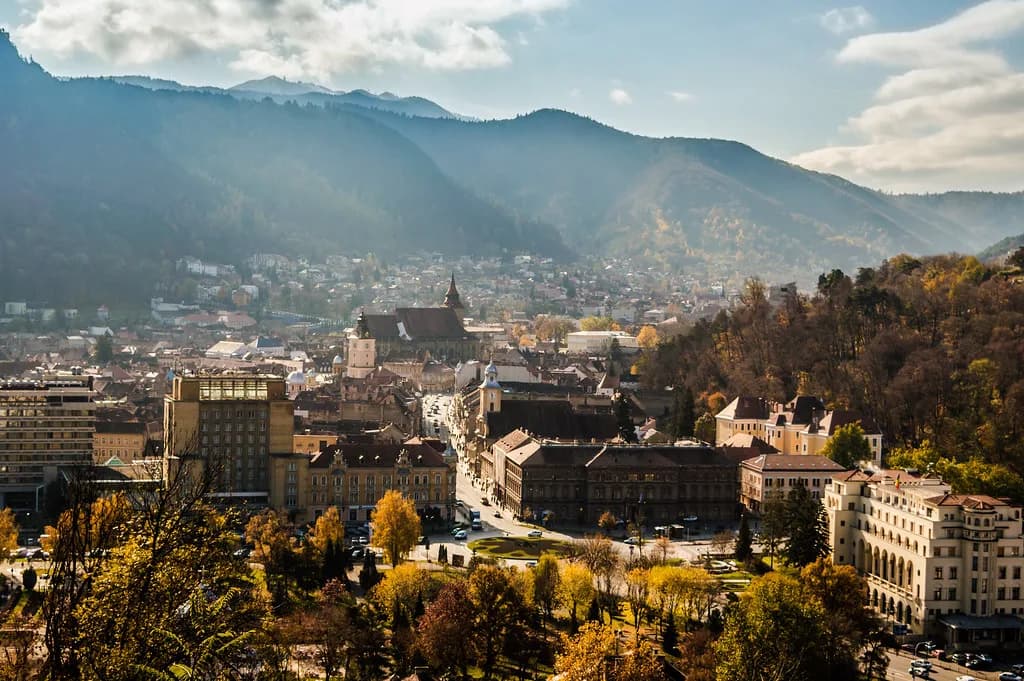
Trace the wall early in your visit, because everything else in the old town makes more sense afterwards. The core is small enough to cross on foot in a morning, so the walls, the square and the churches fit into one continuous walk. The Brașov Old Town guide covers the street-by-street shape of that core.
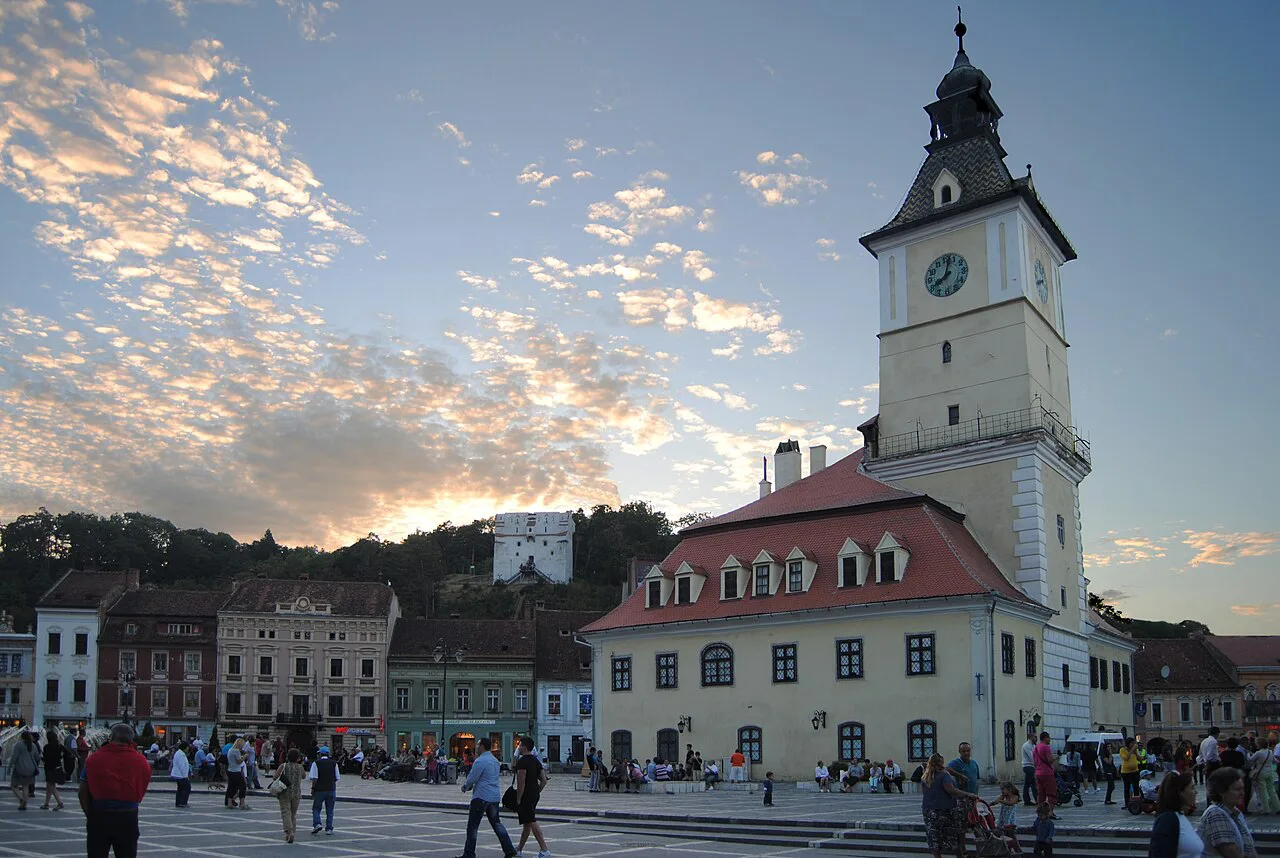
Piața Sfatului (Council Square): The Council House and the Trumpeter's Tower
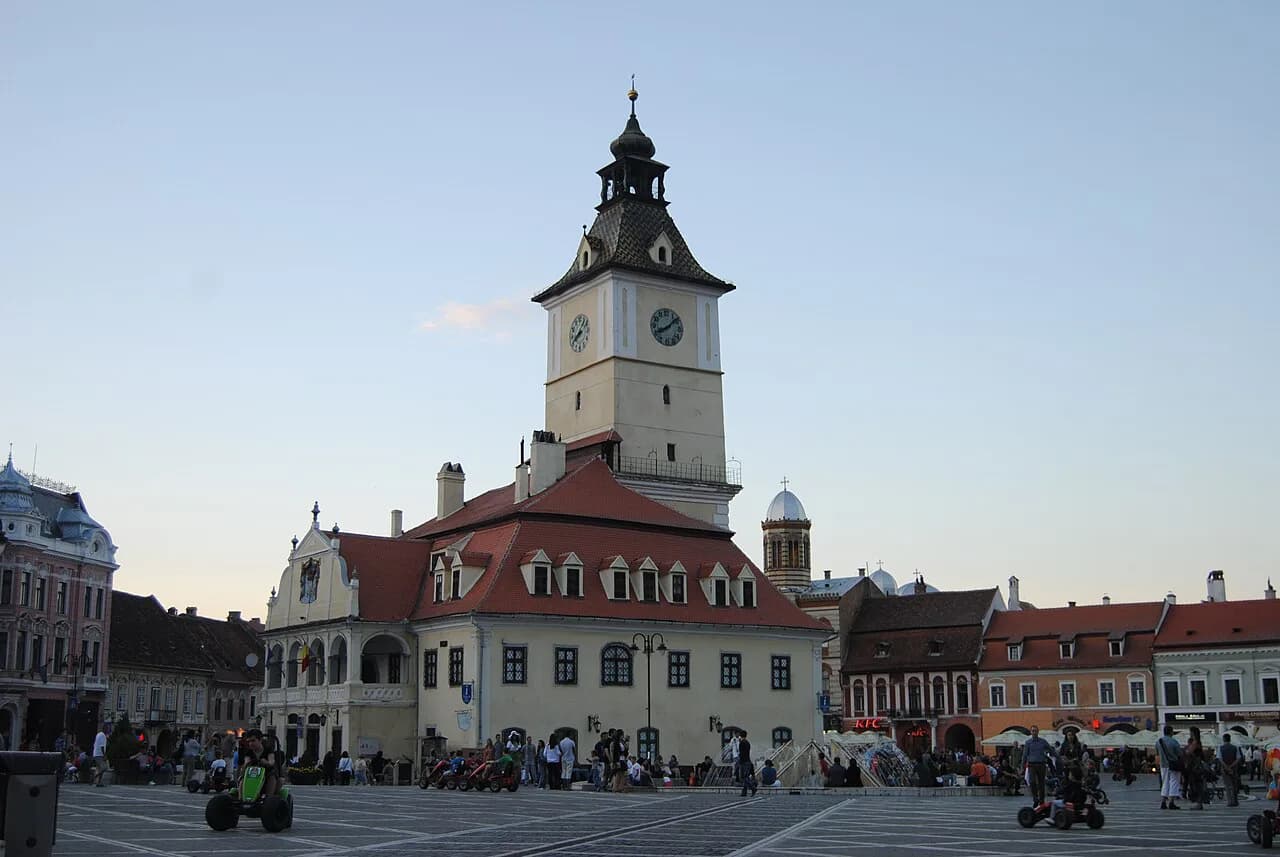
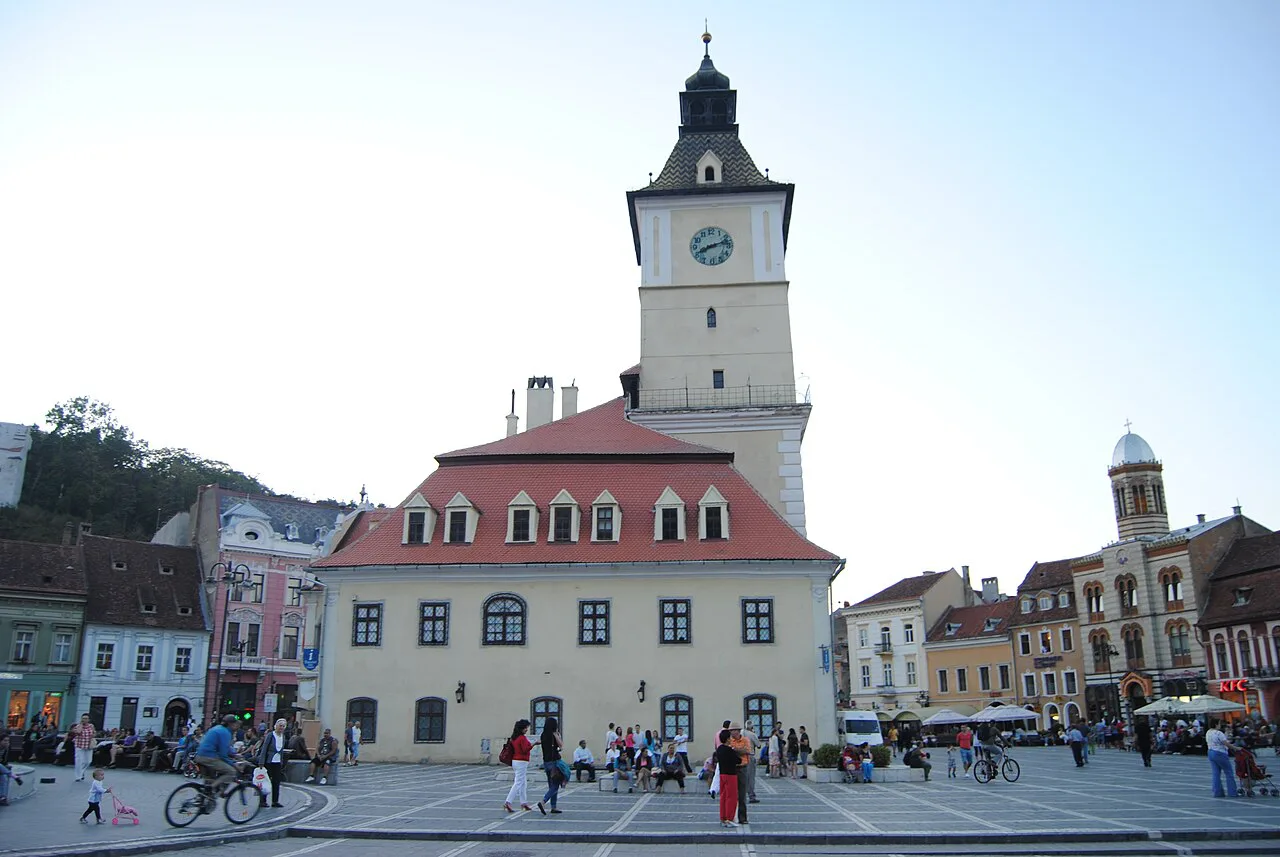
Piața Sfatului, or Council Square, was the hub of Brașov, where squares across the region hosted festivals, gatherings and public punishments. The 1420 Council House stands on the square, topped by the Trumpeter's Tower and now used as a history museum. Stand in the middle and look up at the tower to see the building that governed the town.
Small museums sit around the square if you want a formal collection, but the square itself is the exhibit. Give the Council House museum a slot only if you want labelled context for buildings you have already seen. Our round-up of Museums in Brașov Worth Your Time sets out which collections earn the time.
The Black Church (Biserica Neagră): The 1689 Fire and the Name
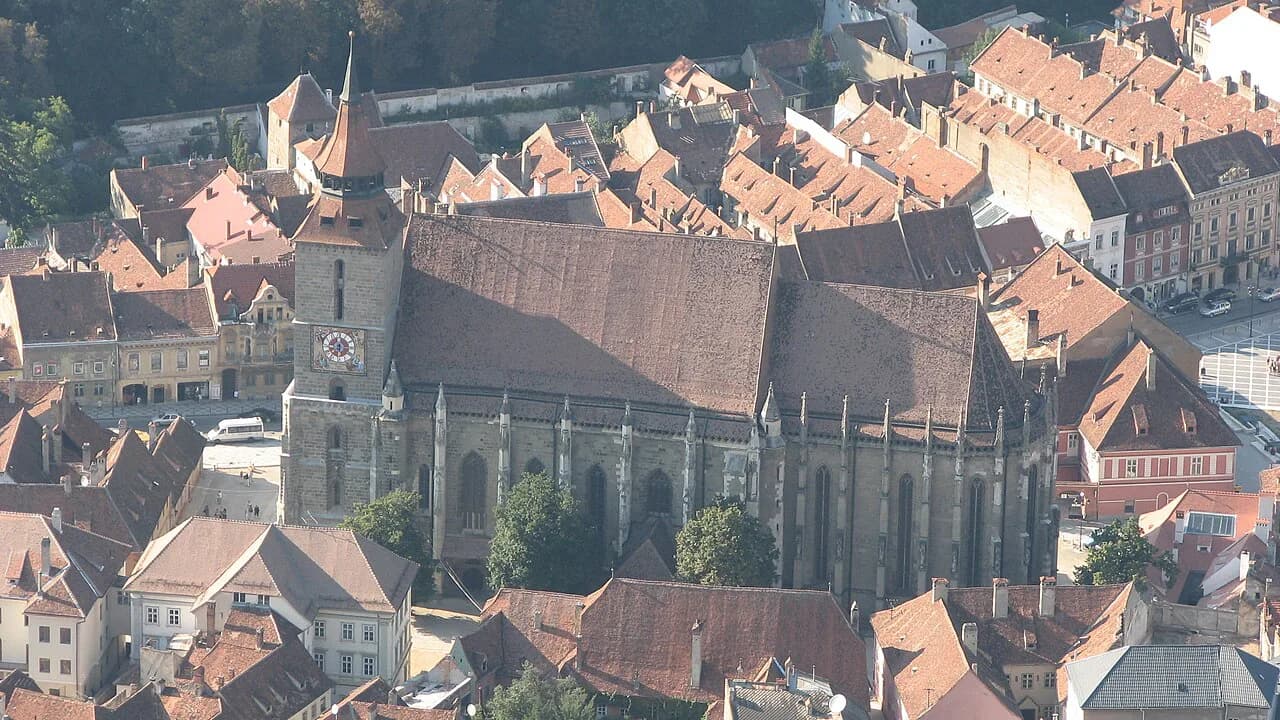
The Black Church, Biserica Neagră, is a Lutheran church dating from the late fifteenth century, and takes its name from a large fire in 1689 whose flames and smoke blackened it on the outside. The building has since been given an external scrub-down, so the stone no longer matches the name, but the fire explains how it got it. Services are still held in German each week.
The church is an active place of worship as well as a landmark, so treat the nave accordingly and time your look inside around the weekly German service. Entry carries a small admission fee. The churches guide covers the rest of Brașov's ecclesiastical buildings.
Poarta Ecaterinei (Catherine's Gate): The 1559 Gate and the German Quarter
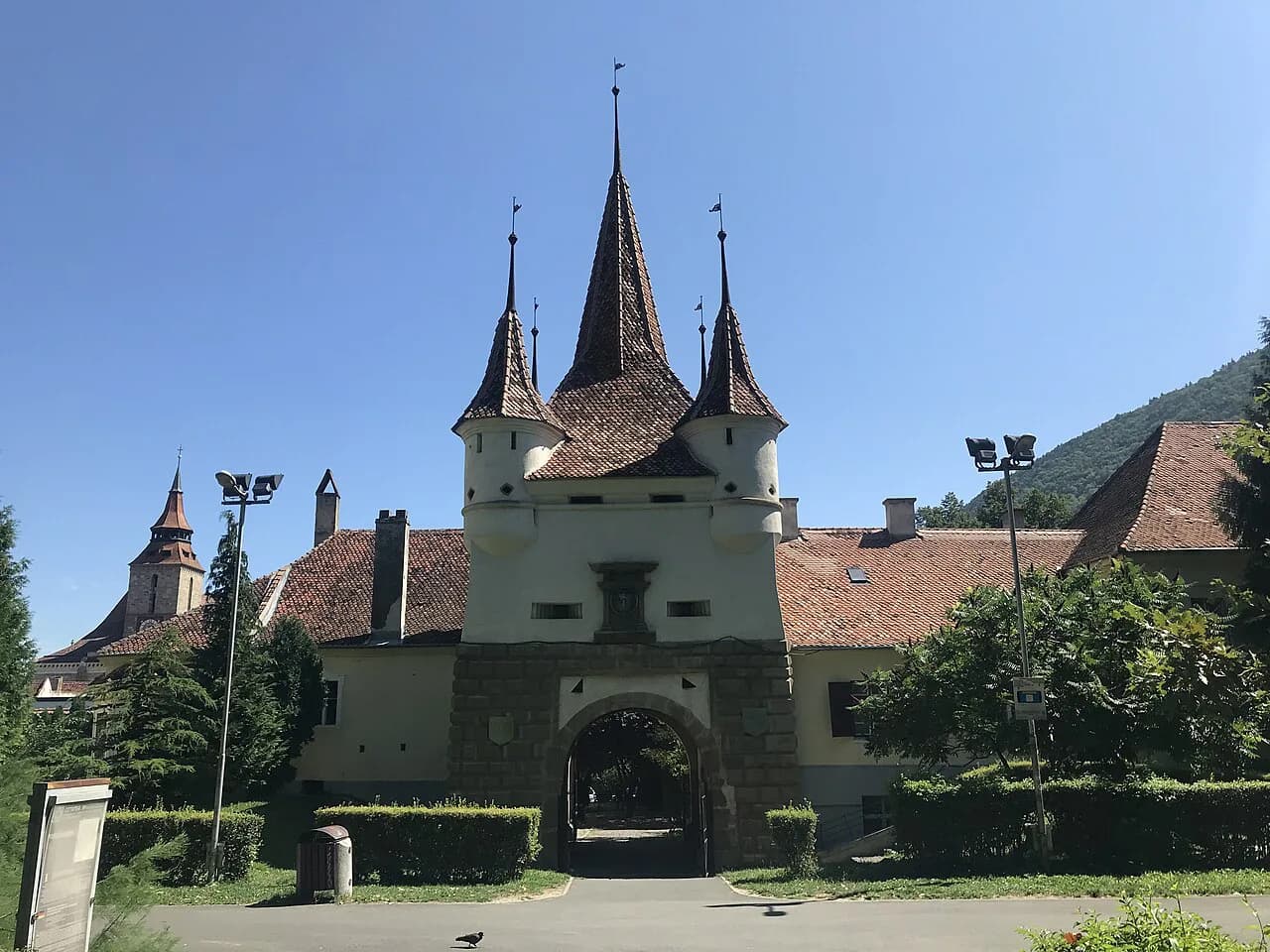
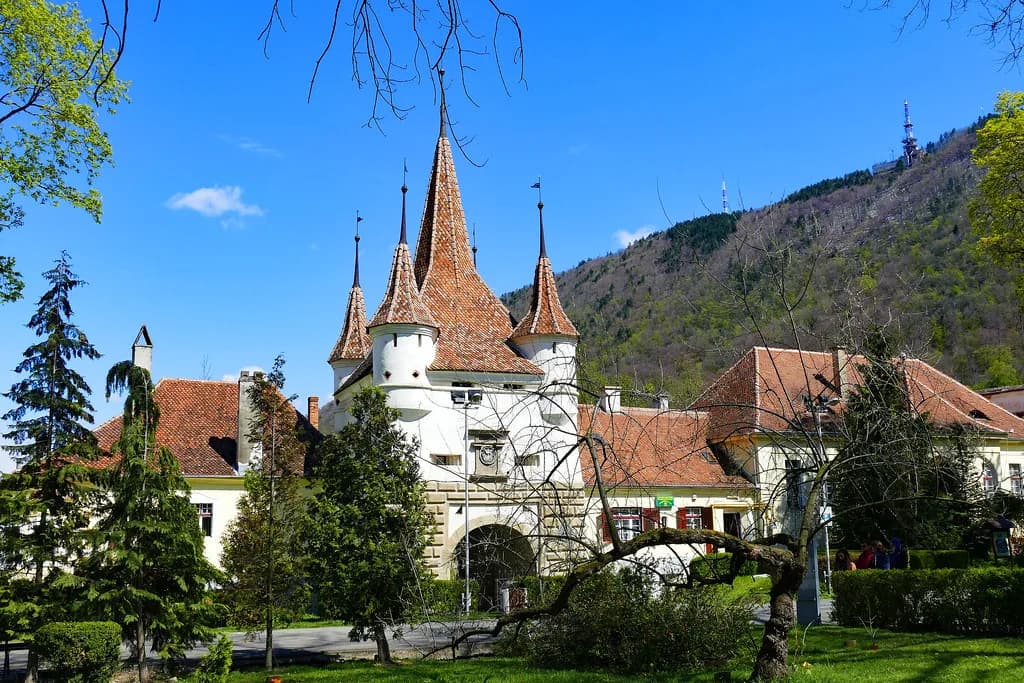
Poarta Ecaterinei, Catherine's Gate, was built in 1559 as the entrance to the German part of Brașov, which was separated from the Romanian quarter. It is the only gate to have survived from medieval times, and its fairytale turreted tower is the surviving piece of town architecture that visitors come to see. The gate marks where the German side began and the Romanian side lay beyond.
Check the gate as a piece of town planning, not just a photo stop. Passing through it puts you on the German side of a divided town, which is the point the building was making. Our Brasov map helps you see how the gate sits relative to the square and the walls before you set out.
Strada Sforii (Rope Street): The Four-Foot Lane
Strada Sforii, Rope Street, is only four feet wide, and it is described as one of the narrowest streets in Europe. It was laid out in the fifteenth century so firefighters carrying a bucket of water in each hand could pass between the city's streets. Tucked into the old town, it works best as a short detour between bigger sights rather than a destination in itself.
Turn into it, touch both walls and move on; the lane takes a minute and tells you more about how a dense medieval town handled fire than any plaque will. It sits within easy reach of the square, so fold it into the middle of your circuit. A guided Brasov walking tour often uses it as a natural waypoint.
The Schei District and St. Nicholas Church
During Saxon rule from the thirteenth to the seventeenth century, Romanians were forbidden from owning property inside the citadel walls, so they settled beyond them in the Schei district to the south-west. They could enter the town only at set times and paid a toll at the gate to sell their produce inside. Walking out to Schei today is walking across that old divide.
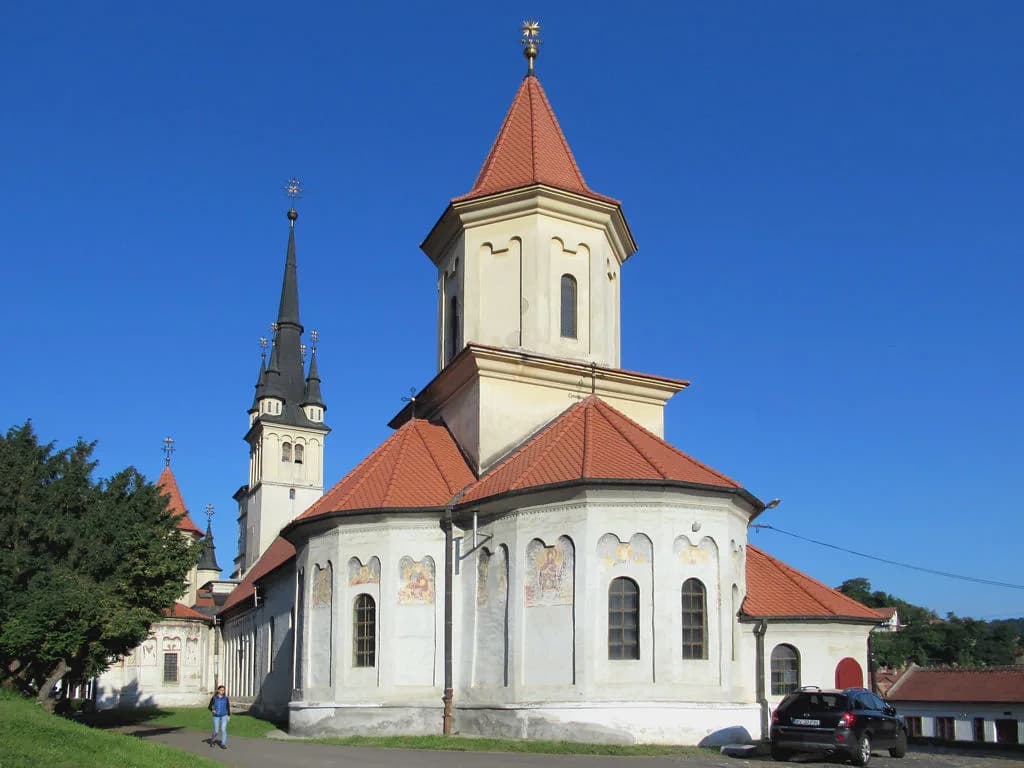
St. Nicholas Church, built in 1495 in the Romanian quarter, carries the same turreted design as the town's gates, a deliberate statement about where authority lay. Compare it with Catherine's Gate and the message becomes clear in the masonry. Give Schei half an hour beyond the church to register how different the district feels from the walled centre.
The Towers: Black Tower and White Tower
The Black Tower stands on the hill above the old town, and despite the name it has been white for years, for the same reason the Black Church lost its soot. The classic view of the Black Church and the old town is taken from up there. The climb buys you the town's shape in one glance, so save it for a clear afternoon.
The White Tower sits on the opposite side of the city from Mount Tâmpa, reached by a pleasant stroll along the old walls and the stream, and the view of the Black Church from it is particularly good. One visitor reports that taking the stairs up to the White Tower is free, unlike the Black Tower. Do both if you have the time and compare the angles.
Mount Tâmpa and the Brașov Sign
Mount Tâmpa rises directly above the city, with a sign on its slope in the style of the Hollywood letters, and the summit stands at 955 metres. A cable car runs up, but walking from the bottom takes about an hour with photo stops, and the views over the old town and the surrounding mountains reward the effort. Call it a mountain, not a hill, if you want to sound like a local.
The walk up is the best way to see how tightly the medieval town sits between the slopes, so treat it as part of the history rather than a workout. Our guide to the Brașov Sign on Tâmpa covers the route and the viewpoints.
The Modarom Building: 1989 and the Bullet Holes
The Modarom building stands on the corner of Strada Republicii and Bulevardul Eroilor, the tall yellow building with an unusual shape. On one side, bullet holes from the 1989 revolution have been deliberately preserved. It is the one place on this walk where the history runs to the present day rather than the medieval town.
Strada Republicii is the main street of the old town, lined with shops, restaurants and bars, so you will pass the Modarom building without trying. Slow down at the marked façade rather than walking past it on the way to dinner. Brașov's name had its own political turn: the city was briefly called Stalin City during part of the Communist period.
Where to Pick Up the Thread on Foot
Start in Piața Sfatului, take in the Council House and the Black Church, then head for Catherine's Gate and Rope Street before crossing to Schei and St. Nicholas Church. Finish with the White Tower and, if the weather holds, Mount Tâmpa for the view back over everything you have walked. That order keeps the climb to the end and leaves the medieval town at the beginning, when your legs are fresh.
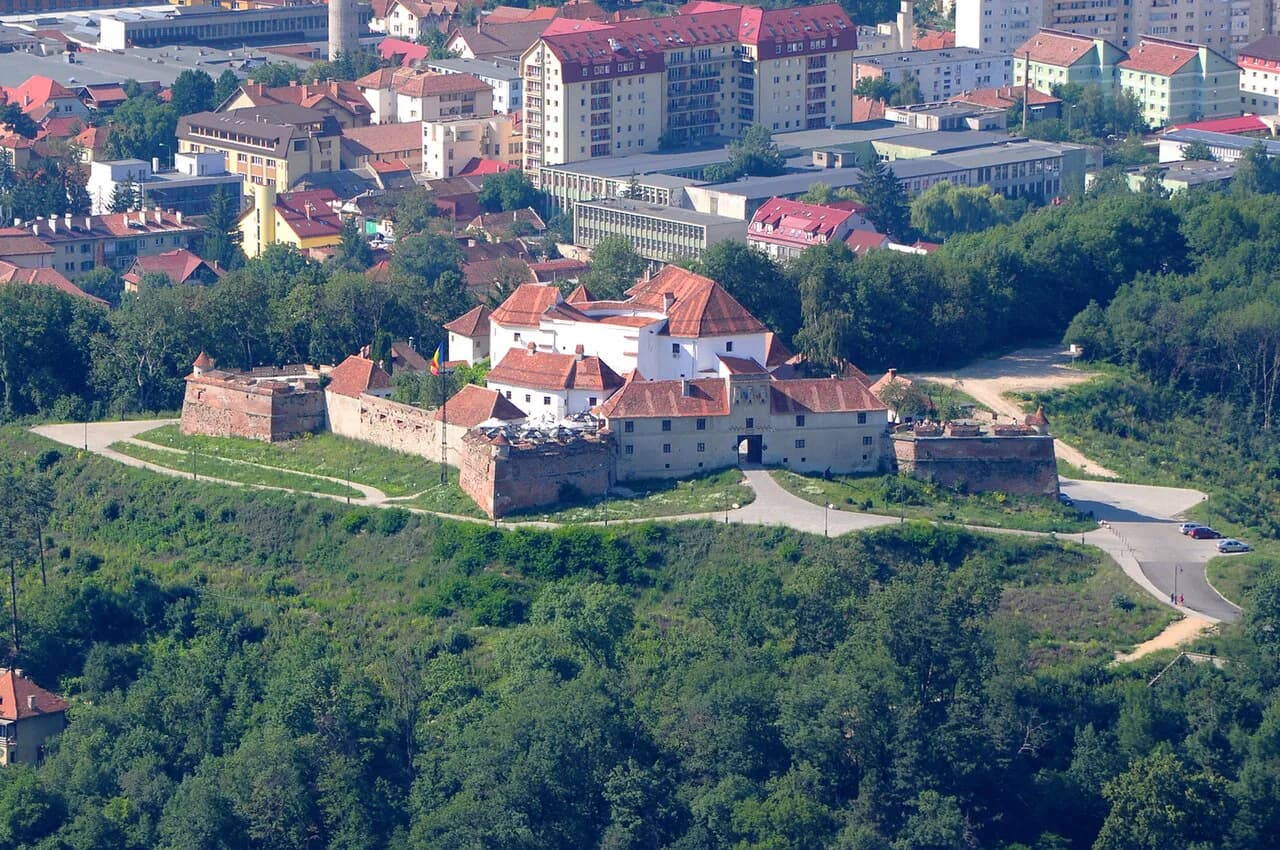
The Brasov itinerary slots these stops into a realistic day and shows where to cut if time runs short. If the Saxon walls and bastions are your main interest, add the citadel on Straja Hill, the Brasov citadel that overlooks the town from the other side.
Beyond the city, Bran Castle is widely billed as Dracula's Castle, but one account of a visit reports no real connection to Dracula and Bram Stoker, and very few links to Vlad the Impaler. Judge the castle on what it holds: art and furniture that belonged to Marie of Romania and exhibitions on the castle's history. That same visitor found it the most crowded place they saw in Romania, so go early or expect queues.
Bran, Peleș at Sinaia and the other fortresses are tricky to combine without a car or an organised tour, since public transport makes a multi-castle day hard. Book through an operator whose inclusions you have read, and confirm what admission is extra before you pay. The full list of castles near Brașov sets out the options from the city.
Which Layer of Brașov Do You Want to Walk First?
If you have one day, take the medieval layer: Piața Sfatului, the Black Church, Catherine's Gate, Rope Street and the towers, with Mount Tâmpa at the end for the view. If you have two, add Schei and St. Nicholas Church on the second morning and save the Modarom façade for an evening walk down Strada Republicii.
Keep the walking order flexible and let the weather decide whether Tâmpa happens on your first or last afternoon. The buildings that carry the dates are all within the compact centre, so nothing on this walk needs a car.
Frequently Asked Questions
Was Brașov called Stalin City?
Yes, the city was briefly called Stalin City during part of the Communist period. The 1989 revolution, by contrast, left visible traces on the Modarom building on Strada Republicii, where bullet holes have been deliberately preserved.
Which gate in Brașov survives from the medieval town?
Catherine's Gate, Poarta Ecaterinei, was built in 1559 as the entrance to the German part of Brașov. It is the only gate to have survived from medieval times, with its fairytale turreted tower. It marks where the German quarter inside the walls began and the Romanian Schei district lay beyond.
Does Bran Castle have a real Dracula connection?
Bran Castle is widely marketed as Dracula's Castle, but one account of a visit reports no real connection to Dracula or Bram Stoker, and very few links to Vlad the Impaler. The castle displays art and furniture that belonged to Marie of Romania and exhibitions on its own history. Go for the building, not the vampire story, and expect crowds.
How long does it take to walk Mount Tâmpa?
Walking from the bottom to the summit takes about an hour, with stops for photos along the way. The summit is at 955 metres. A cable car also runs up, which saves the climb but removes the gradual view over the old town. Confirm the cable car's running times locally before you rely on it.
Sources
Useful notes for your next trip
Optional updates to our guides.
You might also like
Continue reading
More guides you'll find useful