Brașov's Walls, Towers and Bastions: What Survives and How to Walk Them
Brașov's medieval walls ran for three kilometres with seven bastions. Here is what survives, which towers and gates you can see, and how to walk the line.
On this page
Brașov's walls survive as fragments rather than a lap you can complete: the 15th-century circuit measured 3 kilometres, stood 12 metres high and carried seven bastions, and today you walk public streets between the pieces. This guide sets out what stands, where the line runs around the old centre, and the order that keeps the climbs at the end rather than the start.
Expect a half-day on foot rather than a ticketed attraction. The towers, bastions and gates sit above and beside ordinary streets, so the strongest views come from below, looking up at the wall from outside the circuit.
What remains of Brașov's walls today
The medieval citadel was ringed by walls built in the 15th century, 12 metres high and 3 kilometres long, with seven bastions worked into the line. Those figures describe the circuit as a whole; they do not mean you can walk the full 3 kilometres on top of a wall today.
Treat what remains in three categories. Some stretches are standing wall you view from the street below, some are towers and bastions that punctuate the line, and some are gates that once controlled movement in and out. Planning around those three categories is more useful than looking for a continuous rampart.
Where the walls sit around the old centre
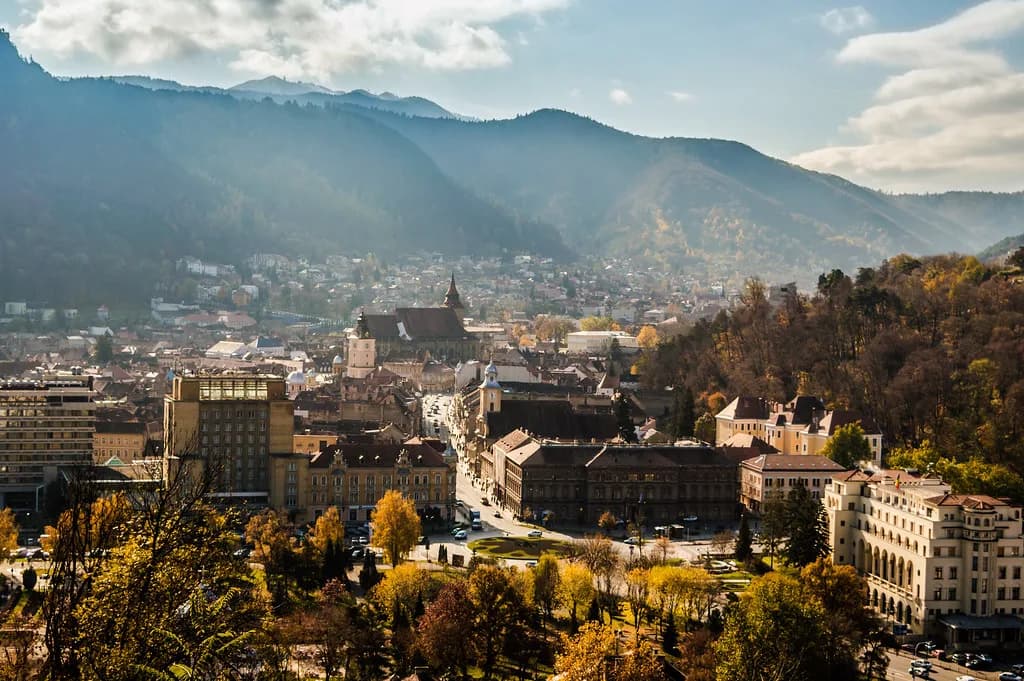
Brașov sits almost at the heart of Romania, roughly 170 kilometres from Bucharest, with the Carpathians wrapping it on three sides. The historic centre is compact enough to cross on foot, which is why the wall fragments work as a walking route rather than a drive.
The line runs around the old core, with Piața Sfatului (Council Square) at the centre and the Șchei district outside the old perimeter to the south-west. Catherine's Gate sits in the old centre, and the wall and bastions sit along the edges where the built-up area meets the slopes. The Brasov map is worth having open on your phone before you set out, because the fragments do not announce themselves as a single route.
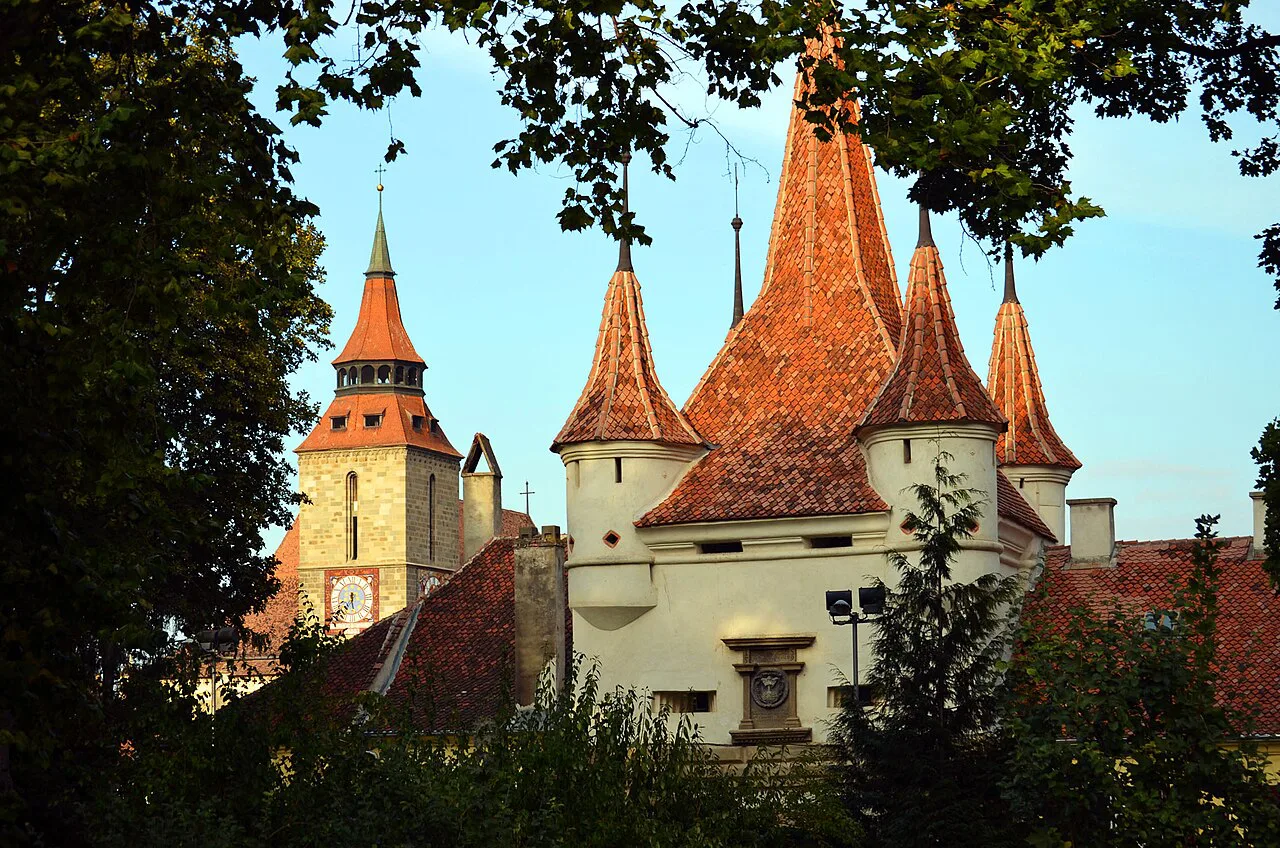
Catherine's Gate (Poarta Ecaterinei): the last of the old gates
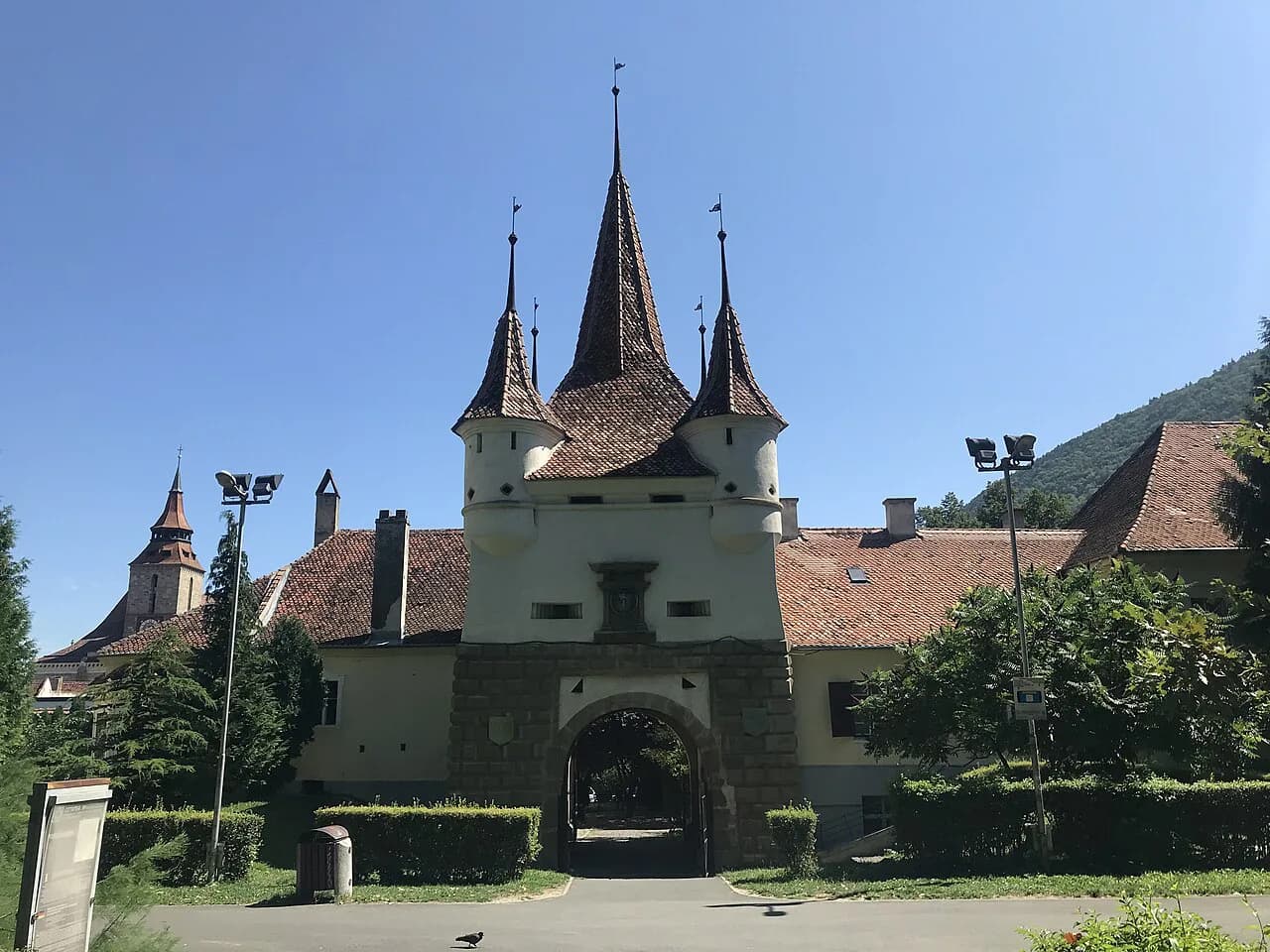
Catherine's Gate, Poarta Ecaterinei in Romanian, was built in 1559 to replace an earlier gate destroyed by flooding, and it takes its name from a monastery that once stood on the site. It is the only one of the city's ancient gates still standing, which is reason enough to make it a fixed point on any wall walk.
Look at the four turrets on top before you walk through. They signalled Brașov's medieval judicial autonomy and its right to apply capital punishment, so they are a statement of legal power rather than decoration. That detail is what separates this gate from a photogenic archway.
From the gate, the old town opens up quickly: the Black Church, the Orthodox church, the Museum of Urban Civilisation and the Hirscher House all sit nearby, with Republicii Street running off the square as a pedestrianised shopping street. Catherine's Gate therefore works best as the start of the old-town half of the walk, not the end of it.
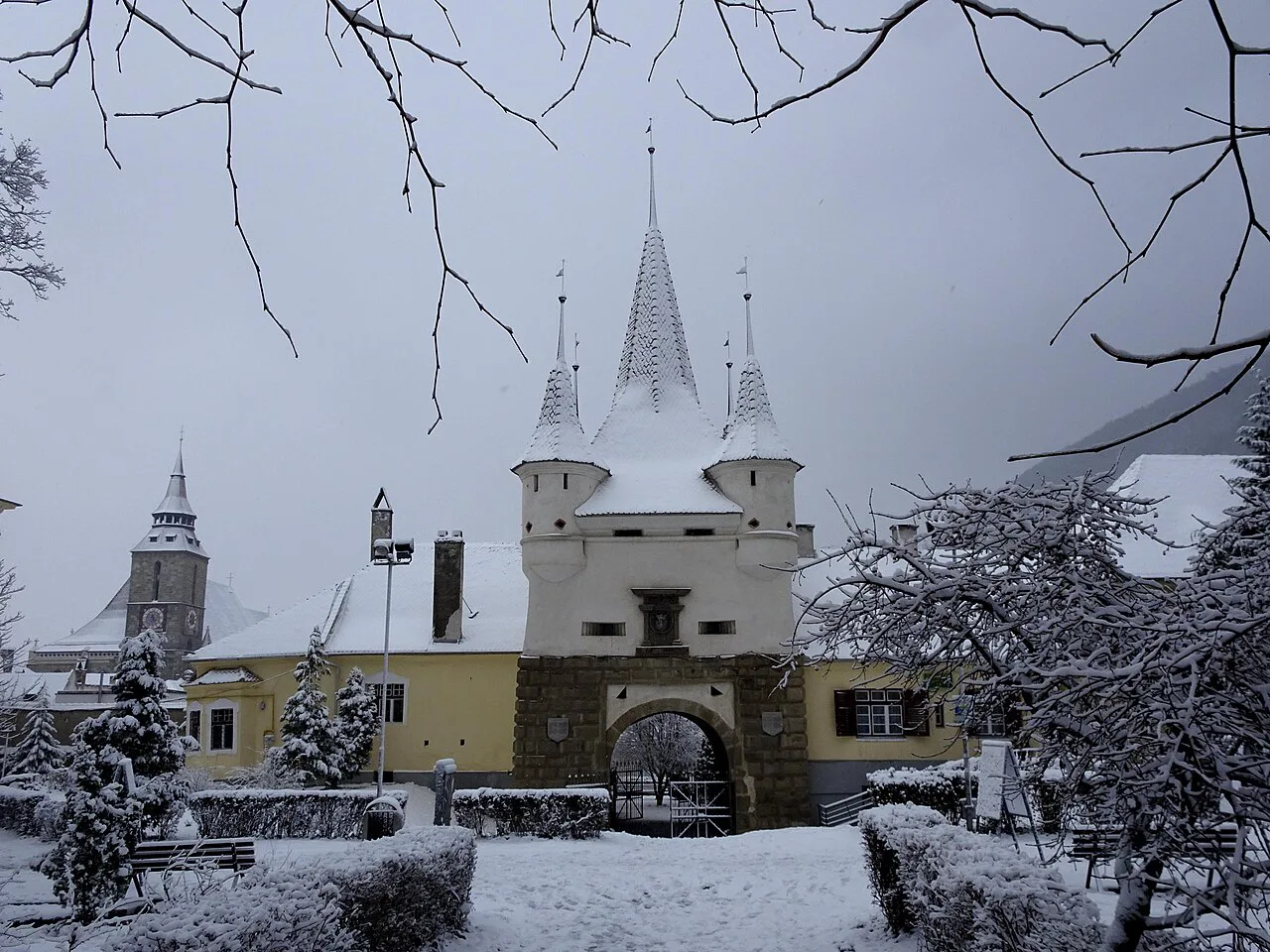
The towers along the wall above the old centre
The towers read best as markers on the skyline above the roofs of the old centre. They sit on the outer edge of the circuit, above the streets that run below the walls, so you spot them from a distance and then walk to the base rather than the other way round.
Plan a tower stop as five minutes of looking rather than an ascent. Access arrangements for the towers change, and the safest approach is to decide on the day whether a staircase is open, then build the rest of the route around that answer.
The Weaver's Bastion: what you see from outside
The bastions are the most photogenic parts of the circuit, and the Weaver's Bastion rewards the detour to its base. The walls of the Weaver's Bastion are best seen from below, looking up at the fortification from street level rather than from inside it.
That is the honest trade-off of a Brașov wall walk: the best views come from outside looking up, not from the wall itself. Set your expectations accordingly and the bastions deliver; expect a continuous rampart walk and they will not.
The bastions and wall stretches sit within a wider set of fortifications, and a walking tour is the simplest way to have the line pointed out for you if you would rather not navigate between fragments.
Walking the walls: route order, timing and the climbs
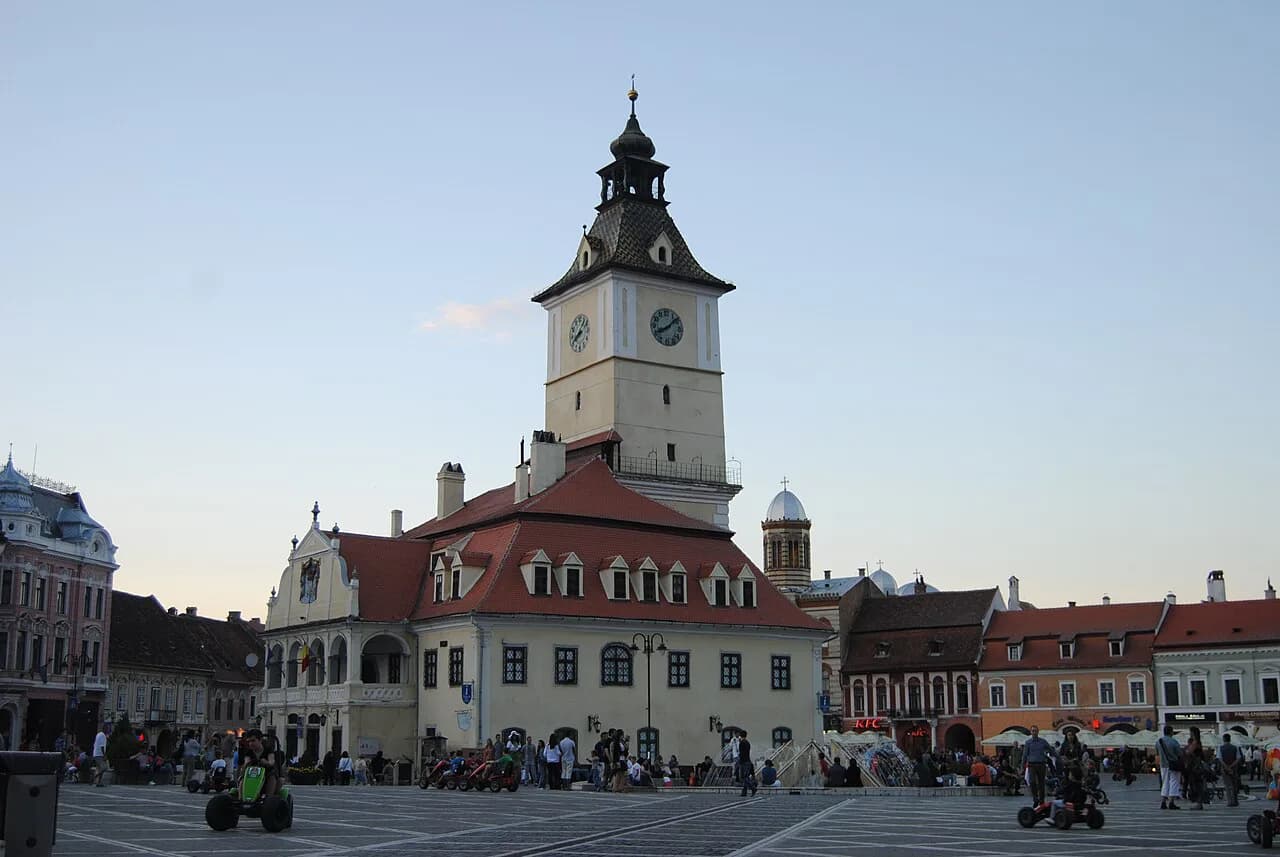
Start at Piața Sfatului, where the Black Church and the former council house anchor the square, and work outward to Catherine's Gate before turning towards the wall and bastions. That order keeps the flat old-town streets first and saves the climbs for the second half.
Allow roughly half a day including stops at the Black Church and the square. The walking itself is not long, but the fragments are spread around the edge of the centre, so the distance adds up and the climbs come in short bursts rather than one sustained ascent.
End below the Weaver's Bastion, looking up. Finishing there puts the most striking wall view at the end of the route, when you have already seen the gates and towers in context and can read the fortification as a single system.
Piața Sfatului and the Black Church as start and finish
Piața Sfatului (Council Square) is the historic centre's main square, lined with 19th and 20th-century buildings that are mostly historical monuments. The Casa Sfatului, the council house that gives the square its name, dates from 1420 and now holds the Brașov county history museum.
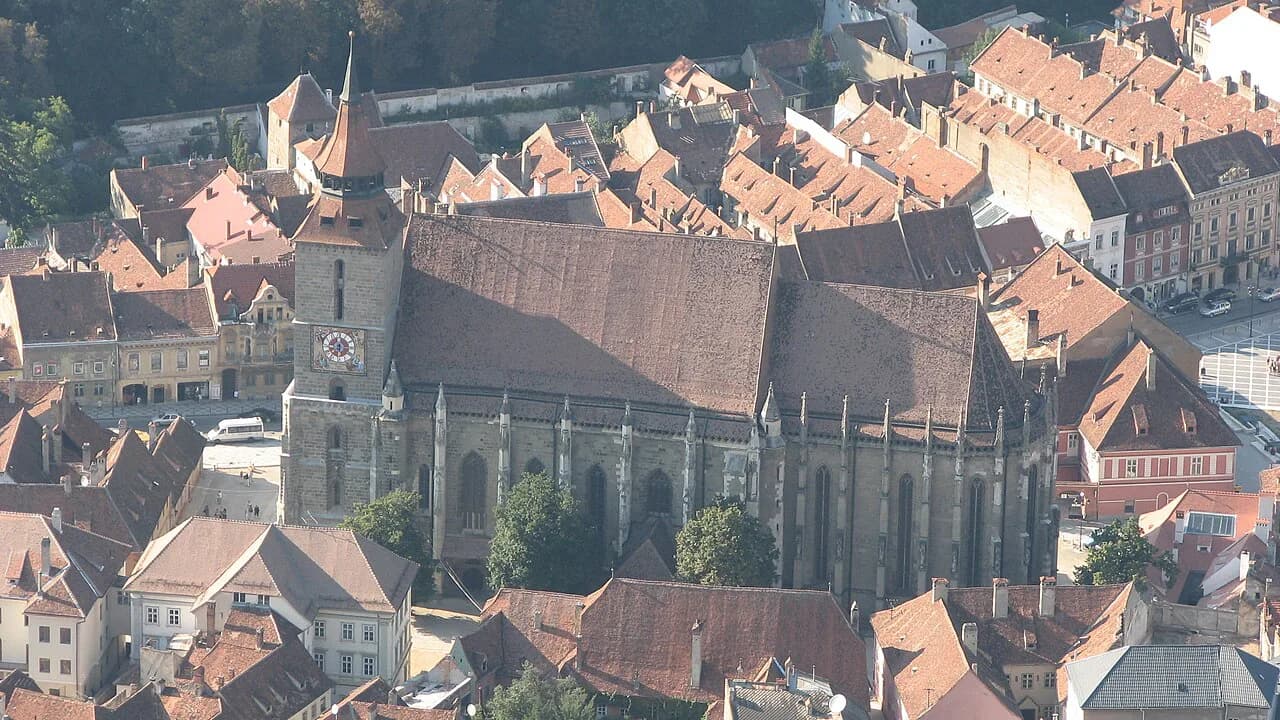
The Black Church, Biserica Neagră, stands in the square and was built between 1385 and 1477, with a length of 90 metres and a bell tower 65 metres high. Its walls were blackened in the fire of 1689, which is where the name comes from, and inside are 119 Anatolian carpets donated by German merchants between the 17th and 18th centuries.
If you want more than the walls in the same half-day, the Museums in Brașov Worth Your Time page covers the history museum and the other collections in the centre.
What to skip with half a day and what to prioritise with a full one
With half a day, take Piața Sfatului, the Black Church, Catherine's Gate and the bastions, in that order. That covers the gates, the centre and the best exterior wall view without stretching the route around every surviving fragment.
With a full day, add the outer fragments and the old town's side streets, which the Brașov Old Town guide sets out street by street. The extra time buys context rather than more wall: the circuit is not long, but the streets between the pieces are worth walking slowly.
Rope Street, Strada Sforii, connects Cerbului Street with Poarta Schei Street and is a natural link between the old-town streets and the Schei side. It slots into the route between the gates rather than as a separate trip.
Tickets and opening times: what to confirm before you go
Walking the streets between the gates and bastions is a matter of public thoroughfares and squares, not a ticketed circuit, so there is nothing to book for the route itself. Individual towers and interiors are a separate question, and access can change with the season.
Check current opening times and any tower entry charges before you rely on climbing anything. The same applies to the Black Church and the county history museum, which keep their own hours.
Is a Brașov wall walk worth half a day?
Yes, if you go for the fragments rather than a full circuit. The gates, the towers above the old centre and the bastions seen from below give you the shape of the fortification in a few hours, and Catherine's Gate alone justifies the walk.
Build the half-day around Piața Sfatului, the Black Church and Catherine's Gate, finish below the Weaver's Bastion, and treat any tower climb as a bonus. For the rest of the city, the Brasov Attractions hub and the Things to Do in Brașov guide cover what to add.
Explore more Brasov guides
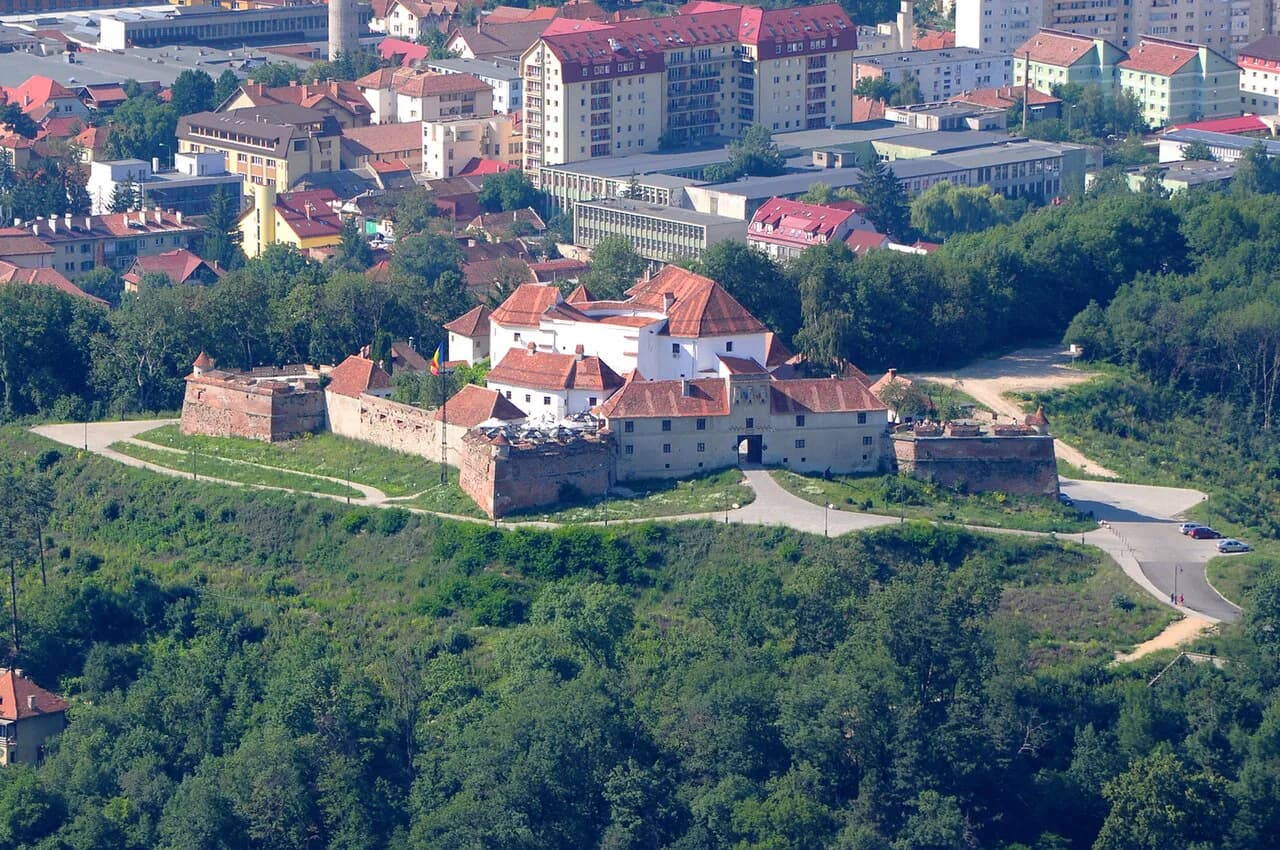
- Brașov Citadel on Straja Hill
- Brașov Day Tours
- Brașov Itinerary
- Castles Near Brașov
- The Brașov Sign on Mount Tâmpa
- Șchei, Brașov
- Brasov City Break
- Brașov History
- Churches in Brașov
- Free Things to Do in Brașov
- How Many Days in Brașov Do You Need?
- One Day in Brașov
- Shopping in Brașov
- Brasov Attractions
Frequently Asked Questions
Where is Brașov located in Romania?
Brașov lies almost at the heart of Romania, roughly 170 kilometres from Bucharest, with the Carpathians surrounding it on three sides. That position makes it a practical base for the surrounding fortified churches and castles.
Can you walk the whole length of Brașov's walls?
No. The 15th-century circuit measured 3 kilometres with seven bastions, but what survives is a series of fragments, towers, bastions and gates. You walk public streets between the pieces rather than a continuous wall path.
Do you need a ticket to see Brașov's walls and gates?
The route between the gates and bastions follows public streets and squares, so there is nothing to book for the walk itself. Individual towers and church interiors keep their own access arrangements, which are worth confirming before you plan a climb.
Sources
Useful notes for your next trip
Optional updates to our guides.
You might also like
Continue reading
More guides you'll find useful