Cluj Architecture: Gothic, Baroque and Art Nouveau on Foot
A walking guide to Cluj-Napoca architecture: Gothic St Michael's, the Baroque Bánffy Palace, the Matthias Corvin Monument and the Cetățuia viewpoint.
On this page
Cluj-Napoca's main architectural set pieces fit into one day on foot, and the logical order runs from Piața Unirii up to the Cetățuia hill. Start with the Gothic church and the Baroque palace on the main square, add the botanical garden and the Old Town Hall, then climb to the fortress park for the view. This guide orders each stop by the style it shows you, with a garden finish and a salt-mine side trip.
Cluj-Napoca's architecture in a single day on foot
Every style on this route sits within a walkable centre, so you do not need a car or a bus ticket until the Turda side trip. The sequence is deliberate: the square first while it is quiet, the palace museum next, then the streets around Eroilor Avenue, and the hill last when the light softens. If you only have an afternoon, cut the botanical garden and keep the square and the viewpoint.
Piața Unirii and St Michael's Church: the Gothic stop
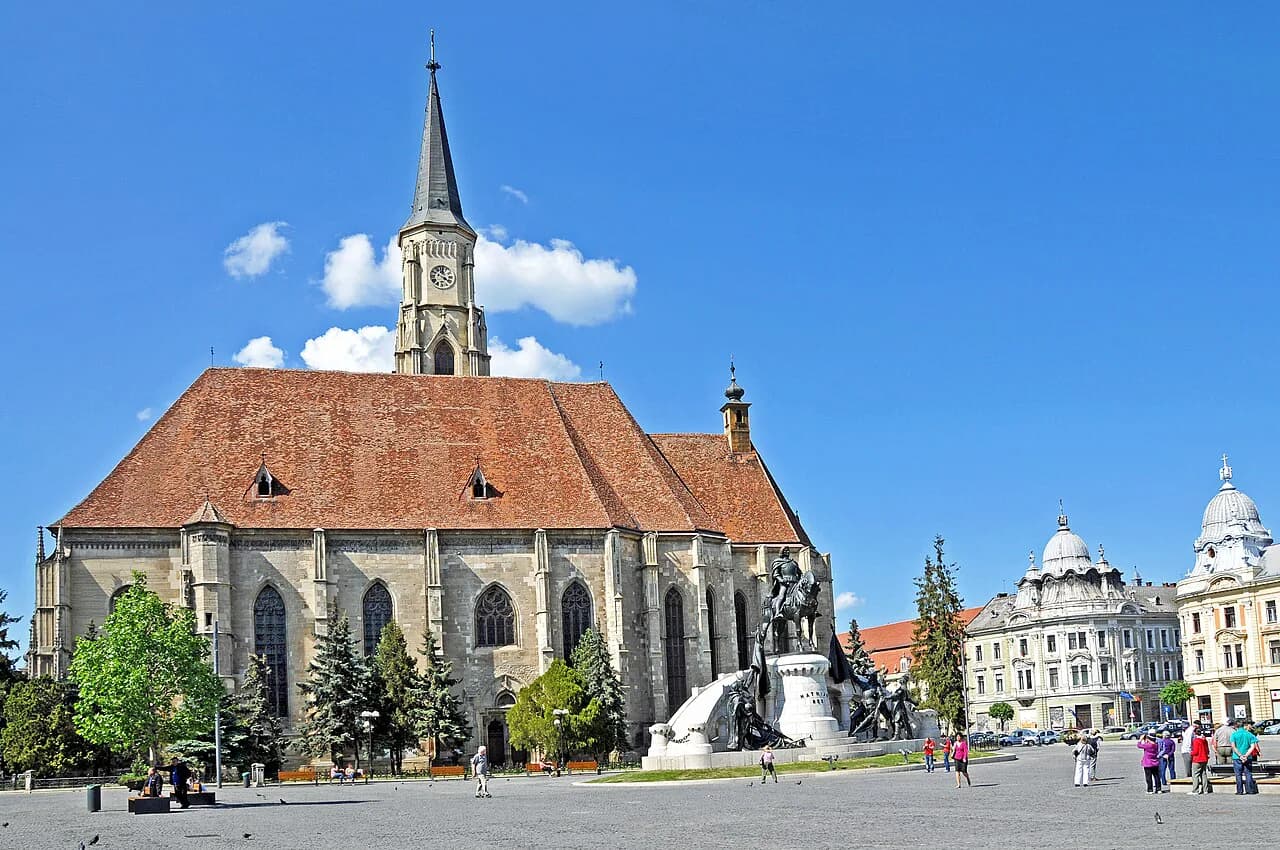
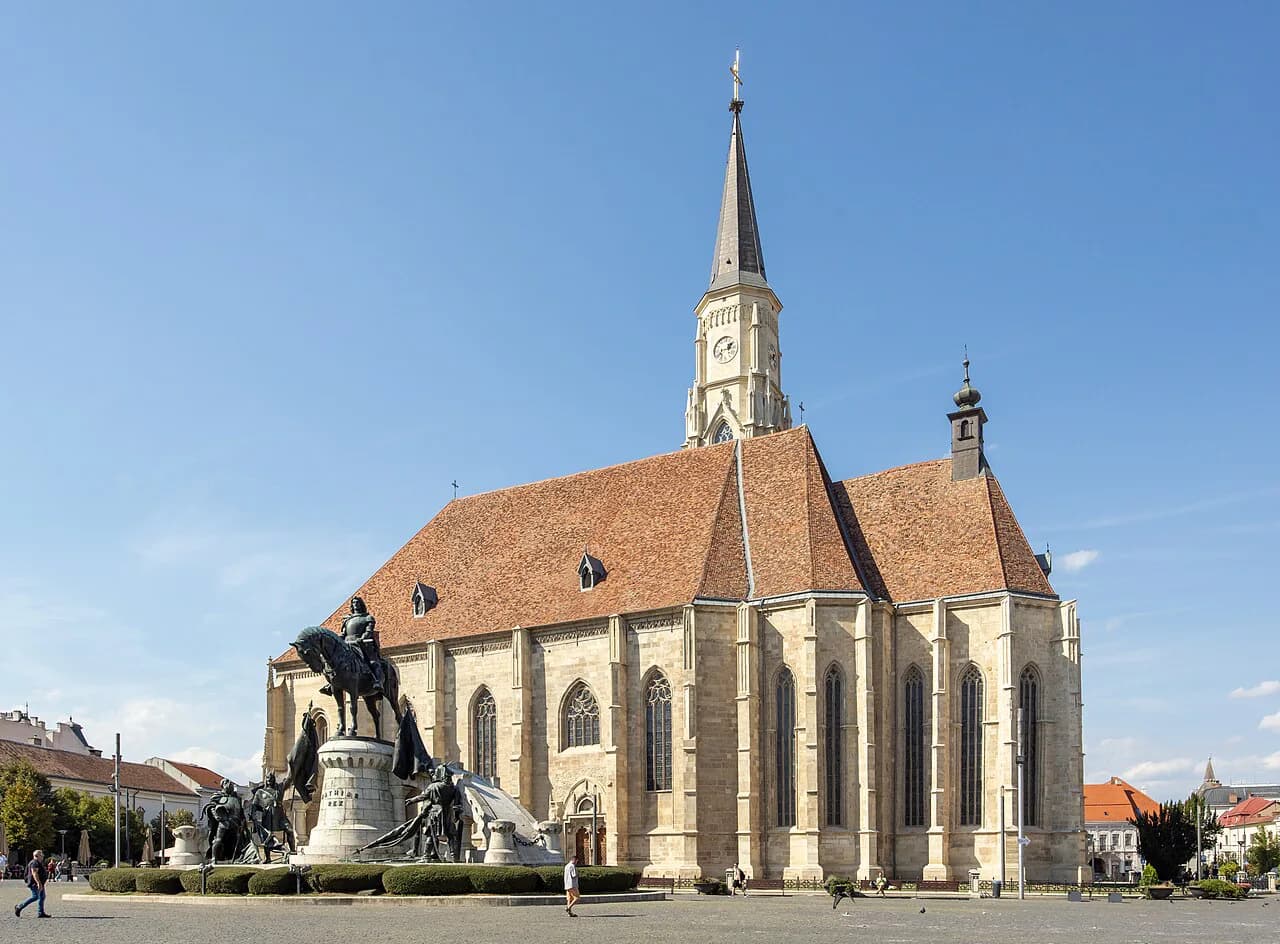
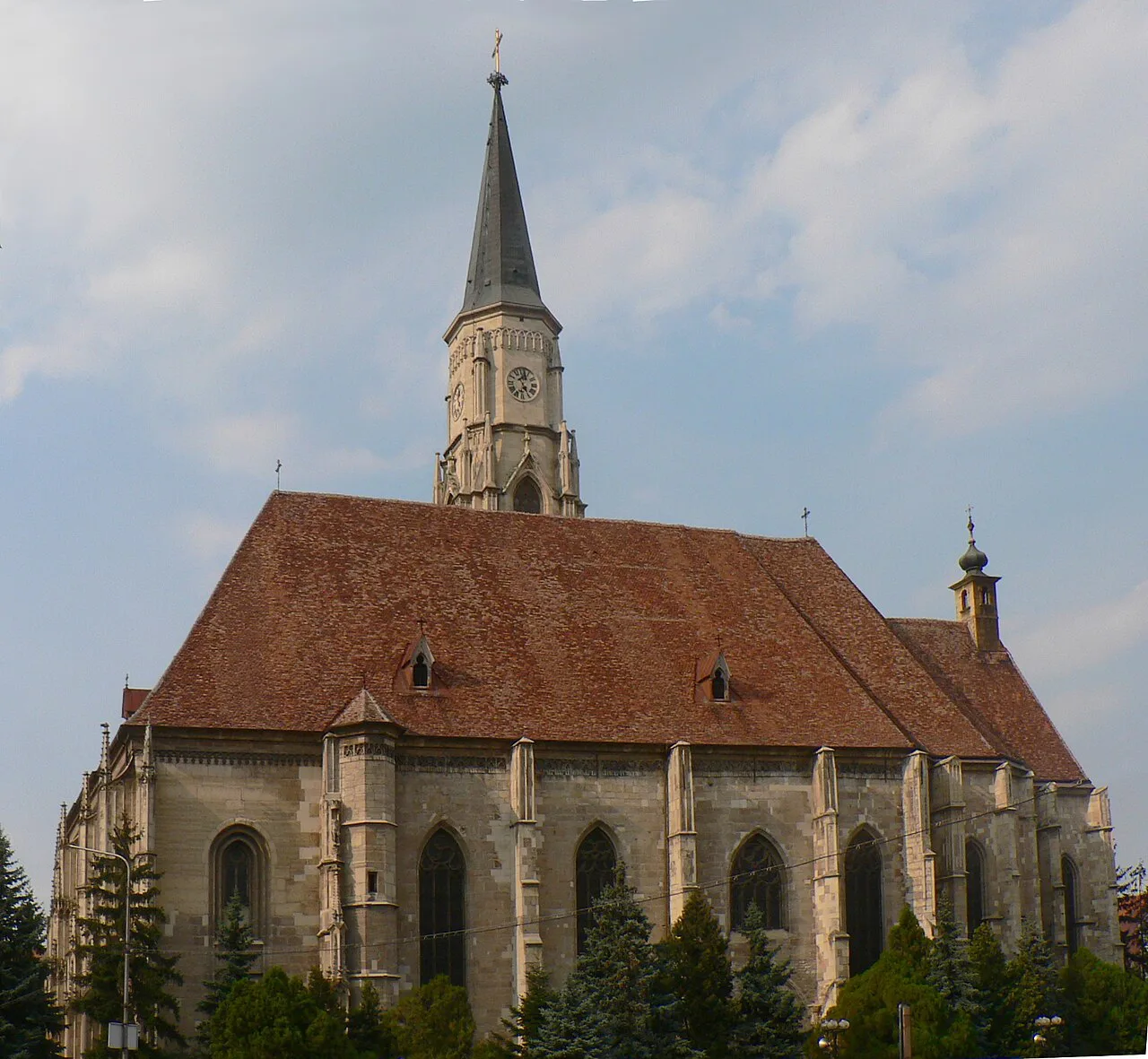
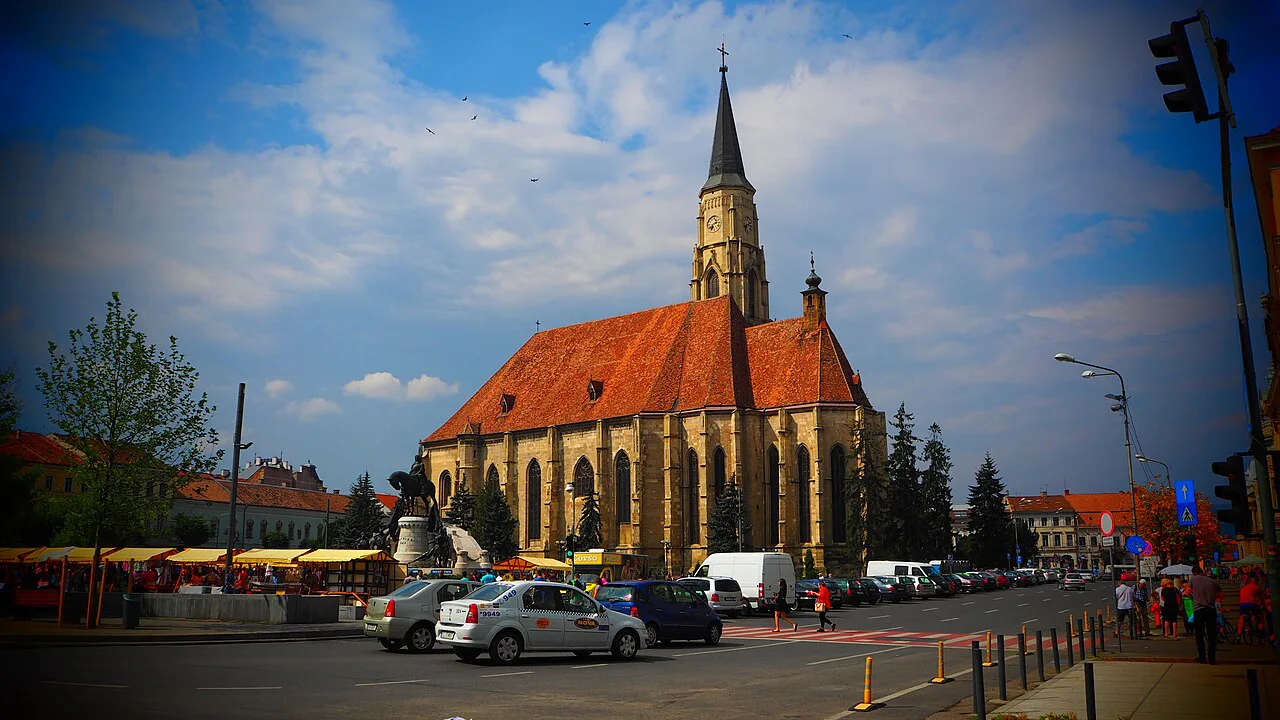
St Michael's Church (Biserica Sfântul Mihail) faces Piața Unirii and its Flamboyant Gothic lines give the square its shape, with a tower rising about 80 m. Walk round the exterior before going in, because the buttresses and the tower read differently from the side streets than from the open square. The square itself is the natural anchor for the rest of the route, and the nearby streets of the old town carry the smaller historic façades.
Interior access depends on service times, so treat the church as an exterior and tower stop and time your look at the tower from outside rather than building the day around going in.
The Matthias Corvin Monument: the square's meeting point
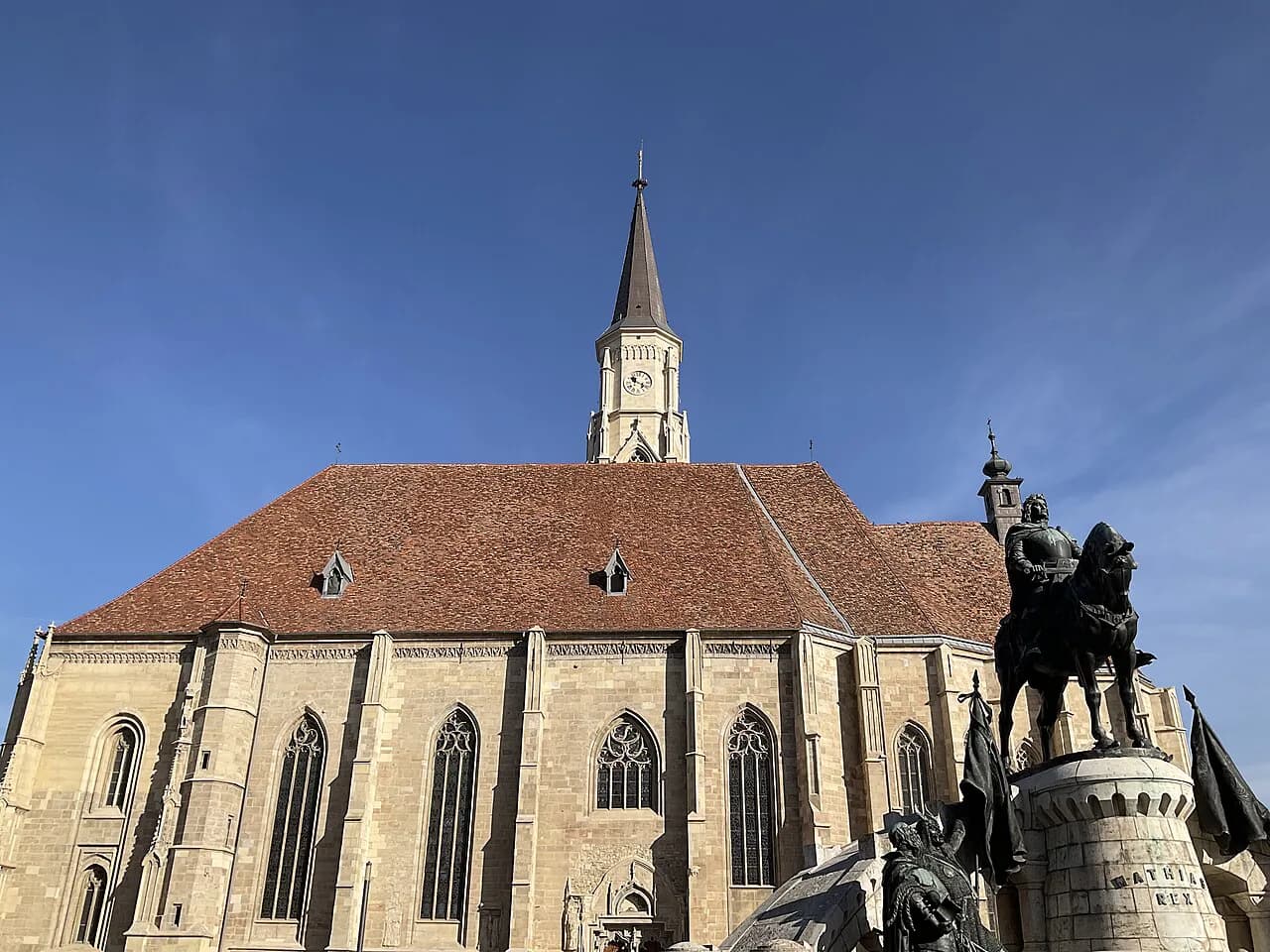
The Matthias Corvin Monument is the bronze equestrian statue on the square and the obvious rendezvous point if your group splits up. Architecturally it is a piece of civic sculpture rather than a building, but it sets the scale of the square and gives you the classic view back towards St Michael's. Read it as part of the square's composition, then move on to the palace.
Bánffy Palace and the Museum of Art: the Baroque stop
The Bánffy Palace is the Baroque civil building to look at closely, a former princely residence that now holds the Museum of Art in Cluj. Come for the façade and the courtyard rhythm as much as the collection, since this is where the route shifts from Gothic to Baroque. The museum's Romanian and European art collections fill the interior rooms.
The palace interior is a museum visit rather than a quick look, so decide before you go in whether you want the galleries or just the architecture. Ticket prices and opening days are set by the museum, so check them before you commit to the interior.
Piața Unirii to Cetățuia: the Habsburg hill and the view
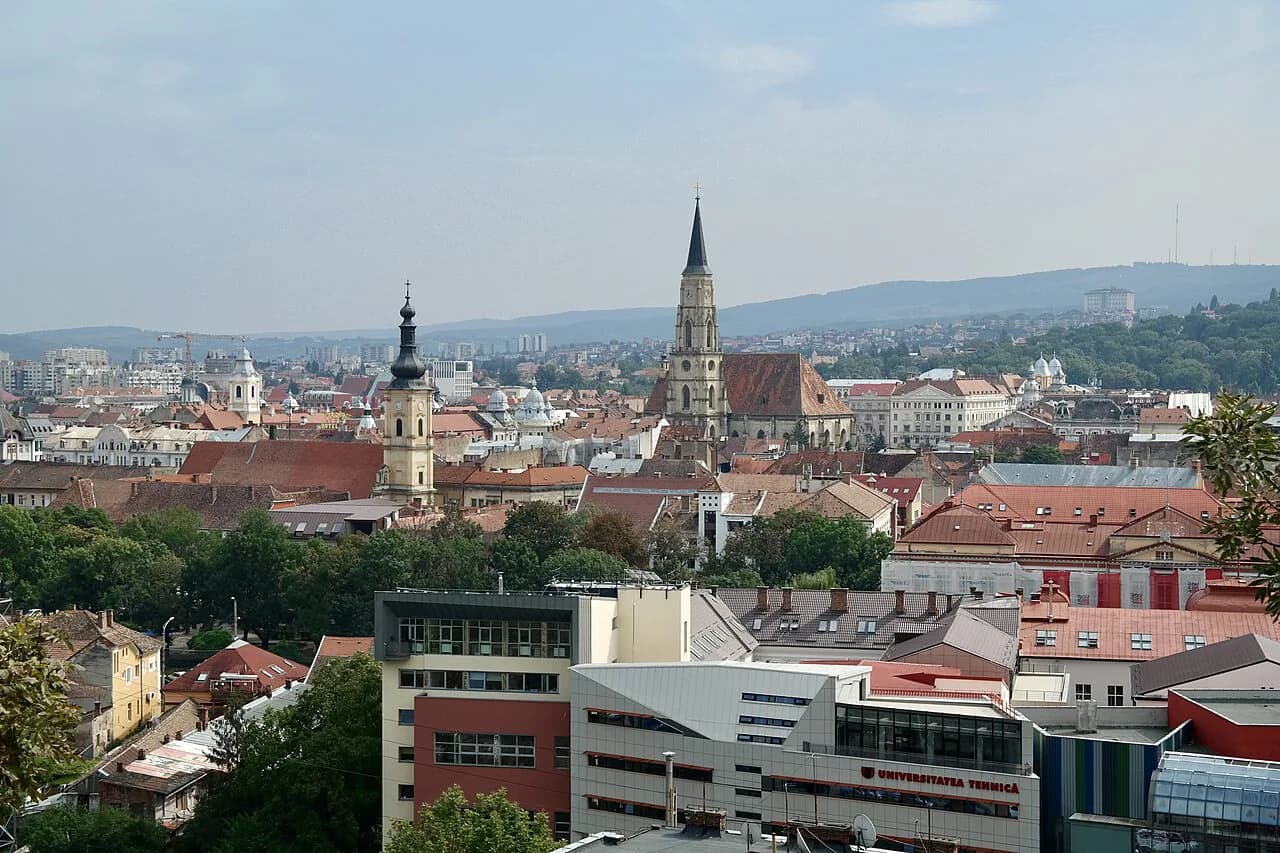
Cetățuia, the Fortress Park, is an eighteenth-century Habsburg garrison hill above the city and the viewpoint that ends this walk. Climb it after the squares rather than before, because the payoff is looking back down at the roofs, the church tower and the streets you have just crossed. Sunset is the obvious slot, and the walk up through the park is the main effort; the view itself costs nothing.
The Alexandru Borza Botanical Garden: the layout stop
The Alexandru Borza Botanical Garden covers 14 hectares and gives the walk a different kind of architecture: glasshouses and a Japanese garden laid out as a designed landscape. It is the one stop where you slow down, and it works best after the built-up centre because the scale opens out. Allow more time than you think for the greenhouses if the weather turns.
Old Town Hall on Eroilor Avenue and the streets around it
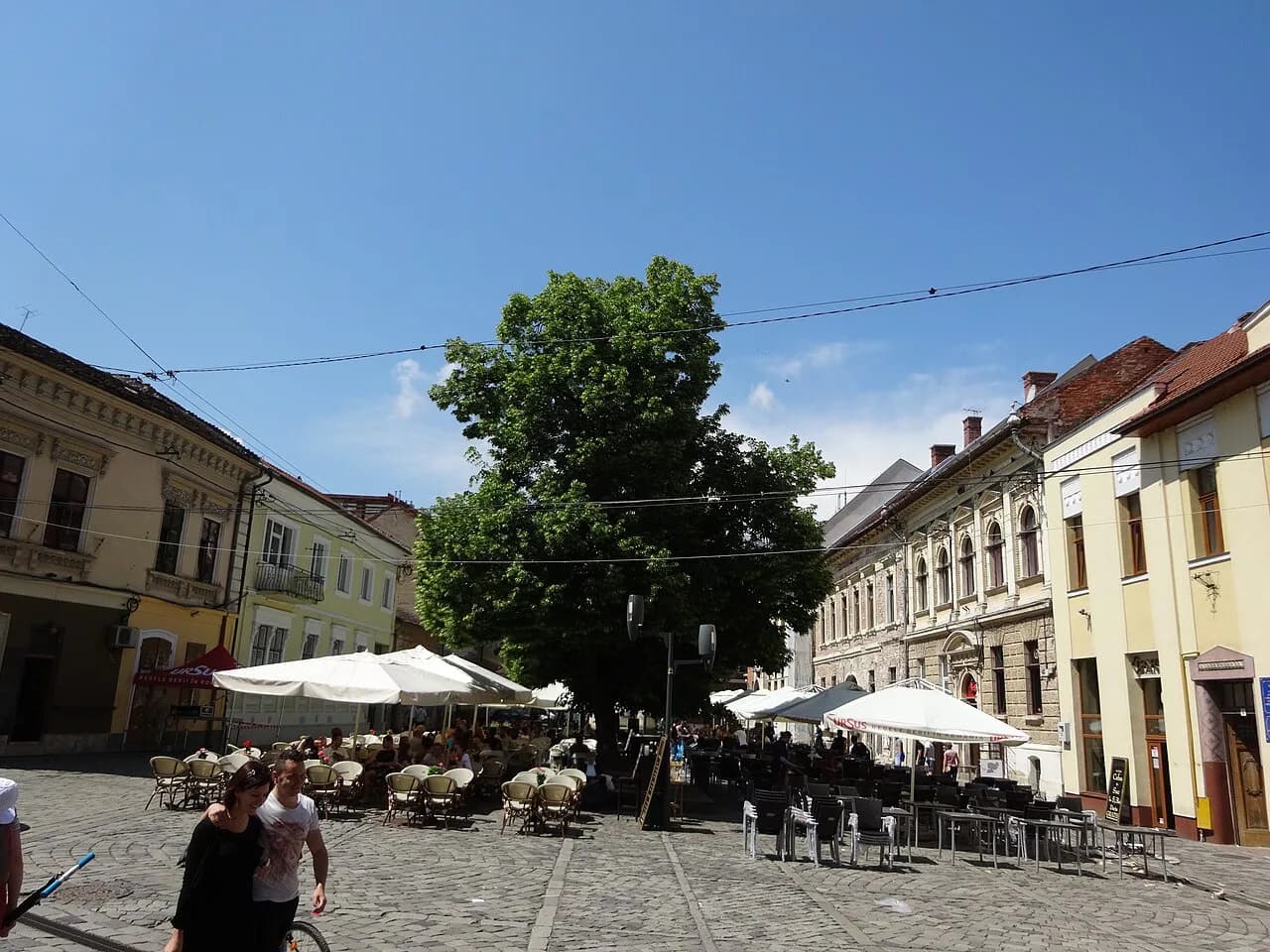
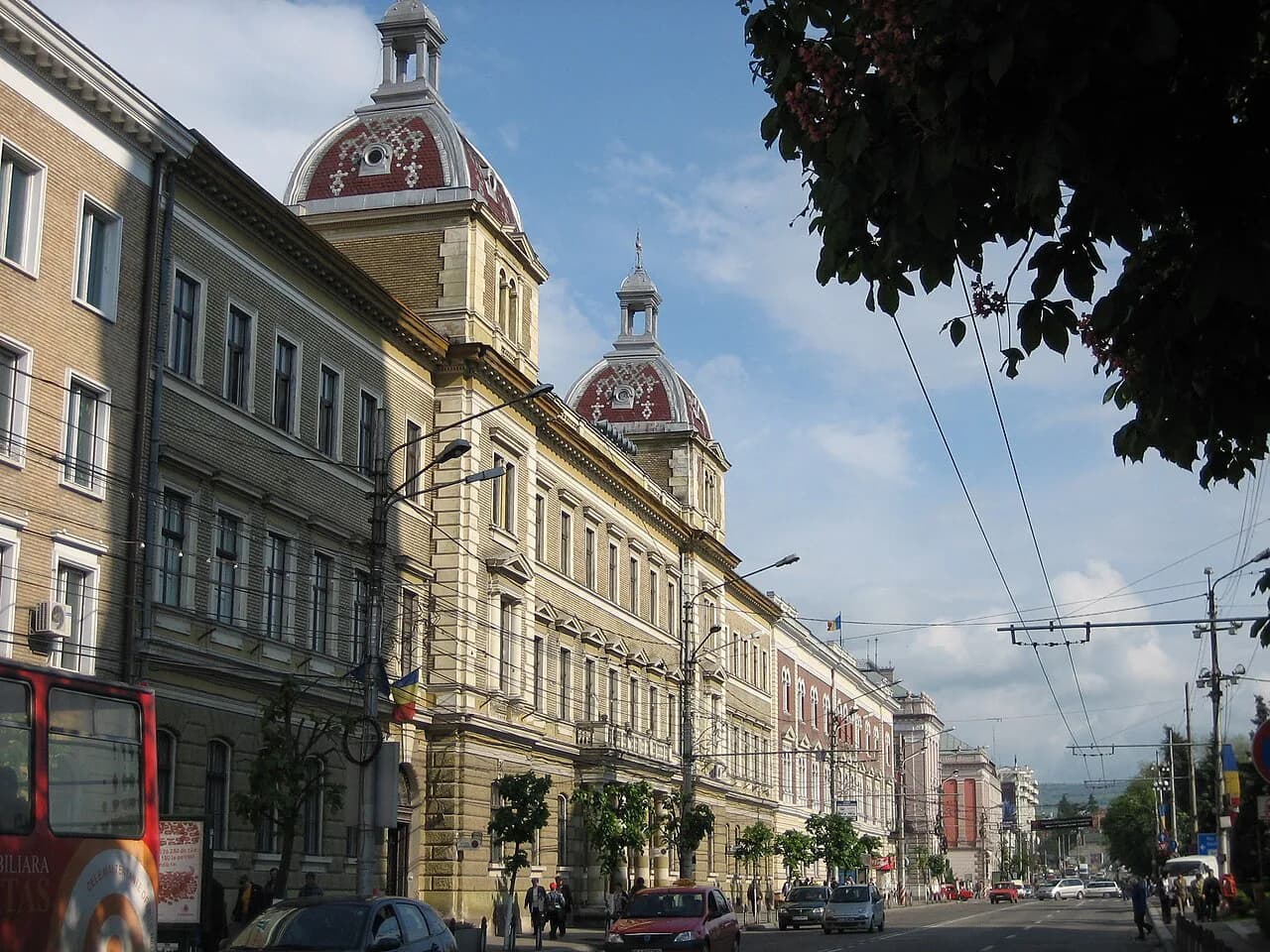
The Old Town Hall building on Eroilor Avenue is the stop for the city's older civic architecture, and the avenue around it is where you read the street frontages rather than single monuments. Walk it slowly between the square and the hill, because this stretch connects the main stops on foot. The surrounding old town streets carry the smaller historic façades that fill in the picture.
How long the walk takes and where it bites
Budget most of a day if you include the museum interior and the botanical garden, and half a day if you keep to the square, Eroilor Avenue and the hill. The hard part is the climb to Cetățuia at the end, when your legs are tired, so wear shoes you can walk uphill in. The centre is compact enough that you will not need transport between stops.
Turda Salt Mine: the architectural side trip 30 km south
Turda Salt Mine sits roughly 30 km south of Cluj-Napoca and is the one stop on this list that needs a trip out of the city. It is a former salt mine carved into underground chambers, so the architecture is subterranean and on a very different scale from the square. Treat it as a half-day side trip rather than part of the walking route, and check transport and opening details before you set out.
Which stops to keep if you have half a day
With half a day, keep Piața Unirii, St Michael's Church, the Matthias Corvin Monument and the climb to Cetățuia, and leave the museum interior and the botanical garden for a longer visit. The full day adds the Bánffy Palace, Eroilor Avenue and the garden, in that order. If you want the route mapped stop by stop, use the Cluj-Napoca walking tour alongside this guide.
Explore more Cluj-Napoca guides
Sources
Useful notes for your next trip
Optional updates to our guides.
You might also like
Continue reading
More guides you'll find useful