Cluj-Napoca History: What to See from the Old Town
Cluj-Napoca history for visitors: a short walk tied to Avram Iancu Square, Union Square, St Michael's Church and Matthias Corvinus House, all on foot.
On this page
Cluj-Napoca's history is a walk of roughly an afternoon, not a museum timeline: begin at Avram Iancu Square, follow Eroilor Boulevard into Union Square, and finish on Cetățuia Hill looking back over the route. Every period you read about is attached to a wall, a tower or a façade you have just passed. This guide ties the city's story to named squares, churches and streets as laid out in the city guide, and keeps the wider regional picture separate from what you can see on the ground.
Cluj-Napoca is in Romania, in the historical region of Transylvania, and the Romanian Friend city guide describes it as Romania's second largest city. It is also Kolozsvár in Hungarian, a name you will see on older signs and in Hungarian-language material, while Cluj-Napoca is the form used today. Keep both in mind, because plaques and guidebooks shift between them.
Start at Avram Iancu Square: the entry point for the historic centre
Avram Iancu Square is where the city guide's walking route into the historic centre begins, before it moves on to the main street. Treat it as an orientation stop rather than a sight in itself: get your bearings, note the direction of Eroilor Boulevard, and set off.
From the square the historic core is close enough to cover on foot, which is why the route runs through the centre to Union Square and St Michael's Church without any transport in between. Plan the walk as a single line rather than a loop, and you will see more with less doubling back. If you want the street order drawn out before you start, the Cluj-Napoca map is the practical place to check it.
Eroilor Boulevard: the main street through the old core
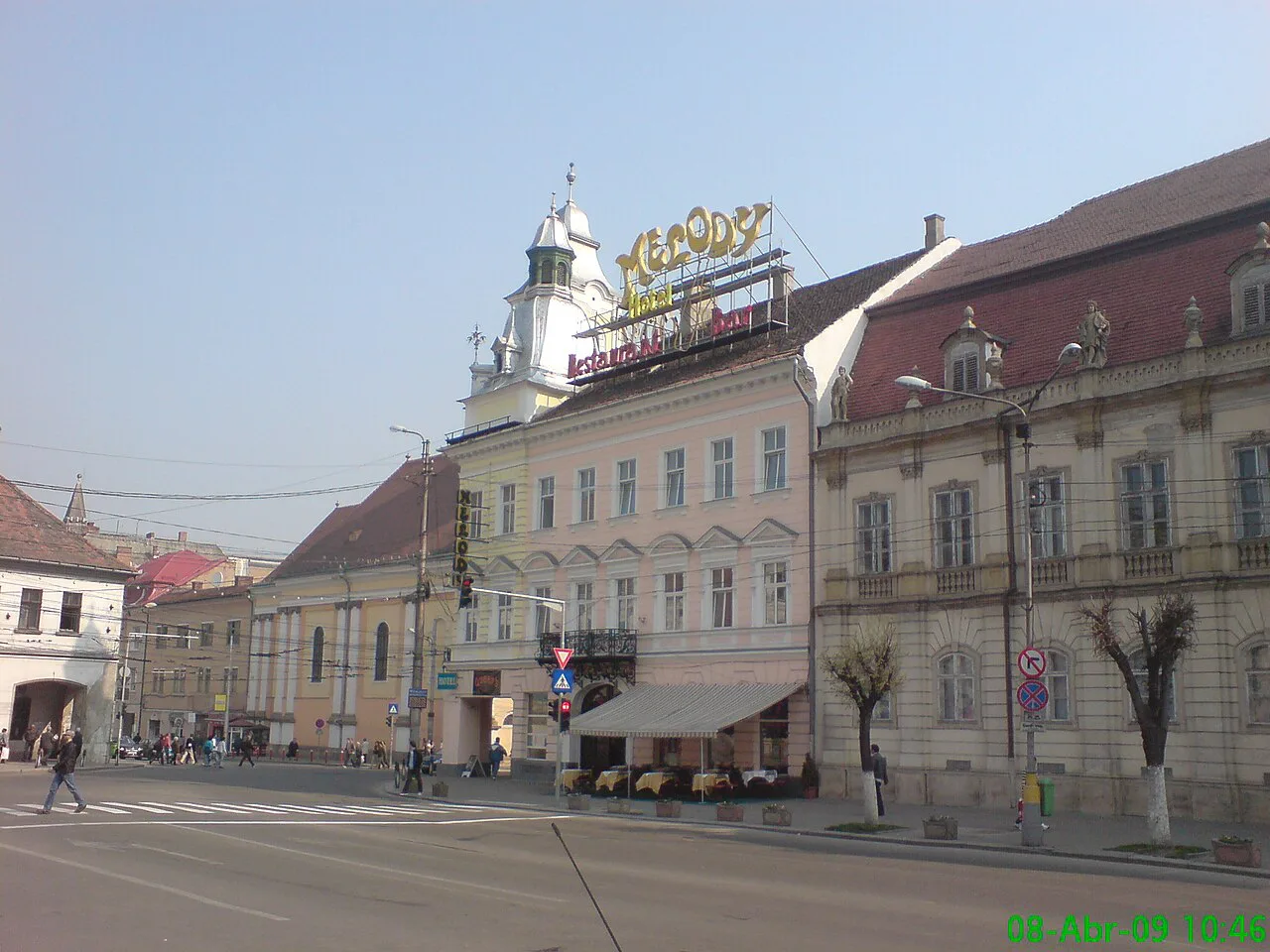
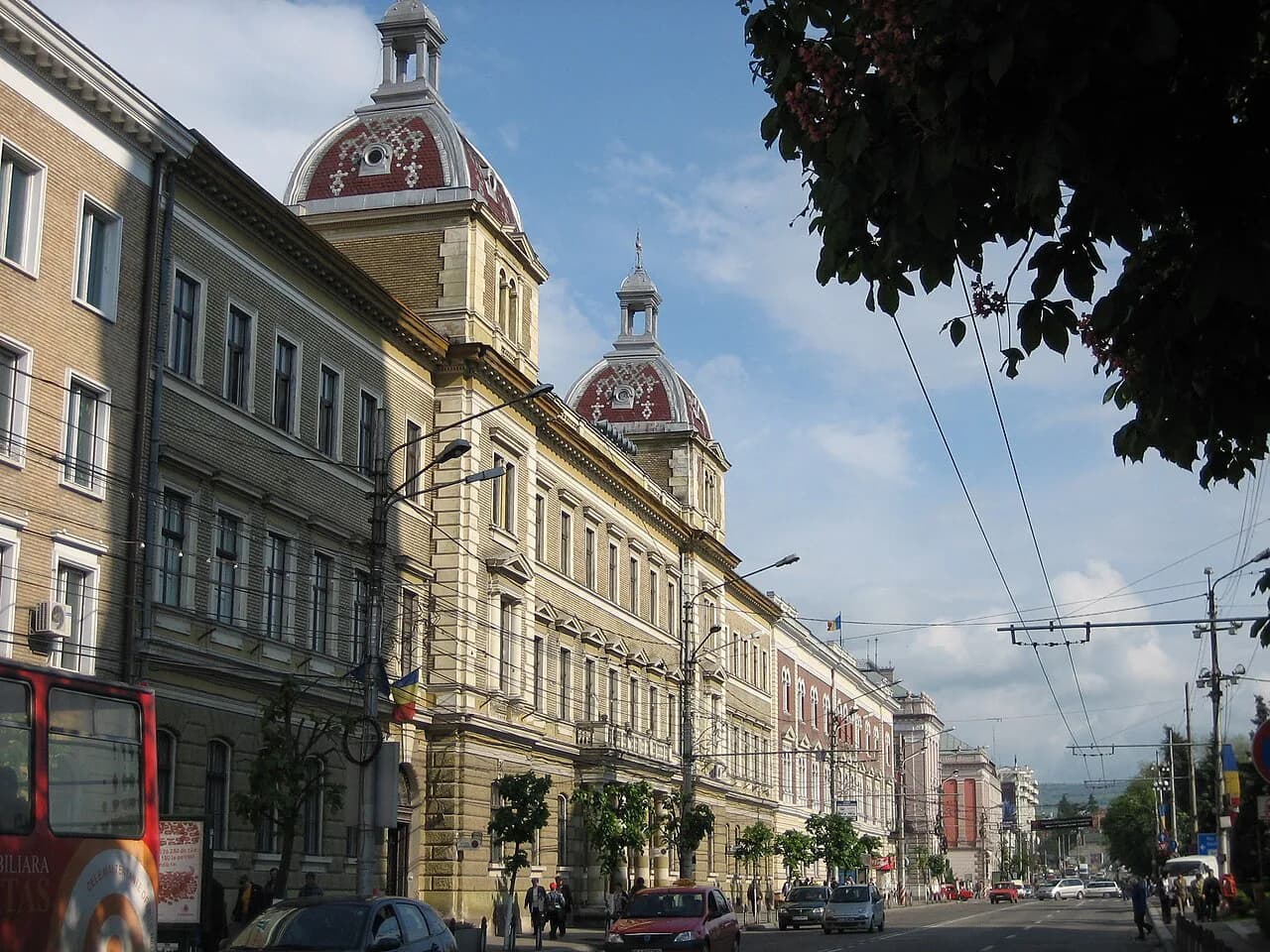
Eroilor Boulevard is the main street the city guide suggests strolling, and it carries you from the Avram Iancu Square end of the centre towards Union Square. Walking it rather than taking a taxi is the point: the architectural mix along these streets is listed as a stop in its own right, so the street is the exhibit. Stop wherever a façade catches your eye.
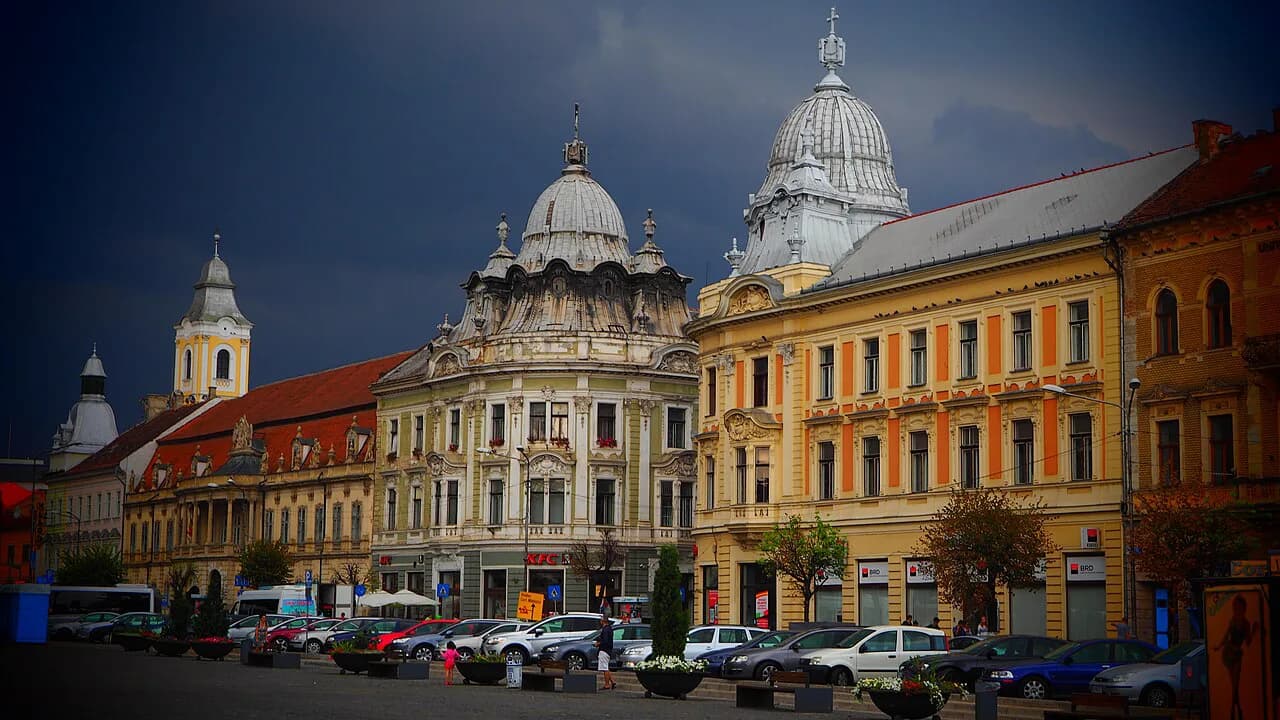
The buildings layer rather than repeat: medieval landmarks sit alongside later work, and the interwar architecture along the Someș River is picked out separately by the same guide. Read the street as a sequence of periods rather than comparing single façades: the guide treats the architectural mix and the interwar riverside buildings as distinct stops.
Union Square (Piața Unirii) and St Michael's Church
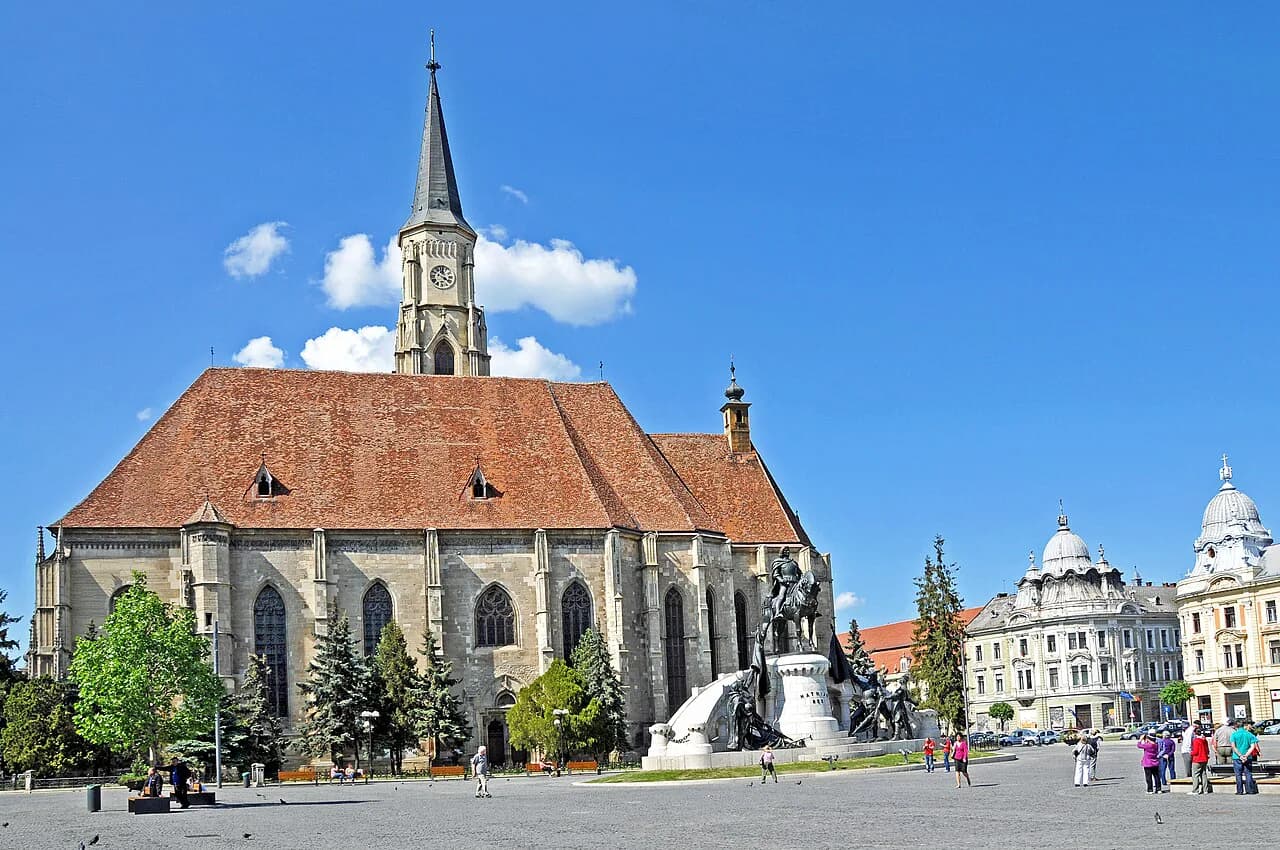
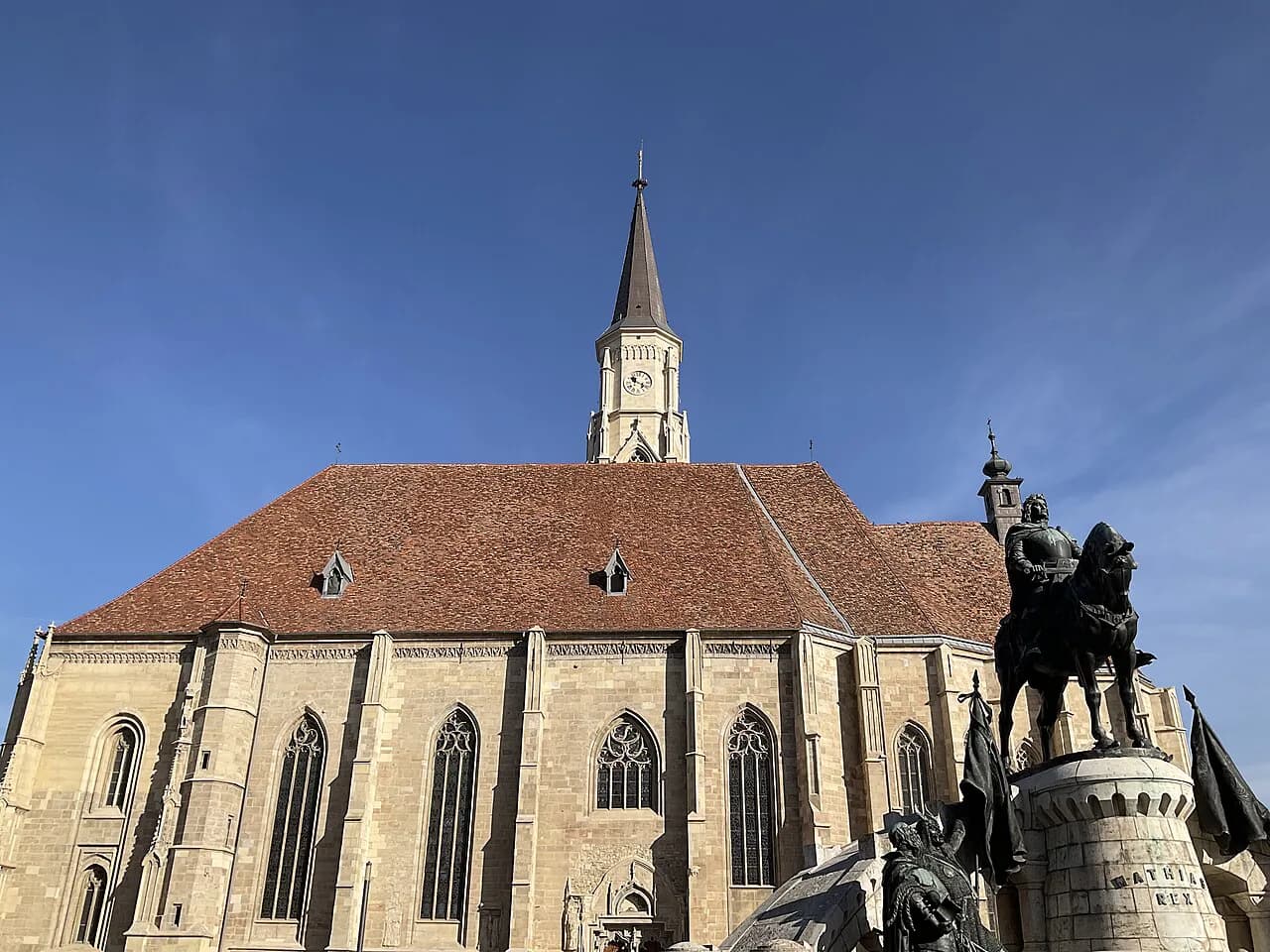
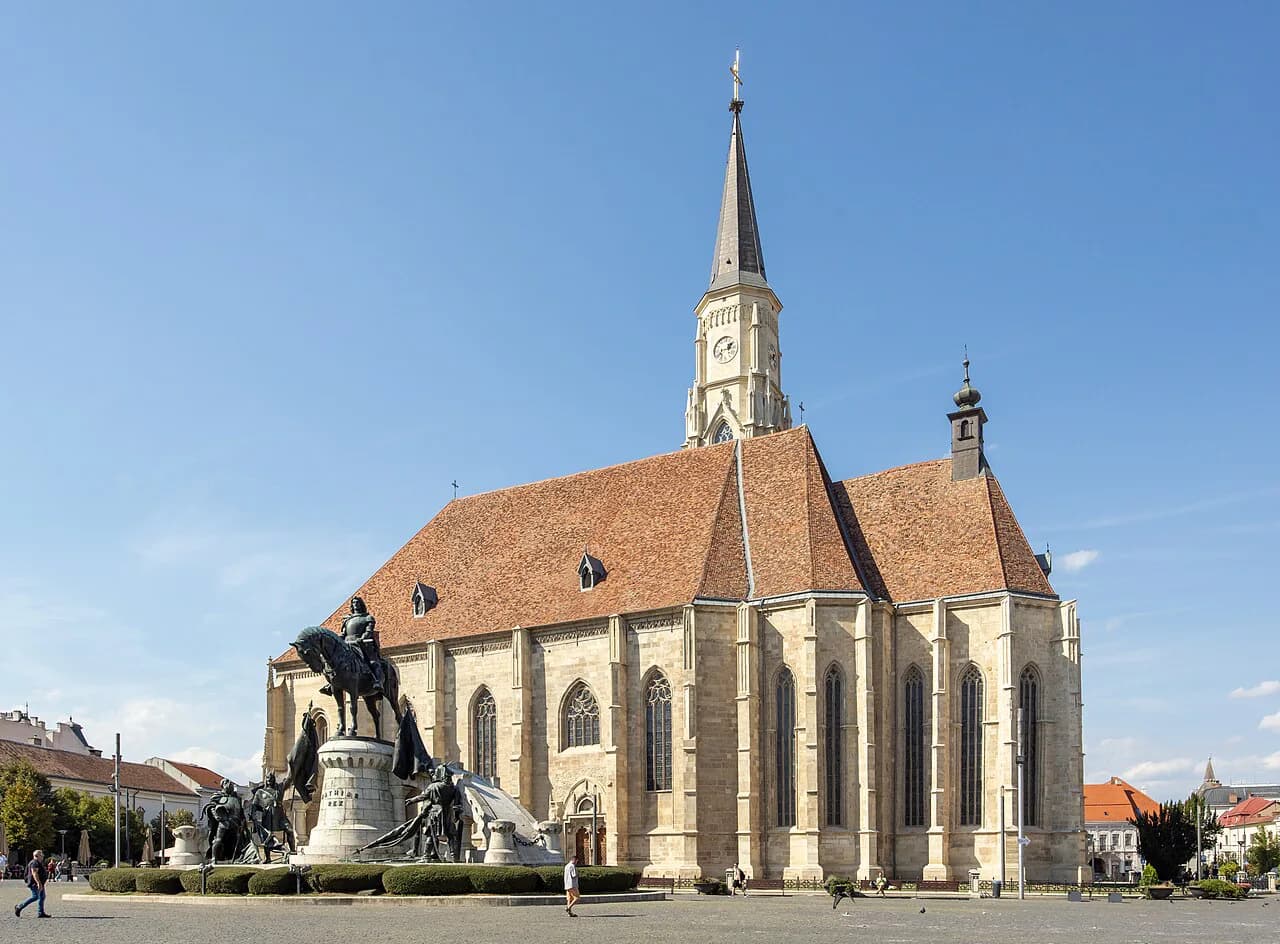
Union Square, Piața Unirii in Romanian, is the heart of the walk, and the city guide pairs the square with St Michael's Church as a single stop. The church is the vertical landmark you navigate by: find its tower and the old town arranges itself around you. Come in on foot from Eroilor Boulevard and the church reveals itself gradually, which beats arriving by car.
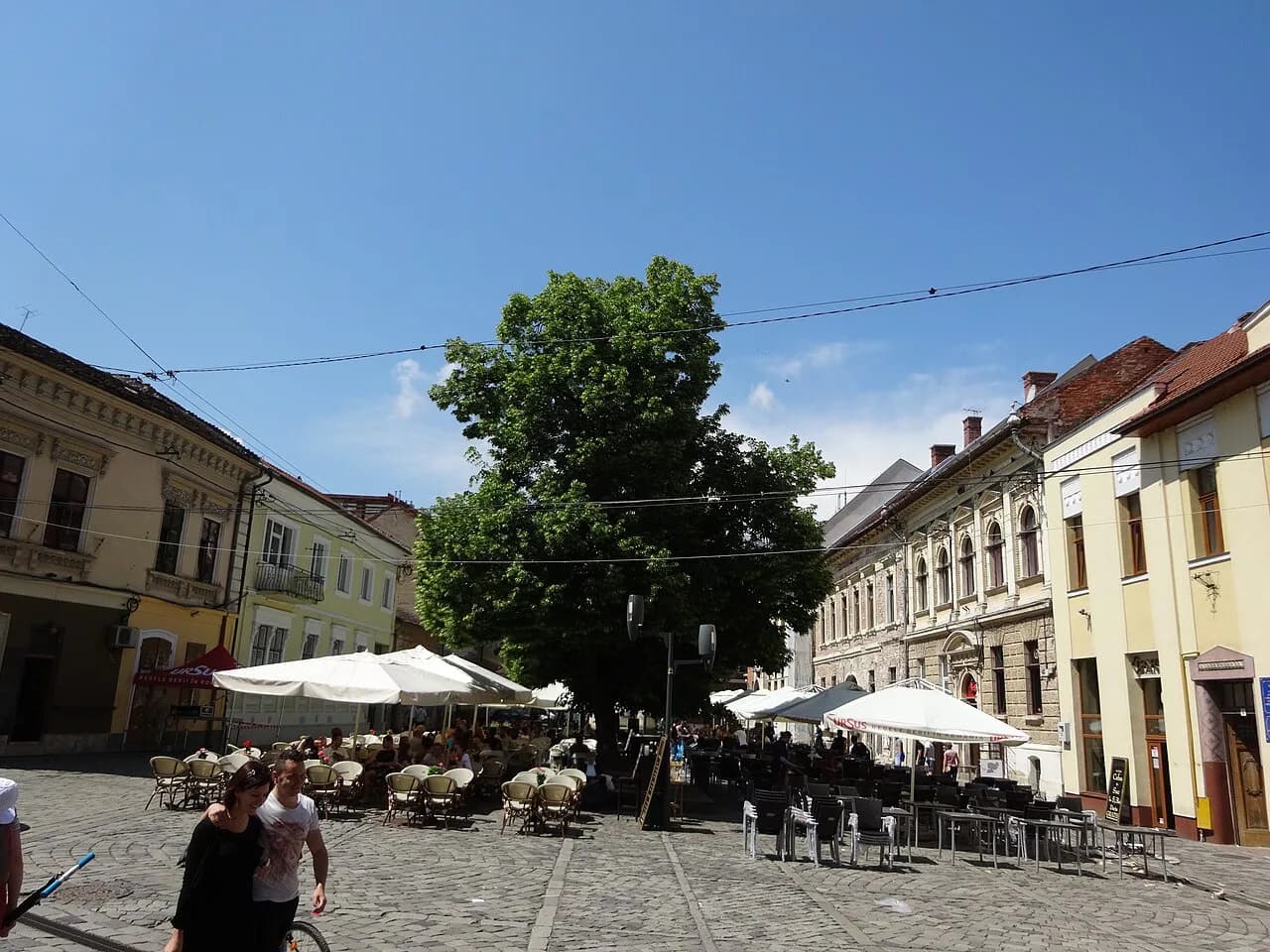
The old town around Piața Unirii rewards a slower pass than the walk between squares, so split the day: cover Avram Iancu Square and the boulevard first, then give the square and church their own time. The Cluj-Napoca Old Town guide sets out what sits within that compact area, and the Things to Do in Cluj-Napoca list adds the stops beyond it. If your schedule is fixed, decide how many days in Cluj-Napoca you have, because the historic core fills an afternoon comfortably.
Matthias Corvinus House: the oldest building in Cluj
The Matthias Corvinus House is described by the city guide as the oldest building in Cluj, which makes it the one address on this walk where the claim is about age rather than style. Put it on your route between the squares and look at the stonework before you read anything else.
For the building placed in a fuller sequence of city sights, the Cluj-Napoca walking tour route threads it together with the squares and the hill in one continuous line. The museums in Cluj-Napoca are the natural follow-on when you want interiors and collections rather than façades.
The Franciscan Church, one of the oldest churches still in service
The Franciscan Church is described as one of the oldest churches still in service, a phrasing worth keeping exactly as it stands: it says something narrower than oldest, and that distinction matters when you set it beside St Michael's. Add it to the walk as a second church stop, close enough to the square to reach without re-planning. Look at how a working church differs from a monument you file past.
Churches in a living city keep their own rhythms, so treat both churches as exterior stops and the day runs smoothly. Seeing the city centre on foot keeps the route simple.
The architectural mix along the streets: medieval to interwar
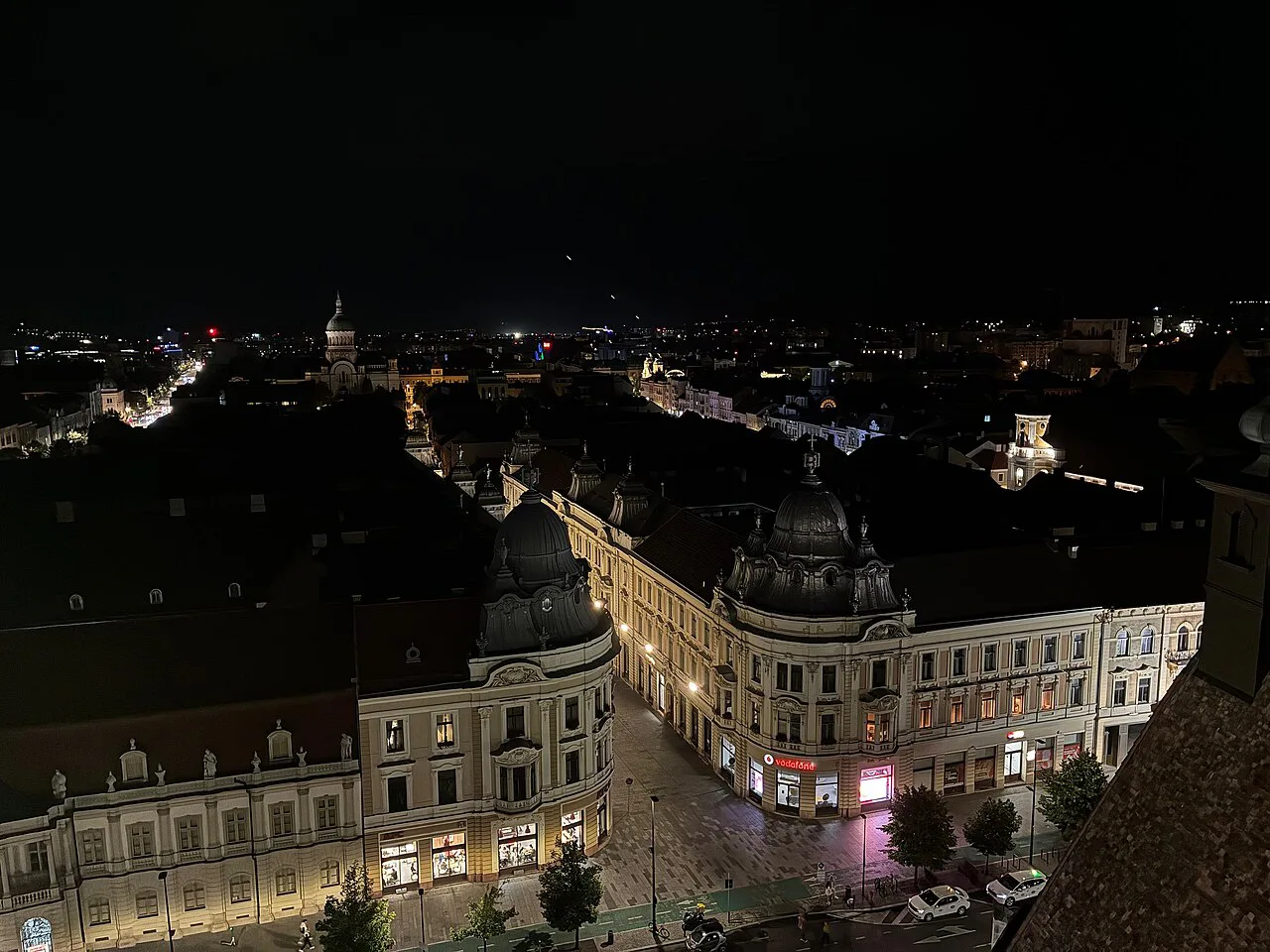
Between the squares the city guide points to interwar architecture along the Someș River and to Central Park as the green break in the middle of the city. Use the river as your cue: once the streets open out towards the Someș, the buildings change character and the walk moves from the medieval core into the twentieth century. Central Park is the obvious place to sit down before the final climb.
This is where a single afternoon can start to feel thin, so decide in advance whether you are walking for buildings or for collections. The Cluj-Napoca itinerary sets out how the stops fit across a day, and the Cluj-Napoca Architecture guide goes deeper on the styles you are passing. With one day in Cluj-Napoca, keep to the spine of Avram Iancu Square, Eroilor Boulevard, Piața Unirii and the hill.
If you are building the walk into a wider break and want to see how the day divides, the one day guide is the place to start. Set the squares as fixed points and let everything else hang off them.
Cetățuia Hill: the view back over the city you have just walked
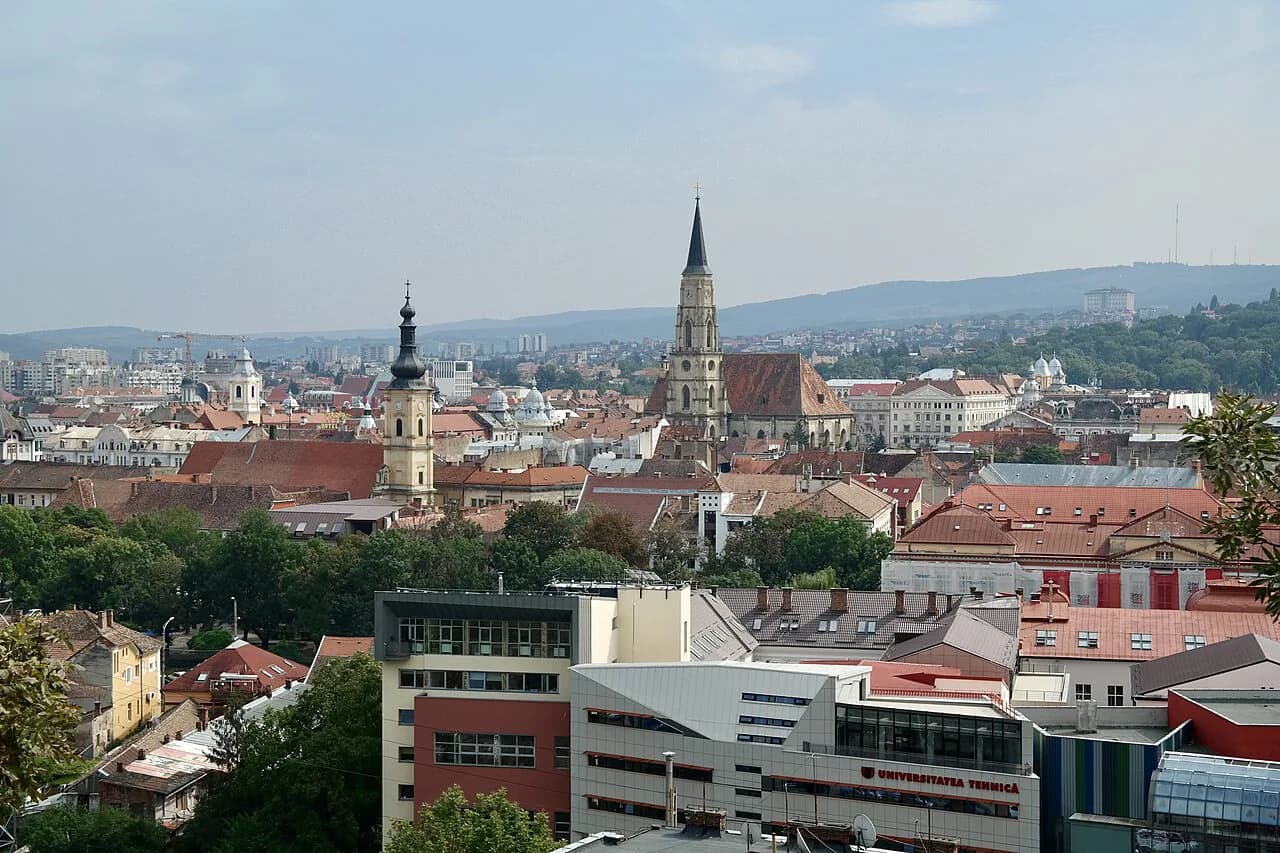
Cetățuia Hill is the place the city guide recommends for admiring the city from above, and it works best as the last stop because the climb hands you the whole route back at once. From up there the squares you crossed and the churches you looked up at line up into a single shape, and the history stops being a list. Go late in the day if you want the light on your side.
Budget time for the hill, and allow for the walk back down before you plan an evening, keeping the descent in daylight if you are unsure of the paths. The Cluj-Napoca Attractions: 13 Visitor Guides hub shows what else can fill the rest of your stay.
Where Cluj-Napoca sits in the wider story
Keep the city's standing simple: the guide calls Cluj-Napoca Romania's second largest city and asks whether it is Transylvania's capital, rather than asserting the title. It gives no founding date and no dynasty-by-dynasty narrative, which is why this walk sticks to buildings and their labels rather than dates you cannot check on a plaque. For the regional picture, the linked history guides are the place to look.
What Cluj offers is its own thing rather than a contest with Bucharest: a compact, walkable historic centre with a university-city feel, and squares whose buildings you can read as periods. Either way, the walk above is the baseline everything else adds to.
Which walk to do first
Do the Avram Iancu Square to Cetățuia Hill walk on your first afternoon, because it gives you the map in your head for everything afterwards. Then choose where to go deeper: the museums, the churches, or the smaller galleries among the cultural stops. That order saves you from wandering the centre without knowing which square you are standing in.
Before setting out, note the two wording traps that will otherwise confuse you on the ground: Cluj and Cluj-Napoca are the same city, and Kolozsvár is its Hungarian name. The route itself fits whatever time you have left after the museums, since it is a walk between public squares and a hill viewpoint.
Explore more Cluj-Napoca guides
Sources
Useful notes for your next trip
Optional updates to our guides.
You might also like
Continue reading
More guides you'll find useful