Constanța Map: Old Centre, Seafront and Port Explained
A visitor's guide to reading a Constanța map: how the old centre, the seafront and casino strip, and the port and harbour fit together, and what a map cannot settle.
On this page
A Constanța map shows a compact, layered city: the old centre sits inland with Piața Ovidiu as its reference point, the seafront and casino strip run along the eastern edge, and the port occupies the north-east. Reading those three bands together tells you which sights group into a single wander and which need a deliberate detour. This guide explains the layout, compares a printable tourist map with an online map for use on the day, and marks the practical details the map cannot give you.
What a Constanța map shows you at a glance
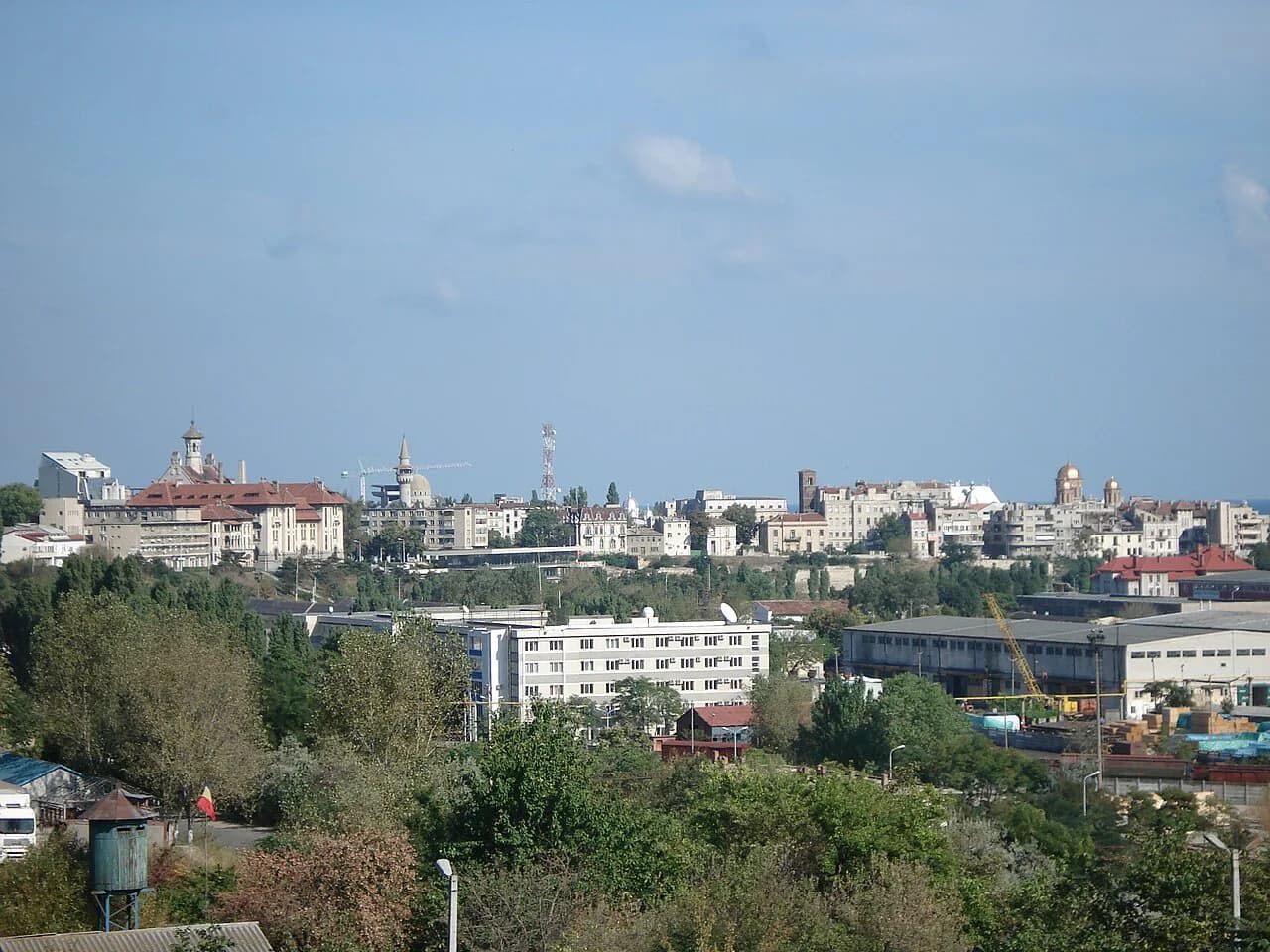
At a glance, Constanța reads as three bands. The old centre lies inland, the seafront and casino strip run along the eastern edge toward the Black Sea, and the port and harbour fill the north-east, shaping how streets and walking routes connect. Seeing the city in these bands helps you decide which cluster of sights to take on first and which parts are a longer walk from the centre.
Maps published for the city show the built-up area, the coastline and the harbour together, which is the key to reading orientation correctly. Use them to place your starting point relative to the sea rather than to memorise turn-by-turn streets, because the shoreline and port give you fixed reference edges that stay clear even on a phone screen. The map sets the geometry; a fuller list of sights to fill it with is where the things to do in Constanta guide earns its keep.
How the old centre is laid out
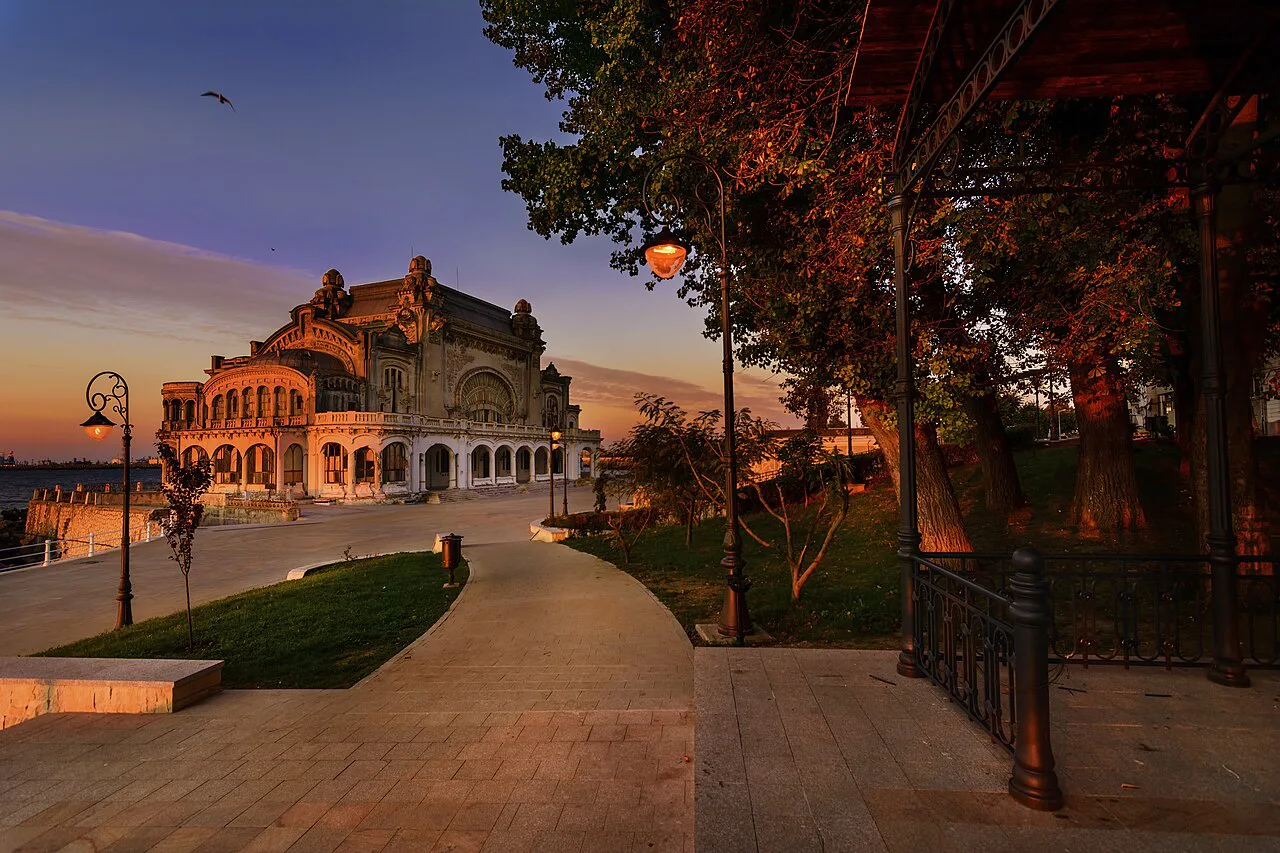
Piața Ovidiu is the reference point for the pedestrian streets of the old centre: orient yourself here and the surrounding lanes fan out in a walkable knot. Treat the square as your anchor for a first loop and note which streets lead back to it, so a wander through the old town never becomes a search for the way out. A dedicated Constanta old town page takes that same area building by building.
Because the centre is compact, the map's value is less about distance than about sequence: which streets sit side by side and which landmarks bookend a loop. Work out one inland circuit around Piața Ovidiu and keep the seafront for a separate pass, rather than zig-zagging between them. If you would rather follow a set route than invent one, a Constanta walking tour is the safer way to cover the same ground.
The seafront edge and the casino strip
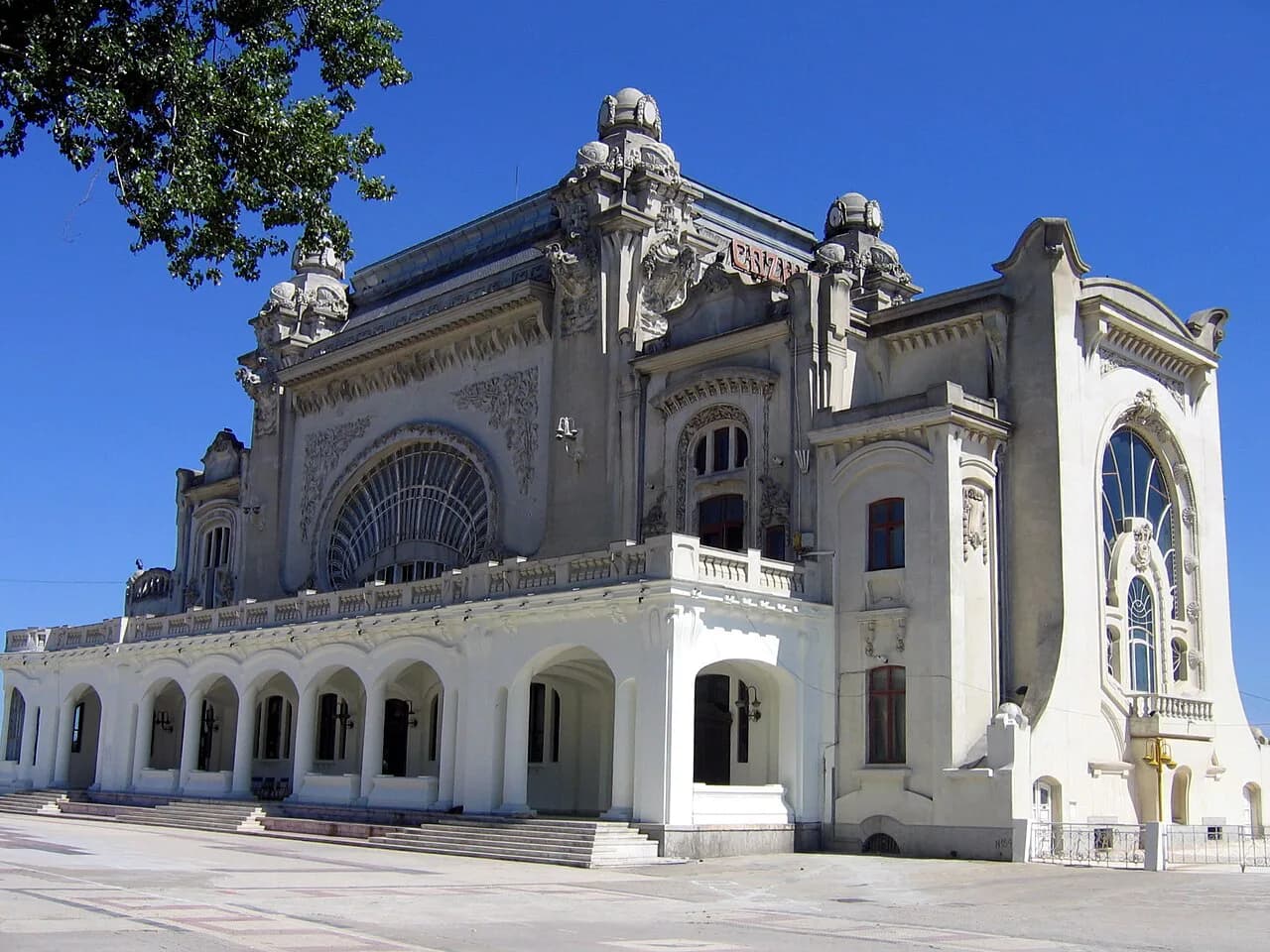
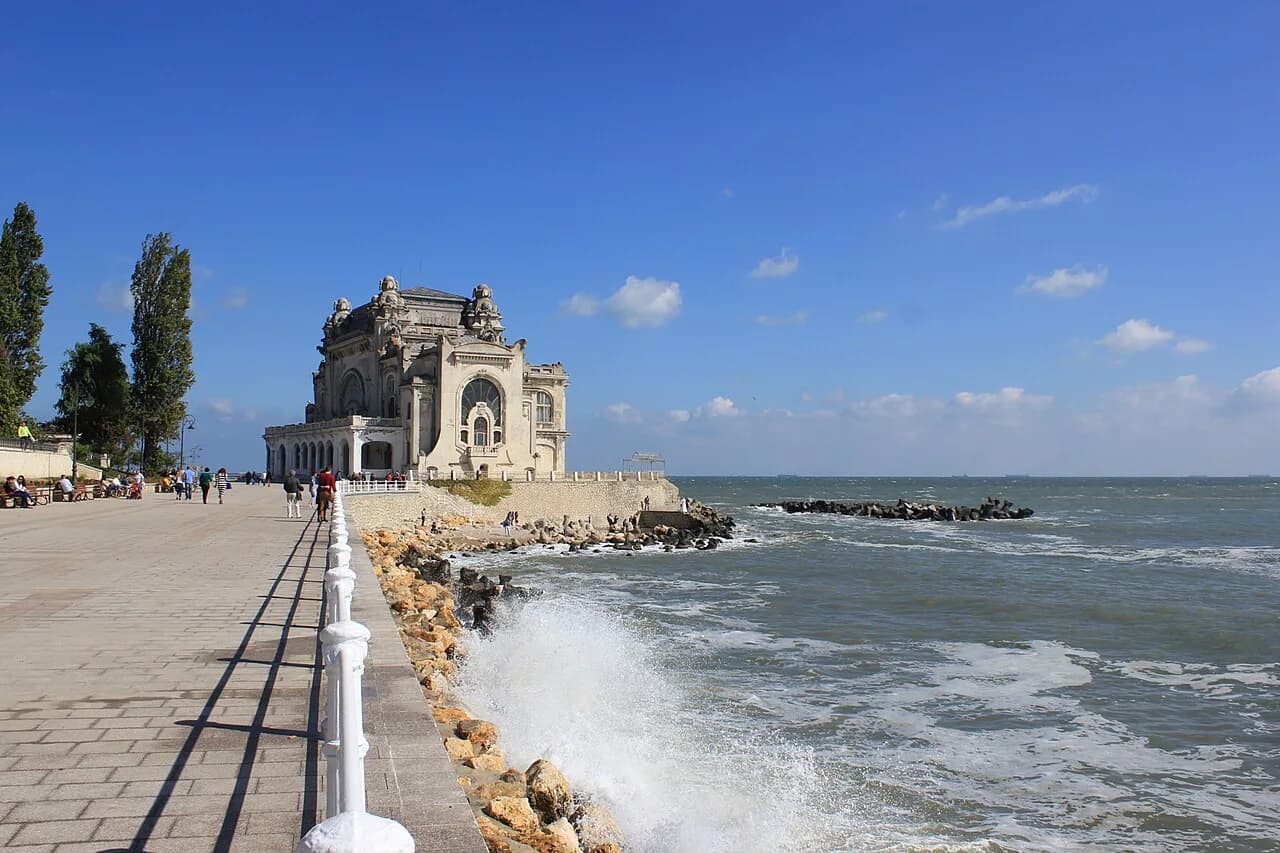
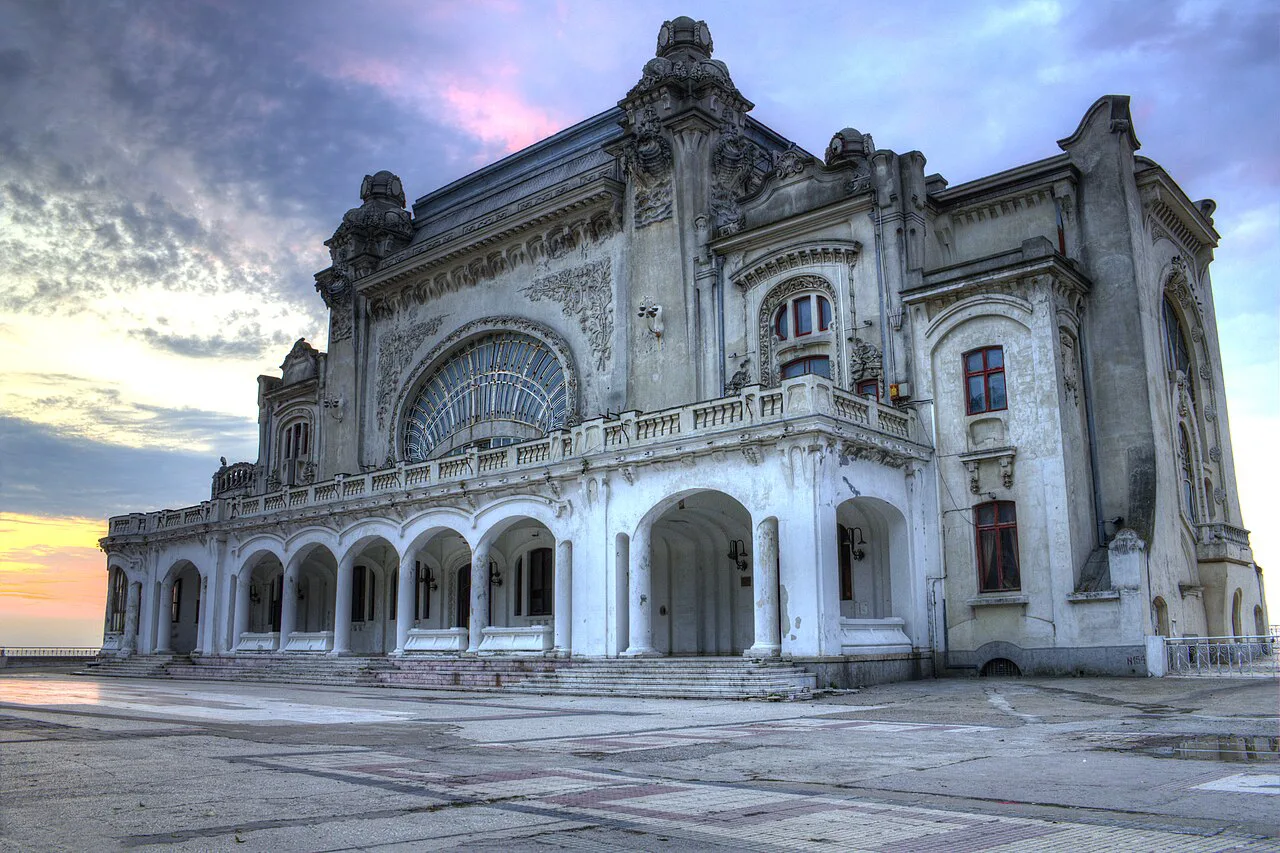
The seafront sits east of the old centre, with the promenade and the casino building marking the transition from streets to shore. On the map this edge is easy to identify: the built grid stops and the water begins, so the casino strip gives you a clear boundary against which to judge where you are. That matters when you want to end a walk at the water rather than double back through the same lanes.
It also tells you how to organise a day: old centre first, then a single outward leg to the seafront, rather than treating the waterfront as an afterthought. The same edge explains why the eastern side feels like a natural finishing point for a route built around the centre. A museum stop can be slotted into the inland half before you head for the shore.
Where the port and harbour sit, and why they cut off routes
The port and harbour occupy the north-east, and that placement is the single most useful thing a map tells you about walking in Constanța. Harbour land is working ground, not connective tissue, so the shoreline route you might imagine along the top of the city breaks where the port boundary begins. Read the map's coastline carefully: what looks like a continuous walk on a simplified pin map can funnel you back inland instead.
Plan routes that respect those breaks, and pick your start and finish points with the harbour edge in mind rather than relying on pins dropped at random. This is where a printable tourist map earns its place: large enough to show the shape of the coast and the port together, it stops you committing to a route that the map's geometry quietly forbids. The printable tourist map can be downloaded and studied before you set out.
Placing Constanța on the wider county and Black Sea map
Zoom out and the same maps show Constanța against the wider county and the Black Sea coast, which is what you want when planning how the city sits in Romania and how the coast runs north and south. A county or regional map is an index of towns and links; the city map is the tool you actually navigate with. Use the wide view once, for orientation, and then switch to the detailed one.
At national scale the country map indexes Constanța among Romania's cities, while a separate Black Sea view frames the coast itself. Treat the wider map as context and the city map as the working document, so you do not spend the day scrolling a national view for streets that only a local map can settle.
Printable tourist map versus online map on the day
A printable tourist map gives you the whole shape of the centre, seafront and port at once, which is exactly what an orientation plan needs. An online map, by contrast, wins on search: it finds a named street or square quickly and shows your position. The sensible approach is to use the printable map to choose your loops and the online map to confirm details once you are standing on the pavement.
Online mapping handles the practical questions well but hides the large-scale geometry when you zoom in, so check the coastline and port together before you trust a route. Search results for a city map in a third-party tool also need cross-checking against a proper city map rather than treated as the final word. The history of what you are walking through is better read before you go than squinted at on a phone.
What the map does not settle
A map will not tell you when a site opens, what a ticket costs or when the next bus leaves, and that is true of every map of Constanța, printed or digital. Treat transport timing, opening days and entry prices as details to look up ahead of your trip, not as facts to infer from lines and pins. If you are weighing the resort strip beside the city against a day in the old centre, Mamaia is the outlier the city map barely covers.
The same caution applies to seasonal services and any special closures: a street that exists on every map may still have a gate or an entrance you need to find on the ground. Use the map to decide where to go, and confirm the details of what you plan to enter closer to the day. That keeps the map doing the job it does well, without asking it to answer questions it cannot.
Build your day around the map's three bands
Start with the old centre around Piața Ovidiu, then take the seafront as one deliberate outward leg, and treat the port as a boundary rather than a route. That three-band reading is the most useful thing a Constanța map gives you, and it is enough to plan a coherent day without extra detail on the ground.
Print or download the wide tourist map for the shape of the city, keep an online map for finding named places once you are there, and check timetables, opening days and tickets before departure. With that division of labour, the map does the orienting and the practical checks do the rest.
Explore more Constanta guides
Frequently Asked Questions
Where is Romania located on a world map?
Romania sits in south-eastern Europe, with Constanța on its Black Sea coast in the east of the country. A national map of Romania places Constanța among the country's larger cities and shows the coastline running north and south from it. Use that wide view for context, then switch to a city map for streets and landmarks.
In which country is the Port of Constanța located?
The Port of Constanța is in Romania, on the Black Sea coast at the north-eastern edge of the city. On the map it is the large harbour area that interrupts the shoreline walk, so plan routes that go around it rather than along it. The port is working ground, not a through route for a walking day.
Sources
Useful notes for your next trip
Optional updates to our guides.
You might also like
Continue reading
More guides you'll find useful