Tropaeum Traiani at Adamclisi: Roman Monument, Fortress and Museum
What the Tropaeum Traiani at Adamclisi is, what the reconstructed Roman monument and fortress show, and how the site museum displays the original carvings.
On this page
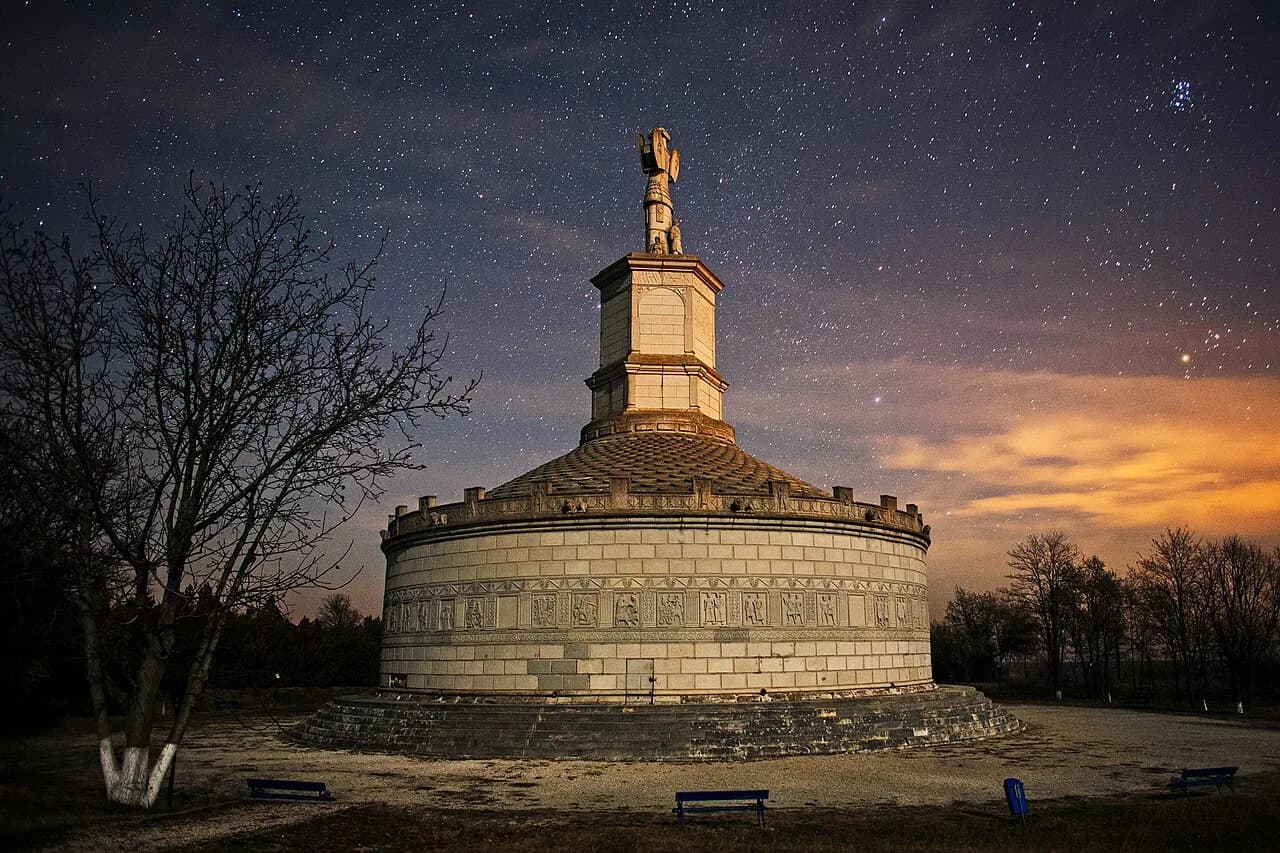
The Tropaeum Traiani at Adamclisi is a Roman commemorative complex in three parts: a triumphal monument on a hill, a walled Roman town in the valley below, and a site museum in the village itself. The monument was raised by the emperor Trajan between 106 and 109 and dedicated to Mars Ultor, and the sculpted reliefs you see on it outdoors are copies.
Plan on half a day here rather than an hour, because the three elements sit apart on open ground and each rewards a slow look. This guide separates what is reconstructed from what is original, gives the distances between the monument, the fortress and the museum, and explains how the approach from Constanța works. It is one stop within the wider Roman and Greek archaeology of Dobruja.
What the Tropaeum Traiani is and where Adamclisi sits
Adamclisi is a village in inland Dobrogea, in Constanța county, with the archaeological complex spread around it rather than concentrated at one gate. The triumphal monument stands on Dealul Monumentului, the fortress lies in the Urluia valley, and the museum occupies a building in the centre of the village.
The complex is a Roman story rather than a medieval one, so leave Dracula and Vlad III out of your expectations here. What you get is Trajanic stonework, a Roman street plan and a museum of excavated objects, all in a landscape of low, bare hills.
The triumphal monument on the hill
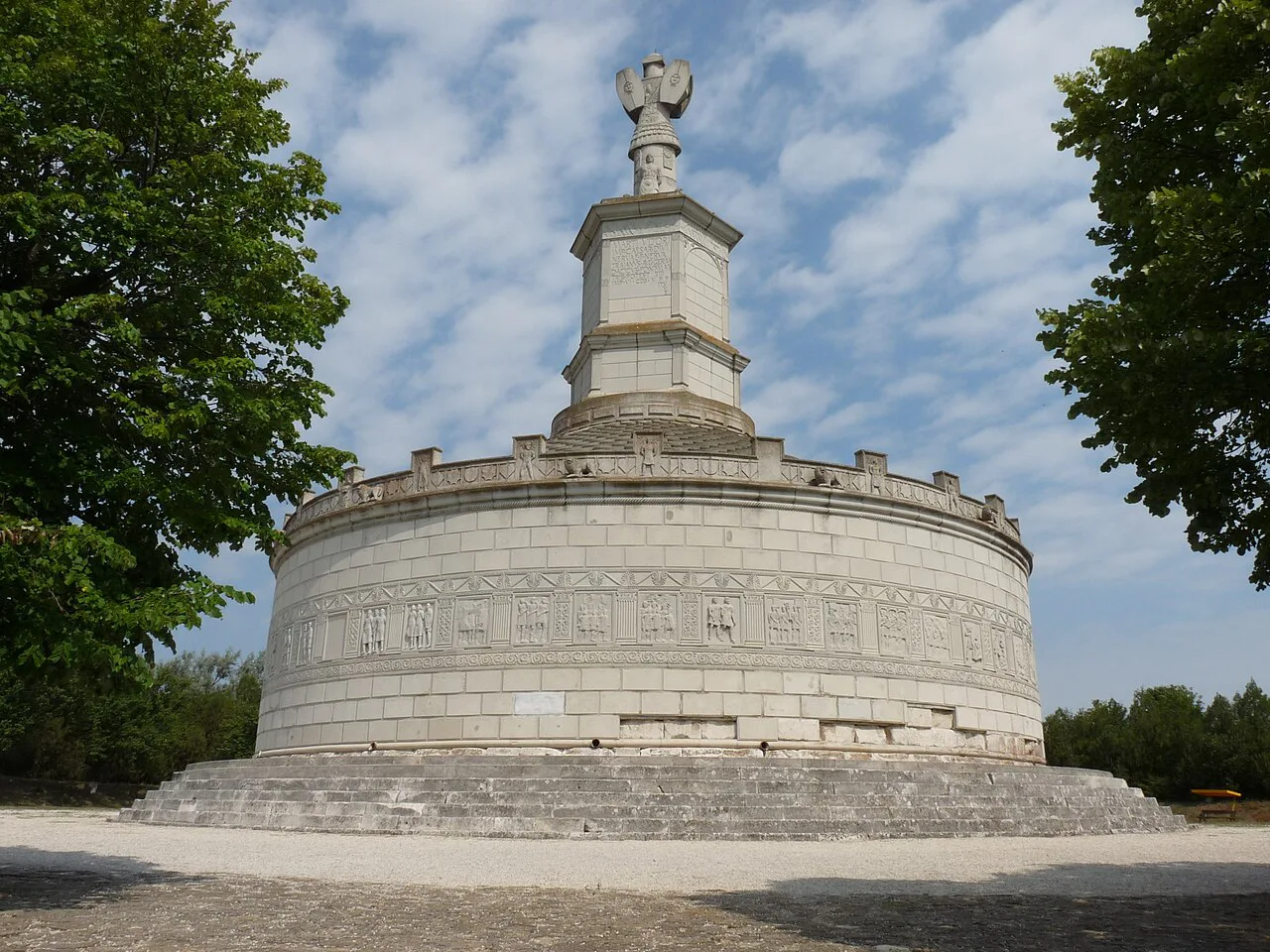
Trajan built the monument between 106 and 109, after the hard-fought battles at Adamclisi against the Dacians and their allies, and dedicated it to Mars the Avenger. It formed part of a larger commemorative ensemble that also included a mausoleum and a funerary altar.
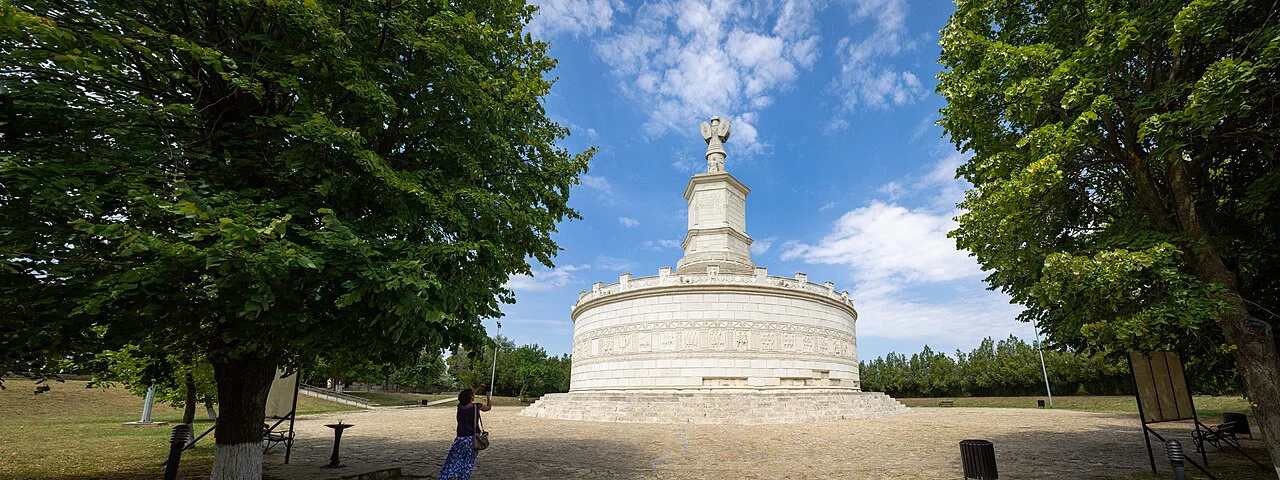
The circular structure you walk around today is the restored monument, and its carvings are not the originals. The archaeological documentation of the site sets out that the museum was built above all to hold the bas-reliefs and the colossal trophy from the monument.
Read the outdoor sculpture as a legible account of the monument's design, then go to the museum to see the pieces themselves. That order makes the second visit feel like the point of the trip rather than an afterthought.
The reconstructed monument, the trophy and the reliefs
The reconstruction gives you the monument's silhouette on the hill, which is the view photographs tend to miss because it only reads properly from a distance. Time it for the walk up from the car, then circle the monument on foot to see how the reliefs wrap around the drum.
The stone has taken punishment over the centuries from earthquakes and attacks, which is exactly why the museum route matters. Comparisons with the Tropaeum Augusti in France are drawn in the academic literature, but for a visitor the practical point is simple: exterior for shape and setting, interior for carved detail.
The fortress: via principalis, gates and aqueduct
The Roman town of Tropaeum Traiani was laid out on Trajan's orders for the families of veterans of the Dacian wars, and its main street, the via principalis, ran between the east and west gates. Even now that street is the most impressive part of the ruins, and a drainage channel runs down its centre.
Look for the aqueduct bonded to the south wall of the channel and faced in square brick, which carried water from a cistern near the west gate over roughly 200 metres. A statue base of Trajan found inside the walls carries an inscription dated 116, naming the townspeople as Traianenses Tropaenses.
The site lies on a lower hill in the Urluia valley, ringed by higher ground that gave it natural protection. Walking the length of the via principalis takes minutes, but the ground is uneven and largely unshaded, so sturdy shoes matter more than a detailed plan.
The mausoleum and the military altar
The mausoleum was built in memory of a Roman general who died in the winter fighting of 101–102, and it had a stone and timber substructure. Near it are the remains of a military funerary altar commemorating the roughly 3,800 legionaries killed in the battle, with their names set out by unit. Both were built during 102, according to the Constanța museum researcher responsible for the Tropaeum Traiani excavation.
These are the quietest and least legible parts of the ensemble, and the altar in particular means little without its inscription. If you are short of time, the monument and the museum carry more of the visit; if you have the half-day, walk out to the funerary group so the whole commemorative scheme makes sense.
The site museum in the village
The museum sits in the centre of Adamclisi and opened in 1977 alongside the restoration of the triumphal monument. Its building was designed first of all to display the monument's bas-reliefs and colossal trophy, alongside original fragments of funerary inscriptions and the military altar.
Excavation at Adamclisi began in 1892, and the finds from the fortress are displayed in chronological and thematic order. On the upper-level corridor, cases hold objects of national and international heritage importance, including imported goods, so allow time for that floor rather than treating the museum as a quick shelter.
How the three parts sit on the ground
The fortress stands about 600 m south-west of the present village and about 1,500 m from the triumphal monument, on the Urluia valley floor. That gap is the single most useful fact for planning: you will drive or walk between the monument and the museum, not step from one into the other.
A sensible order is monument first, while the light is flat and the hill is quiet, then the fortress on the way down, then the museum with the originals. Keep water and a hat in the car, because there is no shade to retreat to between the parts.
Getting to Adamclisi from Constanța
Adamclisi is an inland stop in Constanța county, well away from the coast road, and the approach is by road. A car is the practical choice and buys you the ability to move between the monument, the fortress and the village museum without relying on anything you have to time.
If you are working from Constanța, treat Adamclisi as one half of a Roman day and pair it with the Greek city ruins at Lake Sinoe. Histria: the Greek city ruins on Lake Sinoe gives you the layout, gates and shore setting for the second stop, and the two together cover both the Greek and Roman chapters of the region.
Rural bus timetables in this part of Dobrogea change with the season and are not something to plan around without confirming them, so check locally before you commit to a car-free day. Fuel up and buy water before you leave the bigger towns.
Time on site, walking and standing
Budget around three hours for the complex: an hour around the monument and its hill, forty minutes in the fortress, and the rest in the museum. Most of that is spent standing or walking on uneven ground, with the monument and fortress outdoors and the museum the only enclosed space.
The walking is short in distance but repetitive on the feet: gravel paths, exposed Roman paving and steps. Anyone with limited mobility will find the museum the easiest of the three and the fortress the hardest, so plan the order around that.
Summer heat and wind on the hillside
The monument stands on an exposed hill and the fortress on open valley ground, so the site is hot in summer and windy for much of the year. Go early in the day, carry more water than you think you need, and wear a hat that stays on.
Because the reliefs outdoors are casts, there is no reason to linger over them in uncomfortable weather; do the monument quickly in the heat and save the original carvings for the museum. In cooler, clearer conditions, the walk out to the mausoleum and altar is the part to give extra time.
Tickets and opening days: where to check
Ticket prices, opening hours and closing days for the monument, fortress and museum are not given in the sources for this guide, so take the price and the day from the site operator when you plan your date. The archaeological documentation describes how the museum was built to hold the monument's carvings and trophy.
Cost in lei (RON) at the gate, and note that an outdoor monument and a museum may keep different hours, so a single arrival time does not guarantee all three parts. Confirm the museum first, since it holds the originals and would be the greater loss if it were shut.
Is the Tropaeum Traiani worth the drive from Constanța?
Yes, if you want Roman stonework in the round rather than one sculpture behind glass. The combination of a reconstructed monument, a readable street plan and a museum of originals is what sets Adamclisi apart from a single ruin, and the trip works best as a half-day paired with the Greek ruins at Histria.
Go by car, start at the hill, finish in the museum, and confirm the ticket price and the museum's opening days before you set off. The rest you can work out on the ground.
Explore more Constanta guides
Sources
Useful notes for your next trip
Optional updates to our guides.
You might also like
Continue reading
More guides you'll find useful