Sarmizegetusa Regia: Visiting the Dacian Capital in the Mountains
Sarmizegetusa Regia in the Orăștie Mountains is the ruined Dacian capital, with its sacred zone, temples and fortress walls, reached by car.
On this page
Sarmizegetusa Regia is the ruined capital of the Dacians, a political, religious and military centre that flourished from the first century BCE until the Romans conquered it in 106 CE. It sits high in the Orăștie Mountains, and the visit is as much about the drive up the Orăștie valley and the short walk to the entrance as about the stones themselves. This guide covers the sacred zone, the fortress and the civilian settlement, then separates the mountain site from the Roman city of the same name 40 km away.
Romania has two Sarmizegetusas and they are not interchangeable. Sarmizegetusa Regia is the Dacian stronghold in the mountains, where the last king, Decebalus, took his own life rather than be captured; the Roman victors then razed the site. Ulpia Traiana Sarmizegetusa is the colonial city Trajan founded on flat ground in the Hațeg Basin after the conquest, and it has its own forum, amphitheatre and museum. Decide which one you want before you set out, or plan for both if you are driving.
Sarmizegetusa Regia or Ulpia Traiana Sarmizegetusa?
The two sites lie about 40 km apart and reward different expectations. Sarmizegetusa Regia gives you mountain forest, a rough approach road and scattered sanctuaries explained by signboards; Ulpia Traiana gives you the ground plan of a Roman city laid out on a grid, with an amphitheatre whose seating banks are still easy to read. If you have time for one, pick the mountain site for atmosphere and the Roman city for legible urban planning.
The names are close enough to confuse a satnav. Sarmizegetusa Regia is reached from the Orăștie valley, not from the village of Sarmizegetusa in the Hațeg Basin where the Roman ruins lie. The Roman city was founded by Trajan in 106 AD and served as the province's capital until around 168 AD, when administrative reforms moved some functions to Apulum, modern Alba Iulia.
The three parts of the Dacian capital
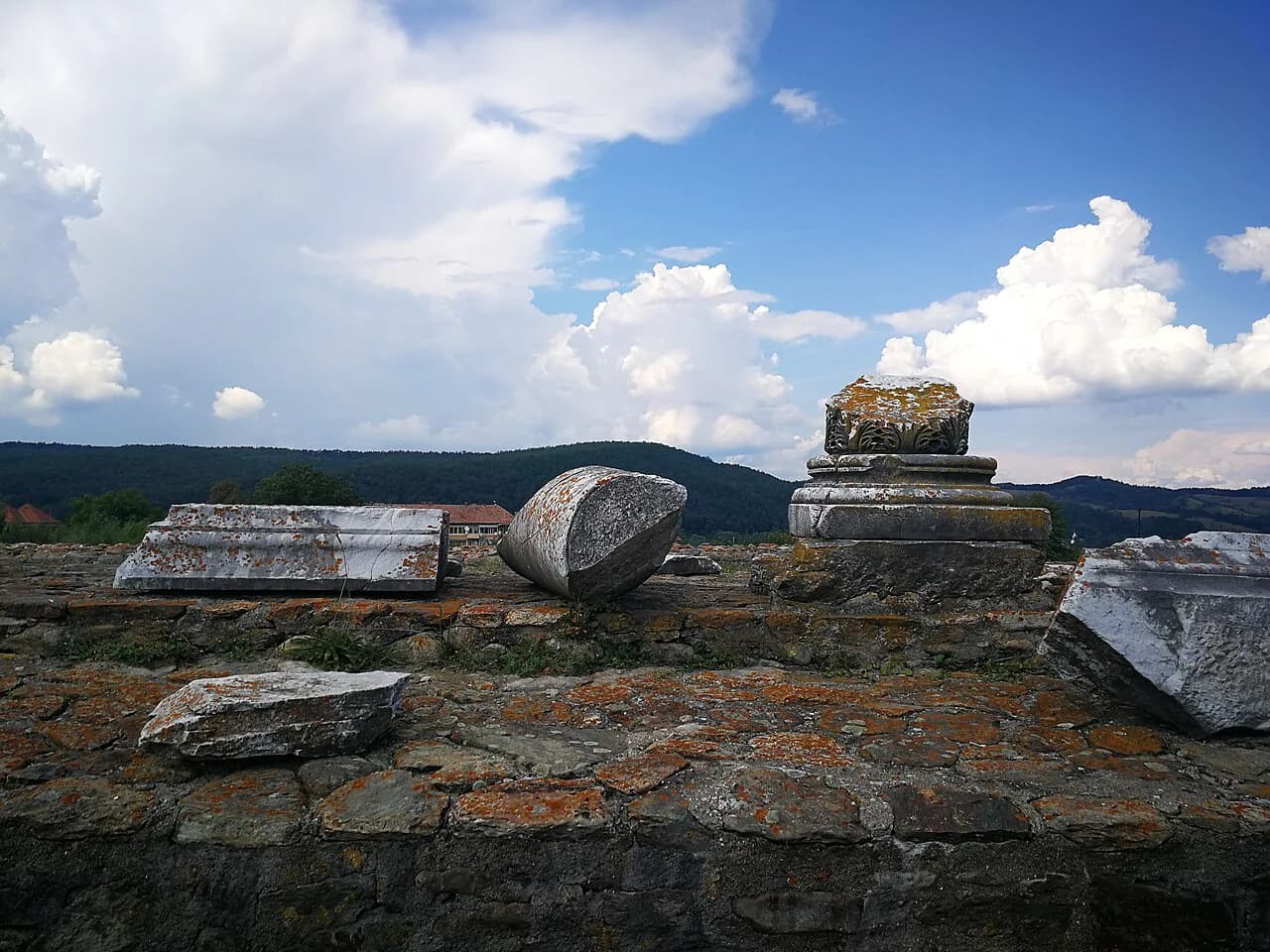
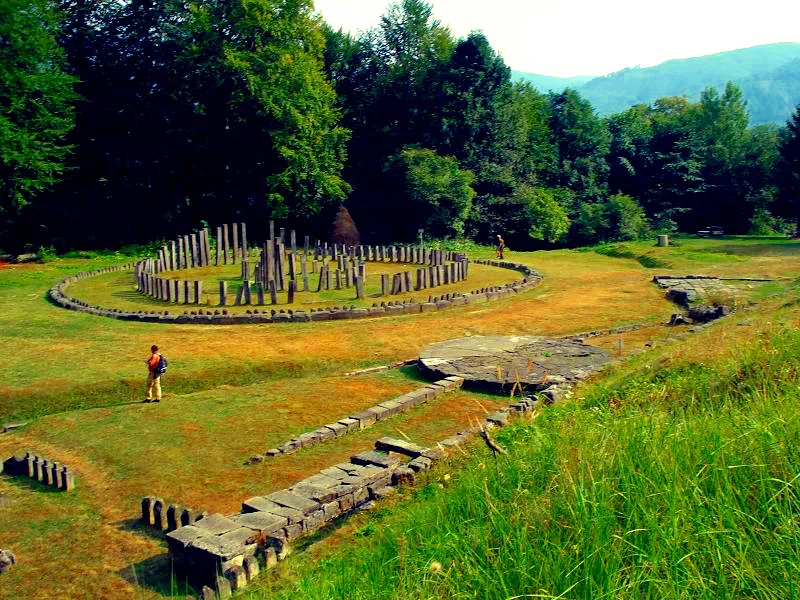
Sarmizegetusa Regia divides into three sections: the civilian settlement, the fortress and the sacred zone. Visitors can see two of them. The fortress keeps mostly its walls, because the Romans destroyed much of the rest after defeating the Dacians, and a stretch of the Dacian road runs over the top of the mountain on which the capital was built.
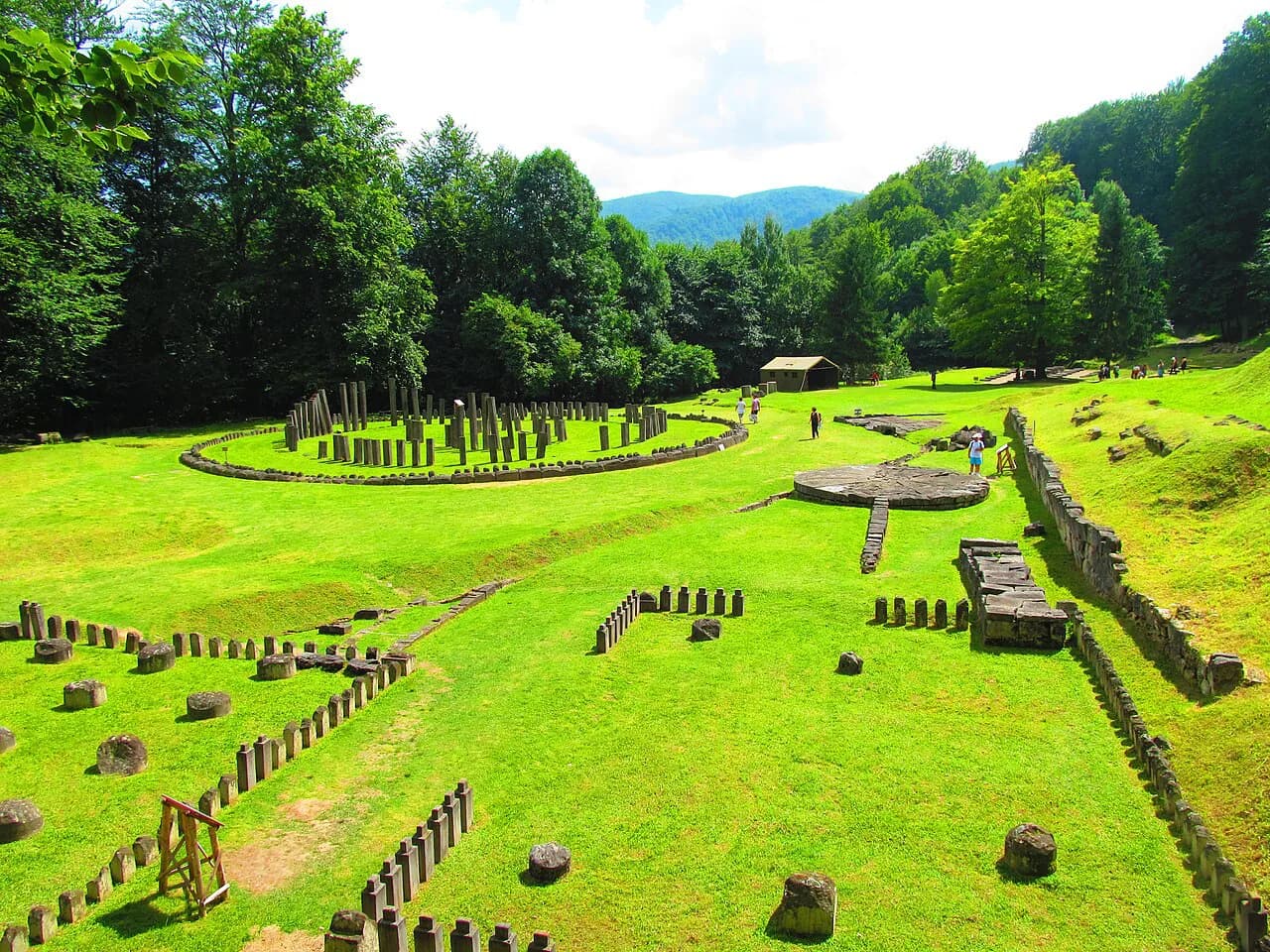
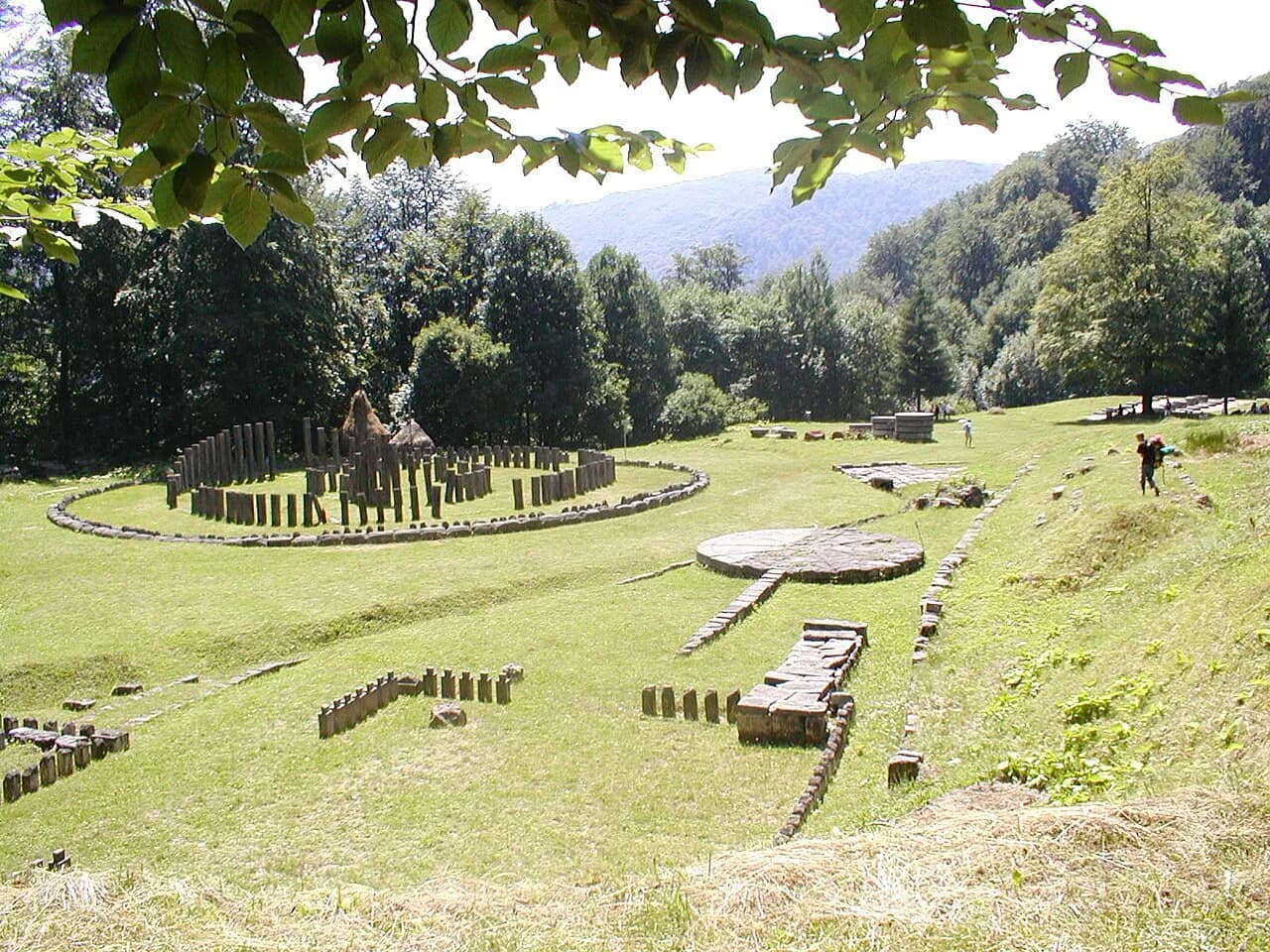
Treat the sacred zone as the centrepiece of the visit. The rectangular temples sit closest to the approach, followed by the newer temples around the altar and the large circular sanctuary. Helpful signboards carry drawings of how the structures looked, which matters because the Romans left little standing and the temples were largely reduced to rows of stone blocks.
The sacred zone, element by element
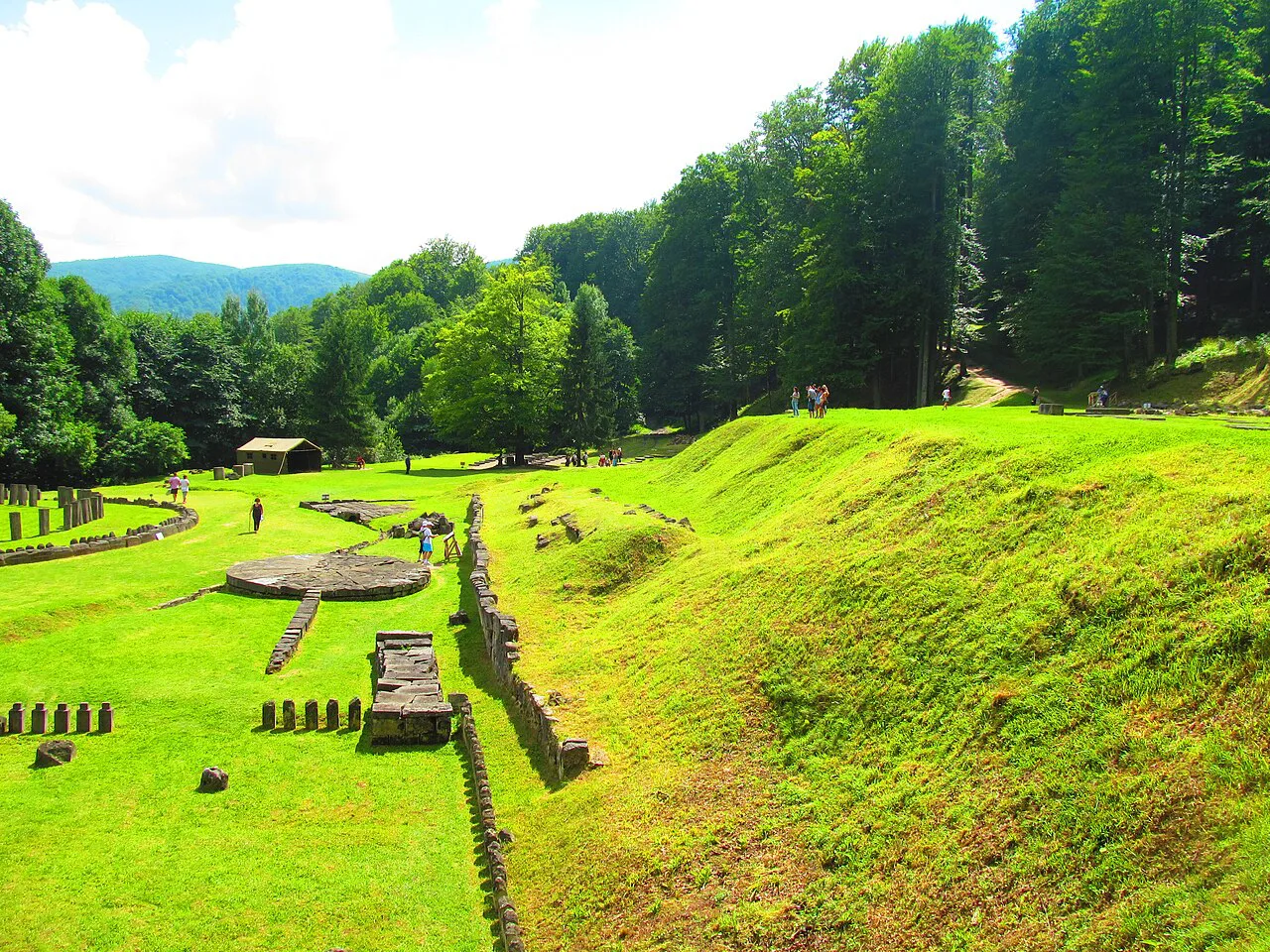
Start with the rectangular temples, the oldest in the sacred zone. Their stone platform is still buried, accessed originally by stairs, with wooden columns standing on limestone drums and a roof above; iron and ceramic artefacts were found nearby during excavation. A smaller rectangular sanctuary stands beside the larger one, so look for two footprints rather than one.
The circular andesite altar is the object most visitors remember, a disc with rays cut into it, described as looking like a giant pizza with the slices already cut. Sacrifices were made here, marble pieces were placed near the outer edge, and a cut in one ray drained liquids poured over the altar into a stone sewer that still runs nearby. The large circular temple close by holds several rings of andesite blocks and pilasters, and its central room had an apse aligned to the solstices.
Look for the large rectangular temple the Dacians were still building when confrontation with the Romans began; it had six rows of ten columns, though little of the andesite structure survives. A small hill within the sacred zone gives the best overview of this section, and it is worth climbing before you leave rather than after.
Reading the ruins and walking the fortress
The signboards carry the visit. With the temples destroyed, the drawings of platforms, wooden columns and conical roofs are what turn rows of stone into architecture, so read them at each cluster rather than hurrying past. The reconstruction of the large circular temple suggests a conical roof, and the solstice alignment of its apse is easier to understand from the panel than from the stones.
Walk the stretch of Dacian road and the fortress walls on the mountain top, which give the site its shape. The civilian settlement is the section you cannot properly see, so do not spend time hunting for it. Dress for forest and uneven ground: this is a mountain archaeological site, not a museum floor.
Getting there: the Orăștie valley and the end of the road
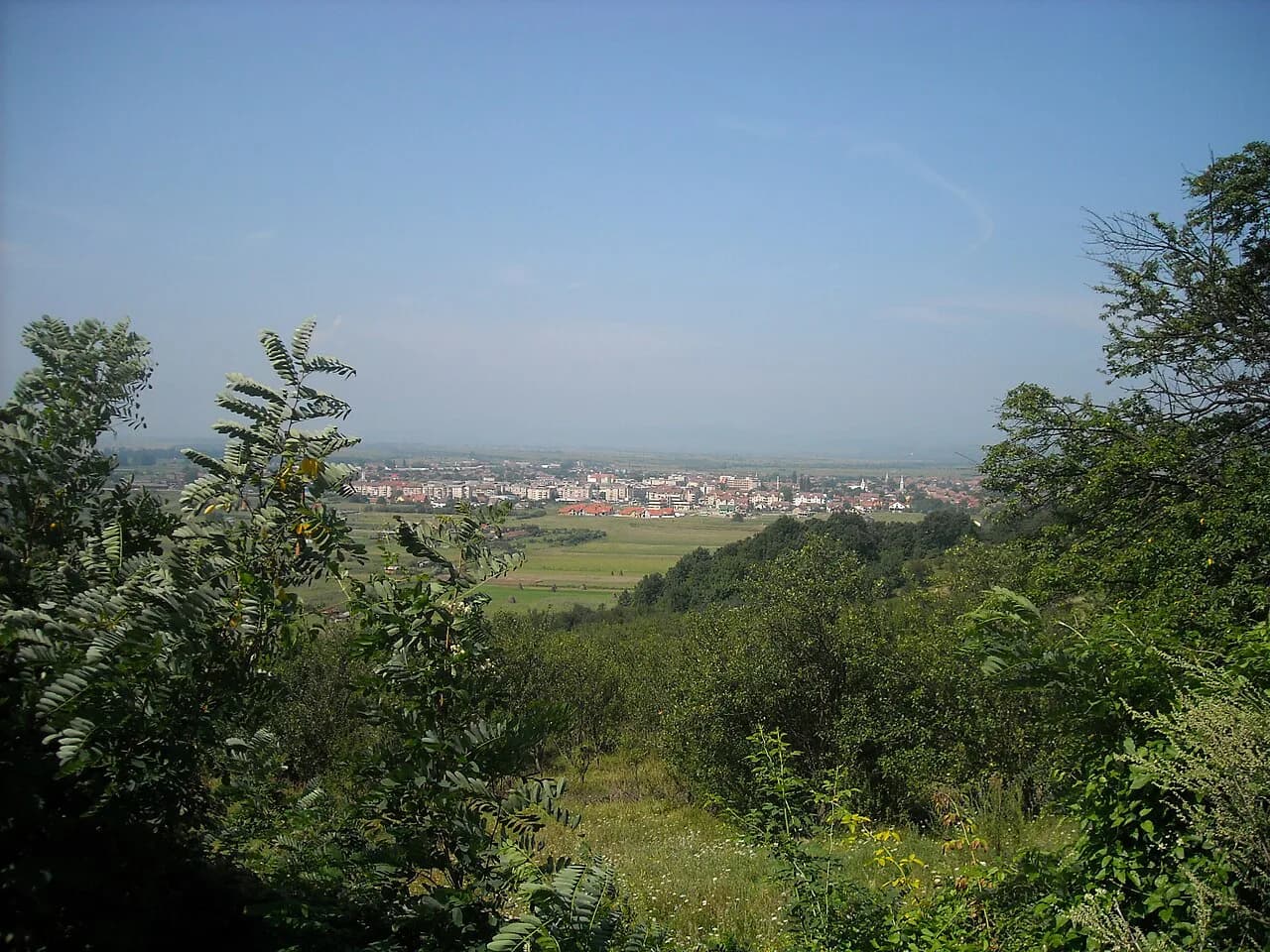
The approach is by car up the Orăștie valley, climbing through small villages and thick forest until the road ends. You park at the end of the road and walk a short way to the entrance of the site. That final stretch is part of the trip, so allow for it rather than treating the drive as dead time.
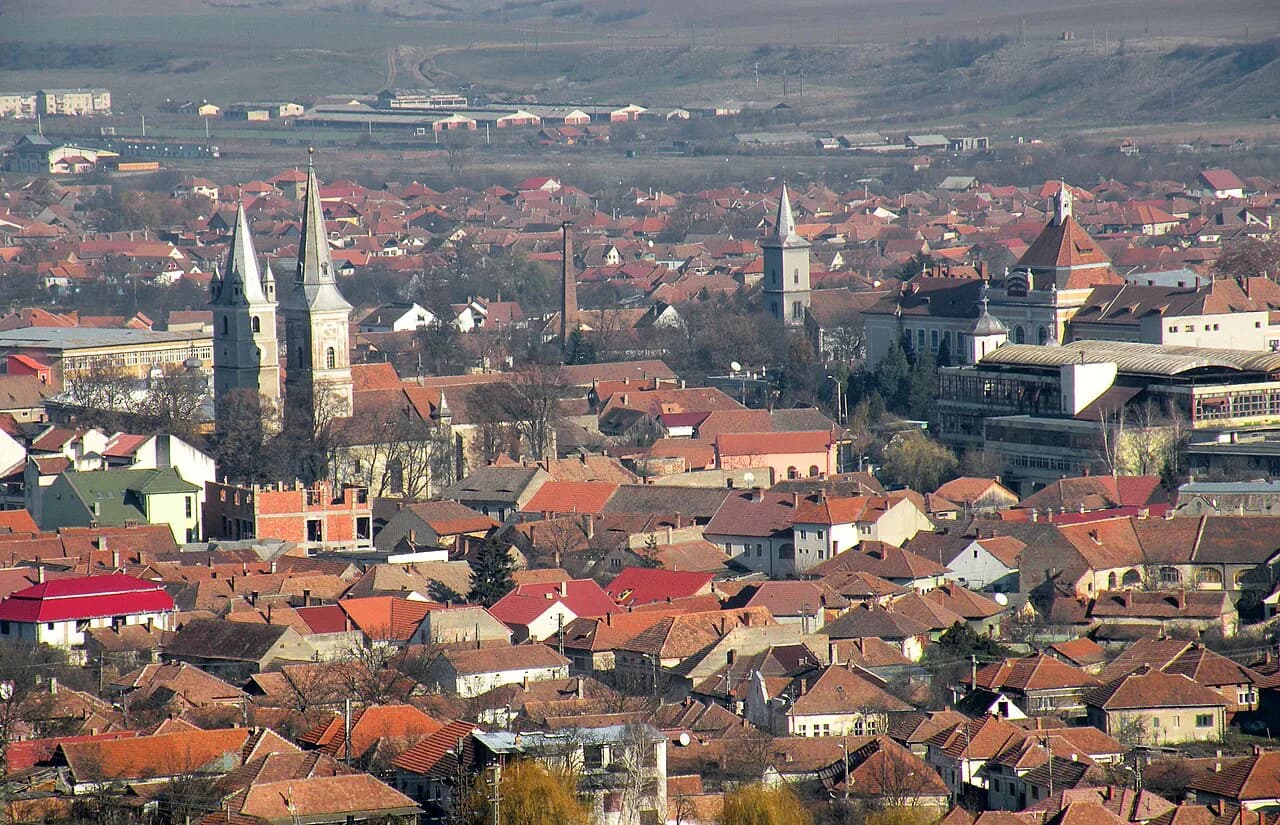
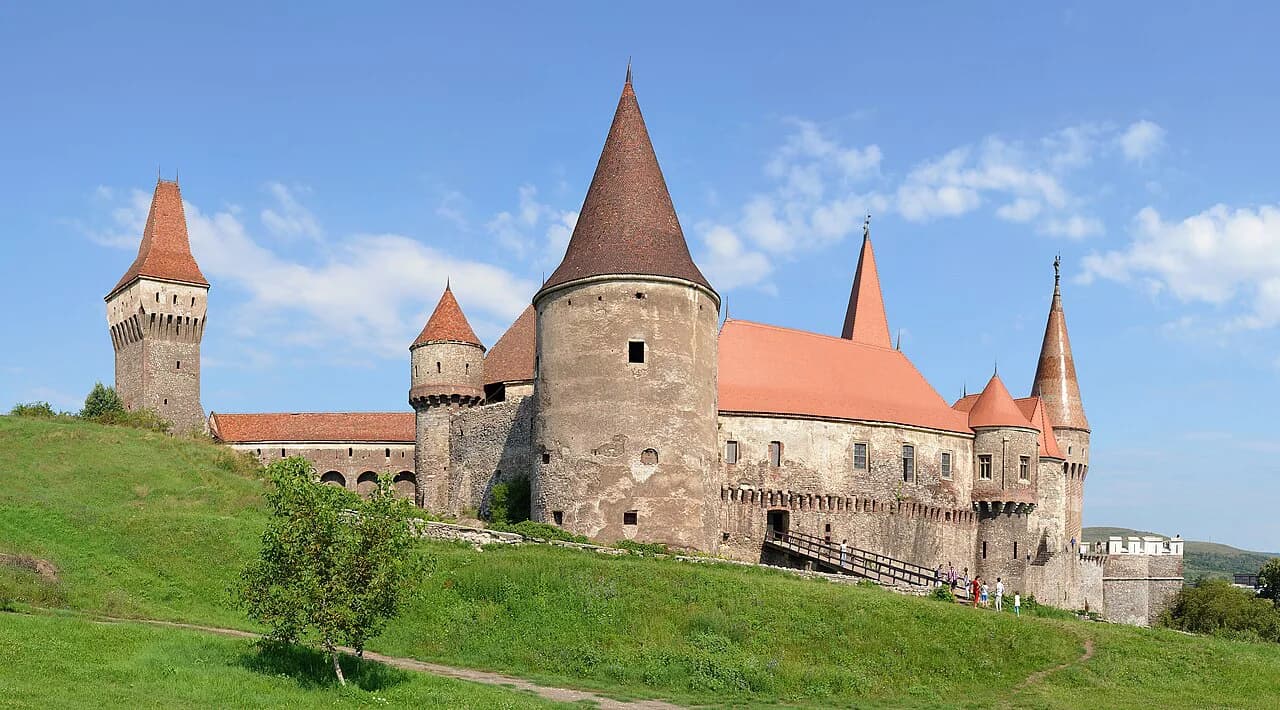
Hunedoara is a practical base for this corner of the county, with Corvin Castle in the town itself and the Orăștie valley within reach by car. Orăștie, at the mouth of the valley, is the last town of any size before the climb. Plan the mountain site as a half-day outing from either, and allow for the winding drive up the valley through the small villages and forest to the end of the road.
Ulpia Traiana Sarmizegetusa in the Hațeg Basin
The Roman capital Trajan founded in 106 AD lies on flat land at the head of the Hațeg Basin, enclosed by a perimeter wall of roughly 550 by 440 metres around 32 hectares. Its forum-basilica complex at the centre is among the largest in the Danubian provinces, and its amphitheatre held about 5,000 spectators; the site holds more than 500 surviving Latin and Greek inscriptions. The city was abandoned around 270 AD when Aurelian evacuated the province, and later medieval builders quarried its dressed stone, leaving the ground plan intact beneath fields.
What you see today is the excavated forum foundations and porticoes, the elliptical arena and seating banks of the amphitheatre to the east, and a small on-site museum. Parts of the site remain under active investigation, so the exposed area is partial rather than complete.
Pairing the two sites in one day by car
With a car, the mountain site and the Roman city make a long but coherent day: Sarmizegetusa Regia in the morning, when you have the forest road and the walk fresh, then the Hațeg Basin for Ulpia Traiana in the afternoon. The 40 km between them is the only fixed figure to plan around, so build the rest of the day from the drive up the Orăștie valley and the time you want in the sacred zone.
If you are basing yourself in the basin, Hațeg gives you the Roman city, Densuș and the surrounding villages without a mountain road. Keep Hunedoara for Corvin Castle and the Orăștie valley, and treat the two halves as separate outings rather than forcing them into one.
Which Sarmizegetusa should you drive to?
Drive to Sarmizegetusa Regia if you want the Dacian capital itself: the forest road up the Orăștie valley, the short walk in, and the sacred zone with its altar, circular temple and rectangular sanctuaries. Choose Ulpia Traiana Sarmizegetusa if you want a Roman city you can read at ground level, with forum foundations, an amphitheatre and a museum. With a car and a full day, do both and keep the 40 km between them in mind.
Either way, arrive with the signboards in mind and give the stones time; the drawings do the work that the ruins cannot. Check current opening hours before setting off, since the mountain approach and the Hațeg sites run to their own calendars.
Explore more Hunedoara guides
Frequently Asked Questions
Is Sarmizegetusa Regia the same as Ulpia Traiana Sarmizegetusa?
No. Sarmizegetusa Regia is the Dacian capital in the Orăștie Mountains, conquered by the Romans in 106 CE and largely destroyed afterwards. Ulpia Traiana Sarmizegetusa is the Roman colonial city Trajan founded in the Hațeg Basin after the conquest, about 40 km away, with its own forum, amphitheatre and museum.
Can you visit Sarmizegetusa Regia by public transport?
The site is reached by driving up the Orăștie valley to the end of the road, then walking a short way to the entrance. Plan on a car for the approach.
Are the temples at Sarmizegetusa Regia original?
The stone platforms and blocks you see are the excavated remains, but the Romans destroyed much of the capital after 106 CE, so little stands to full height. The on-site signboards carry drawings of how the rectangular temples, the circular temple and the altar are thought to have looked, which is what makes sense of the ruins.
Sources
Useful notes for your next trip
Optional updates to our guides.
You might also like
Continue reading
More guides you'll find useful