Densuș Church: Romania's Roman-Stone Church and How to Visit
Densuș Church in Hunedoara County is built from Roman stones and columns. See what survives inside, where the village sits and how to reach it from Deva.
On this page
Densuș Church is an active village church in Hunedoara County, and the reason to come is the fabric of the building itself: its walls and narthex columns are built from Roman stone, columns and tombstones brought from Ulpia Traiana Sarmizegetusa. Plan on a short visit of half an hour to an hour, combined with the Roman ruins and the towns of the Hațeg basin rather than treated as a day out on its own.
The page covers what the church is, why it looks Roman, its interior and layout, and how to reach the village from Deva. It also sets out the sites worth adding to the same drive.
What Densuș Church is
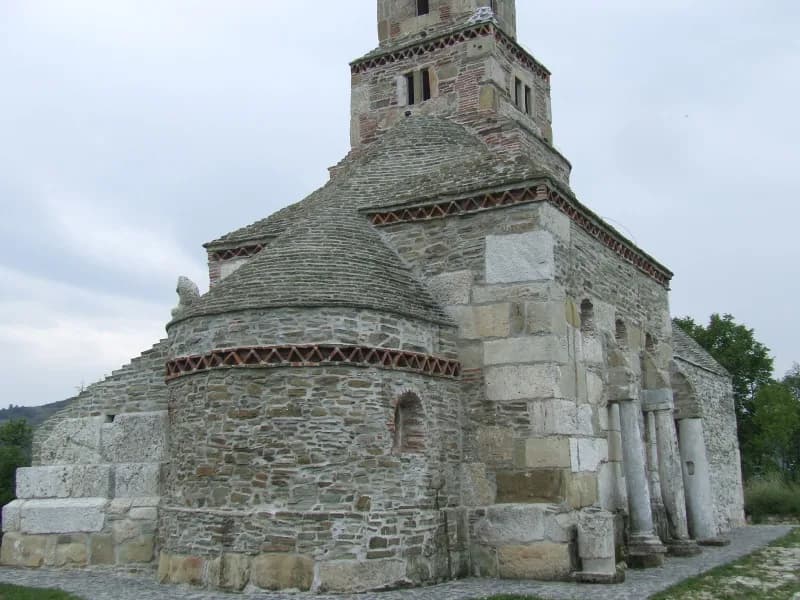
Densuș Church, also dedicated to St Nicholas, stands in the village of Densuș in Hunedoara County, in the Țara Hațegului area. The first documentary mention of the church dates from 1360, which is the documented fact to hold on to.
It is often described as the oldest church in Romania, and as the oldest Orthodox stone church in the country. Treat that as the claim it is: the origins of the building are debated, and the sources making the claim hedge it themselves.
Visitors regularly describe it as little known and worth the detour, and it appears in suggestions for UNESCO listing rather than on the list. Read the church as a small, active monument in a village, without visitor facilities around it.
Why the building looks Roman
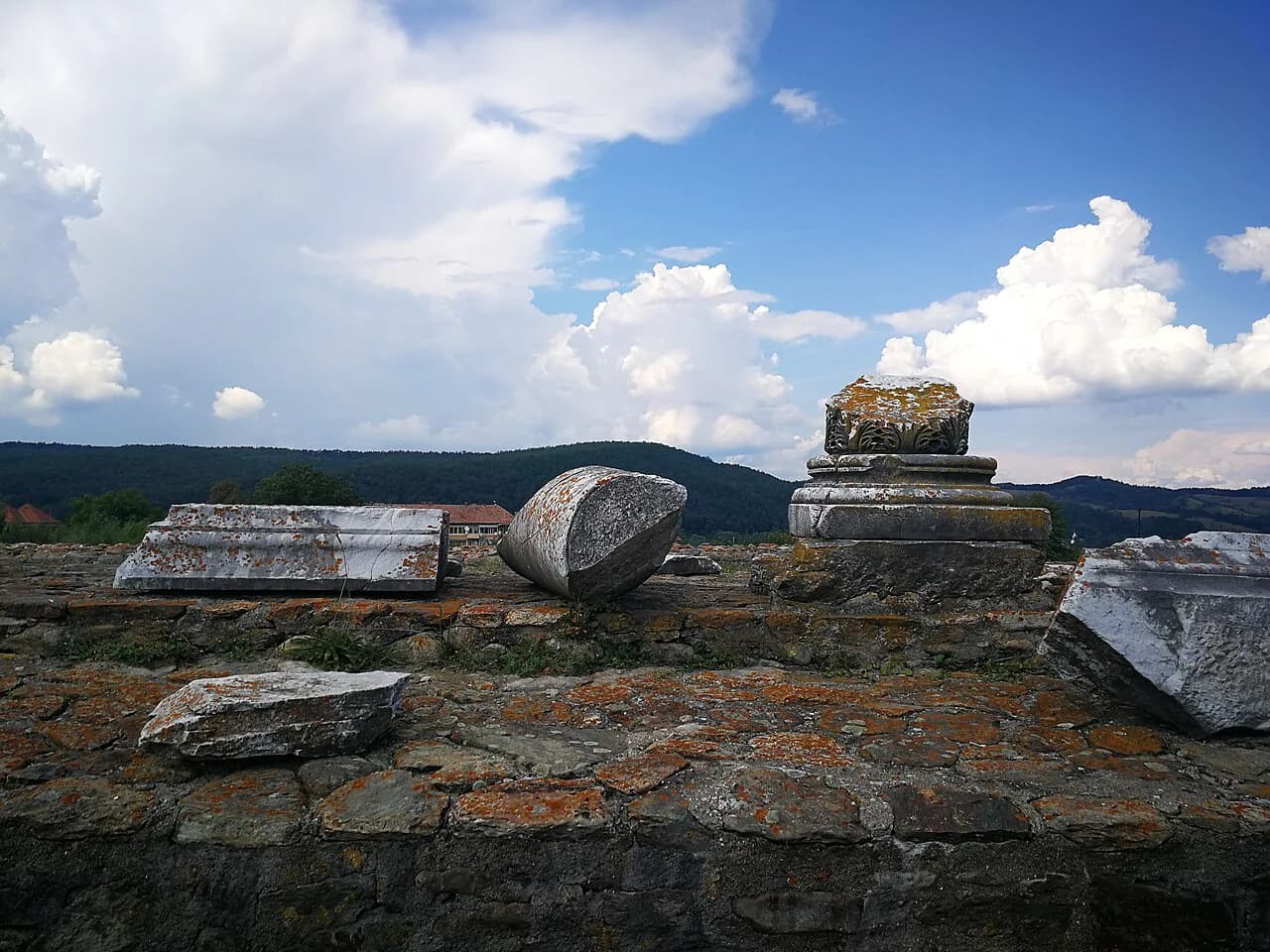
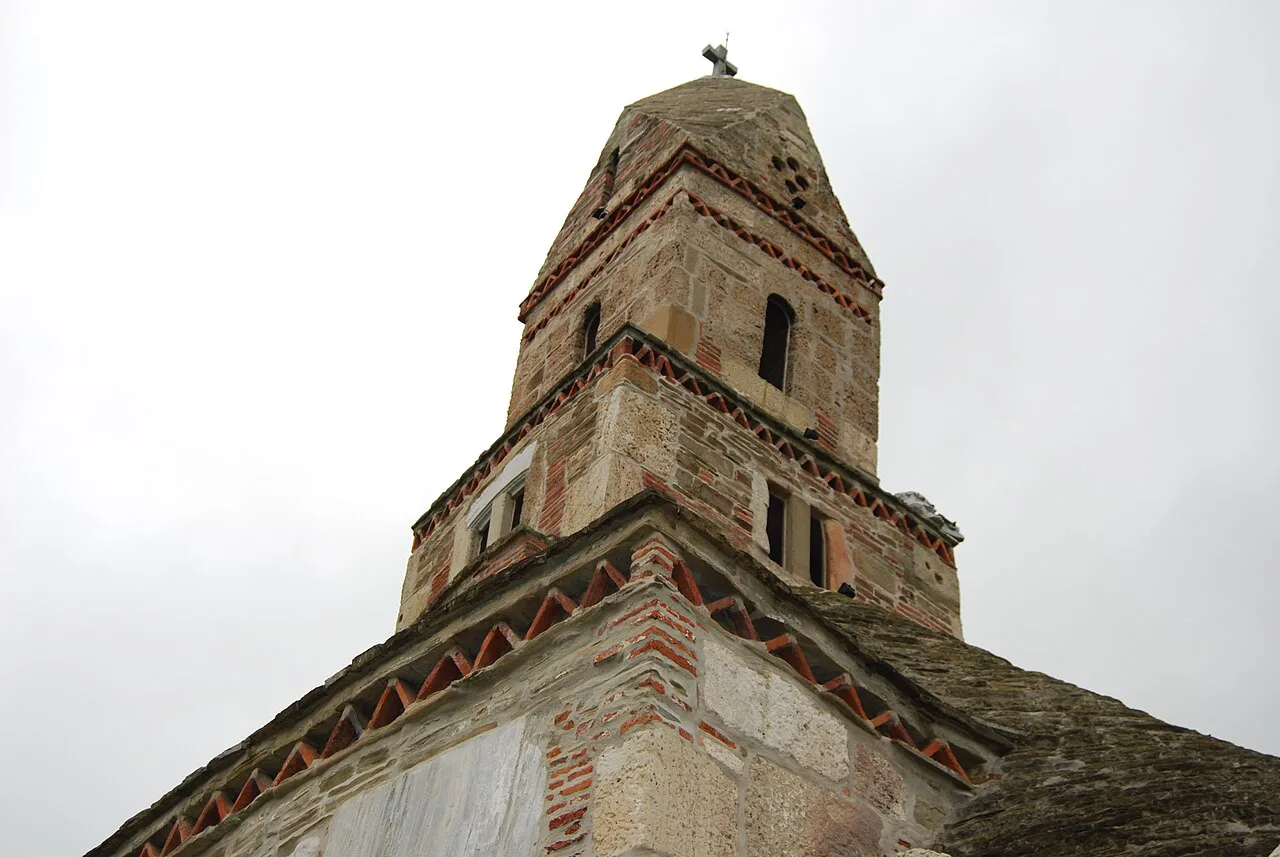
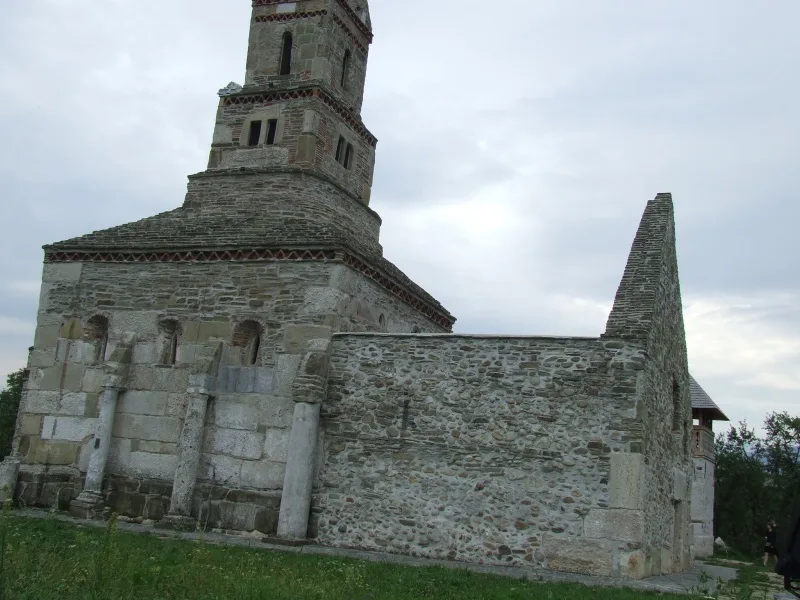
The walls are built from bricks, columns and statues taken from Ulpia Traiana Sarmizegetusa, the Roman capital of the conquered Dacian kingdom. The narthex is ringed by four columns made from Roman tombstones, and the roof is of stone, the main construction material here.
That recycling is the source of the Roman-temple theory. Some accounts hold that the church was originally a fourth-century Roman pagan temple, or stood on the site of a temple to Mars or of a mausoleum for the general Longinus Maximus. None of this is documented, so read it as a theory and look at the stone itself instead.
The interior: a south-facing altar and the 1443 frescoes
The interior detail most often pointed to is the position of the altar, placed to the south rather than the east as in typical Christian churches. That unusual orientation is the practical observation standing behind the Roman-temple theory.
Paintings from 1443 survive in part, including a fresco above the entrance. Among them is a Baby Jesus shown in Romanian national dress, an unusual image for an Orthodox church.
Size and layout
The church measures about 30 metres long and 18 metres wide, built in a Byzantine style. Four columns enclose the narthex, and the stone roof sits directly over the masonry.
In the 19th century locals wanted to demolish the church to build a larger one. The Hungarian authorities then governing Transylvania stepped in, the building was saved and it was soon declared a historical monument.
Where Densuș is and how to get there
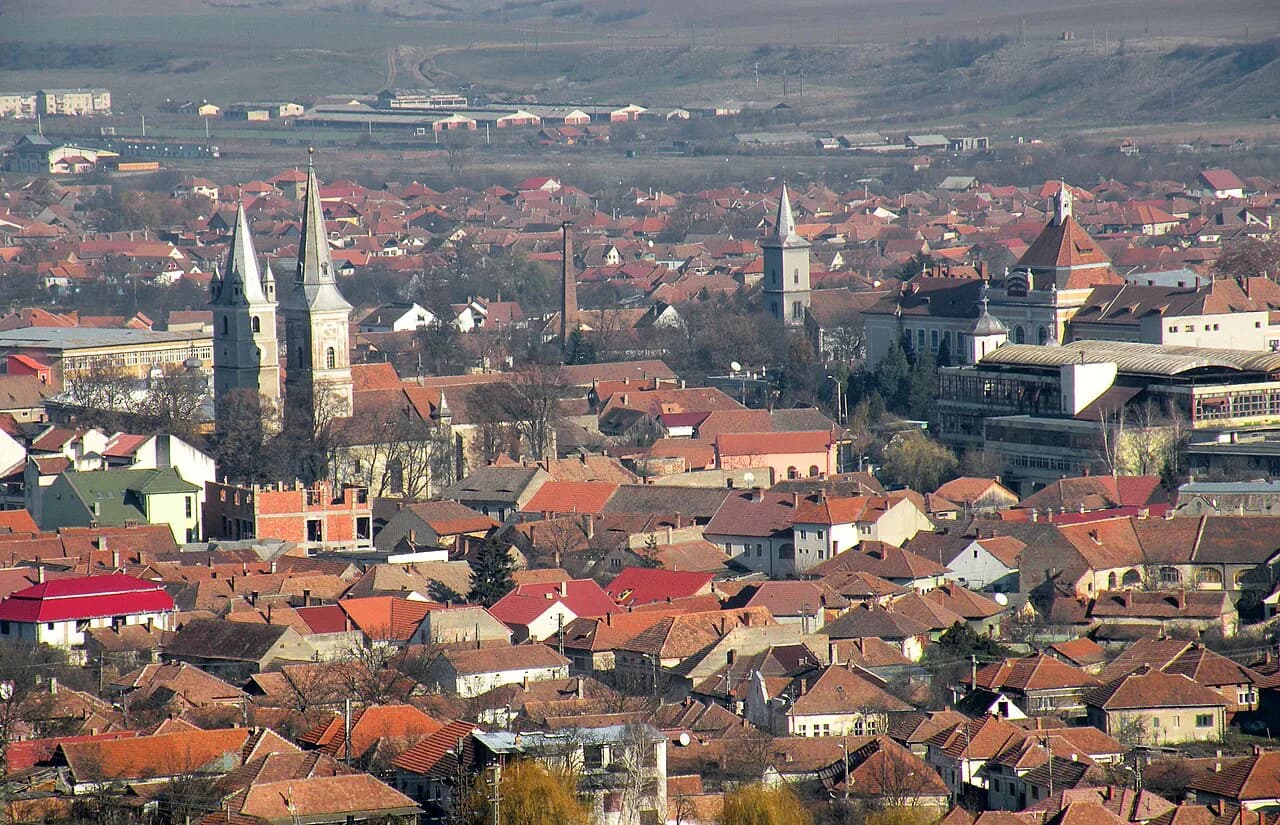
Densuș sits in Hunedoara County in the Țara Hațegului, closest to Deva, reached from the E79 road. The church is in the Hațeg basin, the same area as the Dacian fortress sites in the Orăștie Mountains and the Roman city at Sarmizegetusa.
Coming by car from Deva, follow the E79 towards Hațeg and turn off for the village. For the wider county, including Corvin Castle and the towns around the basin, see the guide to Hunedoara.
The obvious pairing is the Roman site at Sarmizegetusa, whose stone was reused here: the two together explain the building. Orăștie is the nearest town of any size and makes a useful stop for fuel and supplies.
What to expect on a visit
This is a working village church, not a museum. Religious services are still held regularly here, which is part of what keeps the building in use after centuries.
Set expectations accordingly: a small building, a short look, no visitor centre. The value is in reading the Roman fragments in the walls and columns, so arrive knowing what you are looking at.
The church is not on the UNESCO World Heritage list, though some visitor accounts suggest it has been proposed for inclusion. Whatever you read online, check the official UNESCO listing before you build a trip around that claim, and confirm current opening arrangements at the church itself before you set out.
Nearby sites worth adding
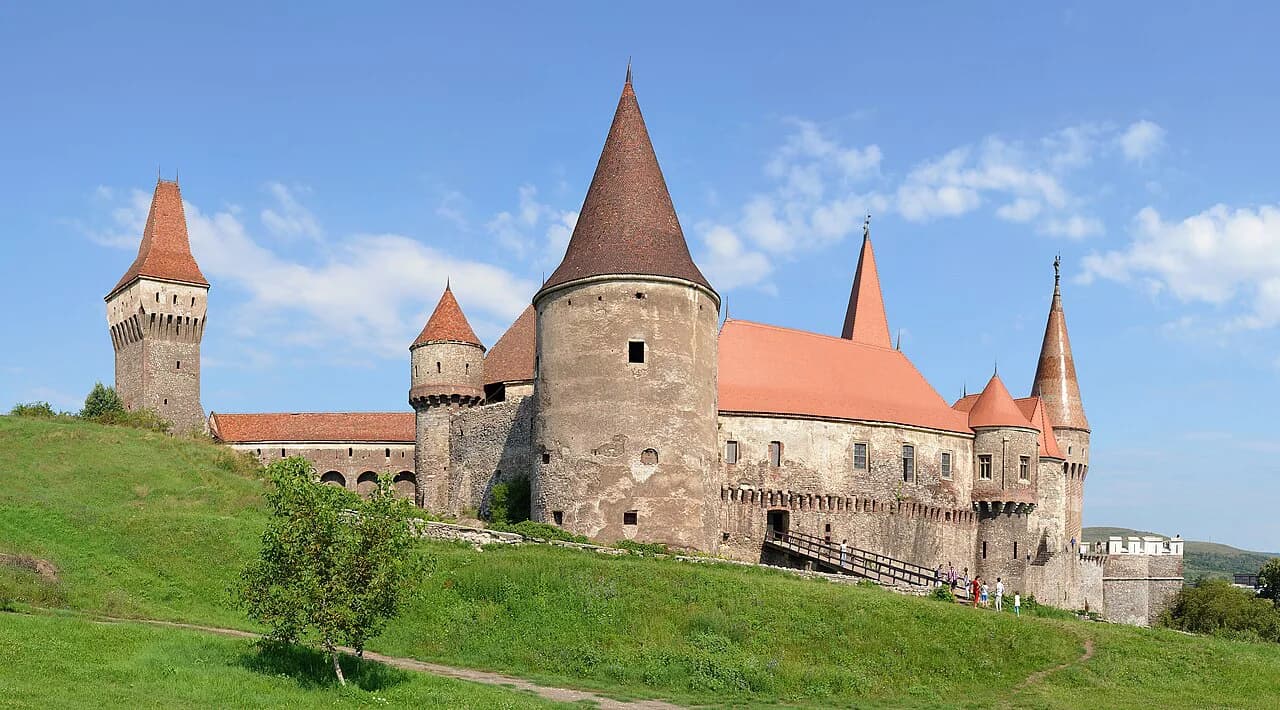
Corvin Castle at Hunedoara is the strongest anchor for a day in this part of the county, and pairing it with Densuș gives you a Gothic fortress and a Roman-built village church in one loop.
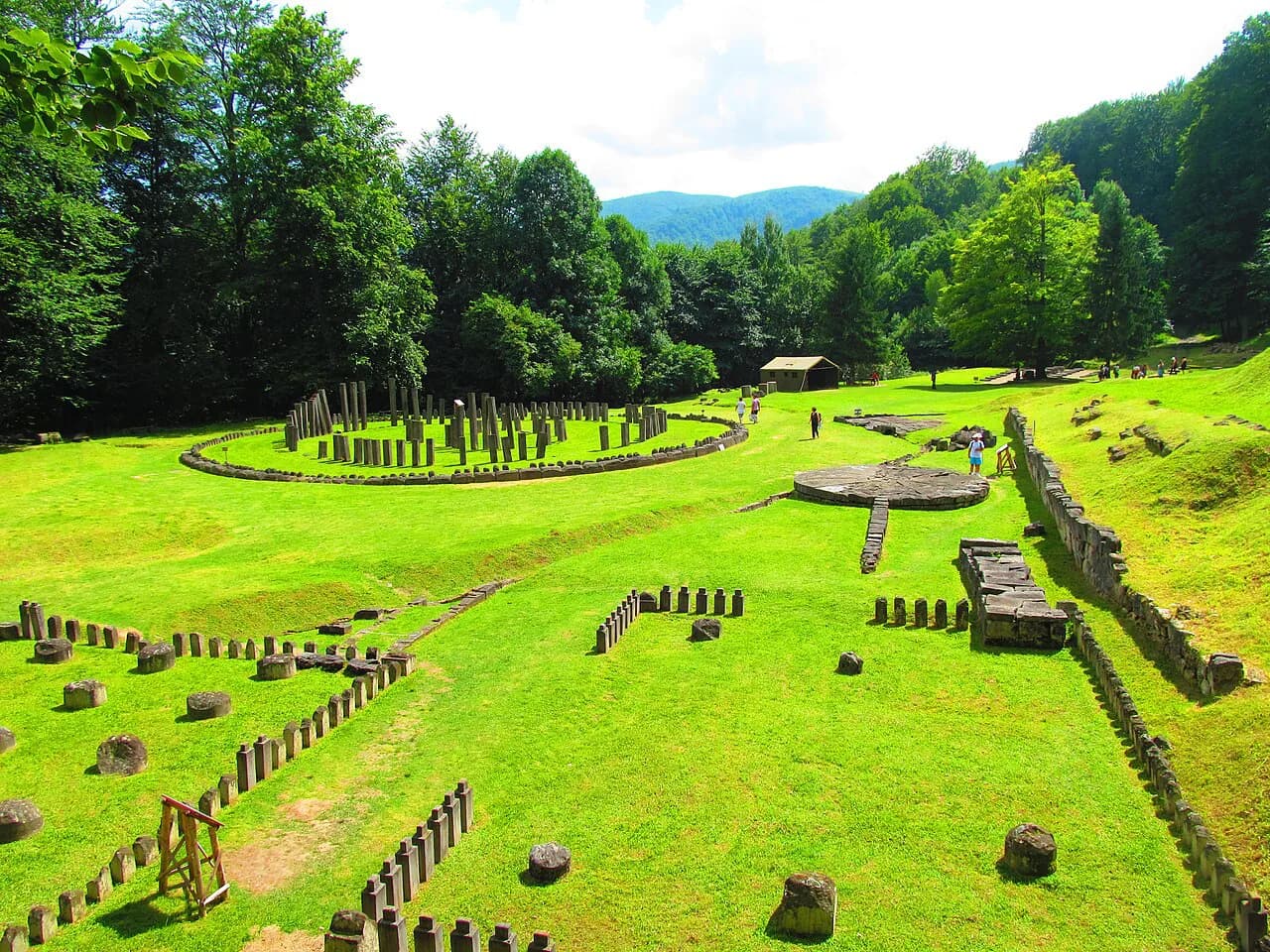
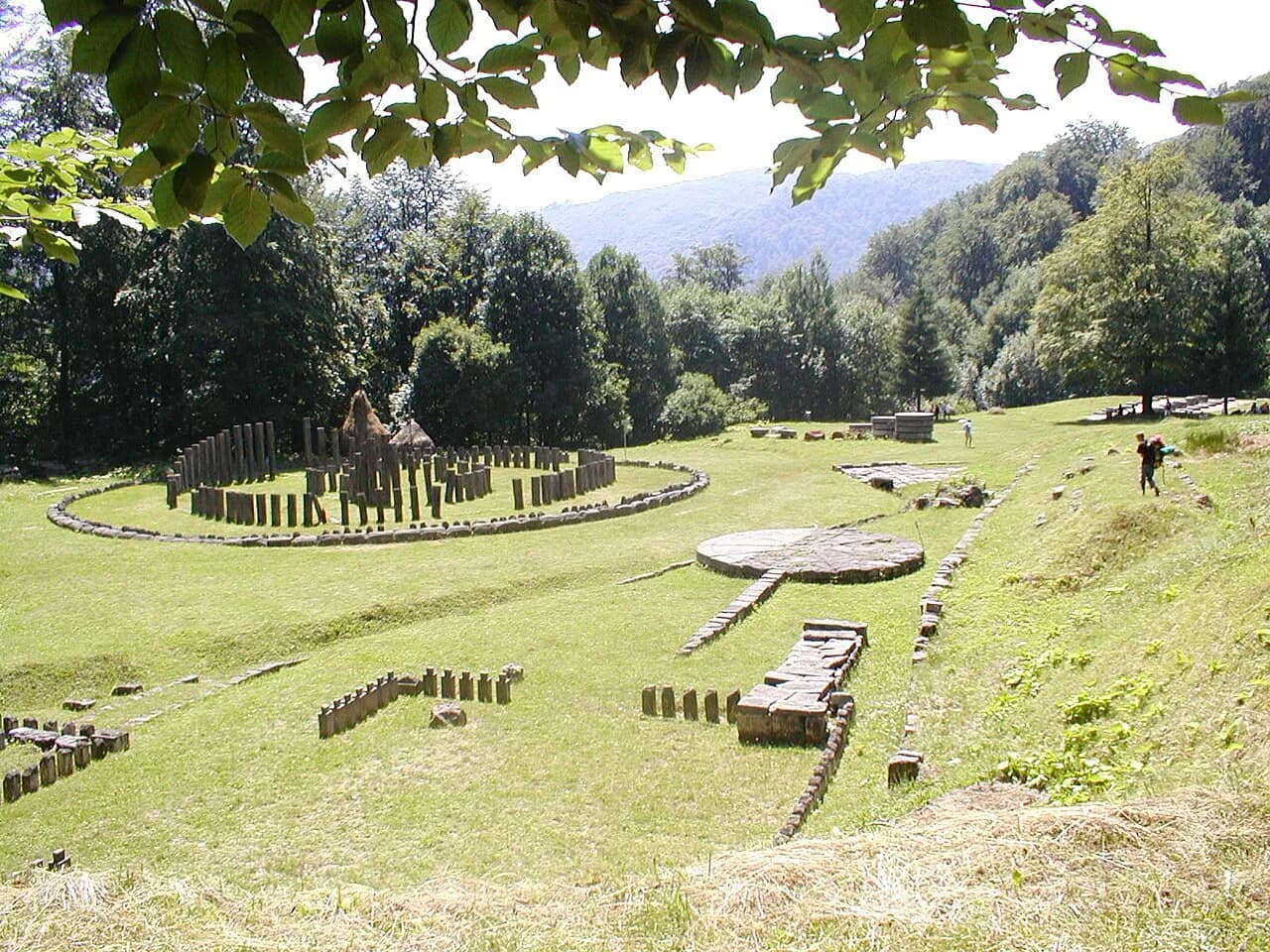
The ruins of the Roman capital at Ulpia Traiana Sarmizegetusa are the essential companion stop, since the stone in Densuș came from there. Further out, the Dacian fortresses of the Orăștie Mountains sit in the hills above the basin and reward a separate day, including the royal capital at Sarmizegetusa Regia.
Closer in, the medieval fortress ruins at Colți and the old churches of Sântămăria-Orlea and Prislop sit within the same rural stretch. Retezat National Park lies just to the south if you want mountain scenery to bookend the drive.
Is Densuș worth the detour?
Yes, if you are already driving the Hațeg basin for Corvin Castle or the Roman site at Sarmizegetusa. The church is a short stop, and the Roman stone in its walls is the reason to make it.
Skip it as a standalone trip from far away. It is a small village church with no facilities, and its interest is architectural rather than a full day out.
Frequently Asked Questions
Is Densuș Church the oldest church in Romania?
It is often described that way, and it is described as the oldest Orthodox stone church in the country. The building's origins are debated, and the claim is not settled fact. The documented starting point is the first written mention of the church in 1360.
Does Densuș Church charge an entry fee?
No entry price is published for it; it is an active village church rather than a museum with a ticket desk. Confirm any fee or entry arrangements with the parish before you travel if you need to plan around it.
How long does a visit to Densuș Church take?
Allow half an hour to an hour. The building is small and the interest lies in the Roman columns, tombstones and stone roof, so the visit is short unless you are reading the fabric in detail.
Is Densuș Church a UNESCO World Heritage Site?
It is not on the UNESCO World Heritage list, though some visitor accounts suggest it has been proposed for inclusion. Check the official UNESCO listing if that status matters to your trip.
Sources
Useful notes for your next trip
Optional updates to our guides.
You might also like
Continue reading
More guides you'll find useful