Dacian Fortresses of the Orăștie Mountains: Which to Visit
The six Dacian fortresses of the Orăștie Mountains form a UNESCO World Heritage site. Here is what stands at each, from Sarmizegetusa Regia to Căpâlna.
On this page
Build a day around Sarmizegetusa Regia and treat the other five fortresses as stops on the same mountain road. That is the honest shape of a trip to the Dacian fortresses of the Orăștie Mountains, a UNESCO World Heritage listing that covers six separate hilltop sites in Hunedoara County rather than one walled compound. This guide sets out which sites reward the drive, what actually stands above ground at each, and how the nearby Roman city of Ulpia Traiana Sarmizegetusa fits into the same outing.
What the UNESCO listing covers
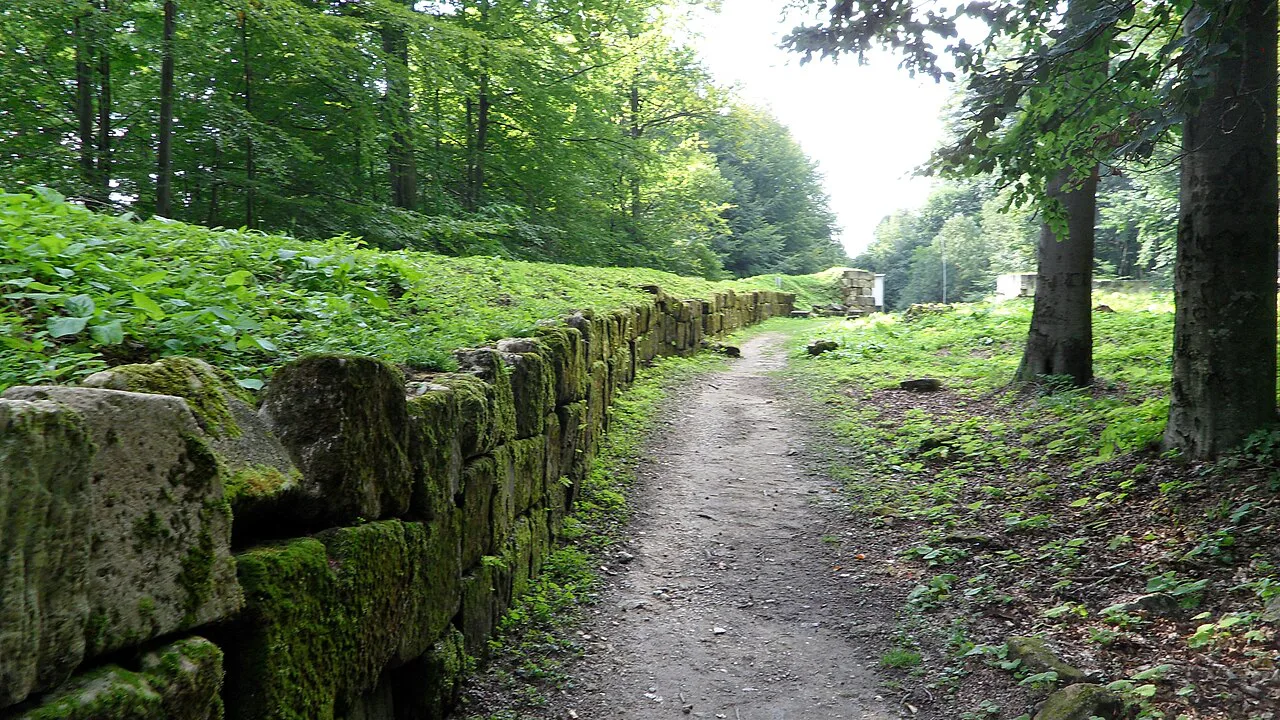
The listing brings together six fortresses built in the 1st centuries B.C. and A.D. under Dacian rule: Sarmizegetusa Regia, Costești-Cetățuie, Costești-Blidaru, Piatra Roșie, Bănița and Căpâlna. They are judged together for the way military and religious architectural techniques fuse in their design, so treat the listing as a system of sites across a mountain range rather than a single visitor attraction.
Practically, that means the listing is not a single walled compound. Each fortress sits where its hill is, and the sites are spread across the Orăștie Mountains. Plan the day as a driving route with short walks, not as a museum visit.
Where they sit in Hunedoara County
Hunedoara County is predominantly mountainous, with the Șureanu and Parâng ranges rising above 2,000 m and the intramontane depressions and the Orăștie corridor forming the low ground between them. The fortresses occupy the mountains, so the approaches are valley roads followed by climbs on foot. Deva is the county seat, and the E68/DN7 corridor links the county westwards towards the rest of Romania and towards Bucharest.
The nearest international airports are Sibiu, about 120 km away, and Timișoara, about 150 km away, according to the county council. Both put you on the western side of the county with a straightforward drive in. The railway junction at Simeria, near Deva, is the regional rail hub if you would rather travel by train and pick up a car locally.
Sarmizegetusa Regia: the civilian settlement, the fortress and the sacred zone
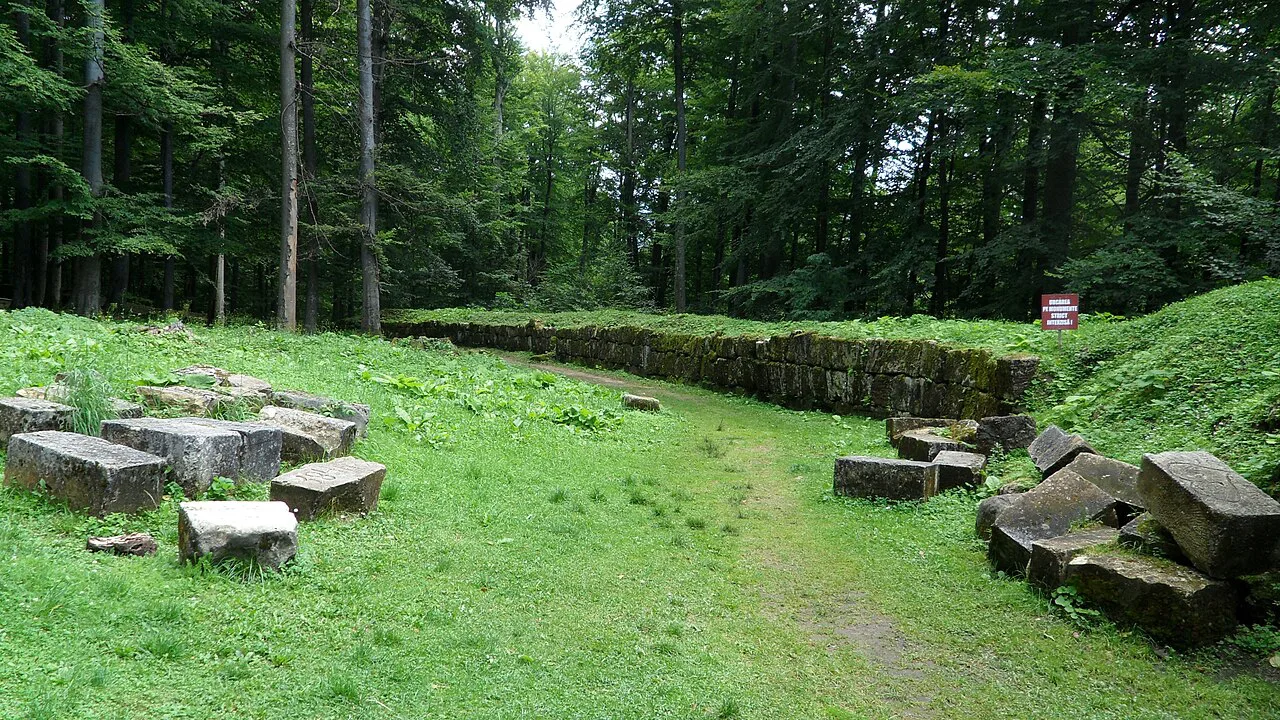
Sarmizegetusa Regia was the Dacian political, religious and military centre, flourishing from around the 1st century BCE until the Roman conquest in 106 CE. The site divides into three parts: the civilian settlement, the fortress, and the sacred zone. Visitors can see two of them, and of the fortress mostly the walls remain, because the Romans destroyed most of the city after defeating the Dacians.
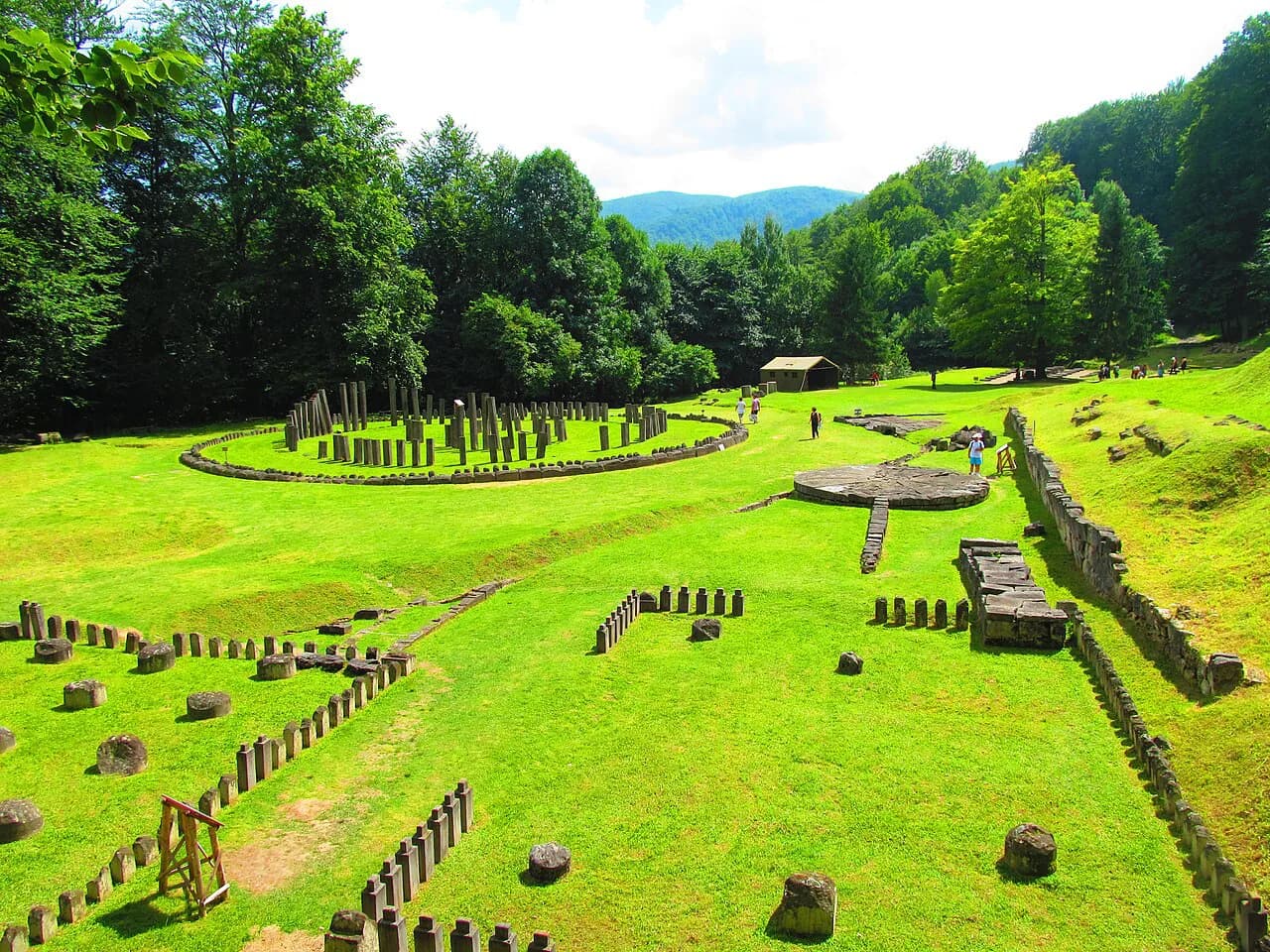
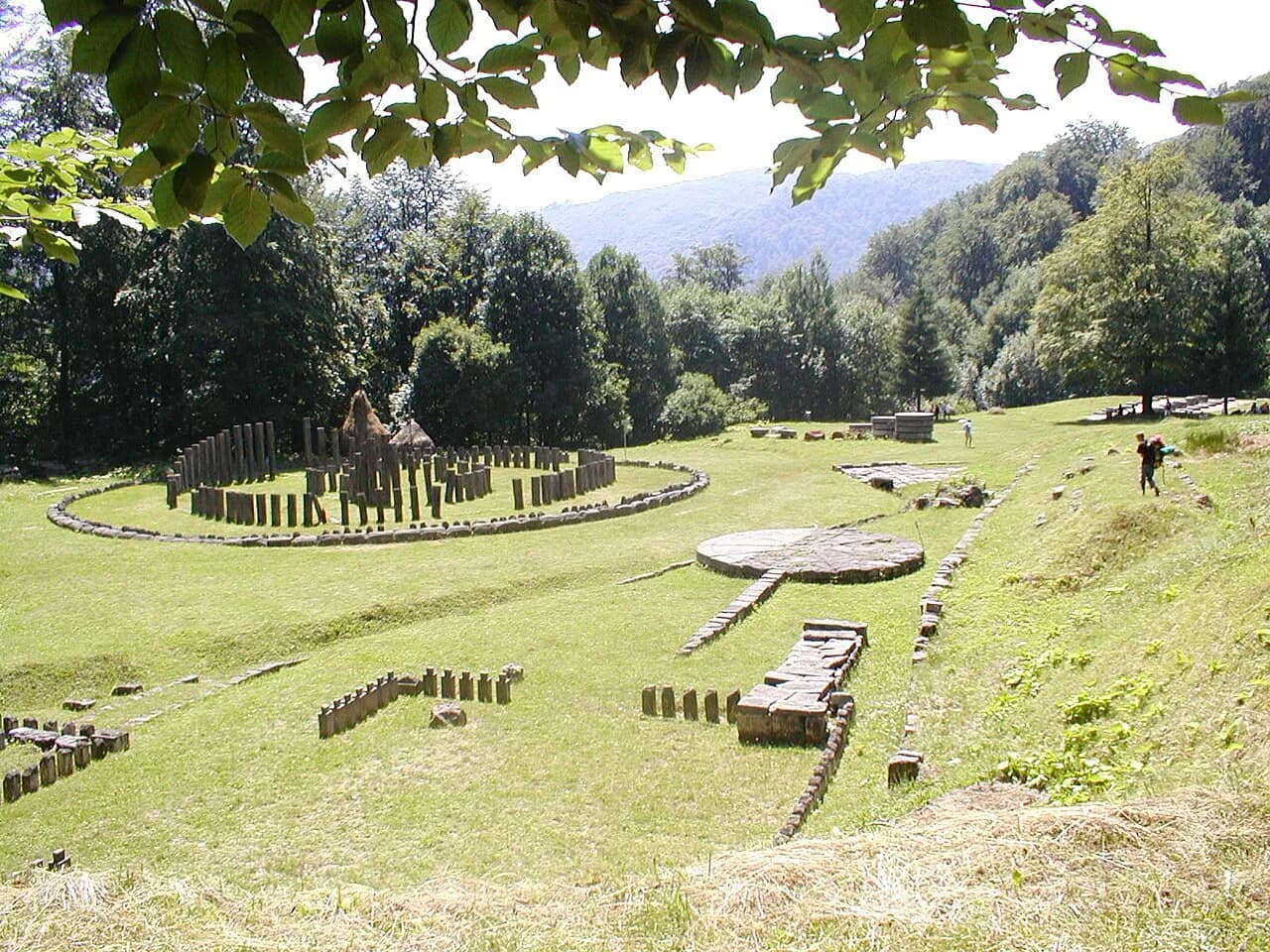
The sacred zone is the part that repays slow walking. It holds the ruins of rectangular temples, rows of circular limestone blocks that once carried wooden columns, and a circular andesite altar cut with radiating channels that drained liquids poured over it into a stone sewer. A large circular temple nearby, built from concentric rings of andesite blocks, was likely dedicated to the main Dacian god.
The Roman victory did not end the name. A new capital, Ulpia Traiana Sarmizegetusa, was established about 40 km away, and travellers routinely mix the two up when planning. If you want the mountain site alone in detail, our guide to Sarmizegetusa Regia walks through the temples and the approach; keep the Roman city for the afternoon.
Reading the ruins: what the signboards explain
Set your expectations: these are foundations and stone drums, not standing buildings. The value comes from the signboards, which carry drawings of how the temples are thought to have looked, with stone platforms, wooden columns on the limestone drums and roofs above. Read them before you look at the stones, and the shapes resolve.
A short climb to a small hill inside the sacred zone gives an overview of the whole section, which is the clearest way to understand how the temples were arranged relative to one another. Allow time for that detour rather than treating the site as a quick photo stop. The site sits at the end of the valley road, where a short walk leads to the entrance.
Costești-Cetățuie, Costești-Blidaru, Piatra Roșie, Bănița and Căpâlna
The other five fortresses formed the defensive system around the Dacian capital, and the listing names all six together. Costești-Cetățuie and Costești-Blidaru make natural additions to a Sarmizegetusa Regia day if you want second and third Dacian sites in the same area; Piatra Roșie, Bănița and Căpâlna stand as further named sites in the same listing, reached by their own roads and walks.
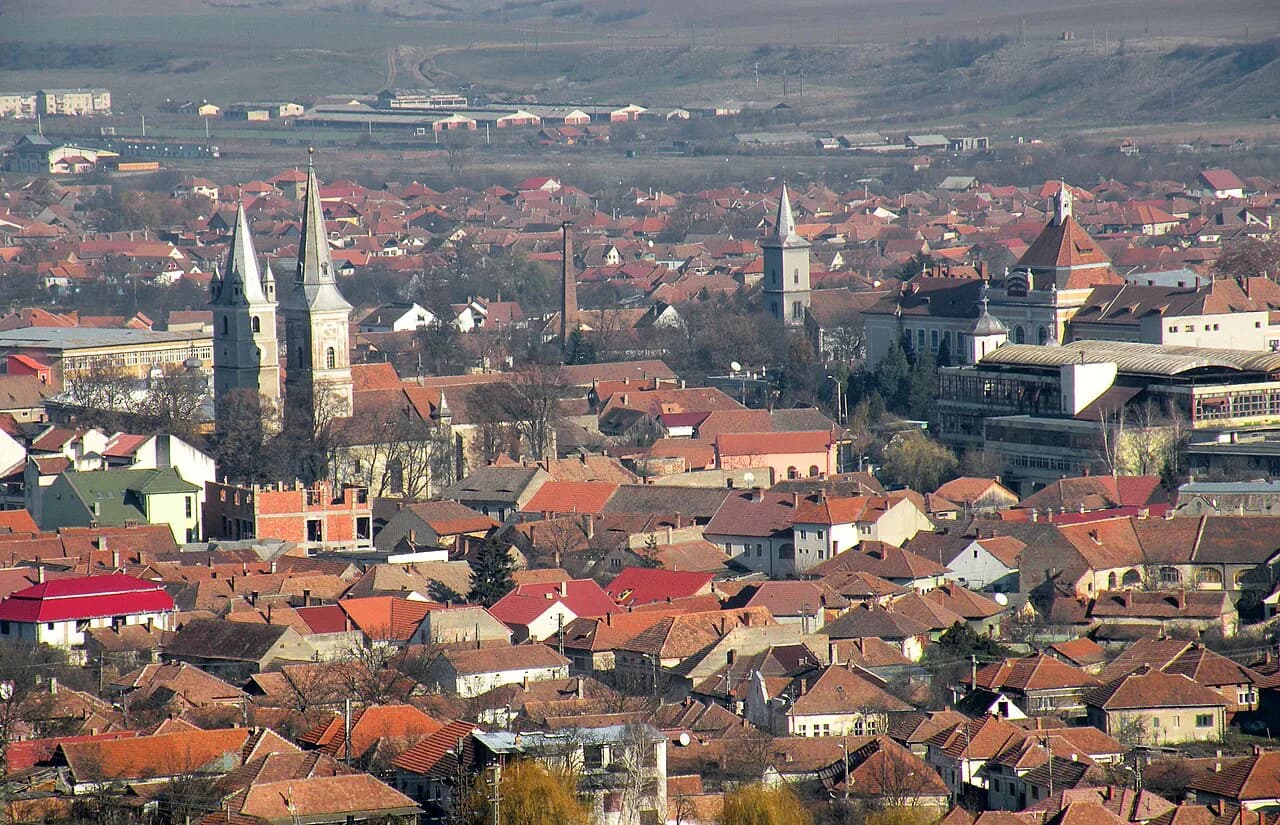
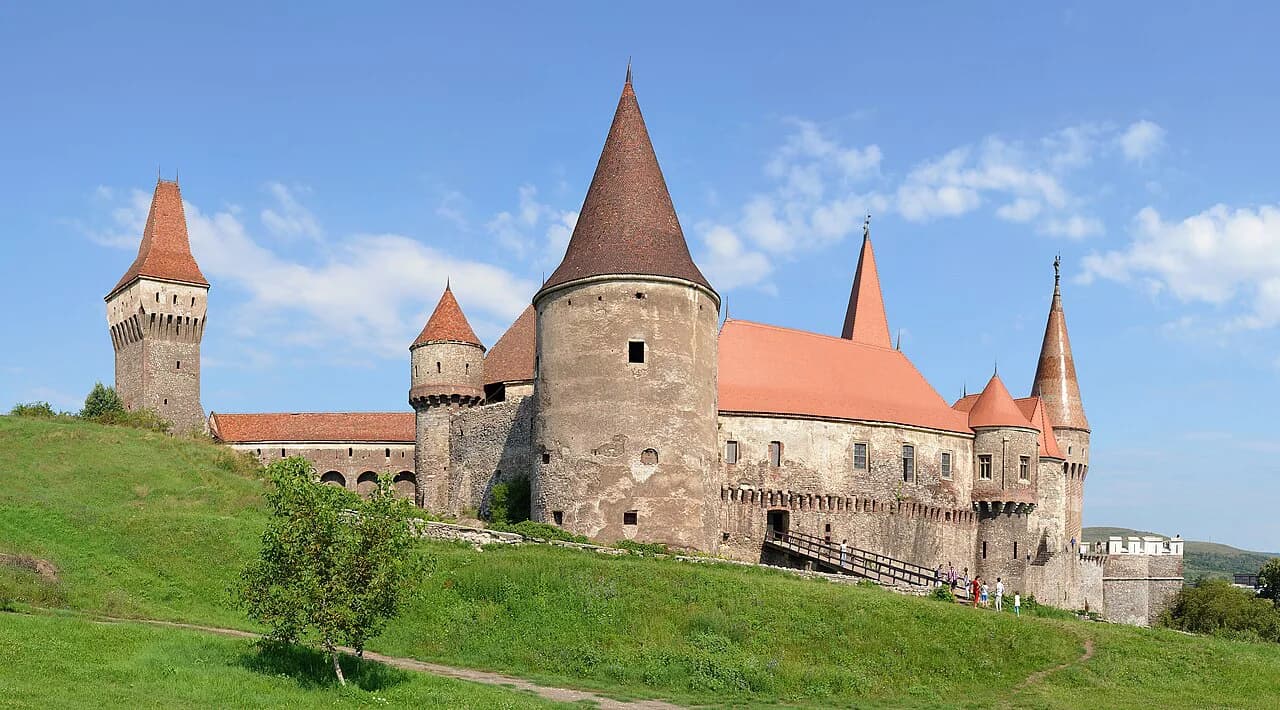
For most travellers the sensible split is one fortress in depth plus an optional second site, rather than ticking off all six. If you are basing yourself in the towns rather than the mountains, Orăștie: A Short Guide to the Town and Its Dacian Ruins Nearby covers the practical base at the foot of the valley, and Hunedoara gives you Corvin Castle as a counterweight to a day of foundations.
Ulpia Traiana Sarmizegetusa: the Roman city 40 km away
Ulpia Traiana Sarmizegetusa was founded by Trajan around 106 AD, immediately after the conquest, on flat ground in the Hațeg Basin rather than on the old Dacian capital. Its perimeter wall enclosed roughly 32 hectares, with a forum-basilica complex at the centre, an amphitheatre taking about 5,000 spectators to the east, temples, baths and houses. A small museum stands on site.
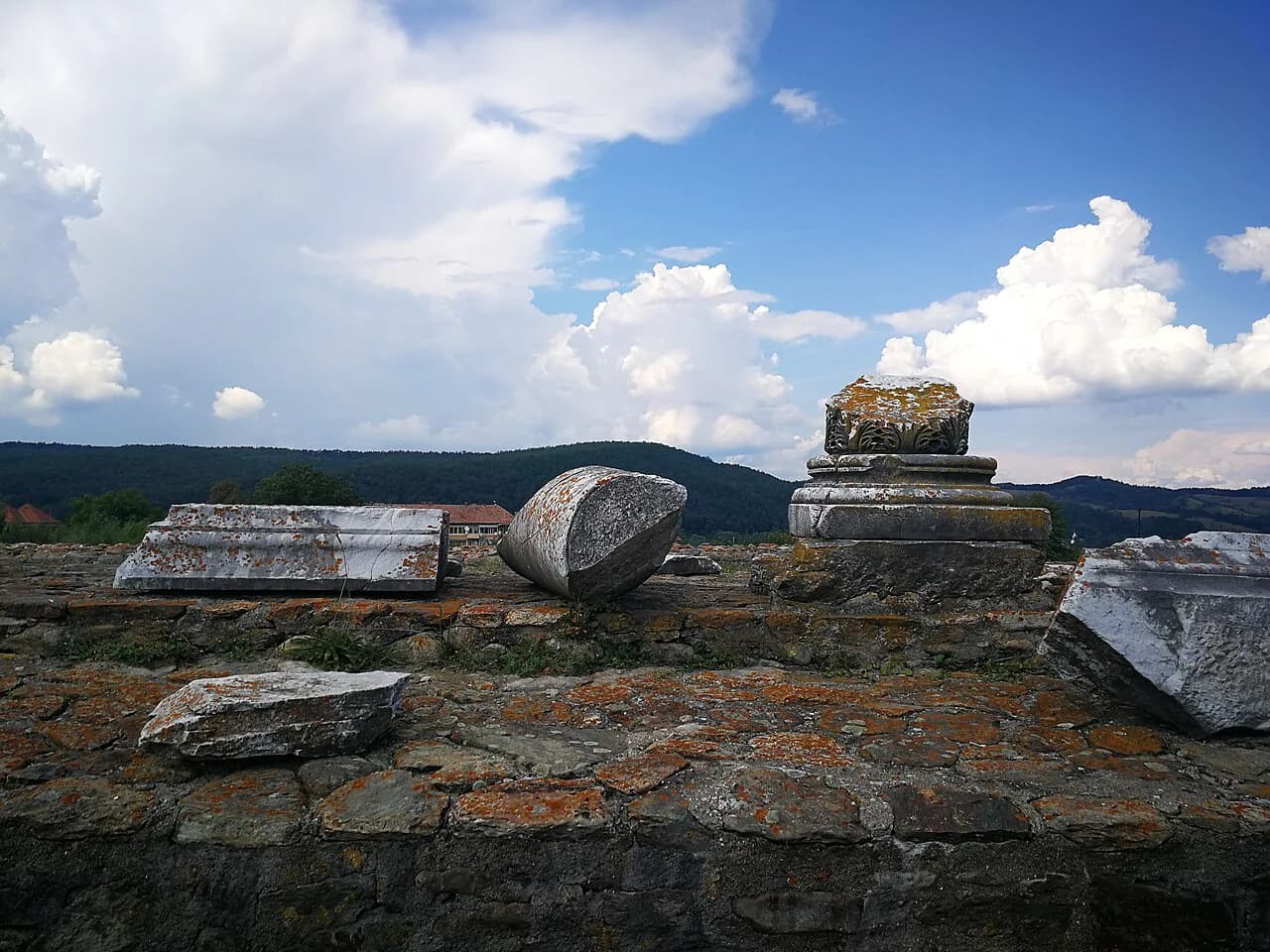
What you see today is the forum foundations and the elliptical arena of the amphitheatre, legible from ground level and from above. The city was abandoned around 270 AD, and medieval builders later quarried its dressed stone, which stripped the standing remains while leaving the ground plan readable beneath the fields.
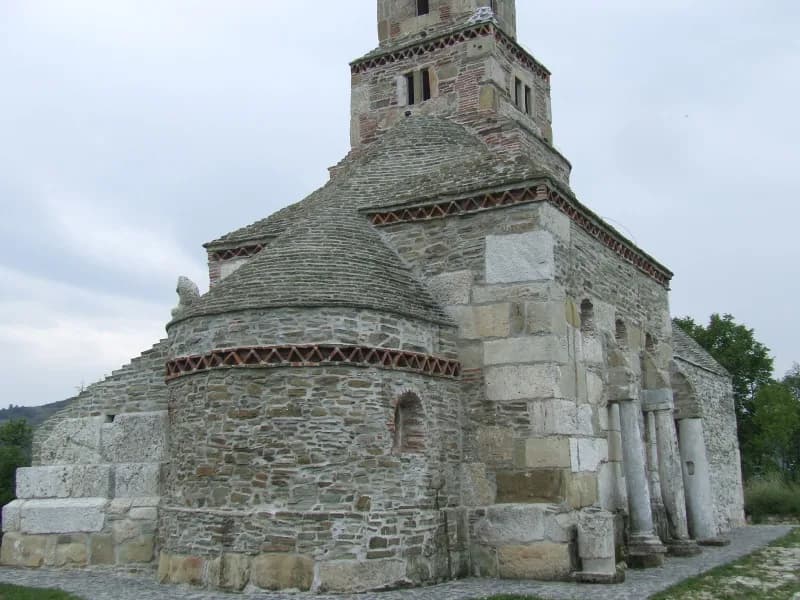
Because it lies on flat ground with a museum and a clear plan, Ulpia Traiana suits travellers who find hilltop foundations hard to read, and it pairs well with the Hațeg Basin. our Hațeg guide covers the surrounding area, including the Densuș Church, a short drive from the Roman site.
Getting there: the valley road and the walk in
Reach the fortresses by car. The drive up the Orăștie valley climbs through small villages and thick forest until the road ends, where you park and continue on foot to the Sarmizegetusa Regia entrance. A car or an organised tour is the most practical way to combine the sites.
Hunedoara County has a dense road network, including the longest network of county roads in Romania, but you should allow for slow going on country roads. Build slack into the day rather than chaining sites tightly, and refuel in the towns before heading up.
Practical limits on the day: uneven ground and timings
Expect uneven ground, exposed stone and short climbs throughout. At Sarmizegetusa Regia the walk from the road, the circuit of the sacred zone and the climb up a small hill inside the sacred zone for an overview together make a full visit at an unhurried pace. Sturdy shoes matter more than any single sight.
Opening hours, ticket prices and seasonal closures for the fortresses and for Ulpia Traiana are not set out here; confirm current access conditions with the sites before you set out. The same applies to the on-site museum at Ulpia Traiana.
Dacian and Roman history to hold in mind
The Dacian king Decebalus killed himself rather than be captured, and he remains a national hero in Romania. Trajan's campaigns of 101–102 AD and 105–106 AD broke Dacian power and turned the territory into the province of Dacia. Hold that sequence in mind and the ruins read as the aftermath of a conquest rather than as a mysterious lost civilisation.
The Roman response was to build a new capital in the Hațeg Basin and to appropriate the prestige of the old Dacian name for it. That is why a Roman city and a Dacian fortress share the name Sarmizegetusa while sitting 40 km apart in completely different landscapes.
Weighing the fortresses against the rest of a Hunedoara trip
If your trip is built around castles and towns, the fortresses are a half-day to full-day detour into the mountains rather than a rival to Corvin Castle or the Saxon sites. Give them a day if archaeology interests you, and a half-day if you mainly want the landscape and the sacred zone.
Travellers flying into Sibiu or Timișoara can combine Sarmizegetusa Regia, Ulpia Traiana and the Hațeg Basin in a single day by car, but only if you start early and skip some of the smaller fortresses. Trying to see all six plus the Roman city in one day is a driving exercise, not a visit.
Which fortress day suits you?
Choose Sarmizegetusa Regia plus Ulpia Traiana for a balanced day: one mountain site read properly, one Roman city with a museum. Add Costești-Cetățuie or Costești-Blidaru only if you have a second day or an early start and a confident driver.
Before you go, confirm opening hours and ticket prices with the sites themselves, since none are given here. Base yourself in Deva, Hunedoara or Orăștie, take the valley road early, and carry cash and water for the mountain sections.
Frequently Asked Questions
Are the Dacian fortresses of the Orăștie Mountains one site or several?
They are six separate fortresses covered by a single UNESCO World Heritage listing: Sarmizegetusa Regia, Costești-Cetățuie, Costești-Blidaru, Piatra Roșie, Bănița and Căpâlna. They are spread across the Orăștie Mountains, so plan a route between them rather than expecting one walled compound.
Is Sarmizegetusa Regia the same place as Ulpia Traiana Sarmizegetusa?
No. Sarmizegetusa Regia is the Dacian capital in the mountains, destroyed after the Roman conquest. Ulpia Traiana Sarmizegetusa is the Roman colonial city founded by Trajan around 106 AD on flat ground in the Hațeg Basin, about 40 km away.
Can you visit the fortresses by public transport?
The approach to Sarmizegetusa Regia is a drive up the Orăștie valley to the end of the road, followed by a short walk to the entrance. A car or an organised tour is the practical choice.
Sources
Useful notes for your next trip
Optional updates to our guides.
You might also like
Continue reading
More guides you'll find useful