Hațeg: The Town, the Basin and the Sights Nearby
Hațeg is a small town in Hunedoara County and the gateway to the basin around it, with two Sarmizegetusas, the Orăștie Mountains and a deep-time past.
On this page
Hațeg is worth a night, not a week. The town is small, the centre gives up its sights in an hour, and the reason to base yourself here is the basin around it: Ulpia Traiana Sarmizegetusa on the flat ground, Sarmizegetusa Regia up at the end of the Orăștie valley, and the Hunedoara corridor linking both to Deva and Simeria.
The plan that works is to treat the town as a bed and a starting point, spend the morning at the Roman colonial capital where the ground is level and the amphitheatre easy to read, and commit a separate half-day to the mountain site if the road suits you. This page covers what the town is, how to reach it, what survives at each Sarmizegetusa, and how to choose when you have one day.
What and where Hațeg is
Hațeg is a town in Hunedoara County, and three villages sit under its administration: Nălațvad plus two others. The county council places the whole county in the central-west of Romania, bordering Arad, Alba, Vâlcea, Gorj, Caraș-Severin and Timiș.
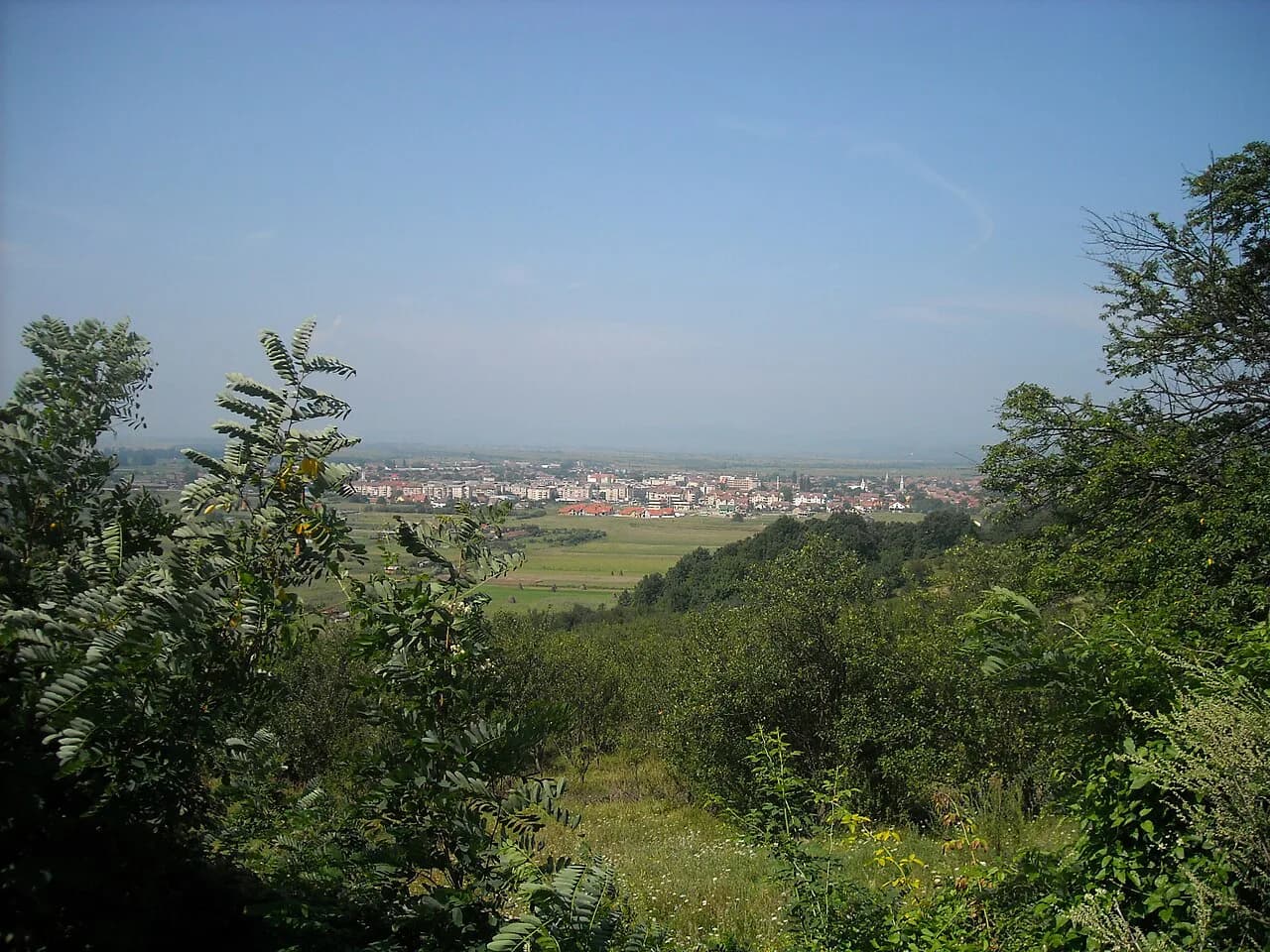
The county's relief is mostly mountain: 68% of its surface is upland, with the Șureanu, Parâng, Retezat, Vâlcan, Godeanu and Țarcu ranges of the Southern Carpathians, and the lower Poiana Ruscă, Metaliferi and Bihor mountains to the west. Hațeg sits in one of the intramontane depressions that form the lowest step of that landscape, the Hațeg Depression, which the county lists alongside Petroșani, Strei-Cerna, the Orăștiei corridor, the Mureș Defile and Brad.
The county council counts 418,565 residents in the 2011 census, spread across 7 municipii, 7 towns and 55 communes, with Deva as the county seat. Read those figures as the 2011 count, not a current population; the town's own 2021 census figure is 8,793.
How to reach Hațeg
The county's spine is Corridor IV, the pan-European route that pairs the E68/DN7 road with the railway between western Romania and Bucharest. Simeria, next to Deva, is the region's most important rail junction, which is where you change if you are arriving by train rather than driving the DN7 corridor.
For flights, the county council names Timișoara at 150 km and Sibiu at 120 km as the nearest international airports. Plan the transfer from whichever you pick before you book a bed: the last stretch into the basin is by road, and the practical question is whether you hire a car at the airport or arrange a pickup.
Local time in this part of Hunedoara is Europe/Bucharest, two hours ahead of London in standard time and three during summer. That two-to-three-hour shift matters if you are landing late and want daylight for the drive up the Orăștie valley.
The town itself: what there is to see and how long the centre takes
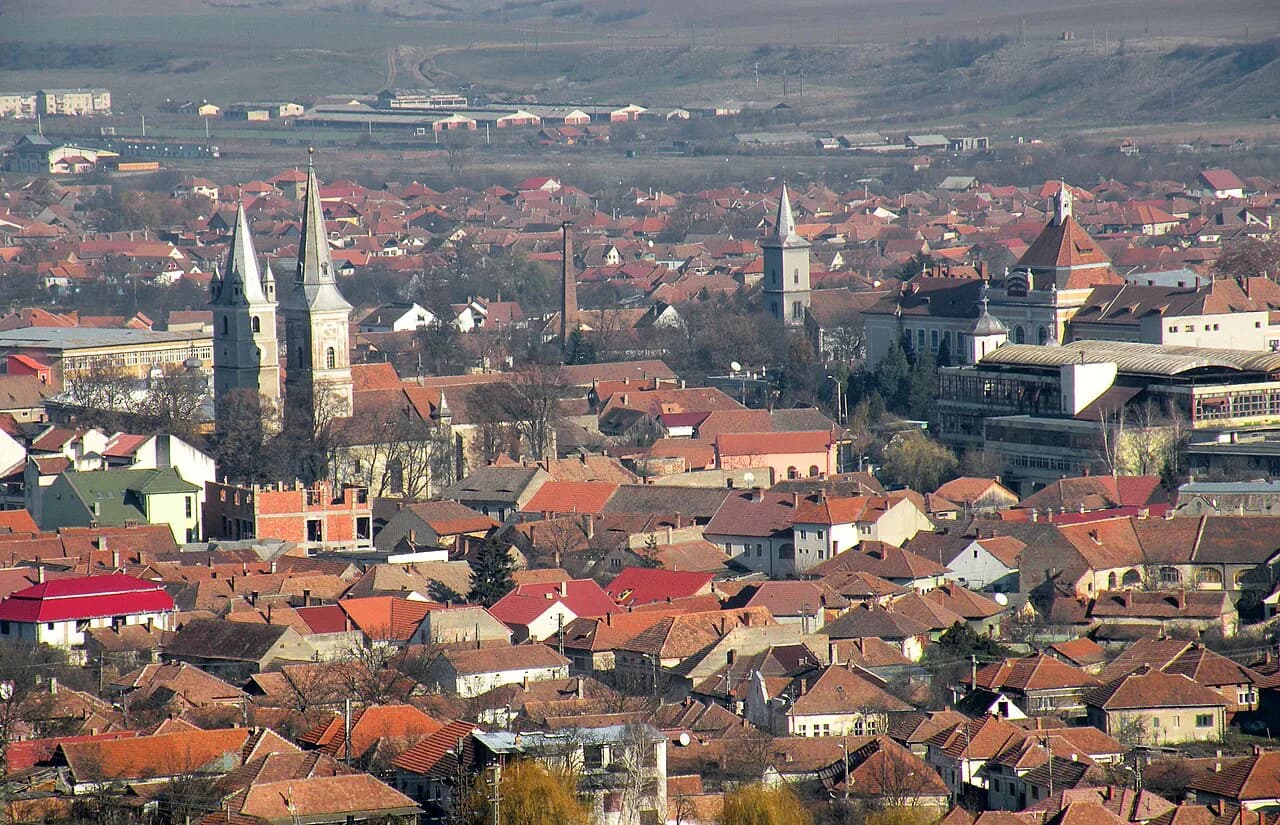
Give Hațeg an hour for the centre and treat the rest of the day as the basin's. This is a working small town, and the honest pitch is that it functions as a base: you sleep here, eat here and drive out to the ruins, rather than spending a sightseeing day on the streets themselves. If you want a full town day, put it into Deva or Alba Iulia instead.
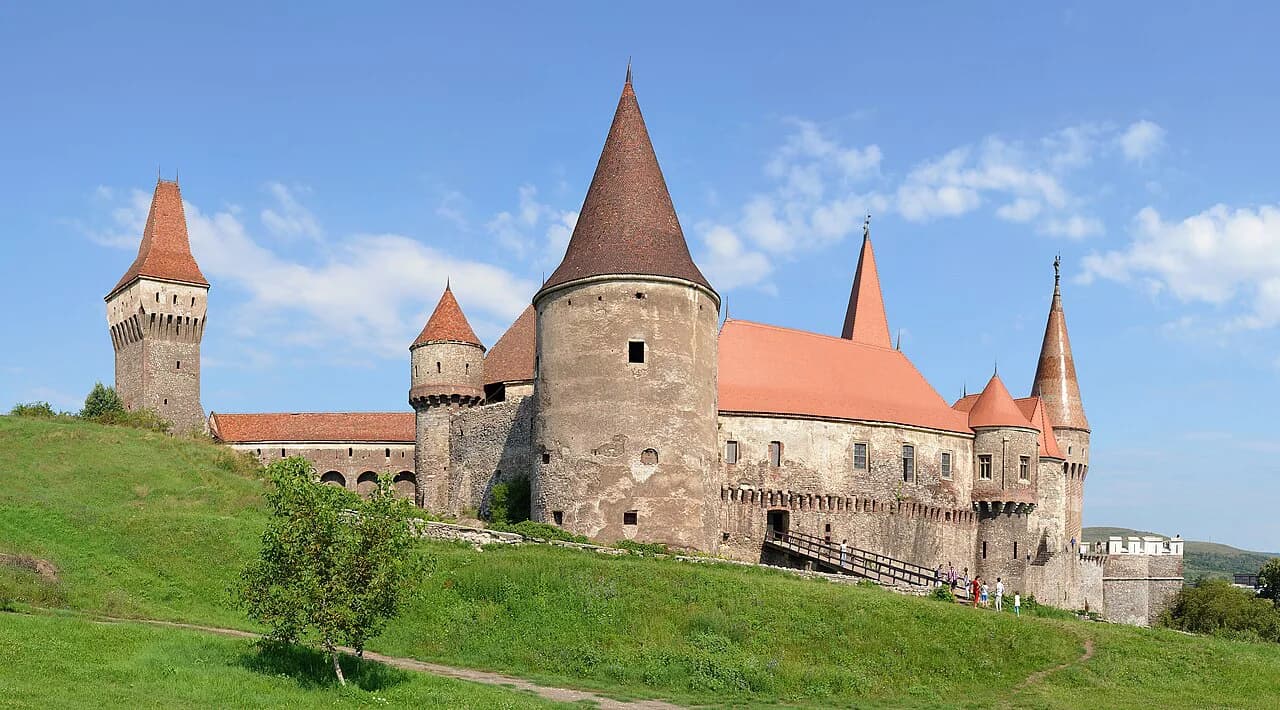
Corvin Castle at Hunedoara is a short run north-west and the reason many people are in the county at all. If you are building a Hunedoara trip, use the Hunedoara guide to place the castle, Deva and the Retezat alongside Hațeg rather than bolting them onto a single day.
Ulpia Traiana Sarmizegetusa: the Roman colonial capital
Ulpia Traiana Sarmizegetusa is the Roman city, on flat farmland at the head of the Hațeg Depression. Trajan founded it around AD 106 after the conquest of Dacia, and it served as the provincial capital until about AD 168, when some functions moved to Apulum, modern Alba Iulia; the province was evacuated around AD 270 under Aurelian.
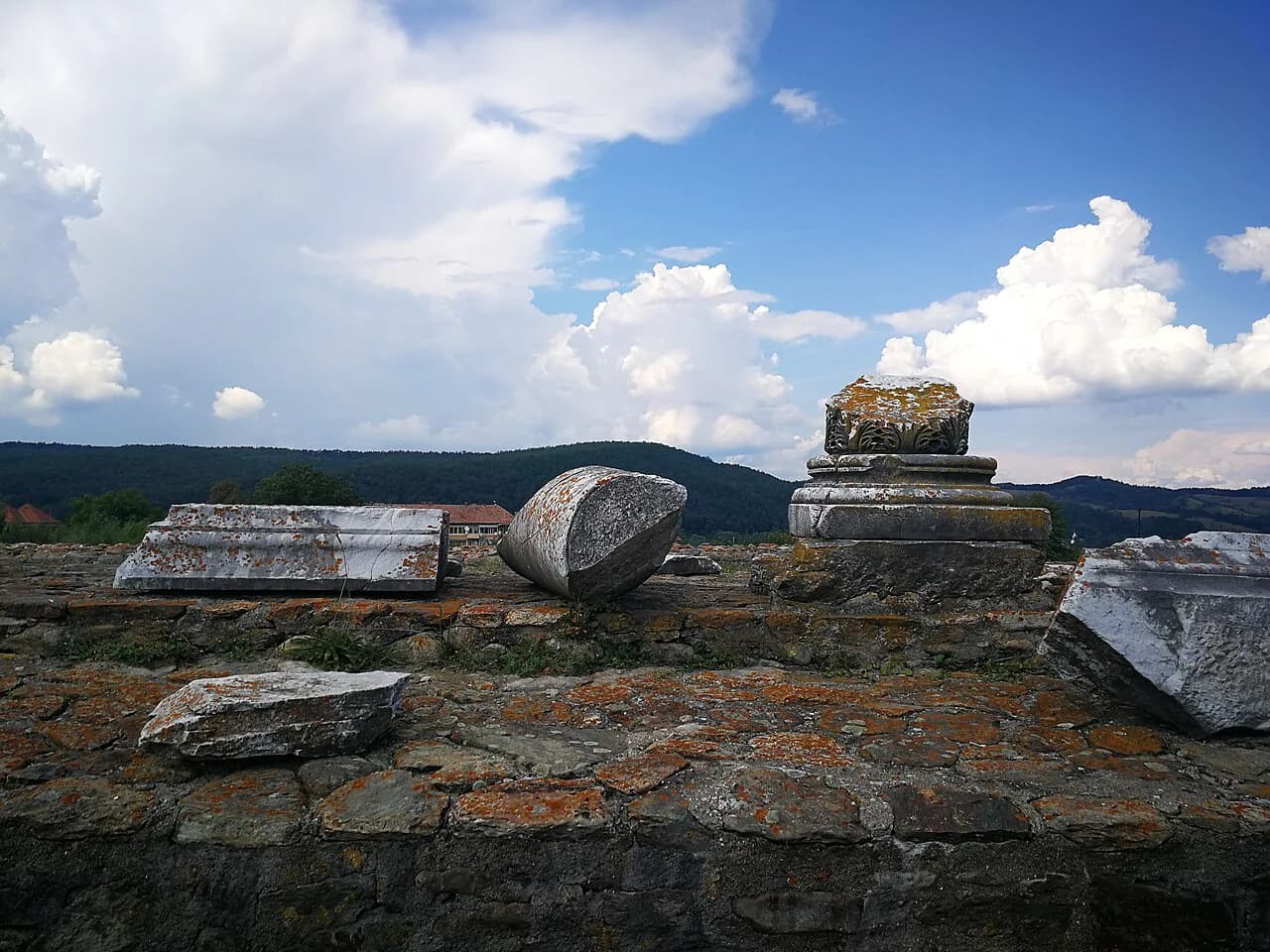
A perimeter wall of roughly 550 by 440 metres enclosed 32 hectares on an orthogonal grid, with a forum-basilica complex about 110 by 48 metres at the centre, a covered market, baths and houses. The amphitheatre, about 88 by 68 metres at the outer wall and built for some 5,000 spectators, sits east of the grid, and its elliptical arena and seating banks are the clearest monument on the ground.
There is a small on-site museum, and the exposed area is partly consolidated and partly still under investigation. This is the easy site: level walking, short distances, no mountain road. It suits a morning, and it pairs naturally with the town as a base.
Sarmizegetusa Regia: the Dacian capital in the mountains
Sarmizegetusa Regia is a different place entirely, 40 km north-east of the Roman city, high in the Orăștie Mountains. It was the Dacian political, religious and military centre until the Romans took it in AD 106, after which the capital was razed and a new one built on the plain at Ulpia Traiana.
The approach is the trade-off. You drive up the Orăștie valley through small villages and thick forest until the road runs out, park, and walk the last stretch to the entrance. Budget for that drive and walk on top of the visit itself; it is not a site you nip into from town.
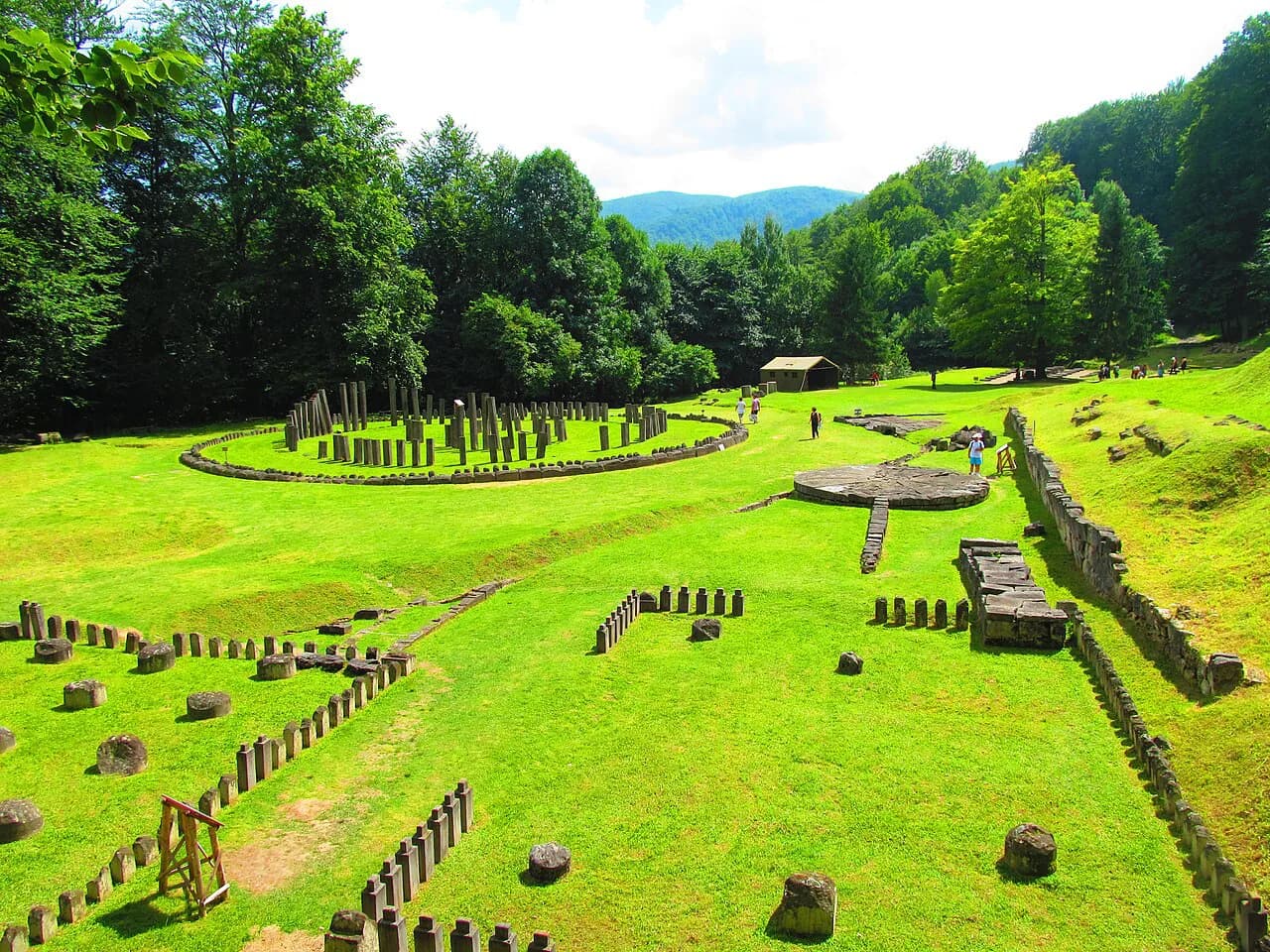
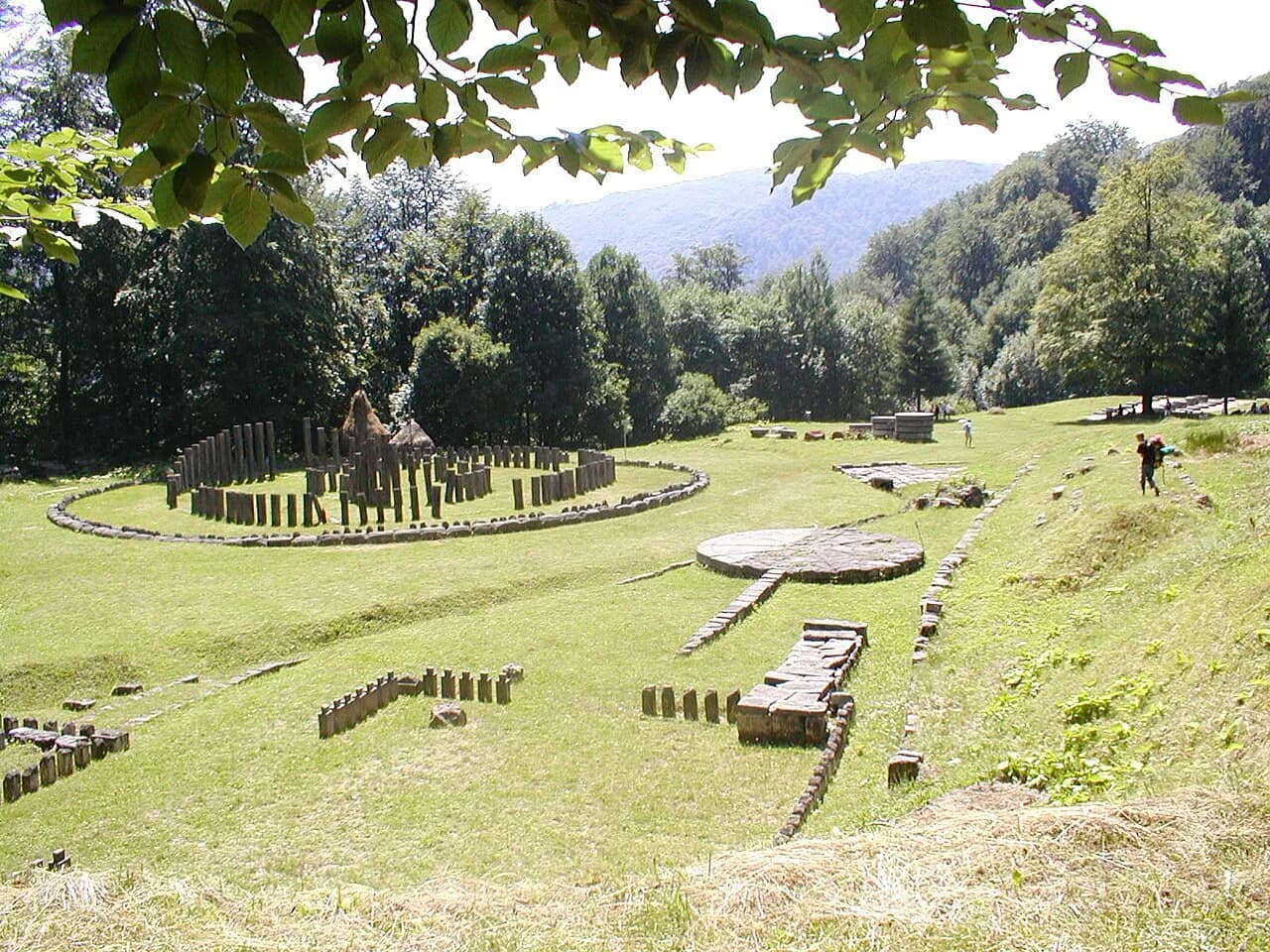
Inside, the site divides into the civilian settlement, the fortress and the sacred zone, and visitors see two of the three; the fortress mostly shows its walls. In the sacred zone the rectangular temples come first, then the circular andesite altar with its cut drainage channel, the large circular temple with its rings of andesite blocks and pilasters, and a smaller circular temple nearby. Signboards carry drawings of how the temples are thought to have looked.
The Dacian fortresses of the Orăștie Mountains are the wider set to which this site belongs, and if you want to see more than one, plan them as separate outings rather than a single loop. A dedicated guide to Sarmizegetusa Regia sets out the layout in more detail than a basin overview can.
Which Sarmizegetusa to choose if you only have one day
With one day and no car, choose Ulpia Traiana Sarmizegetusa: flat ground, a legible amphitheatre, an on-site museum and a short hop from Hațeg. With one day and a car, choose Sarmizegetusa Regia if you want the mountain setting and the sacred zone, accepting the valley drive and the walk at the end. Trying to do both properly in a day means rushing the one you care about.
The names trip people up, so keep them apart. Ulpia Traiana is the Roman colony in the Hațeg Basin; Sarmizegetusa Regia is the Dacian capital in the mountains. If Roman urban planning is your interest, the sibling guide to Ulpia Traiana Sarmizegetusa takes the forum, walls and epigraphy further.
The Hațeg Basin in deep time
Hațeg Island was a large offshore island in the Tethys Sea during the Late Cretaceous, probably from the Cenomanian to the Maastrichtian. That is why the name keeps surfacing in searches about dinosaurs and pterosaurs: the basin's rocks record an island fauna, not a modern landmass.
The island no longer exists as land surrounded by sea; the Tethys is gone and the basin is inland Hunedoara. Read the fossil literature rather than expecting a theme park, and do not assume any particular species was found here without checking the source you are reading.
Getting around the basin without a car, and what a car buys you
Without a car, the basin narrows to what you can reach from Hațeg by rail and local road transport, with Ulpia Traiana the realistic target. A car buys you the Orăștie valley road to Sarmizegetusa Regia, the run to Corvin Castle at Hunedoara, and the freedom to combine sites without waiting for connections.
If you are travelling by train, Simeria is the junction to aim for, and the county road network totals 1,798 km, of which 383 km are national roads and 1,415 km county roads, the longest county road network in Romania. That density of minor roads is why a hire car makes the basin feel small, and why relying on buses for the mountain site is a gamble.
How Hațeg fits a wider Hunedoara trip
Two nights in Hațeg covers the basin: one afternoon for Ulpia Traiana and the town, one full day for Sarmizegetusa Regia or Corvin Castle. Add a night in Deva if you want the county seat, and keep the Retezat for a separate mountain day rather than folding it into a ruins day. The Hunedoara guide is the place to start for the wider county.
The county's climate is temperate continental, humid and cool, shaped by the altitude, with annual averages running from about -2°C in the mountains to 10°C in the Mureș corridor, and precipitation of 540–600 mm per square metre a year. Treat those as climate averages, not a forecast, and pack for cool, damp upland weather even in a warm month.
Orăștie, the other town on the corridor, is worth a look if you are already driving the valley, and the Orăștie guide covers its own sights alongside the Dacian ruins nearby. Check opening times and ticket prices for Ulpia Traiana and Sarmizegetusa Regia with the site operators before you set out.
Which Sarmizegetusa fits your day
Choose Ulpia Traiana if you are on public transport, short of time, or want level ground and an amphitheatre you can read at a glance. Choose Sarmizegetusa Regia if you have a car, a spare half-day and an appetite for a forest road and a walk at the end of it.
Book the bed in Hațeg for the basin, not for the town, and build your day around Ulpia Traiana first.
Explore more Hunedoara guides
Sources
Useful notes for your next trip
Optional updates to our guides.
You might also like
Continue reading
More guides you'll find useful