Văratec Monastery: Visiting the Convent and Its Village
Văratec Monastery is an Orthodox nunnery in Neamț County, 12 km from Târgu Neamț. Here is what visitors see inside the walls and how the convent village works.
On this page
Văratec Monastery is worth a stop for the convent village as much as the church: a working Orthodox nunnery where several hundred nuns live in traditional houses on lanes around a walled enclosure. It sits in Văratec village, Agapia Commune, Neamț County, 12 km from Târgu Neamț and 40 km from Piatra Neamț. This guide covers what stands inside the walls, how the village lanes work, the story behind the stone church and how to reach it by car. For the practical details, see the Piatra Neamț.
Plan on daylight hours and a modest, quiet visit rather than a ticketed attraction: the nuns' homes are people's front doors, not display pieces. Keep voices low in the lanes, dress with shoulders and knees covered, and ask before photographing anyone.
Where Văratec Monastery is
The monastery lies in Neamț County in the Moldova region of eastern Romania, in Văratec village within Agapia Commune. RomaniaTours places it 12 km from Târgu Neamț and 40 km from Piatra Neamț, in a forest at the foot of the mountains. Those two towns are your practical bases and the obvious approach points by road.
It is close enough to Agapia to pair the two in one morning if you have a car, since both sit in the same commune. An overnight in Târgu Neamț lets you space the monasteries out across two days and keep the driving short.
What you see inside the walls
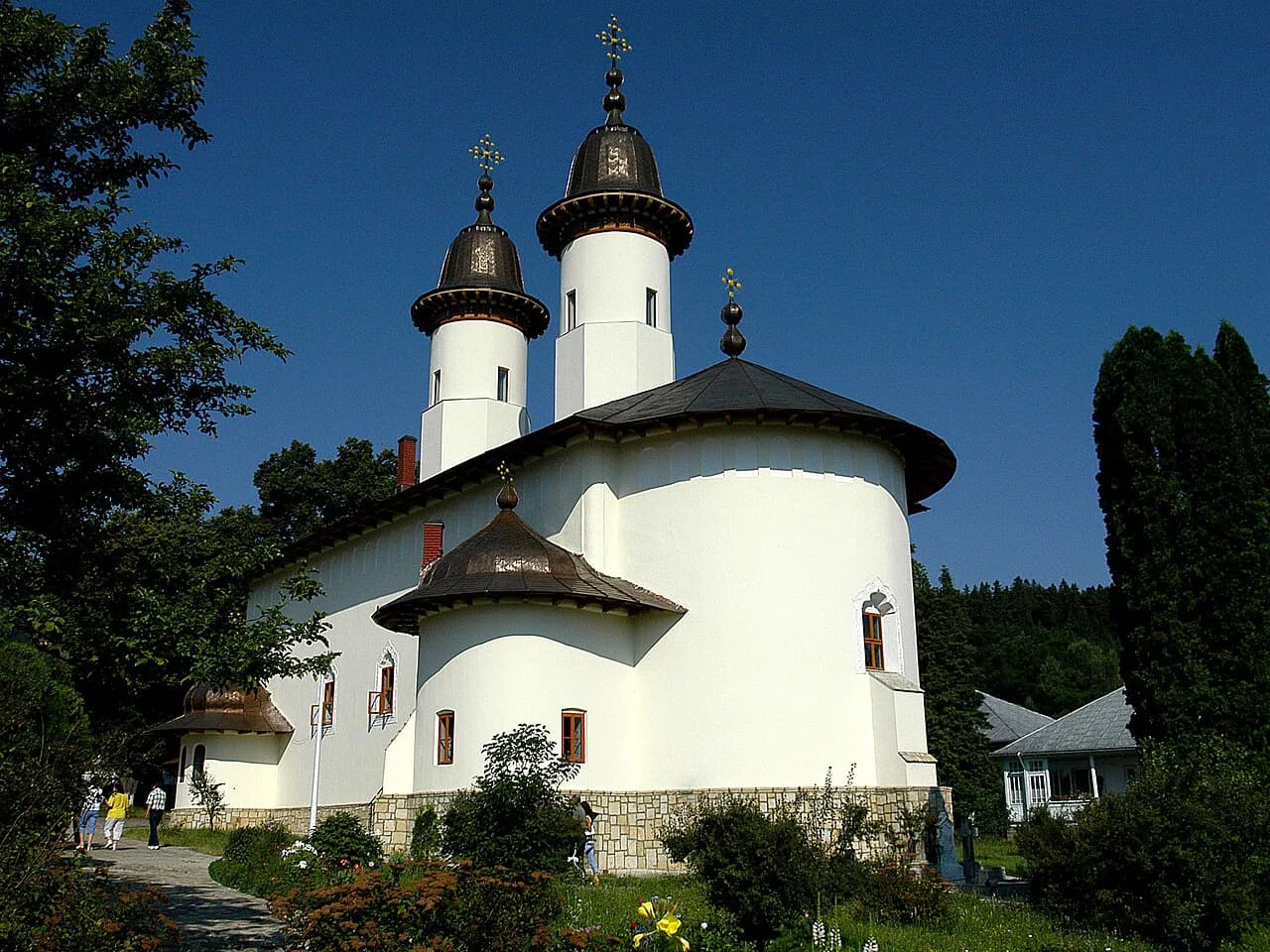
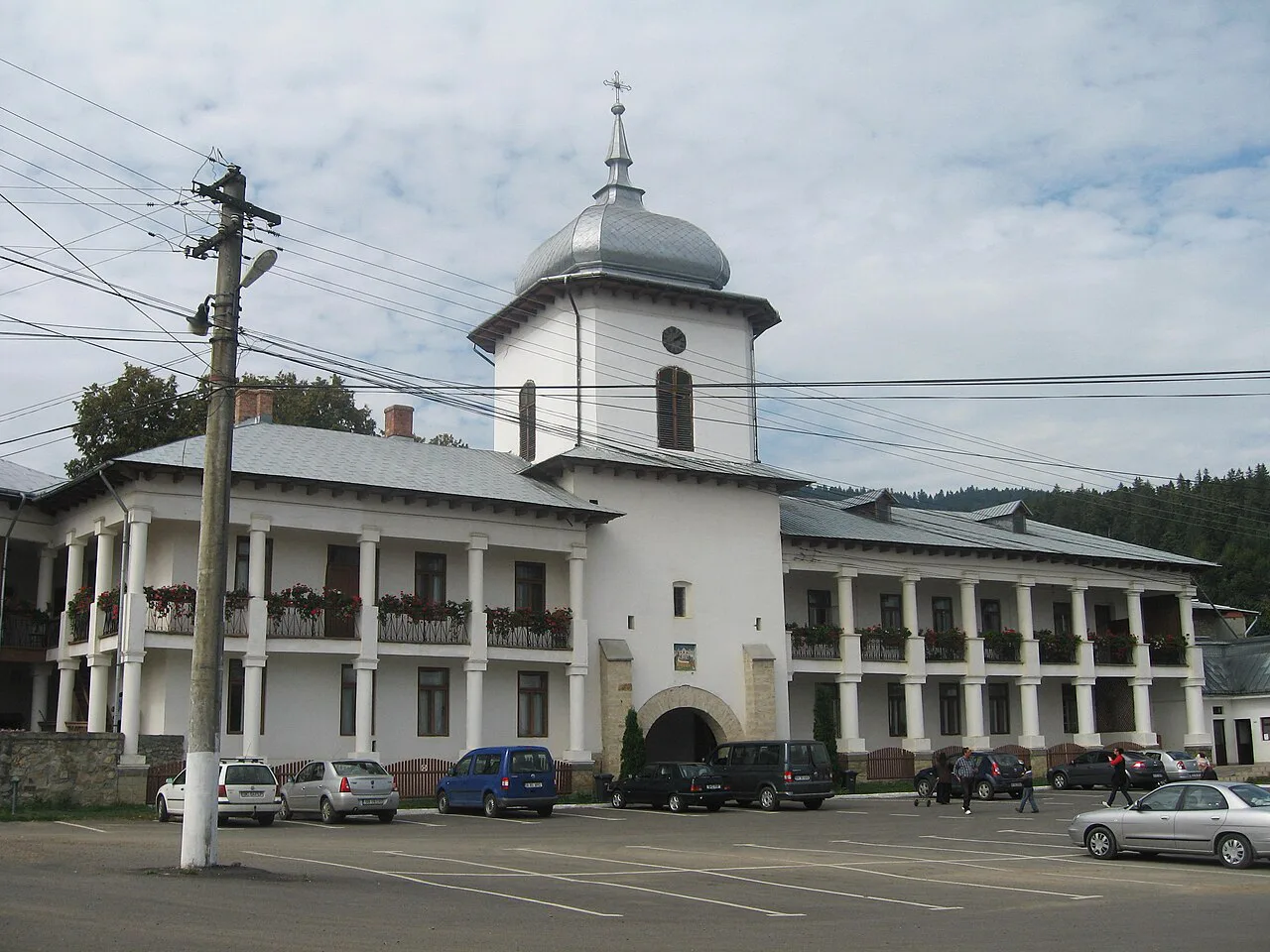
Heavy stone walls enclose the main church, the cathedral, administrative buildings on the north side and the Monastery Museum. The main church is dedicated to the Assumption of Mary, and the museum holds the community's collected objects. Give the church and museum most of your time; the rest of the enclosure is working space for the nuns.
The enclosure also once housed the Regina Maria Workshop, named in the RomaniaTours account of the site. Treat the church as a place of worship first: step aside for anyone praying, keep phone calls outside and leave tripods and flash alone unless you are told otherwise at the gate.
The convent village
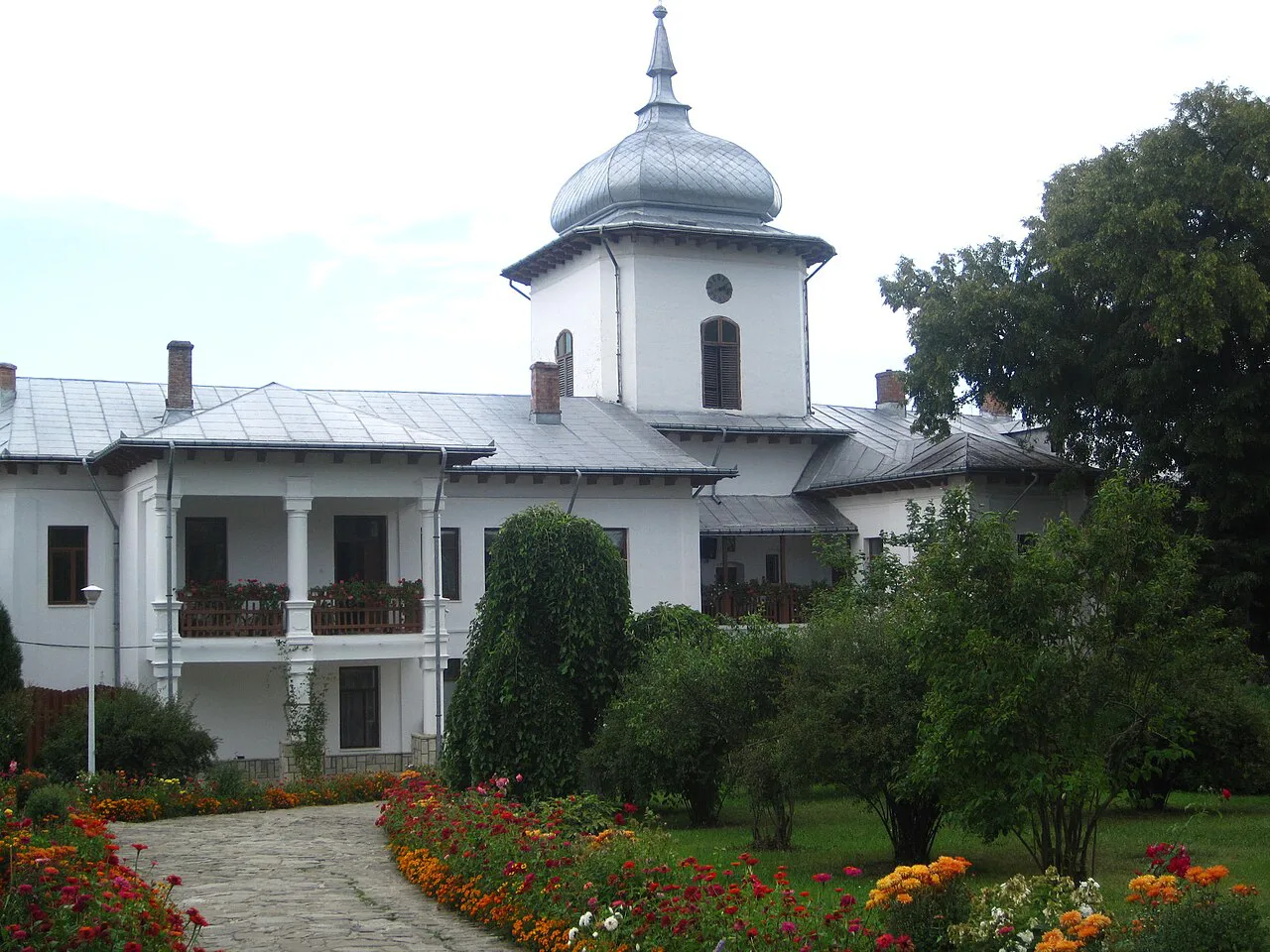
What separates Văratec from a monastery you walk into and leave is the village around it: traditional peasant houses where the nuns live, set along small roadways outside the monastic walls. The community is large, and the RomaniaTours description puts the number of nuns at nearly 400. The lanes are the visit's real texture, and they are also where people live.
Walk them slowly, keep to the road, and do not photograph doorways, washing lines or residents without asking. There is no set route and no ticket gate in the lanes, so the trade-off is freedom against the need to read the place as a neighbourhood rather than a sight.
The community and the Regina Maria Workshop
Văratec is a large working community rather than a heritage shell. The Wikipedia entry describes it as a Romanian Orthodox women's monastery in Văratec village, Agapia Commune. That framing matters for planning: services, bells and daily routines shape when the enclosure feels busy or quiet.
The Regina Maria Workshop is named within the enclosure in the RomaniaTours account, and the museum preserves objects tied to the community. Ask at the gate whether the museum and workshop rooms are open on the day you arrive, since access to individual buildings can vary.
The 19th-century church: 1808, 1812 and 1841
Building on the stone church began in 1808, was finished and consecrated in 1812, and the interior was painted in 1841, according to RomaniaTours. These dates describe the stone church you see today, not the monastery's origins.
A severe fire on 11 June 1900 destroyed large parts of the monastery: the cathedral lost its roof and spires, the bell tower collapsed and the chapels were destroyed. The buildings were restored, which is why the enclosure reads as a coherent group today. Keep that sequence in mind when you look at the roofline and the tower.
Văratec became an independent monastery in 1839, separating from Agapia Monastery. That link makes the pair a natural half-day together, and the Agapia Monastery page covers its own church and the Nicolae Grigorescu paintings.
Getting there from Târgu Neamț or Piatra Neamț
A car is the straightforward way in. From Târgu Neamț the distance is 12 km, from Piatra Neamț 40 km, with the monastery sitting in forest at the foot of the mountains. Allow for narrow village roads on the final stretch and park where you are not blocking a lane.
Târgu Neamț is the closer base, and the town page covers the citadel and the Creangă memorial house for the rest of the day. If you are working from Piatra Neamț, treat Văratec and Agapia as a loop rather than two separate outings, and check road conditions locally before setting off.
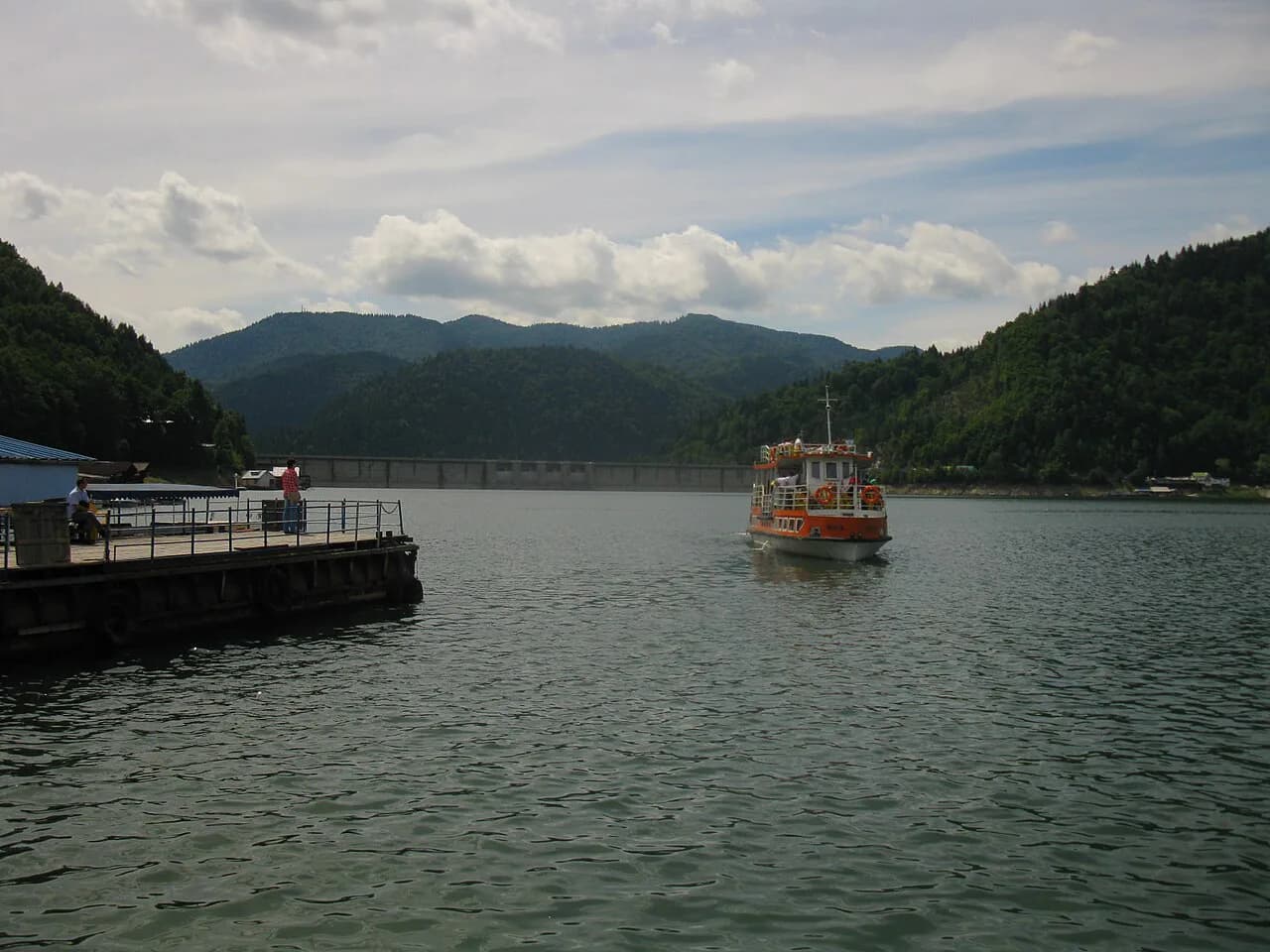
Further afield, the Bicaz dam and Lake Izvorul Muntelui make a long but logical extension of a Neamț County driving day. Those heading on to Neamț Monastery will find a separate walled complex with its own character.
When to go and how to behave
Visit in daylight, when the church is easiest to see and the lanes are safe to walk. Modest dress, quiet voices and a request before photographing anyone are the practical decisions that make a visit work in a living convent.
Check current access at the gate or through the local tourist office before you travel, especially if you want the museum rather than just the church and lanes. Only the distances above are confirmed here; opening times and any entry charge are best confirmed on the day.
Is Văratec worth the detour?
Yes, if you want a working convent and its village lanes rather than a single walled church. Pair it with Agapia and base yourself in Târgu Neamț to keep the driving short.
Build the day around daylight hours, modest dress and a slow walk through the nuns' lanes, and confirm museum access at the gate. The church, the enclosure and the village are the reasons to come, and they reward unhurried time.
Explore more Neamt guides
Sources
Useful notes for your next trip
Optional updates to our guides.
You might also like
Continue reading
More guides you'll find useful