Agapia Monastery: A Visitor's Guide to the Church and Road Access
A visitor's guide to Agapia Monastery in Neamț County: the church interior, the monastic setting and road access from Piatra Neamț and Târgu Neamț.
On this page
Agapia Monastery is one of the Orthodox communities in Neamț County, reached by road from Piatra Neamț and close to Târgu Neamț. Allow about an hour for the church and grounds, and match it with one or two more stops in the same county. This guide covers what the visit involves, how the road access works from the nearest towns and airports, and how to pair it with other monasteries and the citadel.
Agapia is not the American Orthodox nun Mother Agapia Stephanopoulos, who has no connection with this Romanian community. Searches for the name pull both together, so keep the monastery and the person apart when you plan.
Where Agapia Monastery Sits in Neamț County
Agapia lies in the Neamț countryside outside Târgu Neamț, the small town in the north of the county, set on the terrace of the Ozana river at the entrance to the Neamț depression. Târgu Neamț has around 21,000 residents and tourism as its main activity, which makes it a practical base for the monasteries around it. The town stands at 365 m and is ringed by hills including Culmea Pleșu at 913 m to the north and Dealul Boiștea at 582 m to the east.
The wider county town of Piatra Neamț sits at 310 m where the Bistrița river leaves the mountains, overlooked by Pietricica (590 m) and Cozla (679 m). It is the larger of the two towns and the usual starting point for a monastery circuit in the county. Coming from Piatra Neamț, plan the monasteries as one loop rather than separate outings.
The Church Interior
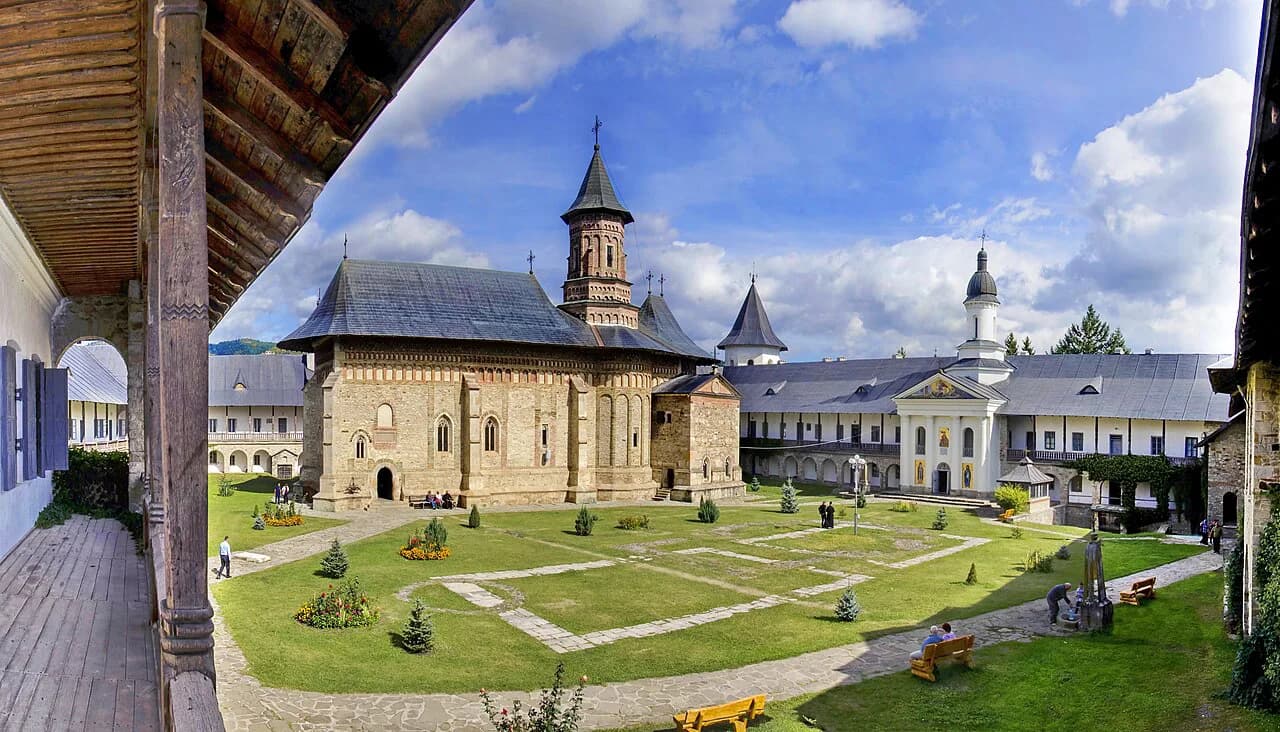
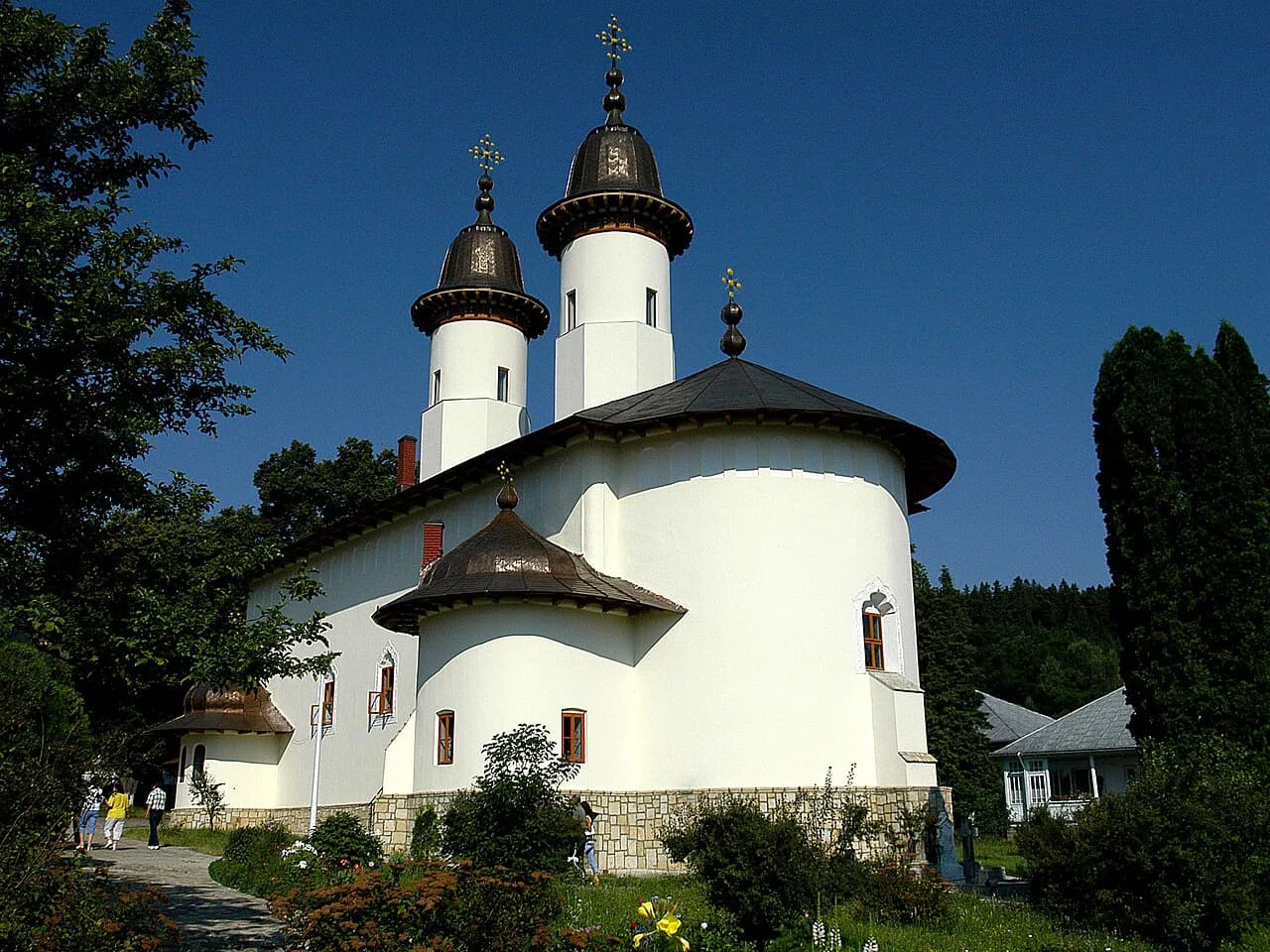
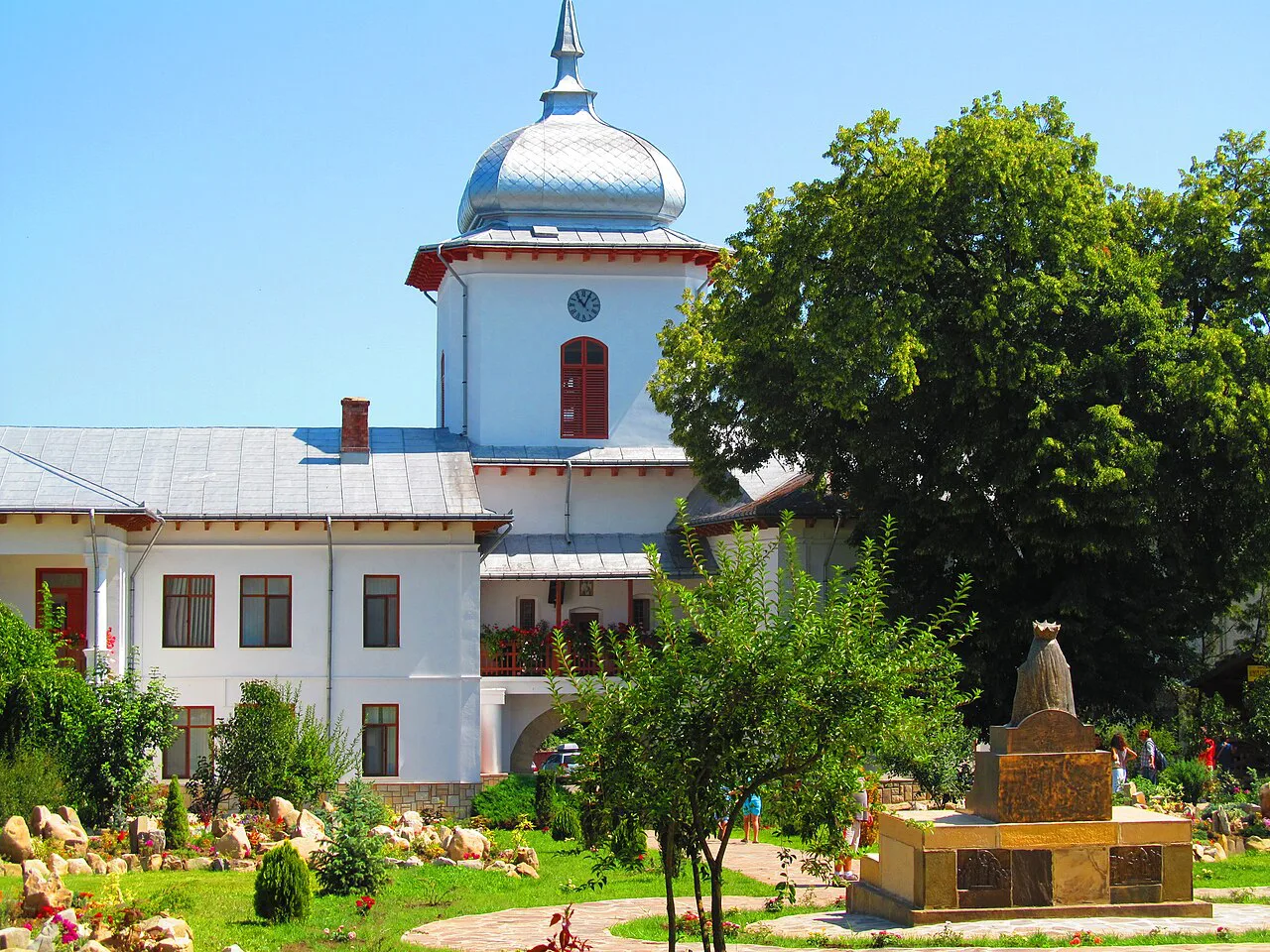
The visit centres on the monastery church. Orthodox churches in this part of Moldavia are approached as places of worship first, and the interior is where you spend your time: walk the length of the nave, look at the icon screen and the painted walls, and sit for a while rather than photographing from the door. A quiet half-hour inside tells you more than a circuit of the outside walls.
Agapia's church is known for its interior painted by the young Nicolae Grigorescu, one of the reasons the monastery is placed on Moldavian monastery itineraries. If the paintings are your main reason for coming, build flexibility into the day and check the current position with the county's visitor information before you travel, since a working monastery can close parts of the church for services or conservation.
Monastic Collections Nearby
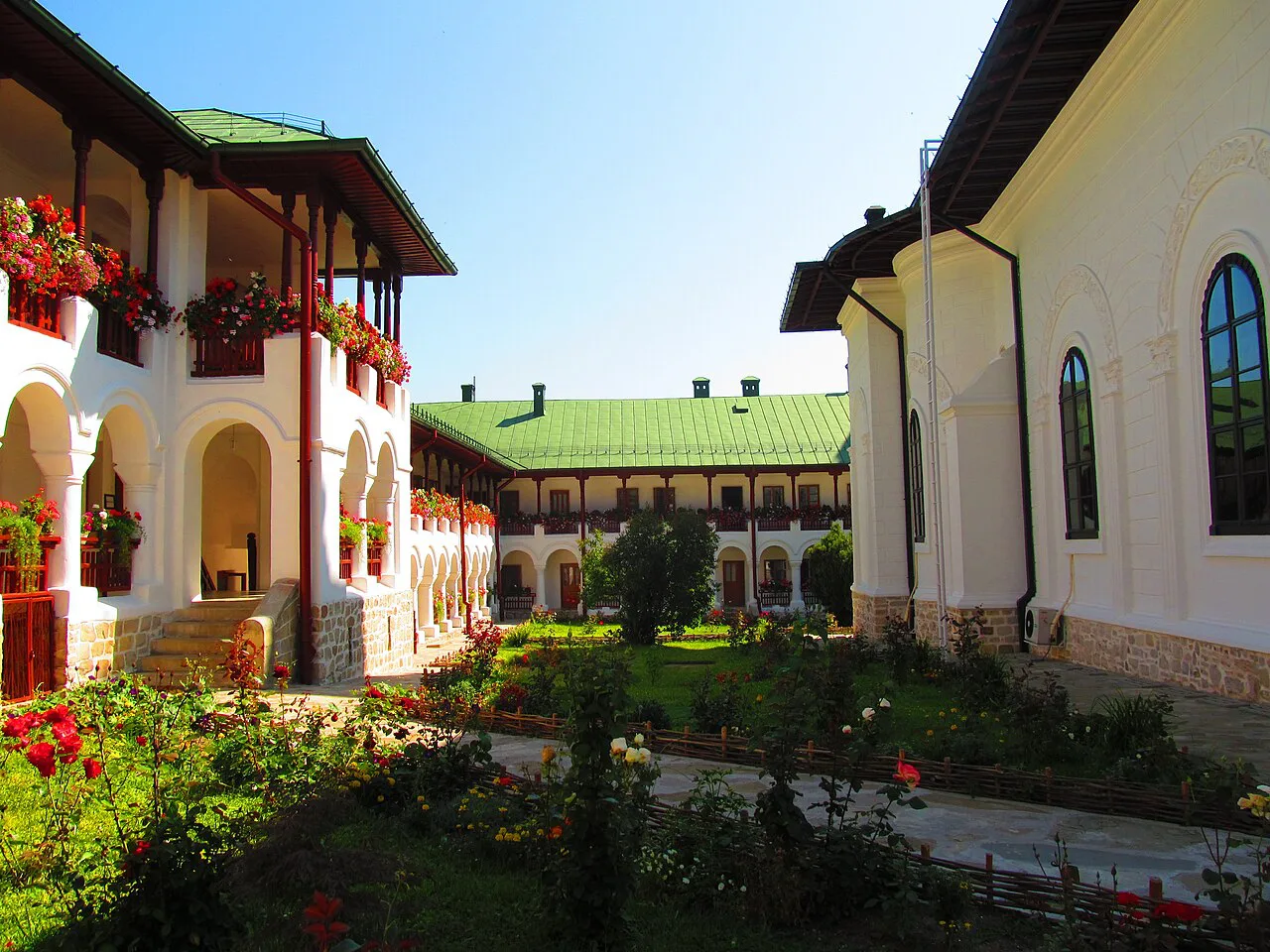
The Neamț Monastery museum shows what a Moldavian monastic collection contains: gold and silver liturgical objects, stone and wood carvings, embroidery, fabrics, manuscripts, translations from Greek and Slavonic, and printed documents recording princes and abbots. Highlights include a Slavonic Gospel of 1759 and the old iconostasis of Neamț Fortress, painted in the fifteenth century. Seeing that collection gives the churches of the county a context they lack on their own.
The Neamț Monastery library holds over 18,000 volumes, the product of a copyists' and calligraphers' school and a printing press that worked there from the medieval period into modern times. That scale explains why the county's monasteries read as cultural centres rather than isolated churches. Allow an hour for the museum at Neamț if you are combining it with Agapia on the same day.
Getting There by Road
The monasteries along this stretch of the county share the DN 15 C corridor between Piatra Neamț and Târgu Neamț. DN 15 B comes in from Cristești and Poiana Largului, and the E 85 passes about 15 km from Târgu Neamț via Cristești and Fălticeni. Driving gives you the most control over timing, since you can move between Agapia, the neighbouring communities and the citadel without waiting for a bus.
The nearest airports are Suceava at 65 km from Târgu Neamț, Iași International and Bacău International. Suceava has scheduled flights to Bucharest and Timișoara, Iași to Vienna, Budapest, Bucharest, Constanța and Timișoara, and Bacău to several Italian cities (Bologna, Milan, Rome and Turin) plus Bucharest and Timișoara. Check current routes and timetables with the airlines before booking.
By rail, trains from Târgu Neamț connect to the Bucharest–Suceava main line through the Târgu Neamț–Pașcani link, so a car-free visit is possible with a change. If you are relying on trains, build the day around the connection times rather than trying to squeeze in three monasteries.
How Long to Allow and What to Pair With It
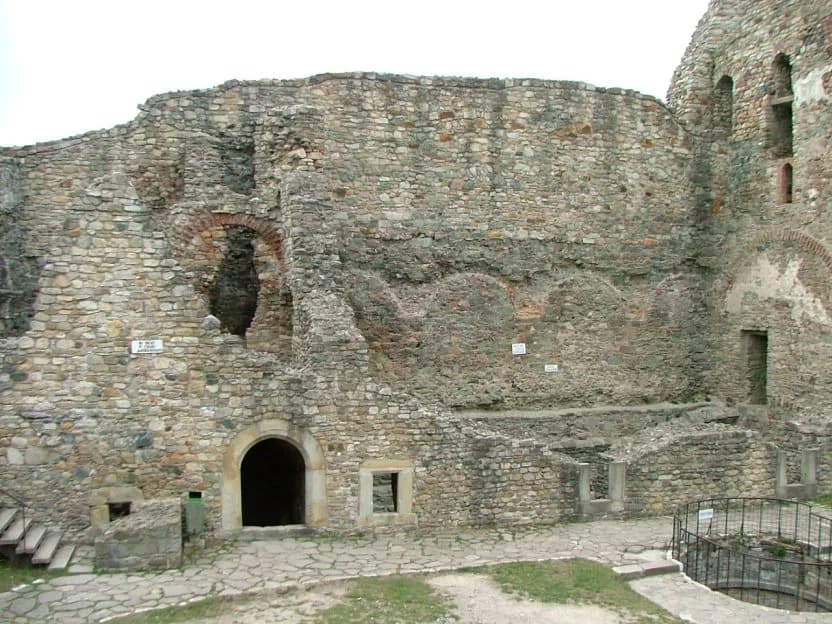
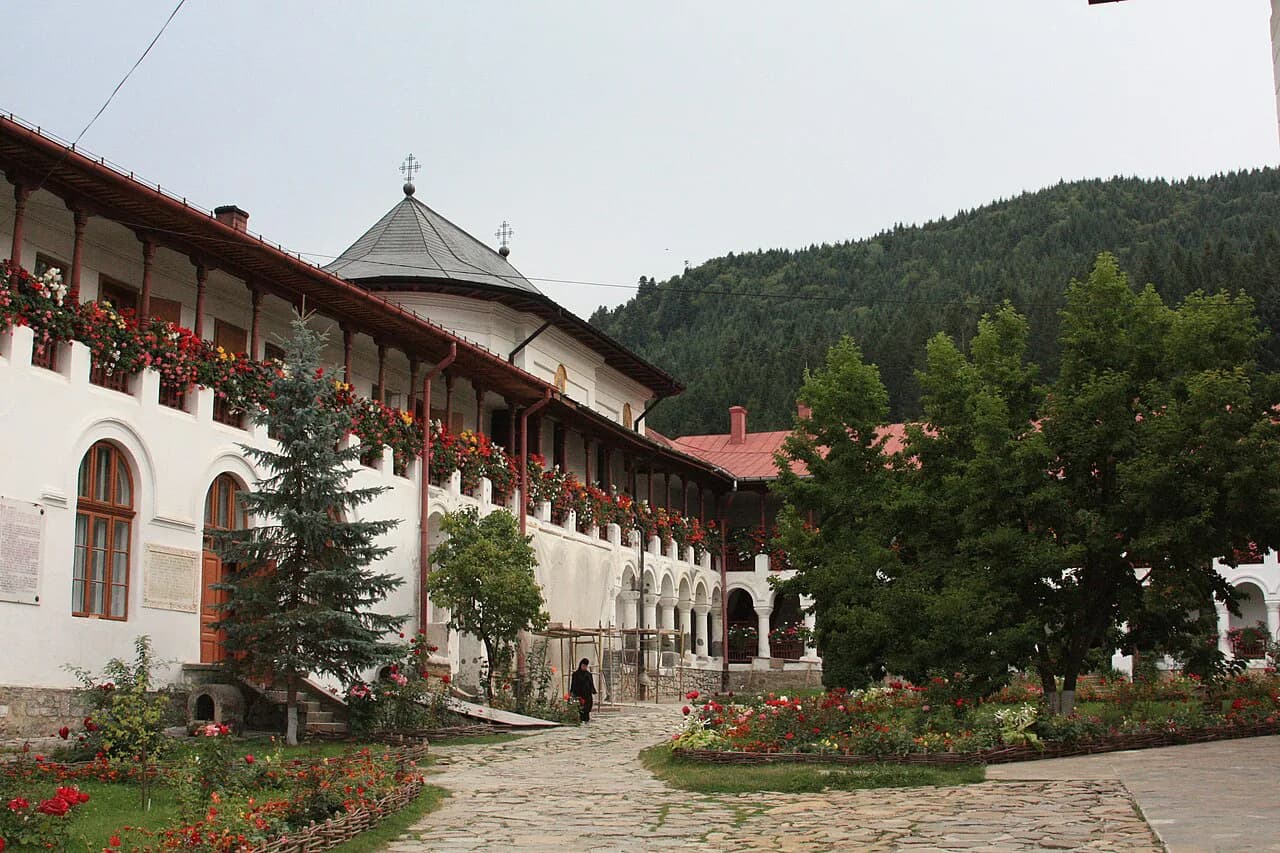
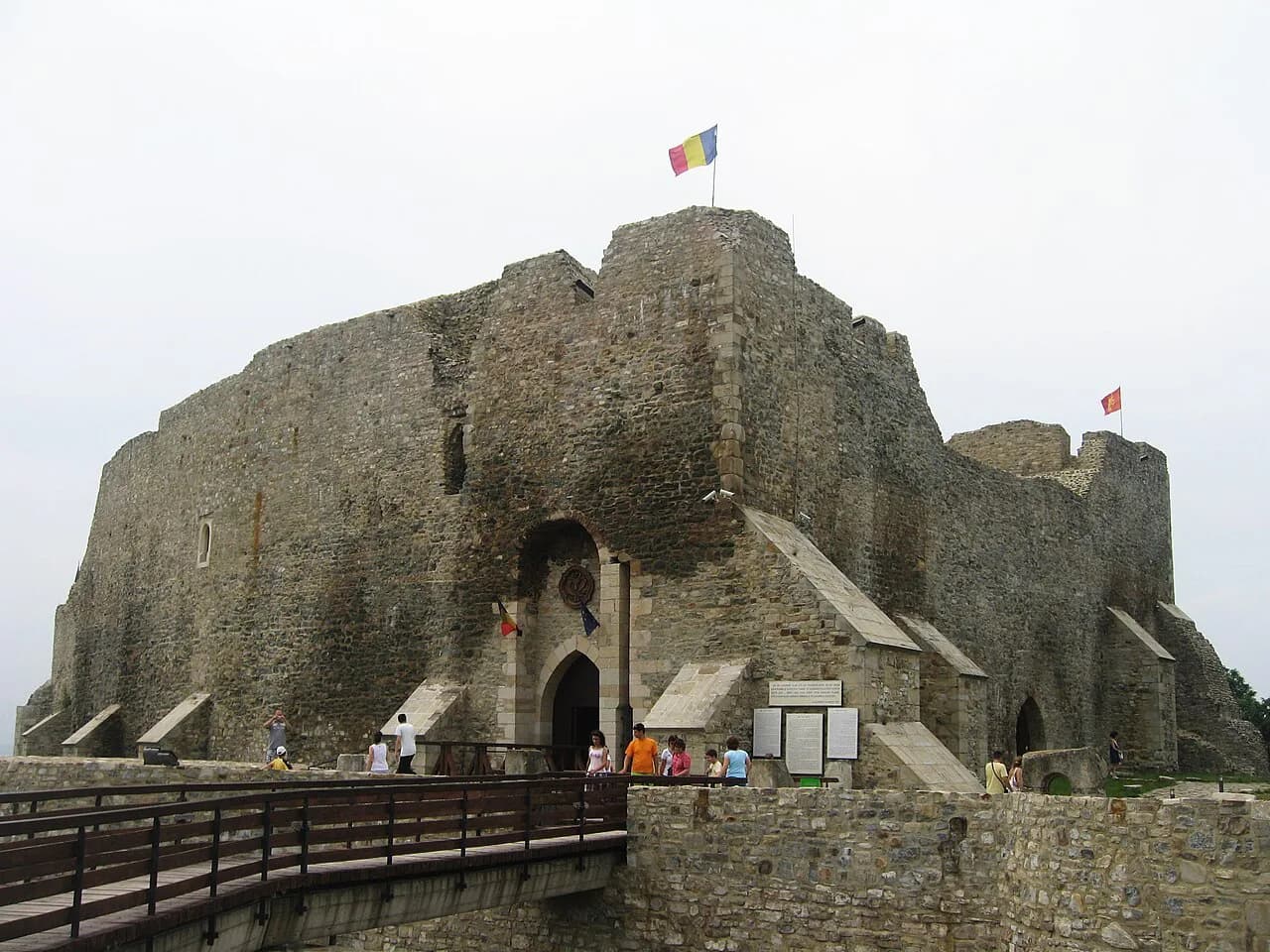
Give Agapia itself about an hour: the church, the grounds and a walk around the walls. Then add Neamț Citadel above Târgu Neamț, where the fortress walls and the view over the Ozana valley make a natural second stop on the same afternoon. The two sit close enough to combine without rushing.
Văratec Monastery is the other community in this cluster and works well on the same loop as Agapia, with Văratec village around it. Treat the monastery circuit through Neamț County as a slow sequence of three or four stops rather than a tick-list, so pick Agapia, Văratec and Neamț and leave the rest for another trip.
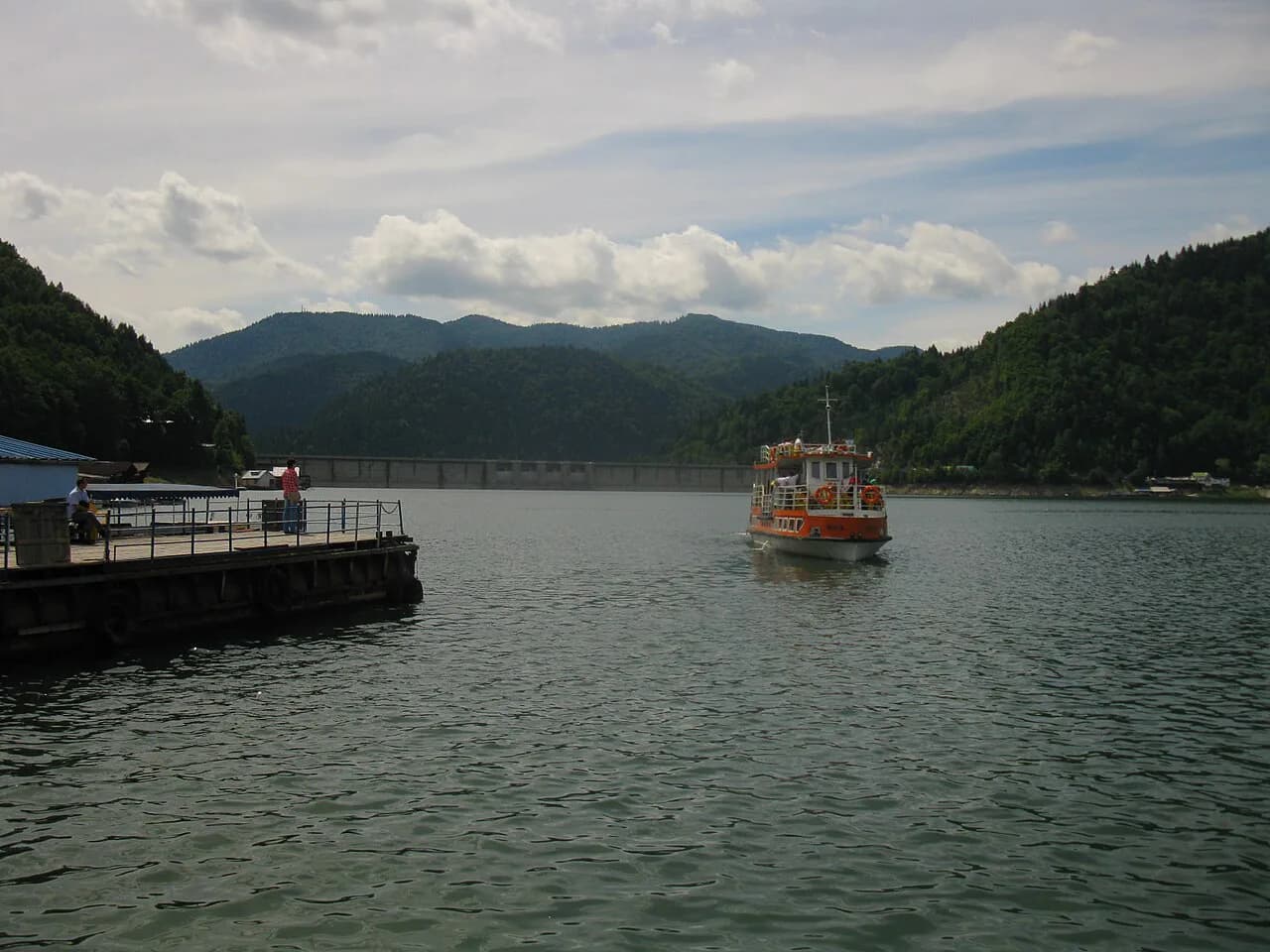
If you are coming from further west, Bicaz and Lake Izvorul Muntelui sit up the Bistrița valley from Piatra Neamț and make a separate day rather than an add-on. Keep the monastery day in the Neamț depression and the lake day on the water, so you are not driving the valley twice.
Visiting as a Non-Orthodox Traveller
Agapia is a working monastery, so treat the church as a place of worship first. Dress modestly, keep voices low inside, and stay out of areas set aside for the resident community. Photography inside painted churches is often restricted, so ask the sisters before raising a camera.
The county publishes visiting hours and entry fees for its tourist objectives, and those pages are the place to confirm the current arrangements for Agapia and its neighbours before you set out. Times change with the religious calendar, so check close to your travel date rather than months ahead.
Is Agapia Worth the Detour?
Yes, if you are already in Neamț County for the monasteries and the citadel. Agapia is a short drive from Târgu Neamț, the church rewards a quiet hour, and pairing it with Văratec and Neamț gives you a coherent day rather than a single stop.
Skip it only if your trip is fixed on Bucharest or Brașov with no room for the northern county. Otherwise, base yourself in Târgu Neamț, drive DN 15 C, and confirm opening times on the county's visitor pages a few days before you go.
Frequently Asked Questions
Is Agapia Monastery still a working monastery?
Yes. Agapia is an active Orthodox community, so the church is a place of worship rather than a museum. Visit quietly, dress modestly and respect any areas closed to visitors.
Do you need a car to reach Agapia Monastery?
A car is the simplest option, using DN 15 C from Piatra Neamț towards Târgu Neamț. Trains from Târgu Neamț connect to the Bucharest–Suceava main line via Pașcani, so a car-free visit is possible with a change and careful timing.
Can you visit Agapia Monastery as a day trip from Piatra Neamț?
Yes. Piatra Neamț is the larger county town and a practical starting point for a monastery loop, with Agapia, Văratec and Neamț Monastery close enough to combine in one day by car.
Sources
Useful notes for your next trip
Optional updates to our guides.
You might also like
Continue reading
More guides you'll find useful