Vatra Dornei: A Practical Guide to the Bucovina Mountain Town
A practical guide to Vatra Dornei in southern Bucovina: the compact centre on the Bistrița, how long to stay, and how the town fits a painted monasteries trip.
On this page
Give Vatra Dornei half a day or a full day. The town sits where the Bistrița river runs through the Dornelor basin, between the Ardeal region and Moldova, and its own tourism material calls it the link between the two. This guide covers the layout of the centre, a short walking route through it, how long to stay and how to slot the town into a Bucovina trip focused on the painted monasteries of Bucovina.
What Vatra Dornei is and where it sits
Vatra Dornei is a mountain town in the Țara Dornelor, the Dornelor basin, on the Bistrița river in Suceava county, in the Eastern Carpathians. Local tourism material describes it as the link between the Ardeal region and Moldova, which is the simplest way to place it: the town sits in the mountains of southern Bucovina rather than on the rolling plain around Suceava. That position makes it a natural western gateway for anyone touring the monasteries by car.
The population is modest: 13,427 inhabitants at the 2011 census. That figure is now well over a decade old, so treat it as a rough scale rather than a current headcount. In practice you are dealing with a walkable town centre rather than a city, and that shapes how much of it you can cover on foot.
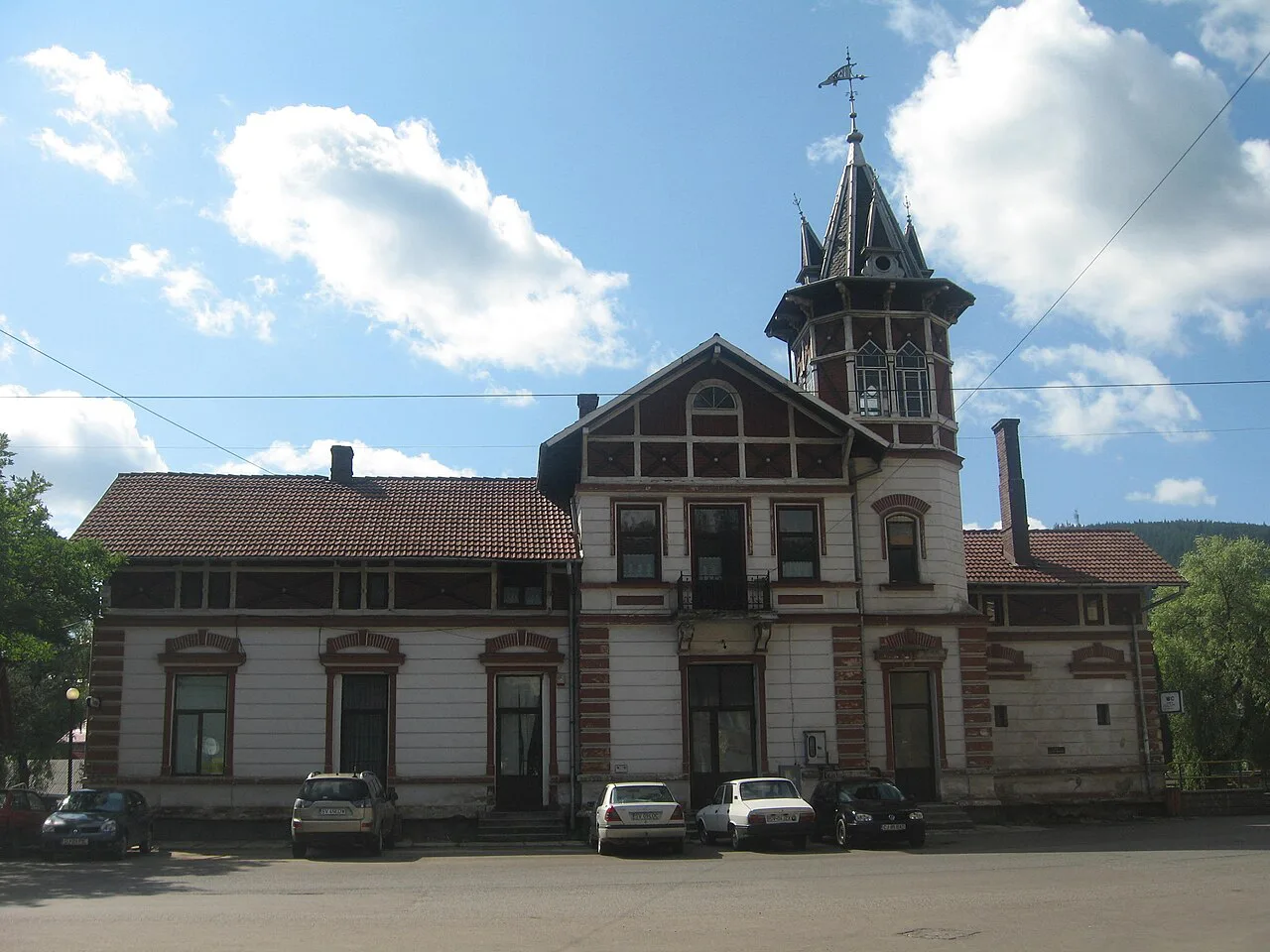
How the town is laid out: the Bistrița and the hills
The Bistrița runs through the town and the surrounding hills rise on both sides, so most views from the centre look up rather than out. Plan your walk around the river corridor first; the hillside is best taken in from a viewpoint rather than climbed street by street.
Because the centre is compact, you will not need public transport within Vatra Dornei. Leave the car where you park it and do the middle of town on foot, saving the vehicle for the onward drive towards the monasteries.
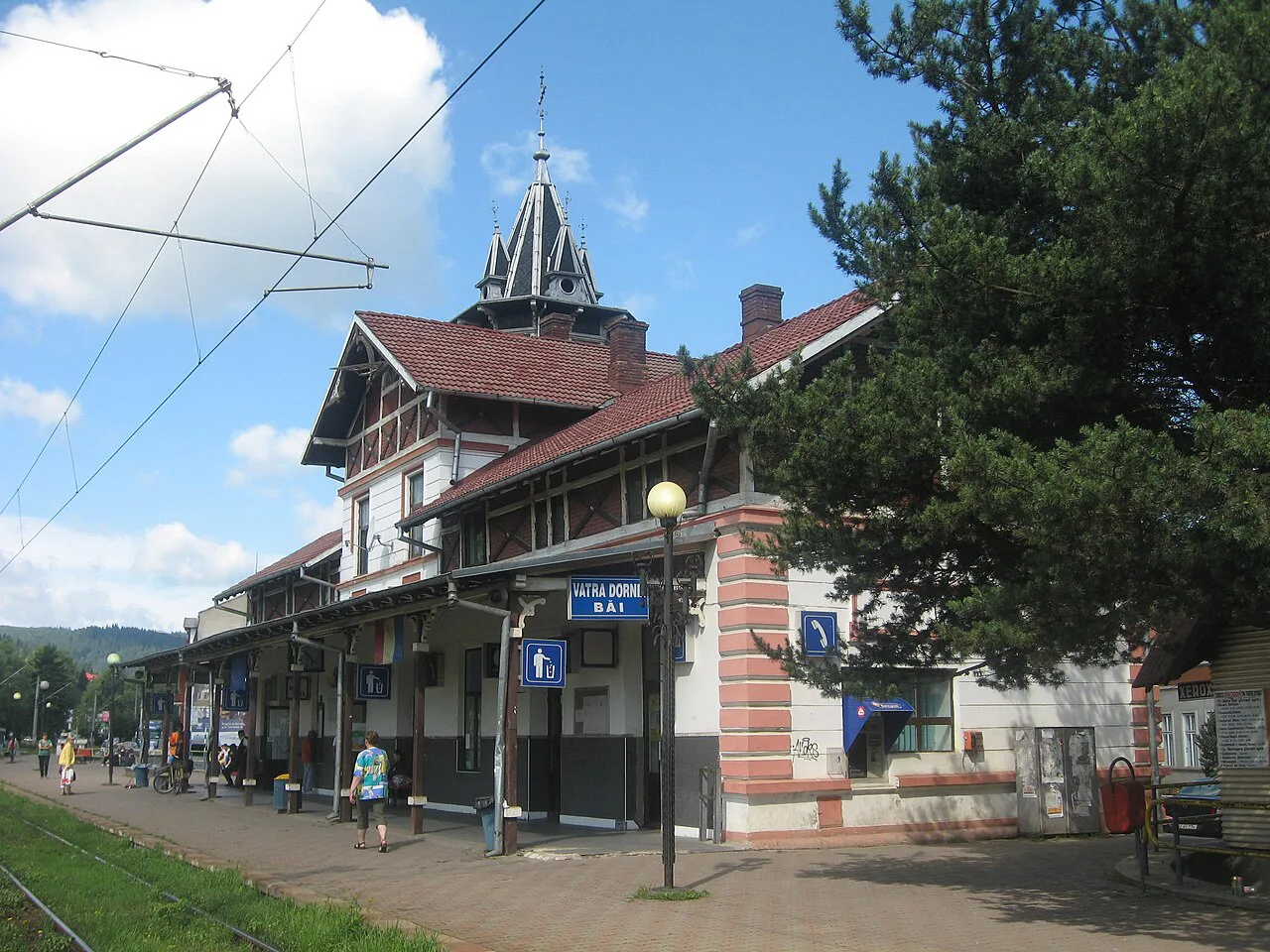
The town centre
Start with the middle of town, the flat riverside stretch along the Bistrița, before you commit to any climbing. It is the easiest part of the town to walk and the quickest way to get your bearings on a first morning.
Walking the centre end to end is the simplest way to see how the town connects to the river and where the older buildings sit. Set aside a relaxed hour rather than treating it as a tick-box.
Landmarks in the centre
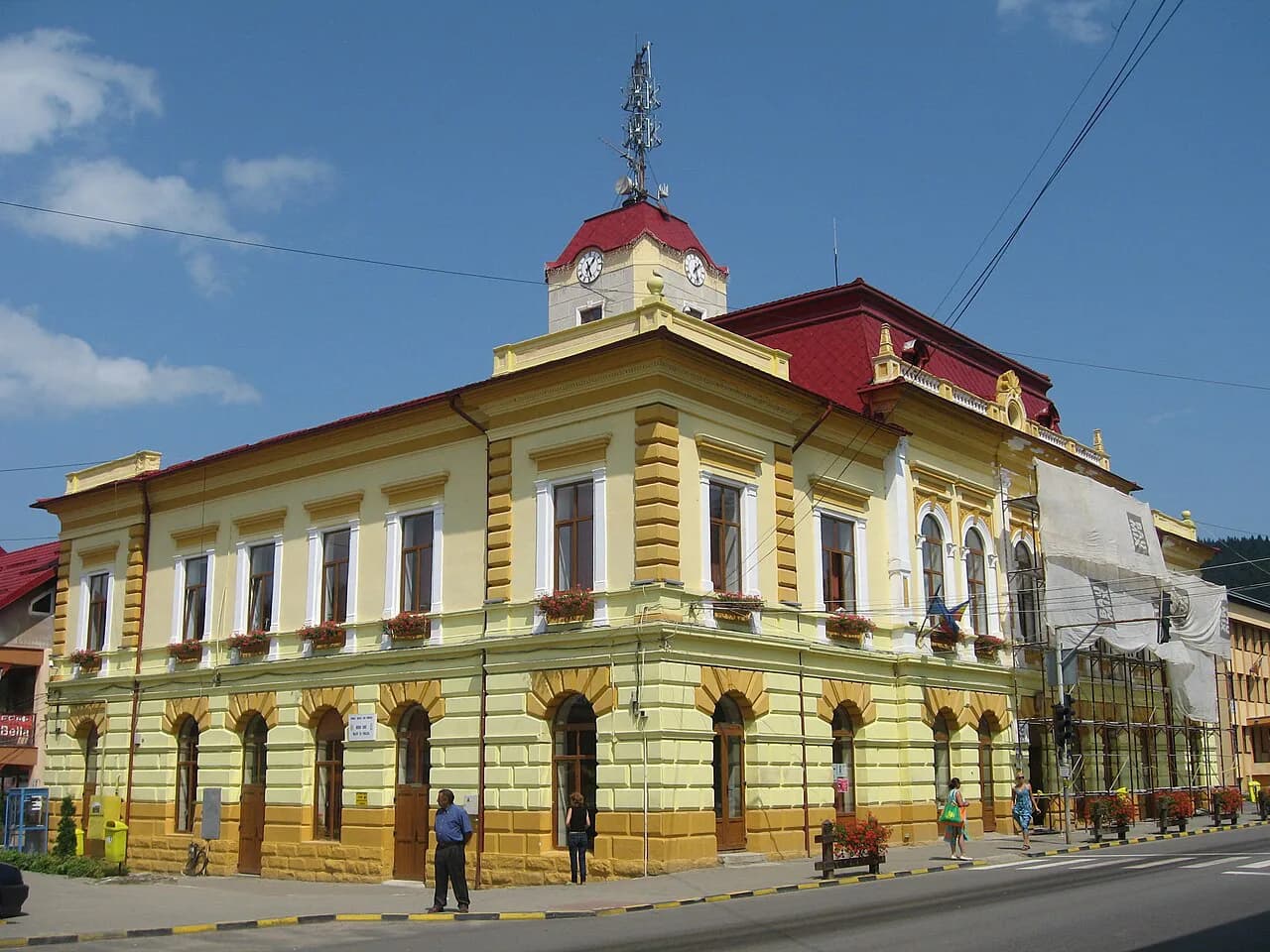
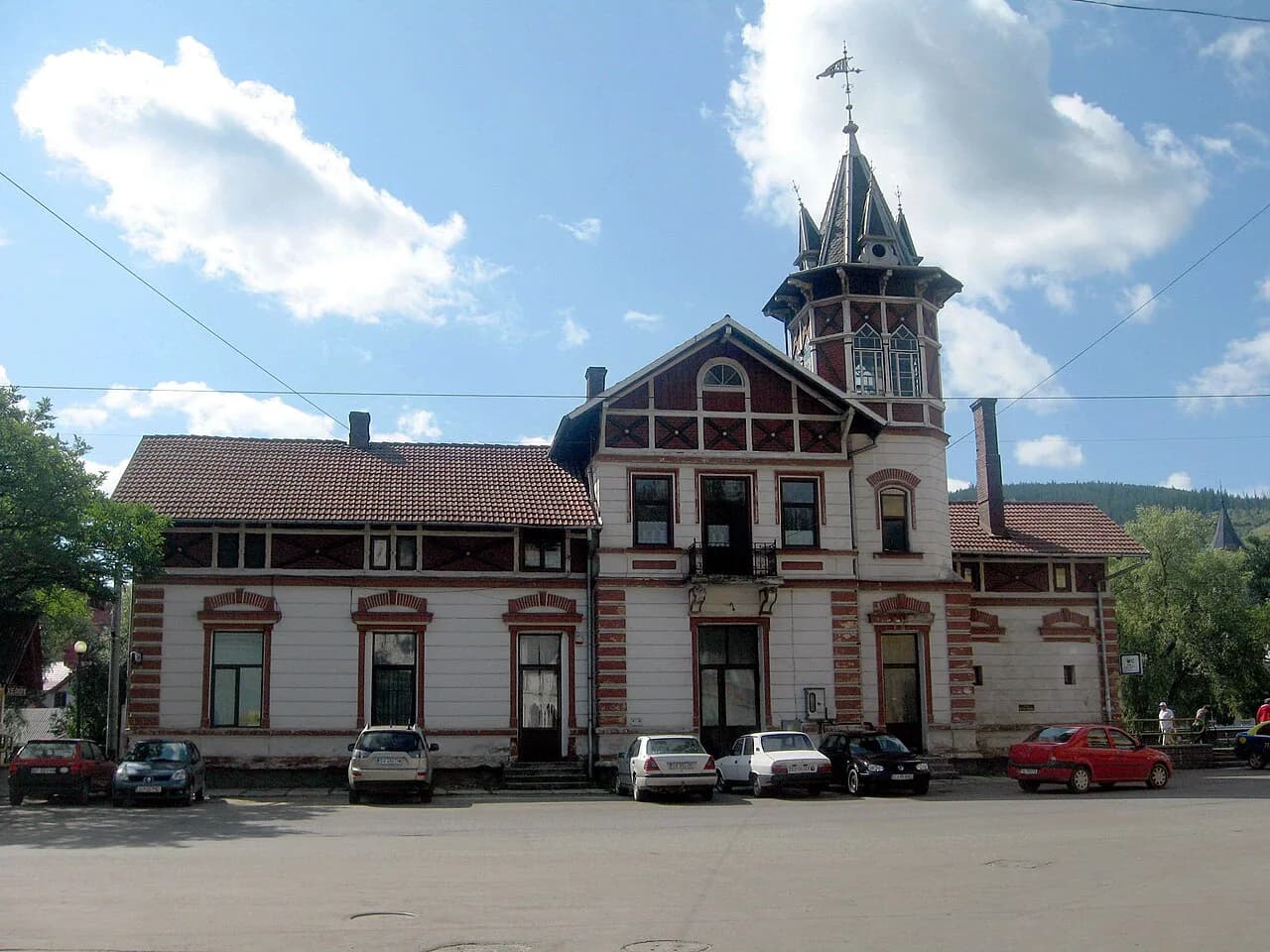
The town's older public buildings are worth a few minutes as you pass, with the river and the surrounding hills as the setting. Plan to appreciate the main buildings from outside as landmarks on the walk rather than as a museum stop.
If a particular building is what draws you, ask on the spot whether anything is open that day before building the rest of your afternoon around it. The riverside walks through the centre do not depend on it.
Views over the Dornelor basin
The surrounding hills give the best overview of the town and the Dornelor basin, lifting you above the river corridor. Check locally on the day how best to get up there and decide then whether the climb fits your schedule. Build that into a full-day version of the visit rather than a half-day one.
The trade-off is time. A morning on the centre and an afternoon on the hills is a realistic full day; trying to squeeze the surrounding heights in before a long drive to Suceava leaves no margin.
Churches and monuments in the centre
Beyond the riverside and the main public buildings, the centre's interest lies in its streets and river setting rather than a checklist of individual monuments. Walk the core slowly, note the public buildings and war memorials as they come up, and keep the detailed church and monastery visits for the painted monasteries themselves, where the decoration is the reason to travel.
A short walk through the centre
Walk the promenade along the Bistrița and loop back through the central streets so you see the town's public buildings and its everyday face. The whole circuit is a stroll rather than a hike and fits comfortably into two or three hours, including stops.
If you are adding the surrounding heights, break the walk after the centre and take the climb while the light is good, then finish the centre on the way back. Doing that first also tells you how the basin sits around the town, which makes the rest of the walk easier to read.
Half a day, a full day, or an overnight
Half a day covers the riverside promenade and the centre, and it is the right call if Vatra Dornei is a pause on the road between Transylvania and the monasteries. A full day adds the surrounding hills and a slower walk through the central streets. An overnight makes sense mainly if you want to use the town as a mountain base rather than a stopover, though the town's tourism material frames it largely around spa and resort stays, which is a separate kind of trip.
How to reach Vatra Dornei on a Bucovina trip
By car, Vatra Dornei works as the western approach to Bucovina, sitting on the road system that connects the Ardeal side with Moldova, which is how the town's own tourism material positions it. From Suceava, the monasteries at Voroneț, Humor, Moldovița and Sucevița lie south and west along the main touring roads, so a car is the practical way to combine them with the town. Allow for mountain driving rather than motorway speeds.
Travellers without a car can base themselves in Suceava or Gura Humorului and take an organised monastery tour, using Vatra Dornei as a shorter stop if the connections line up. Check the current timetable for any train-based itinerary before you commit to it.
Where Vatra Dornei fits in a Bucovina itinerary
On a monastery-focused trip, Vatra Dornei is the western bookend. Come from the Brașov side, spend a half-day or a full day in town, then drive east to the painted monasteries of Bucovina and finish in Suceava or Gura Humorului. That order uses the town's position at the junction of the two regions instead of treating it as a detour.
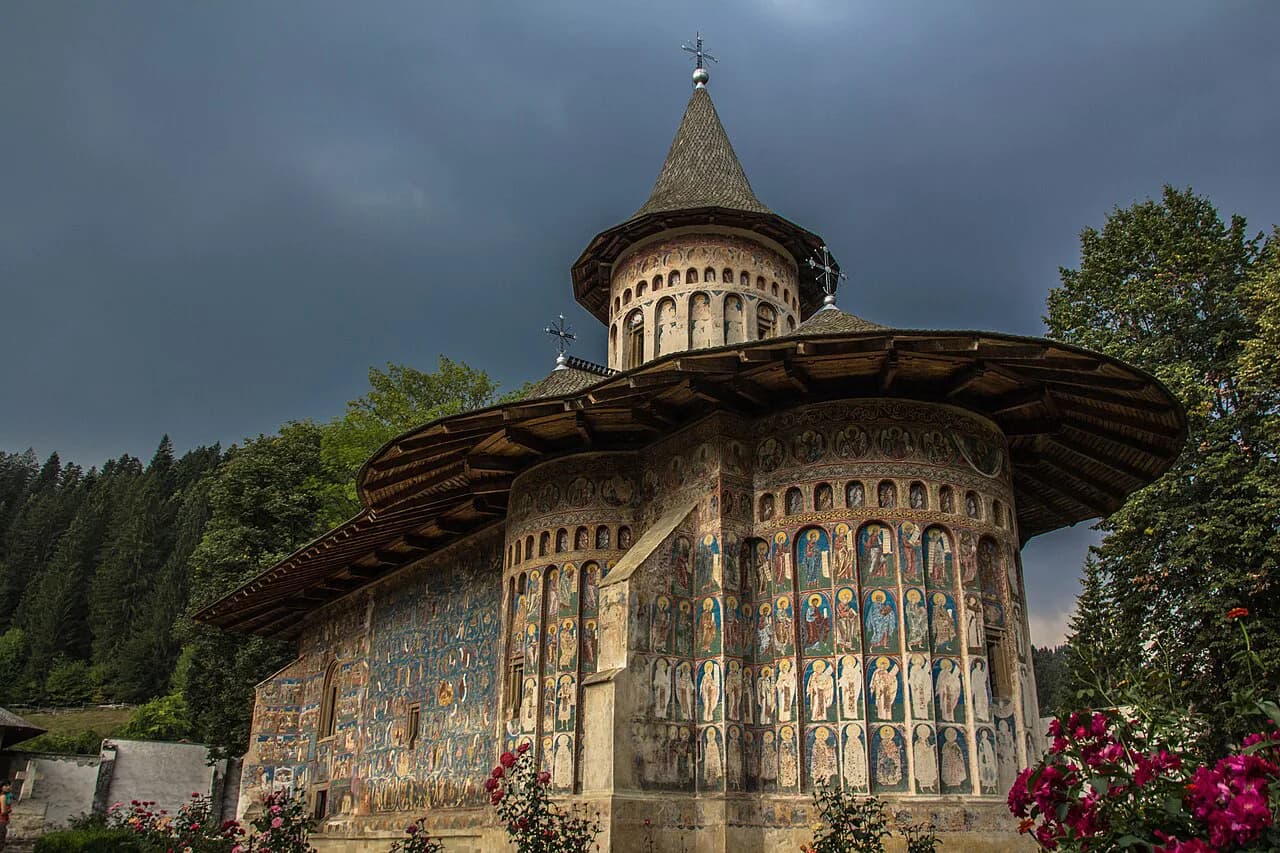
If your priority is the painted churches themselves, the strongest cluster is Voroneț, Humor, Moldovița and Sucevița, all reachable on a loop from Gura Humorului. Place Vatra Dornei before or after that loop, not in the middle of it, and you keep driving to a minimum.
What to skip if you are short of time
If you have only a couple of hours, skip the surrounding hills and the outlying streets. Do the riverside promenade and the centre, then get back on the road. The town rewards a slow visit, but it does not need one to be worth the stop.
Skip any attempt to combine the town with several monasteries in the same day. Mountain roads eat time, and the monasteries deserve more than a rushed look.
Is Vatra Dornei worth the stop?
Yes, if you are already crossing between Transylvania and Bucovina. Half a day along the Bistrița and through the centre earns its place on the route, and a full day makes it a destination in its own right. If the monasteries are your main reason for coming, keep Vatra Dornei as an overnight on the way in or out rather than the centrepiece.
Explore more Bucovina guides
Frequently Asked Questions
Is Vatra Dornei worth visiting?
It is worth a half-day stop if you are driving between Transylvania and the painted monasteries of Bucovina, and a full day if you also want to walk the centre and take in the surrounding hills. The riverside centre is easy walking and compact. It makes less sense as a dedicated long trip unless you want a mountain base.
What is Vatra Dornei known for?
It is known as a mountain town and resort in the Dornelor basin on the Bistrița river. Its tourism material also presents it as the link between the Ardeal region and Moldova, which is why it slots neatly into a Bucovina driving route.
Do I need a car to visit Vatra Dornei?
A car is the practical choice if you want to combine the town with the monasteries, since they sit on mountain roads south and west of Suceava. Without a car, base yourself in Suceava or Gura Humorului and check the current timetables and tours before you rely on the connections.
Sources
Useful notes for your next trip
Optional updates to our guides.
You might also like
Continue reading
More guides you'll find useful