Bucharest History: A Short Timeline of the City You Can Still See
Bucharest history for visitors: a short timeline of the Wallachian capital, Little Paris, the 1977 earthquake and Ceaușescu's rebuilding, with places to see.
On this page
Bucharest history comes down to four layers you can walk between in an afternoon: the medieval court on the Dâmbovița, the French-influenced Belle Époque city, the damage of the 1977 Vrancea earthquake, and the rebuilding under Nicolae Ceaușescu that produced the Palace of the Parliament. Start at Curtea Veche, follow the old merchants' streets through Lipscani, then finish south-west at the palace to see the whole span. If you want the sights grouped by area first, start with Things to Do in Bucharest.
The dates are firm and few. A written document from 1459 names the settlement under Vlad Țepeș, the city became Romania's capital in 1862, an earthquake struck in 1977 and the Revolution came in 1989. Everything else is best read in surviving walls, facades and street lines rather than in another paragraph of background.
What Bucharest history comes down to in one visit
The city sits in the south-east of Romania, on the Dâmbovița River, which flows into the Argeș and then the Danube. It is not in Transylvania: it was the seat of Wallachia, the southern principality, and through the 15th and 16th centuries it competed with Târgoviște and Curtea de Argeș for the ruler's seat before becoming the national capital.
For a short city break, allow one day for the historic core and the palace district, and a second morning for the Belle Époque streets and the Athenaeum. The pair of days takes you from the 15th century to the 1980s without repeating yourself.
1459: the first written mention, under Vlad Țepeș
The earliest record of the town appears in an official document issued in 1459 under Vlad Țepeș, the ruler of Wallachia whose capital had been at Târgoviște. His campaigns against the Ottomans pulled him towards the Danube, and Bucharest became the seat of medieval Wallachia around that shift.
Read that date as the point where records begin, not as the founding of a city. Older settlement on the Dâmbovița is documented earlier, but 1459 is the anchor every later account hangs from, and it is the date to carry with you when you look at the Old Court ruins.
The Dâmbovița settlement and the Old Court (Curtea Veche)
Curtea Veche, the Old Court, is where the city's medieval core is usually located: a fortified residence built during the reign of Mircea the Elder, who ruled from 1386 to 1418, on the spot the ruins occupy today. The first buildings were mostly smithies and barracks, because the place began as a military post behind a high fence.
Around the court, churches and monasteries held large estates of farmland and pasture, and merchants and artisans gathered on that land. Their workshops and warehouses are what actually pushed the town outwards, which is why the oldest streets curve between churchyards rather than following a grid.
Wallachia's seat and the churches that grew around it
Through the 15th and 16th centuries Bucharest competed with Târgoviște and Curtea de Argeș for the ruler's seat, and it only settled into the role gradually. Rulers and noble families founded churches across the city in that period, and those buildings became the fixed points around which later streets formed.
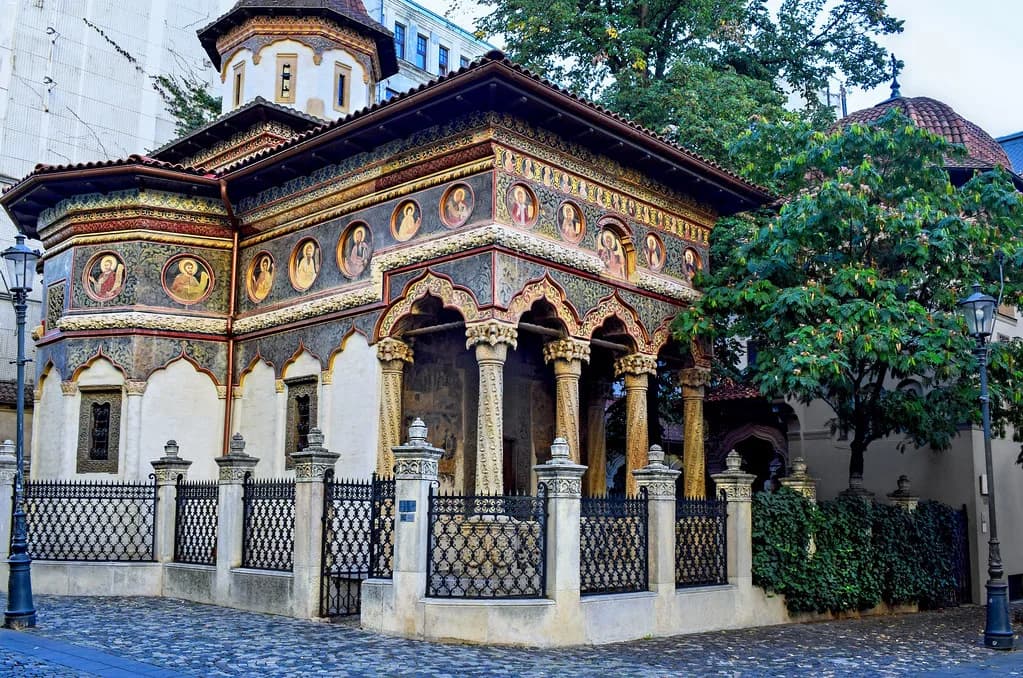
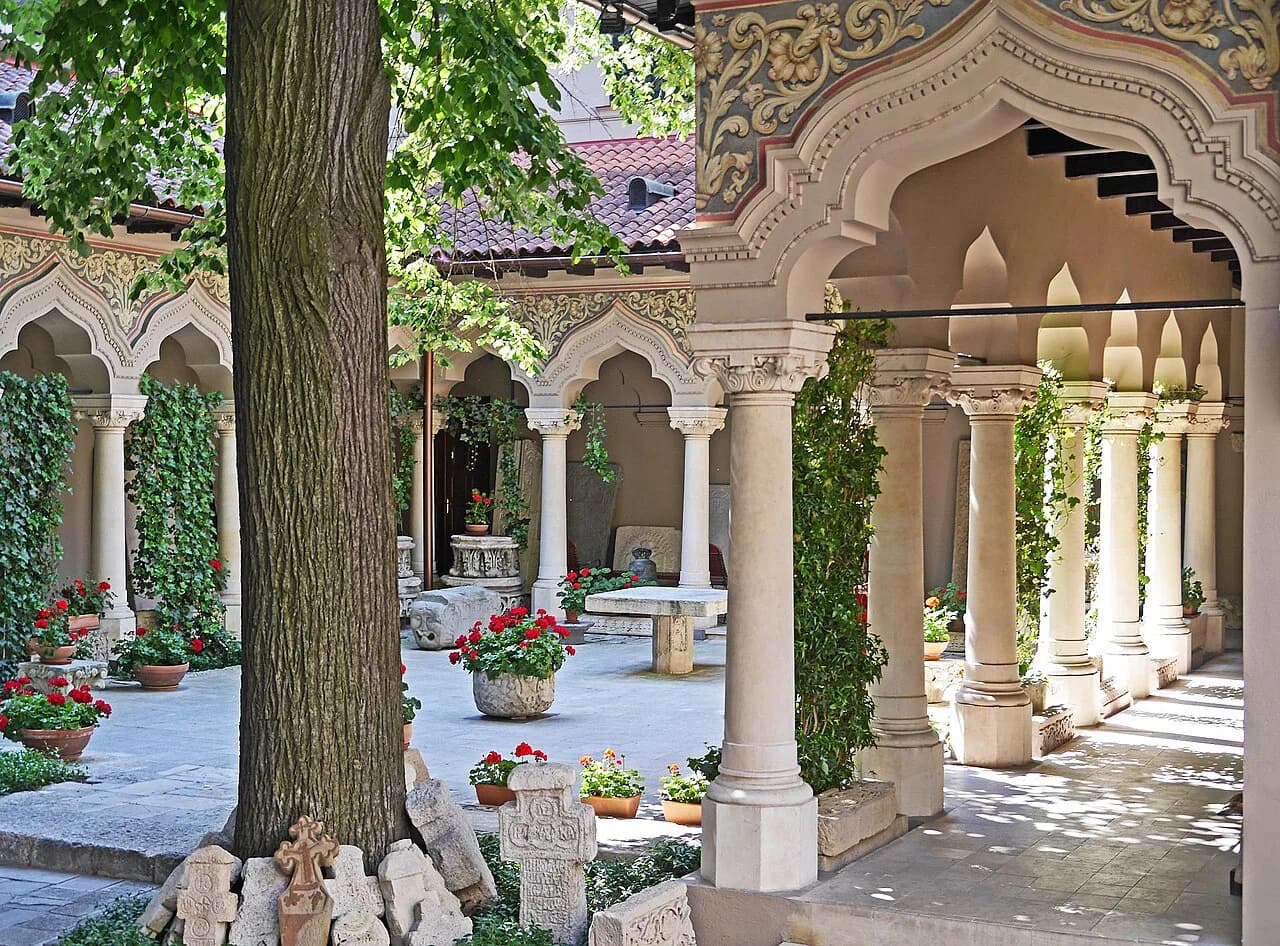
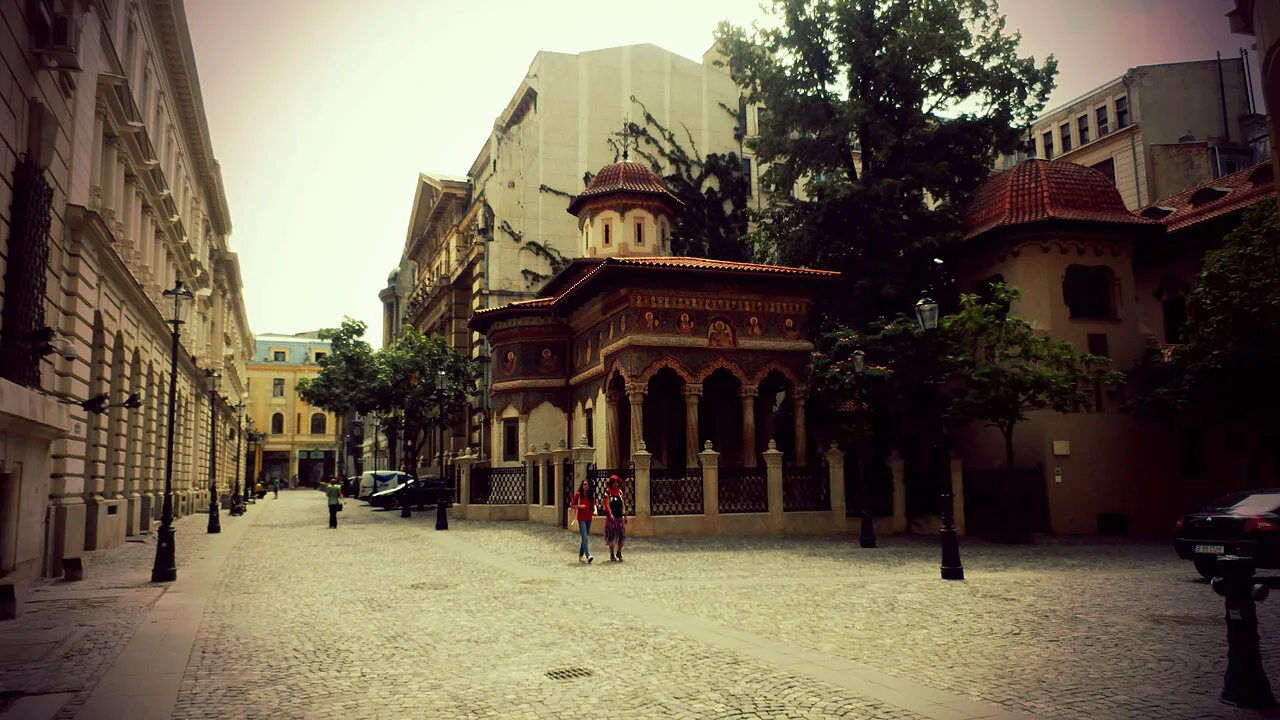
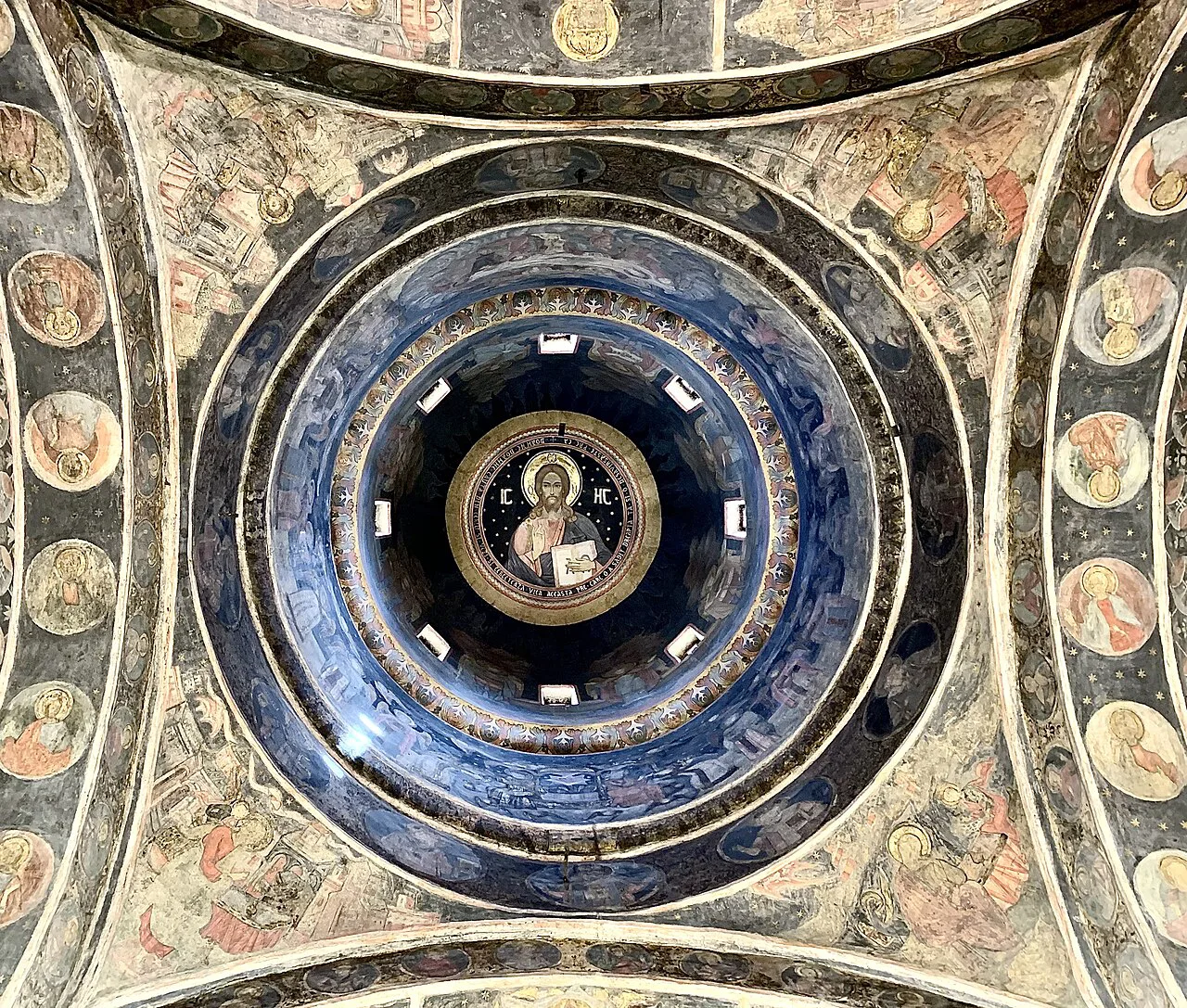
One of them, Stavropoleos Church, stands inside the Old Town with a courtyard of candles that cuts the noise of the surrounding terraces. Its small scale gives you a sense of how dense the religious building was in the merchant quarters. For more of the city's churches, see Bucharest Old Town.
The 19th century: French influence and the 'Little Paris' nickname
From the mid-1800s Romanian students returned from Paris determined to reshape their own society, and with aristocratic backing they introduced a French style of living that replaced many older eastern habits. Manners, fashion and architecture all shifted, and the city began to mirror Paris in its facades and its framed windows.
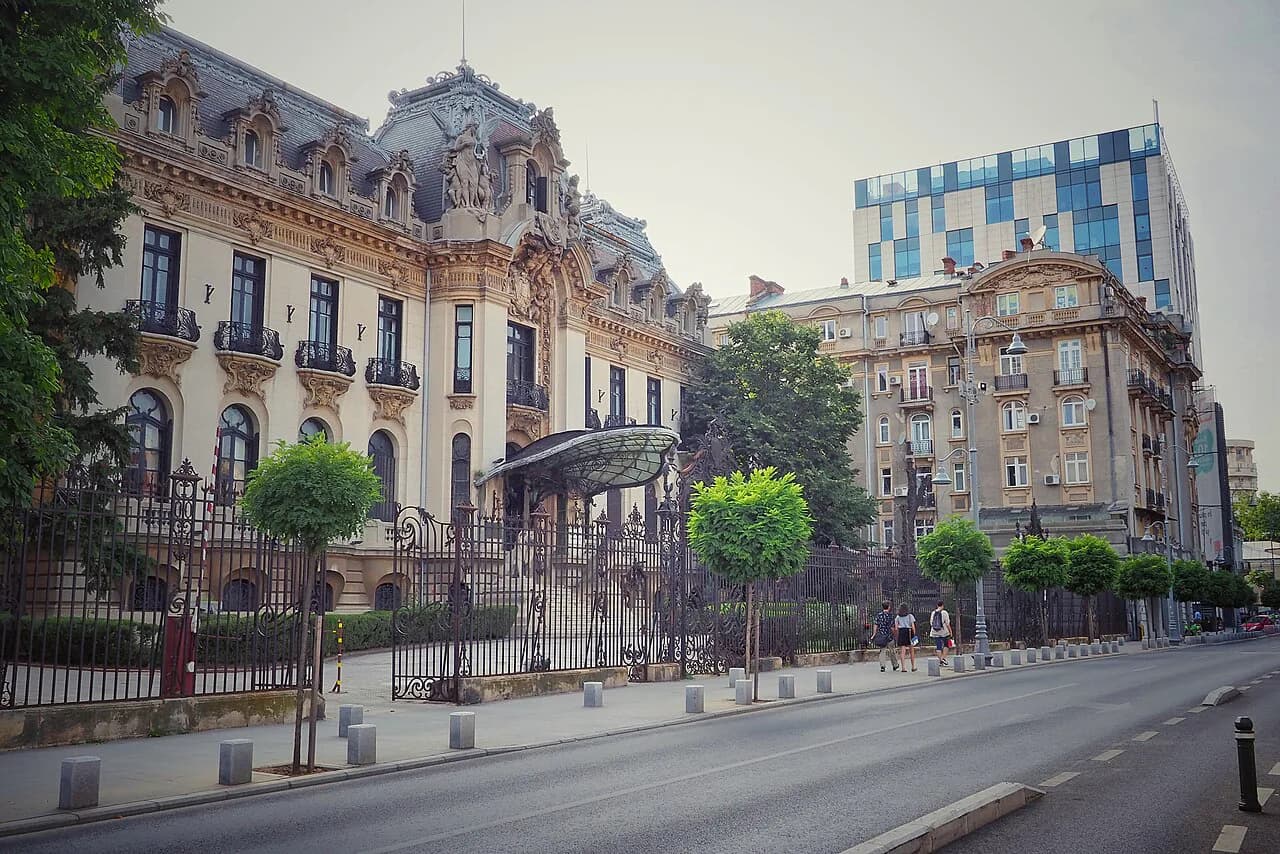
The nickname Little Paris belongs to the stretch between the two World Wars, when elegant architecture and a strong intellectual class earned it. Walk Calea Victoriei for the clearest surviving evidence: decorated facades, grand entrances and a street plan laid out for carriages rather than cars.
1862: Bucharest becomes the capital of Romania
Bucharest became the capital of Romania in 1862, after Moldavia and Wallachia united in 1859, and it has grown as the country's centre for art, culture and media ever since. The decades that followed brought factories producing cigarettes, beer, soap, textiles and aircraft, plus a bourgeoisie that replaced the old nobility as the city's most influential class.
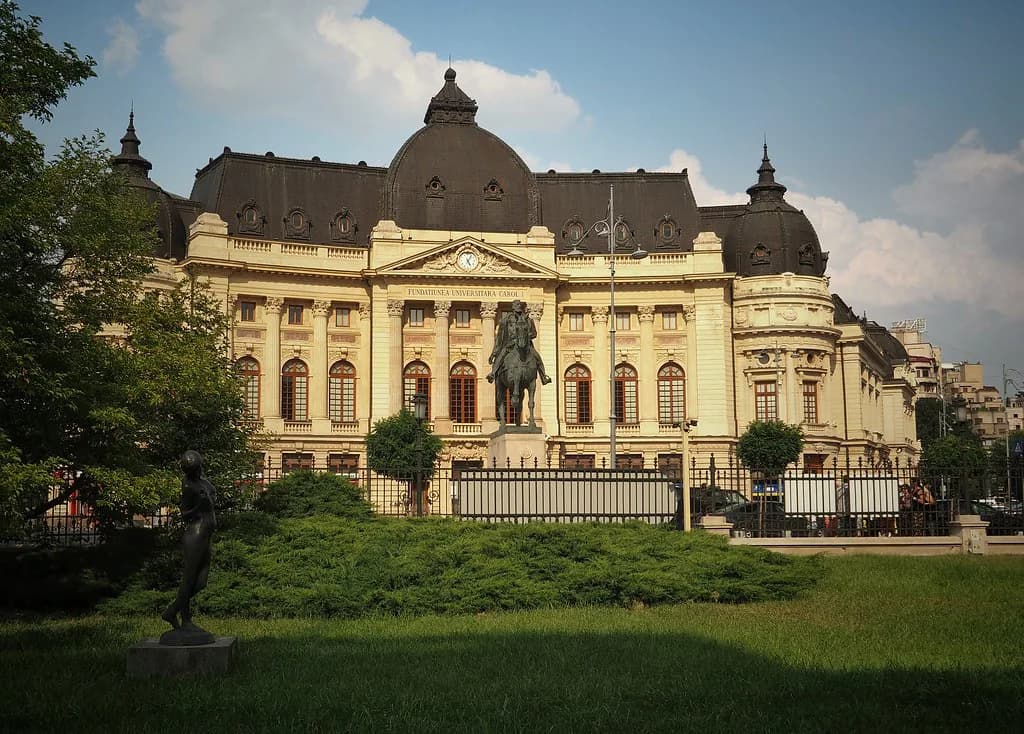
Money from that trade built the public face of the city, which is why the grand buildings cluster along a short line rather than spreading evenly. The National Museum of Art of Romania, housed in the former Royal Palace, and the Romanian Athenaeum on Calea Victoriei both sit in that belt of late 19th and early 20th century confidence.
Belle Époque buildings you can still walk past in the Old Town
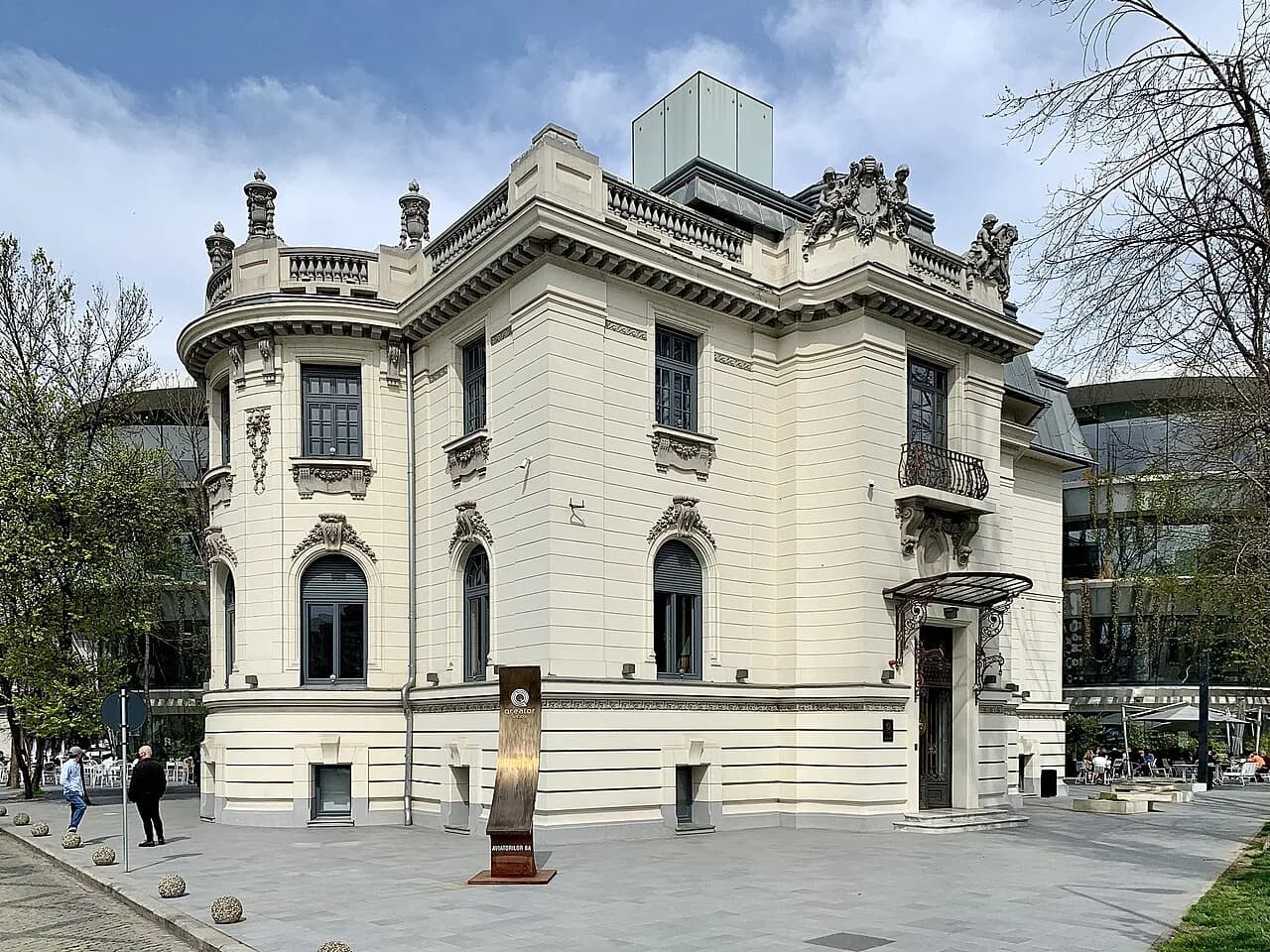
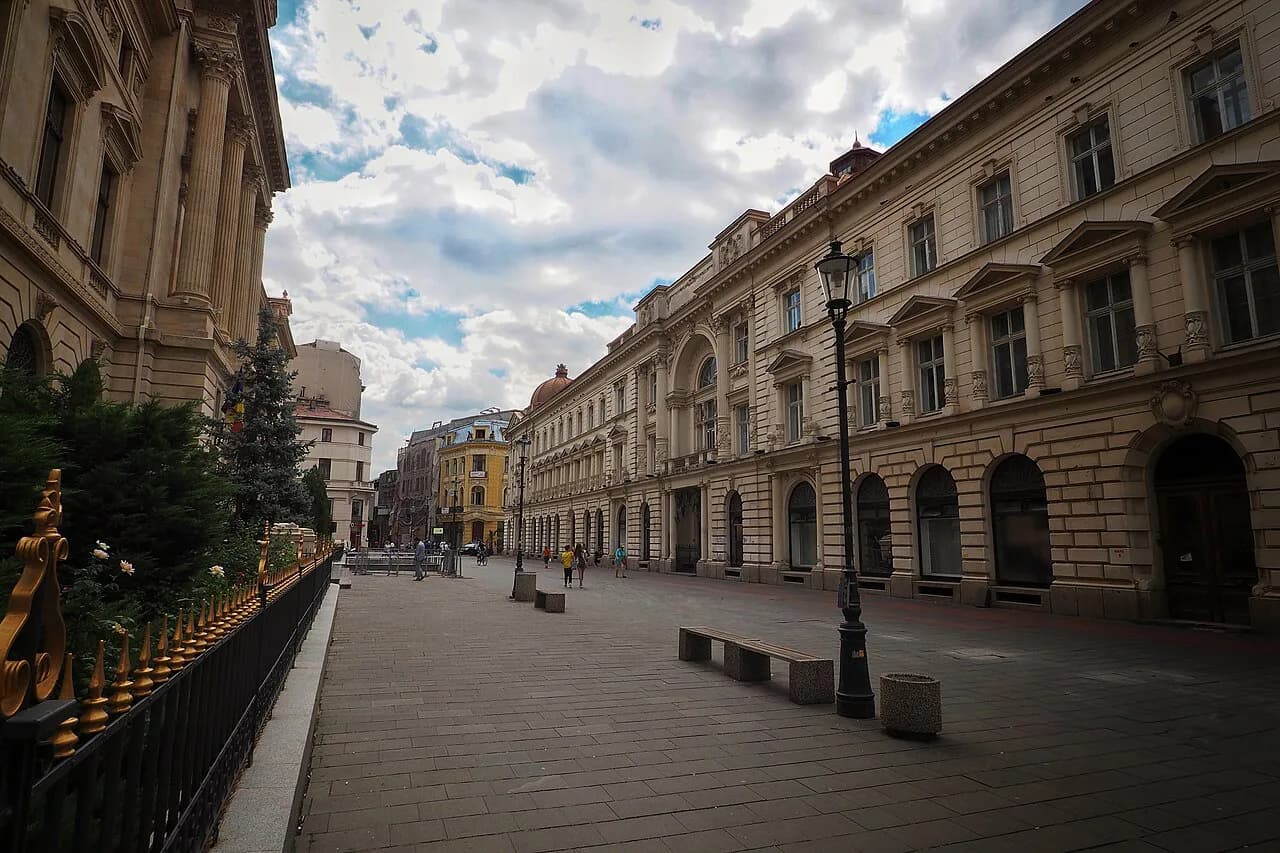
The Old Town, centred on Lipscani, keeps the strongest concentration of Belle Époque decoration, with richly carved facades and framed windows from the late 19th and early 20th centuries. Manuc's Inn, the Savings Bank building known as CEC, and the remains of the Old Court sit within a few minutes of each other.
Walk it early, before the terraces fill, and read the upper storeys rather than the ground floors: shopfronts have been replaced many times, while the stucco and window surrounds above have often survived intact. The bookshop on Strada Lipscani at number 55 occupies a restored 19th-century building with a white staircase, and it is worth stepping inside for the interior alone.
The 1977 Vrancea earthquake and what was lost
In 1977 an earthquake in the Vrancea region struck Romania and severely damaged large parts of Bucharest. Many historic buildings collapsed or were left beyond repair, and the authorities of the time cleared entire areas rather than restoring them.
That loss matters when you walk the centre, because the gaps between surviving Belle Époque buildings are not simply redevelopment. Some of the empty plots and newer blocks mark where older streets were demolished after the quake, and the effect is a historic core with parts missing rather than a continuous old town.
Ceaușescu, systematisation and the razing of the Uranus neighbourhood
Under Nicolae Ceaușescu the clearance intensified through large-scale systematisation projects that displaced communities and permanently altered the city's historic fabric. The clearest case is the Uranus neighbourhood, which was razed to make room for the Palace of the Parliament.
Standardised apartment blocks went up across whole districts in the same period, and many older buildings and churches were demolished for them and for monuments to the regime. The communist legacy is still visible in the uniform blocks that ring the centre, and in the way the historic core stops abruptly rather than fading out.
The Palace of the Parliament and the scale of the rebuilding
The Palace of the Parliament is the building to see if you want the scale of the rebuilding in one view. Accounts describe nearly four million square feet and around a thousand rooms, including the senate, the chamber of deputies, three museums and an international conference centre, and it is possible to tour the interior.
Treat the superlatives attached to it carefully. Travel accounts describe it as the second largest building after the Pentagon, the heaviest in the world and the largest in Europe, but these are figures published by travel writers rather than surveyed here. What you can judge yourself is the contrast between the marble and crystal interiors and the ordinary city around them.
If you plan to go inside, check the arrangements for your dates before you travel, since the interior is not simply open to walk into. The surrounding Bulevardul Unirii gives you the axis the rebuilding was designed around, and it is free to walk at any hour.
Where to read the layers on foot: Old Town, Lipscani, Calea Victoriei, the Athenaeum
The walking order that works: start at Curtea Veche, cross Lipscani and the Old Town for the medieval and Belle Époque layers, follow Calea Victoriei north past the CEC building and the Athenaeum, then take a taxi or the metro south-west to the palace for the communist layer. That sequence runs chronologically and saves you doubling back.
If you prefer a guided frame, a free walking tour covers much of the same ground with the dates attached, and the Old Town route is short enough to repeat later at your own pace. Take the tour first and the self-guided walk second.
Which sights best show the pre-communist city
For the pre-communist city, the Athenaeum, the CEC building, Stavropoleos Church and the surviving facades along Calea Victoriei do the work in a single morning. The National Museum of Art of Romania holds the former royal collection in the Royal Palace, so it covers both the architecture and the elite culture of the same period.
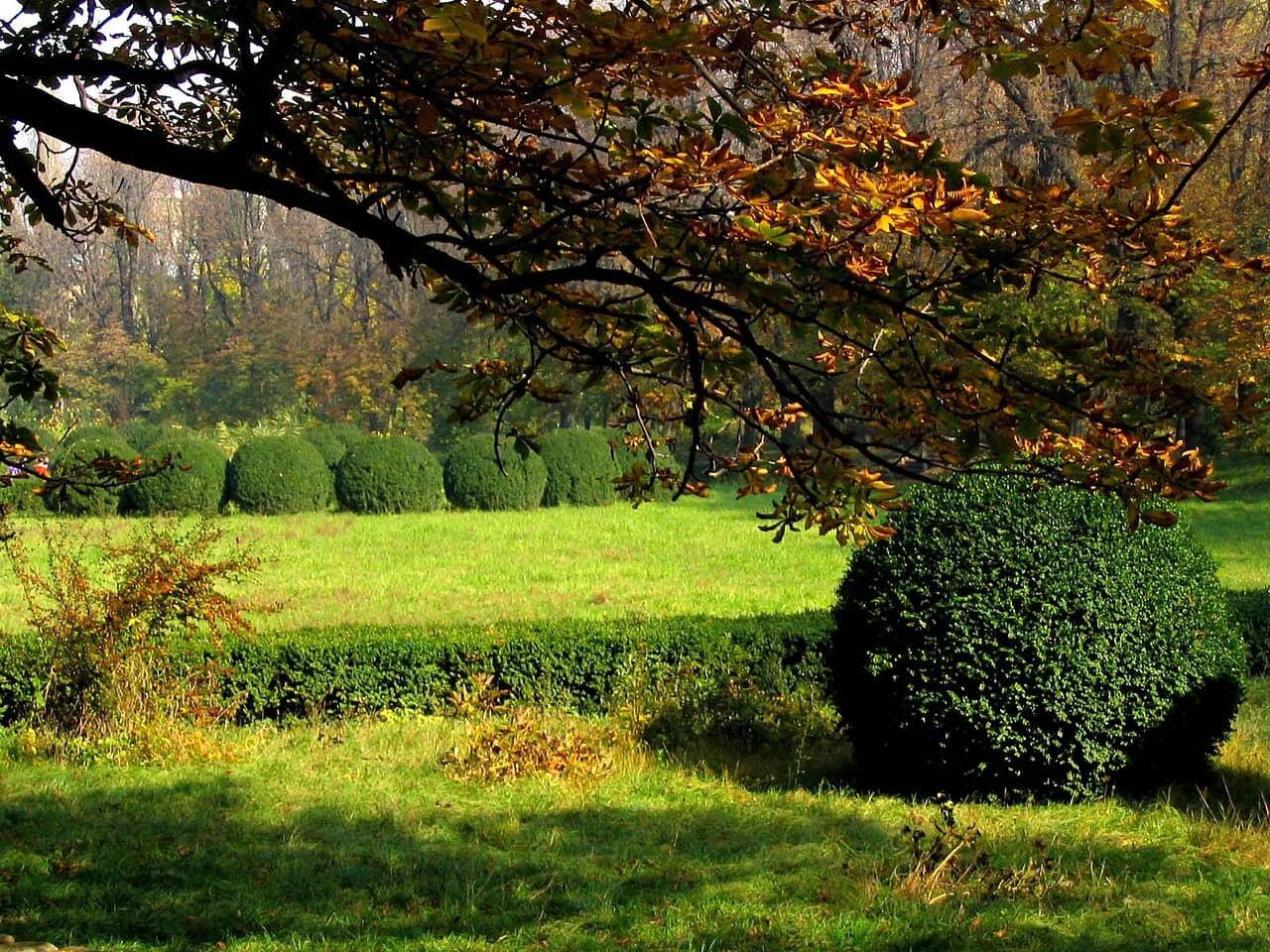
Add Cișmigiu Park, the best known of the central parks, for the 19th-century habit of laying out formal gardens in the middle of a capital. The Patriarchal Cathedral and the older churches give the Orthodox counterweight to the French-facing city.
Which sights best show the communist and post-1989 city
For the communist era, the Palace of the Parliament and the uniform blocks around it are the essential pair. The Arch of Triumph, built in 1935 to mark the reunification of 1918, is the earlier national statement in the same city.
Since 1989 the city has been reclaiming parts of that identity, though the communist legacy cannot simply be renovated away. Look for restored facades next to unrepaired ones on the same street: that unevenness is the post-1989 story, and it is more honest than any single monument.
Which period do you walk first?
Start with the Old Court and Lipscani if you have a single day, because the medieval and Belle Époque layers sit within a few minutes of each other and need no transport. Save the palace for a morning of its own, when you can give the interior tour the time it takes.
If your trip is shorter than that, pick one layer and take it properly rather than racing between them: the Old Town for atmosphere and churches, or the palace district for the 20th century. Both start from a metro stop and neither needs a car.
Explore more Bucharest guides
Frequently Asked Questions
Is Bucharest in Transylvania?
No. Bucharest lies in the south-east of Romania, on the Dâmbovița River, and was the seat of Wallachia rather than of Transylvania. The Transylvanian towns of Brașov and Sibiu are a separate trip, several hours away by train or car.
What are the key dates in Bucharest's history?
A document from 1459 records the town under Vlad Țepeș, Bucharest became the capital of Romania in 1862, the Vrancea earthquake damaged large parts of the city in 1977, and the Revolution came in 1989. The Arch of Triumph was built in 1935 to mark the 1918 reunification.
Can you visit the Palace of the Parliament?
Yes, it is possible to tour the interior, and the building houses the senate, the chamber of deputies, three museums and an international conference centre. The interior is not simply open to walk into, so check the arrangements for your dates before you travel.
Sources
Useful notes for your next trip
Optional updates to our guides.
You might also like
Continue reading
More guides you'll find useful