Bucharest Walking Tour: Free Options and a Self-Guided Route
How free walking tours in Bucharest work, what a guided route covers, and a self-guided walk through the centre you can follow on your own schedule.
On this page
A Bucharest free walking tour works on a simple bargain: no ticket, no booking fee, and a tip at the end based on what you felt the walk was worth. Walkabout Free Tours runs its city walk every day, rain or shine, in English and Spanish, and publishes that the walk covers 500 years of history from Vlad the Impaler through the communist period and the 1989 Revolution to the present day. This guide explains what the free format really costs, which themed walks are worth picking over the general one, and how to structure the same ground as a self-guided route.
Central Bucharest on foot fits together neatly, because the concert hall, the grand squares and the Old Town lanes sit close together. From the Romanian Athenaeum you can head south towards Lipscani or west towards the large squares without ever needing public transport.
What a Bucharest free walking tour actually is
The word free describes the booking, not the economics. You turn up, join the group, and the guide is paid by whatever each walker hands over at the end, so the real cost is the tip plus the couple of hours it takes. Walkabout Free Tours publishes that its walk covers the city's history from Vlad the Impaler through the communist period and the 1989 Revolution to the present day, which is a lot of ground to compress into one circuit.
Treat the tip as your own judgement rather than a fixed fee. A practical habit is to decide before you set off what the walk is worth to you per person, then hand it over in cash at the end; carrying lei avoids an awkward conversion. If your budget is tight, a self-guided version of the same route costs nothing at all.
Themed walks: pick by interest, not by convenience
The general city walk is not the only option, and choosing a theme often gives you a better two hours than the broad circuit. Walkabout Free Tours lists separate themed experiences including The Story of Bucharest, Life in Communist Bucharest, a Bellu Cemetery free tour and a Twilight over Royal Bucharest evening walk, alongside tours in Italian, Spanish and a French-language tour of the city's history. If the communist period is what drew you to the city, the dedicated walk goes deeper than a general tour can.
Bellu Cemetery sits outside the central walking circuit, so that tour is a different kind of outing: quieter, further out, and focused on tombs and monuments rather than squares. The evening royal-themed walk suits anyone who has already spent the daylight hours on the main sights and wants a second look at the same area after dark. Pick one themed walk and one general walk rather than three general walks.
Check Walkabout Free Tours' seasonal schedule and current listings before you build a day around a specific theme, since the line-up of walks shifts through the year. Walkabout Free Tours keeps a seasonal schedule page alongside its tour menu, and that is where to confirm which walks run during your dates.
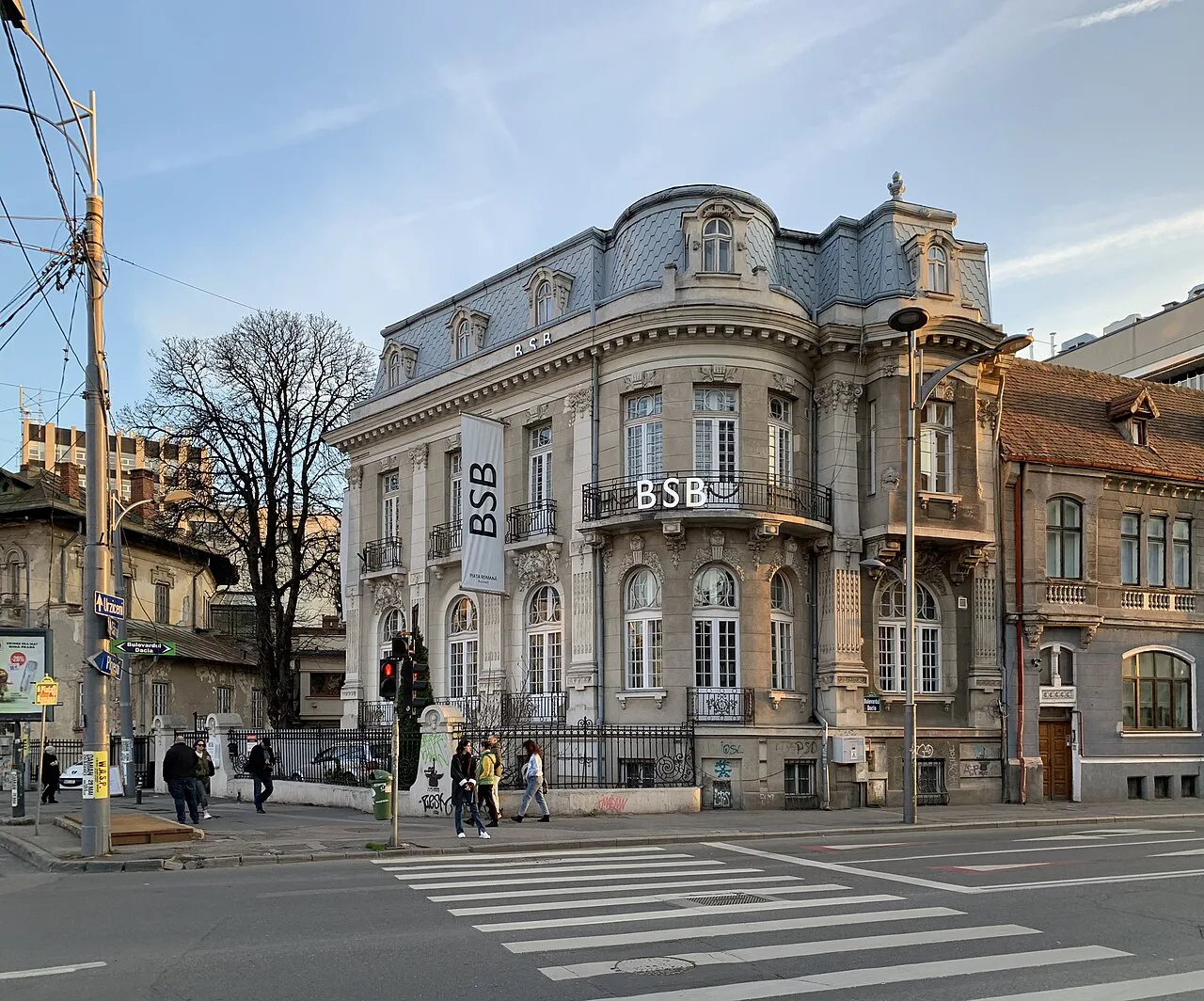
Tipping: what a free tour really costs
Treat the tip as the ticket. If you would happily pay for a paid walking tour of the same length, pay that amount at the end and you have priced it fairly; if you would not have booked it at all, that is useful information about your own budget. The guide carries the risk, so a walk that disappoints costs you little.
The same operator's partner experiences show the scale of guided time in Bucharest: a three-hour sweets walk with a guide is listed from thirty to sixty-nine euro per person, a Bran and Peleș day trip starts at sixty-nine euro per person, and a market food-tasting tour starts at sixty euro per person. Those are separate products run by partner agencies, not the free city walk, and they are quoted in euro rather than lei.
A self-guided route through the centre
If you would rather walk alone, build the route around a single spine: start at the Romanian Athenaeum, work through the central streets, cross into the Lipscani lanes of the Old Town, and finish near the river. That gives you roughly three to four kilometres of walking, a comfortable half day at an unhurried pace. Keep the walking order fixed and let the time at each stop flex.
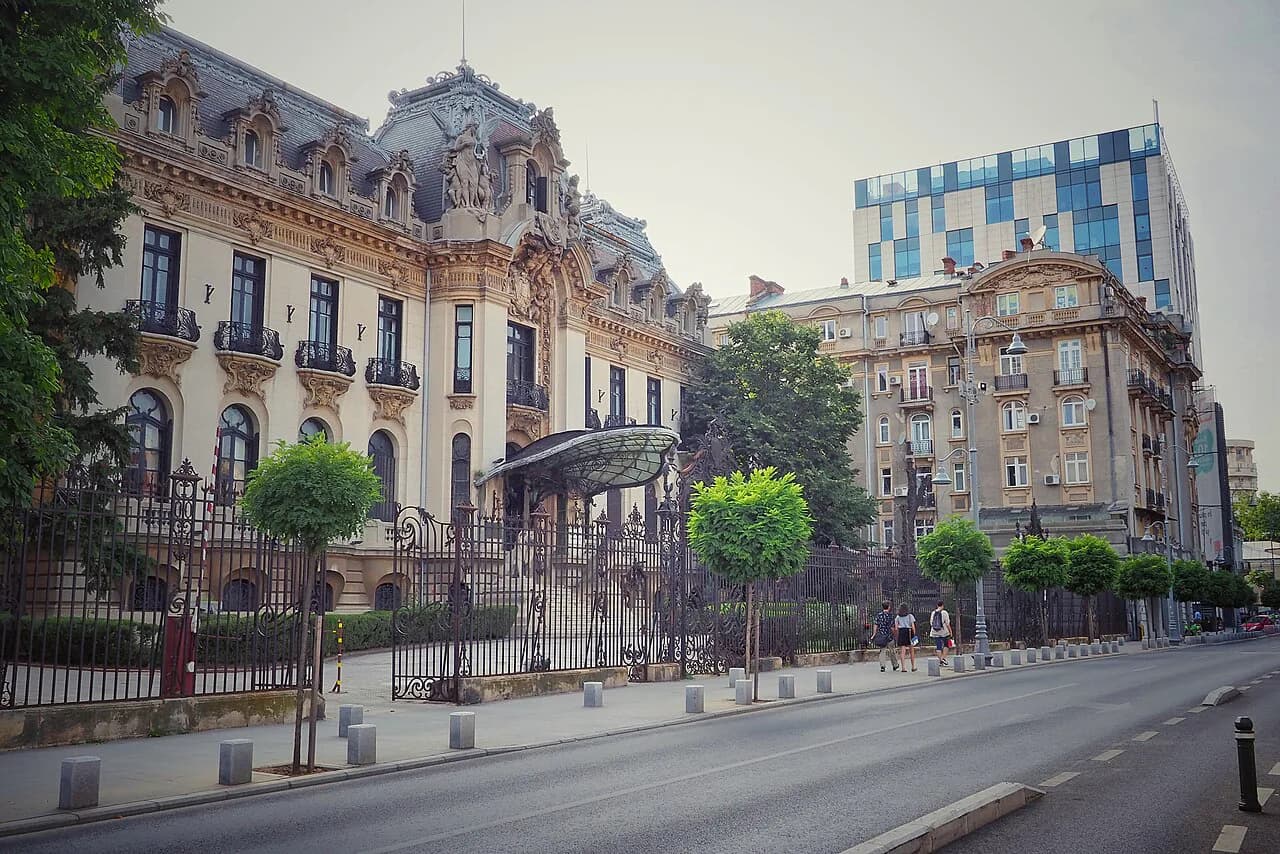
At the Romanian Athenaeum, look at the concert hall's exterior before walking on; the building is the easiest landmark to orient yourself by. Heading south along Calea Victoriei you pass the city's grander commercial architecture, and the street names themselves are worth reading as you go.
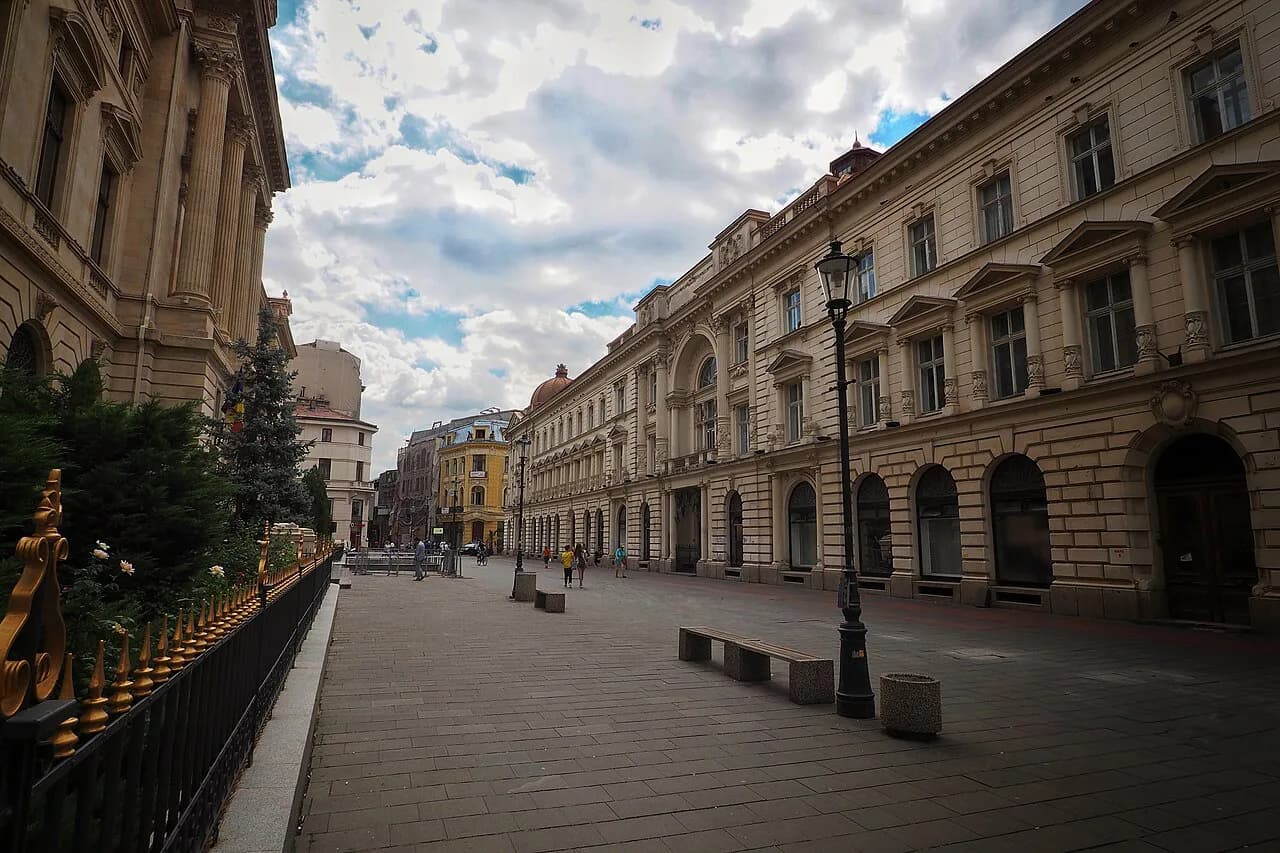
The Old Town lanes around Lipscani reward wandering more than checklist ticking: Strada Smârdan is part of the historic centre, and the side streets behind the main strips are quieter and better for looking up at the buildings. Walk one long loop rather than doubling back.
Maps, orientation and the ground truth
A custom map is useful for the shape of the route but useless for the detail that makes a walk interesting, so plan the sequence digitally and then navigate by eye once you are there. Walkabout Free Tours publishes an interactive custom map of the places it recommends, a reasonable starting sketch for a self-guided loop. Save it offline before you leave your accommodation.
Get the geography straight before committing: central Bucharest is broadly flat and the blocks are long, so distances on a map translate into more walking than you might expect. Pair the map with a written orientation guide so you know which square follows which.
One warning about any Bucharest route list: Piața Sfatului and Piața Mare belong to Brașov and Sibiu, not to this city, and lists that mix them in are describing Transylvania. In Bucharest the equivalent central spaces are the squares along the Calea Victoriei axis and the streets of the Old Town.
When a guided walk beats walking alone
Take the guided version if this is your first day and you want the city explained rather than merely seen. The free tours run every day regardless of weather, so you do not need to plan around a schedule, and the guide's overview of the city's history is difficult to reconstruct from plaques and facades.
A guide also helps if you are short on time and want the highlights compressed into one circuit rather than discovered by trial and error. Use the walk as a scouting trip: note the buildings and streets you want to return to, then spend your remaining days on those.
Beyond the centre, guided transport becomes the practical option: Bran Castle, Peleș Castle and Brașov all sit well outside the city, and the day tours that combine them leave from Bucharest with a guide and a vehicle. Walkabout's partner Travel Maker lists a two-castle day trip that visits Peleș, Bran and Brașov with a guided walking tour of the town.
Bucharest also appears on third-party booking platforms with a wide spread of paid walking tours, which matters if you want a fixed price and a confirmed departure rather than a tip-based model. The trade-off is that you pay whether or not the guide suits you.
When to walk it yourself instead
Choose self-guided if you have already done a free tour in another city and know how the format suits you, or if your interest is narrow enough that a general circuit would waste your time. Photographers, architecture obsessives and anyone travelling with someone who walks slowly will get more from their own pace than from a group.
Self-guided also wins on a second visit, when you already know the shape of the centre and want to spend an afternoon on one neighbourhood rather than the whole circuit. Build a two- or three-day framework first, then use a walking route to fill the gaps between fixed visits.
If you are in town for a single weekend, a guided walk on the first morning and self-guided wandering afterwards is the most efficient split: the guide gives you the framework, and you spend the rest of the trip going deeper into the parts that interested you.
What lies beyond the walking circuit
Some of what draws people to Bucharest sits separate from the simple free-walk loop. The Palace of the Parliament is a substantial building on the city's central axis that deserves its own visit rather than being treated as a stop on a casual walking circuit.
The city's religious architecture also rewards a dedicated look: the cathedral and the newer People's Salvation Cathedral are substantial landmarks outside the casual Old Town circuit that deserve their own hour.
For context on how the city grew into the shape you are walking through, from the Dâmbovița River to the boulevards of the communist period, read up before you set out; a free tour is effectively a live version of the same story.
Which walk should you book?
Book the free walking tour on your first full day if you want the city explained and do not mind tipping at the end; pick a theme such as communist Bucharest or Bellu Cemetery if you already know the general history. Walk it yourself the following day with the Athenaeum, Calea Victoriei and the Old Town in that order.
Keep the day tours separate from the walking plan: Bran, Peleș and Brașov need a vehicle and a full day, and no amount of walking around the centre will substitute for them.
Explore more Bucharest guides
- Bucharest City Break
- Bucharest Day Tours
- Bucharest Map
- Bucharest Opera
- Bucharest Palaces
- Bucharest Parks Worth Building a Day Around
- Castles near Bucharest
- Cărturești Carusel
- Little Paris, Bucharest
- Mogoșoaia Palace
- Museum of the Romanian Peasant
- Old Princely Court (Curtea Veche), Bucharest
- People's Salvation Cathedral in Bucharest
- Shopping in Bucharest
Sources
Useful notes for your next trip
Optional updates to our guides.
You might also like
Continue reading
More guides you'll find useful