Bucharest Landmarks: What Each One Is and How to See Them
Bucharest's landmarks from the Palace of the Parliament to the Romanian Athenaeum, what each one is, and how to link them on one realistic walking route.
On this page
Bucharest's landmarks fall into two groups: the ones you go inside with a ticket or a booked tour, above all the Palace of the Parliament, and the ones you read from the street, such as the Romanian Athenaeum, Revolution Square and the Arcul de Triumf. Most of the central set sits within one walkable band running from Piața Constituției up Calea Victoriei, so the sensible plan is to tour one big interior in the morning and walk the rest.
This guide takes each landmark in turn, says what it is and how you actually see it, then sets out a route with realistic timing. If you would rather start from a broader shortlist, our guide to the things to do in Bucharest places these buildings alongside the city's parks and museums.
Palace of the Parliament (Palatul Parlamentului): scale, guided tours and booking ahead
The Palace of the Parliament at Strada Izvor 2-4 is the landmark most visitors plan around, and its statistics are the reason: it covers 365,000 square metres across 3.93 million square feet and is described as the second-largest administrative building in the world after the Pentagon, as well as the heaviest building in the world. Construction began in 1984 under Nicolae Ceaușescu as the People's House, and it was still unfinished at the revolution of 1989, with work continuing into the 1990s and early 2000s.
You cannot simply wander in: visits run as guided tours, and booking ahead is the practical choice if the palace is the centrepiece of a short trip, because it secures a place and lets you plan the rest of the day around a fixed slot. Turning up and hoping costs you flexibility in a city where the alternative sights are spread out. Ticket prices and tour times change, so check the official palace website before you commit to a date.
Allow more time than the tour alone suggests. The building sits beside Izvor Park and Constitution Square (Piața Constituției), with Izvor metro station the closest stop, so you can walk out of the tour and straight onto the metro or continue north on foot.
Romanian Athenaeum (Ateneul Român): the concert hall and when to see the interior
The Romanian Athenaeum is the city's most elegant building, a neoclassical concert hall designed by the French architect Albert Galleron with Romanian architects and engineers and built between 1886 and 1888, funded by a public campaign remembered as 'Donate one leu for the Athenaeum'. It is home to the George Enescu Philharmonic Orchestra and hosts the George Enescu Festival.
The honest trade-off is that the exterior, with its circular colonnade and dome, is free to admire from the street, while the frescoed interior and staircases are best experienced at a performance. If you have the time and the interest, book a concert rather than treating the building as a photo stop, and set aside around two to three hours if you do.
Revolution Square (Piața Revoluției) and its Belle Époque buildings
Revolution Square (Piața Revoluției) works as a landmark in its own right and as the hinge of a walking route, giving the central cluster a northern anchor before you drop into the Old Town.
Treat it as a fifteen-minute pause rather than a destination: read the buildings from the pavement, then continue south towards Universitate or north up Calea Victoriei.
Old Town (Centrul Vechi) and Lipscani: Stavropoleos Church, Manuc's Inn and Curtea Veche
Centrul Vechi, the Old Town, is the site of the city's original medieval centre, where merchants, craftsmen and traders gathered, and its fabric mixes medieval, neoclassical and Art Deco buildings side by side with modern additions. It is largely pedestrianised, with narrow cobblestone streets lined with restored buildings, and the mornings are the quietest time to walk the historical landmarks before the area fills up.
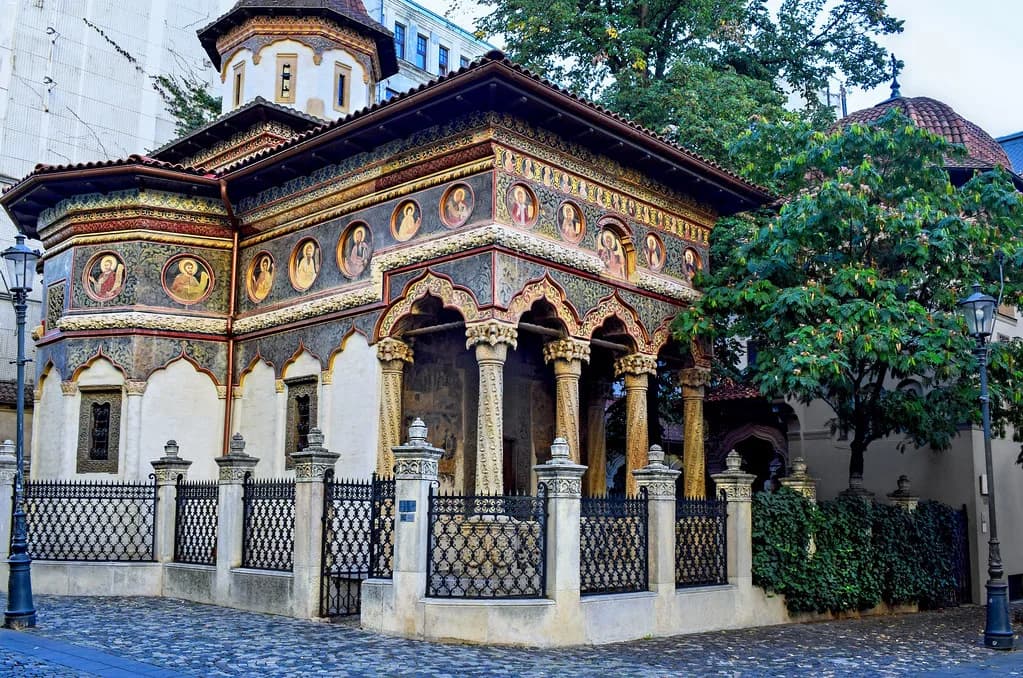
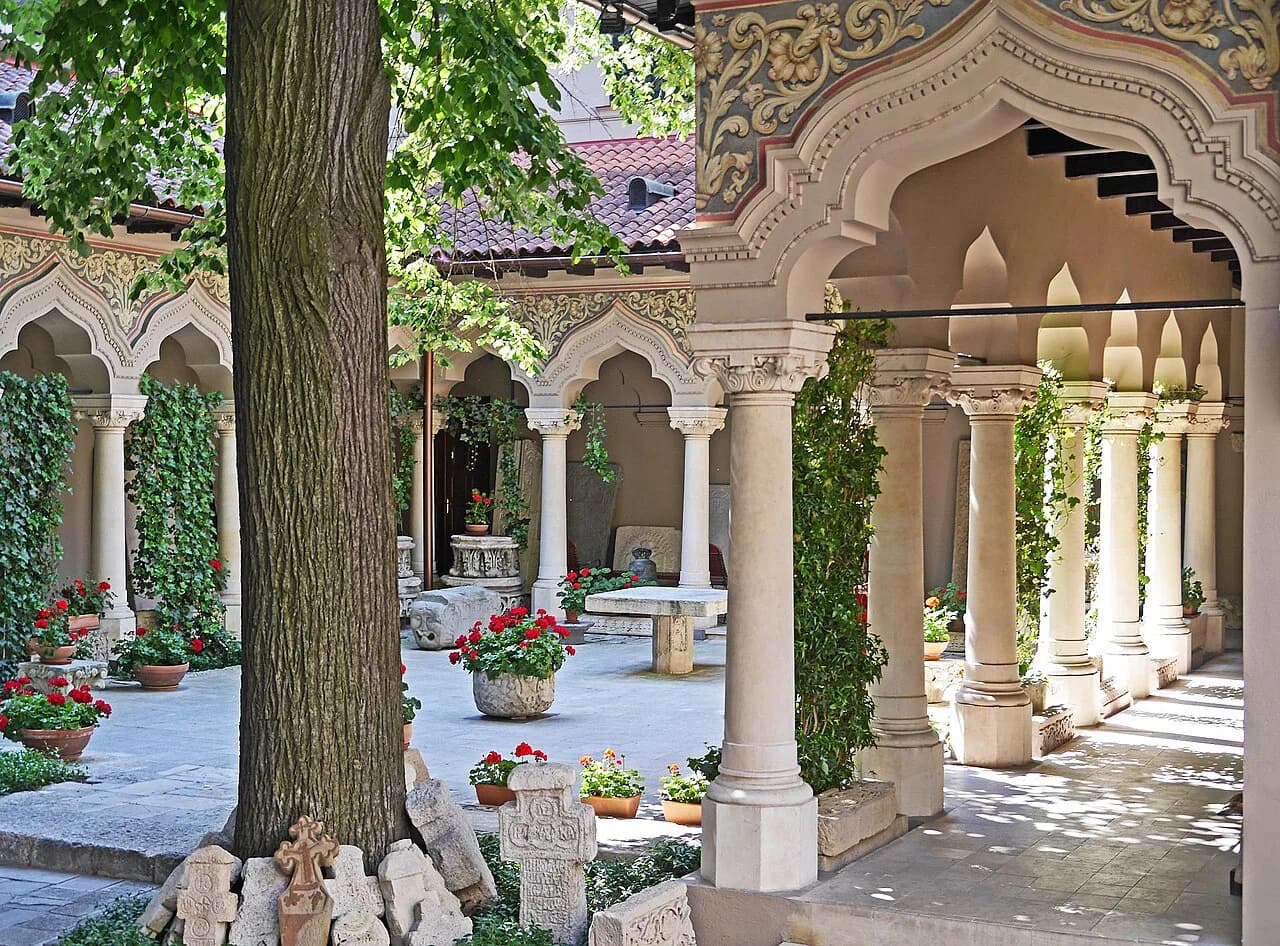
Three named stops anchor the walk. Stavropoleos Church, the National Bank of Romania and Manuc's Inn (Hanul lui Manuc) all stand in the district, and the Old Princely Court (Curtea Veche) is associated with Vlad the Impaler, who ruled from the palace in the 15th century; keep that historical figure separate from Bram Stoker's fictional Dracula. For a street-by-street plan of the quarter, use our guide to the Bucharest Old Town.
The district sits just south of Revolution Square and the University of Bucharest and is well connected, with Universitate and Piața Unirii metro stations nearby and many bus routes passing through, so you can end a walk here and leave by metro rather than retracing your steps. In the evening the same lanes turn into the city's liveliest nightlife quarter, which is worth knowing if you want quiet streets instead.
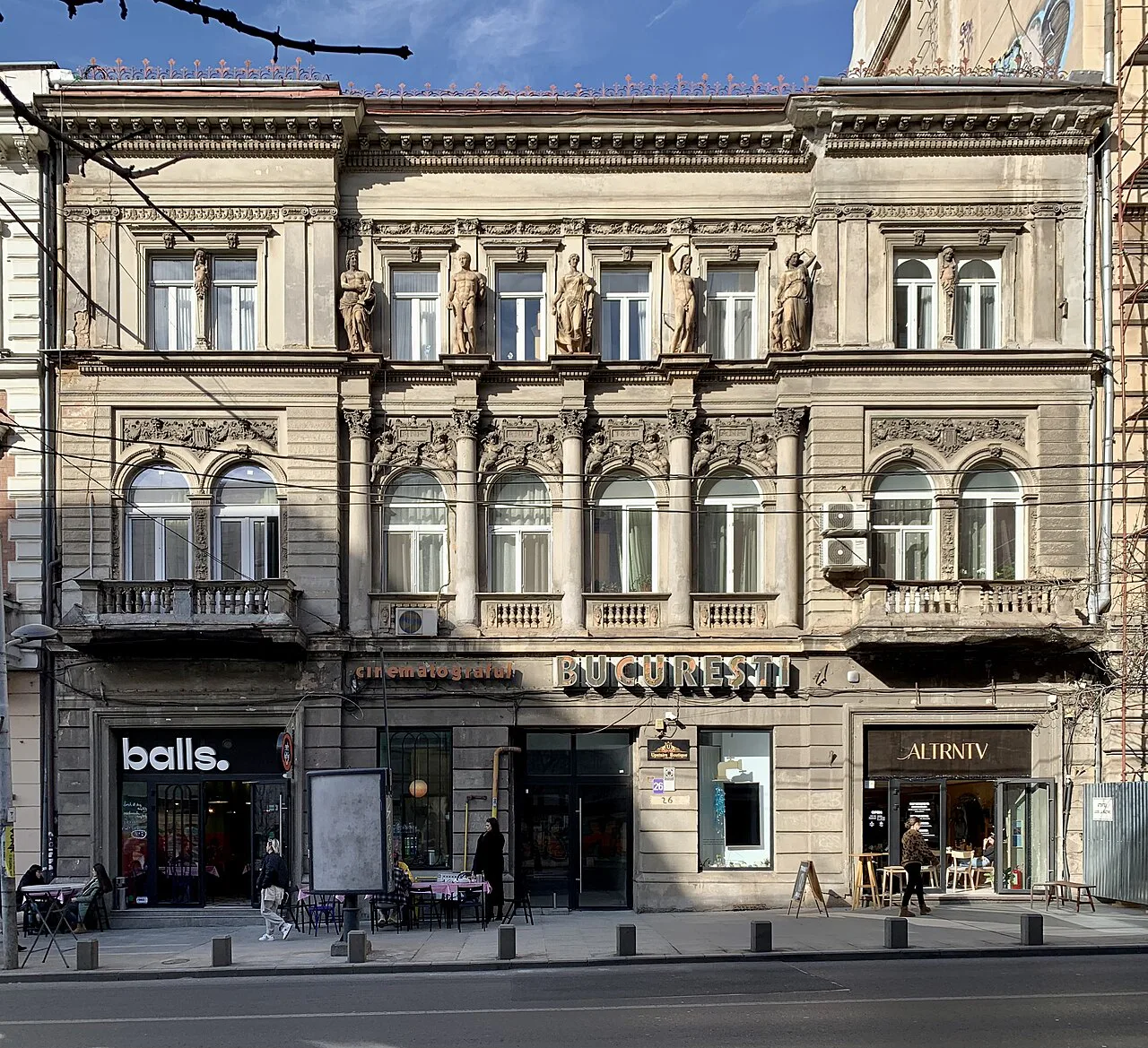
Macca-Vilacrosse Passage: the covered arcade between Old Town and Calea Victoriei
Pasajul Macca-Vilacrosse is a covered passage tucked between the Old Town and Calea Victoriei. Its value on a landmarks walk is architectural rather than monumental: a few minutes under the roof gives you a piece of the city's historic commercial building without a ticket or a queue.
Slot it in as you cross between the Old Town and Calea Victoriei rather than making a separate trip. It is the kind of landmark that rewards a five-minute detour and punishes nothing if you miss it.
Arcul de Triumf and the northern landmarks
The Arcul de Triumf is the northern landmark most often named alongside the centre, and it needs a different plan: it sits well north of the Old Town and Revolution Square, so it belongs to a separate half-day or a metro-and-walk leg rather than the central loop. Pair it with the northern sights instead of trying to bolt it onto a day already spent at the palace.
If time is tight, this is the landmark to drop. The central cluster delivers more per hour on foot, and the arch is a look-at-it monument rather than an interior to tour.
Churches and civic buildings: Patriarchal Cathedral and the National Museum of Romanian History
The Patriarchal Cathedral (Catedrala Patriarhală) and the National Museum of Romanian History (Muzeul Național de Istorie a României) fill out the civic and religious side of the city, and both sit naturally on a route between the centre and the river. The cathedral is a working place of worship, so treat it as a short visit rather than a sight to schedule around, and dress accordingly. Our guide to the Bucharest cathedral covers the Patriarchal Cathedral and the newer People's Salvation Cathedral.
The history museum suits a wet hour or a deliberately slower afternoon, and it makes more sense after you have walked the Old Town and seen Curtea Veche, because the objects then have a setting. Pick one interior a day and let the rest be exteriors.
Linking the landmarks on foot: one route and realistic timing
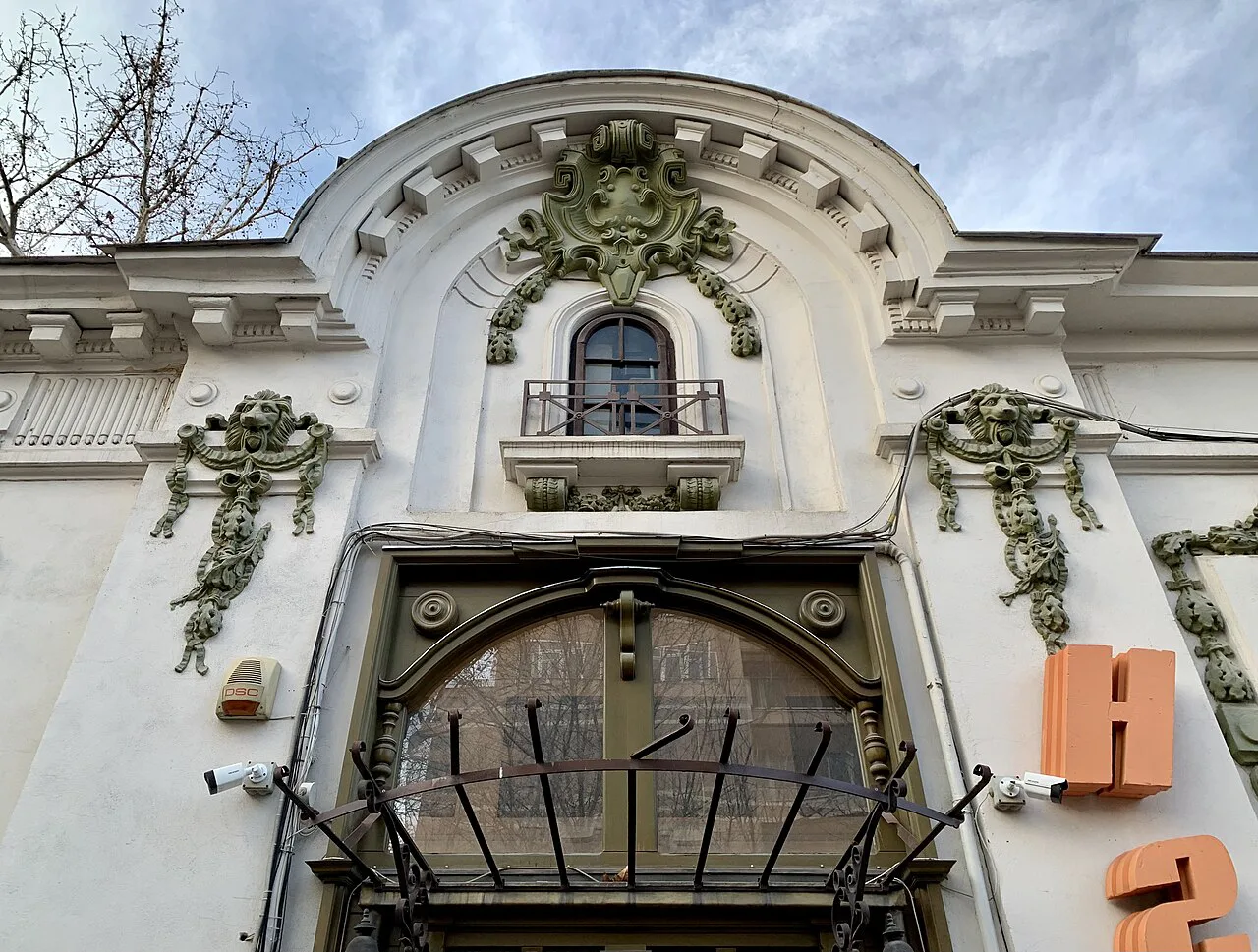
The workable route runs from the Palace of the Parliament at Izvor north through Revolution Square and into the Old Town, with a detour through Macca-Vilacrosse Passage as you cross towards Calea Victoriei. The palace tour and the Old Town walk are the two blocks that need real time; Revolution Square and the passage are ten to fifteen minutes each. Doing it in this order means you finish in the pedestrian quarter, near Universitate and Piața Unirii, instead of trailing back across the city.
Plan the day around one booked palace slot and keep the rest loose. If it is your first time in the city, a guided walk is a cheap way to get the street pattern straight before you commit your own route.
Which landmarks to drop if you have one day
With a single day, tour the Palace of the Parliament and walk Revolution Square, the Old Town and the passage. Drop the Arcul de Triumf first, since it sits away from everything else, and treat the Athenaeum as an exterior unless a concert happens to fall on your date.
Keep the church and museum visits optional. They are good landmarks but interchangeable with an hour of walking if the weather holds, and a one-day trip loses more by rushing the palace than by skipping an interior.
Practical points: metro stops, opening days and ticket prices in lei (RON)
Use the metro to bracket the walk rather than to move within it: Izvor for the palace, Universitate and Piața Unirii for the Old Town. Prices, opening days and tour times for the palace, the museums and the churches change, so confirm them on each venue's official site before you travel.
Beyond the palace tour, the central set is mostly seen from the street, which is why the walking route holds up on a tight budget. Check whether a concert at the Athenaeum falls on your dates if you want the interior.
Which Bucharest landmark should you book first?
Book the Palace of the Parliament first, because it is the only landmark here that needs a slot and a ticket, and the rest of the day can be arranged around it. Then walk north through Revolution Square into the Old Town, taking in Stavropoleos, Manuc's Inn and Curtea Veche, and cross to Calea Victoriei via the Macca-Vilacrosse Passage.
Leave the Arcul de Triumf and the northern sights for a second visit, and decide on the Athenaeum by whether a concert is playing. That order gives you the city's defining buildings without spending the day in transit.
Explore more Bucharest guides
Frequently Asked Questions
What are the main landmarks in Bucharest?
The Palace of the Parliament, the Romanian Athenaeum, Revolution Square, the Old Town with Stavropoleos Church and Curtea Veche, the Macca-Vilacrosse Passage and the Arcul de Triumf are the landmarks covered here. The central ones cluster within one walkable band from Piața Constituției up Calea Victoriei.
Sources
Useful notes for your next trip
Optional updates to our guides.
You might also like
Continue reading
More guides you'll find useful