Dârjiu Fortified Church: Visiting the Unitarian Church in Székely Land
A guide to Dârjiu's Unitarian fortified church in Harghita county: the wall paintings, gate tower and food stores, plus opening seasons and how to reach it.
On this page
Dârjiu fortified church is worth a detour if you are already touring the Saxon fortified churches around Sighișoara, but it is a village church, not a castle, and it needs planning. July and August are the straightforward months: the church opens Tuesday to Sunday, 10 a.m. to 6 p.m., with guides in English, Hungarian and Romanian. This guide covers what stands inside the walls, the wall paintings, the appointment seasons either side of summer and the drive from Sighișoara or Odorheiu Secuiesc.
Where Dârjiu is and how the church sits in the village
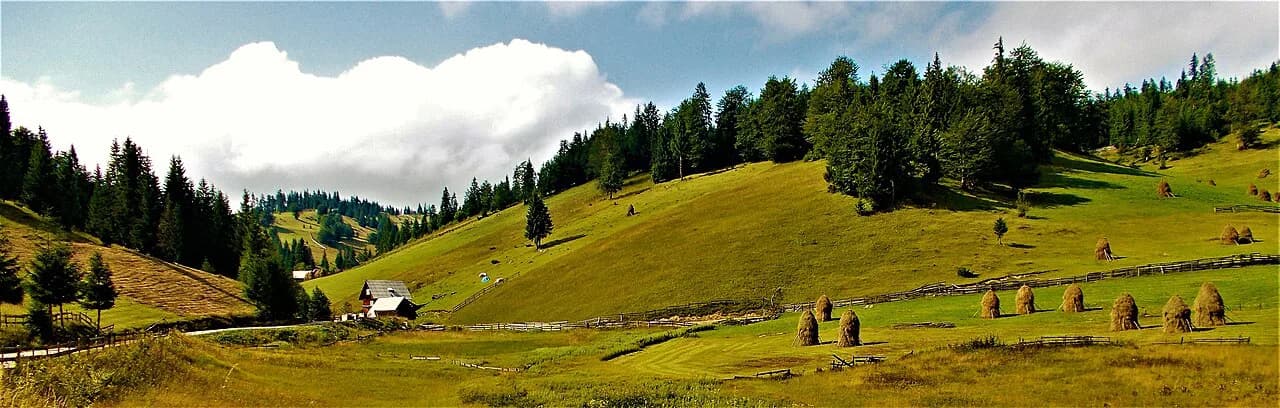
Dârjiu is a village in Harghita county, in eastern Transylvania, in the Székely Land. The fortified church stands in the village itself, reached by the DJ133 road; the nearest large towns are Sighișoara, about 20 miles west, and Odorheiu Secuiesc, about 15 miles north. Treat those distances as the basis for your driving plan rather than a promise about road speed, because the last stretch is country road.
The village is Hungarian-speaking Székely country, not Saxon country, and that is the first thing to hold in your head when you compare it with the fortified churches to the west. The Saxon villages grew their defences around German congregations; Dârjiu's congregation is Unitarian. If you are working through the wider circuit, the Fortified Churches of Transylvania guide sets out how the Saxon examples differ from this one.
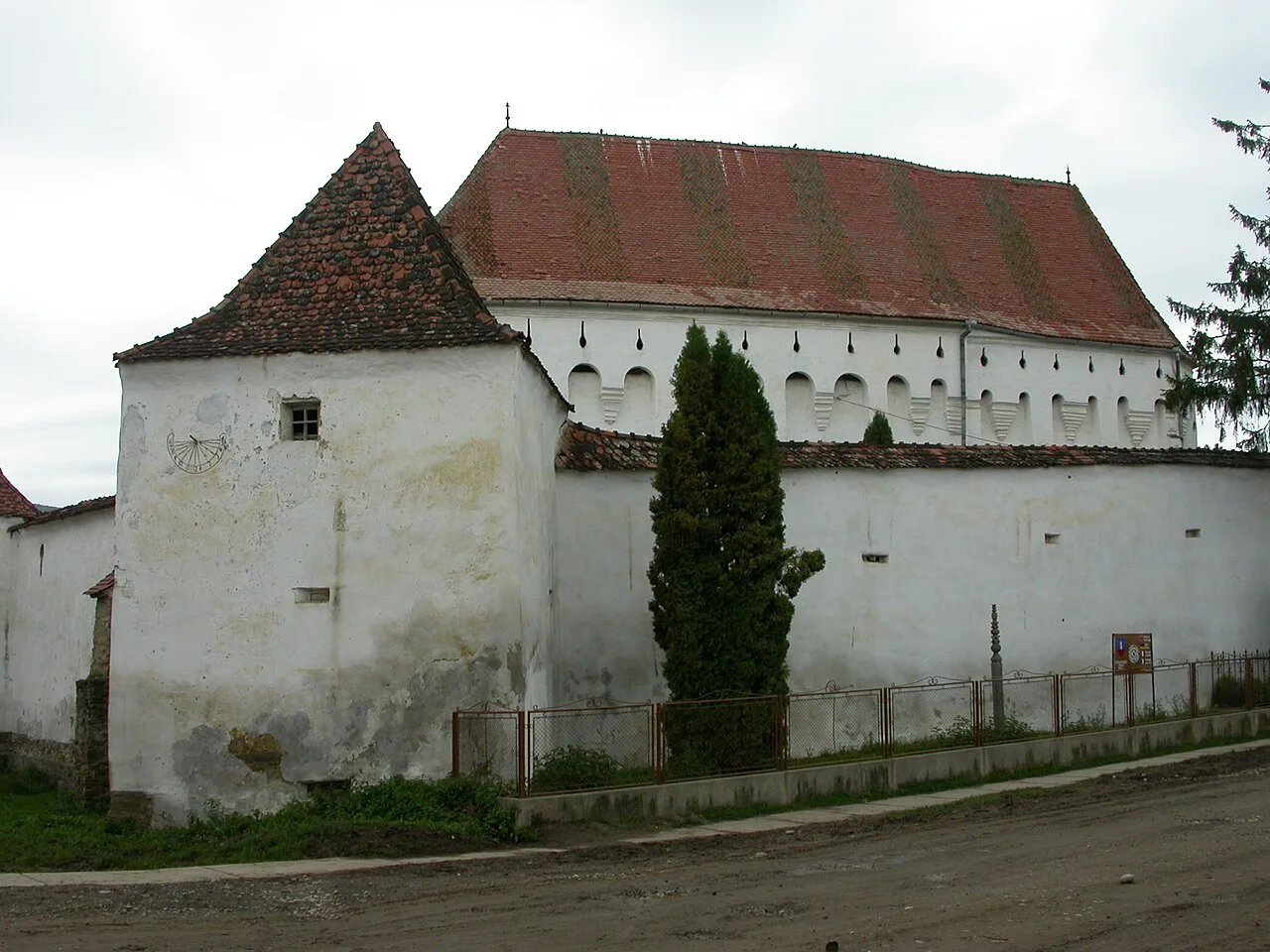
Why the church matters: UNESCO listing and the medieval frescoes
The church is a UNESCO World Heritage Site. It was first built in Romanesque style in the 14th century, later rebuilt in Gothic style, and fortified in the 16th century, when the villagers took their cue from the fortified churches in neighbouring Saxon villages. Look for the interior frescoes, among the most impressive surviving medieval works in Transylvania; the best known show the legends of St. Ladislaus.
The paintings are the reason to come inside rather than just walk the walls, so give them time and bring a torch if you want to read the darker corners. Nothing about the building is on a cathedral scale: this is a single village church with a painted interior, and the visit is short unless you are interested in the detail. If you want the big Saxon set pieces as well, plan a separate day around Viscri, where the church and village are the main event.
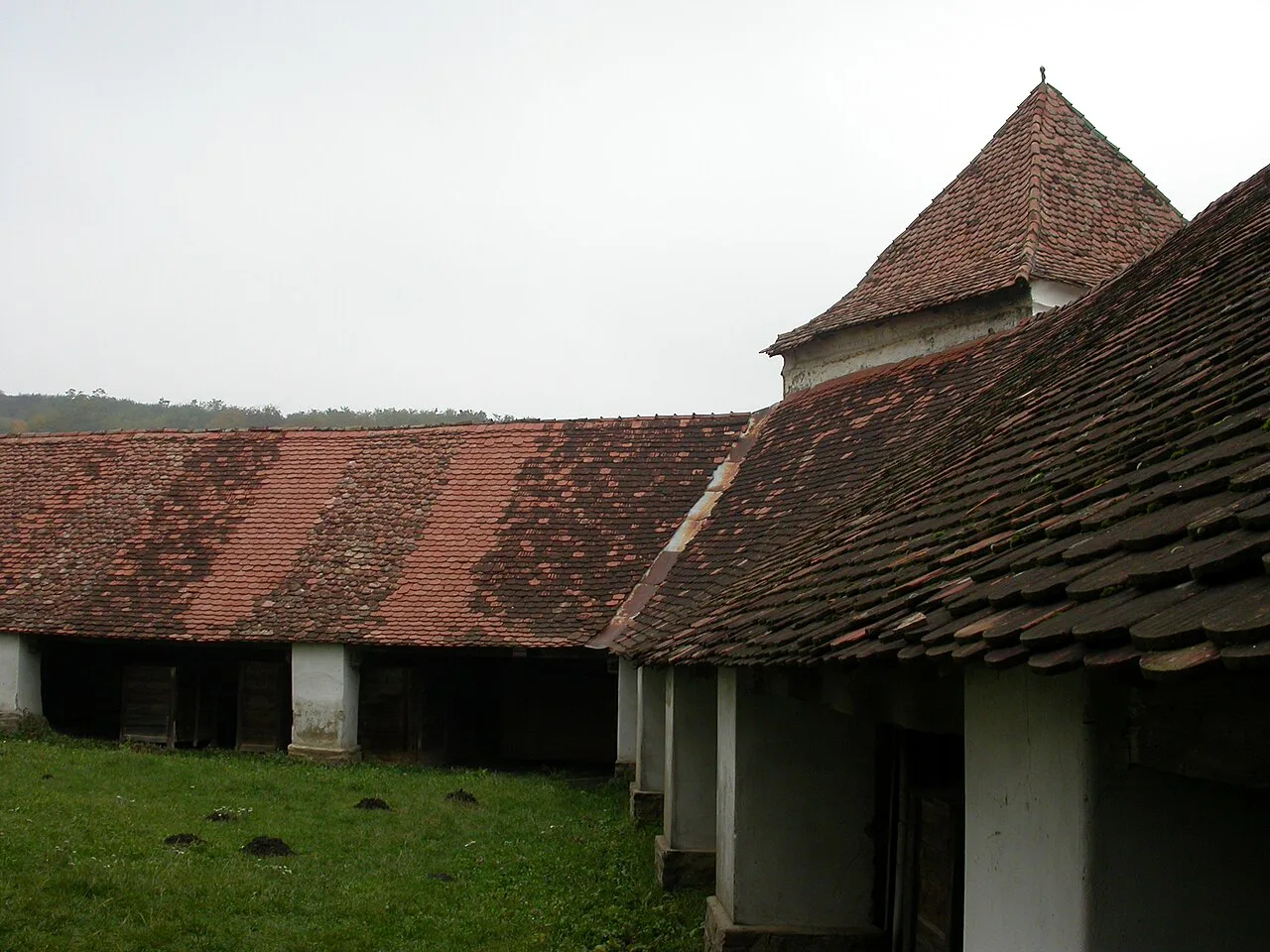
The defences: Gate Tower, loopholes and wooden shutters
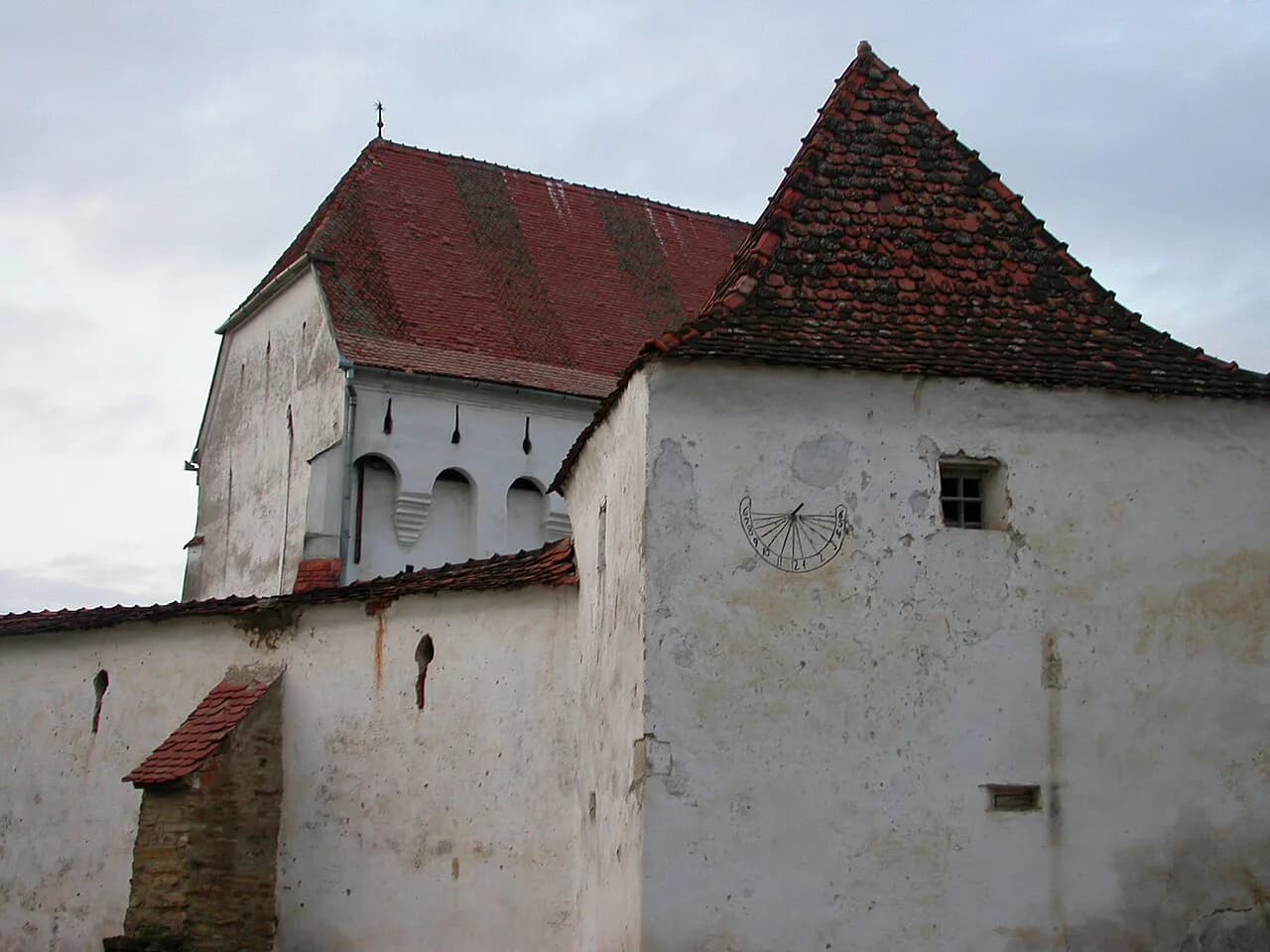
The Gate Tower keeps its original form, with openings for firearms, and its wooden shutters were there to stop incoming bullets. Defending walls enclose the church, and the gate is the first piece of military architecture you meet. Walk the wall line before you go in, because the defensive story is easier to read from outside.
Compare the scale with the Saxon defences elsewhere and you see how modest this one is: no great bastion towers, no long approach, just a walled churchyard built to keep a community and its food safe. The Saxon fortified churches around Brașov, such as Prejmer, show the same idea at a much larger size. If military architecture is your priority, that comparison is worth making.
Inside the walls: grain stores and the smoked-ham hooks
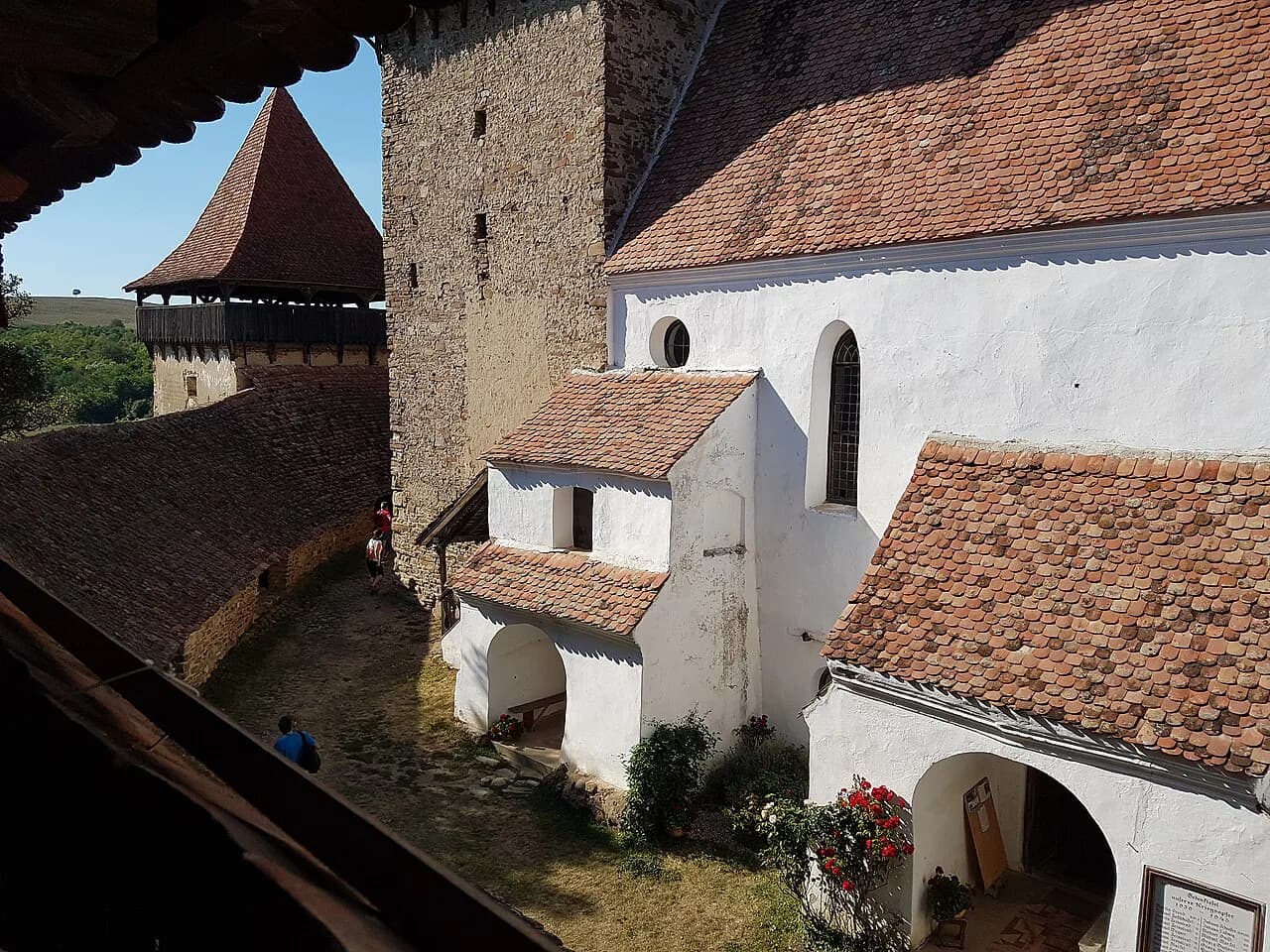
Against the inside of the defending walls stand grain-storage rooms, and they are still in use. In the main tower, smoked hams, meats and sausage have always been stored, hung on wooden hooks assigned to each family and passed down through generations; the number of hooks a family owned signalled its wealth and standing. Grain could be collected every morning, but bacon only once a week.
This is the detail that makes Dârjiu memorable: look up in the tower and you are seeing a working larder, not a museum set. The weekly custom of opening the gates at dawn on Wednesdays, announced by the church bell so families can reach their stores, still happens, but you cannot simply turn up for it; visitors who want to see it must arrange an appointment by phone or email before the end of the previous week.
The Székely and Unitarian context
Dârjiu sits in the Székely Land, the Hungarian-speaking region of eastern Transylvania, and the church belongs to a Unitarian congregation. That makes the visit a different experience from the Saxon villages, where the German communities and their churches shaped the layout of the village. Sunday services here start at 11:30 a.m., and weddings and christenings are held on Saturdays from 3 p.m.
If you are building a picture of who built and defended Transylvania's churches, the story of the Transylvanian Saxons covers the German settlements; Dârjiu is the counterpoint. It also helps to know that this part of Transylvania is rural and thinly served by public transport, so the church is realistically a car day.
Opening seasons: appointments, guides and winter closure
Opening follows a season, not a fixed weekly pattern. From 1 July to 31 August the church opens Tuesday to Sunday, 10 a.m. to 6 p.m., with guide service in English, Hungarian and Romanian. From 1 April to 30 June and from 1 September to 31 October, the same Tuesday to Sunday hours apply but visits are by appointment only with 24 hours' notice, and no guide is available. From 1 November to 31 March the church is closed to visitors.
That split matters for planning: June and September are appointment months with no guide, so you need to fix a time in advance and go in prepared to read the church for yourself. July and August give you the guided window and the most flexibility. The appointment is made by phone or email, before the end of the week preceding your visit.
The source gives no ticket price, so budget your day around travel and the optional locally produced meal (fresh sheep's milk cheese, smoked ham, plum brandy) that can be arranged for a fee when you book. Opening hours, appointment rules and any charges are the sort of detail that changes, so confirm them before you drive out.
Getting there: nearest towns and train stations
By train, the nearest stations are Sighișoara and Vânători, both about 19 miles west of the village; from either you need a car, a taxi or a pre-arranged lift for the final leg. By car, Dârjiu is reached on the DJ133, about 20 miles from Sighișoara and 15 miles from Odorheiu Secuiesc, so Sighișoara is the natural base and Odorheiu Secuiesc the alternative approach from the north.
Allow real driving time: these are country roads through villages, not dual carriageways, and an appointment slot is not something you want to miss. Dârjiu has no station of its own, so a car is the practical way to combine it with anything else on the same day. If you would rather not drive, ask your accommodation in Sighișoara about a driver or taxi for the round trip.
How long to allow and what to combine
The churchyard and walls are quick to walk; the painted interior rewards a slower look, more so with a guide. The village itself is small, so the visit works best as one stop on a loop rather than a destination in its own right. With a car, Sighișoara fills the rest of a comfortable day.
On the Saxon side of the same region, Saschiz pairs a fortified church with a hilltop citadel and sits on a sensible route from Sighișoara. Rupea Citadel is another short stop if you are heading towards Brașov. Both suit a driving day that includes Dârjiu.
If your interest is in painted interiors rather than defences, Mălâncrav in Sibiu County has a church with frescoes of its own. Biertan is the grander Saxon destination and takes longer to see properly. Decide which one earns the drive and keep the day realistic.
What to expect: a village church, not a castle
Go with the right expectation and Dârjiu rewards you: a walled churchyard, a gate tower with gun ports, a painted interior and a working food store in the tower. The farming detail, hams on family hooks and grain locked in wall chambers, is what you remember.
The trade-off is a plain village setting and a guided visit available only in July and August. Come prepared for lunch elsewhere and treat Dârjiu as the quiet finish to a day of walls and towers.
Is Dârjiu worth the detour?
Yes, if you are driving the fortified-church circuit and want something different from the Saxon set pieces. Book July or August for the guided window, expect an hour, and match your appointment to your drive from Sighișoara. If your dates fall in June or September, plan around the 24-hour appointment rule instead.
If you have only one day and no car, skip it and spend the time in Sighișoara. If you have a car and two days, Dârjiu earns a half-day alongside Saschiz or Rupea, with Viscri kept for a separate outing.
Explore more Transylvania guides
Frequently Asked Questions
Is Székelyderzs the same place as Dârjiu?
Yes. Székelyderzs is the Hungarian name for Dârjiu, the village in Harghita county where the Unitarian fortified church stands. You will see both names on maps and signs.
Can you go inside the Dârjiu fortified church?
Yes, within the published seasons. From July to August, Tuesday to Sunday, 10 a.m. to 6 p.m., with guides in English, Hungarian and Romanian. From April to June and September to October, visits are by appointment only with 24 hours' notice and no guide. From November to March the church is closed to visitors.
How do I book a visit outside the summer season?
Arrange the appointment by phone or email before the end of the week preceding your visit. The church asks for 24 hours' notice and does not provide a guide in the April to June and September to October windows.
What does it cost to visit?
The church publishes no ticket price. Ask the entry cost when you make your appointment, and budget around the drive.
Sources
Useful notes for your next trip
Optional updates to our guides.
You might also like
Continue reading
More guides you'll find useful