Free Things to Do in Brașov: Squares, Walls and Viewpoints
Free things to do in Brașov: Piața Sfatului, the Black Church exterior, the old walls and towers, Rope Street and the walk up Tâmpa, with honest trade-offs.
On this page
Brașov rewards a low-cost day because almost everything worth seeing sits in and around the old town, within a ring you can walk in an afternoon. You pay nothing to stand in Piața Sfatului (Council Square), walk the line of the medieval walls, pass through the old gates or look up at the Brașov sign on Mount Tâmpa. This guide separates the free sights from the paid add-ons attached to them, such as tower interiors, church entry and the cable car.
The structural fact that shapes a free day is simple: the Saxons built a defensive ring of walls, towers and bastions around the centre, and the old town fills the space inside it. That means a single loop on foot takes in the square, the walls, the towers, both gates and the Schei district beyond them without a bus or a ticket.
Piața Sfatului: the square where a free day starts
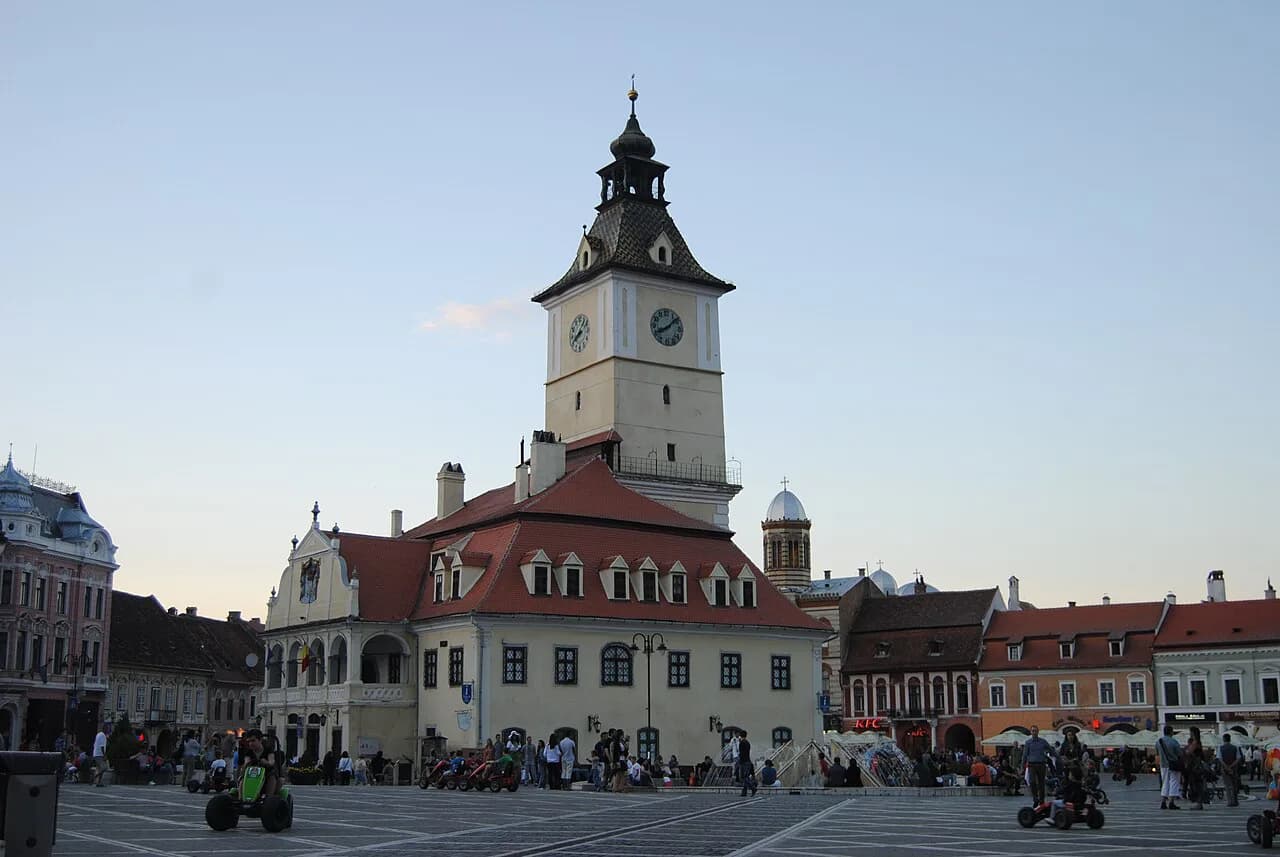
Start in Piața Sfatului, the Council Square, lined with colourfully painted and ornately decorated baroque structures with red roofs. The square has benches facing Mount Tâmpa, so you can sit with a view of the mountain and the Brașov sign above the rooftops at no cost. The square is the natural meeting point before you head into the side streets.
Casa Sfatului, the old town hall with its clock tower, stands in the square and now houses the Brașov County Museum of History. Seeing the building and its tower from outside costs nothing; going inside to the museum is a separate paid visit. Treat it as a marker on your walk rather than a stop unless you want to spend time and money on the collection.
Strada Republicii and the side streets
Strada Republicii runs off the square as the main pedestrian street, and it is where you find the densest concentration of shops and places to eat. It is also the most touristy stretch of the centre, so it works better as a route through than a destination. The side streets off the square are quieter and just as free to wander.
Use the pedestrian spine to orient yourself, then branch off towards the walls or the gates rather than walking the whole length twice. A printed or offline map helps because the old town bends around the foot of the mountain.
The Black Church from outside and around
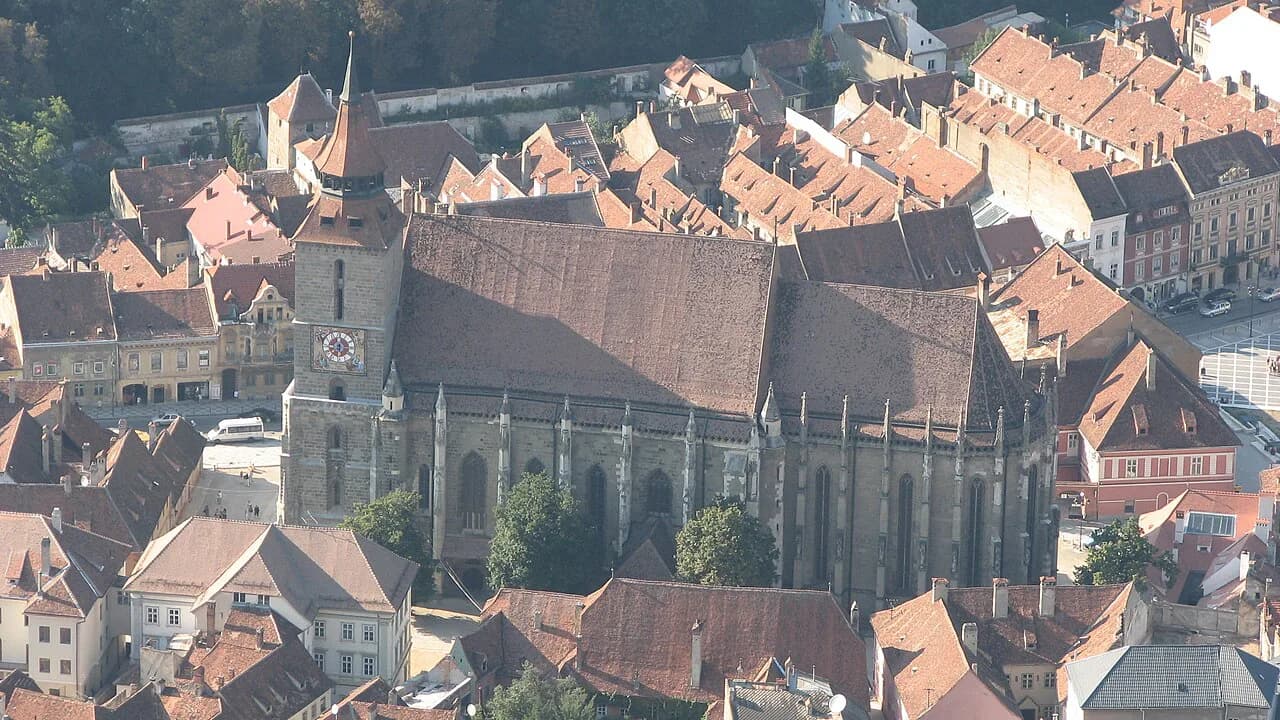
The Black Church, Biserica Neagră, sits just south of the square, and its darkened exterior is what gives it the name. You can walk around the building and read its outline from the street without paying; the interior, with its organ and rug collection, is a separate paid visit. Plan the church as a look-at stop on your loop and decide on the interior only if you want to spend time inside.
The church is one of several in the centre, and a short churches walk pairs it naturally with the surrounding streets. Keeping to the outside means you can see more in less time and keep the day free.
The medieval walls along Dupa Ziduri Street
The Transylvanian Saxons built massive stone walls and seven bastions around the city, and these are still visible today. The best free way to see them is the walk along the outside of the walls on Dupa Ziduri Street, which passes the Black Tower and the White Tower. This is open-air sightseeing with no ticket, and it gives you the clearest sense of how the town was defended.
Allow the walk its own time rather than folding it into the square. The wall line sits slightly above the streets, so you get changing views back over the rooftops as you go.
The Black Tower and White Tower: a five-minute link
The Black Tower, Turnul Negru, and the White Tower, Turnul Alb, are within a five-minute walk of one another on the wall walk. Both are small structures with tight balconies at the top, so they crowd quickly when a group arrives. Go before 11am or after 3pm if you want some breathing room.
Seeing the towers from the wall path is the free part; if you want to climb inside, check what is open on the day before you rely on it. The free view from the wall path already takes in the square and Mount Tâmpa behind it.
Weaver's Bastion: free outside, paid inside
The Weaver's Bastion, Bastionul Tesatorilor, is part of the same defensive ring, and its exterior is free to see as you walk the walls. Inside, it houses a museum of medieval weapons and guild artefacts, which is a paid visit rather than part of the free walk. That split is typical of Brașov: the structure is the free sight, the collection is the add-on.
If museums are your priority, it is worth comparing the county history museum, the bastion and the art museum before committing. A single well-chosen collection usually beats three rushed ones, and the wider list of museums in Brașov makes that choice easier.
Catherine's Gate and Schei Gate, side by side
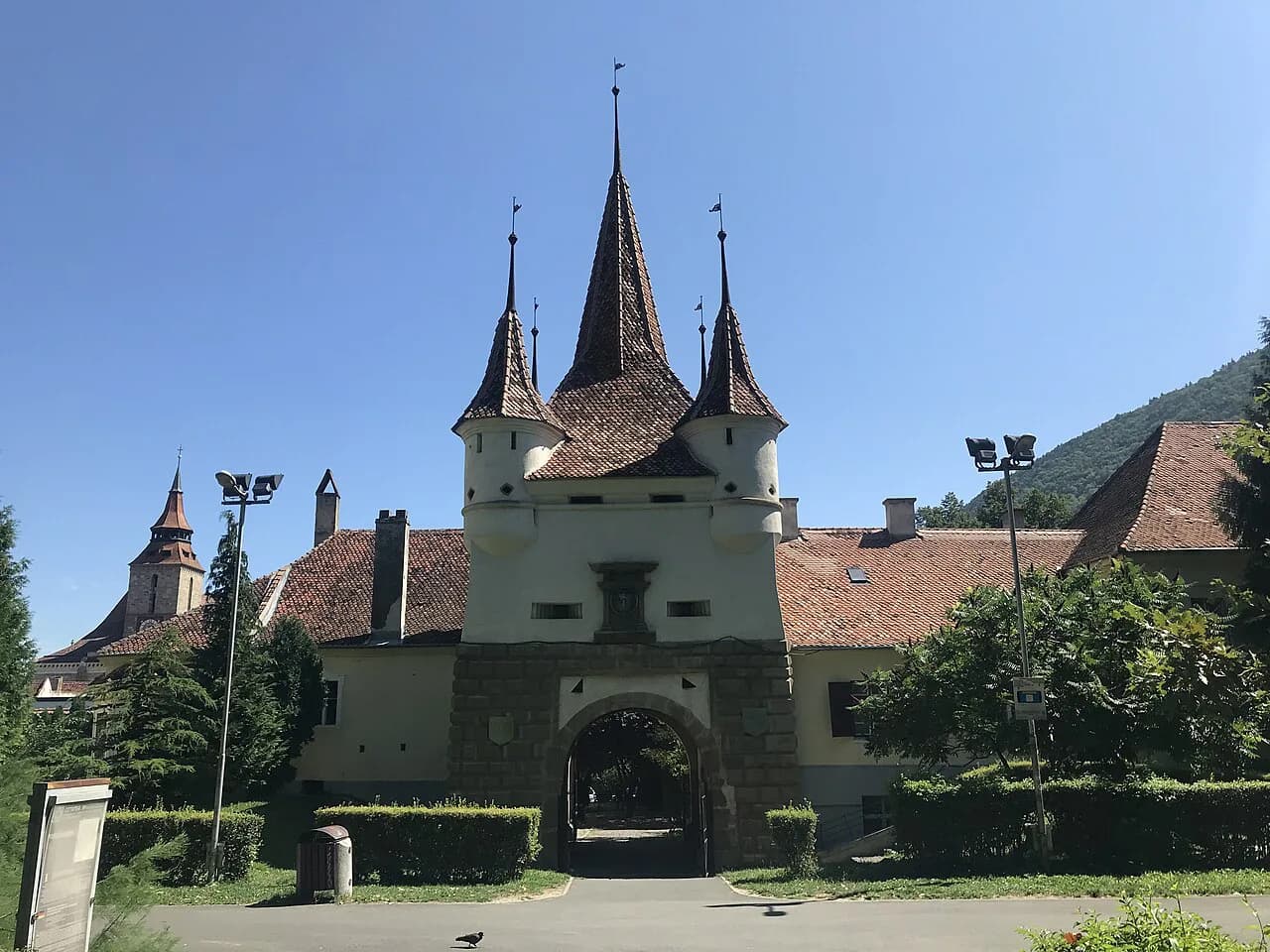
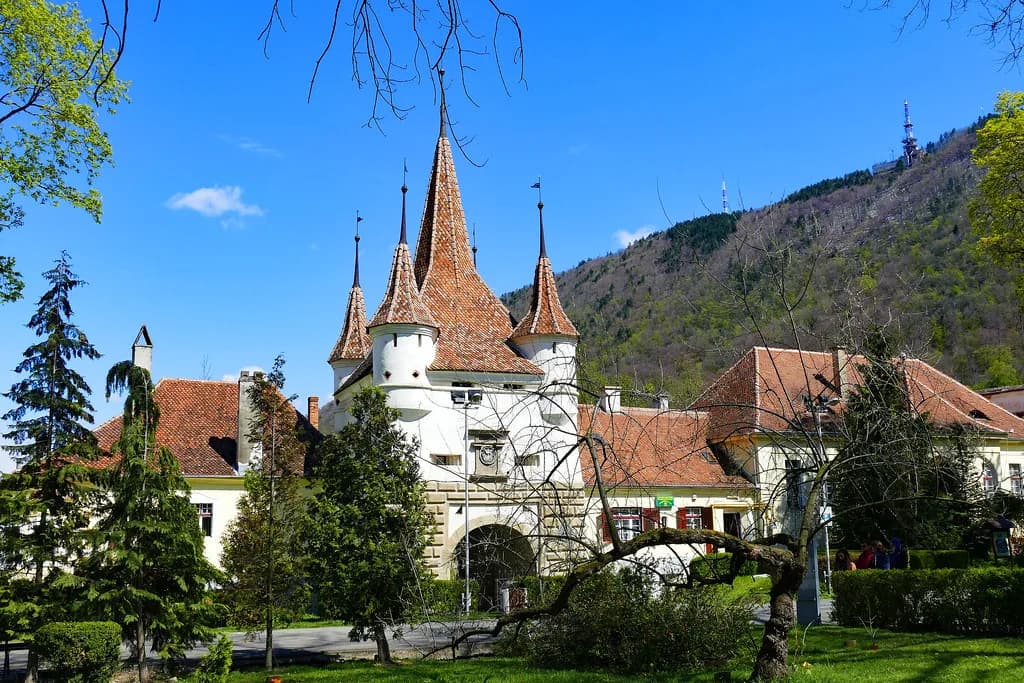
Catherine's Gate was once the only way in and out of the fortified town, and by the early nineteenth century there was so much traffic that the Schei Gate was built next door. The two gates stand close together and look very different from one another, which makes them an easy free pairing. Walk through both and compare the scale.
The gates sit on the edge of the old town, so they work best as the point where you leave the centre and continue into Schei. Seeing them from the street costs nothing, so treat them as a short detour that frames the rest of the walk.
Rope Street and the Brașov sign alignment
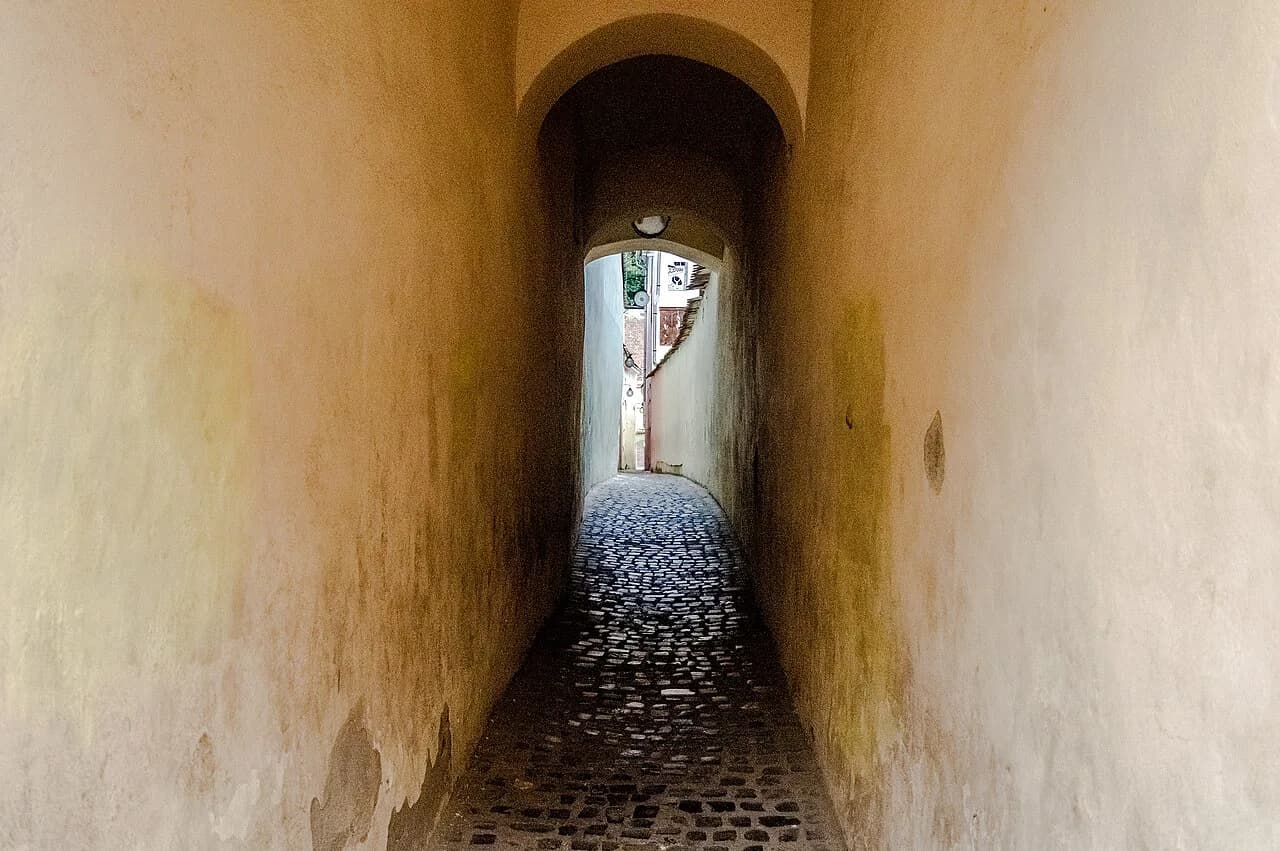
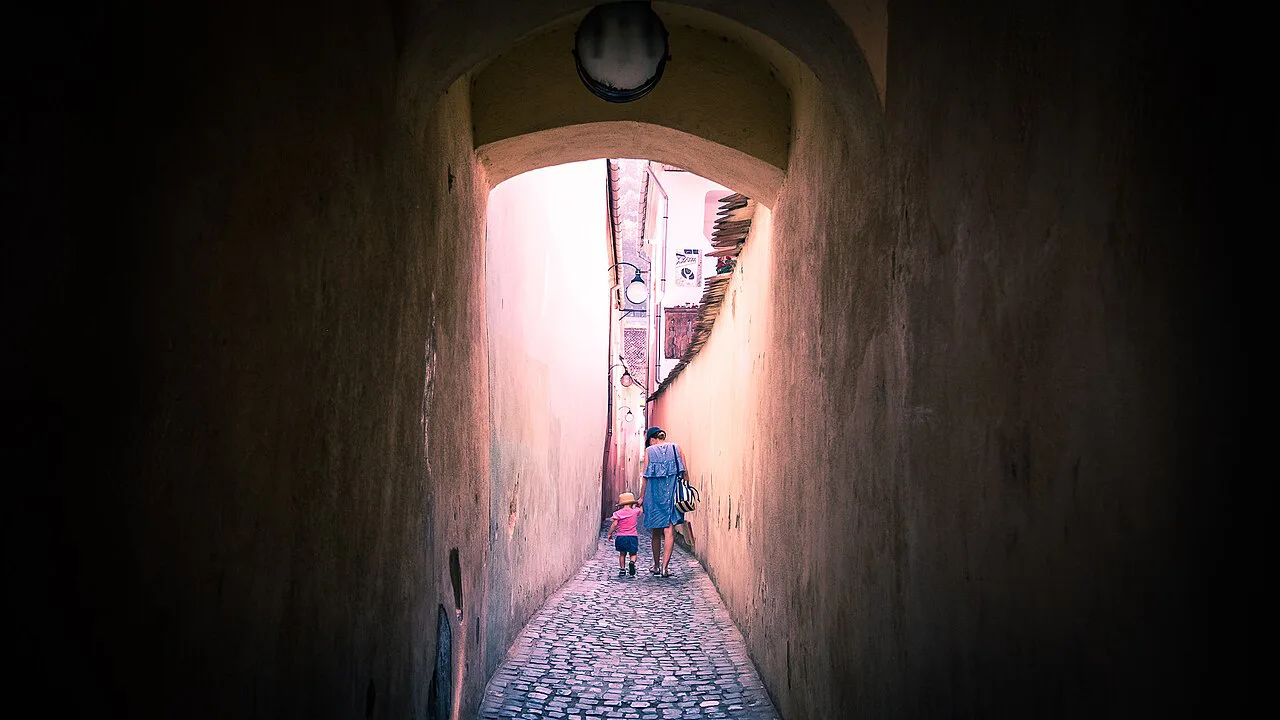
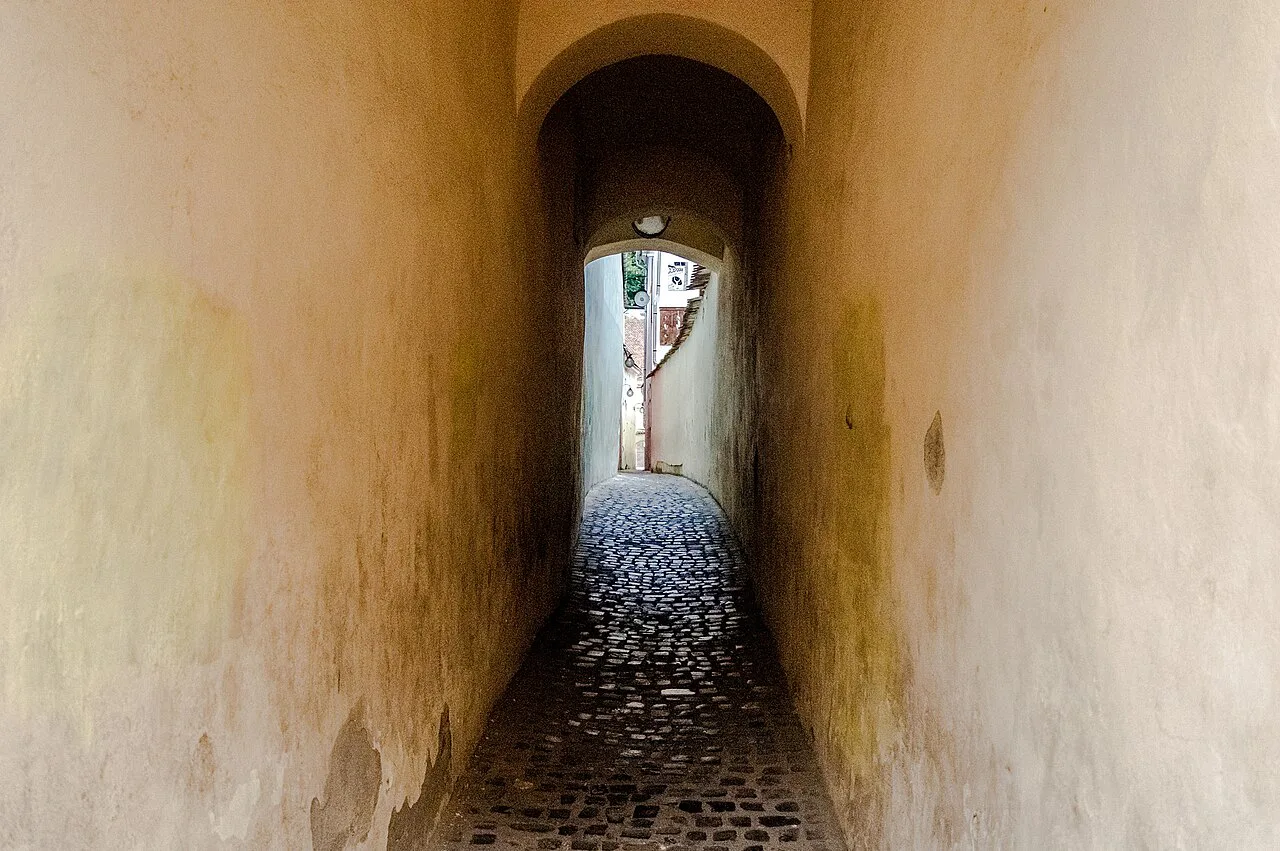
Rope Street, Strada Sforii, is a passageway linking Strada Cerbului with Strada Poarta Schei in the old town. If you enter from Strada Poarta Schei and look up, the Brașov sign on the mountain lines up with the street above you. It is a free curiosity and a quick photograph rather than a sight that needs a slot in the day.
The Schei district beyond the gates
Schei lies beyond the old gates and is a straightforward free wander once you have crossed out of the walled centre. It gives you a different feel from the square, with the mountain closer and the streets quieter. Combine it with the gates and Rope Street so the walking flows in one direction.
Tâmpa: free on foot, paid by cable car
Mount Tâmpa rises directly above the old town, and the walk up costs nothing. Two routes start to the left of the cable car station, take about an hour to the top, and are marked with red triangles for the easier Serpentine Trail and yellow triangles for the steeper Gabony Steps Trail. Stick to the marked trail to avoid any encounters with wildlife.
The cable car is the paid alternative, with a station on Aleea Tiberiu Brediceanu opposite the Undertakers Tower about ten minutes from the main square. Fares and seasonal hours change through the year, so check the posted tariff at the station on the day rather than budgeting from an old figure. Each car holds a maximum of 20 people and the ride takes about three minutes.
The sign and the terrace above it
The Brașov sign sits on the mountain above the town and is lit at night. Above the sign there is a large terrace with a wide panorama back over the city, which is the reward for either the walk or the cable car. If you are on a free day, the walk is the version that keeps it free.
Free walking tours: what tip-based means
Brașov has tip-based walking tours: there is no set price and no upfront payment. You join the group, walk for the advertised time, and give the guide whatever you consider appropriate at the end. That is not the same as free, so treat it as a discretionary cost rather than a no-cost item.
If you want a fixed-price, self-guided alternative, a mapped route through the same sights avoids the tipping question entirely. Either way, a route planned in advance saves doubling back.
What is not free, so you can budget
The free day is built on squares, streets, walls, gates and exteriors; the paid items are the interiors and the rides. The Black Church interior, the Weaver's Bastion museum, the County Museum of History and the Tâmpa cable car sit in that second category. Decide in advance which one or two you will pay for, and check current opening arrangements before you travel.
If you would rather pay once and have the day arranged for you, a guided day tour covers the same ground with transport and commentary. The free version is the same streets and viewpoints without the guiding.
Combining the free sights into half a day
A workable loop starts in Piața Sfatului, takes in the Black Church from outside, follows Dupa Ziduri Street past the Black and White Towers and the Weaver's Bastion, then returns through the gates and Rope Street into Schei. From there the mountain walk adds about an hour up if you have the energy. Keep the whole thing on foot and you pay only for what you choose to enter.
Build the walking order around the wall ring rather than hopping between scattered stops, and the day needs no transport at all. It also leaves the afternoon open if one paid interior turns out to be worth more time than you planned.
Free morning or cable car afternoon?
Choose the on-foot version if you want the day to cost nothing but your time: square, church exterior, walls, towers, gates, Rope Street and the climb up Tâmpa. Choose the cable car if the climb is not appealing, and accept that it turns the mountain into a paid item.
Whichever you pick, build the day around the wall ring rather than scattered stops, and confirm cable car hours and any tower access on the day before you set out.
Frequently Asked Questions
What should I not miss on a free day in Brașov?
The Council Square and its benches facing Tâmpa, the walk along Dupa Ziduri Street between the Black and White Towers, the two town gates and Rope Street. The Black Church is worth circling from outside, and the walk up Tâmpa keeps the day free if you skip the cable car.
How many days in Brașov is enough?
A single afternoon covers the free loop on foot, and a full day adds the mountain walk and one paid interior. Two days gives you room for the old town at an unhurried pace.
Are there wild animals around the Tâmpa paths?
The mountain paths above the town run through forest, so stay on the marked trails and do not cut across woodland. The routes are signposted, and keeping to them is the practical precaution.
Sources
Useful notes for your next trip
Optional updates to our guides.
You might also like
Continue reading
More guides you'll find useful