Letea Forest, Danube Delta: Visiting the Oak-and-Sand Forest
Letea Forest in the Danube Delta is a protected oak-and-sand woodland reached by safari car from Letea village, with wild horses, dunes and a walk on foot.
On this page
Letea Forest is the Danube Delta's oak-and-sand woodland: old trees on a thin layer of fertile soil over salty sand, split into shady forest strips and open desert strips, reached by safari car from Letea village and finished on foot. This guide covers where the forest sits, what you actually see inside it, how the safari-car and walking visit works, and the trade-offs that decide whether it fits your Delta trip.
What Letea Forest is and where it sits
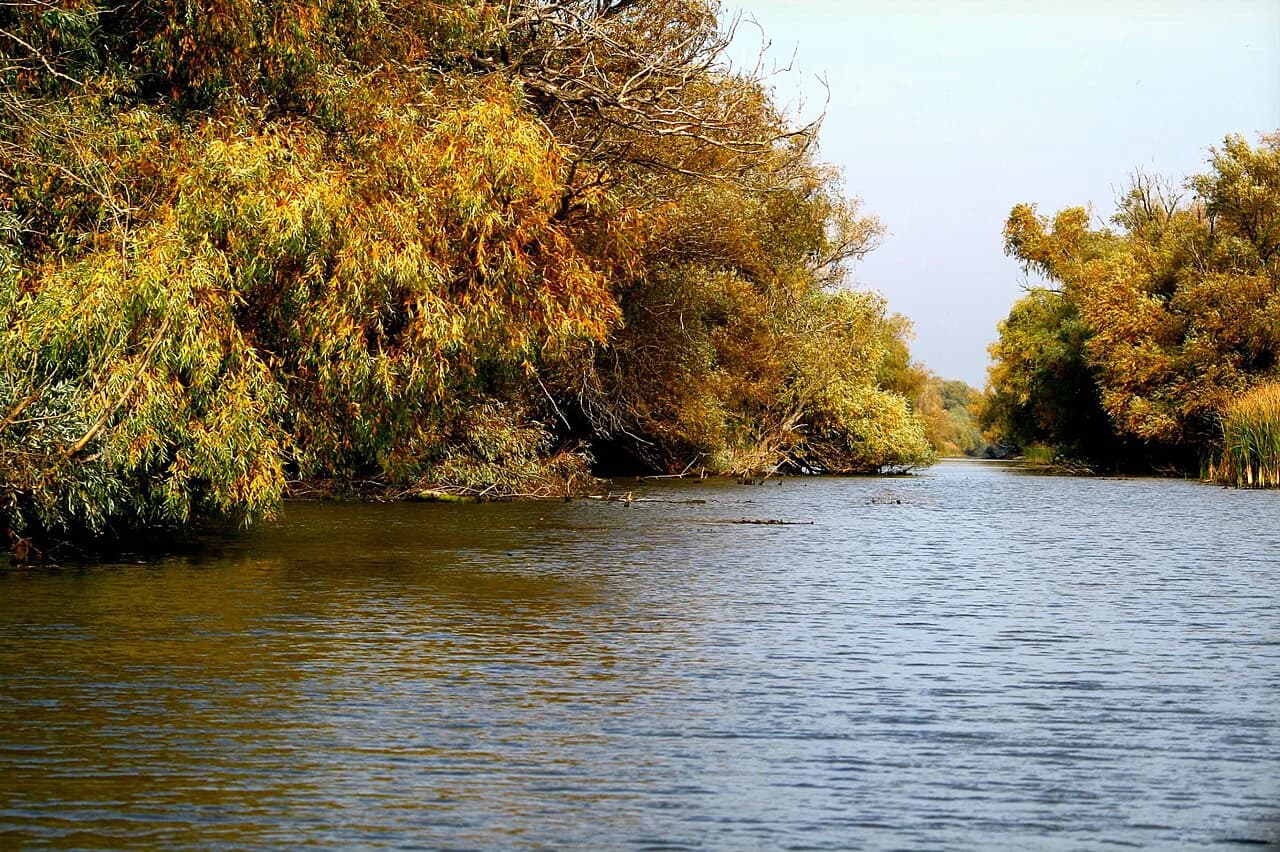
Letea Forest is a protected nature reserve in the Danube Delta near the village of Letea in Tulcea County, and it lies between the Sulina and Chilia branches of the Danube. The woodland and sand are a single reserve rather than a park with paths laid out for visitors, and the landscape is the point: you are coming for the swing between deep shade and bare, bright dunes.
The reserve was established in 1938 and sits between the Sulina and Chilia branches of the Danube. If you are planning the wider Delta trip around it, our Danube Delta Guide sets out how the branches and the main waterways fit together, which helps you judge how much of a detour the forest is from your base.
Why the forest looks like it does
The old oaks grow on a thin layer of fertile soil covering the salty sands of what was once a seabed, which is why they take on odd shapes and why the woodland sits in narrow strips rather than a continuous canopy. Between the strips lie open desert stretches covered in dry vegetation, and the source describes the contrast as alternating forest and desert, with a vegetation more typical of subtropical forests than of a northern woodland.
Alongside the oaks you can pick out silver poplars, ash and linden trees, plus ten species of orchid, asparagus and other subtropical plants. In places the oaks carry Periploca graeca, the silkvine, and old man's beard, Clematis vitalba, running up the trunks and branches.
The wild horses of Letea
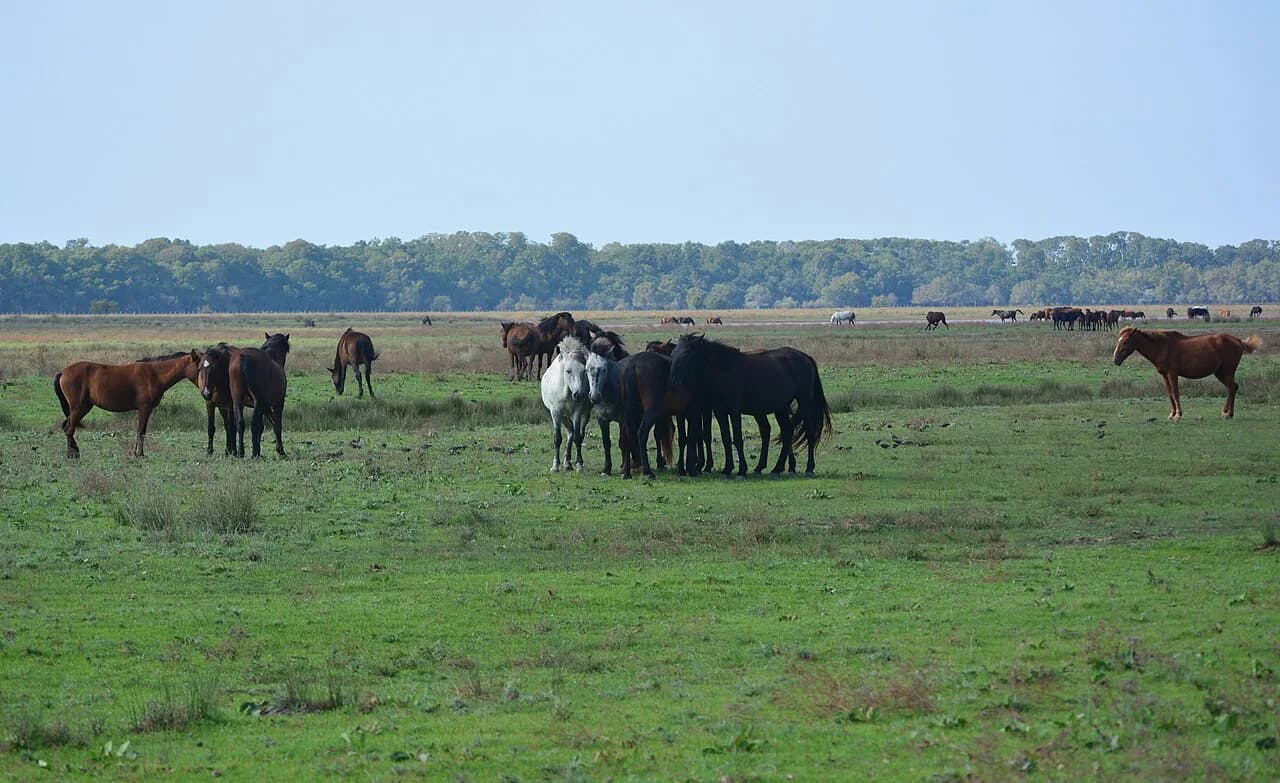
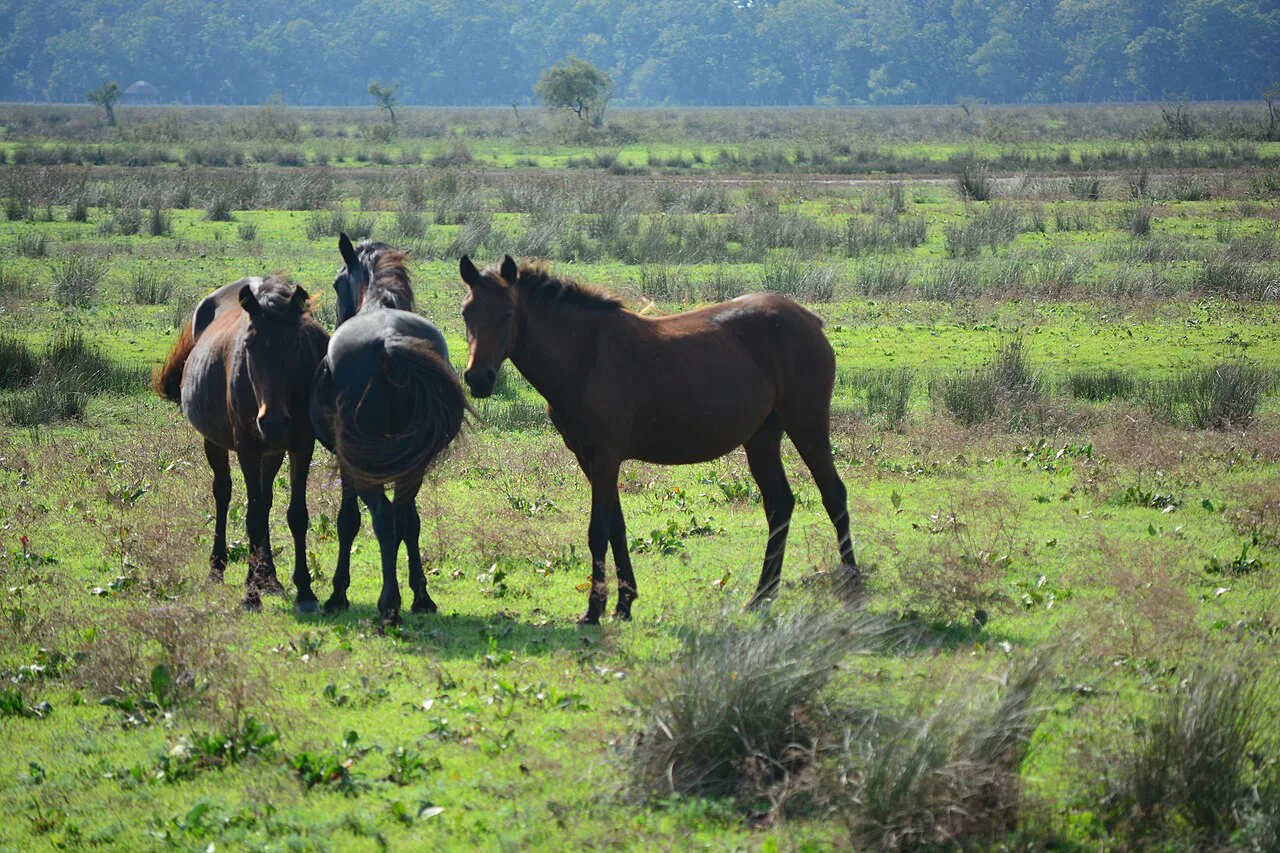
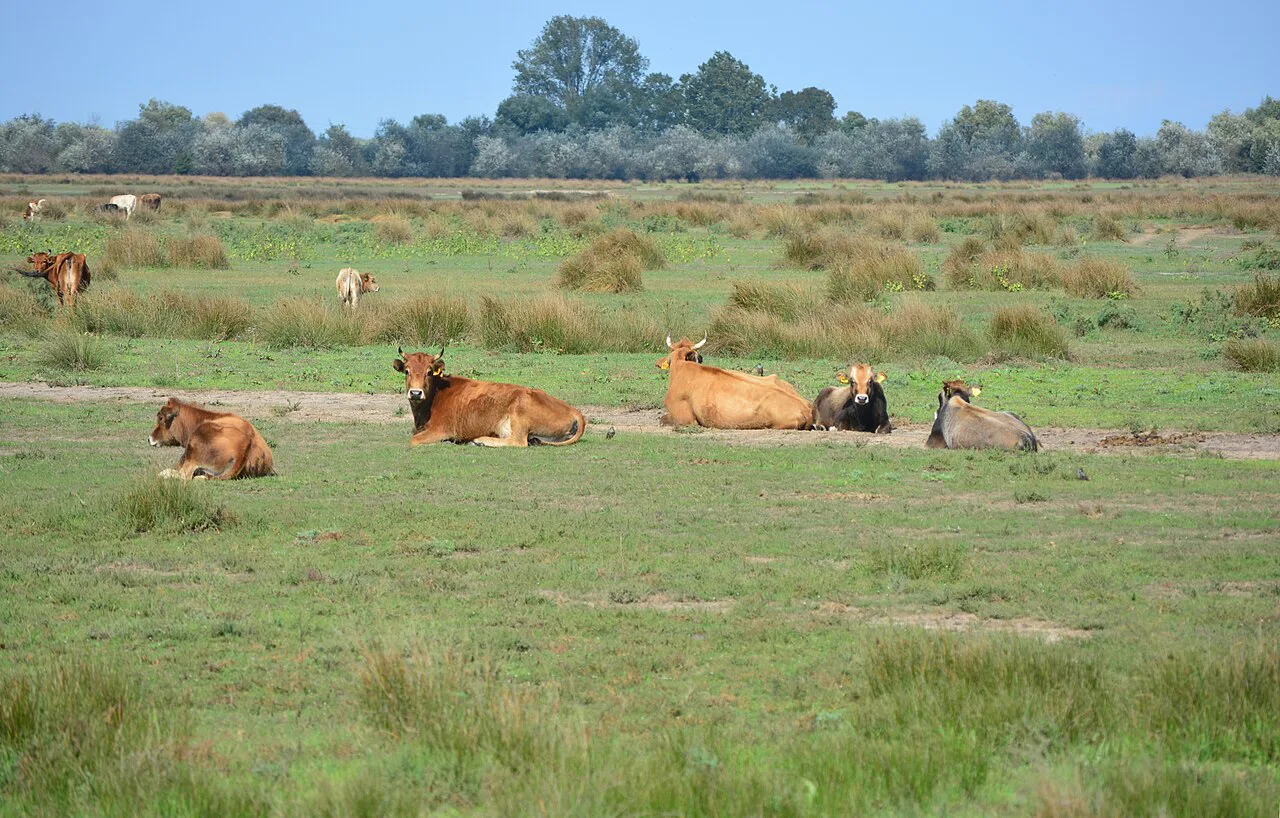
The wild horses are one of the reserve's real draws, and tours make a point of searching the meadows and woods for the herds grazing free. Treat a sighting as a possibility rather than a guarantee: the guiding approach is to look for the horses across the open ground while you are already walking the forest and dune sections, so the morning or afternoon is built around the search rather than a separate stop.
If you are booking through an operator, ask whether the itinerary covers the herd areas and how much time is given to looking, because that shapes how much of the forest walk you actually get. Our guide to Danube Delta tours explains how guided days in the Delta are usually structured, which makes it easier to compare what different itineraries promise.
Starting point: Letea village
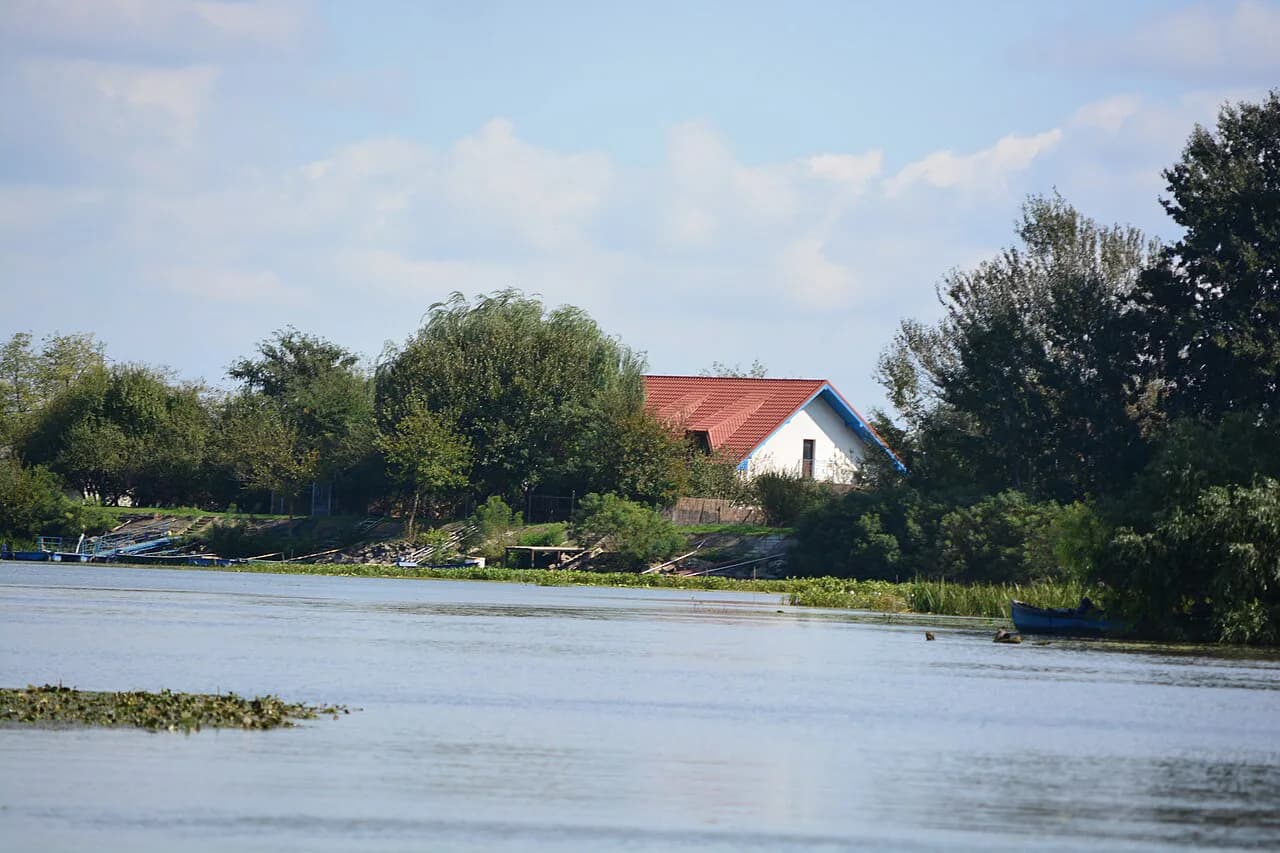
The visit begins in Letea village, where many houses built in the local architectural style out of clay, wood and reed are still standing, painted and decorated in the Lipovan and Hahol style. This is where you leave the boat or road transport behind and switch into the safari cars that cover the rougher ground towards the woods.
How you get in: safari car, then on foot
Access is by safari car from Letea village, and the cars are left at a point from which the dunes are reached on foot, so the final stretch over the sand is a walk rather than a drive. That arrangement matters for what you pack and wear: the visit is not a drive-through, and the walking section is where the dune landscape and the old oaks are actually seen.
Tarla Popii: the two old oaks
Tarla Popii is where two of the forest's old oaks stand, and it is the point to match against your itinerary if ancient trees are the reason you came. Stories put these oaks at more than a thousand years, but research places them between 300 and 600 years old, and that is the figure worth carrying into the visit.
Dunele Mari and Hasmacul Mare
Dunele Mari, the High Dunes, begin at Hasmacul Mare, where the highest dunes in the area stand and the landscape opens into alternating strips of forest (hasmac) and desert. This is the section that produces the photographs people associate with Letea: trees on one side, bare sand on the other, and a horizon that changes with every rise.
Dunele mici: the short walk
Dunele mici, the Small Dunes, sit closer to the road and are the easiest dune section to reach, with a walk of ten minutes at most away from the road. That makes them a sensible substitute if time is tight or if the heat is making the longer walking sections harder.
Fântâna lui Omer: access closed since 2019
Fântâna lui Omer, Omer's Fountain, is closed to access: the source states that entry has been prohibited since 2019 after visitors and local guides filled the fountain with plastic bottles and damaged the area. Some itineraries and older descriptions still list it, so check the route your Discover Danube Delta guide is actually running before the day, since the fountain may not be on it.
What changes with the season
In spring, orchids carpet the green meadows, wild horses graze on fresh grass after the winter and stallions can be seen challenging each other, with the first foals beside their mothers. Temperatures allow longer walks and more ground to be covered, which is when the guiding can stretch the walking route into the spring and autumn.
In summer the contrast sharpens between the green forest and the brown, dry desert strips, and the heat is immediately noticeable on the sand. Long walks over hot sand are difficult in summer, so tours tend to shorten the walking section during the hottest months, while the shade of the woods remains the comfortable part of the visit.
The vines, and why you keep your distance
The lianas and vines once gave the forest interior a distinctive look, but many broke or were torn away by visitors and guides who wanted photographs of them hanging from the vines. Only a few feeble vines remain, which is the reason to keep your distance and take nothing from the trees.
Practical trade-offs
The main trade-off is heat versus ground covered: summer makes the sand genuinely hard walking, while spring and autumn let you see more of the forest and dunes because the temperatures allow a longer route. The second is transport versus protection: cars are left at a point from which the dunes are reached on foot, so the sensitive areas are crossed on foot rather than by vehicle.
The forest is reached through Letea village, so build your day around getting to the village and the safari-car transfer rather than treating Letea as a stand-alone stop. Our Tulcea Guide covers the town's layout and how onward transport into the Delta works, which is useful background before you arrange the village transfer.
Should Letea Forest be on your Delta itinerary?
Letea Forest suits travellers who want the Delta's wooded and sandy side rather than another waterway: old oaks on thin soil, open dunes, a village of clay, wood and reed houses and a genuine chance of wild horses. Go for the shaded oak forest and the open sand strips, book a safari car from Letea village, and expect the last stretch on foot.
If you are weighing the forest against the Delta's other stops, our guide to Sulina explains the town where the river meets the sea, which is the other end of the Delta and a different kind of day out.
Explore more Danube Delta guides
Frequently Asked Questions
Where is Letea Forest located?
Letea Forest lies in the Danube Delta in Tulcea County, between the Sulina and Chilia branches of the Danube, next to the village of Letea. You reach it by boat and road transport into the Delta and then by safari car from the village.
Can you visit Letea Forest without a guide?
Visitors reach the woods by safari car from Letea village and cover the dunes on foot, with cars kept out of the sensitive areas. Operators run guided days that include the drive and the walk, so ask what is covered.
How old are the old oaks at Tarla Popii?
Research places the two old oaks at Tarla Popii between 300 and 600 years old, although stories put them at more than a thousand. The research figure is the reliable one to use.
Sources
Useful notes for your next trip
Optional updates to our guides.
You might also like

Continue reading
More guides you'll find useful