Brăila: Romania's Danube Port Town and Its Old Centre
Brăila is a Danube port town in eastern Romania, known for its 19th-century old centre around Piața Traian. Here's what to see and how long it needs.
On this page
Brăila is a Danube port town in eastern Romania, in the historical region of Wallachia, and its main draw for a visitor is the 19th-century old centre arranged around Piața Traian. It suits a half-day stop on the road or rail line toward the Danube Delta rather than a dedicated city break, because the centre is rich in atmosphere and architecture but short on conventional ticketed sights. This guide covers the layout, the streets and buildings worth walking, the theatre, the waterfront and how to reach it.
What Brăila is and where it sits on the Danube
Brăila sits on the bank of the Danube in eastern Romania, roughly 170 kilometres from the river's mouth, and serves as the capital of Brăila County. The town grew as one of the important Romanian Danube ports and was rebuilt in the mid-1800s on a modern plan that followed the slope down to the water. Its mercantile past left a dense stock of villas, mansions and public buildings from that period.
Two details help you place the town before you arrive. Its historic core was shaped by trade, and more than 2,000 old buildings, palaces and mansions from the mid-1800s are still standing, which gives the centre its particular feel. Many of these historic buildings are now in disrepair, so expect a town of faded grandeur rather than a restored showpiece.
The town is also associated with the physician Ana Aslan, founder of Romania's Geriatric Institute, and the jazz musician Johnny Răducanu, both born here. Musicians and medics aside, the appeal for a traveller is architectural and riverside, so plan your expectations around streets and squares rather than a single headline attraction.
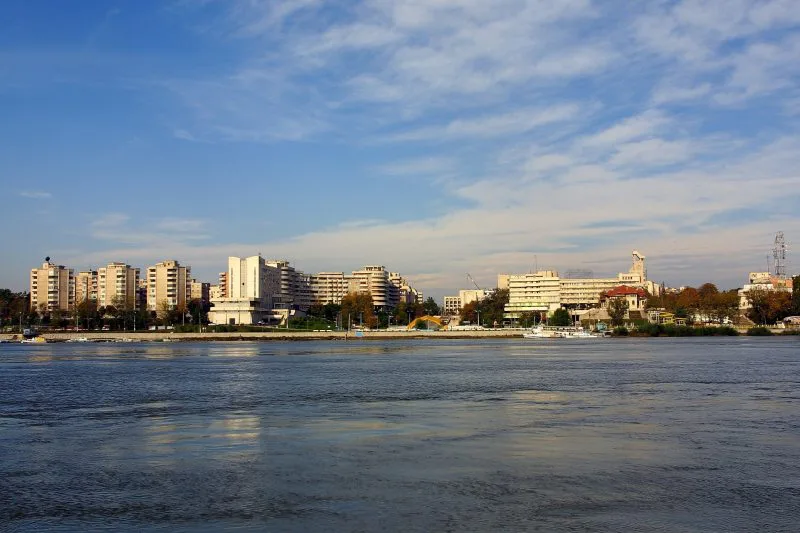
How Brăila is laid out: Piața Traian and the fan-shaped streets
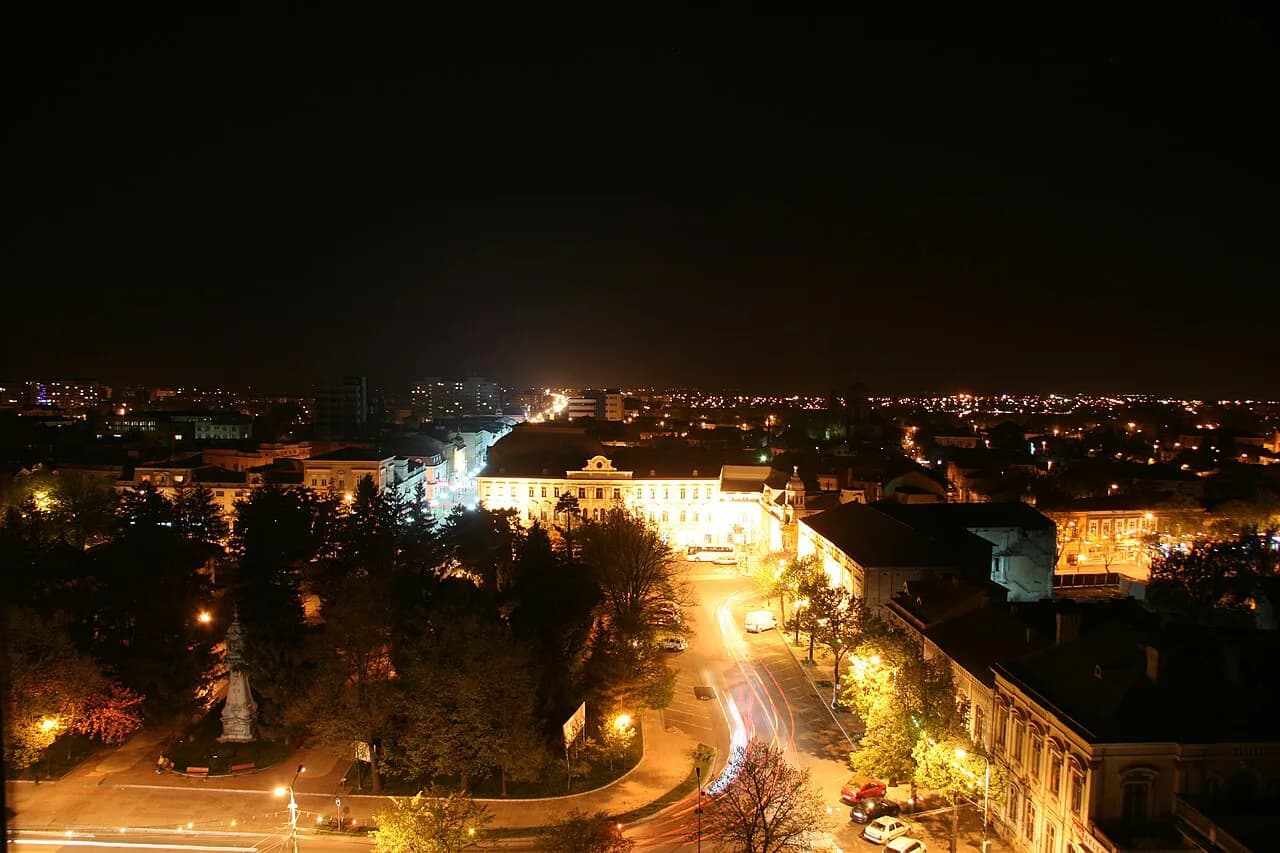
The old centre is centred on Piața Traian (Traian Square), and all the main arteries of the city start from that square in the shape of an arc whose base is the Danube to the east. Because of this plan the town is known as the fan-shaped city, and once you understand the arc you can orient yourself without a map: find the river, then walk inland from the square.
The historic building stock is concentrated on Strada Mihai Eminescu, formerly Strada Regală, which holds the largest concentration of historic buildings that recall the cosmopolitan mid-19th-century period. Walk this street slowly rather than treating it as a through-route, and look up at facades rather than at shopfronts. Expect scaffolding, peeling plaster and boarded windows alongside intact detailing.
The pattern of the town is semicircular rather than grid-like, so side streets peel away from the arc and descend toward the river. A simple walking plan is to start at Piața Traian, follow Strada Mihai Eminescu, then drop down to the waterfront and loop back. This keeps you inside the historic core without needing to navigate the wider modern city.
The old centre on foot: 19th-century villas and their condition
Brăila keeps some of its 19th-century grandeur in the form of elegant villas and mansions built when successful merchants ran the port. These buildings give the city a unique feel but many are in disrepair, which is the honest expectation to carry: you are walking a historic townscape in mixed condition, not a museum quarter.
Plan the walk for the middle of the day when light falls on the facades along Strada Mihai Eminescu, and keep an eye on uneven pavements and works. The centre buildings are street architecture seen from outside unless a sign at the door invites you in, so the walk costs nothing and takes as long as you give it.
If you want a route with a clear shape, walk the Eminescu corridor twice: once at street level for doorways and cornices, once down by the river looking back up at the roofline. The fan-shaped plan means the river gives you a reliable reference point throughout, so you are unlikely to get lost even without a map.
Teatrul Maria Filotti and the landmarks around Piața Traian
The best-known landmark on the square is Teatrul Maria Filotti, a Baroque-style theatre originally built as a mixed-use building with a hotel, shops, restaurant and café, with significant renovations and additions made in 1895. It was renamed in 1969 after the Romanian actress Maria Filotti, who was born in 1883, which explains the name on the front today.
The theatre is the architectural centrepiece of the square, and its frontage is the detail most visitors come to see. Around Piața Traian, numerous historic buildings with charming architecture face the square, and the best approach is to circle it slowly and then follow the arc inland.
Set your expectations for a square that is lived-in rather than polished. The theatre and its neighbours are worth a fifteen-minute pause, and combined with Strada Mihai Eminescu they form a compact circuit that fits comfortably into a morning.
The Danube waterfront and why the port shaped the town
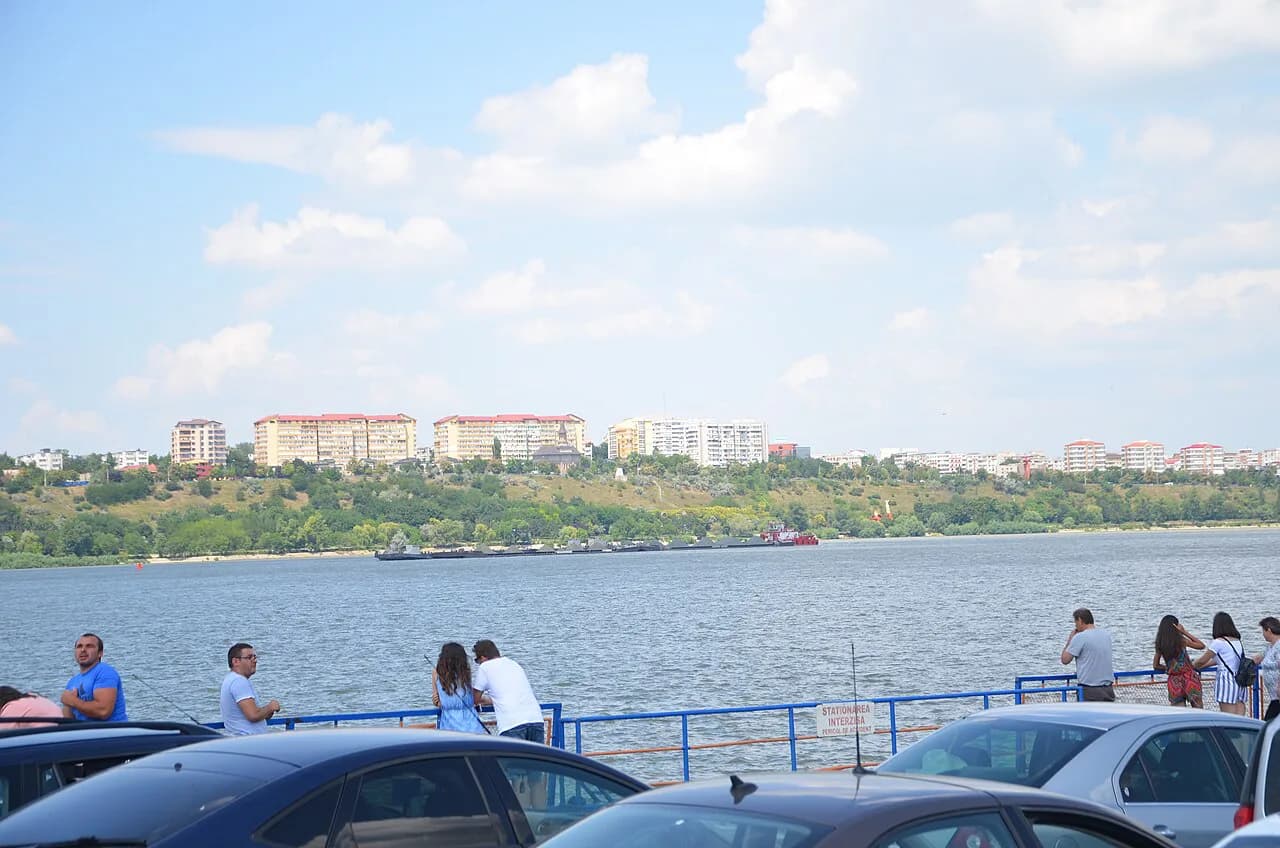
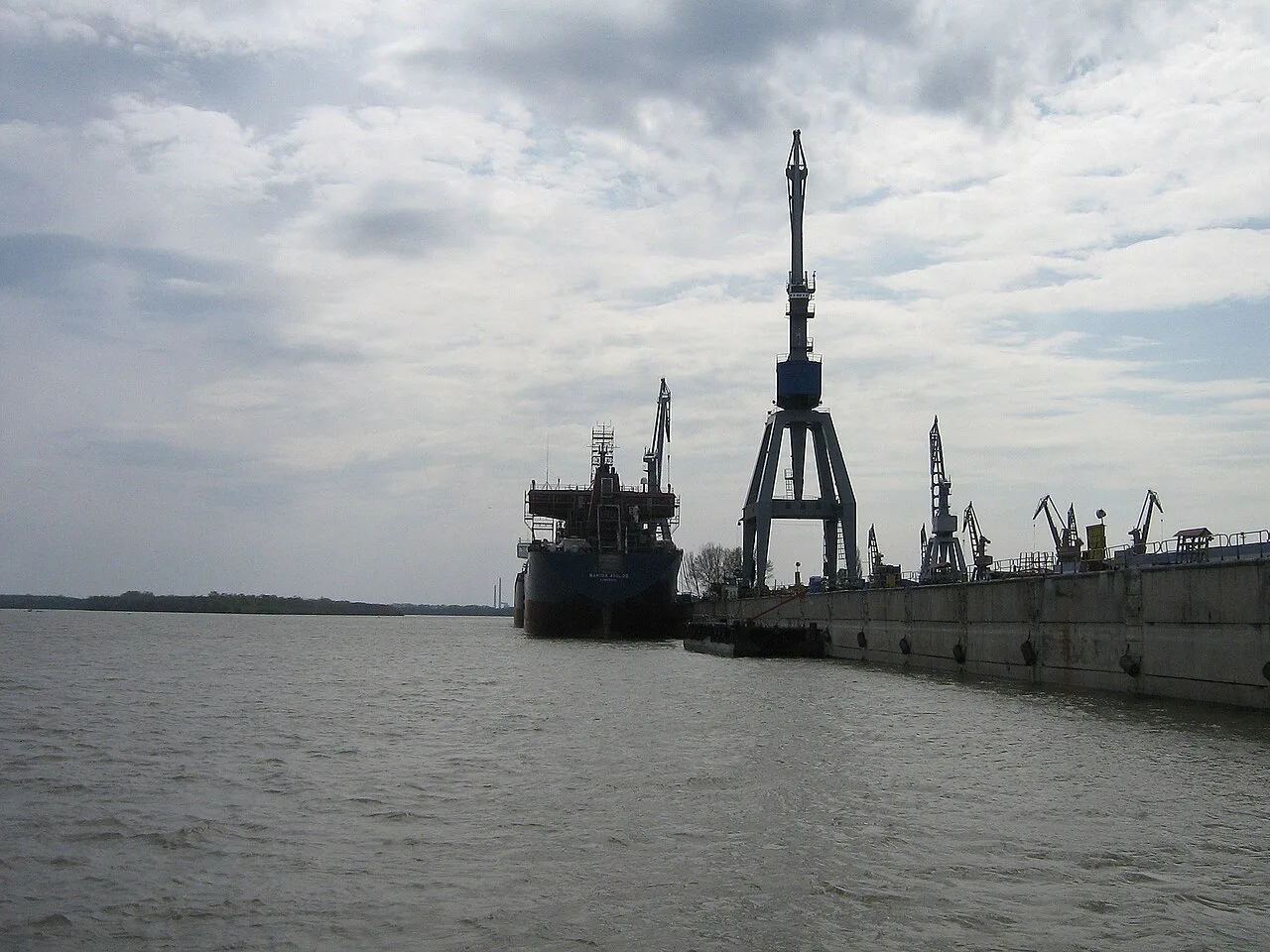
Brăila was declared a free port in 1836, and the resulting trade made it one of the three most important ports on the Romanian section of the Danube, alongside Turnu Măgurele and Giurgiu. Investors and workers arrived from across Europe, and that influx explains the cosmopolitan character of the 19th-century buildings you see in the centre. Walking the waterfront helps you understand how the town was arranged around the river rather than away from it.
The river is the reason the town exists and the reason its plan curves towards it, so give the waterfront its own unhurried half-hour. From the bank you can look back at the fan of streets descending to the water, which is the clearest way to see the town's shape.
How long Brăila needs and how it fits a trip toward the delta
Give Brăila half a day: two to three hours covers Piața Traian, Teatrul Maria Filotti, Strada Mihai Eminescu and the waterfront at an unhurried pace. A full day only makes sense if you want to walk the arc streets in depth or take a longer riverside pause, and the centre does not justify more than that on conventional sights alone.
The town works best as a stopover on a journey toward the Danube Delta rather than as a destination in itself. Position it as a first taste of the river before you continue east, and use the Danube Delta Guide to plan what comes next on the water. If you are heading for the delta's main gateway, the Tulcea Guide covers that town and its connections.
If you continue into the delta proper, its villages and channels have their own character and their own practical logistics. The guides to Mila 23 and Sulina cover the two settlements most travellers aim for once they are on the water, and Danube Delta tours explains how organised boat trips fit around them.
Getting to Brăila: nearest airports and onward connections
The nearest airports to Brăila are Bucharest and Bacău, so most travellers arrive by air and then continue overland by road or rail. The town has no commercial airport of its own, and exact train and bus timetables change by season, so check current times and connections with CFR Călători and the bus companies before you commit to a schedule.
The town's layout helps here: the historic core sits between Piața Traian and the Danube, so once you arrive you can cover the sights without further transport. Arrive with the walk planned and leave the ticketing to the journey rather than the town.
Brăila's location is eastern Romania, with the nearest airports at Bucharest and Bacău; the town covers about 33 square kilometres at an elevation of around 20 metres. Use those as planning anchors rather than a live transport guide, and treat the river as the fixed point of any arrival.
Is Brăila worth the stop?
Brăila is worth a half-day if you are already travelling toward the Danube Delta, and not worth a dedicated trip on its own. The old centre around Piața Traian and Strada Mihai Eminescu gives you the mercantile 19th century in a compact, honest form, disrepair included.
Arrive with modest expectations, walk the arc from square to river, and treat the theatre as the centrepiece. Then move on east and let the river do the rest of the work.
Explore more Danube Delta guides
Sources
Useful notes for your next trip
Optional updates to our guides.
You might also like

Continue reading
More guides you'll find useful