
Stavropoleos Monastery: A Visitor's Guide to Bucharest's Brâncovenesc Church

Stavropoleos Monastery is a compact Orthodox monastery for nuns tucked into Stavropoleos Street in Bucharest's Old Town, and it needs roughly 20 to 30 minutes rather than a half-day. The church was founded in 1724 and is built in the Brâncovenesc style, which is why the carving outside repays a slower look than the building's size suggests. This guide covers where it sits, how to walk to it from Lipscani, what to look for on the portal and inside the church, and how to slot it into a longer Old Town route.
Where Stavropoleos Monastery sits in the Old Town
The monastery stands at 4 Stavropoleos Street in Sector 3, in the middle of the dense grid of lanes that make up Bucharest's Old Town. The street takes the monastery's name, so once you find the lane you have found the church; look for the low, carved stone frontage rather than a tower. It sits close to Lipscani, the main Old Town artery, which is why it fits so easily into a stroll rather than a separate trip.
Because it is hemmed in by neighbouring buildings, the church is easy to walk past; the carved portal and the small courtyard are the cues to watch for rather than a long facade. Treat the surrounding lanes as your navigation: coming from Lipscani, the monastery appears quickly and without ceremony. That compactness is exactly what makes it a natural pause between other Old Town stops, and the wider set of Bucharest Attractions: 13 Visitor Guides is within walking reach from here.

Walking there from Lipscani and the Old Town
The simplest approach is on foot from Lipscani, which runs through the Old Town and connects to Stavropoleos Street. No transport is needed once you are in the Old Town, and walking lets you absorb the surrounding streets rather than arriving at a set-drop point. If you are coming from further out, aim for Lipscani first and work back into the lanes from there.
Old Town lanes bend and change name quickly, so pick a landmark close to the monastery before you set off and approach from that direction. The church's position inside a tight block means a map pin is more useful than a street address alone. Build the monastery into a route that already passes Lipscani rather than making a dedicated journey for it.

The Brâncovenesc exterior: what to look for
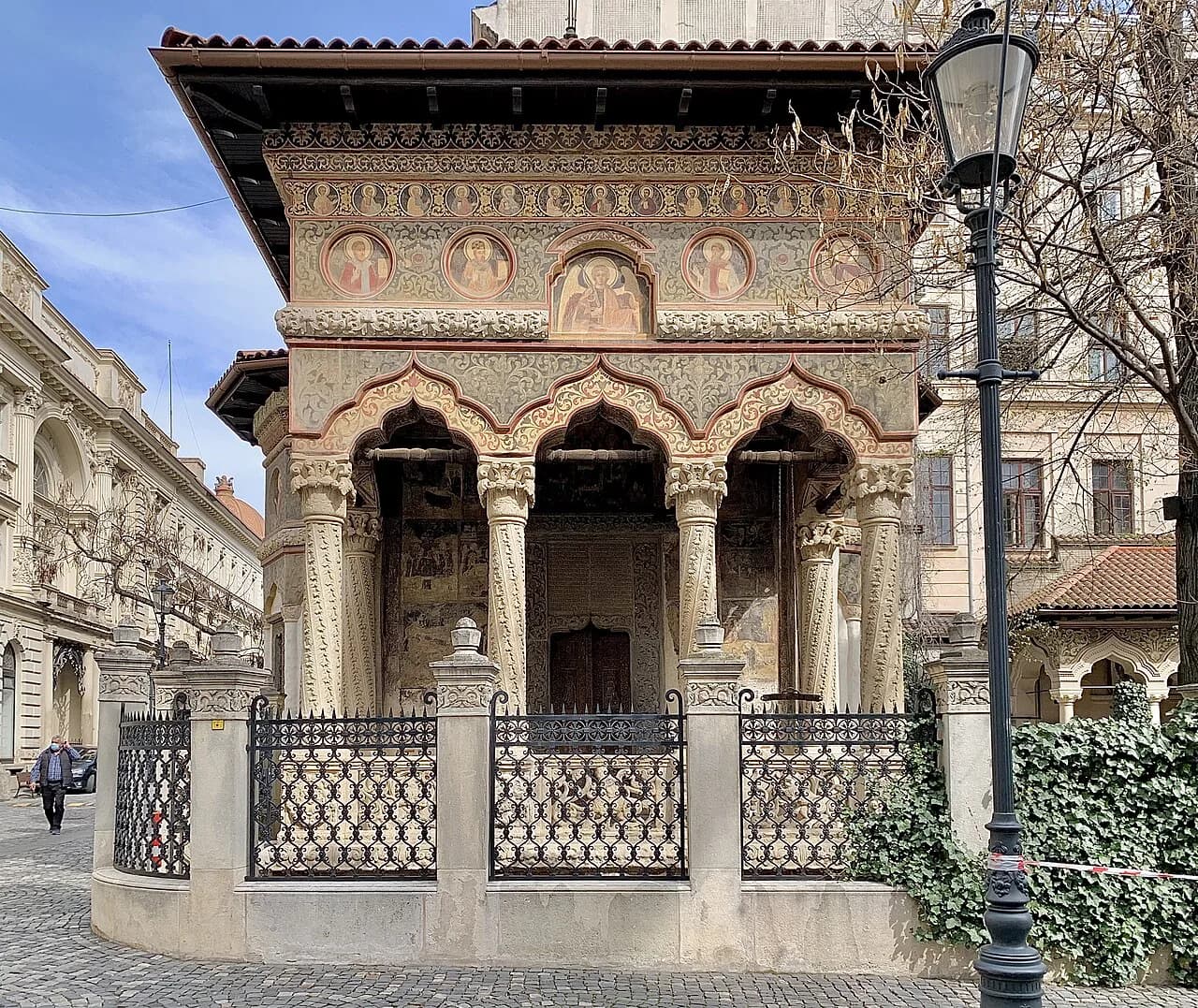
The church is built in the Brâncovenesc style, and the exterior is where that shows most clearly. Give the carved stone portal a proper look before stepping through it: the decorative carving around the entrance is the detail that distinguishes this frontage from the plain walls around it. The scale is domestic rather than monumental, so the ornament sits close to eye level.
Look at the columns and stonework framing the entrance as a set rather than as individual pieces; the interest is in how the carving wraps the whole doorway. Because the church is small, a couple of minutes of close looking covers the exterior, which leaves the bulk of your stop for the interior. Photograph the portal before you go in, when your eyes are still adjusted to the street.
Inside the church and courtyard
Inside, the church is small and closely decorated, with a carved iconostasis as the focal point at the front of the nave. The interior rewards a quiet, unhurried look rather than a circuit: stand still, let your eyes settle, and pick out the carving and painted surfaces rather than trying to see everything at once. The tight proportions mean you can take in the whole space from near the entrance.
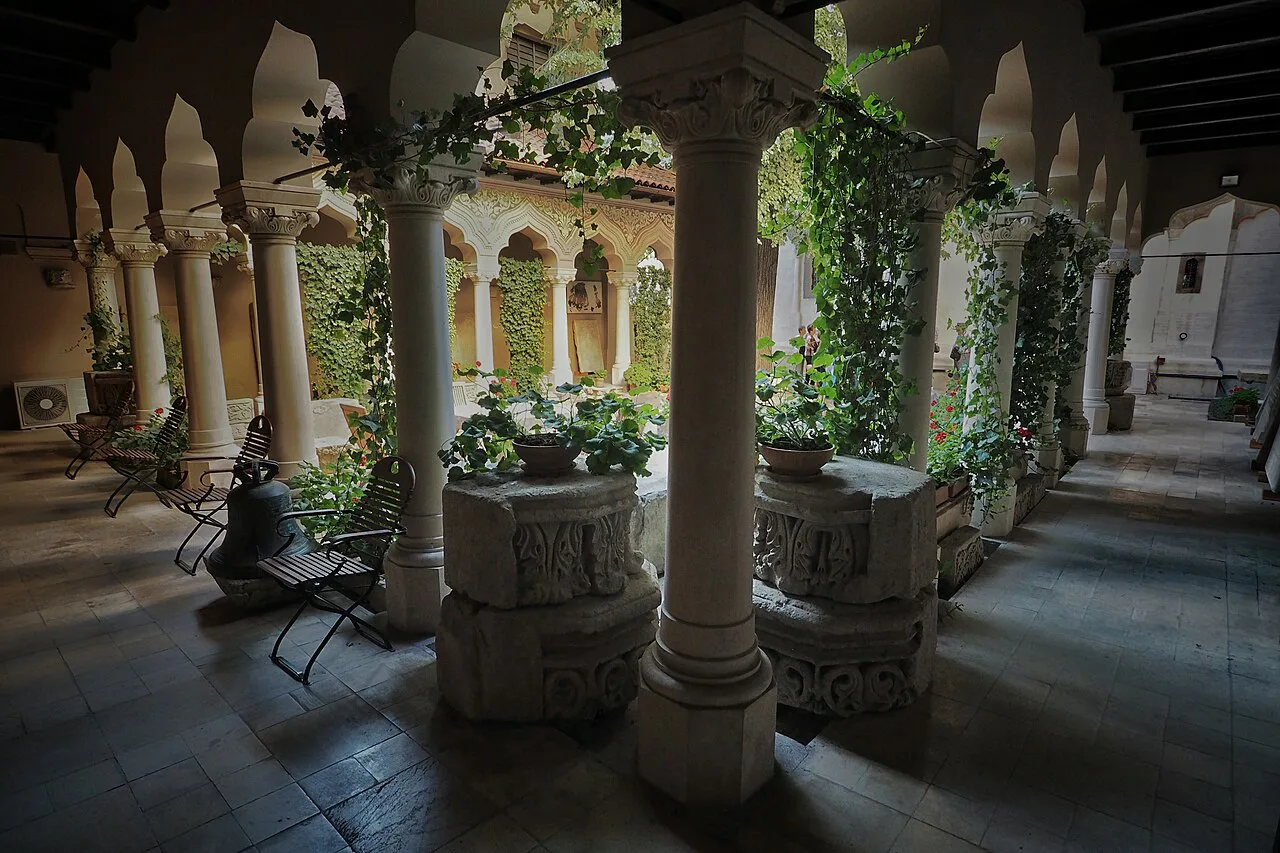
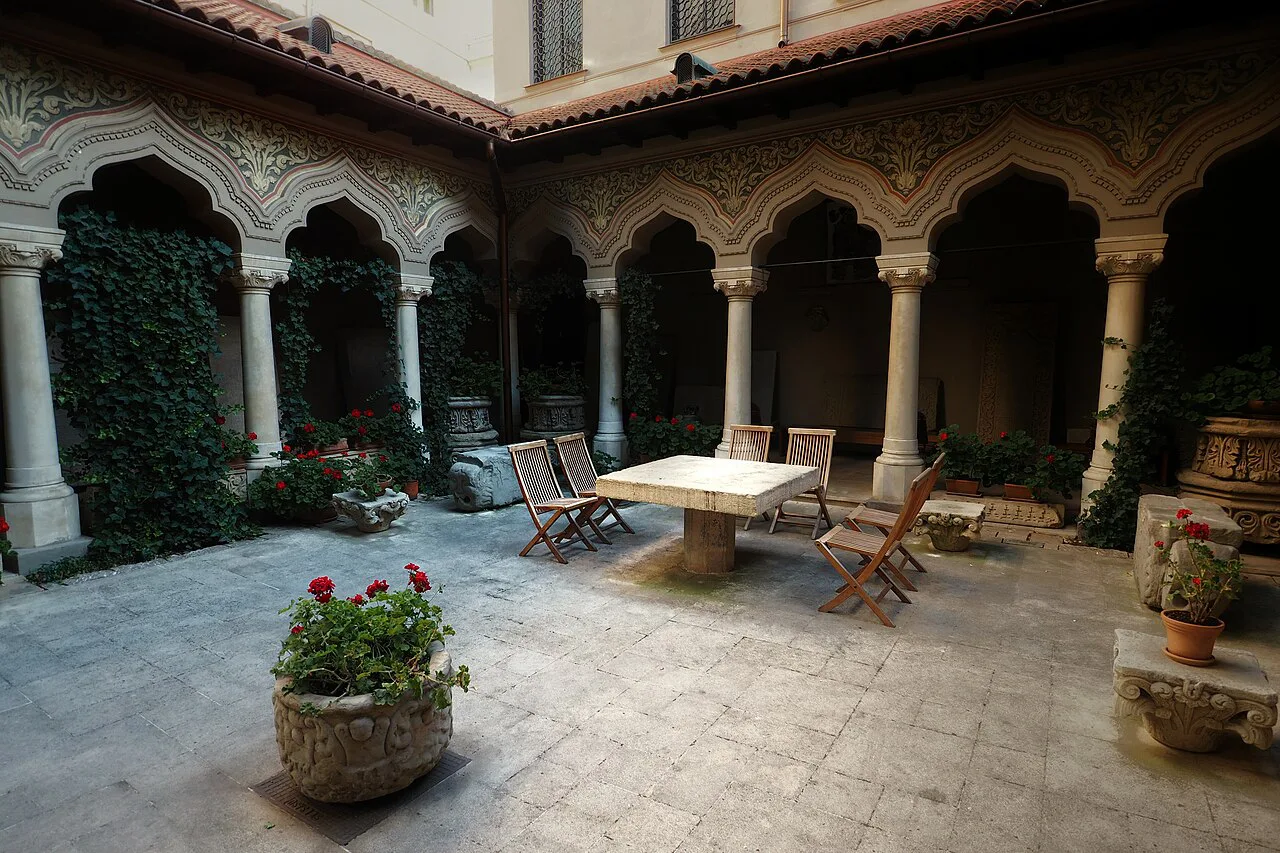
The small courtyard gives you breathing room and a second angle on the building after the dim interior. Use it to slow down, and keep your voice low, since this is a working monastery rather than a museum with rooms to tick off. The whole interior and courtyard visit fits comfortably into the same 20 to 30 minute stop.
Opening hours and entry
The church is listed as open every day from 8:00 to 19:00, with free entrance. Those times are a guide rather than a guarantee, so confirm the day you plan to visit before making it the anchor of your walk.
Free entry is part of why the monastery works as a low-commitment stop: there is no ticket to buy and no timed slot to plan around. Because it is a place of worship rather than a ticketed attraction, opening can be affected by services, so check ahead on the day and keep the visit flexible. If the doors are shut when you arrive, the Old Town lanes and Lipscani are immediately around you.
How long to allow, and fitting it into an Old Town walk
Budget 20 to 30 minutes: a few minutes on the carved exterior, ten to fifteen inside the church and courtyard, and the rest as a pause rather than a tour. That is enough to look properly without rushing, and it leaves the day free for the rest of the Old Town. Trying to stretch it further mostly means standing still in a small space.
The monastery works best as one stop on a longer Old Town walk rather than a destination in its own right. Pair it with Lipscani and the surrounding lanes, then continue to the larger sights further out when you want a change of scale. The compact visit is the point: it adds texture to a walk without eating the afternoon.
What is close by
The Little Paris Museum on Lipscani Street 41 makes a natural next stop, set in the former Dalles family building with rooms furnished to evoke a bourgeois Bucharest house. It is closed on Mondays and open Tuesday to Sunday from 11:00 to 19:00, with adult tickets at 25 lei and children at 15 lei. Check those details before you go, since they anchor a second stop on the same walk.
Further up Calea Victoriei, the Romanian Athenaeum (Ateneul Român), Bucharest is a longer walk but a sensible continuation if you are heading north through the city centre. Treat it as the next chapter of the day rather than a neighbour of the monastery. The Little Paris Museum is the closer pairing, while the Palace of the Parliament, Bucharest sits in a different part of the city and is best planned as its own visit.
Practical notes for a working monastery
Stavropoleos is an active monastery for nuns, so the visit is a quiet one: keep conversation low, move slowly through the church, and treat the courtyard as a place of calm rather than a photo set. Dress modestly as you would for any Orthodox church. Read the notices at the entrance, which set out what applies on the day you visit.
Is Stavropoleos worth the stop?
Yes, if you are already in the Old Town: it is a free, short, closely carved church that gives a quieter counterpoint to the busier lanes around Lipscani. Do not build a day around it; build it into a walk that already passes through the Old Town. Twenty to thirty minutes is the honest estimate.
If you want a fuller half-day, continue to the Little Paris Museum on Lipscani or walk up Calea Victoriei towards the Romanian Athenaeum. Either turns a brief church visit into a proper Old Town route without overloading the day.
Explore more Bucharest guides
Frequently Asked Questions
Is Stavropoleos Monastery free to enter?
Yes, entrance is listed as free, with the church open every day from 8:00 to 19:00. Those times can change around services, so confirm before you set out.
How long does a visit to Stavropoleos Monastery take?
Allow 20 to 30 minutes: a few minutes on the carved Brâncovenesc exterior, then ten to fifteen minutes inside the church and courtyard. It works as a short stop within a longer Old Town walk.
Where exactly is Stavropoleos Monastery?
It stands at 4 Stavropoleos Street in Sector 3, in Bucharest's Old Town, a couple of minutes on foot from Lipscani. The street carries the monastery's name, so the lane itself is the main wayfinding cue.