Calea Victoriei, Bucharest: What to See on the Walk
Calea Victoriei is Bucharest's best-known avenue for a city walk. See what you pass along the way, how long it takes and where to break the stroll.
On this page
Walk Calea Victoriei end to end in about an hour and a half without stopping, or give it a half day if you want the Romanian Athenaeum, a museum and a coffee along the way. It is the spine of the city's late-19th and early-20th-century architecture, running from the Dâmbovița river up to Piața Victoriei, with the Old Town at its southern foot.
This guide treats the avenue as a route rather than a single sight. It splits the walk into a northern, middle and southern stretch, names what you pass, and flags the indoor stops and the weekend traffic closures that change how you plan it.
What Calea Victoriei is and why it is the street to walk
Calea Victoriei is the boulevard where Bucharest's Beaux-Arts face is most concentrated, lined with the banks, ministries and townhouses put up when the city was nicknamed Little Paris for its French-trained architects and Gallic tastes. French visitors in the late 19th and early 20th centuries described elegant crowds strolling this street in particular, and the nickname stuck by around 1900.
That polish was never the whole story. Accounts of the same period describe grand avenues running beside crooked lanes and shacks, and the gap between the two is still legible as you walk south towards the river, where the frontages thin and crossings interrupt the rhythm.
If you only have one walking day in the city, put this avenue first and build the rest of your plan around it. Use the wider list of things to do in Bucharest for choosing what to add at either end, rather than trying to cover the whole city on foot.
Where the walk starts and ends, and how long it takes
Start at Piața Victoriei in the north and walk south-west along the avenue to the Dâmbovița, then continue into the Old Town. The full run is manageable on foot in 35 to 45 minutes at a brisk pace, but the point of the street is the stops, so budget two to four hours with one museum and a sit-down.
Walking north to south puts the museums early and the Old Town last, which suits an afternoon that ends with somewhere to eat. Walking the other way works too, but you finish at a major traffic junction rather than in the pedestrian lanes.
Check a Bucharest map before you set out if you plan to detour to the Palace of the Parliament or the riverbank, because those sit off the avenue and add a separate leg.
The northern stretch: Piața Victoriei, the Athenaeum and the museums
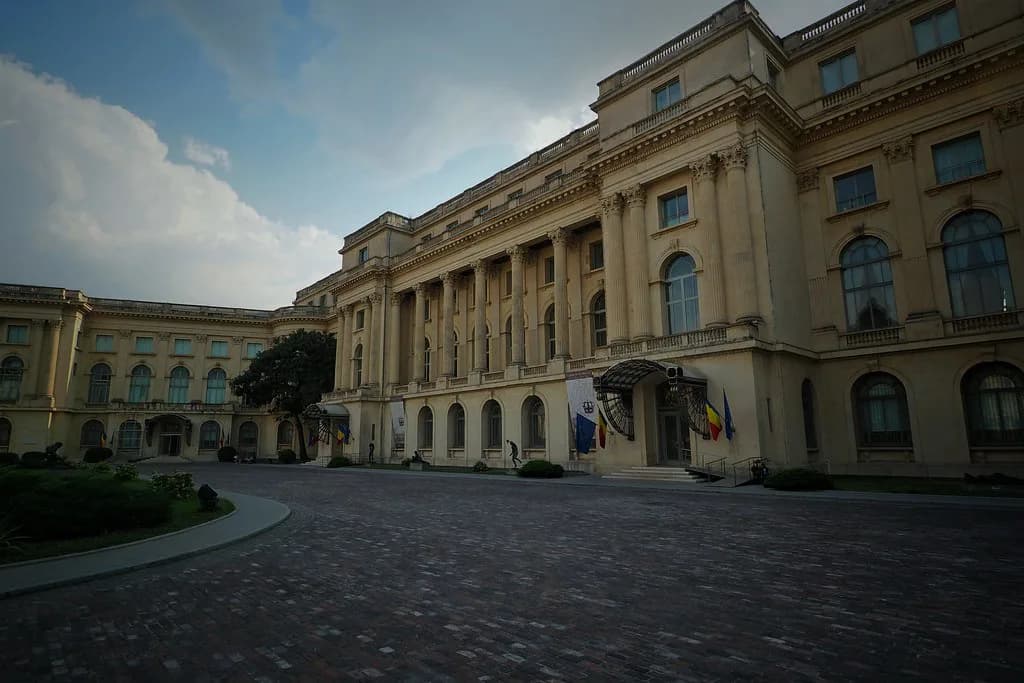
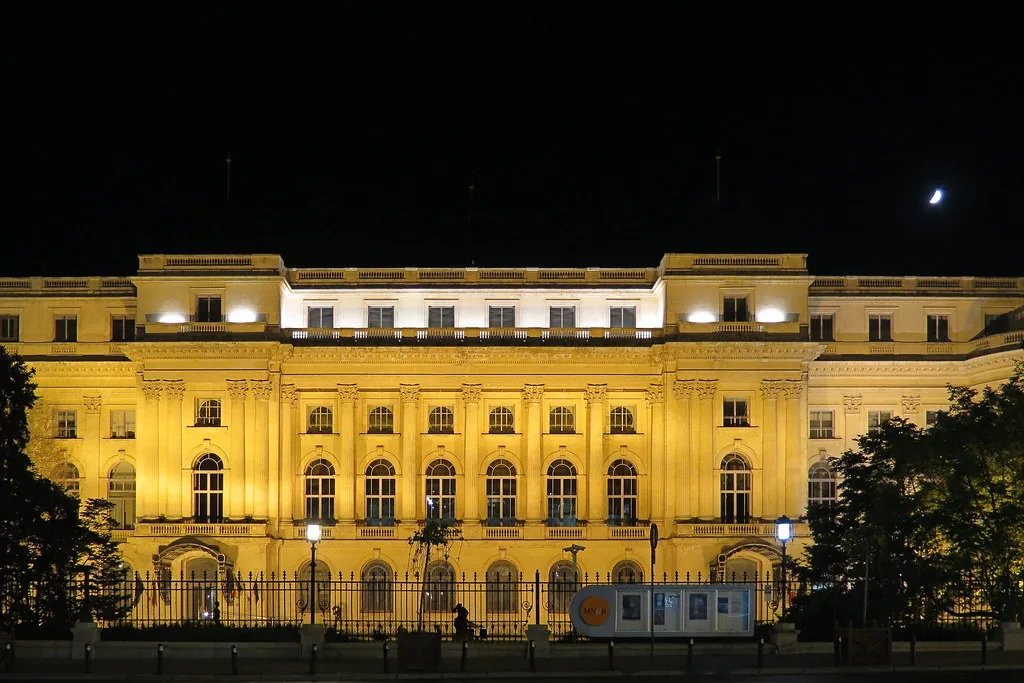
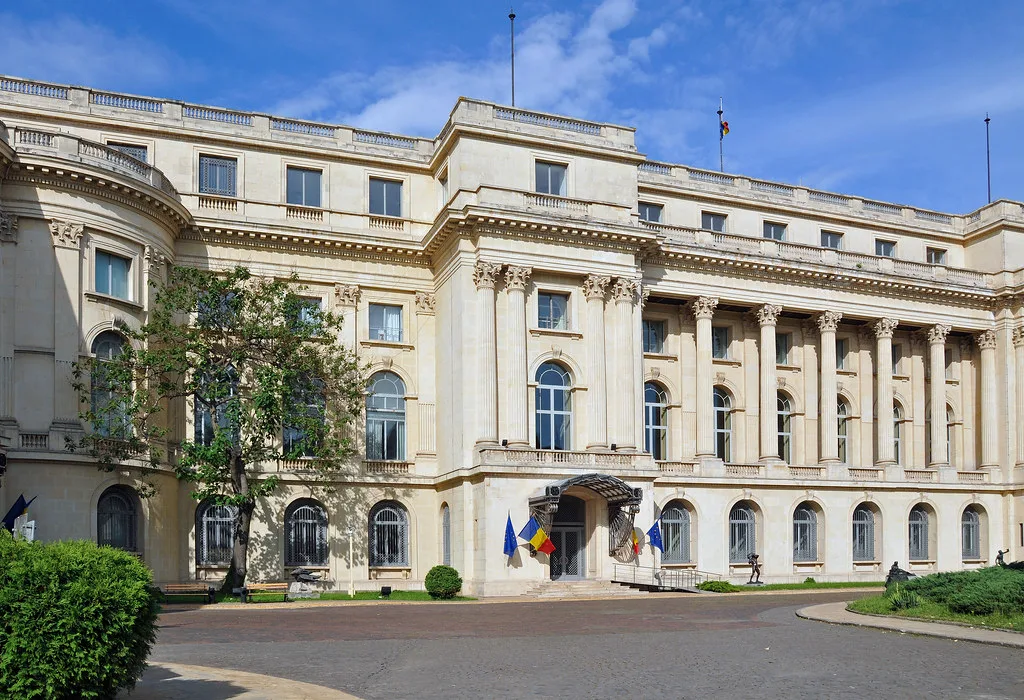
The northern end is the most formal part of the walk. Piața Victoriei is a wide junction with government buildings around it, and heading south you soon reach the Romanian Athenaeum, a domed concert hall set back behind a small garden, and the National Museum of Art of Romania in the former Royal Palace opposite.
Both are worth stepping into rather than photographing from the pavement, but they keep their own hours and ticket arrangements, so check the venue's own listing on the day. If you want to compare the city's collections before committing an afternoon, work through the museums in Bucharest first.
The palace buildings on this stretch, including the Royal Palace, are the reason the avenue reads as a capital street rather than a shopping lane. Allow an hour here if you are going inside one building, or twenty minutes for the exterior walk past the Athenaeum.
The middle stretch: palaces, banks and the Beaux-Arts frontages
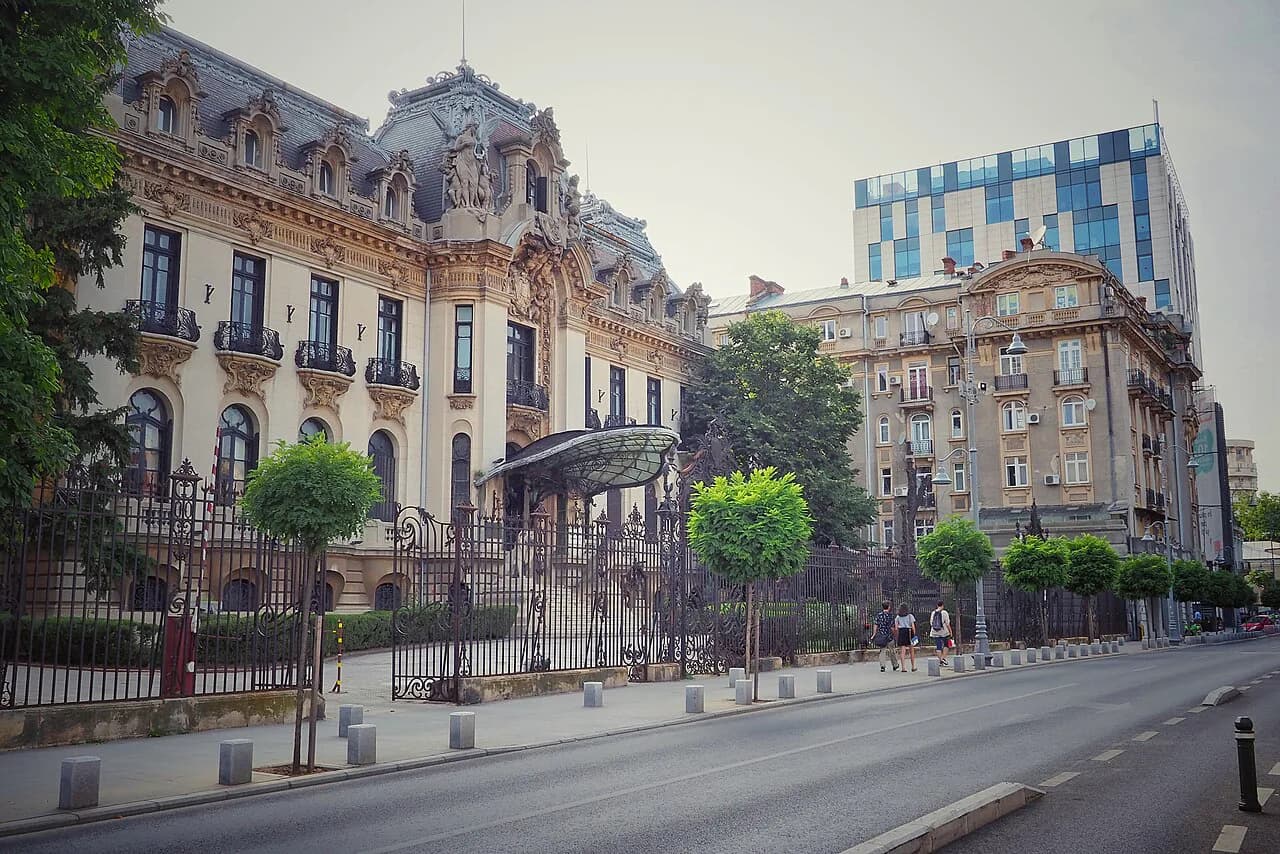
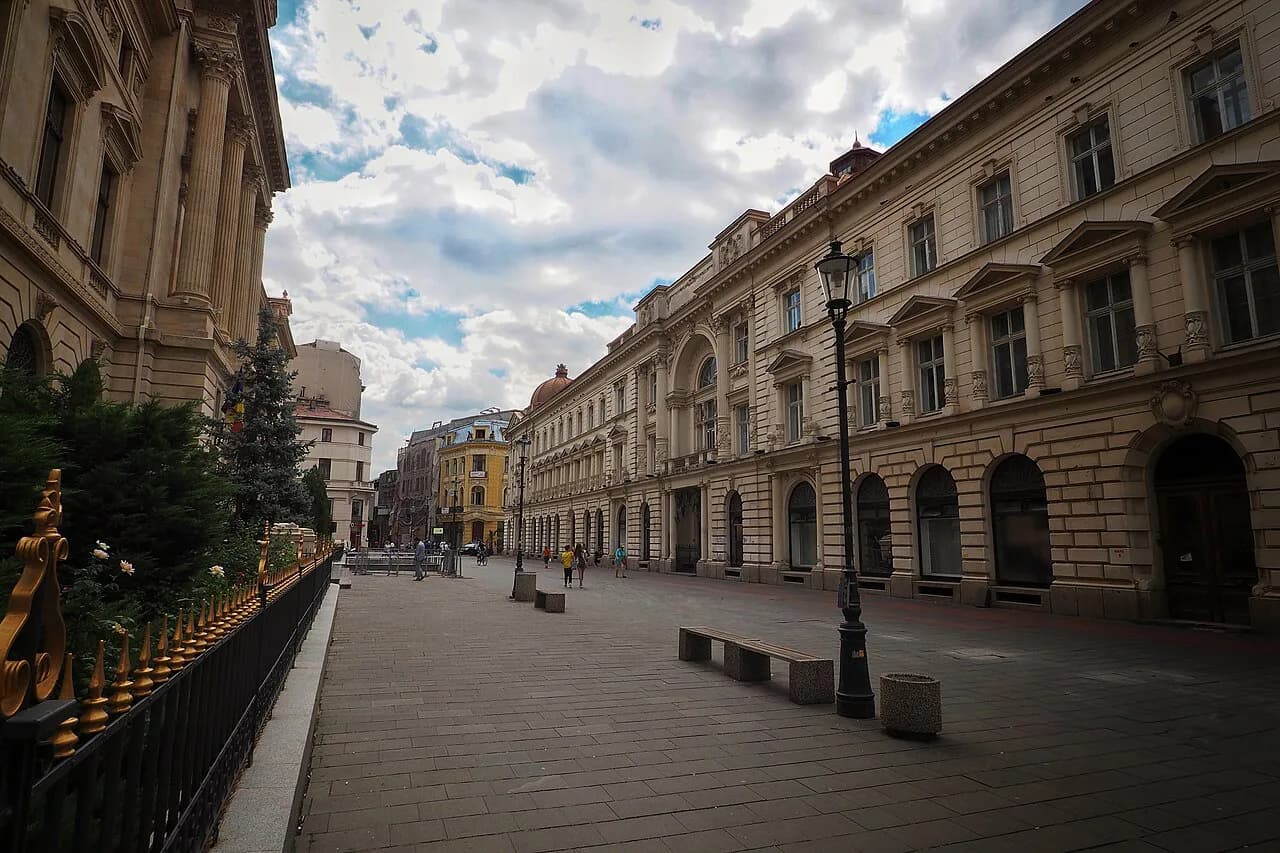
South of the Athenaeum the avenue tightens into the commercial frontage of the old Little Paris years. The National Bank, the House of Deposits and Consignments and the Post Office Palace were singled out by French visitors around 1905 as the new public buildings that gave the city its swagger, and several of these facades still frame the pavement today.
This is the stretch to slow down on. Doorways, balconies and carved stonework sit above the ground-floor shops, and the best of it is at first-floor level, so look up rather than straight ahead.
If you would rather have the architecture pointed out than read it yourself, a Bucharest free walking tour covers this corridor and saves you the guesswork about which building is which.
The southern stretch into the Old Town and Lipscani
Towards the river the avenue loosens, crosses busy roads, and hands over to the Old Town. The transition is the useful marker in your day: north of it you are looking at facades, south of it you are in the lanes around Lipscani, where the ground floors turn into terraces, cafés and shops.
The Bucharest Old Town rewards wandering rather than a fixed route, but keep the church spires in view as anchors so you do not loop back on yourself. The parallel lanes are the busiest, and they are where the crowds concentrate.
If you are building a longer stay, this is the natural end point for day one, with the remainder of a 3 days in Bucharest plan given to the palace quarter and the parks.
The Little Paris Museum on Lipscani: rooms, opening days and ticket price
One stop justifies a proper pause: the Little Paris Museum at Lipscani 41, in the former Dalles family building. It is part antique gallery, part café and part vintage photography studio, with four rooms of Belle Époque objects, an Oriental hall with Moorish stucco and a French hall with a rococo mirror.
It closes on Mondays and opens Tuesday to Sunday, 11am to 7pm, and the listed tickets are 25 lei for adults and 15 lei for children. Treat those as the published figures and confirm at the desk, since small museums revise them.
The collection runs to more than a thousand objects, and you can schedule a styled portrait session in the photo cabinet if you want something more than a look round. It is a sensible indoor stop on a hot or wet afternoon, and it sits on Lipscani in the Old Town, close to where the avenue runs into those lanes.
Weekend closures to traffic: what Străzi deschise means for walkers
Bucharest has run weekend pedestrian closures on Calea Victoriei under the Străzi deschise programme, which turns the carriageway over to walkers for the duration. The scheme has been staged on selected weekends rather than permanently, so the avenue is not reliably car-free and you should not plan around it without checking.
When a closure is on, the walk is noticeably better: you can cross the street freely and the frontages are easier to read without traffic between you and them. When it is not, treat the avenue as a normal busy boulevard and use the marked crossings.
Where to break the walk: churches and side streets worth stepping into
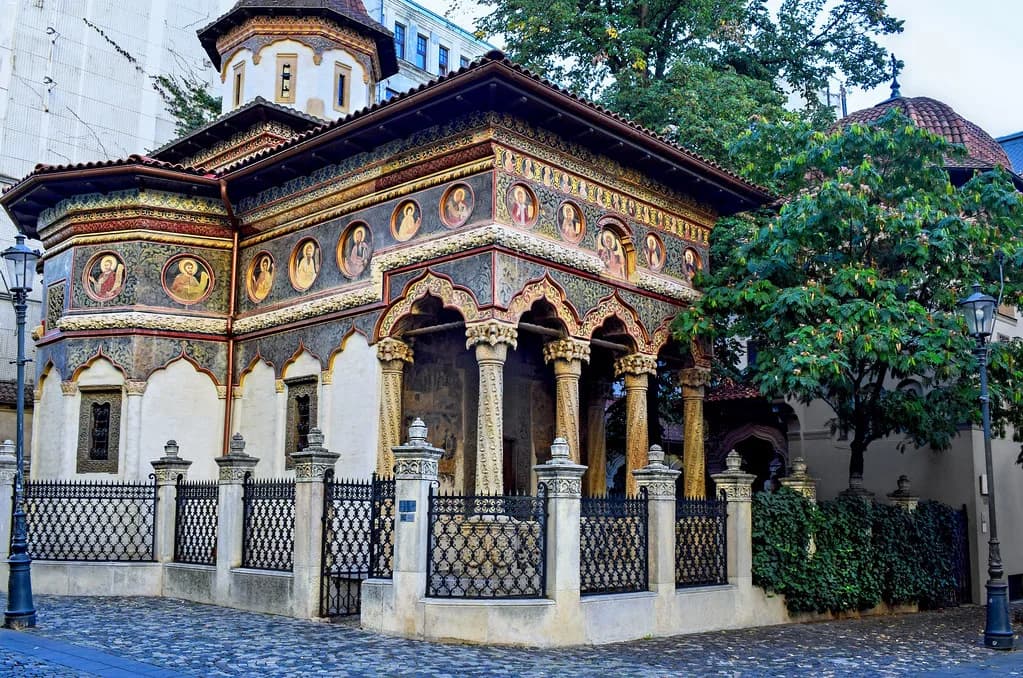
The avenue is best walked with two or three deliberate detours. Step off into the side streets between the middle stretch and the Old Town, and look for the churches wedged between commercial buildings, which the city has in quantity.
A city break built around this one street plus the palace quarter is realistic for two nights, with the Old Town supplying the evenings without any further planning.
National Cathedral and Dealul Arsenalului: whether to add it on
The National Cathedral on Dealul Arsenalului is a separate leg, not a stop on the avenue, but it is the biggest recent addition to the city's skyline and worth the detour if you have a spare hour. The building was completed in 2025 after fifteen years of construction, with interior decoration still in progress at the time.
The draw for a walker is the open-air observation deck wrapped around the main tower, some 300 feet above ground, with 360-degree views over Bucharest. It also houses the Museum of Christianity in Romania, so the visit can be a viewpoint or a museum depending on your time.
Visitor hours and entry arrangements are set by the cathedral, so confirm them before making the trip across town. For the wider set of city churches and what each one offers, see the Bucharest churches guide.
Practical trade-offs: crowds, traffic at crossings and walking in heat
The honest trade-off is that Calea Victoriei is a working boulevard. Traffic crosses it at several points, and the junctions near the river are the least pleasant part of the walk, so plan to cross once and deliberately rather than drifting.
Crowds build in the Old Town end from late afternoon, and the pavements there are narrow. Walk the northern stretch in the morning if you want the Athenaeum and the bank facades without company, then finish south as the terraces open.
Summer heat is a real constraint on the avenue, which offers only patchy shade along its length. Split the walk in two, with an indoor stop at the Little Paris Museum or a palace in the middle, and carry water.
Which stretch should you walk first?
Start at Piața Victoriei and walk south: you get the Athenaeum and the palace frontages while you are fresh, the banks and Beaux-Arts middle stretch when you have warmed up, and the Old Town at the end where you want to be anyway. That order also puts an indoor pause such as the Little Paris Museum between the two halves of the walk.
Add the National Cathedral as a separate leg if you have the time, and check its visitor arrangements and the weekend Străzi deschise status before you set out. If you want the avenue interpreted rather than self-guided, book the walking tour and use the rest of the day for the Old Town.
Explore more Bucharest guides
Sources
Useful notes for your next trip
Optional updates to our guides.
You might also like
Continue reading
More guides you'll find useful