
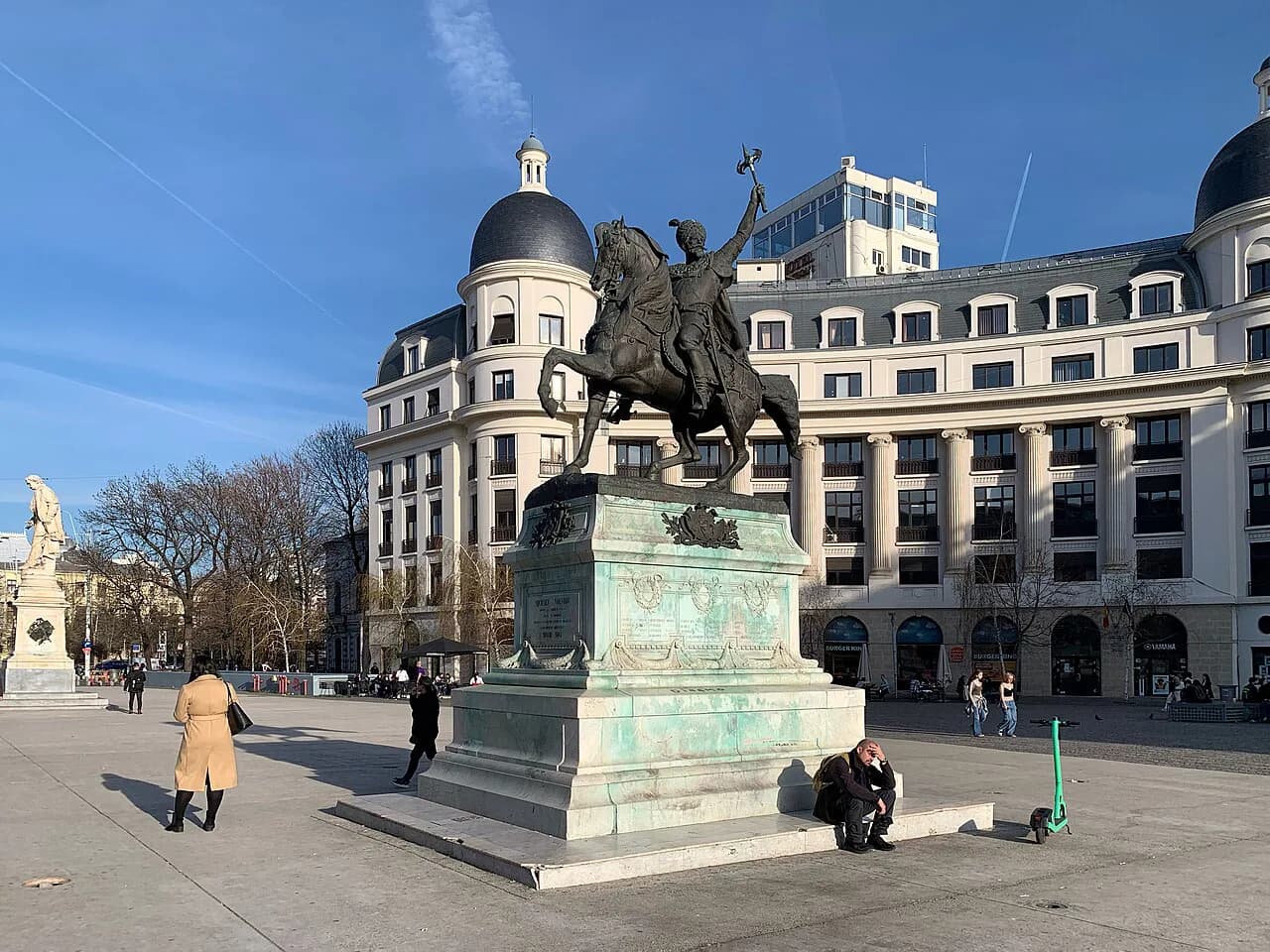
University Square (Piața Universității), Bucharest

University Square is a public square in central Bucharest, free to walk through at any hour, with no ticket and no opening times. It works best as a short stop on foot between the Old Town and the Romanian Athenaeum rather than a sight in its own right, and this guide covers how to reach it, what you see, and how long to allow.
The square sits in the Piața Universității area and is served by Universitate metro station, which puts it on the metro network rather than at the end of a bus ride. Expect a working city square with traffic and, at times, building works, so treat the visit as 20 to 30 minutes of looking rather than an afternoon.
Where University Square is and how to reach it
University Square, Piața Universității, lies in the centre of Bucharest on the axis that runs from the Old Town up towards the Romanian Athenaeum. The University of Bucharest fronts the square, which is the easiest landmark to aim for if you are navigating on foot.
The simplest approach is by metro: Universitate station serves the square directly, so you surface more or less on it.
On foot, the square is a natural continuation of a walk up from Lipscani and the Old Town, and a short walk from the Athenaeum end of Calea Victoriei. If you are stringing together central sights, plan the square as the hinge between the two rather than a separate trip.


What you see on the square
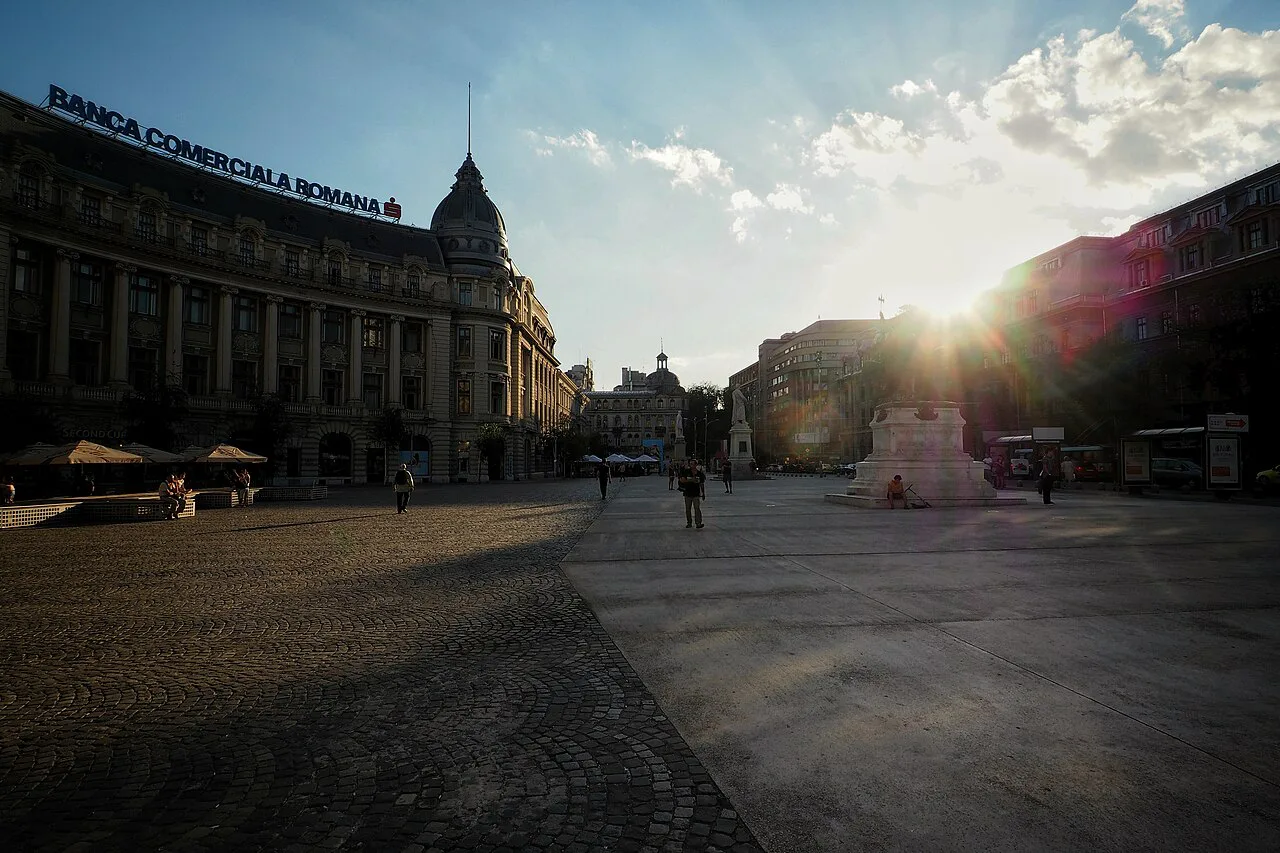
The layout is a broad open space with the University building at its head and roads running through and around it. In front of the University stand four statues, which are the main thing to look at once you are on the square.
Read the statues as a group rather than a single monument: they line up in front of the University facade and give the square its focus. Beyond them, the square is mostly a place to stand and look at the surrounding buildings rather than to tour an interior.
Wikimedia Commons holds photographs of the square at different stages, including during renovation, which is a useful check on how it currently looks before you go.
Whose statues they are
The four figures in front of the University are the square's identifying feature, and they are worth a pause even if you are only passing through. They stand in a row facing the street, so you can see them from the pavement without entering any building.
Treat them as public monuments with no ticket and no set viewing time, and build them into a walk rather than a scheduled stop.
Building work and how the square looks
The square has been through renovation, and Wikimedia Commons holds images of it mid-works, so its appearance depends on what stage the works are at when you arrive. That means barriers, bare surfaces or closed sections are possible rather than guaranteed.
If the look of the square matters to your visit, check recent photographs before travelling rather than relying on an old guidebook image. Because it is an open public space, there is nothing to book and no closing time to work around.
How long to allow, and when to come
Give University Square 20 to 30 minutes: enough to walk the length of it, look at the statues and read the University facade. It does not need a half-day, and it works poorly as the main event of a morning.
Come early in the day or at the weekend for a quieter look, since the square carries traffic and commuters on working days. There are no opening hours to plan around, so you can slot it into a walk whenever you are passing.

What's nearby
Lipscani and the Old Town lie a short walk downhill, and the Romanian Athenaeum is a short walk the other way, which makes the square a convenient midpoint. For a full list of what to see in the city, work from the Bucharest Attractions: 13 Visitor Guides hub before you set an order.
The Romanian Athenaeum (Ateneul Român), Bucharest is close enough to combine with the square in one walk, and the National Museum of Art of Romania sits in the same area. If you want a collection rather than a facade, the national museum of art of Romania is the obvious next stop.
For a taste of the Belle Époque city that earned Bucharest its old nickname, the Little Paris Museum on Lipscani Street is a short walk away and pairs naturally with a wander through the Old Town.
Further afield, the Palace of the Parliament is a separate trip that needs its own time slot and booking, so do not try to fold it into a University Square walk.
Practical points for visiting
There is no ticket and no entrance to buy: the square is a public space you walk across, and the University building is not a sight you tour as part of it. Budget for the metro fare and nothing else.
The wider Old Town around the square is a mix of streets with churches among the commercial frontages, which is worth knowing if you plan to extend the walk towards Lipscani.
For the period when Bucharest was known as Little Paris, the surviving traces along Calea Victoriei give context to the buildings you pass on the walk between the square and the Athenaeum.
Should University Square be on your Bucharest walk?
Yes, but as a 20-to-30-minute stop on a walk, not a destination in itself. Arrive via Universitate, look at the four statues, cross towards Lipscani or the Athenaeum, and you have used the square well.
Check recent photographs of the square before you go if building works would spoil the look for you. Otherwise simply fold it into a central walking route and keep the rest of the day for the Athenaeum or the Old Town.
Explore more Bucharest guides
Frequently Asked Questions
Is University Square free to visit?
Yes. University Square is a public square in central Bucharest, so there is no ticket and no opening time. You walk through it as part of a route around the centre rather than paying to enter a site.
How do I get to University Square by metro?
Universitate metro station serves the square, so it is a straightforward metro stop rather than a walk from the edge of the centre. On foot, it also sits naturally between the Old Town and the Romanian Athenaeum.
How long should I spend at Piața Universității?
Allow around 20 to 30 minutes to walk the square, see the statues in front of the University and look at the surrounding buildings. It works as a midpoint on a longer walk rather than a half-day stop.