
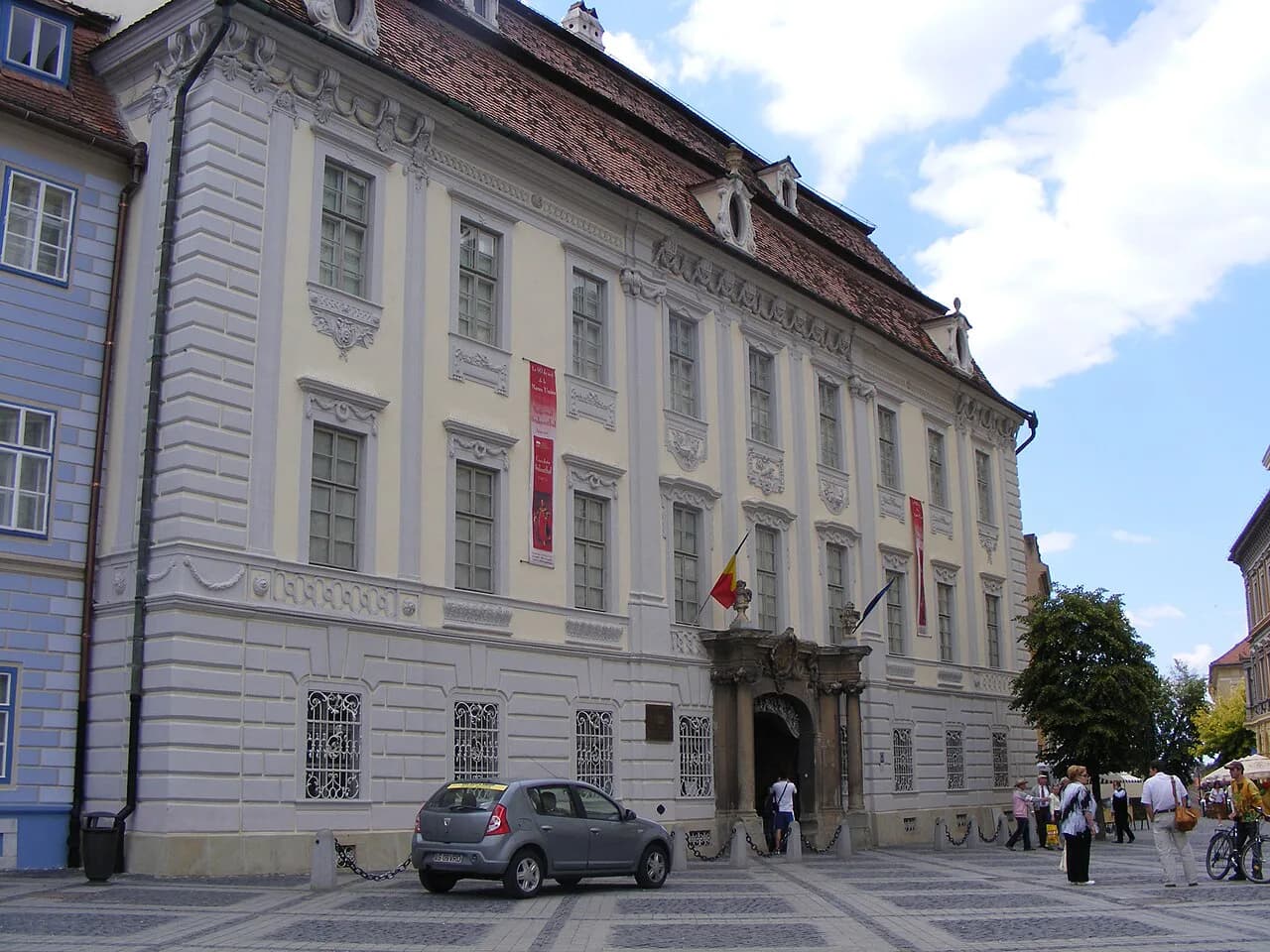
Brukenthal National Museum, Sibiu: Visitor Guide

The Brukenthal National Museum is the main reason to set aside a morning or afternoon in Sibiu, and the building you want first is the Brukenthal Palace on Piața Mare, whose second floor holds the National Art Gallery. Entry is through the palace gates on the square, and the galleries run through a suite of baroque rooms rather than a modern block. This guide covers where each Brukenthal building sits, the opening days that matter, what hangs on the second floor and how long to allow.
What the Brukenthal National Museum is and where it sits
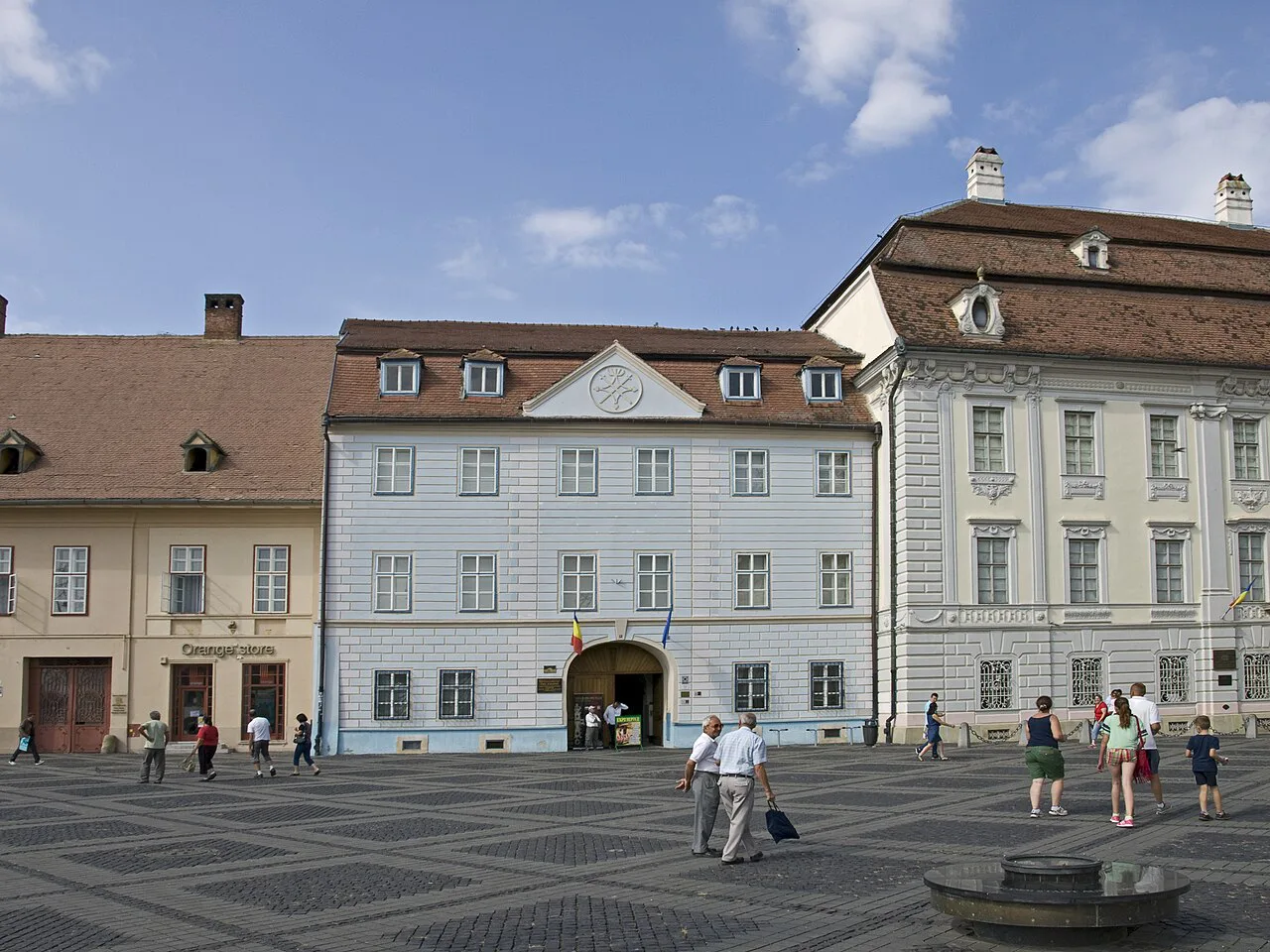
The museum is a group of sites rather than one door: the Brukenthal Palace faces Piața Mare at number 4–5, and the Museum of History in Altemberger House, Museum of Natural History, Museum of Contemporary Art and Museum of Pharmacy sit in separate buildings. The palace is the baroque townhouse of Baron Samuel von Brukenthal, built in a Viennese style directly on the old square instead of in open grounds. For a first visit, treat the palace as the headline and the other departments as add-ons you fit around it.
The building's shape decides your route: it stands tight against the surrounding old town, so you enter from the square and climb to the collections rather than crossing a courtyard. The other departments are scattered through the same neighbourhood, which means a single visit can cover two or three of them on foot without a taxi. A wider look at what else fills the old centre is in the Sibiu Attractions: 12 Visitor Guides.

Opening hours and closed days for the palace and the other Brukenthal museums
The Brukenthal Palace opens Wednesday to Sunday from 10:00 to 18:00, and the ticket office closes at 17:15, so a late-afternoon arrival needs to be at the desk well before six. Monday and Tuesday are closed days at the palace, which rules out a Monday visit unless you plan the gallery for another morning. Build the rest of the day around that 17:15 cut-off rather than the 18:00 closing time.
The Museum of History in Altemberger House, the Museum of Natural History, the Museum of Contemporary Art and the Museum of Pharmacy keep shorter hours: Wednesday to Sunday, 09:00 to 17:00, with ticket offices shutting at 16:15 at the history museum and 16:30 at the natural history and contemporary art museums. They also close on Monday and Tuesday. If you want the history collection as well as the gallery, do the gallery first and the history museum after, because the latter's desk closes earlier. The museum of history Sibiu (Casa Altemberger) is a separate building from the palace, so check you are at the right door before queueing.

Which building holds the National Art Gallery
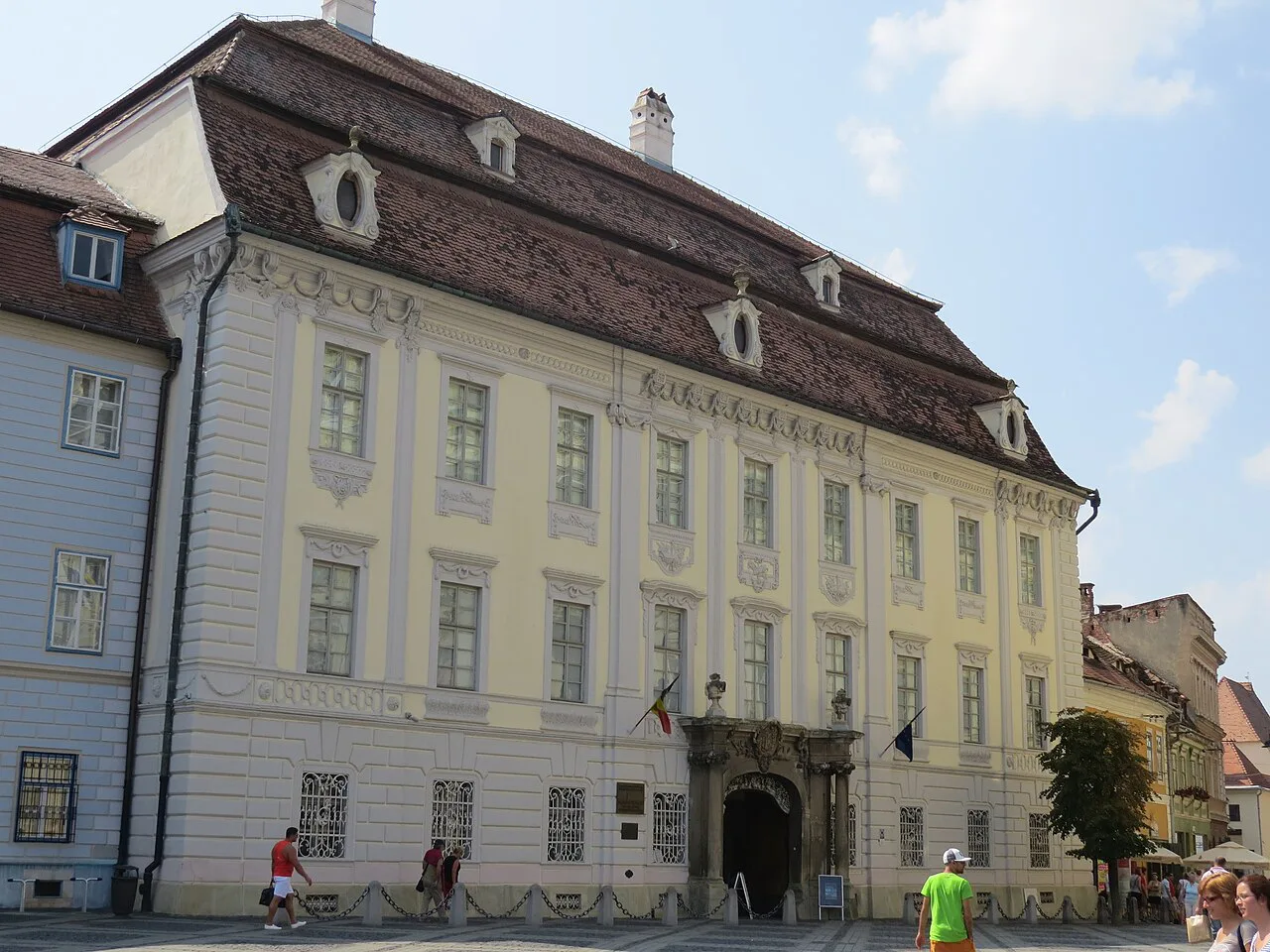
The National Art Gallery is not a separate address: it occupies the second floor of the Brukenthal Palace, reached through the main gates on Piața Mare. That single fact saves a wasted trip, because the square has several museum doors and the gallery is inside the baroque palace rather than a modern annexe. Head for the palace entrance, buy your ticket, then climb to the second floor to begin.
The gallery was founded on the baron's private collection, assembled during the eighteenth century while he served in Vienna, and the palace was built to house it in the manner of an imperial residence. The collection opened to the public in 1817, a date that places the museum among the early public galleries of Europe. Treat the 1817 figure as the opening date of the collection rather than the date of the current displays.
Because the gallery sits on the upper floor, the visit begins with stairs and then unfolds as an enfilade of rooms rather than a single hall. That layout rewards a slow walk from one end to the other instead of doubling back. If stairs are a problem, ask at the ticket desk about access before buying, since the palace is a historic building rather than a purpose-built gallery.
What to see inside: Van Eyck and the European rooms
Among the gallery's early Netherlandish works is Jan van Eyck's Portrait of a Man with a Blue Chaperon, a small panel that draws many visitors. Around it, the collection runs through German, Austrian, Dutch and Italian painting, so the visit is a survey of European art rather than a single-country display. Give the Van Eyck a few minutes on its own before working through the neighbouring rooms.
Look closely at the still lifes: some depict plants that Baron Brukenthal is said to have cultivated first in Transylvania, including pineapples and oranges, which were exotic here in his day. That detail turns a decorative corner of the gallery into a record of eighteenth-century taste and trade. The baroque interiors themselves, with their enfilade of rooms, are part of the exhibit rather than just a backdrop.
Elsewhere in the complex, the Museum of Natural History and the Museum of Pharmacy add collections that suit a shorter stop, and both keep the shorter Wednesday-to-Sunday hours. The natural history museum Sibiu is a sensible second stop if you are travelling with anyone who prefers specimens to canvases. Neither replaces the gallery as the reason to come, so budget them as extras.
How long to allow, including the wider complex
Allow two to three hours for the National Art Gallery if you want to see the main works and take in the palace interiors without rushing. A close reading of the collection, canvas by canvas, takes closer to four hours. Those figures cover the gallery alone, so add time if the history or natural history museums are also on your list.
A realistic half day looks like this: arrive at the palace when it opens, spend two to three hours upstairs, then walk to one of the shorter-hours museums before its ticket office closes in the mid-afternoon. Trying to fit all four departments into one day is possible but leaves little room for the square outside. Pick two buildings and see them properly.
If your interests lean towards objects rather than paintings, the Museum of History in Altemberger House can carry a longer slot, and the Museum of Contemporary Art is a quicker stop for most visitors. The trade-off is simple: more buildings means less time in each. The gallery is the one to protect in your plan.
Getting there from the old town and the main station
From Sibiu's main railway and bus station, the walk to Piața Mare takes about 15 to 20 minutes through the old town streets, which makes it a reasonable arrival-day option with a small bag. Local taxis and public transport also stop close to the pedestrian zone if you would rather not walk. Once on the square, the palace gates are the landmark to look for.
Within the old town, everything Brukenthal is walkable: the palace fronts Piața Mare, and the other departments are minutes away on foot. Save the car for the ASTRA Museum of Folkloric Traditional Civilization, which sits out of the centre and is a different kind of visit altogether. In the compact centre, walking beats moving the car between sites.
Nearby: the square, towers and churches
Step out of the palace and you are already on Piața Mare, the long square that anchors the old town and the natural place to sit after the gallery. The Council Tower Sibiu (Turnul Sfatului) stands at the square's edge and pairs well with a museum morning. Both are within a couple of minutes of the palace gates.
A short walk brings you to the Bridge of Lies (Podul Minciunilor), Sibiu's iron footbridge, and to the Lutheran Cathedral in Sibiu, whose tower is a landmark over the rooftops. The Holy Trinity Orthodox Cathedral sits a little further on and is worth a look if you are heading that way. These are separate buildings from the Brukenthal complex, so check their own hours rather than assuming the museum timetable applies.
For a change of pace, the Piața Mică, Sibiu's smaller square, sits just off the main square and links the old town's lanes; Parcul Sub Arini, Sibiu's park, is further out if you want green space after the galleries. None of this needs a car, and the whole loop back towards the station takes under an hour at an easy pace.
Temporary closures at the Brukenthal sites
Two Brukenthal locations are out of a normal visit. From 1 April 2025 the Museum of Hunting August von Spiess is closed for an indefinite period, though groups of at least ten can ask about a visit by appointment, booked at least 24 hours ahead by email to the museum secretariat. If that museum is the reason for your trip, email before booking travel.
The Brukenthal Library is closed to the public from 4 March to 31 December 2025 while a general inventory of its volumes is carried out, so do not plan a reading visit around it. That is a defined closure period, not a permanent one, and the rest of the palace is unaffected. Either way, it is worth a quick look at the visiting page before you travel.
Practical ticket-office notes
Ticket prices are set by the museum and sold at its own desks and online, so confirm the current tariff on its site or by phone rather than relying on an older figure. Contact details are listed as Piața Mare 4–5, with the phone numbers +40 269 217 691 and +40 269 436 558. Ring ahead if you are making a special journey for one department.
The practical rule is to arrive at the palace before 16:00 so you have time for the second floor before the ticket office closes at 17:15, and to treat Wednesday to Sunday as the days to plan for. Mondays and Tuesdays are for the square, the towers and the churches instead. A same-day ticket at the palace desk is the normal route.
Is the Brukenthal worth a morning of your Sibiu trip?
Yes, if you want one museum in Sibiu and want it to be a proper one: the palace on Piața Mare, the National Art Gallery upstairs and the Van Eyck at the centre of it. Plan it for Wednesday to Sunday, arrive before the mid-afternoon ticket cut-off and allow two to three hours. Add one of the shorter-hours museums only if you have a second morning to spare.
Explore more Sibiu guides
Frequently Asked Questions
Is the Brukenthal Museum open on Mondays?
No. Both the Brukenthal Palace and the history, natural history, contemporary art and pharmacy museums close on Monday and Tuesday. Plan your gallery visit for Wednesday to Sunday, when the palace opens from 10:00 to 18:00 with the ticket office closing at 17:15.
Do I need to book Brukenthal museum tickets in advance?
A same-day ticket at the palace desk is the normal route, and the museum also sells tickets online through its own site. The ticket office closes at 17:15, well before the 18:00 closing, so arrive with a margin.
Where exactly is the National Art Gallery inside the museum?
It occupies the second floor of the Brukenthal Palace on Piața Mare, entered through the palace's main gates on the square. It is not a separate building, so head for the palace rather than looking for a gallery address elsewhere in the old town.