
Museum of History Sibiu (Casa Altemberger): What to See and How Long to Allow

The Museum of History Sibiu is the history branch of the Brukenthal National Museum, housed in Casa Altemberger at Piața Mare 4-5. Its permanent exhibition follows local history from cave dwellers and Roman villas through guild production, warfare, religious ritual and the national movement in southern Transylvania. This guide covers what the building and its exhibitions contain, how long to set aside, and which nearby sights pair well with it.
It is not the picture gallery. Visitors often arrive expecting Brukenthal's European paintings; those hang in the Brukenthal Palace facing the same square, while Casa Altemberger holds archaeological finds, weapons, coins and civic history. Keeping the two separate helps you decide whether to buy one ticket or spend the day across several Brukenthal sites in Sibiu.
What the Museum of History Sibiu is and where it sits on Piața Mare
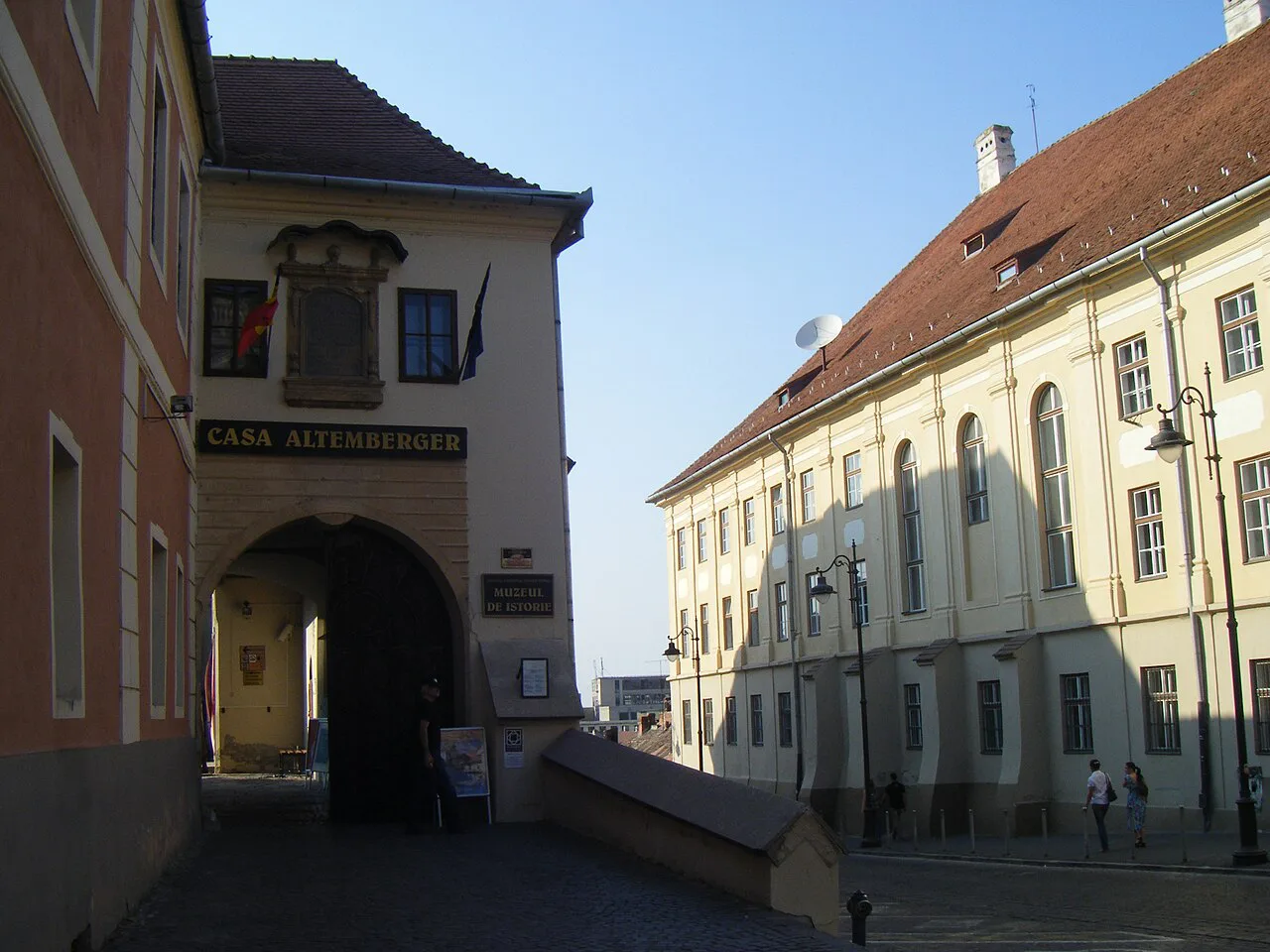
The museum is the history section of the Brukenthal National Museum, listed at Piața Mare nr. 4-5, postal code 550163, with telephone numbers +40 269 217 691 and +40 269 436 558 and the email secretariat@brukenthalmuseum.ro. Piața Mare is the broad square at the heart of the old town, so the entrance sits within a short walk of the main café terraces and church towers. Because the address is on the square itself, you do not need transport to reach it once you are in the historic centre.
Treat this as a museum of local life rather than a national treasury. The value of a visit comes from seeing how one Transylvanian town organised hunting, craft, worship, warfare and civic authority across centuries, all inside a building that itself served as the town hall. If you want grand paintings, go next door; if you want to understand how Sibiu worked, start here.

Getting there from the Old Town squares
From the Upper Town, the museum is reached on foot through the old streets around Piața Mare, Sibiu's broad central square. Distances are small: if you can see the Council Tower rising over the rooftops, you are already close. Coming from the lower town, the walk involves the staircases and slopes that connect Sibiu's two levels, so allow a little extra time and wear shoes that grip.
The wider attractions of the old town, including towers, churches and squares, are mapped in our Sibiu Attractions: 12 Visitor Guides, which helps you slot Casa Altemberger into a walking route instead of doubling back across the centre.

The building itself: Casa Altemberger, its Gothic tower and two courtyards
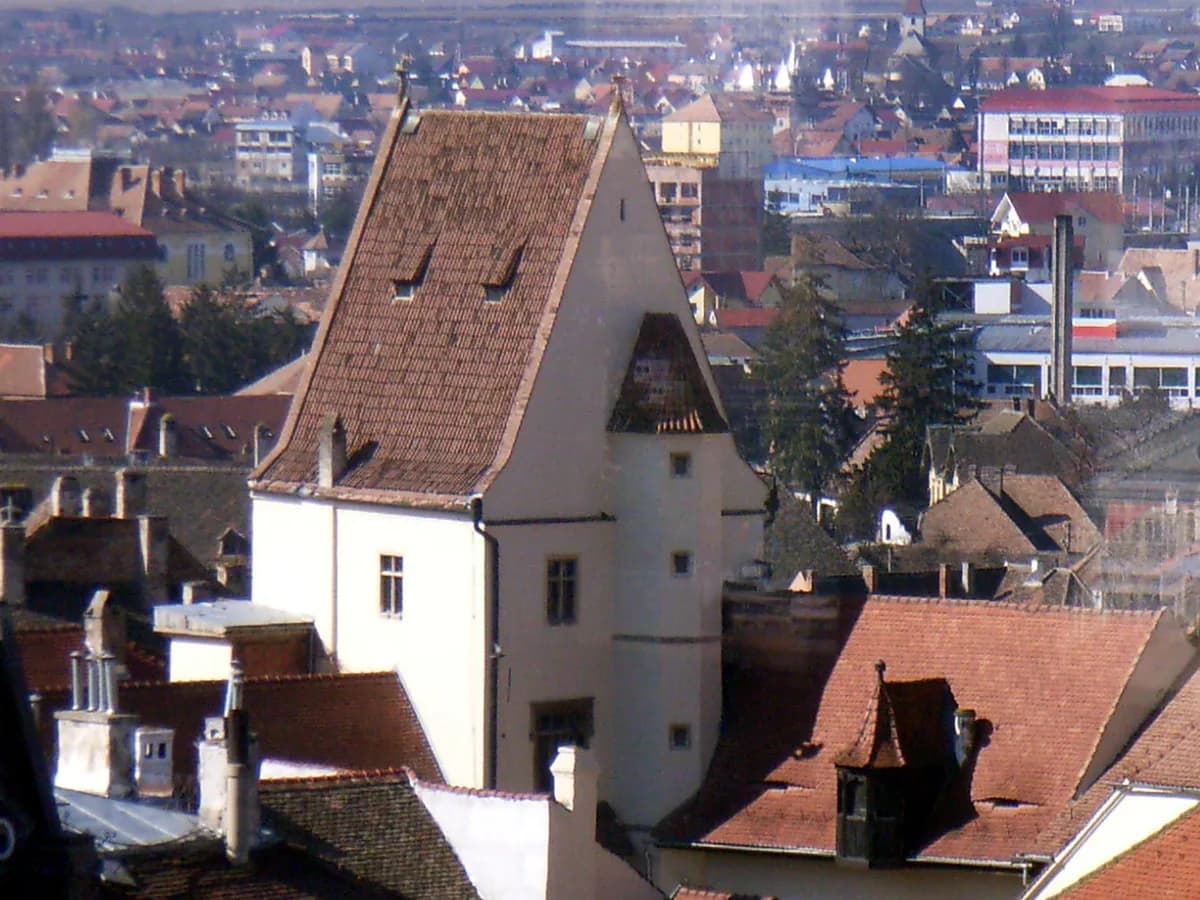
The house takes its name from its first owner and was bought in 1545 by the town magistracy, which used it as the town hall for four hundred years, until 1948, according to the Brukenthal museum. Ten architectural units plus a defence tower form one of the most impressive ensembles of civil Gothic architecture in Romania and south-east Europe, and the oldest part is the tower-locuință, begun in the late thirteenth century. The building is therefore half the visit: look up at the tower and the stone doorways before you look at any display case.
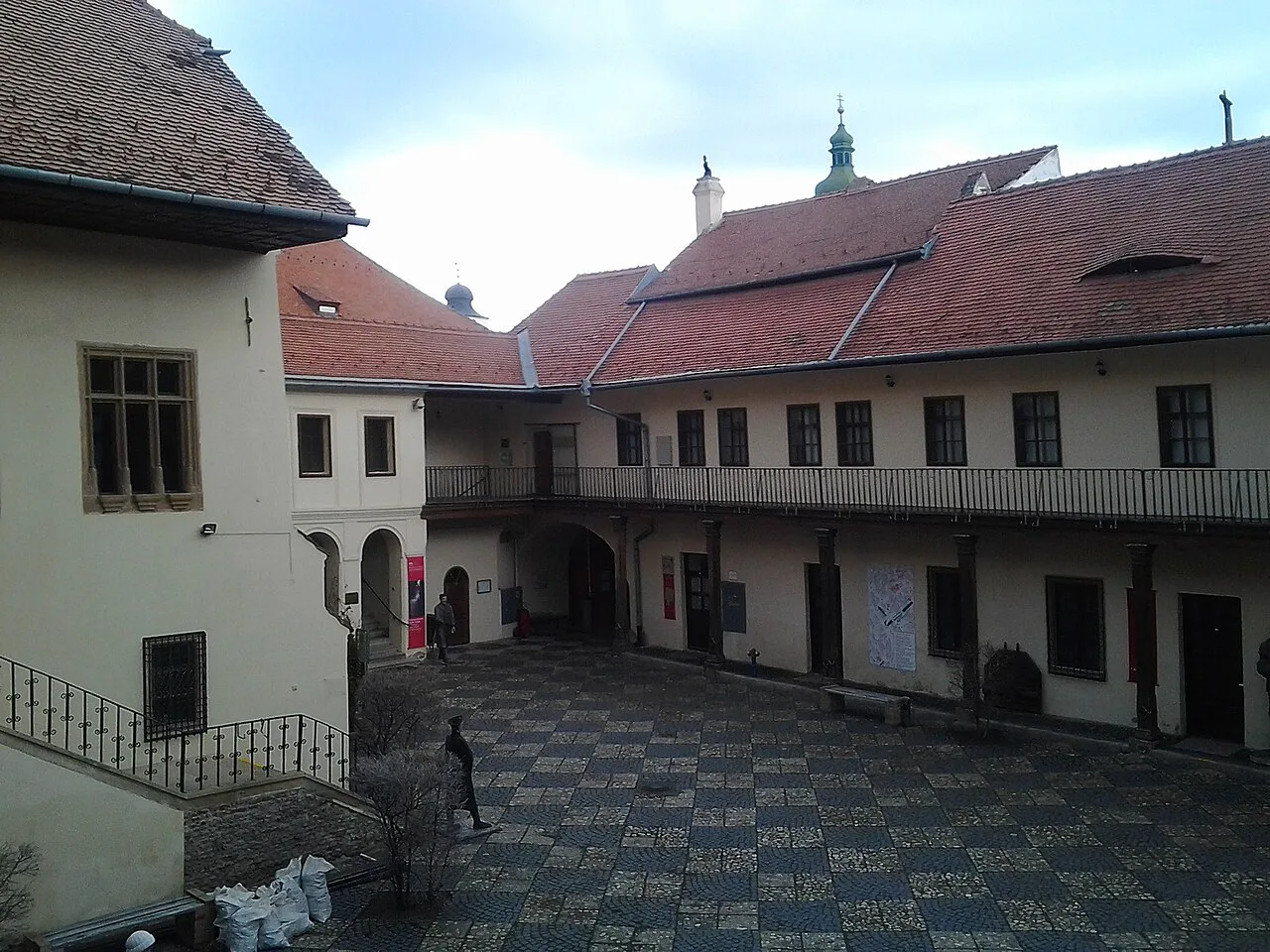
Two courtyards reward a slow circuit. The inner courtyard has held a series of bronze busts of figures from national history since 2018, marking the centenary of the Great Union, while the second courtyard, known as Grădina Martirilor, or the Garden of the Martyrs, contains figurative sculpture, including four stone consoles of the loggia carved with portraits of men in a space with Renaissance-influenced detail. Step into both rather than heading straight for the ticket desk, because they are easy to miss from the street.
The permanent exhibitions: Lapidariul Antic and Lapidariul Medieval
The permanent display was reorganised in 2006 and 2007 around the theme of local history, and the circuit begins with everyday life in the Palaeolithic. It shows how people lived in caves, sunken huts, farmsteads, a Roman villa and a medieval dwelling, then moves to the specialised production of the guilds. Two lapidarium sections, Lapidariul Antic and Lapidariul Medieval, hold the carved stonework, and the Roman lapidarium together with the exhibition on the Magistrate of Sibiu underlines social rank and the dignity of office.
Stonework halls can feel dry if you walk through quickly, so pick out the portraits, inscriptions and fragments that show real people holding office or paying for memorials. The medieval pieces tie directly to the building around you, which makes them more legible here than in a national collection. Give the two lapidarium rooms a share of your time rather than saving all your attention for the armour.
Arms and armour, the treasury and Sibiu's guilds
War gets its own treatment through weapons and armour, covering arms, tactics, logistics and the organisation that went with them. Nearby, the Tezaur and the Bresle Sibiene exhibitions turn to stored valuables and the town's craft guilds, while a separate room covers glass in Transylvania. These four displays together explain how a fortified trading town produced, defended and displayed its wealth.
Religious practice runs through the circuit from prehistory to elaborate liturgical rites, shown through objects of cult. If you are visiting with limited time, choose between the arms and the guild rooms depending on your interest, but do not skip the religious objects entirely, as they carry much of the medieval material.
Coins and medals, and the Romanian national movement
The circuit closes with the emancipation movement in southern Transylvania across the eighteenth to twentieth centuries, and a separate Monede și Medalii exhibition covers coins and medals. That final stretch shifts from objects of daily life to political change, which makes a satisfying ending after the earlier rooms on craft and belief. Read the panels here rather than skimming, since the sequence of events matters more than any single item.
How long to allow inside, plus the courtyard sculpture
Budget about an hour to ninety minutes for the permanent circuit and the two courtyards, more if you read every label in the lapidarium and coin rooms. The exhibitions are spread across ten architectural units, so the walk between rooms takes time in itself; a rushed forty minutes will leave you with impressions of stone and armour but little sense of the sequence. Add the courtyards either before or after the indoor route, since they are open to the same visit.
Tickets and opening hours
The Brukenthal National Museum's site has a programme and tariffs page covering visiting hours and prices for its sites, so check that before travelling, particularly around public holidays. Casa Altemberger is one of several Brukenthal museums in Sibiu, so ask at the ticket desk which sites your ticket covers, since one purchase may not admit you everywhere. Carry lei in case the ticket desk handles card payments differently from the online shop.
Do not confuse this museum with the History Museum in Sighișoara, which sits inside the Turnul cu Ceas and keeps its own separate admission and hours. Guides to the Sighișoara museum describe a different collection in a different town, and its details do not apply to Casa Altemberger.
What to see nearby
Because the museum opens onto Piața Mare, the rest of the upper town is on the doorstep. The Lutheran Cathedral in Sibiu, with its tower and roof windows, stands a short walk away, and the Bridge of Lies, Sibiu's best-known iron footbridge, links the upper and lower town close by. The Holy Trinity Orthodox Cathedral and the Council Tower fill out a comfortable half-day circuit on foot.
If you want a contrast to the indoor historical circuit, the ASTRA Museum of Folkloric Traditional Civilization spreads across a large open-air site outside the centre with rural houses and workshops. It needs a separate journey and far more time, so pair it with Casa Altemberger on different days rather than the same afternoon.
Is Casa Altemberger worth an hour of your Sibiu trip?
Yes, if you want Sibiu's own story rather than another gallery of European painting. The building carries much of the experience, from the thirteenth-century tower to the Garden of the Martyrs, and the permanent rooms give a coherent run from prehistory to the national movement. Choose it over the Brukenthal picture galleries if your interest lies in how the town worked.
Check the museum's programme and tariffs page for the day's hours and ticket options, then build the rest of your walk around Piața Mare. The arrangement of squares, towers and churches around the museum means you can leave and re-enter the old town on foot without needing a car.
Explore more Sibiu guides
Frequently Asked Questions
What is the difference between the Museum of History Sibiu and the Brukenthal National Museum?
The Museum of History is one branch of the Brukenthal National Museum, housed in Casa Altemberger at Piața Mare 4-5, and covers local history from the Palaeolithic to the Romanian national movement. The Brukenthal name also covers art galleries, a natural history museum, a pharmacy museum and other sites in Sibiu, each with its own displays and admission arrangements.
Can I visit the museum without booking in advance?
The Brukenthal National Museum publishes its programme and tariffs, including online tickets, on its own website, so check there before travelling to see whether advance booking is expected for the day you plan to visit. Details can change around public holidays.
What else is in the same building as the history museum?
Casa Altemberger holds the museum's permanent history circuit across ten architectural units and a defence tower, plus two courtyards: the inner courtyard with bronze busts added in 2018, and the second courtyard known as Grădina Martirilor. Plan your time so you see the courtyards as well as the display rooms.