
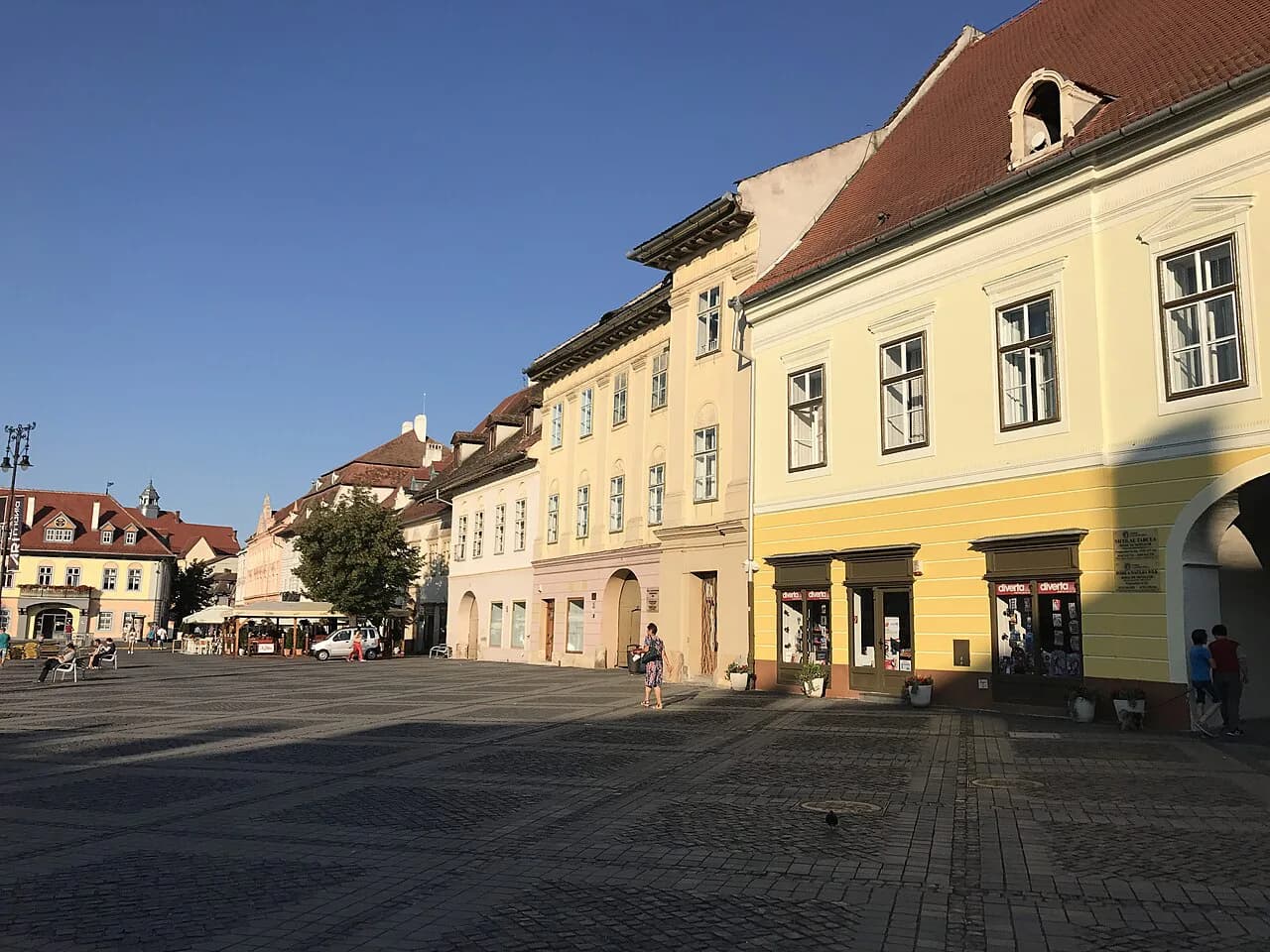
Piața Mare, Sibiu: What to See in the Large Square

Piața Mare is the Large Square, the open space at the centre of Sibiu's old citadel. You walk into it freely from the surrounding streets. It is documented from 1366, the year the third ring of the city's fortifications was completed, and it began as a market square used for selling grain. This page covers where the square sits, how to reach it on foot, what faces it, its earlier names and how long to allow. Use the Sibiu Attractions: 12 Visitor Guides overview to see what else sits in the old town around it.
What Piața Mare is
Piața Mare is Sibiu's central market square, an open paved space enclosed by historic buildings rather than a single monument you queue for. It began as an economic market, used specifically for selling grain, and it also served as a place of executions, so its past is more commercial and civic than ceremonial. From the early sixteenth century it developed into the cultural centre of the old citadel.
Treat it as the place you stand in rather than a stop on a list. Because the square is an open public space, there is nothing to buy at a gate; the buildings on its edges are what you come to look at. It is the natural place to start or end a walk through the old town.

Where Piața Mare sits in Sibiu
The square lies at the centre of Sibiu's old town, ringed by the streets of the historic core and within a few minutes' walk of the smaller squares and passages around it. Use it as your compass: once you have found it, the lanes leading off its corners take you to the rest of the old citadel.
Its position grew out of the fortifications: the square is tied to the completion of the third defensive ring in 1366, so it sits inside the line of the old walls rather than on their edge. Walking the old town, you can read the layout as layers added outwards from this open centre.

How to reach Piața Mare on foot
The square is a pedestrian destination, and the practical approach is to walk in from whichever old-town street you are on. From the lanes around it, look for the widening of the street and the open sky above; the square opens out suddenly after the narrow approach streets. Comfortable shoes matter more than transport here, since the surface is paved and you will cover the old town on foot.
If you need orientation before you set off, the Sibiu City App lists the city's tourist attractions and walking itineraries, which you can use to plan the route to the square. Use it for layout and routes rather than for live opening times, and check the square's surroundings on the ground when you arrive.
What to look at in and around the square
Look at the buildings that enclose the square rather than through them: the façades facing the open space are the reason to slow down. Because it served as the city's market and later its cultural centre, the edges of the square are where its civic life was concentrated. Read the fronts of the houses as a row and you get a sense of how the old citadel presented itself.
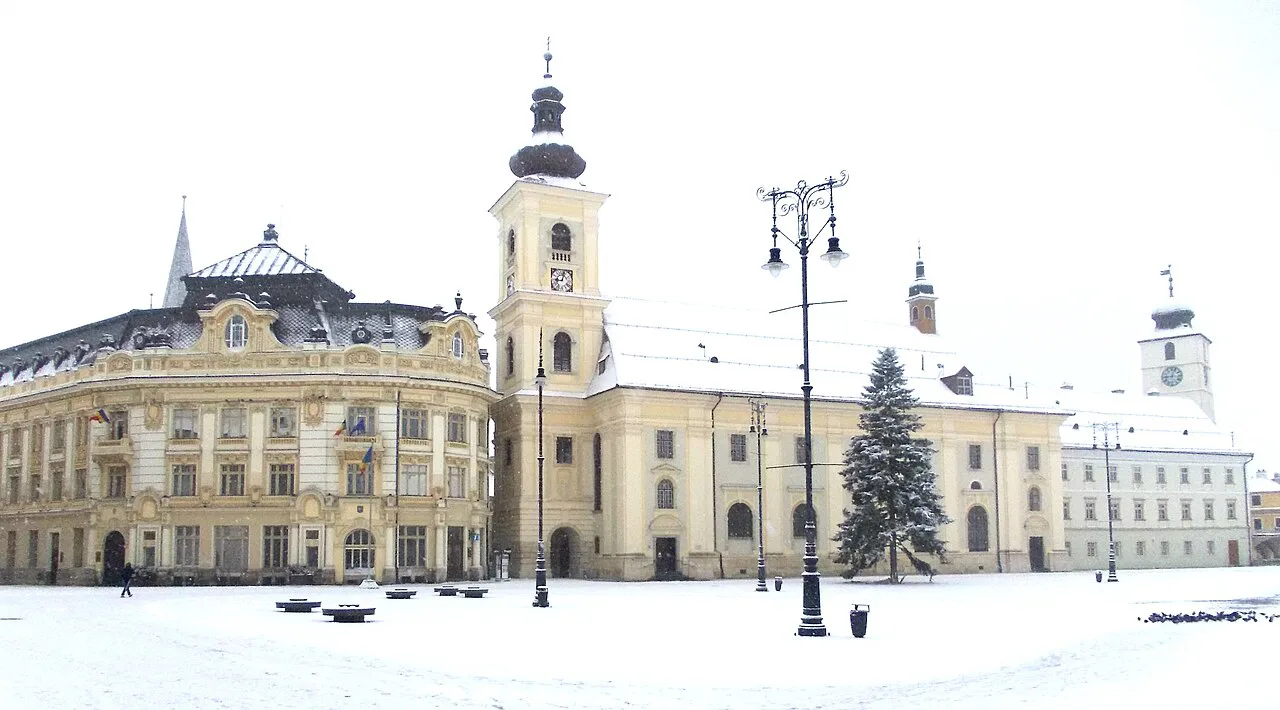
The Council Tower, Turnul Sfatului, stands by the square and is the obvious vertical landmark to fix your position against. Pair the square with the tower if you want a view back over the rooftops, and with the Lutheran Cathedral in the surrounding old town if you are following the main sights.
The Brukenthal National Museum sits in the old town close by, so the square works as a starting point for a museum visit rather than a substitute for one. The Museum of History in Casa Altemberger is another building in the same compact area worth folding into the same walk.
For a photograph without people in it, come early in the day; the square is open ground and fills up as the old town does. There is no schedule to plan around for the square itself, so the timing of your visit is about light and crowds rather than opening hours.
The square's earlier names
The square long carried the German names Der Grosse Ring and Grosser Platz, and between the two world wars it was called Piața Regele Ferdinand. If you are reading old maps, postcards or German-language signs in Sibiu, those are the names to match against the modern Piața Mare. Recognising them makes the older labels in the city legible rather than puzzling.
The sequence of names tracks the city's changing administrations rather than the shape of the square itself, which is why the open space looks the same under any label. Take the names as a way of reading Sibiu's layers: Saxon, royal Romanian and modern. They are a small piece of evidence you can carry into the surrounding streets.
How much time to allow
Give the square itself fifteen to twenty minutes: enough to walk its edges, read the façades and take a few photographs. If you add the Council Tower or one of the nearby museums, budget two to three hours for the immediate area on foot. The square rewards a slow pass rather than a rushed snapshot.
Use the square as a base for the old town rather than a destination in itself. Because the surrounding streets are compact, you can leave the square, visit a museum or church, and return to it without a long walk. That makes it a sensible meeting point and a place to reset between sights.
What is nearby to combine with a visit
The Bridge of Lies (Podul Minciunilor), Sibiu is a short walk away and pairs naturally with a wander across the square. The Piața Mică, or Small Square, sits adjacent and gives you a second open space to compare with the Large Square. Both fit into the same half-day in the old town.
If you want to stretch the day beyond the old town, the ASTRA Museum Sibiu is the larger open-air collection on the city's edge. It needs its own block of time and a different approach, so keep it separate from a square-and-streets walk rather than bolting it on.
Practical points: crowds and what the square is used for
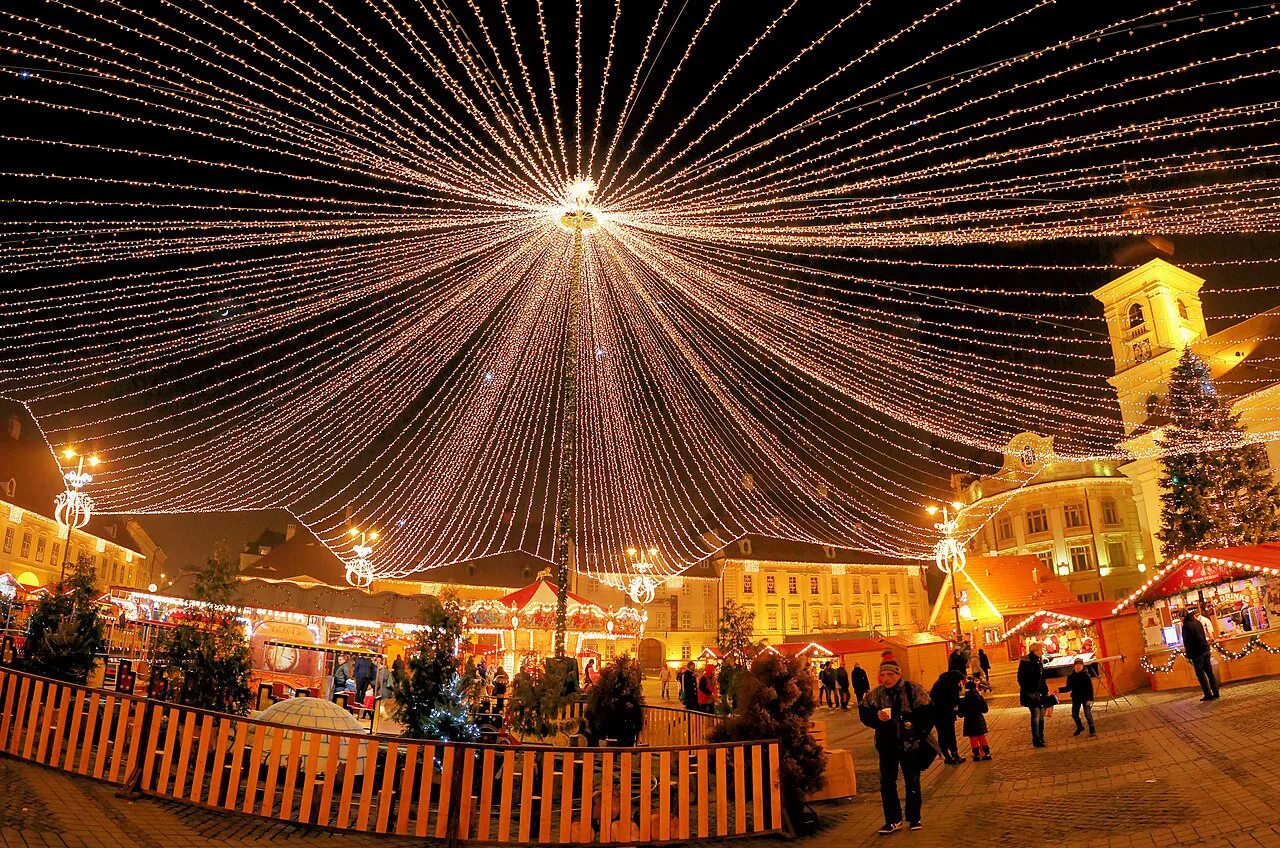
The square is open ground, so it hosts public gatherings and events as well as everyday foot traffic; on a busy day you may share it with a crowd rather than have it to yourself. It remains a public space first, which is exactly what its history as a market and civic centre suggests. Plan on the square being a place you pass through, not a quiet corner.
There is no admission charge for the square itself, since it is a public open space. The buildings around it, including the museums and the Council Tower, set their own arrangements, so check those individually before you rely on a particular opening time.
Is Piața Mare worth your time?
Yes, but as the hinge of your old-town walk rather than a sight in its own right. Walk into it from the surrounding streets, look at the façades and the Council Tower, then use it to reach the Small Square, the Bridge of Lies and the museums nearby. A short stop plus one or two neighbours makes a solid half-day.
Explore more Sibiu guides
Frequently Asked Questions
Is Piața Mare the same as Large Square in Sibiu?
Yes. Piața Mare translates as Large Square, and both names refer to the open central square of Sibiu's old citadel. You will also see the German names Der Grosse Ring and Grosser Platz on older maps and signs, and Piața Regele Ferdinand for the interwar period.
Do you need a ticket to visit Piața Mare?
No. The square is an open public space in the old town, so you walk in without a ticket or booking. The buildings around it, such as the museums and the Council Tower, set their own admission arrangements, so check those separately before you plan around a particular opening time.
How long should you spend at Piața Mare?
Allow around fifteen to twenty minutes for the square itself, walking the edges and looking at the buildings that face it. If you add the Council Tower or a nearby museum, set aside two to three hours for the immediate old town, since everything sits within a short walk of the square.